This Is The Invasive Bug Targeting Pennsylvania Roses At An Alarming Rate
A Pennsylvania rose can look perfect one week and strangely shredded the next.
The culprit is often easy to miss at first.
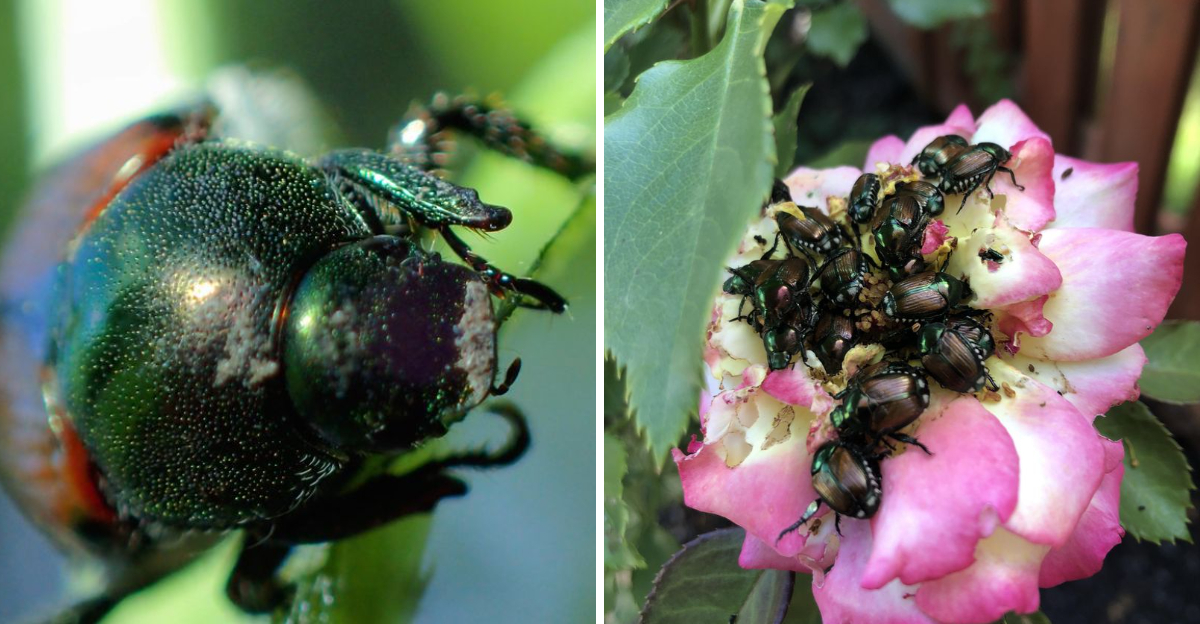
Japanese beetles arrive in summer with metallic green bodies, coppery wing covers, and an appetite for both rose foliage and blooms.
Their feeding leaves a distinctive lace-like pattern behind, with softer tissue chewed away between the veins.
That damage can build quickly.
One beetle may not seem important, but feeding groups can gather on the same plant and turn a few nibbled leaves into a much rougher-looking shrub within days.
So what should Pennsylvania gardeners watch for?
Start with the beetles themselves, then read the pattern they leave behind. Morning scouting, quick removal, smart trap placement, and careful treatment choices can all reduce pressure without turning the whole garden into a spray zone.
Roses can tolerate some summer feeding.
The real advantage comes from catching Japanese beetles early, before a temporary visitor becomes the season’s most annoying regular at your favorite rose bush in the entire flower bed.
The Culprit Is Japanese Beetle
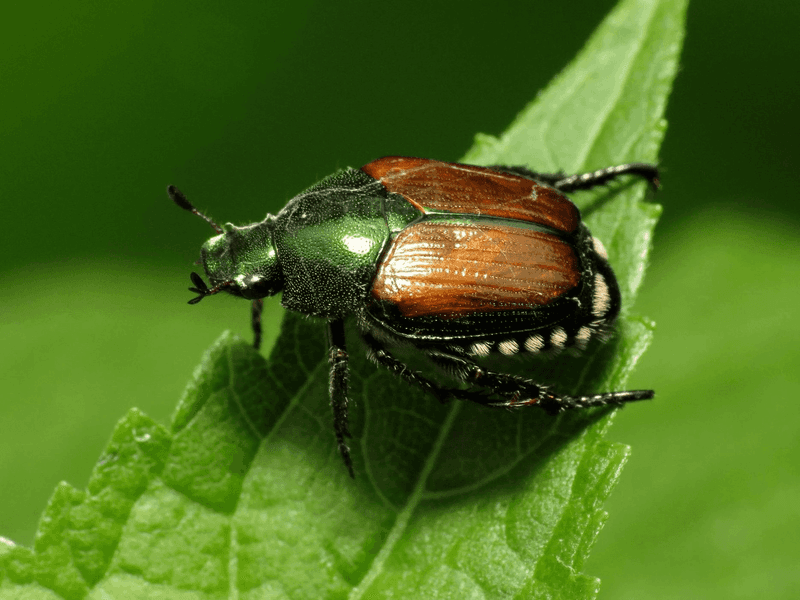
A shiny beetle on a rose can look almost decorative until you notice what happened to the leaf beneath it.
Japanese beetles, Popillia japonica, are about half an inch long and easy to recognize once the details stand out.
The head and thorax have a metallic green sheen, while the wing covers look coppery brown. Small white tufts along the sides of the abdomen add another useful identification clue.
Pennsylvania gardeners usually see adults from late June into August, with July often bringing the heaviest activity.
Roses are especially attractive feeding sites because adults chew both foliage and flowers. Several beetles may gather on one bloom or leaf cluster, which makes damage look far more dramatic than the size of one insect suggests.
Do not confuse them with every shiny beetle in the yard.
Pause long enough to check the green body, copper wings, and white side tufts before deciding what you found. Correct identification keeps harmless beetles from getting blamed for the wrong crime.
The first sighting matters because Japanese beetles rarely arrive with subtle table manners.
One may be the scout. Several can become a lunch crowd.
Once those metallic backs start appearing on the roses, begin regular morning checks. Early attention is much easier than trying to rescue a plant after half the canopy has been turned into lace.
Spot Skeletonized Rose Leaves Early
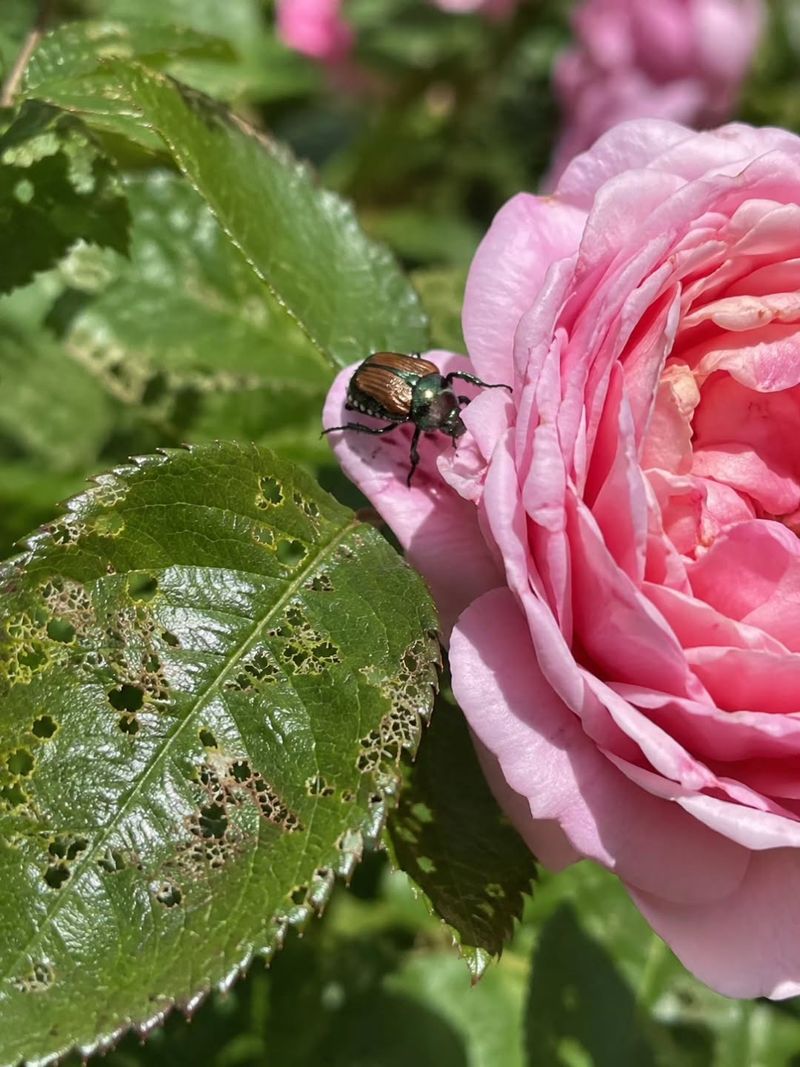
Japanese beetle damage has a look that becomes hard to forget.
The insects chew the softer tissue between leaf veins and leave much of the vein network behind. What remains resembles green lace, especially once several nearby leaves have been worked over.
That pattern is called skeletonization.
A little skeletonizing looks mostly cosmetic. Heavy feeding across a large part of the plant reduces the amount of healthy leaf tissue available for photosynthesis, which can weaken a rose already dealing with summer heat or drought.
Check flowers too.
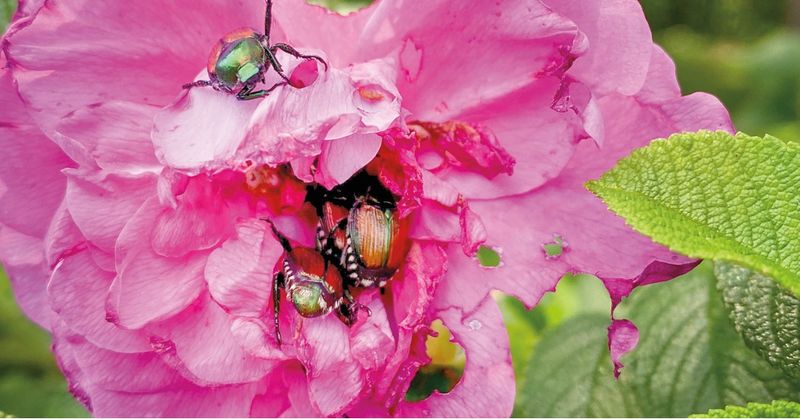
Japanese beetles often chew petals and may gather deep inside open blooms, where their metallic bodies can disappear against shadows and folded petals. A rose can therefore show flower damage before the foliage looks severely affected.
Your Pennsylvania Garden Changes Every Week. Your Plan Should Too.
Gardening in Pennsylvania changes quickly throughout the season. Every Friday you’ll receive a simple weekly plan showing exactly what to plant, prune, fertilize, harvest, and protect so you never miss the right timing.
Start scouting at the top and outside edges of the plant, then work inward.
Fresh damage often appears near actively feeding beetles. Older skeletonized leaves may remain after the insects have moved elsewhere, so finding the newest chewing helps locate the current problem.
Do not panic over one damaged leaf.
The useful question is how quickly the pattern is expanding.
A few holes that barely change over several days call for observation. Several new skeletonized leaves every morning tell you feeding pressure is rising.
The rose is basically leaving evidence at the scene. Read the freshest damage first, and you can usually find the suspects nearby.
Scout Roses During Peak Summer Flights
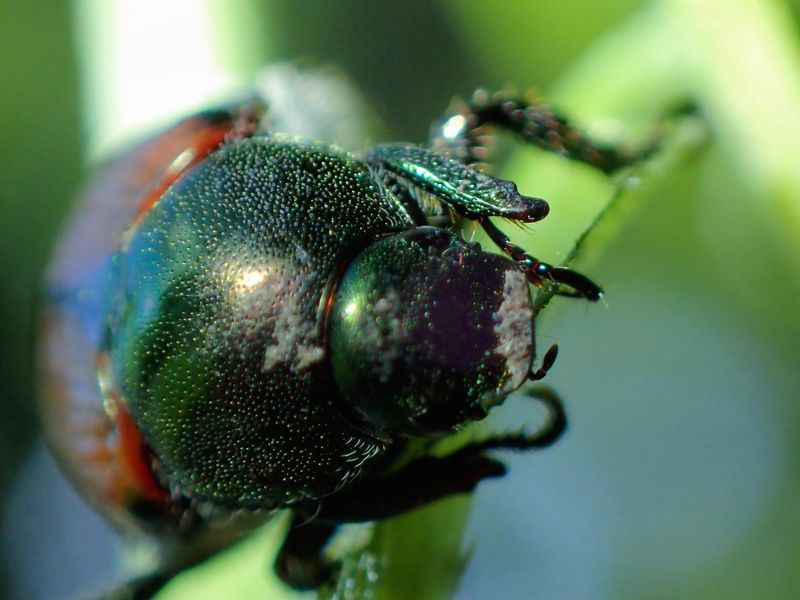
Pennsylvania roses deserve their closest inspections during the heart of summer.
Adult Japanese beetles commonly become active from late June through August, and July can bring big feeding groups. That makes regular scouting more useful than one inspection after leaves already look rough.
Walk the rose bed every two or three days during peak activity.
Morning works especially well because cooler temperatures leave the beetles slower and easier to approach. Look across open flowers, upper leaves, and sunny stems where several adults may sit together.
Keep an eye on numbers.
One or two beetles on a vigorous rose create a different situation from twenty clustered across fresh blooms. A simple mental count helps you notice when activity is climbing rather than relying on how alarming one chewed leaf looks.
Weather can change the pattern quickly.
A quiet garden early in the week may receive a new wave of adults several days later. Nearby lawns and landscapes can also produce beetles that move into your roses even after you removed yesterday’s visitors.
That is why consistency matters more than one perfect cleanup.
A five-minute inspection repeated through the active period can catch trouble while hand removal is still practical.
Japanese beetles have a short summer season, but they make efficient use of it.
Meet them with the same efficiency. Scouting turns July from a surprise attack into a routine garden check that keeps the feeding pressure much easier to manage.
Handpick Beetles During Cool Mornings
A coffee mug and five spare minutes can become useful Japanese beetle tools.
Cool mornings slow adult beetles down, making them easier to remove before warm air turns them into quicker fliers. This works especially well on a small collection of roses where the first feeding groups are still manageable.
Carry a container of soapy water through the bed.
Hold it beneath the leaf or flower, then gently tap or flick the beetles into the liquid. Their tendency to drop when disturbed can work in your favor when the container is already waiting below.
Move slowly around each rose.
Check open blooms, the upper surfaces of leaves, and clusters where several beetles sit together. Removing groups early reduces the number actively chewing on the plant and may also make that particular feeding site less busy.
Repeat the process regularly.
One morning pass will not stop new adults from arriving later in the week. The value comes from keeping numbers lower throughout the main flight period.
Avoid crushing beetles directly on flowers or foliage.
A simple drop into the container is cleaner and prevents extra mess on petals.
Hand removal will not solve a massive neighborhood-wide outbreak by itself.
For a few rose bushes, though, it can be remarkably practical.
Japanese beetles arrive wearing shiny armor, but cool mornings take away some of the swagger. Catch them before the sun warms the stage, and the job becomes much less dramatic.
Drop Collected Beetles Into Soapy Water
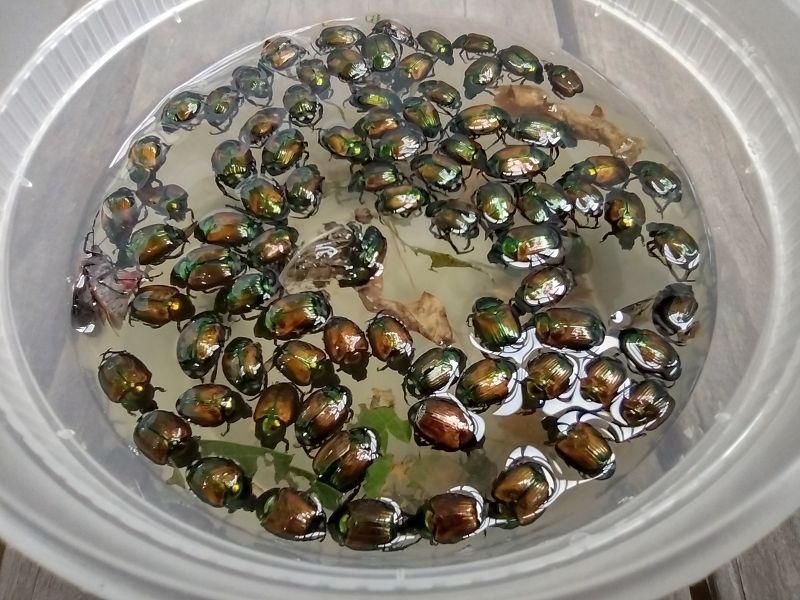
A trap full of Japanese beetles can feel like proof that the product is working beautifully.
The roses beside it may tell a different story.
Japanese beetle traps use strong floral and pheromone lures to pull adults toward the device. Those scents can attract beetles from beyond the immediate garden, and not every beetle following the lure ends up inside the bag.
Some stop on nearby plants instead.
That makes a trap beside the rose bed a poor arrangement. The lure may increase beetle traffic exactly where you are trying to reduce it.
Gardeners who use traps should keep them well away from valuable roses and other plants that Japanese beetles readily feed on. A distant property edge makes more sense than the middle of the flower border.
Traps can still reveal useful timing.
A sudden jump in captures can show that adult activity has increased in the area, which gives you a reason to scout roses more frequently.
Do not treat the trap as a complete management plan.
Hand removal, plant health, and targeted decisions around severe feeding still matter more at the rose itself.
The strange lesson is that catching lots of beetles does not automatically mean fewer beetles on your flowers.
Location changes everything.
Putting a powerful lure beside the rose bush is a little like advertising a buffet and then acting surprised when extra customers wander through the dining room.
Keep Beetle Traps Away From The Roses
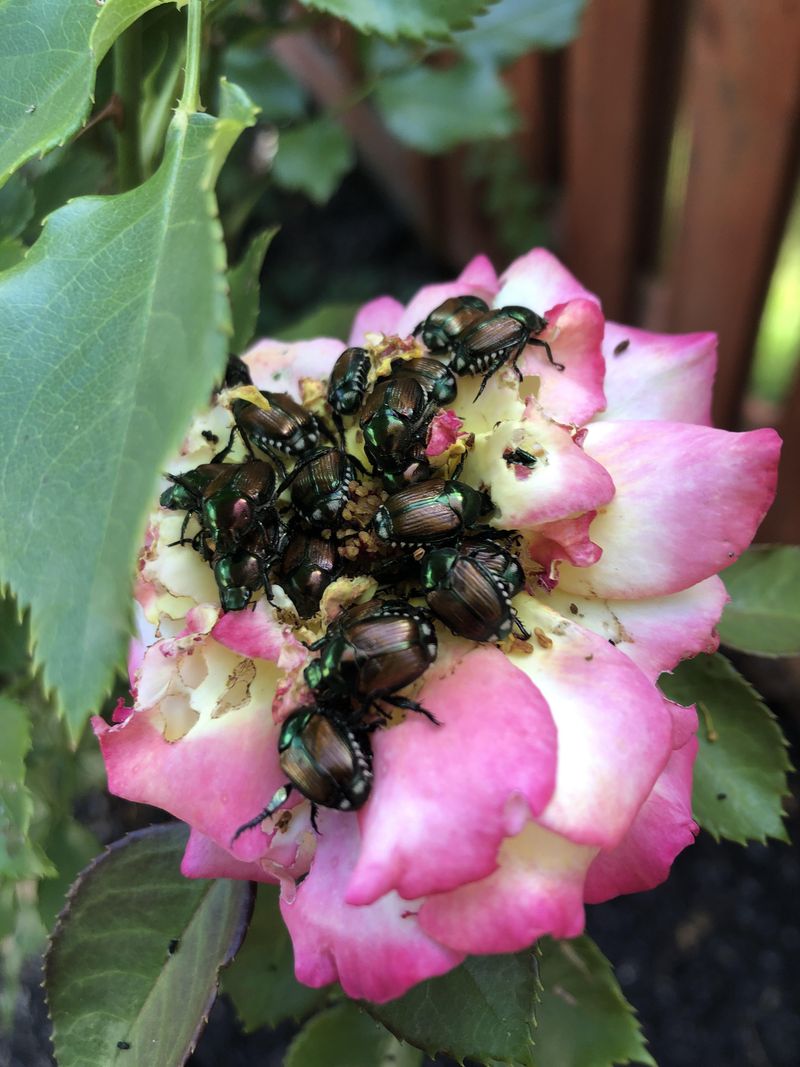
A few chewed leaves do not automatically justify treating the whole rose garden.
Japanese beetle damage can look dramatic, especially on flowers, while a healthy established rose may still tolerate a moderate amount of feeding without lasting trouble.
Judge the plant, not just the insect.
Look at how much healthy foliage remains, how quickly new damage is appearing, and how vigorous the rose was before beetles arrived. A stressed transplant deserves more protection than a large established shrub with plenty of intact leaves.
Start with lower-impact steps.
Morning hand removal and regular scouting can keep small populations under control. Save insecticide decisions for situations where feeding becomes extensive enough to threaten plant performance or seriously damage a valued display.
Pollinators matter in that decision.
Roses and nearby flowers may attract bees and other beneficial insects, so broad spraying across open blooms can affect far more than the target pest.
Any product used on ornamentals needs to be labeled for the plant and pest, and the label directions determine how, where, and when it can be applied.
Avoid treating on autopilot every summer.
Beetle pressure changes from year to year and even from one part of a yard to another.
A rose with three beetles does not need the same response as one covered in them.
Good pest management leaves room for judgment. The spray bottle should be a tool, not a reflex.