This Is The Invasive Insect Targeting Pennsylvania Hemlocks At An Alarming Rate
The eastern hemlock is Pennsylvania’s official state tree. For generations, these graceful evergreens have shaded mountain streams, sheltered wildlife, and kept forest creeks cool enough for native brook trout.
Now they’re under attack from an insect about the size of a pinhead. This invasive pest arrived from Asia and has been spreading across the state for decades.
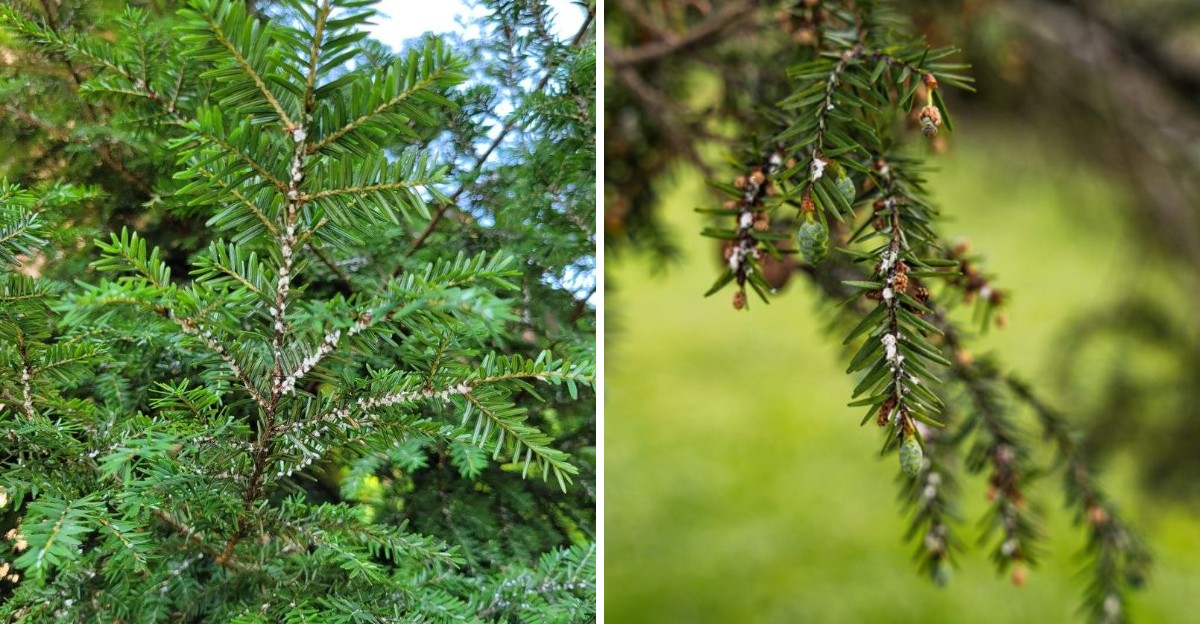
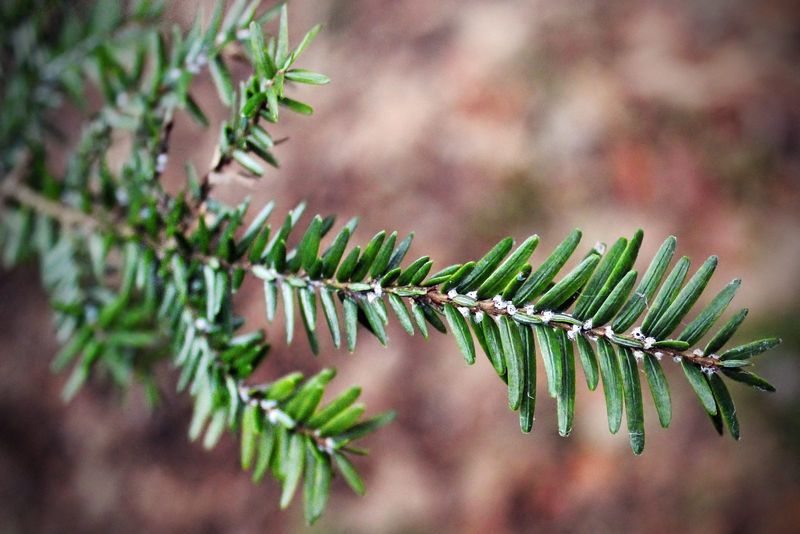
It hides on the undersides of hemlock branches, where it tucks itself into tiny white tufts that look like bits of cotton or flecks of snow.
Each one feeds on the tree’s stored energy. Over time, needles turn grayish, new growth stops, and the tree slowly weakens.
Infested hemlocks can decline badly within just a few years. Many homeowners don’t notice the problem until it’s well underway.
Learning the warning signs could help protect the hemlocks in your yard and the forests Pennsylvania treasures.
A Tiny But Dangerous Pest
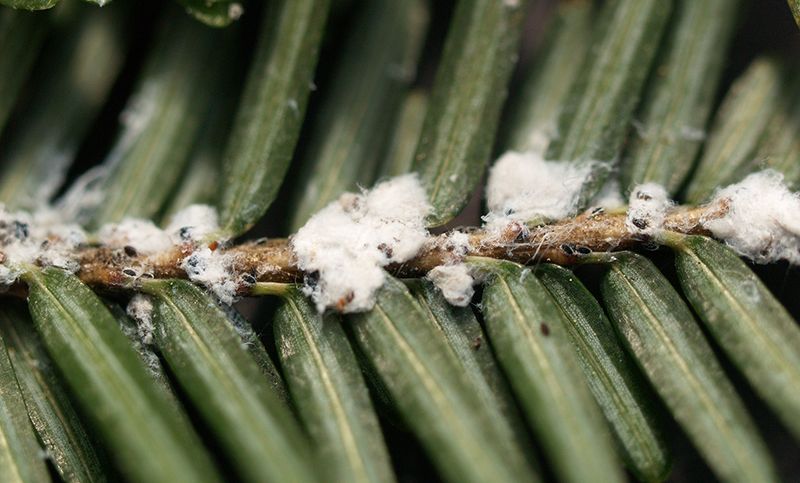
Small things can cause big problems, and the hemlock woolly adelgid proves it. This insect is about the size of a period at the end of a sentence. It looks a bit like an aphid, which is a tiny bug that sucks juice from plants.
The adelgid did not start out in America. It is native to East Asia, where it lives in places like Japan and China. Over there, local hemlocks have natural defenses, and other insects eat the adelgids, so the pest stays under control.
Things changed when the bug arrived in the eastern United States. Experts first found it in Virginia in the 1950s. It most likely hitched a ride on nursery plants shipped from overseas.
At first, few people paid much attention. The insect seemed like a minor issue in a few gardens. Over the next several decades, though, it slowly crept north and east.
Today, the adelgid has spread across much of Pennsylvania. You can find it in state forests, city parks, campgrounds, and even quiet suburban yards. It has been reported in a large share of the state’s counties.
Eastern hemlocks are its main target here. American hemlocks never had to deal with this pest before, so they have almost no natural protection. That makes them an easy meal.
Fun fact: the word adelgid comes from a family of tiny insects that feed only on cone-bearing trees. Some relatives attack firs and spruces too.
Knowing the basics is the first step toward helping. Once you understand what this bug is, you can start keeping an eye out for it during your next walk in the woods.
How To Spot An Infestation
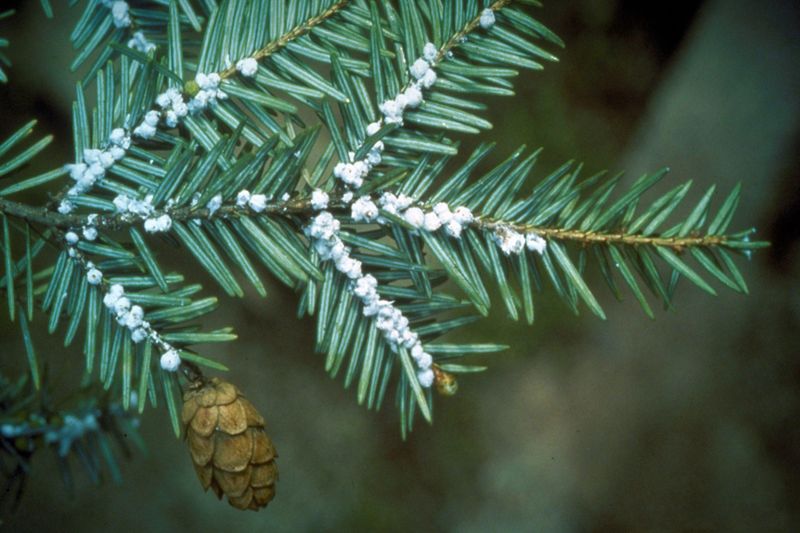
Grab a winter coat and head outside, because the best time to hunt for this pest is when the weather turns cold. From late fall through early spring, the signs are easiest to see. Summer checks can miss them.
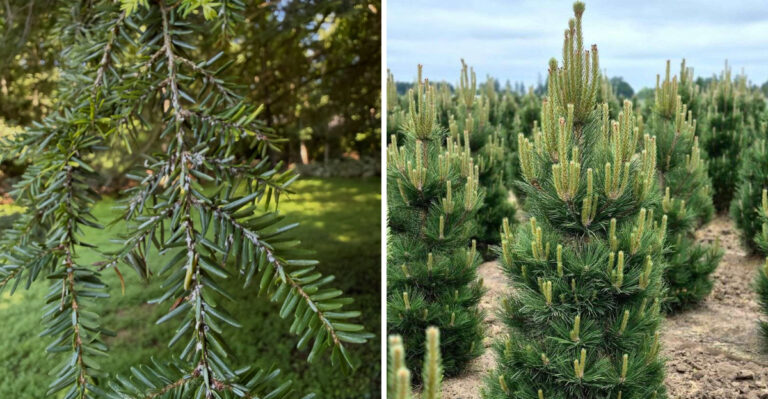
Start by finding a hemlock tree. Look for short, flat needles with two pale white stripes underneath. Then gently lift a low branch and flip it over.
Now check the spot where each needle meets the twig. Are there small white, cottony tufts stuck there? They might look like bits of wool, cotton balls, or even tiny clumps of snow.
Your Pennsylvania Garden Changes Every Week. Your Plan Should Too.
Gardening in Pennsylvania changes quickly throughout the season. Every Friday you’ll receive a simple weekly plan showing exactly what to plant, prune, fertilize, harvest, and protect so you never miss the right timing.
Those fluffy blobs are the giveaway. Each one is a protective covering the insect makes around itself and its eggs.
Real snow melts or brushes off easily, but these masses stay stuck tight. Here are a few quick tips for a good inspection:
Check several branches on different sides of the tree. Look at lower branches first, since they are easiest to reach. Use a magnifying glass if you want a closer view.
Do not confuse the tufts with spider egg sacs or bits of sap. Adelgid wool sits right at the needle base in neat rows. Spider silk is usually more scattered and stringy.
If you find something suspicious, snap a clear photo. You can share it with your local Penn State Extension office or the Pennsylvania Department of Conservation and Natural Resources. They can help confirm what you found.
Catching the problem early gives your tree the best chance. A few minutes of looking each winter can save you a lot of worry later on.
How It Damages Hemlocks
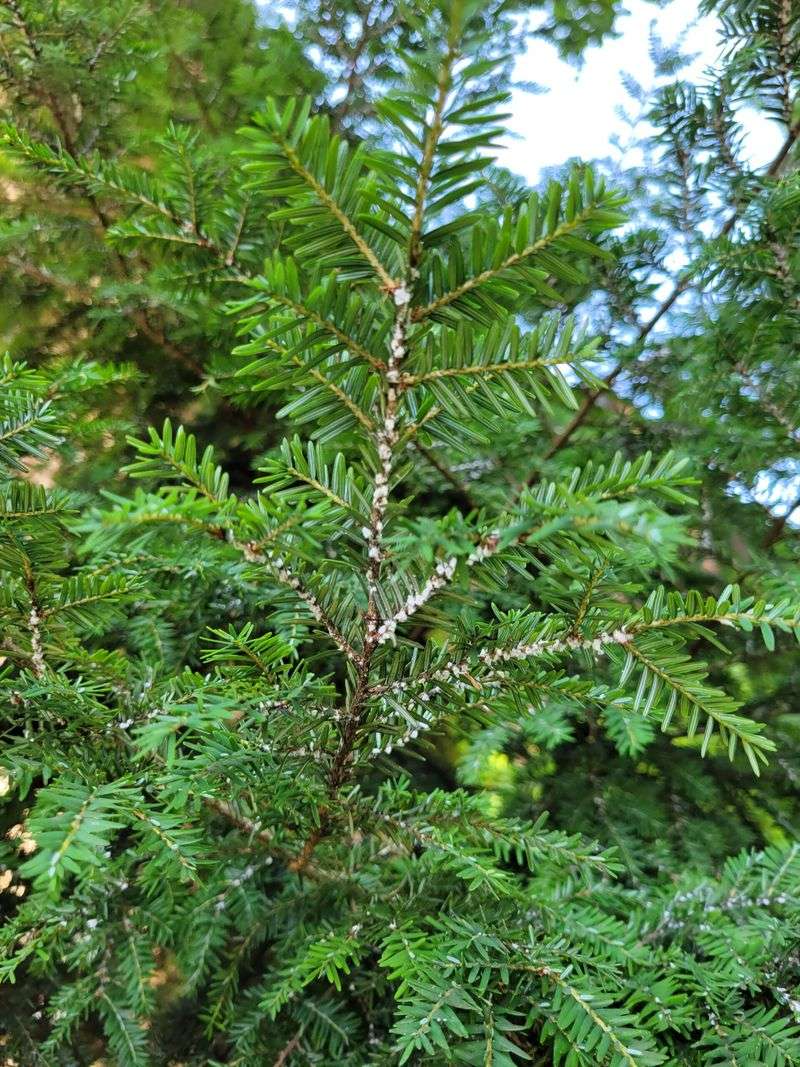
Think of a hemlock as a tree with a packed lunchbox. It stores food, called nutrients, near the base of its needles. The adelgid sneaks in and eats that lunch before the tree can use it.
The insect has a long, thin mouthpart shaped like a straw. It pokes this into the twig right where the needle attaches. Then it sips the stored starches the tree needs to grow and stay strong.
One bug would not matter much. Thousands of them on a single tree, though, add up fast. Bit by bit, the hemlock begins to starve.
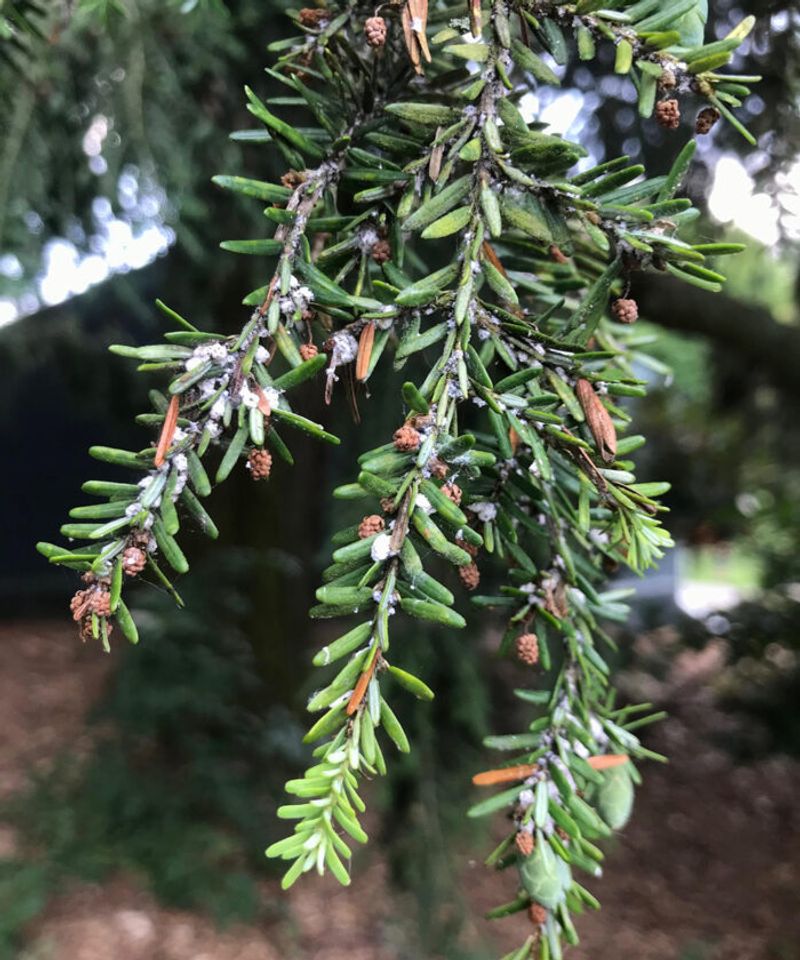
So what does that look like? The first clue is often a change in color. Healthy needles are dark, shiny green, but infested needles turn a dull grayish shade.
Next, the tree starts dropping needles. Branches look thin and see-through instead of full and bushy. You may notice more sunlight shining through the crown than before.
Another big warning sign is the lack of new growth. Each spring, healthy hemlocks push out bright, light green tips. A tree under attack often skips this growth completely.
Lower branches usually suffer first, and the damage moves upward over time. Without help, many trees decline badly and fail within several years. Stressed trees also become easier targets for other pests and diseases.
The pace depends on the tree’s size, age, and health. Some big hemlocks hang on for a decade or more. Smaller or weaker trees can go downhill much faster.
Watching for these changes helps you act in time. A grayish, thinning hemlock is a tree asking for help.
Why It Spreads So Easily
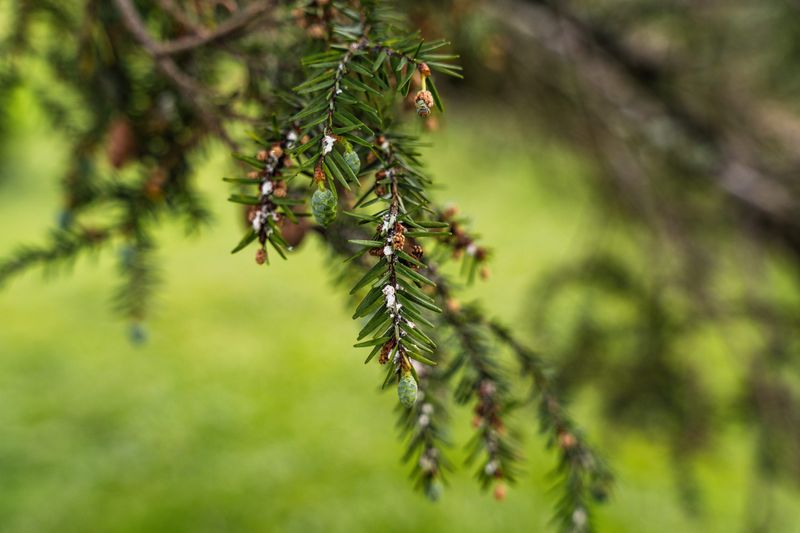
Here is a strange fact that surprises most people. Every single hemlock woolly adelgid in North America is female. There are no males at all.
How do they make more bugs, then? They reproduce without mating. Each female can lay eggs all on her own, which makes the population grow at a shocking speed.
On top of that, the adelgid produces two generations every year. One group hatches in late winter and spring. Another group follows in early summer.
A single female can lay up to a few hundred eggs at once. Multiply that by two generations, and one tiny bug can lead to thousands more in a short time. No wonder trees get overwhelmed.
The newly hatched babies are called crawlers. They are so small you would barely notice one on your sleeve. That tiny size is exactly what makes them such good travelers. Crawlers catch rides in many sneaky ways:
Wind can blow them from one tree to the next. Birds pick them up on their feathers and feet while hopping between branches. Deer and other animals brush past hemlocks and carry them along.
People play a big role too. Moving infested nursery plants, logs, or firewood can carry the pest many miles. Even hikers and campers might accidentally give a crawler a lift on clothing or gear.
You can help slow things down. Buy firewood near where you plan to burn it. Check new hemlock plants carefully before buying them.
Avoid brushing against infested trees in spring, when crawlers are most active. Small habits like these really do make a difference across the state.
Why Pennsylvania’s Hemlocks Matter
Stand beside a mountain stream on a hot July afternoon, and you will feel the magic of hemlocks. The air is cooler. The water is clear and chilly. Much of that comfort comes from these shady evergreens.
The eastern hemlock is Pennsylvania’s official state tree. Lawmakers picked it in 1931 because it was so important to the state’s history and forests. Long ago, its bark was even used to tan leather.
Hemlocks can live for hundreds of years. Some old giants in places like Cook Forest have stood for more than 300 years. They grow slowly but become true forest landmarks.
Their thick, dark branches block sunlight all year long. Along streams, this shade keeps water cool. Cool water holds more oxygen, which fish need to breathe.
Brook trout, Pennsylvania’s state fish, depend on these chilly streams. Without hemlock shade, water temperatures can climb too high for trout to survive. Anglers notice the difference fast.
Many other creatures rely on hemlocks too. Deer shelter under them during snowy winters. Birds like warblers nest in their branches. Owls, porcupines, and salamanders also make homes nearby.
When hemlocks disappear, the whole forest can change. Sunlight floods the ground, soil dries out, and different plants move in. Streams warm up, and some animals lose their homes.
Backyards feel the loss as well. Hemlocks are popular for privacy hedges and shady corners. Losing them can leave yards hotter and more exposed.
Protecting these trees means protecting fish, wildlife, clean water, and the peaceful places families love to visit.
How Homeowners Can Protect Their Trees
Good news first: infested hemlocks can often be saved. Many homeowners have brought struggling trees back to good health. The key is acting early and choosing the right method.
For large, valuable yard trees, systemic insecticides are a popular choice. These treatments are applied to the soil, sprayed on the trunk, or injected into the tree. The tree soaks up the product and spreads it through its branches.
When adelgids feed, they take in the treatment and stop causing harm. One application can protect a tree for several years. Results often show up within a season or two.
Hiring a certified arborist is the smartest move here. These tree experts know the safe amounts to use. They also understand how to protect nearby streams, pets, and helpful insects.
Smaller trees have another option. Horticultural oil or insecticidal soap sprays can coat and smother the bugs. You need to reach every branch, so this works best on trees you can easily cover. A few extra habits keep hemlocks strong:
Water trees during dry spells. Add a layer of mulch around the base, but keep it away from the trunk. Avoid heavy fertilizer, since adelgids love fresh, nutrient-rich growth.
Pennsylvania is also fighting back on a bigger scale. The state is releasing tiny predator beetles and flies that eat adelgids. Some of these helpers come from the Pacific Northwest, where they naturally hunt the pest.
These biological controls take time, but they offer hope for wild forests. With smart care at home and help from nature, hemlocks can keep shading Pennsylvania for generations.