This Is The Texas Pecan Tree Invasion Nobody Saw Coming This September
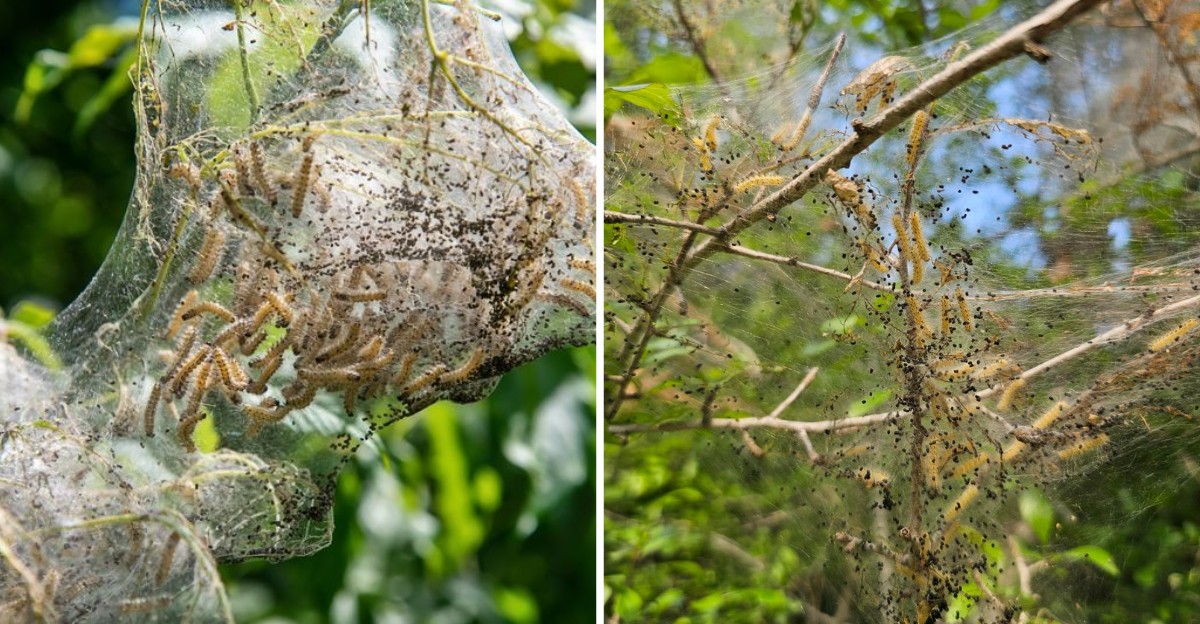
Late summer in Texas brings sticky heat, loud cicadas, and something strange draped across the branches overhead. From the road, it looks like somebody tossed old lace curtains high into the treetops.
Drive past a country fence line in September and you might count dozens of pale gray bundles. They shimmer slightly when the wind moves through, which somehow feels worse than staying perfectly still.
Neighbors argue about them at the feed store, and everybody seems to have a cousin with a theory. Some folks reach for a rake, some reach for the garden hose, and a few reach for matches.
Please set the matches down, because scorching your own shade tree is a rough way to win. Those branches already survived droughts, floods, hailstorms, and at least three regrettable pruning jobs.
A Native Caterpillar Is Behind Those Silk-Wrapped Branches
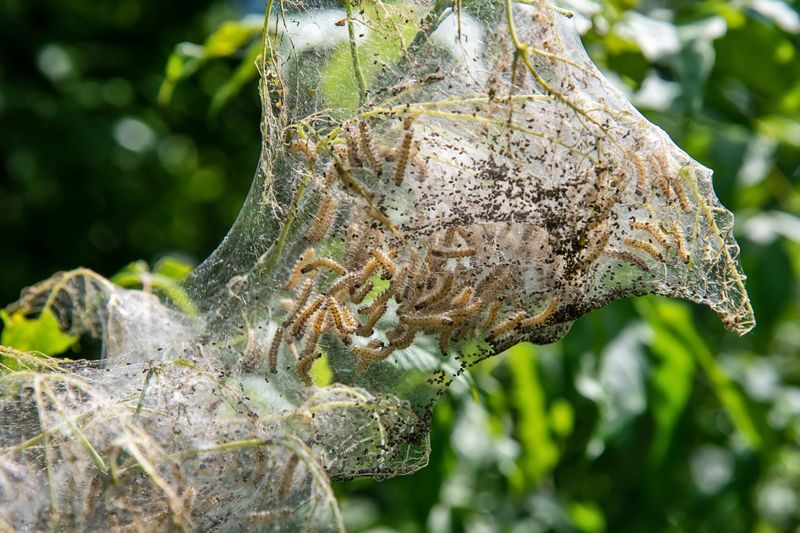
Hyphantria cunea sounds fancy, but most Texans just call the fuzzy little residents fall webworms. Despite the drama, they belong here and have chewed native trees for centuries.
Adult moths are snowy white, sometimes flecked with black dots, and about an inch across. They fly at night in spring and summer, looking for tender leaves to host their families.
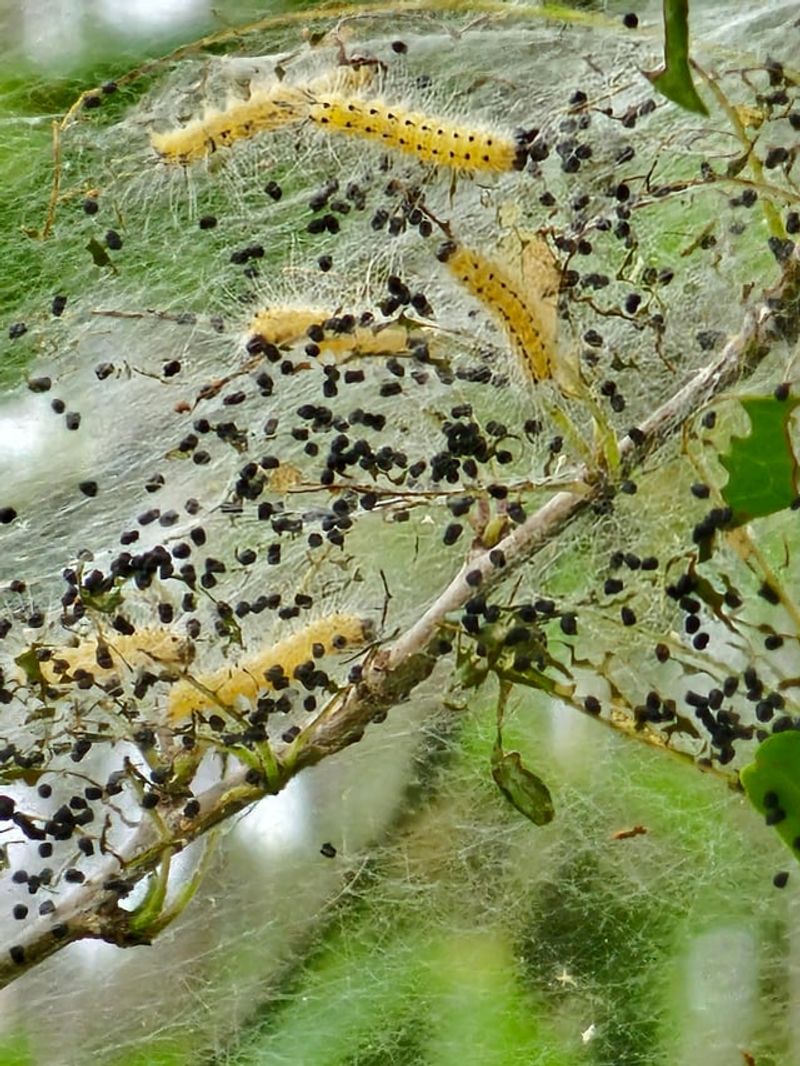
The caterpillars wear pale hair, dark stripes, and a pair of shiny dots down each side. Color varies, so hairy bodies inside webbing matter more than exact shading.
Unlike tent caterpillars, which build nests in branch crotches, these builders wrap the branch tips. Leaves stay trapped inside the silk, giving larvae both food and shelter from hungry birds.
Pecans, mulberries, persimmons, and walnuts rank among their favorite Texas menu items every single year. Hackberry and sweetgum get sampled too, though pecan growers complain loudest.
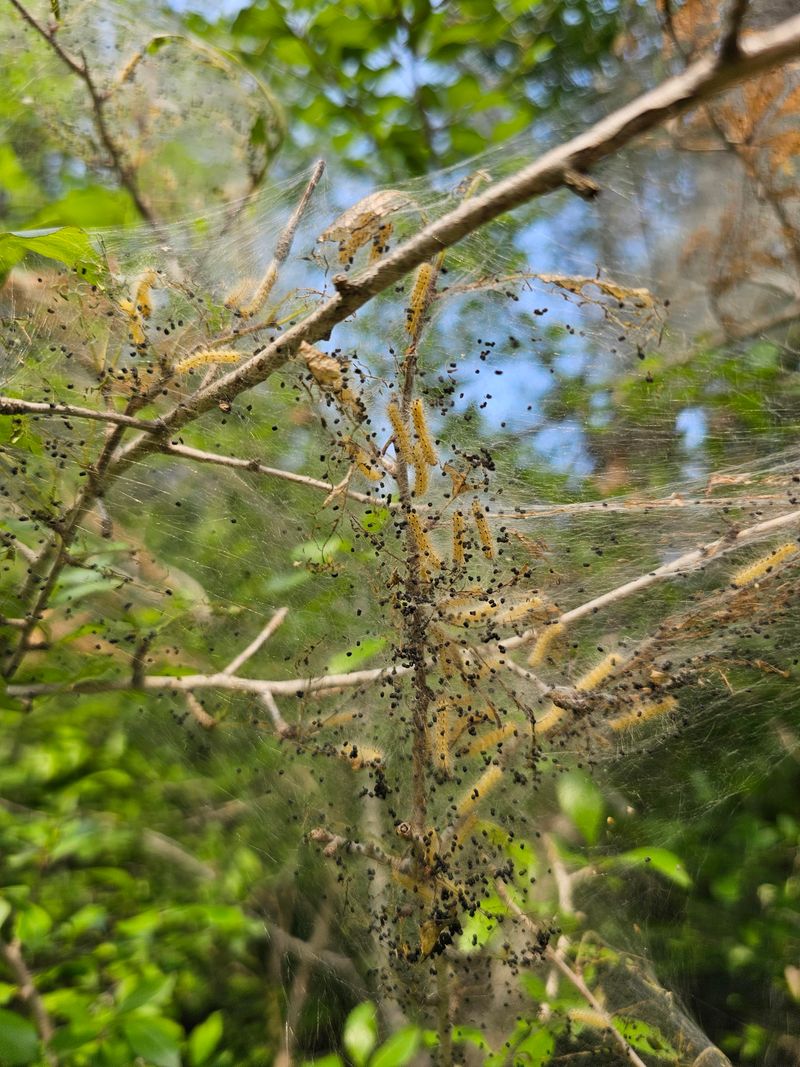
One nest can shelter hundreds of siblings munching together in a shaded, humid silk apartment. As food runs short, the crew expands the webbing outward instead of moving to cleaner branches.
Reputation aside, they rarely threaten a mature tree’s survival, because the damage arrives late. Leaves have already done most of their summer work by the time webs appear.
Recognizing the culprit correctly saves money, because bagworms and tent caterpillars need different timing. Peek inside the silk, spot the fuzzy stripes, and you have your answer.
Fun fact, this moth hitched a ride overseas and now causes headaches across Europe and Asia. Texas simply gets the homegrown version, complete with sticky silk and puzzled homeowners.
Second Generation Timing Across Texas In September
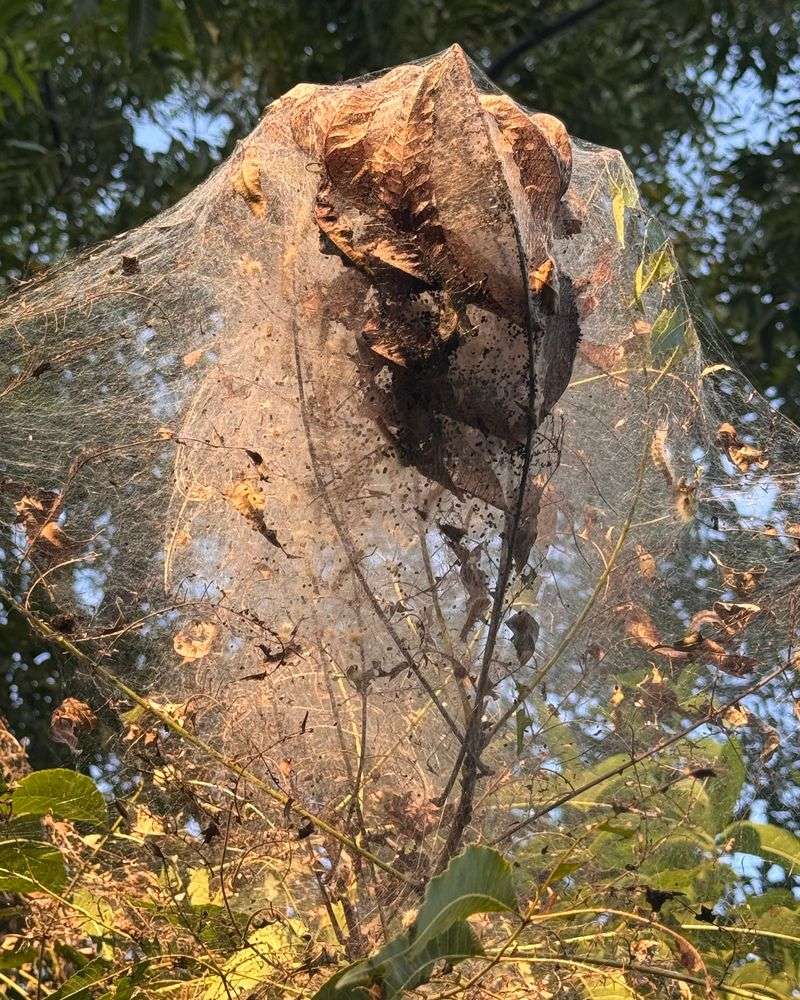
September is prime time, and that is no accident on the calendar. Texas usually sees two or three generations, with the final wave arriving as summer fades.
The first batch shows up in late spring, small and easy to overlook entirely. Few people notice those tiny nests, since leaves are thick and attention is elsewhere.
By August, moth numbers have multiplied, and egg masses cover leaf undersides across whole neighborhoods. Warm nights speed up development, which is one reason South Texas sees action sooner.
Those late nests look enormous because the caterpillars keep growing while the webbing keeps stretching. Add a month of feeding and one tidy pouch becomes a gray tangle across branches.
Your Texas Garden Changes Every Week. Your Plan Should Too.
Gardening in Texas changes quickly throughout the season. Every Friday you’ll receive a simple weekly plan showing exactly what to plant, prune, fertilize, harvest, and protect so you never miss the right timing.
Drought years can make things look worse, since stressed trees show damage more plainly. A tree already dropping leaves from heat has little cushion left for extra chewing.
Timing matters for control, because young caterpillars are far easier to handle than big ones. Once webbing thickens, sprays bounce right off the silk and rarely reach the diners inside.
Walk your trees weekly from July onward and check branch tips at eye level. Small nests spotted early can be snipped in seconds with ordinary hand pruners.
By October, most larvae drop down and tuck into bark crevices or leaf litter. They spend winter as pupae, waiting quietly for spring warmth to start the cycle again.
Cooler weather ends the feeding, so nests you see in November are empty leftovers. Rain and wind eventually shred them, though stubborn silk can hang on until spring.
Nest Growth From A Single Egg Mass
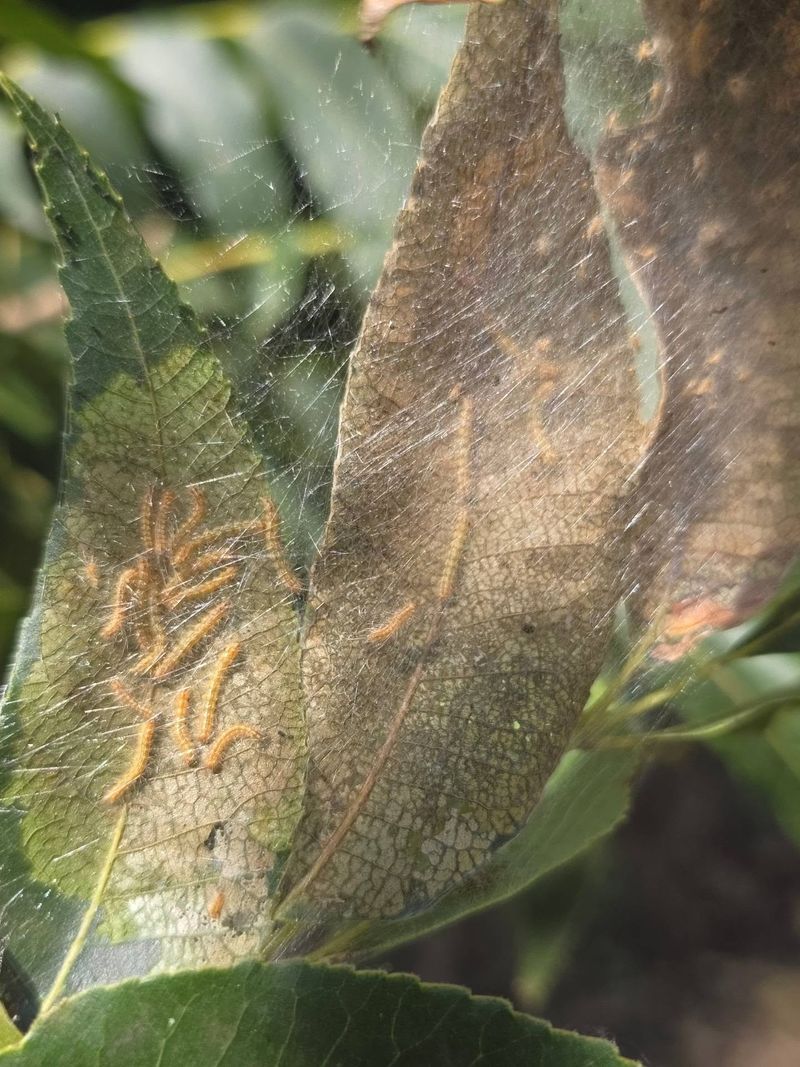
Picture one moth landing on a pecan leaf at dusk and leaving behind a fuzzy patch. That patch holds several hundred eggs, covered with scales from the mother’s own body.
Roughly a week later, the hatchlings begin feeding together on the leaf’s underside. They skeletonize the green tissue, leaving pale lace where a healthy leaf used to be.
Silk goes up almost immediately, because the group needs protection while eating in the open. Every time food runs out, the crew adds more webbing over fresh leaves nearby.
Nests can stretch three feet or longer by the end of a good feeding run. Inside, you will find shed skins, dark droppings, and chewed leaf stems packed together.
Wind carries young caterpillars on silk threads, which spreads the family to neighboring trees. Fence lines, pecan bottoms, and creek corridors act like highways for this ballooning travel.
Six weeks of growth turns a pinhead hatchling into a caterpillar over an inch long. Appetite grows with size, so the last stretch causes most of the visible damage.
Birds, wasps, and predatory stink bugs do pick off strays that wander outside the silk. The webbing exists mainly to keep those hunters from reaching the crowd inside.
Torn webbing helps nature along, since exposed caterpillars quickly become snacks for backyard wrens. A simple pole and a twist of the wrist can open the whole apartment.
Understanding the buildup explains the alarm, because nothing about it happens slowly at the end. One quiet leaf patch in July becomes a neighborhood spectacle by mid September.
Burning Nests And Other Costly Missteps
Every fall, somebody ties a rag to a pole, soaks it, and lights the tree. Fire crews across Texas can tell you exactly where that plan tends to end.
Flames scorch bark, damage the living tissue underneath, and invite borers and rot later. The caterpillars are temporary visitors, while a burned trunk carries that wound for decades.
Some people blast nests down with air rifles, which sounds efficient until you count the shredded branch tips. Broken limbs heal poorly and give fungal problems a convenient door into the wood.
Broad insecticide sprays create another headache by wiping out the wasps and beetles helping you. Fewer predators often means bigger outbreaks next season, which is a frustrating trade.
Spraying the outside of a thick nest mostly waterproofs it and wastes your product. Silk sheds liquid remarkably well, so the caterpillars inside barely notice the effort.
Panic pruning ranks high on the regret list, especially when growers remove healthy scaffold limbs. Cutting a major branch to reach one nest trades a small problem for permanent loss.
Ignoring young trees is the quieter mistake, since saplings have fewer leaves to spare. A newly planted pecan wrapped in silk deserves attention long before a sixty year old giant.
Home remedies like bleach, motor oil, or diesel damage bark and soil without helping. Neighbors swear by them anyway, usually while standing next to a very unhappy tree.
Patience beats drama here, because most established pecans shrug off the chewing by spring. Leaves return, nuts return, and the only lasting scar is often from the cure.
Practical Nest Removal For Backyard Pecan Growers
A twelve foot pole pruner handles more nests than any spray bottle in the shed. Snip the branch tip, drop the bundle, and step on it or bag it.
For nests you cannot cut cleanly, a stiff brush or rake tears the silk open. Exposed caterpillars become easy targets for birds, paper wasps, and heavy afternoon rain.
Strong water from a hose nozzle knocks smaller nests apart without touching your pruners. Aim upward, work from several angles, and expect a little debris in your hair.
Bacillus thuringiensis, sold as Bt, works nicely on small caterpillars when applied to opened webbing. Break the silk first, then spray, because coverage on the leaves does the job.
Spinosad offers another option and stays gentler on many beneficial insects than older chemicals. Read labels carefully, follow pecan specific instructions, and mind the harvest interval before picking.
Tall orchard trees rarely justify the effort or the ladder risk involved in reaching nests. Professional arborists have the equipment, and hiring one beats a trip off a wobbly rung.
Focus energy on young trees, grafted varieties, and anything under about fifteen feet tall. Those trees have the least leaf area to spare and the most to gain.
Timing your walk in the cool morning makes the work pleasant and the nests visible. Backlit silk glows against the sky, which turns scouting into an oddly satisfying chore.
Bag the removed nests rather than tossing them in a brush pile near trees. Curious caterpillars will happily crawl back up the trunk if you give them a chance.
Protecting Next Year’s Pecan Harvest
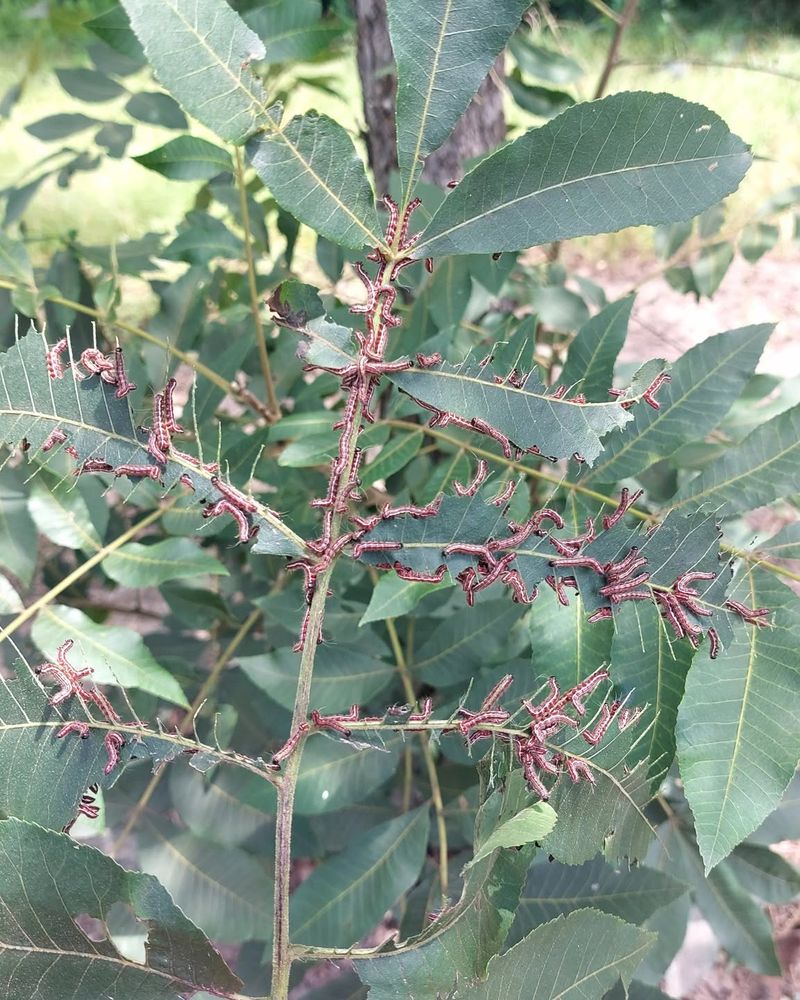
A mature pecan can lose a chunk of its canopy and still recover. September defoliation lands after most sugar production is finished for the growing season.
Nut fill can suffer when heavy webbing covers a large share of the branches. Kernels may come out thin, and next year’s crop can shrink after a rough autumn.
Repeated years of stress matter more than any single outbreak in a backyard orchard. Combine drought, poor soil zinc, and hungry caterpillars, and the tree starts running on empty.
Winter cleanup pays off nicely, so rake fallen leaves and haul off old nest debris. Pupae hide in that litter, and removing it trims the population near your trees.
Encourage the helpers by planting flowering herbs and letting paper wasps keep their nests. Those wasps patrol pecan foliage all summer and carry caterpillars home to their young.
Sticky bands on trunks catch some larvae traveling down to pupate in autumn. The trick works best on smaller trees with smooth bark and steady monitoring.
Healthy trees handle trouble better, so water deeply during dry spells and feed appropriately. A vigorous pecan pushes new leaves quickly and shrugs off damage that flattens weak ones.
Scouting in June and early July catches the first generation while nests remain tiny. Removing those few pouches reduces the moths laying eggs for the September wave.
Expect webs again next year, because this insect is a permanent part of Texas. Manage the young trees, tolerate the tall ones, and save your matches for the grill.