This Is Where Japanese Beetles Hit Michigan Fruit Trees First
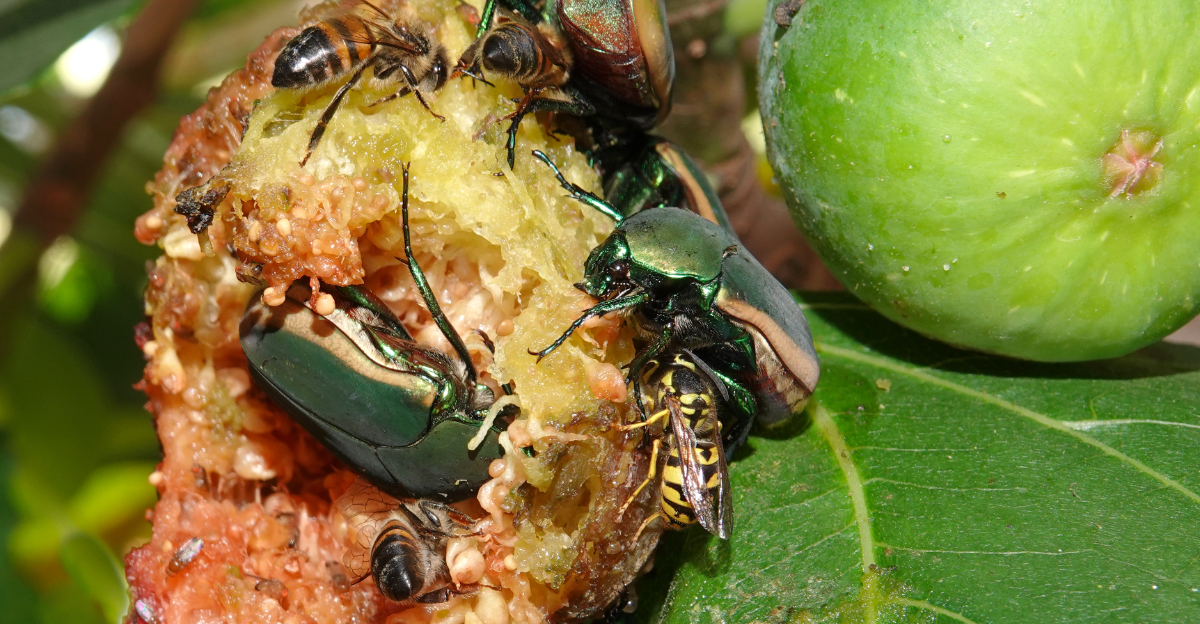
Japanese beetles tend to target the topmost leaves of fruit trees first, working their way downward as feeding continues throughout summer.
In Michigan orchards, this means checking the upper canopy regularly rather than waiting for damage to appear at eye level.
Beetles are drawn to sun exposed leaves, which tend to be softer and more nutrient dense compared to shaded foliage lower on the tree.
Apple, cherry, and plum trees are particularly popular targets, often showing skeletonized leaves within just a few days of heavy feeding.
Checking the top branches with binoculars can help catch an infestation before it spreads throughout the entire tree. Removing beetles by hand in early morning, when they’re less active, offers one of the most effective control methods available.
Treating soil for grubs in early fall helps reduce next year’s population before feeding even begins. Catching this pattern early protects the health and productivity of fruit trees throughout the rest of the season.
1. Check The Top Of The Tree First
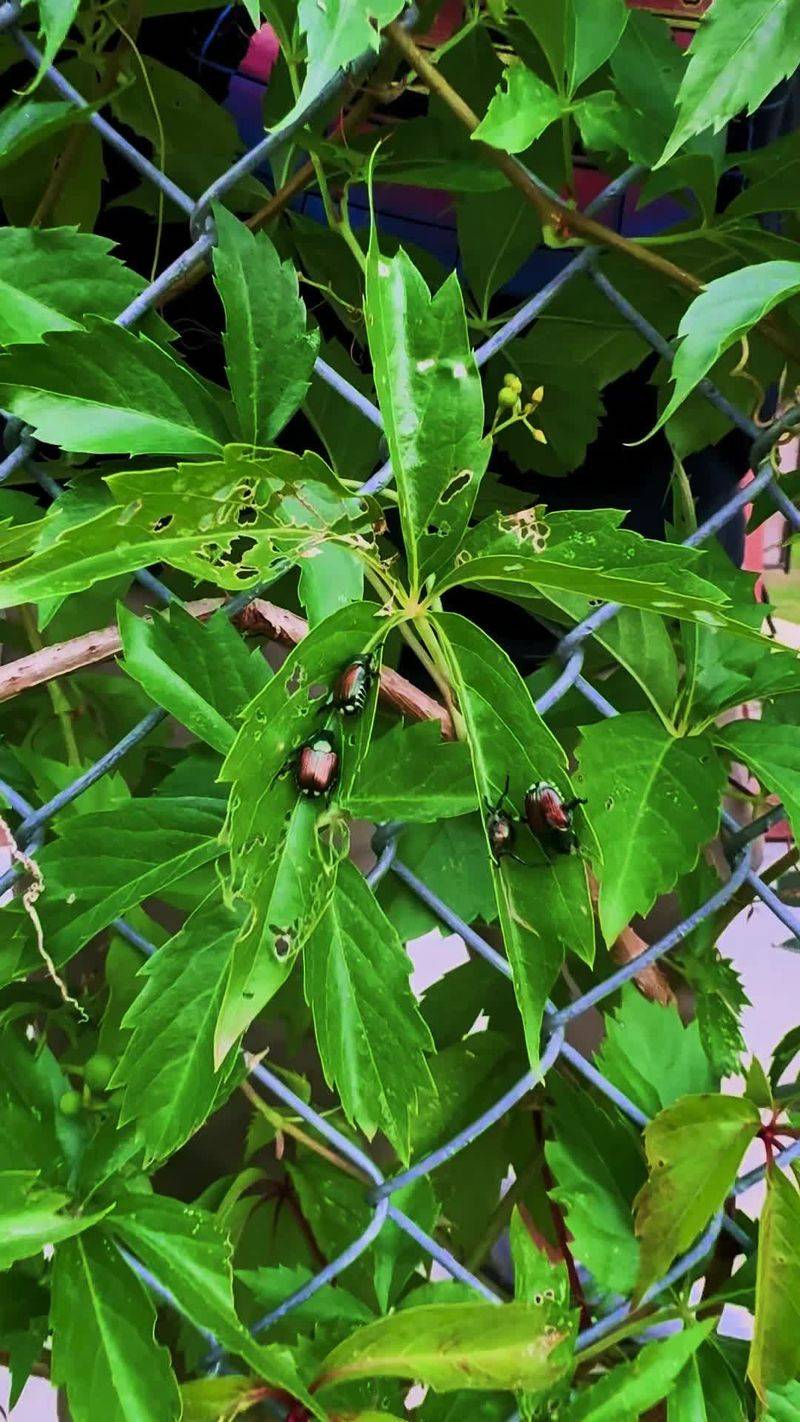
Most people look at eye level when they walk past their fruit trees. That habit can actually cause them to miss the first signs of Japanese beetle activity, because these insects almost always start feeding at the very top of the tree.
Understanding why they do this makes it a lot easier to stay ahead of the problem.
Japanese beetles are drawn to sunlight and warmth. The upper canopy of a fruit tree gets the most direct sun exposure throughout the day, which makes it the most appealing spot for these insects to land and begin feeding.
Warmer foliage tends to attract them faster, especially during the peak summer months of late June through August in Michigan.
Fruit trees like peaches, plums, and cherries are especially vulnerable at the top because that is where the youngest, most tender leaves often grow. Beetles prefer softer leaf tissue, and the upper canopy provides exactly that.
By starting there, a small group of beetles can cause noticeable damage very quickly before moving lower.
Getting in the habit of scanning the treetops regularly, even with binoculars if needed, can give you a major head start. Look for areas where foliage looks thinner, darker, or slightly ragged compared to the rest of the tree.
Those early visual clues often point directly to beetle feeding before the damage becomes widespread. A quick check every few days during beetle season can make a big difference in how well your trees hold up through the summer.
2. Inspect The Sunniest Outer Leaves
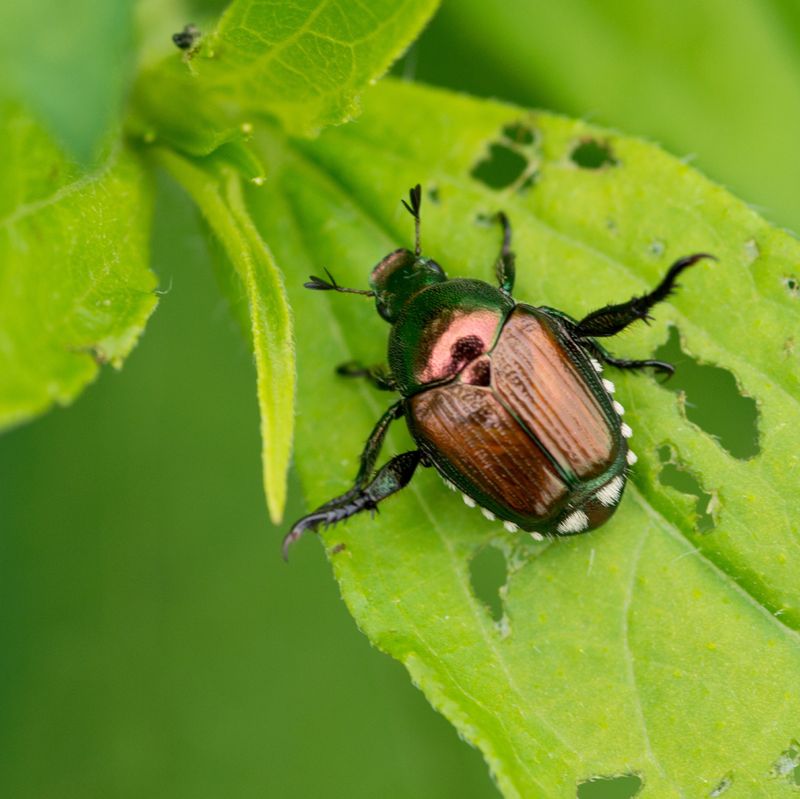
There is something almost predictable about where Japanese beetles choose to settle, and once you understand their preference for sunshine, scouting your trees becomes a lot more straightforward.
These insects are sun-seekers by nature, and they consistently target the warmest, most exposed parts of a fruit tree first.
The outer edges of the canopy receive the most direct sunlight throughout the day. Leaves growing on the outer portions of branches warm up faster in the morning and stay warmer longer into the afternoon.
Your Michigan Garden Changes Every Week. Your Plan Should Too.
Gardening in Michigan changes quickly throughout the season. Every Friday you’ll receive a simple weekly plan showing exactly what to plant, prune, fertilize, harvest, and protect so you never miss the right timing.
Japanese beetles are cold-blooded, meaning warmth directly affects how active and hungry they are. A sunny leaf on the outside of the tree is essentially the most attractive real estate available to them.
Michigan summers can get quite warm from July onward, which is right when Japanese beetle populations peak. During those hot, sunny stretches, checking the outermost leaves of your fruit trees should be part of your routine.
Apple, cherry, and plum trees are among the most commonly targeted species in the state, and their outer canopy leaves tend to take the first hit.
Pay close attention on calm, sunny mornings when beetles are most active. You might notice small groups already gathered on exposed leaves, feeding steadily.
Catching them at this stage, before they release aggregation pheromones that attract even more beetles, gives you the best chance to limit the overall damage.
A targeted response early on is far more effective than trying to manage a large infestation once it has spread across the whole canopy.
3. Look At The Upper Leaf Surface
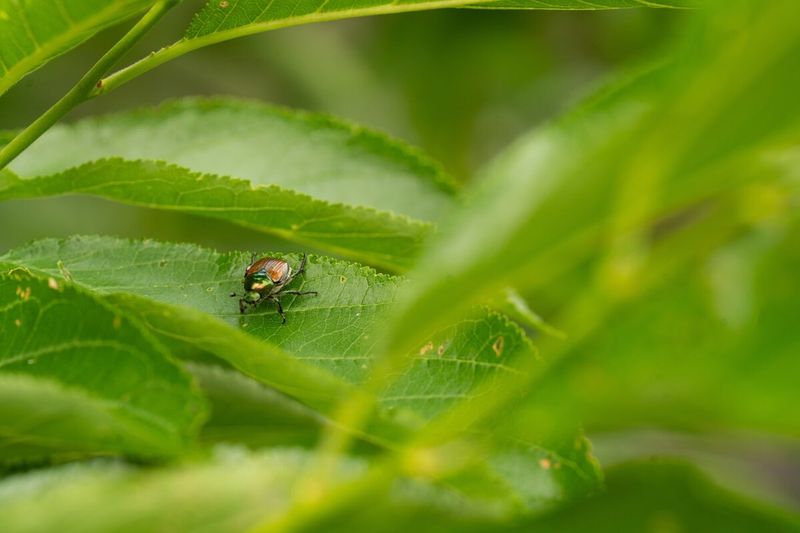
Flip a leaf over and you might find a caterpillar or aphid hiding underneath. But with Japanese beetles, you actually need to look at the top side of the leaf.
These insects feed from the upper surface, and knowing that small detail changes how you scout your trees and spot damage early.
Adult Japanese beetles use their mouthparts to chew through the softer tissue on the upper side of a leaf, leaving the tougher veins mostly intact.
This feeding style creates a very distinctive look that sets Japanese beetle damage apart from other types of insect feeding.
The top surface is where all the action happens, so that is exactly where to focus your attention during your inspections.
On Michigan fruit trees, this damage often appears first on leaves that are fully exposed to the sun, since those tend to be the ones beetles land on first.
Look for areas on the upper surface where the green color seems to be disappearing, replaced by a dry, papery texture.
That is the early stage of what eventually becomes full skeletonization if the beetles are not addressed.
Running your finger gently along the top of a leaf and feeling for rough or missing tissue can also help you detect early feeding before it becomes visible from a distance.
Training yourself to check the upper leaf surface as part of your regular scouting routine is one of the simplest and most effective habits you can build during Japanese beetle season in Michigan. It takes only seconds and can reveal a lot.
4. Watch For Skeletonized Leaves
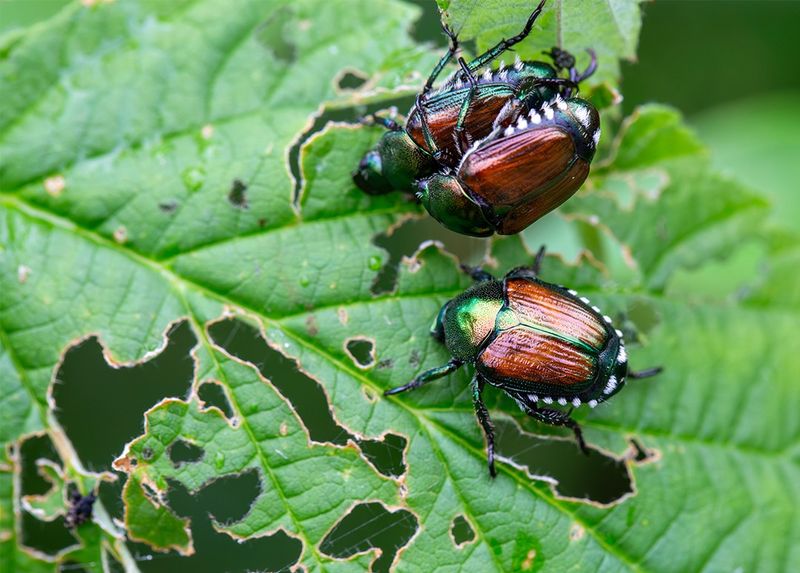
Few sights in the garden are as alarming as a fruit tree branch covered in what looks like tiny lace curtains hanging where healthy leaves used to be.
Skeletonized leaves are one of the clearest signs that Japanese beetles have been feeding on your tree, and learning to recognize this pattern quickly is a skill every Michigan fruit grower needs.
Japanese beetles eat the soft green tissue between the leaf veins but leave the veins themselves mostly untouched. The result is a skeleton-like structure where only the framework of the leaf remains.
From a distance, affected branches can look thin, brownish, or almost see-through compared to the healthy parts of the tree. Up close, the lacy pattern is unmistakable.
This type of damage spreads faster than most people expect. A small group of beetles can skeletonize multiple leaves within a single day, especially during warm weather when they are feeding most aggressively.
On fruit trees like apples, peaches, and cherries, skeletonized foliage means the tree loses its ability to photosynthesize properly in those areas, which can slow overall growth and weaken the tree over time.
Spotting the first few skeletonized leaves is actually a helpful alert. It tells you beetles are actively present and feeding right now, not just passing through.
Once you see that lacy pattern appearing on upper branches, it is time to take a closer look at the entire canopy and assess how widespread the feeding has become.
Early detection at this stage still leaves plenty of room for an effective response before further spread occurs.
5. Look For Beetles Feeding In Groups
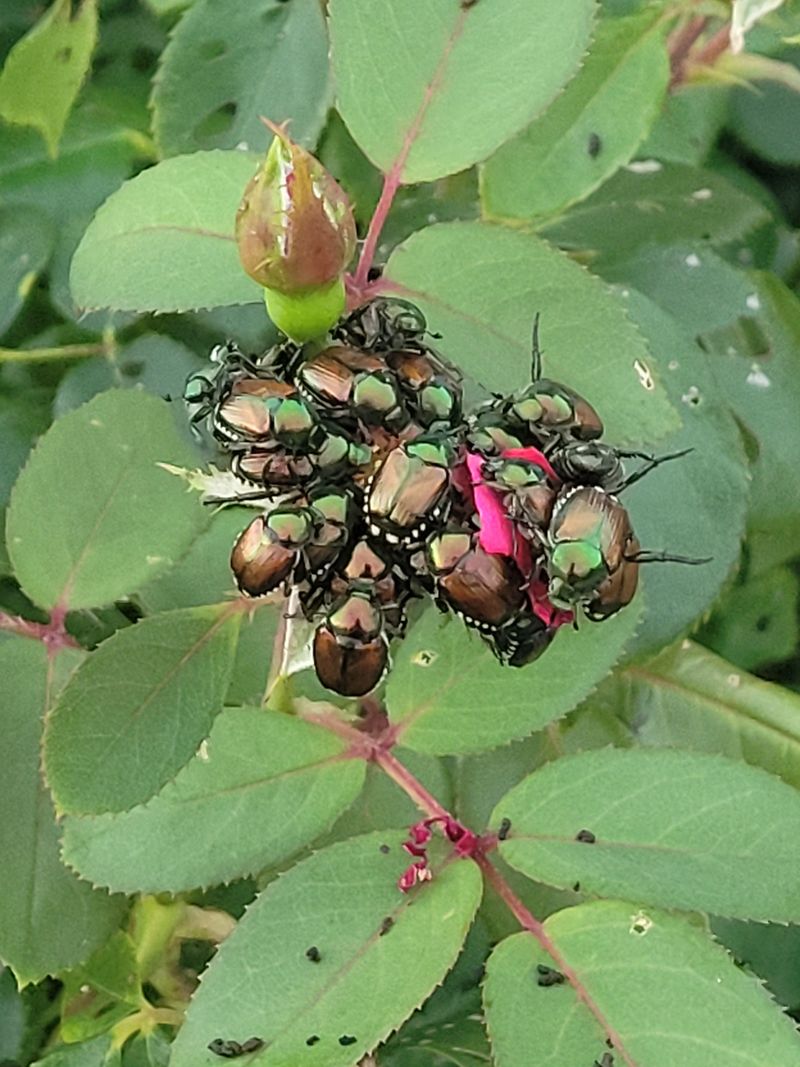
One Japanese beetle landing on your fruit tree might seem like a minor issue. But here is the thing: where one goes, others tend to follow.
Japanese beetles are known for their group feeding behavior, and understanding why they cluster together helps explain why damage can escalate so quickly once they get established on a tree.
When beetles feed, they release a natural chemical signal called an aggregation pheromone. This scent attracts other beetles in the area, encouraging them to join the feeding group.
What starts as one or two insects can turn into a dozen or more within a short time, all concentrated on the same branch or section of the canopy. That concentrated feeding is what causes the rapid and dramatic damage fruit growers often describe.
In Michigan, this group behavior tends to peak during July and into early August when beetle populations are at their highest.
Warm, sunny days intensify the activity, and a heavily infested branch can look noticeably worse by the end of a single afternoon compared to how it looked in the morning.
The visual contrast between a damaged cluster area and healthy surrounding foliage makes it surprisingly easy to spot once you know what to look for.
Checking your trees for groups of beetles, rather than searching for individual insects, is a much more efficient scouting strategy. A cluster of beetles on one branch is also a signal that nearby branches may soon attract more.
Responding quickly when you spot a feeding group can help reduce how much of the tree ends up affected before the season winds down.
6. Check Young Fruit Trees Closely
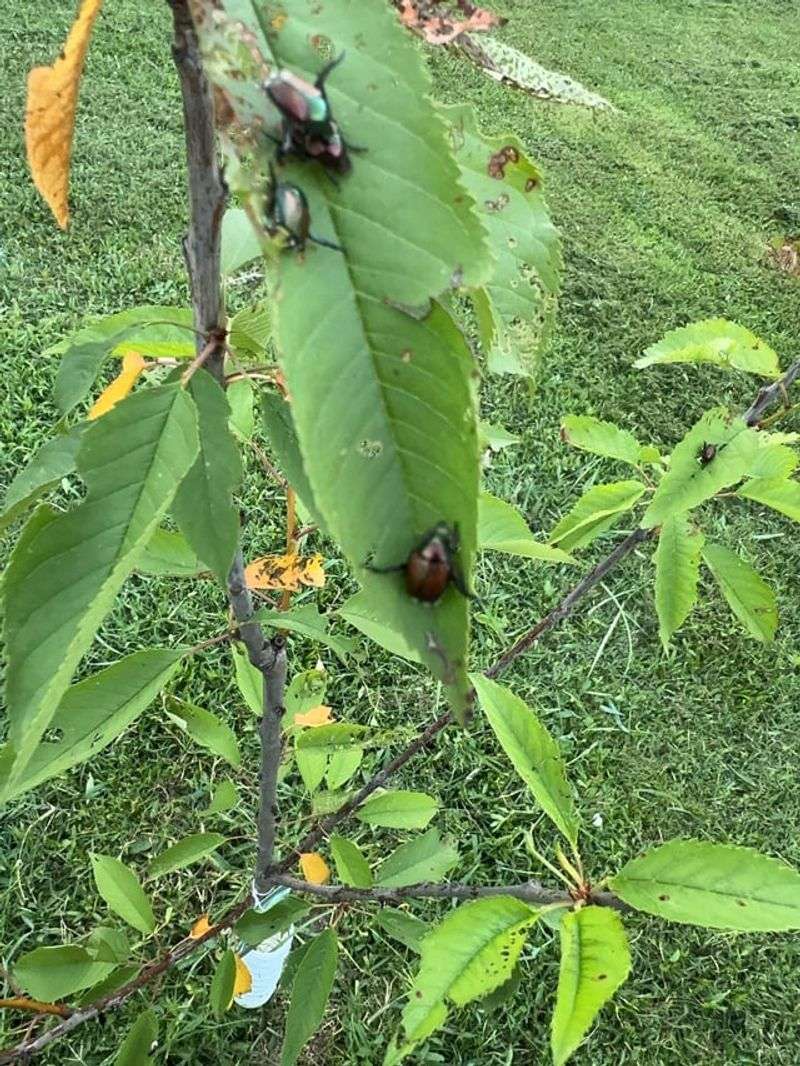
A mature apple tree with a full, dense canopy can absorb a fair amount of Japanese beetle feeding without suffering major setbacks. A young tree with only a handful of branches and a limited number of leaves is in a very different situation.
Every single leaf matters much more when a tree is still getting established, and that makes young fruit trees especially worth watching closely during beetle season.
Young trees in Michigan, particularly those planted within the last one to three years, are still building their root systems and developing the energy reserves they need to grow.
When Japanese beetles strip foliage from a young tree, it directly reduces the tree’s ability to produce food through photosynthesis.
Less leaf area means less energy, and less energy means slower recovery and weaker overall development going into the fall and following spring.
The damage threshold is simply lower for young trees. Losing twenty percent of the leaves on a large established tree is manageable.
Losing that same percentage on a young tree with limited foliage can genuinely set it back in ways that take a full growing season or more to recover from.
Growers who have invested time and money into establishing new trees have good reason to prioritize scouting them first.
Walk through your orchard or yard and pay extra attention to any trees you planted recently. Check the leaves carefully, especially near the top and outer edges where beetles tend to start.
Even a small number of beetles on a young tree warrants a prompt response to keep the foliage as intact as possible through the rest of the season.
7. Pay Attention Near Grassy Areas
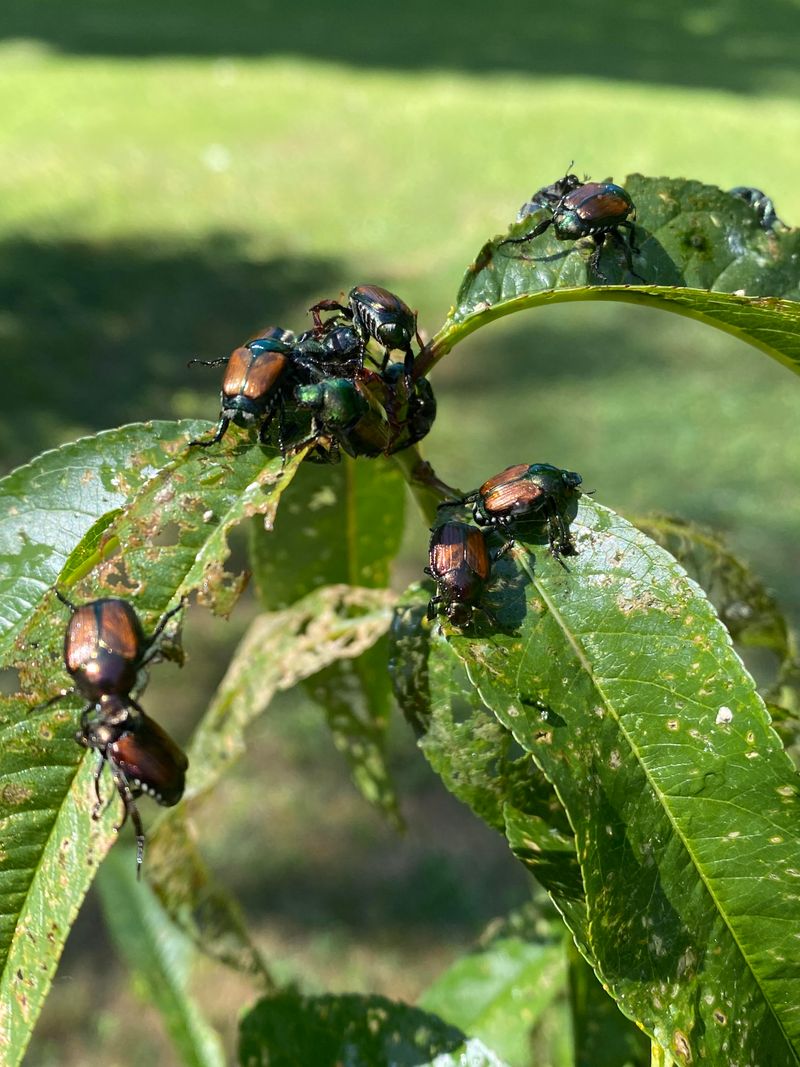
The location of your fruit trees matters more than most growers realize when it comes to Japanese beetle pressure.
Trees planted close to lawns, meadows, or other grassy areas often deal with noticeably higher beetle activity compared to trees in more isolated settings.
The reason goes back to where Japanese beetles spend the first stage of their lives.
Japanese beetles lay their eggs in the soil beneath grass during summer. The larvae, called grubs, live underground through fall and winter, feeding on grass roots.
When they mature into adult beetles the following summer, they emerge from the soil and immediately begin looking for food.
A fruit tree growing right next to a lawn is essentially positioned right next to a beetle nursery, making it one of the first targets as adults emerge.
Michigan lawns and grassy areas are common beetle breeding grounds, particularly in well-irrigated turf that stays moist through the summer.
Orchards or backyard fruit trees bordered by maintained grass often see beetles arrive earlier in the season and in larger numbers than trees surrounded by mulch, bare soil, or non-grassy groundcovers.
Keeping that connection in mind changes how you approach scouting. If your fruit trees sit near a lawn, make scouting those specific trees a top priority starting in late June.
Watch the lower branches first since newly emerged beetles often crawl up from the ground before flying.
From there they move upward and outward. Knowing your highest-risk trees ahead of time lets you focus your attention where it will matter most throughout the season.
8. Scout Before Damage Moves Down The Canopy
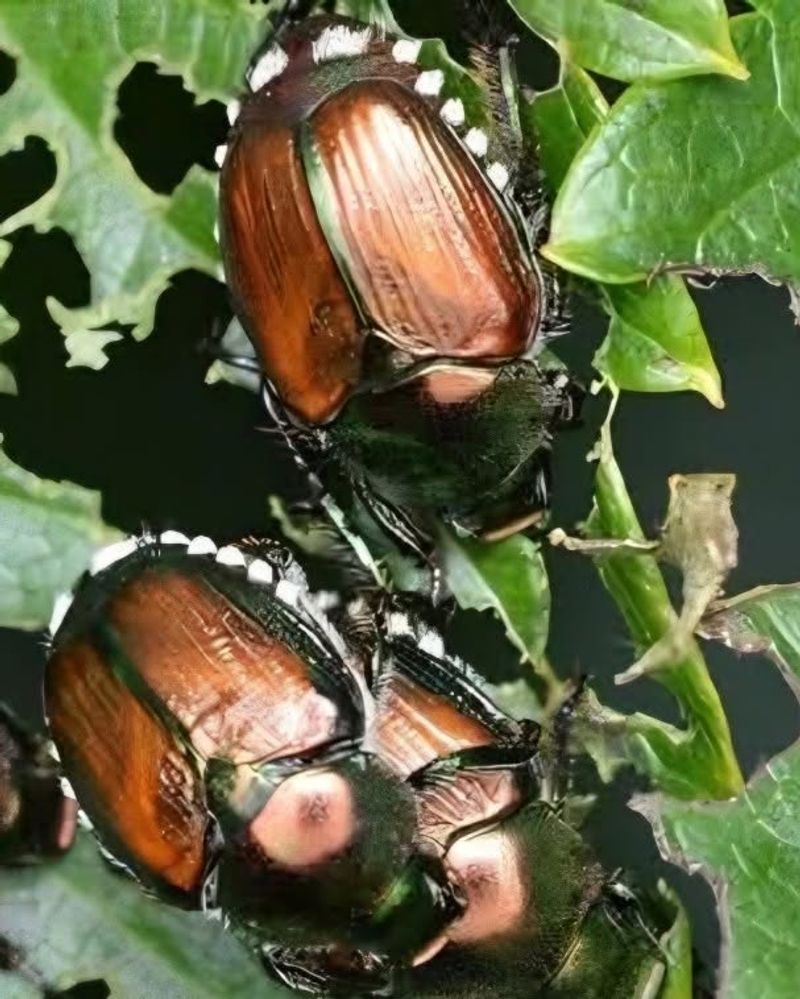
Timing is everything when it comes to managing Japanese beetles on fruit trees. These insects follow a fairly predictable pattern as they feed, starting at the top of the canopy and gradually working their way downward as upper foliage becomes depleted.
Catching them before that downward progression begins is one of the most effective things a grower can do.
The upper canopy is always the first zone to show feeding activity, as covered earlier in this article. But if beetles are left undisturbed, the damage does not stay in one place.
As the most exposed and accessible leaves get consumed, beetles move lower and inward through the tree, eventually affecting much larger portions of the canopy.
What begins as a manageable cluster at the top can become a widespread problem across the entire tree within one to two weeks during peak season.
Regular scouting, ideally every two to three days during July and early August in Michigan, gives you the best chance of catching beetle activity while it is still concentrated in the upper branches.
At that stage, the damage is limited, the beetles are more easily located, and your options for responding are broader and more effective.
Waiting until you notice widespread browning or thinning across the whole tree means the feeding has already progressed significantly.
Think of upper canopy scouting as your early warning system. A few minutes of careful observation near the treetops on a warm morning can reveal whether beetles are present, how many there are, and how urgently you need to respond.
Getting ahead of the downward spread is the single best strategy for keeping your Michigan fruit trees healthy through the entire beetle season.