Peace Lily Turning Brown Since the Furnace Kicked On in Michigan? Here’s Why
A running furnace can drag indoor humidity down below 30 percent, drier than some desert afternoons. That number surprised me the first time I checked a cheap hygrometer in my own living room.
Now think about a houseplant from tropical rainforest floors in Central and South America. It grew up in steamy shade, surrounded by damp leaves and moist air. Then it lands on a Michigan windowsill in November.
I know how frustrating it can be when glossy green leaves suddenly grow crispy tan tips. You water more, you fuss more, and the browning keeps creeping along the edges anyway.
Here’s something you might not expect. Extra water is rarely the fix, and sometimes it makes things worse. The real question is what changed in your house the week the heat came on, and how a few small tweaks can turn it around.
1. Those Crispy Peace Lily Leaf Tips Started With the First Cold Snap
Timing tells a big part of this story. If your plant looked fine all summer and the brown tips showed up a week or two after the heat came on, the furnace is your top suspect.
Forced-air heating warms cold outdoor air that holds very little moisture to begin with. Once that air heats up, its relative humidity drops sharply, often landing somewhere between 20 and 30 percent in Michigan homes during winter.
Peace lilies, known to botanists as Spathiphyllum, evolved on humid tropical forest floors where the air stays moist most of the year.
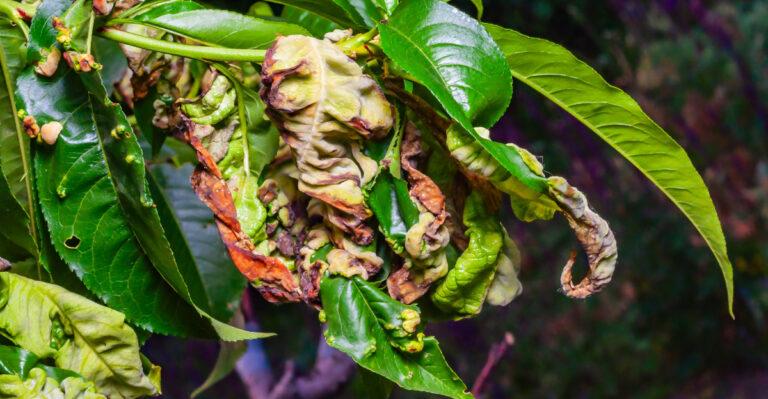
Leaves lose water through tiny pores in a process called transpiration. In dry air, that water escapes faster than roots can replace it. The farthest points from the roots, the tips and edges, run short first, so they dry out and turn brown.
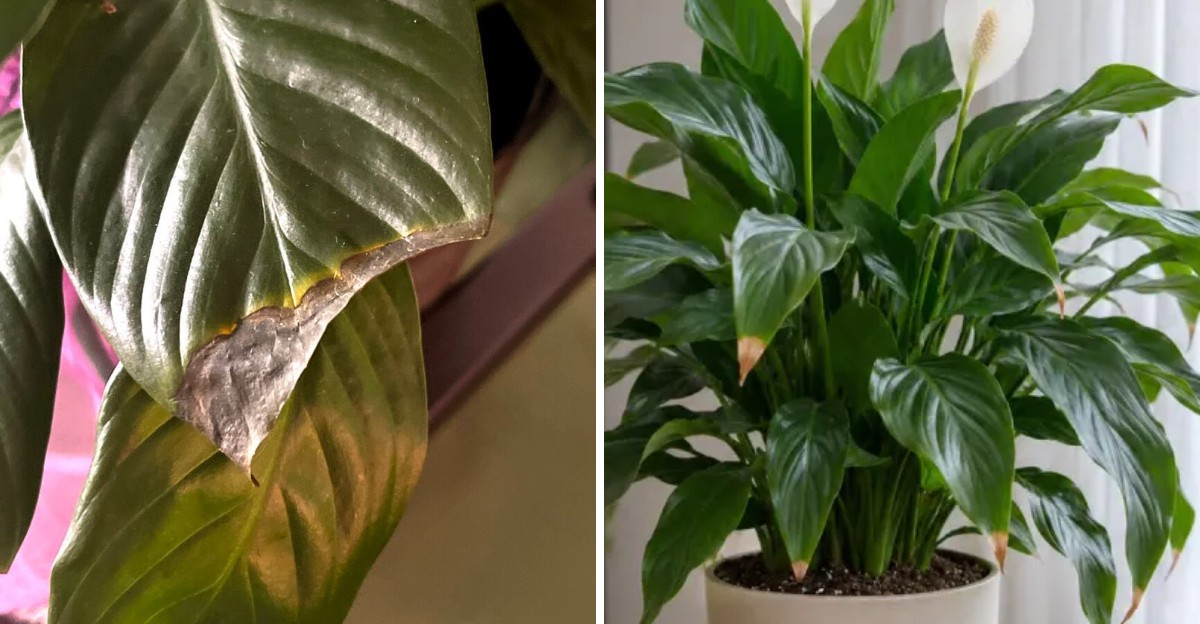
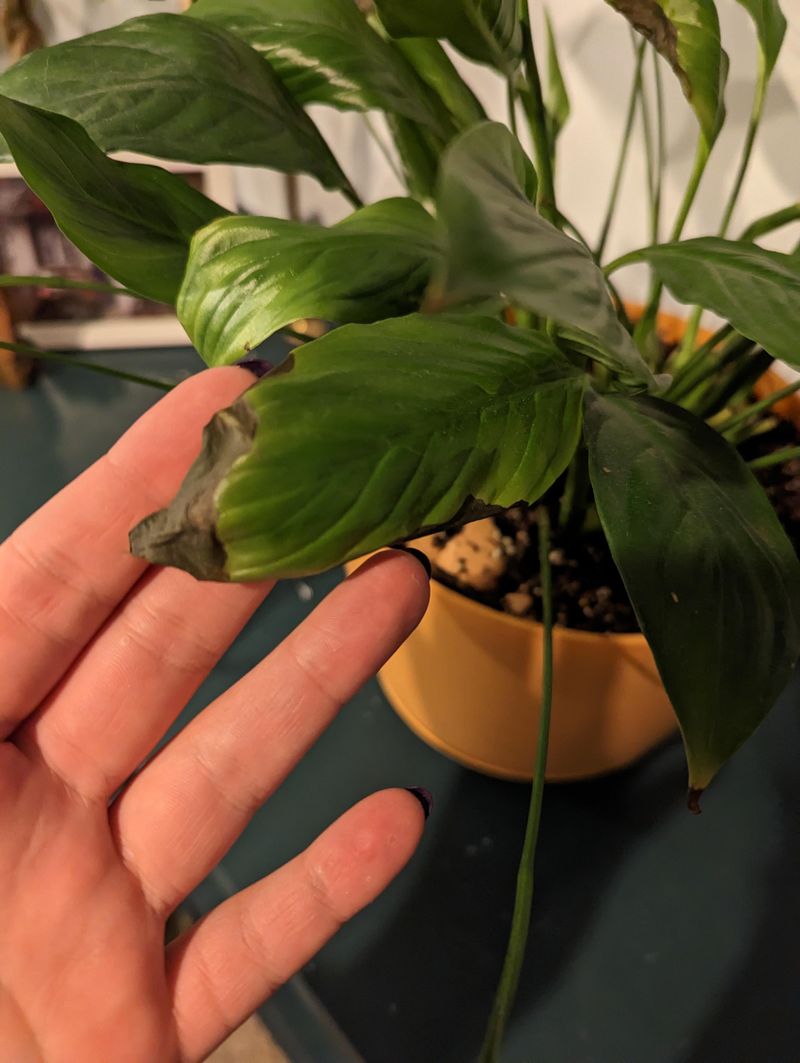
I find it helpful to notice the pattern. Furnace damage usually shows up as tan or brown tips with a clean line where green tissue begins. The rest of the leaf often stays glossy and healthy.
Pick up an inexpensive digital hygrometer and set it near your plant for a day. Seeing the actual number takes the guesswork out of everything. If it reads under 35 percent, you have found your main clue, and the fixes are easier than you might think.
2. A Small Humidifier Near Your Peace Lily Changes Everything
Ask any indoor plant fan who has wintered tropical plants in the Great Lakes region, and most will point you to a humidifier. It is the most reliable way to put moisture back into the air your peace lily breathes.
Aim for indoor humidity between 40 and 60 percent. That range keeps the plant comfortable and is also friendly for people, since very dry air can bother skin, lips, and sinuses.
Going much higher than 60 percent in a cold climate can cause condensation on windows, which may lead to mold on frames and sills.
A small cool-mist unit placed a few feet from the plant works well. You do not want it blasting mist straight onto the leaves all day, because constantly wet foliage can invite leaf spot problems.
Clean the tank often, following the maker’s directions. Dirty humidifiers can grow bacteria and mold. If your tap water is hard, distilled water helps prevent the fine white dust some ultrasonic models spray around.
Fun fact: misting a plant by hand only raises humidity for a few minutes. It feels helpful, but the effect fades fast. A humidifier running steadily does far more good with much less effort on your part.
3. Move That Peace Lily Pot Away From Heat Vents and Drafty Windows
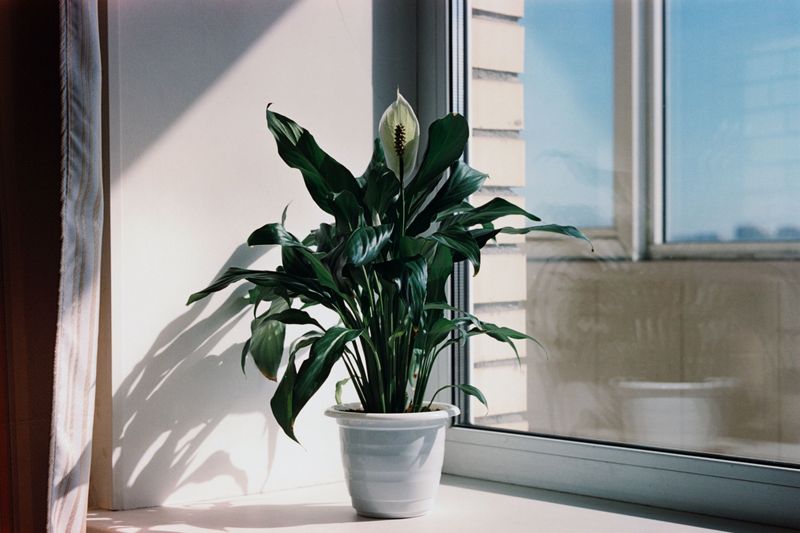
Location can matter as much as the overall air. A peace lily parked beside a floor register gets hit with bursts of hot, bone-dry air every time the furnace cycles on.
Those blasts dry out leaf tissue far faster than the rest of the room. Radiators, baseboard heaters, and space heaters create the same harsh pocket of air. I like to hold my hand where the plant sits while the heat runs.
If I can feel warm air moving, the plant can too. Cold spots cause trouble as well. Peace lilies prefer temperatures roughly between 65 and 80 degrees Fahrenheit, and they dislike chills below about 55 degrees.
Leaves pressed against frosty glass or sitting near a drafty door may develop dark, damaged patches. Try placing your plant several feet from vents and a little back from windows.
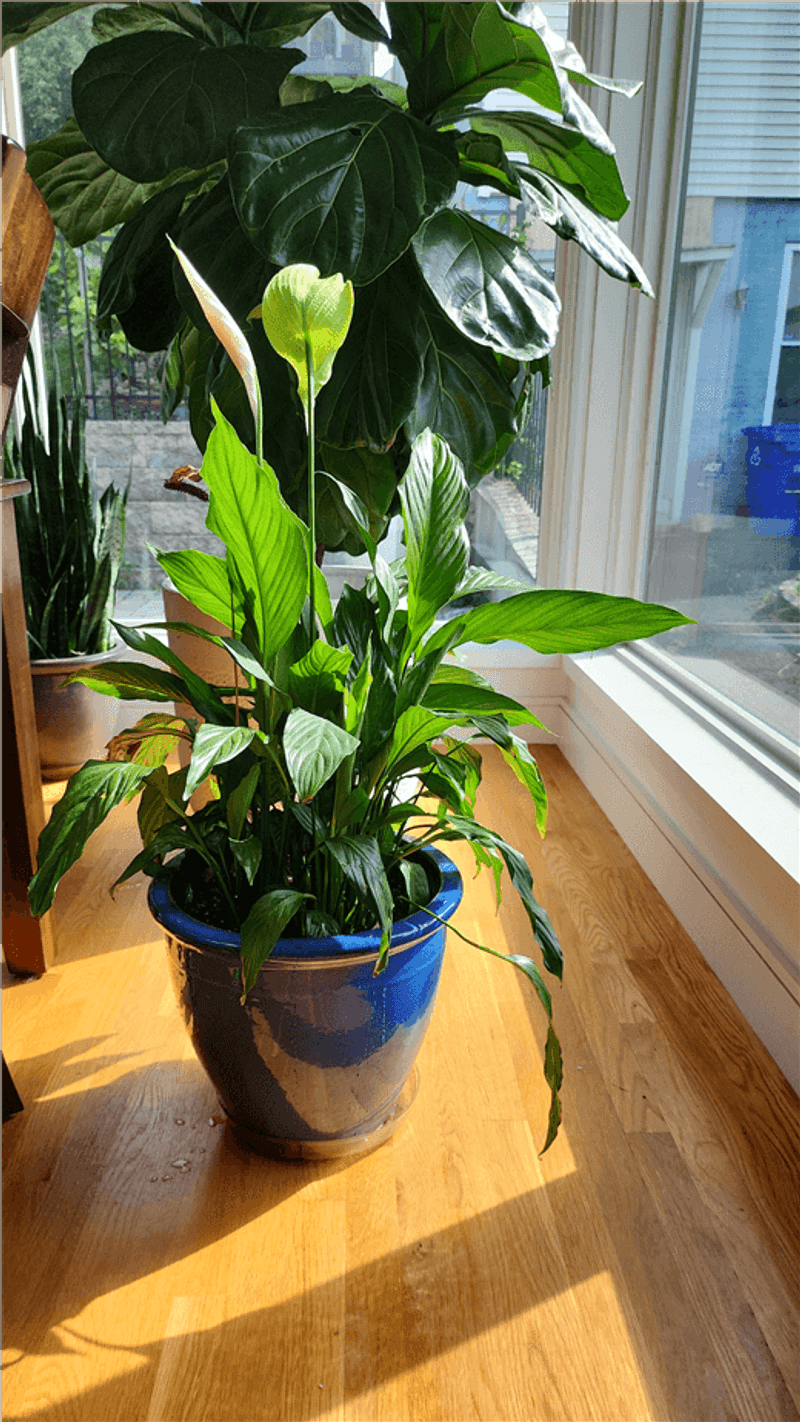
A spot with bright, indirect light, such as near an east or north window, usually works nicely in winter. Keep in mind that Michigan winter sun is weaker and days are short, so a slightly brighter location than summer can help.
Just avoid strong direct afternoon sun hitting the leaves through glass. That steady, gentle middle ground keeps leaves greener through the cold months.
4. Pebble Trays and Plant Groupings Give Peace Lilies a Little Extra Moisture
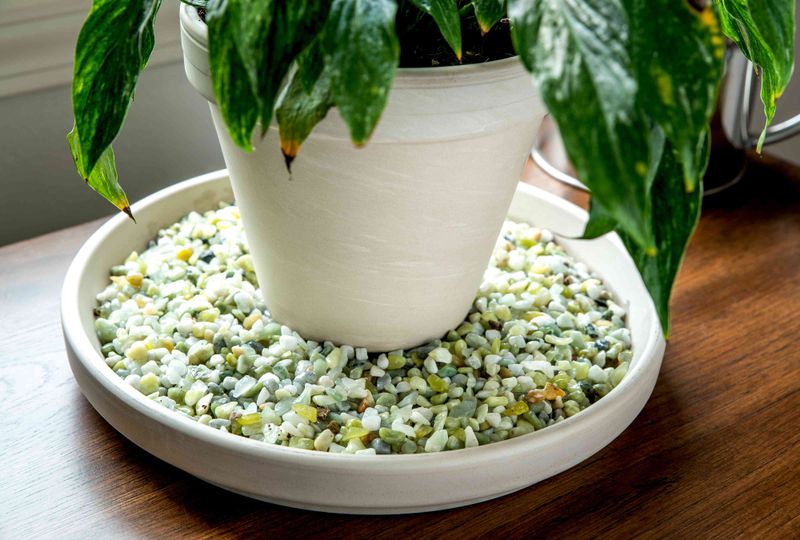
No humidifier? No problem, at least not a big one. A few old-school tricks can soften the dry air around your plant, even if they work on a smaller scale.
A pebble tray is simple to build. Fill a shallow tray with gravel or decorative stones, then add water until it sits just below the top of the pebbles. Set the pot on the stones so the bottom stays out of the water, since roots sitting in water can rot.
As the water evaporates, it adds a bit of moisture right around the leaves. Research suggests the boost is modest, so think of it as a helper rather than a cure. Refill the tray every few days, because dry heat empties it quickly.
Grouping plants helps in a similar way. Leaves release water vapor, and a cluster of houseplants creates a slightly damper pocket of air together. Ferns, calatheas, and pothos make friendly neighbors for a peace lily.
Bathrooms and kitchens tend to run more humid, too. If your bathroom has a window with decent light, it can be a cozy winter home. I enjoy the little tropical corner this creates, especially when snow piles up outside.
5. Watering Your Peace Lily Less Often Can Actually Help in Winter
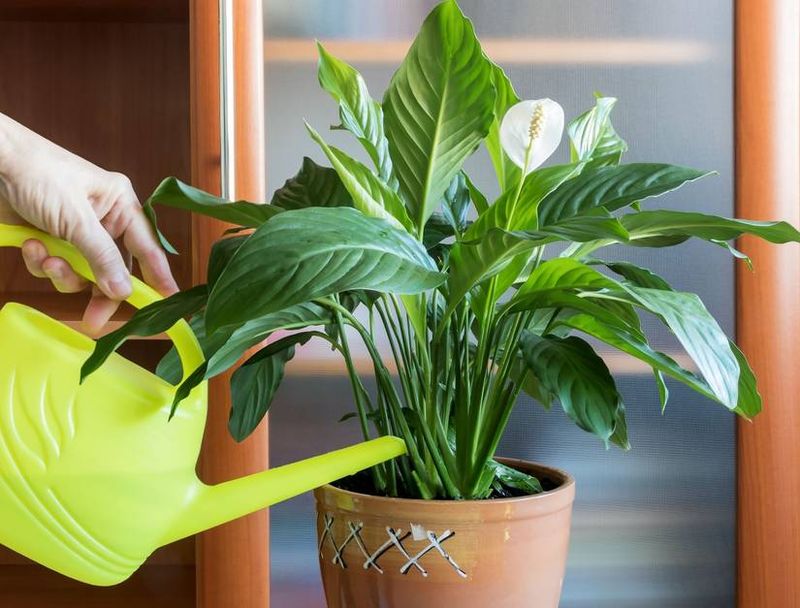
Brown tips make most of us reach for the watering can. It feels like the caring move. Yet soggy soil can brown leaves just as easily as dry soil.
Plants grow more slowly in winter because days are shorter and light is weaker. Slower growth means the roots use less water. If you keep a summer schedule, the soil may stay wet for days, and roots sitting in soggy mix can rot.
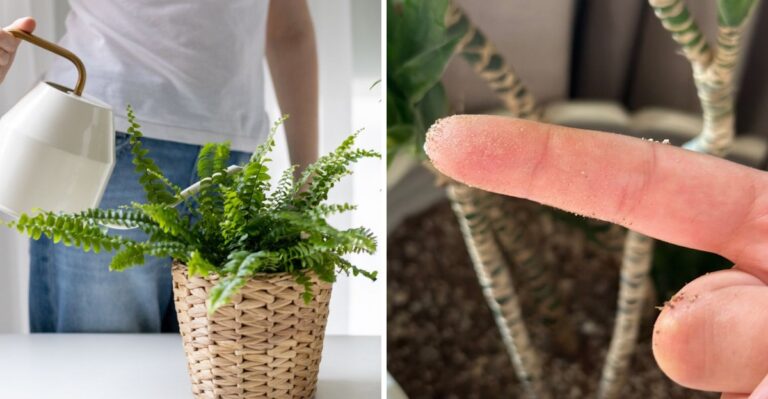
Damaged roots can’t move water up to the leaves, so the tips brown anyway. Skip the calendar and use your finger instead. Push it an inch or two into the soil.
If it feels dry, water slowly until it runs out the drainage holes, then empty the saucer within a few minutes.
Peace lilies also send a handy signal. They droop dramatically when thirsty and usually perk back up within hours of a drink. Still, try not to let them wilt often, since repeated wilting stresses leaves.
Use room-temperature water instead of icy water straight from the tap. Make sure the pot has drainage holes, too. A decorative pot with no holes is one of the sneakiest causes of winter root trouble I see.
6. Tap Water and Fertilizer Salts Can Brown Peace Lily Edges Too
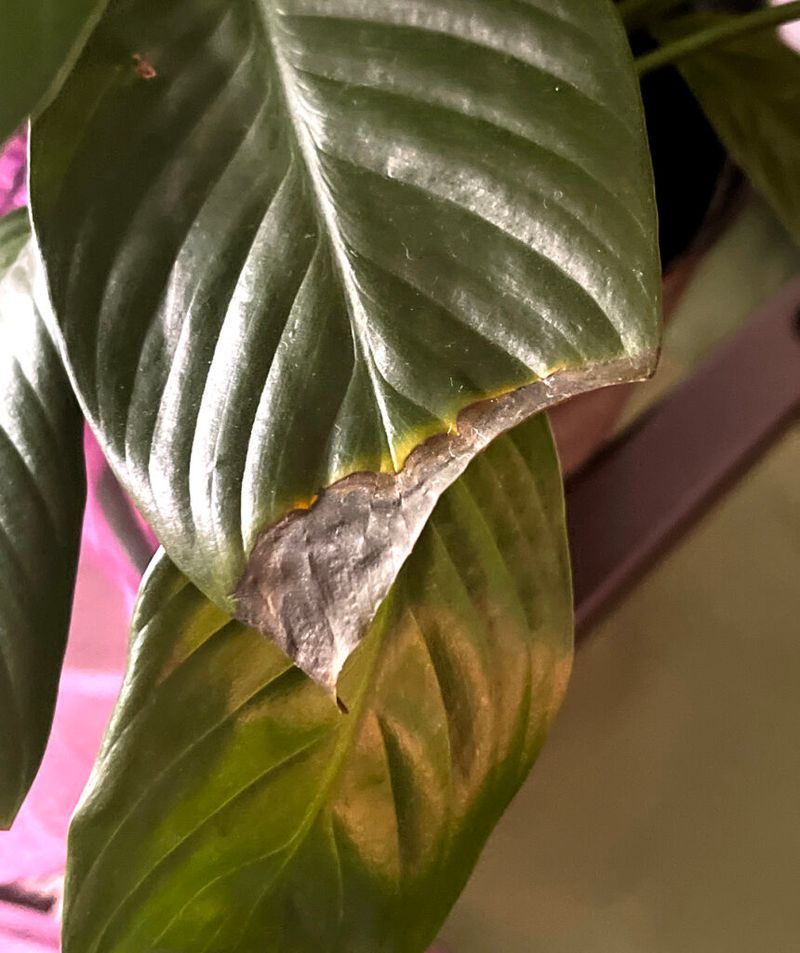
Dry air gets most of the blame, but it often has partners. Peace lilies are known for reacting to dissolved minerals and salts that build up in their soil over time.
Many guides mention fluoride and chlorine in municipal water as triggers for brown tips. Letting tap water sit out overnight can help chlorine escape, though it won’t remove fluoride or chloramine.
If browning keeps returning, try filtered, distilled, or collected rainwater for a few months and watch what happens.
Fertilizer is another common cause. Extra plant food leaves salts behind, and those salts pull moisture away from roots. A white or tan crust on the soil surface or pot rim is a telltale clue.
The fix is called leaching. Take the plant to a sink or tub and slowly run plenty of water through the soil, letting it drain freely. Do this every few months to flush out buildup. Hold off on feeding during winter.
Most peace lilies do fine with a diluted, half-strength fertilizer every month or two in spring and summer only. Here is a fun detail: in the wild, these plants live on forest floors with fairly modest nutrients, so they rarely need heavy feeding.
7. Reading the Brown Spots on Peace Lily Leaves Like a Clue Sheet
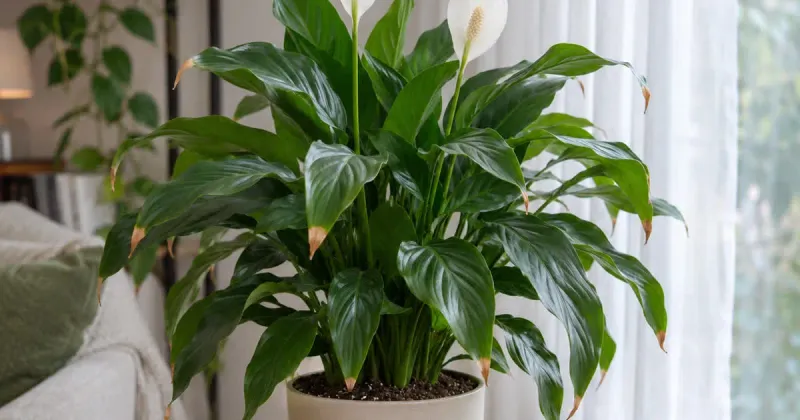
Think of your plant’s leaves as a mood ring. The shape, color, and spot of the browning often point toward the cause.
Crispy tan tips with green leaves behind them usually suggest low humidity, mineral sensitivity, or both. That pattern fits the classic furnace story. Brown edges with a white crust on the soil lean toward fertilizer salts.
Soft, dark brown areas, mushy stems, or a sour smell from the soil point to overwatering and possible root rot. Gently slide the plant from its pot and check. Healthy roots look firm and pale, while rotted roots feel slimy and dark.
Yellow leaves with brown patches can mean several things. Older lower leaves naturally yellow and fade with age, which is normal. Lots of yellowing at once often ties back to watering trouble.
Scorched, bleached, or papery patches in the middle of a leaf may come from direct sun or a cold window. Small speckles plus fine webbing could mean spider mites, which love dry indoor air. Wipe leaves and check undersides closely.
Once you spot the pattern, trim brown tips with clean scissors, following the leaf’s natural shape. The browned parts won’t turn green again, but new growth will show your progress.
8. A Simple Winter Routine Keeps Your Peace Lily Green Until Spring
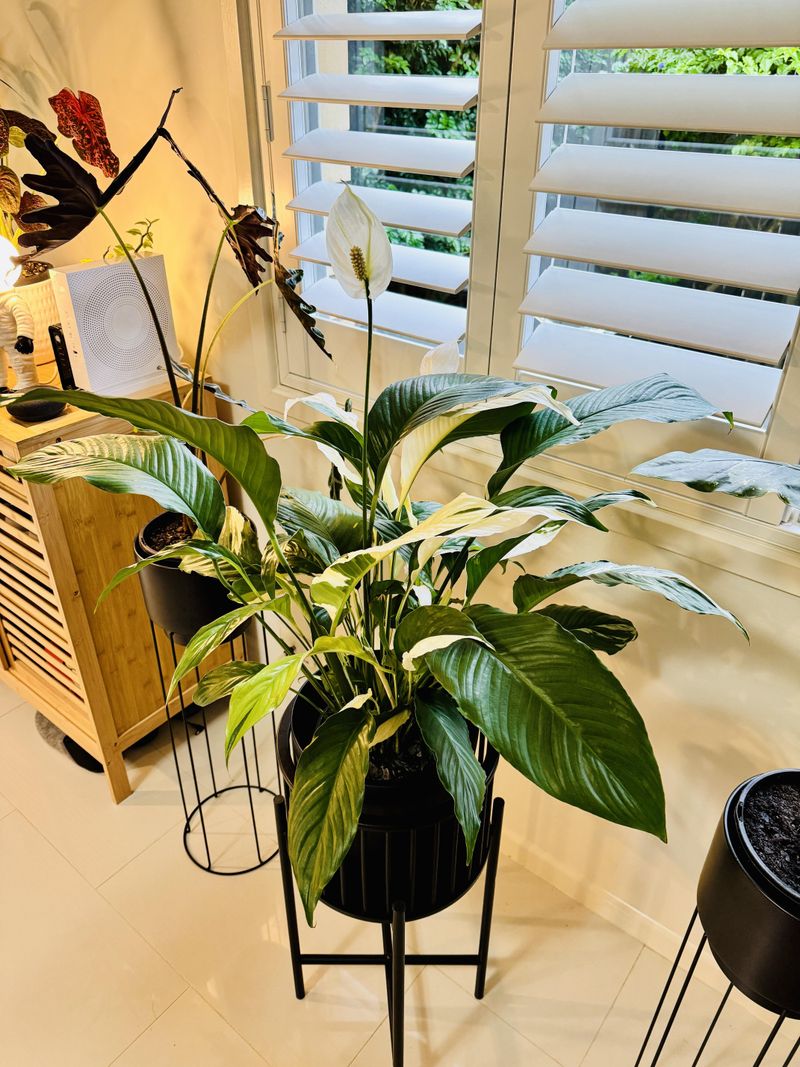
Winter in Michigan often stretches from November into April, so a steady routine beats emergency fixes. The goal is small, repeatable habits that work alongside your furnace instead of against it.
Start with a weekly check. Glance at your hygrometer, feel the soil, and look over the leaves, including the undersides. Five minutes is plenty.
Keep humidity in that 40 to 60 percent zone with a humidifier, a pebble tray, or a cozy plant cluster. Keep the pot away from vents, radiators, and icy glass. Water only when the top inch or two feels dry.
Wipe dusty leaves with a damp cloth every few weeks. Dust blocks light, and winter light is already in short supply. Clean leaves also make it easier to notice pests early.
Save repotting and regular feeding for spring, when longer days return and new growth kicks in. That’s when your plant can recover fastest. I love how forgiving these plants are.
A few brown tips don’t mean failure, they’re simply feedback. With steady care, fresh leaves usually unfurl green and glossy, and many peace lilies reward patient owners with those elegant white blooms once spring light returns.