This Is Why Your Ohio Cantaloupe Splits Before You Can Pick It
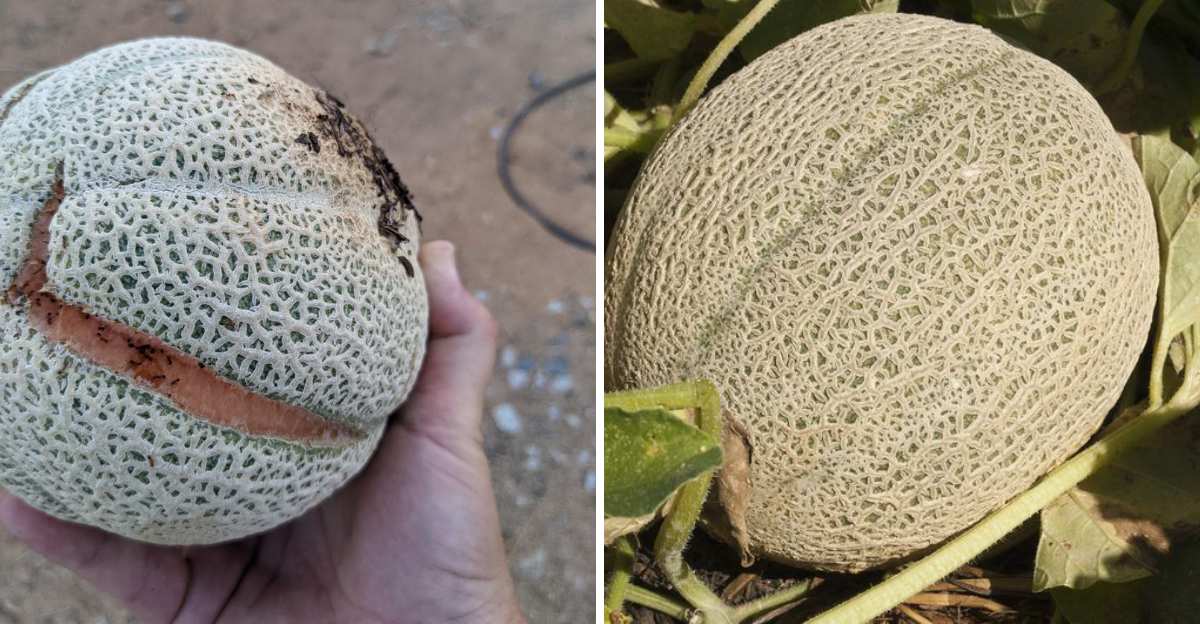
You watched that cantaloupe for weeks. Checked it every morning like it owed you something.
The skin started turning, the smell got sweeter, and you thought, “two more days.” You walk out to finally harvest it and find a crack running straight down the middle like the garden just played a cruel joke on you.
Every Ohio cantaloupe grower has lived that exact moment, and it stings every single time.
Here’s the thing most gardening articles won’t tell you straight: splitting has almost nothing to do with bad luck and everything to do with a few very specific, very fixable mistakes happening underground and overhead.
Ohio’s wild weather swings are partly to blame, sure.
But your watering habits, your soil, and even your mulch are likely the real culprits working against you. The good news?
Once you understand exactly what triggers a split, you can stop it cold.
1. Let Sudden Rain Explain The Split Rind
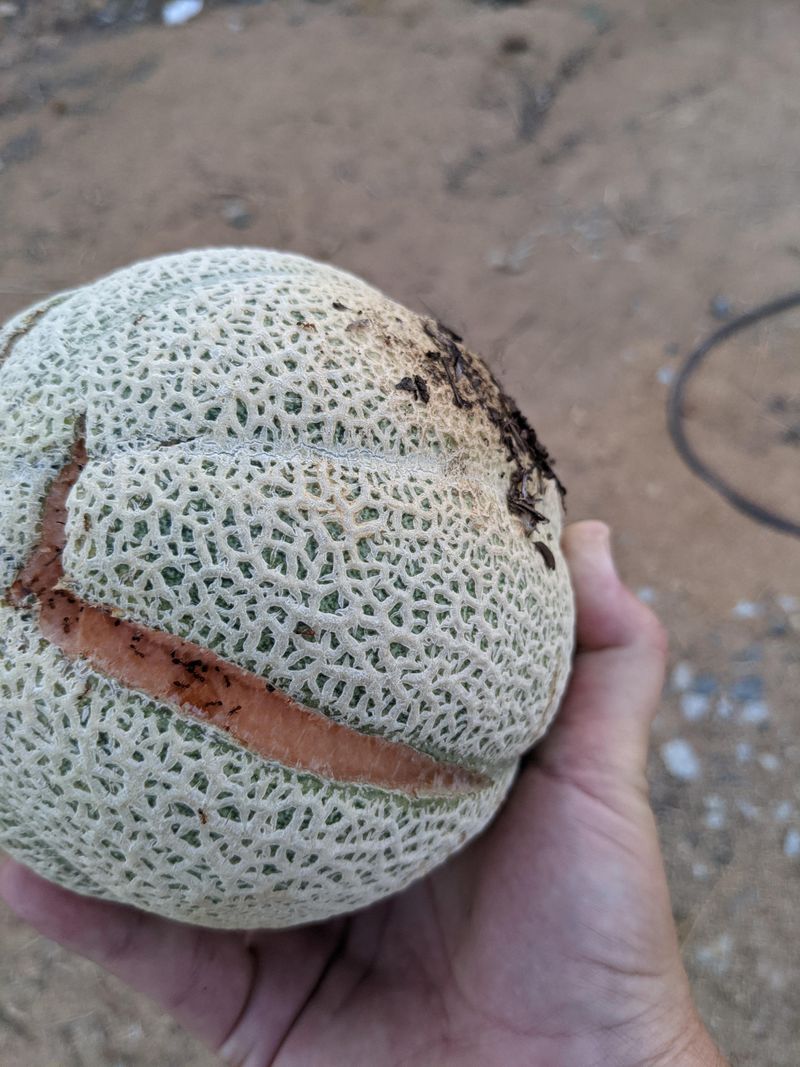
After a week of dry, hot Ohio weather, a single heavy rainstorm can do more damage to a nearly ripe cantaloupe than most gardeners realize.
When the soil has been parched and dry for several days, the roots are primed to absorb as much water as possible the moment moisture becomes available.
A sudden downpour delivers that water all at once, and the fruit responds by swelling rapidly from the inside out.
The rind of a cantaloupe is tough, but it does not stretch. When the interior flesh expands faster than the outer skin can accommodate, the rind gives way and splits.
Melons that are already close to full size are the most vulnerable because the skin has less flexibility at that stage of development. A melon that was three days from harvest can crack overnight after a storm.
Ohio gardeners often see this happen during July and August, when hot dry stretches are regularly interrupted by afternoon thunderstorms.
According to Ohio State University Extension, inconsistent soil moisture is one of the leading contributors to fruit cracking in cucurbits, including melons.
Keeping soil moisture more consistent before rain events can reduce the speed of uptake when rain finally arrives.
Mulching with straw or wood chips helps buffer those sudden swings by slowing how fast rainwater reaches the roots, giving the fruit a little more time to adjust.
2. Blame Moisture Swings Before Blaming Bad Luck
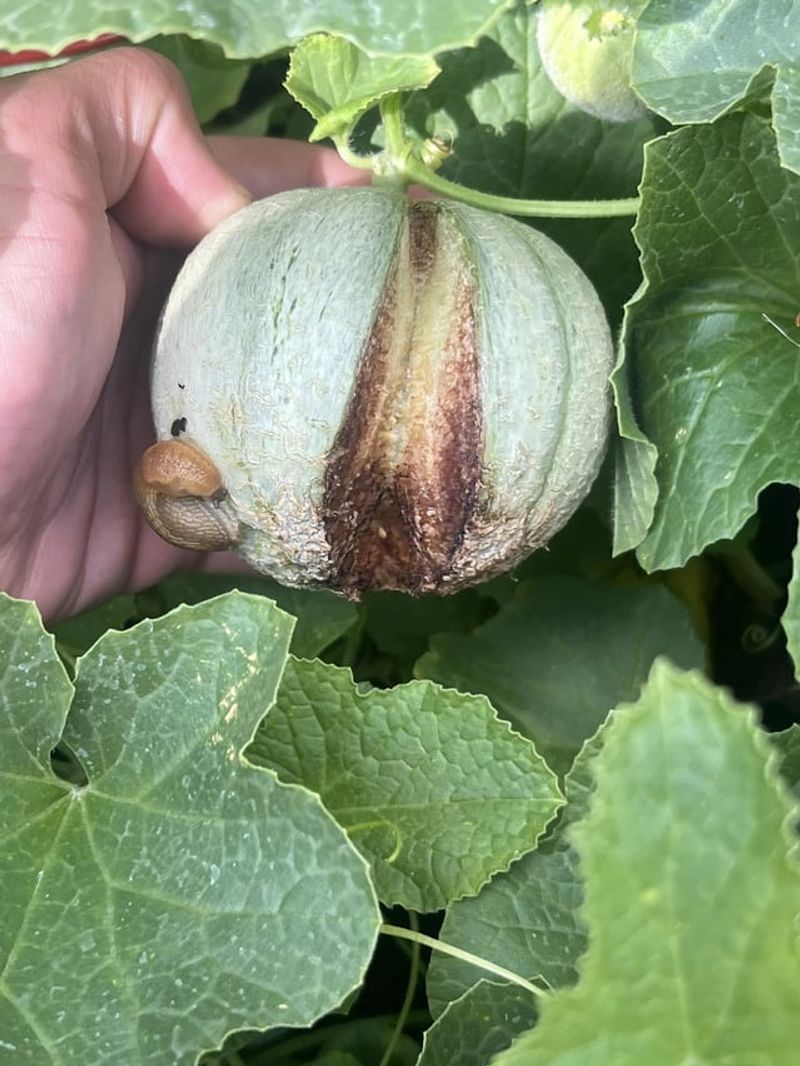
Repeated cycles of dry soil followed by heavy soaking are one of the most reliable ways to end up with split cantaloupes before harvest. The plant does not adjust smoothly between drought stress and sudden abundance.
Each time the soil swings from bone dry to saturated, the fruit responds by trying to absorb and process that moisture as fast as it can, and the rind pays the price.
Steady, deep watering is the most practical fix. Cantaloupes do best when the soil stays consistently moist about six to eight inches down, not just damp at the surface.
Shallow daily sprinkling barely reaches the root zone and leaves the deeper soil dry, which means the plant is always slightly stressed between waterings.
Your Ohio Garden Changes Every Week. Your Plan Should Too.
Gardening in Ohio changes quickly throughout the season. Every Friday you’ll receive a simple weekly plan showing exactly what to plant, prune, fertilize, harvest, and protect so you never miss the right timing.
A deep soak two or three times per week, adjusted based on actual rainfall, is far more effective than light watering every day.
Before you water, check the soil under your mulch layer or about two inches below the surface. If it still feels moist, skip the watering session.
Ohio summers can shift from dry spells to rainy stretches within a single week, so watering on a fixed daily schedule without checking soil conditions often leads to overwatering right before a rain event.
That combination, heavy watering followed by rain, creates exactly the kind of moisture spike that causes the rind to split before you get a chance to harvest.
3. Watch Ohio Clay Hold Water Around The Roots
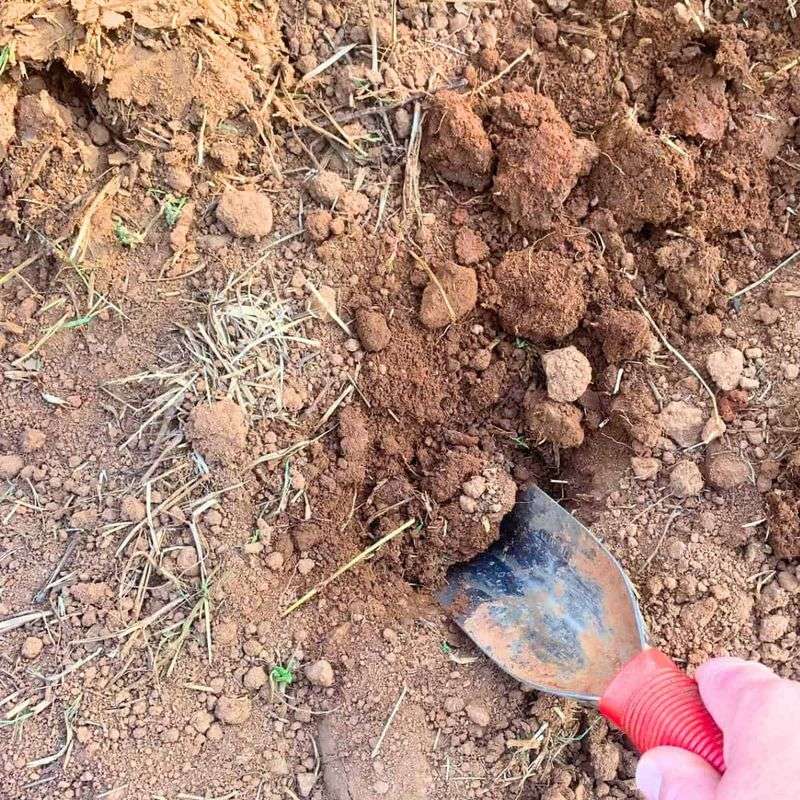
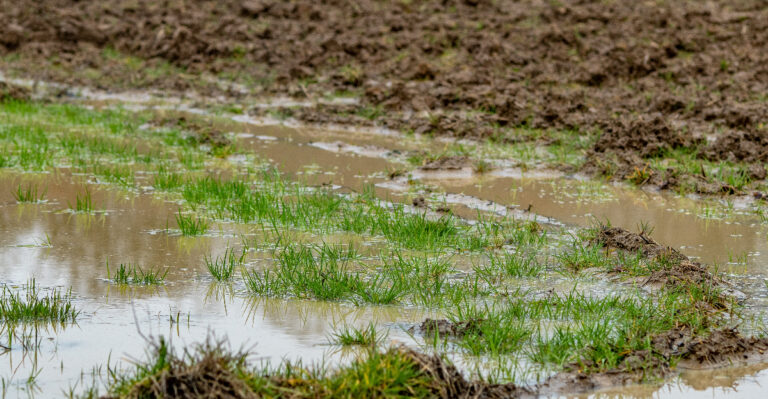
Ohio soil is famously heavy. Much of the state sits on clay-based glacial till, which means drainage can be slow and water tends to pool in low spots long after a rain event ends.
Cantaloupes are not well-suited to soggy conditions. When roots sit in waterlogged soil, the plant absorbs water unevenly and the fruit can swell in unpredictable bursts that stress the rind.
Planting in raised rows or mounded hills is one of the most effective ways to improve drainage in Ohio clay gardens. A mound raised four to six inches above the surrounding soil level allows excess water to drain away from the root zone instead of pooling around it.
Working two to four inches of finished compost into the top foot of soil before planting also loosens clay structure and improves both drainage and water retention at the same time.
Avoid walking near your cantaloupe vines once the plants are established. Foot traffic compacts the soil around roots and makes drainage even worse.
Ohio State University Extension recommends choosing the sunniest, most well-drained section of your garden for melons, and steering clear of low spots that collect water after heavy rain.
If your garden has a persistent drainage problem, raised beds filled with a mix of topsoil, compost, and coarse sand give cantaloupes the loose, well-drained growing environment they need to develop without the moisture stress that leads to splitting.
4. Keep Water Steady As Melons Reach Full Size
The fruit-sizing stage is when cantaloupes are most sensitive to watering habits. From the time a melon begins forming to the point when it reaches full size, the plant needs a steady supply of moisture to support even growth.
If the soil dries out during this window and then gets flooded with water, the interior flesh expands too fast for the rind to keep pace.
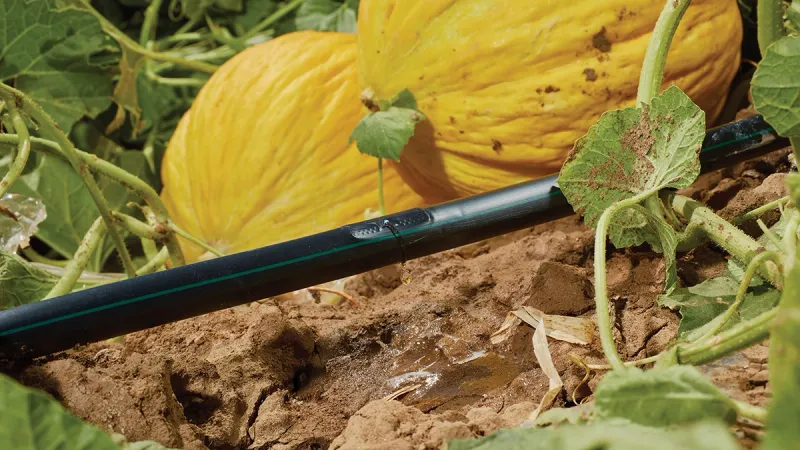
Drip irrigation and soaker hoses are worth the setup time for Ohio cantaloupe growers.
Both methods deliver water directly to the soil at root level without wetting the leaves, which reduces disease pressure and delivers moisture more evenly than overhead sprinklers.
Morning watering is preferable because it gives the soil time to absorb moisture before afternoon heat, and any surface wetness dries before evening.
Mulching with three to four inches of straw around the base of the plants helps moderate soil temperature and slows evaporation between watering sessions, which smooths out the moisture swings that lead to splitting.
As melons approach harvest, ease back on watering gradually if the soil is already holding moisture well.
Do not shut off water suddenly during a hot dry stretch, because the stress of rapid drying followed by any rainfall will trigger the same splitting problem you were trying to avoid. The goal is steady and consistent, not dramatic changes in either direction.
5. Pick At Full Slip Before Overripe Fruit Cracks
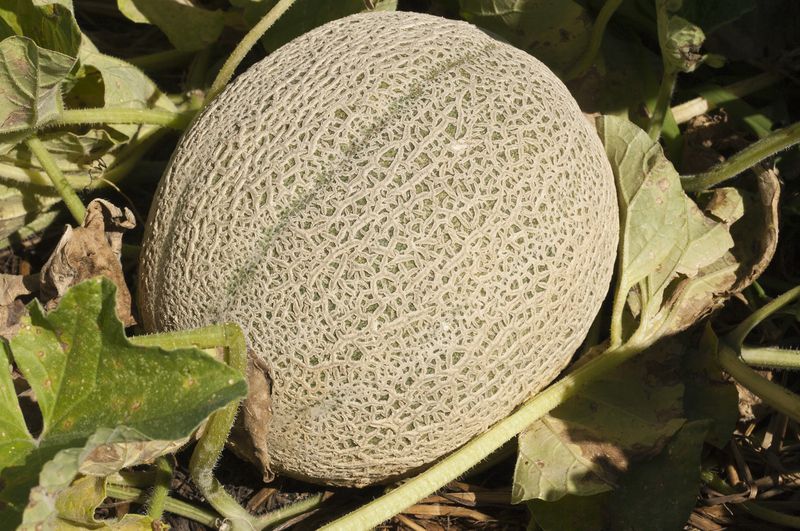
Harvest timing is one of the most overlooked reasons cantaloupes split. A melon that has been left on the vine a few days past its peak is softer, more fragile, and much more likely to crack when exposed to rain or a sudden change in soil moisture.
Learning to read ripeness accurately can save a lot of fruit at the end of the season.
Full slip is the term growers use to describe the moment when a cantaloupe is ready to harvest. At full slip, the stem end of the fruit separates from the vine with very little pressure, sometimes on its own.
The netting on the rind becomes more pronounced and rough, the background color shifts from greenish to tan or yellowish depending on the variety, and the blossom end gives slightly when pressed with a thumb.
A strong, sweet, musky aroma near the stem end is one of the most reliable signs that a melon is at peak ripeness.
Check your ripening melons every single day once they start showing these signs. Ohio summers move fast, and a melon can go from almost ready to overripe within two or three days, especially during a warm humid stretch.
Overripe fruit has softer flesh and a rind that has lost much of its structural strength. Any additional moisture from rain or late watering at that stage can push it right into a crack.
Picking at full slip, not past it, keeps the fruit intact and gives you the best flavor.
6. Give Each Vine Room To Breathe And Drain
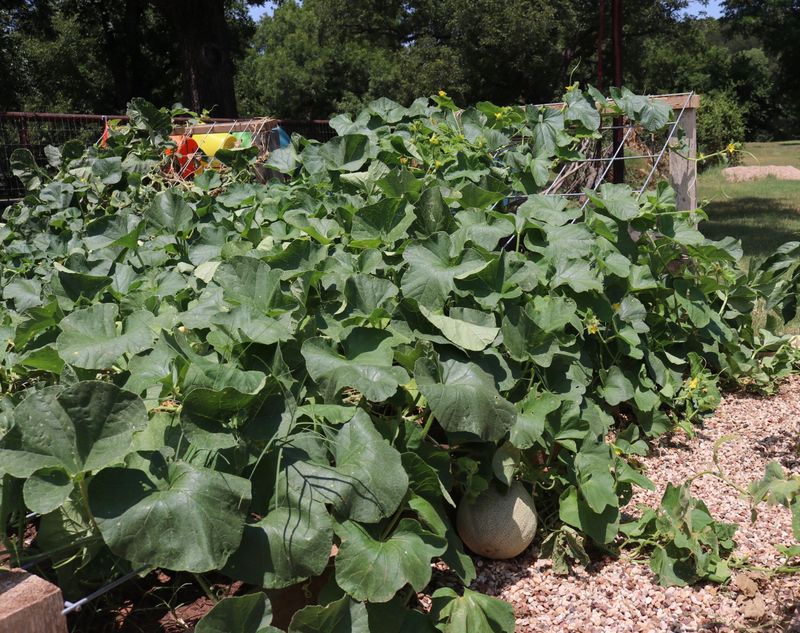
Crowded vines create problems that go beyond competition for nutrients. When cantaloupe plants are spaced too close together, airflow through the bed drops significantly.
Poor airflow keeps the soil surface wet longer after rain or irrigation, which makes moisture management harder and increases the chance that the root zone stays saturated longer than it should.
Ohio State University Extension recommends spacing cantaloupe hills at least four to six feet apart in a home garden, with rows spaced six feet or more apart if you are growing multiple rows.
That spacing gives vines room to spread without overlapping, allows sunlight to reach the soil, and lets air move through the bed after rain or watering.
Cantaloupes need full sun, at least eight hours per day, and shaded spots stay damp and cool in ways that encourage uneven moisture absorption.
Keeping weeds out of the cantaloupe bed matters more than many gardeners expect. A weedy bed traps humidity close to the soil and around the fruit, slowing drainage and keeping conditions wetter than they should be.
Placing developing melons on a small piece of untreated wood, a tile, or a bed of dry straw keeps the fruit off wet soil and allows air to circulate underneath.
Avoiding overhead watering once vines start spreading reduces surface wetness and helps the soil dry more evenly between watering sessions, which lowers splitting risk during the final weeks before harvest.
7. Read A Split Cantaloupe As A Timing And Watering Clue
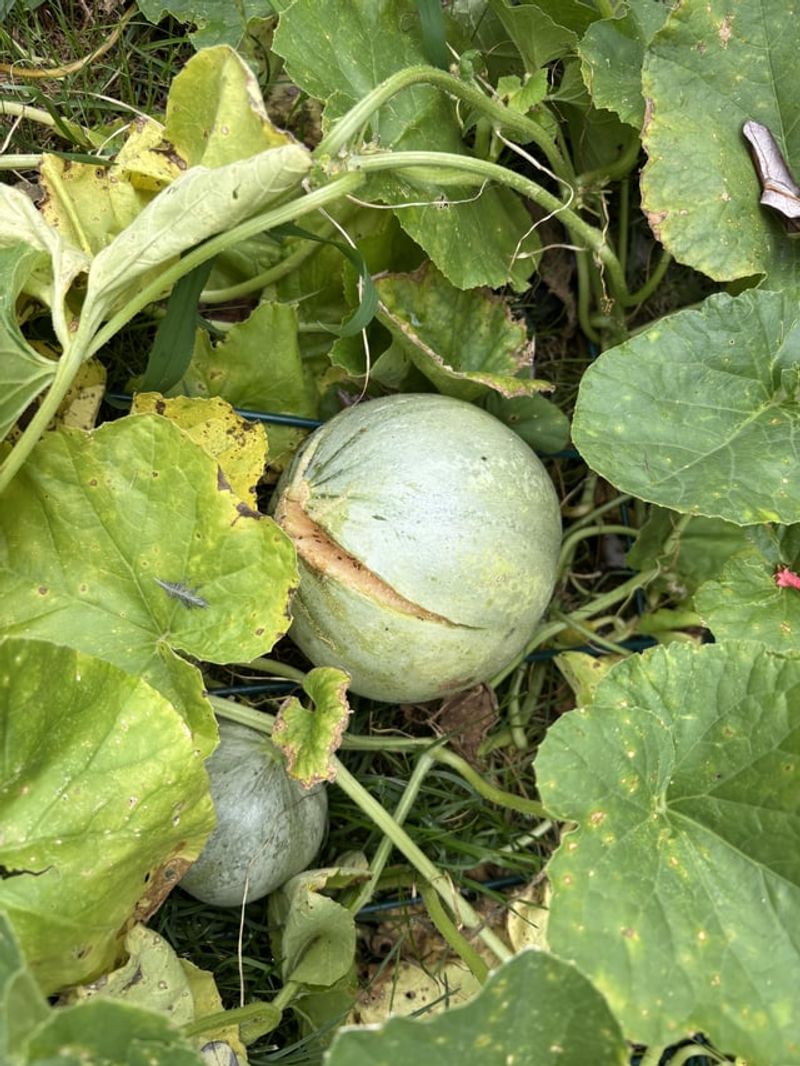
Finding a cracked melon is genuinely disappointing, but it tells you something useful if you take a moment to think through what happened. Look back at the past week of weather.
Was there a dry stretch followed by a heavy rain? Did you water heavily right before a storm rolled through?
Was the melon already showing signs of full slip when it cracked? The answers point directly to which factor caused the split.
For the melons still on the vine, act on what you learned. Check soil moisture before every watering session and skip irrigation if the soil is already moist two inches below the surface.
If rain is in the forecast, hold off on watering until you see how much moisture the storm actually delivers. Walk the bed daily and press the stem end of each melon gently to check for the soft give that signals full slip.
Harvest promptly when the fruit is ready rather than waiting another day or two.
Before next season, consider where drainage could be improved, whether your watering method delivers water evenly and at the right depth, and whether your planting spot gets enough sun to dry out between rain events.
Adding compost each year gradually improves Ohio clay soil and makes moisture management easier over time.
A split cantaloupe is feedback, not failure, and the adjustments you make now will carry directly into a better harvest next year.