This Native Texas Wildflower Feeds Butterflies Through The August Heat
August is one of the hardest months for butterflies in Texas. The heat is relentless, many of the spring and early summer flowers they depend on have finished blooming, and the landscape can feel barren for pollinators at precisely the moment when they need reliable food sources most.
Most Texas gardens hit a gap in August that they never planned for. One native Texas wildflower fills that gap beautifully.
It blooms through the August heat with a generosity that stands out when most other flowers have long since given up.
Butterflies find it reliably, return to it repeatedly, and in some cases appear to seek it out specifically during the hottest stretch of summer when alternatives are scarce.
It’s native to Texas, which means it evolved for exactly these conditions. No extra watering, no special care during the heat. It just grows, blooms, and feeds the butterflies that need it most.
If your August garden has been coming up short for pollinators, this is the wildflower worth planting right now.
Meet Gregg’s Blue Mistflower
Picture a plant that looks delicate but laughs at summer heat. That is Gregg’s blue mistflower in a nutshell.
Known by several names, including Gregg’s mistflower, Texas ageratum, and palmleaf thoroughwort, this native Texas perennial has been charming gardeners and feeding wildlife for generations.
Its botanical name is Conoclinium greggii, and it belongs to the same plant family as sunflowers and daisies.
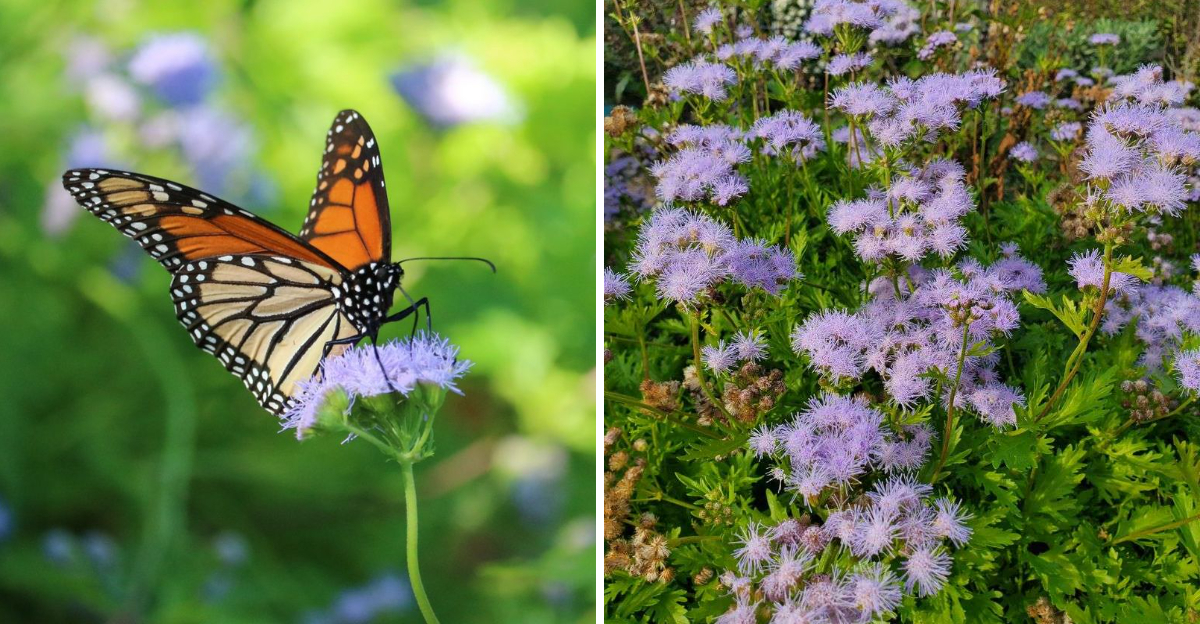
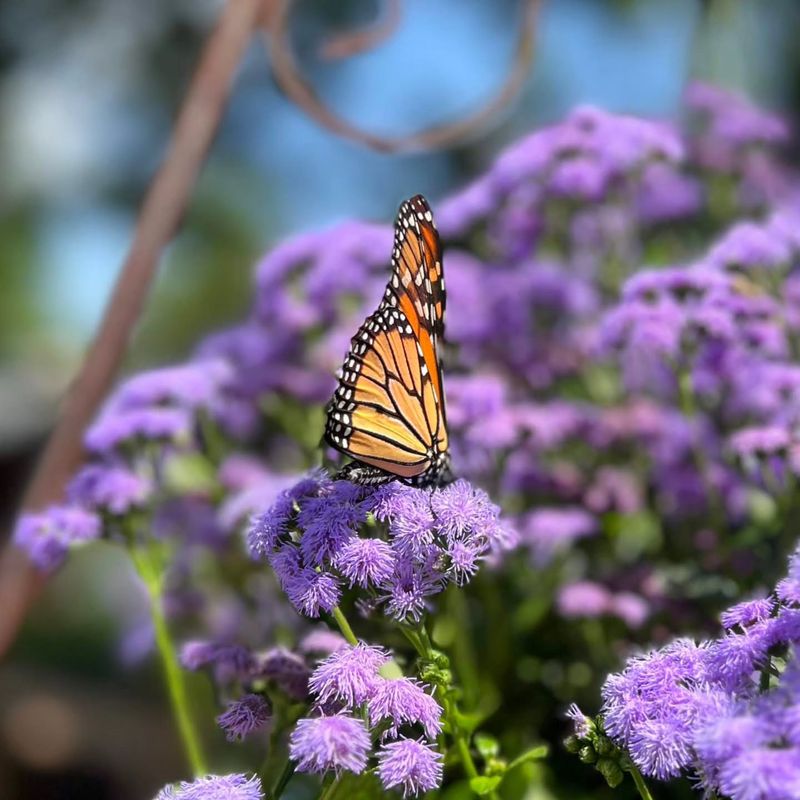
What makes it so visually appealing is its combination of finely divided, lacy foliage and fluffy clusters of small blue-to-lavender flowers. The blooms have a fuzzy, soft texture that almost looks like tiny paintbrushes dipped in purple-blue paint.
They are not bold or showy in the traditional sense, but grouped together, they create a lovely haze of cool color that stands out beautifully against summer-dried landscapes.
Size-wise, Gregg’s blue mistflower is a manageable plant for most garden settings. Plants typically grow about 12 to 18 inches tall, making them easy to fit into borders, rock gardens, or naturalized areas.
Over time, they spread gradually through underground stems, forming loose colonies that fill in a space with minimal fuss.
Native to the Chihuahuan Desert region, this plant evolved to handle heat, drought, and tough soils. That background makes it exceptionally well-suited for Texas gardens.
It is not a fussy plant that demands constant attention. Instead, it quietly goes about its business, growing steadily and producing flowers that attract an impressive parade of pollinators.
For gardeners who want beauty without a lot of babying, Gregg’s blue mistflower is a genuinely rewarding choice.
Why Butterflies Gather Around It
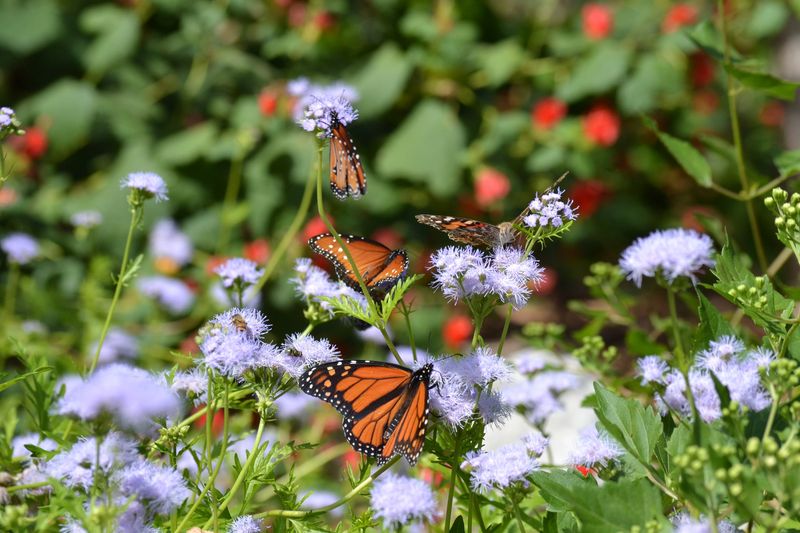
Walk up to a blooming patch of Gregg’s blue mistflower on a warm afternoon, and chances are you will not be alone. Butterflies seem to find these plants almost instantly.
The reason comes down to flower structure. Each cluster is made up of dozens of tiny individual florets, and each floret holds a small pool of nectar right at the surface.
Your Texas Garden Changes Every Week. Your Plan Should Too.
Gardening in Texas changes quickly throughout the season. Every Friday you’ll receive a simple weekly plan showing exactly what to plant, prune, fertilize, harvest, and protect so you never miss the right timing.
Butterflies with their long, tube-like mouthparts can reach that nectar quickly and easily without much effort.
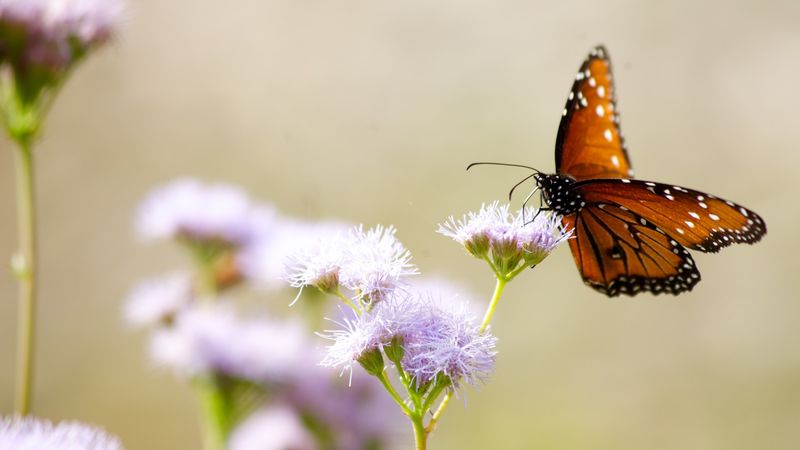
Queen butterflies are among the most frequent visitors, and they absolutely love this plant. Monarchs stop by too, especially during their fall migration through Texas.
But the guest list does not stop there. Skippers, painted ladies, sulfurs, hairstreaks, and many other species regularly visit Gregg’s blue mistflower when it is in bloom. On a sunny day, a healthy patch can feel like a butterfly convention.
Size matters when it comes to attracting wildlife. A single plant will draw some butterflies, but a larger colony creates a nectar source that is hard for passing pollinators to overlook.
The visual mass of the blue-lavender blooms acts like a signal from a distance, pulling butterflies in from across the yard or even from neighboring properties.
Beyond butterflies, bees and other beneficial insects also visit the flowers regularly. So planting Gregg’s blue mistflower does double duty.
It supports the broader pollinator community while giving you a front-row seat to some of the most colorful winged visitors your yard will ever see. Few plants deliver that kind of wildlife action so reliably and so effortlessly.
Why It Matters During August
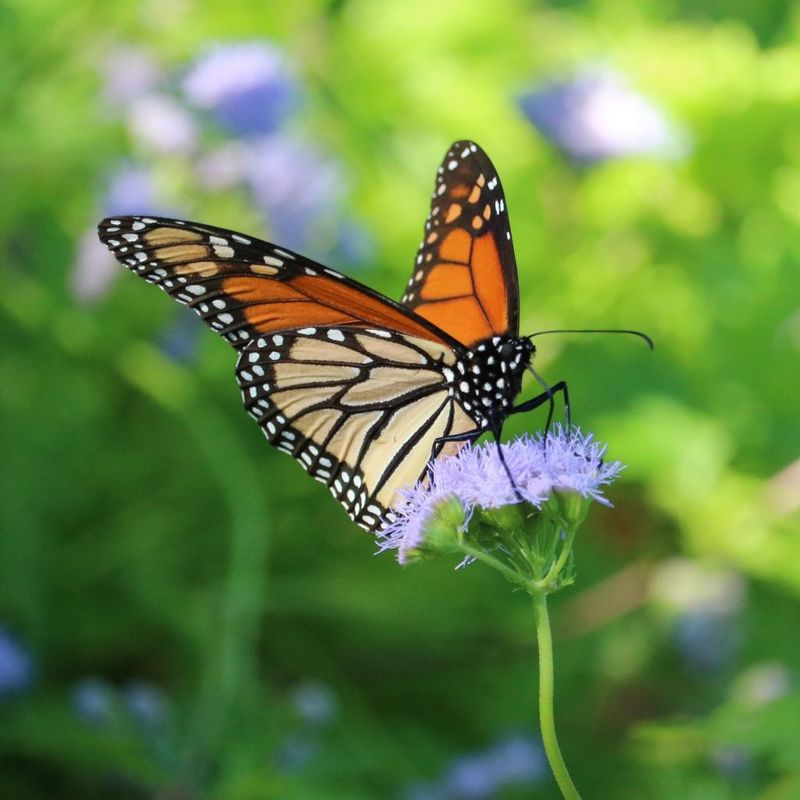
August in Texas is brutal. The thermometer climbs past 100 degrees, the ground bakes hard, and a lot of plants simply stop performing.
For butterflies, this creates a real problem. Many of the nectar plants that bloomed beautifully in spring have long since finished by midsummer. Food sources get scarce right when monarchs and queens are actively flying and feeding.
Gregg’s blue mistflower fills that gap in a meaningful way. It begins blooming in late spring and keeps going strong through late summer and into fall.
The flowering actually peaks during the hottest months, which is exactly when butterflies need reliable nectar the most. That timing is not a coincidence.
As a native plant, Gregg’s blue mistflower evolved alongside the butterflies that depend on it, and their seasonal rhythms line up naturally.
Even during the most intense summer heat, established plants continue producing flowers. They do slow down a bit if conditions get extremely dry, but a modest amount of irrigation during the worst stretches can keep blooms coming steadily.
You do not need to water heavily. Just enough to prevent the soil from going completely dry will help the plant stay active and productive through August.
Gardeners who care about supporting wildlife often focus on spring and fall planting. August tends to get overlooked.
But that midsummer window is genuinely critical for many butterfly species. Having Gregg’s blue mistflower in your garden means you are providing food during a period when options are limited.
That kind of consistent, season-long support makes a real difference for the butterflies passing through your neighborhood.
Where To Plant It For The Most Flowers
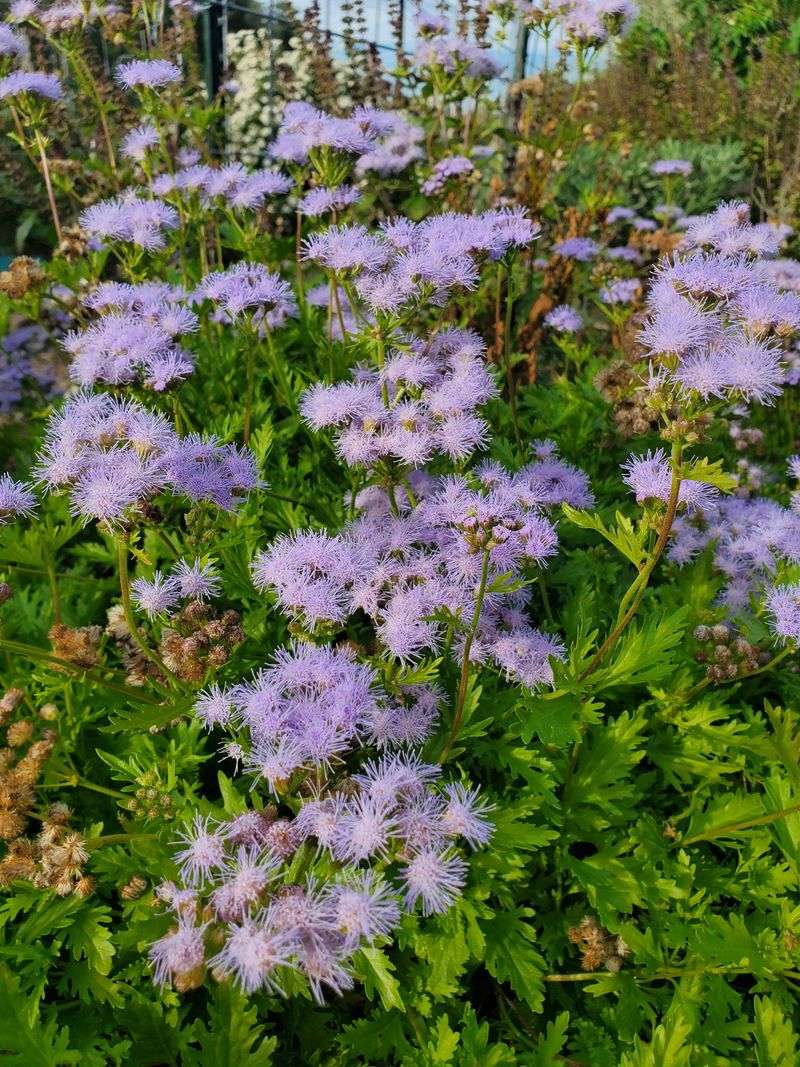
Sunlight is the single biggest factor in how well Gregg’s blue mistflower performs. Give it a full-sun location, meaning at least six hours of direct sunlight per day, and it will reward you with dense, continuous blooms from late spring through fall.
A mostly sunny spot with five to six hours of sun also works reasonably well. The more light it receives, the more flowers you can expect. Shade is where things get tricky. As shade increases, flower production drops noticeably.
Plants growing in deep shade may produce little to no bloom at all. They will survive, and the foliage may look acceptable, but you will miss out on the flowers that make this plant worth growing.
If your yard leans shady, save this one for your sunniest corner. The good news is that Gregg’s blue mistflower fits into a wide variety of garden styles and settings. It works beautifully in dedicated butterfly gardens and perennial borders.
It also performs well on slopes, in rock gardens, and in naturalized or pocket prairie plantings where a spreading groundcover effect is welcome.
For those with smaller outdoor spaces, it grows happily in large patio containers as long as the pot has good drainage and sits in a sunny location.
When planning placement, think about pairing it with other late-season bloomers to extend the visual interest of your garden. Its cool blue-lavender tones contrast nicely with warmer yellows and oranges.
Positioning it near a pathway or seating area also lets you enjoy close-up views of the butterflies that will inevitably come to visit once the plant is established and blooming.
How To Keep It Thriving In Texas Heat
Toughness is honestly one of Gregg’s blue mistflower’s best qualities. Once it settles into your garden, it asks for very little in return for a lot of beauty and wildlife value.
Soil flexibility is a big part of what makes it so adaptable. It grows well in sandy, loamy, and rocky soils.
It handles a range of pH levels without complaint. The main thing it cannot tolerate is soil that stays wet for long periods, especially during winter months when the plant is less active.
Water needs are low to moderate after the plant is established, which typically takes one full growing season. During that first year, water regularly to help roots develop.
After that, natural rainfall handles most of the plant’s needs in average Texas conditions. During extreme heat or prolonged drought, a deep watering once or twice a week will keep the plant healthy and flowering. Avoid frequent shallow watering, which encourages weak surface roots.
One optional but helpful technique is pinching back young growth early in the season. Pinching the tips of new shoots encourages branching, which leads to a fuller, bushier plant with more flower clusters.
You do not have to do this. Established colonies tend to fill in naturally over time. But if you want a denser, more compact look from the start, a little early pinching goes a long way.
Fertilizing is generally not necessary. Native plants adapted to Texas conditions tend to thrive in lean soils.
Adding too much fertilizer can actually push leafy growth at the expense of flowers. Let the plant do what it does naturally, and it will rarely disappoint you throughout the growing season.
How To Manage Its Spreading Habit
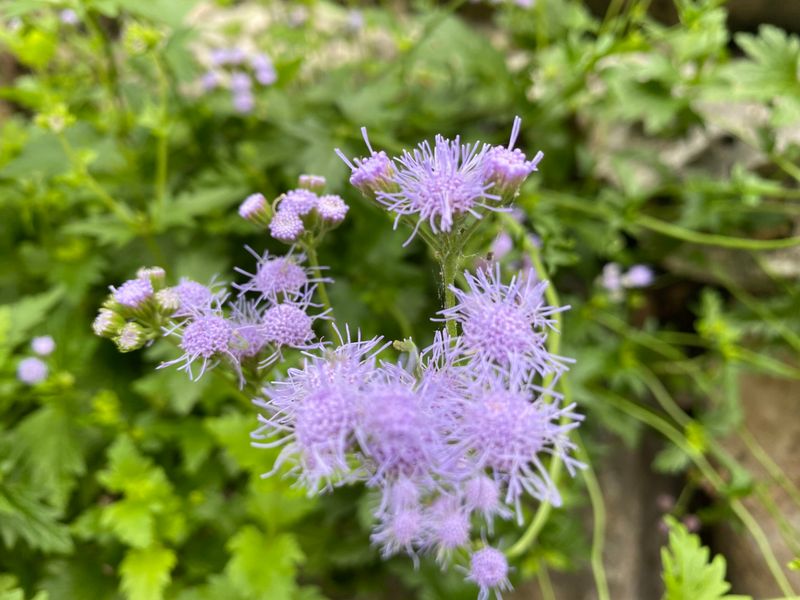
Fair warning: Gregg’s blue mistflower is a spreader. That can be a wonderful thing or a minor headache, depending on where you plant it and what you want from your garden.
Underground stems called rhizomes allow the plant to gradually expand outward from its original planting spot, forming loose, naturalistic colonies over time. In the right location, this spreading habit is actually a feature, not a flaw.
For slopes, naturalized areas, or large open borders where you want a groundcover-style effect, letting it spread freely makes perfect sense.
A big colony produces far more flowers than a single plant, which means more nectar for butterflies and a more impressive visual display for you.
The key is choosing the planting location thoughtfully from the beginning so the plant has room to roam without crowding out neighbors you want to keep.
When it does spread beyond its intended boundaries, managing it is straightforward. You can dig up and remove unwanted shoots in early spring before they get established.
Dividing the colony every few years also helps keep it in check while giving you extra plants to share with friends or expand to other parts of your yard. Seeds may also spread the plant to new spots, so deadheading spent blooms can reduce self-seeding if that is a concern.
For a stunning late-season combination, pair Gregg’s blue mistflower with Mexican mint marigold, which produces bright golden-yellow flowers around the same time.
The contrast between the cool blue-lavender of the mistflower and the warm yellow of the marigold is genuinely eye-catching and gives your fall garden a bold, cheerful finish that both people and pollinators will appreciate.