This Pennsylvania Insect Is About To Start Laying Eggs All Over Your Yard
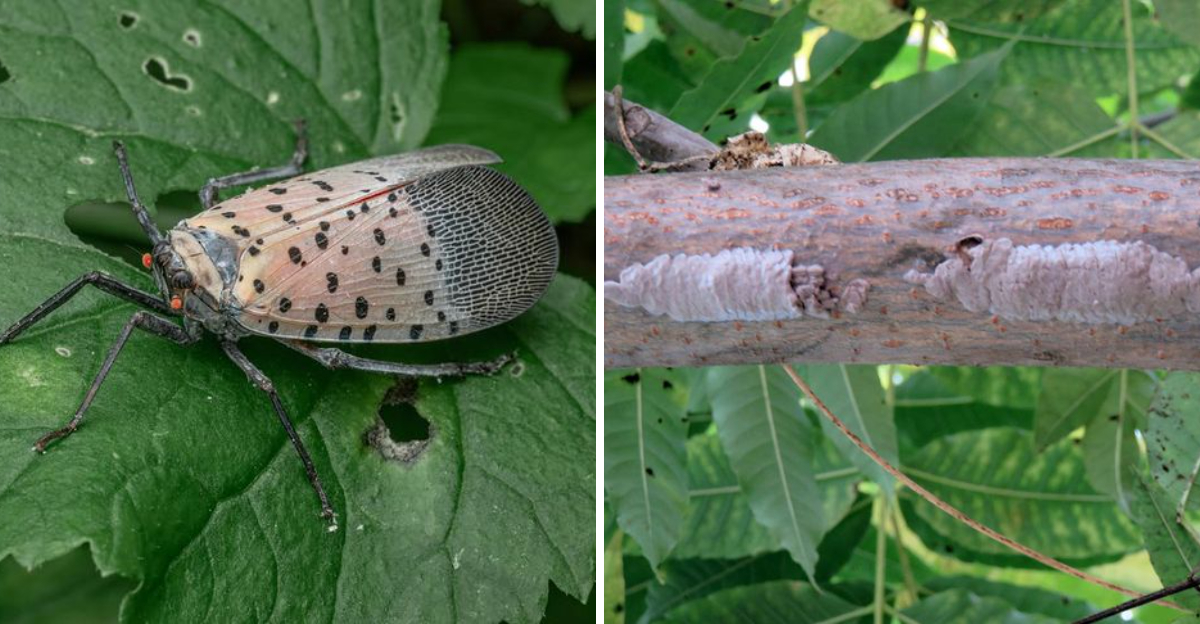
There’s a moment every late summer when a particular Pennsylvania insect begins doing something in yards across the state that most homeowners either miss entirely or misidentify when they do notice it.
Small, unusual looking deposits start appearing on surfaces around the yard. On tree bark, on garden stakes, on the sides of structures, sometimes in places that seem completely random. They’re not random. They’re egg masses.
And if you know what you’re looking at, their appearance right now is a signal worth taking seriously.
This insect has become one of the most talked about pest concerns in Pennsylvania over the past several years, and for good reason.
The damage it causes to trees, vines, and garden plants is significant, and the eggs being laid right now are the next generation of that problem.
Finding and removing them before they hatch is one of the most effective things Pennsylvania homeowners can do to reduce pest pressure in their yard next season.
Here’s what this insect is, what its eggs look like, and exactly what to do when you find them.
The Insect Is The Spotted Lanternfly
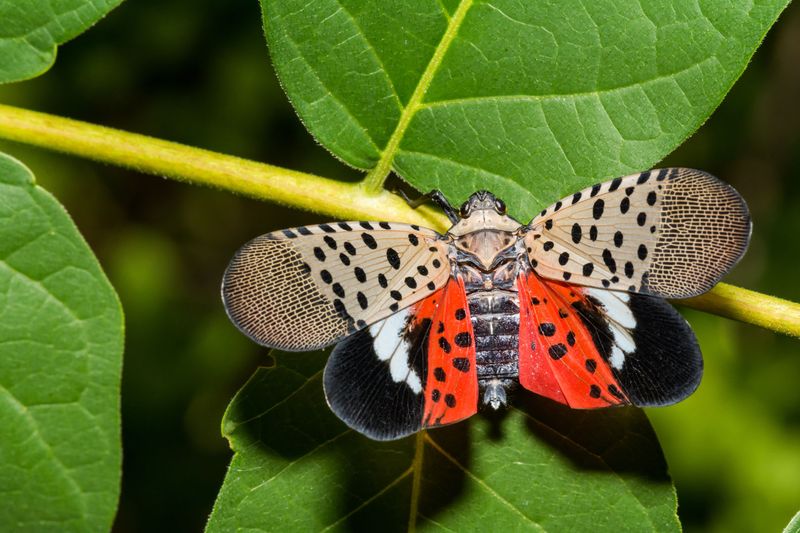
Meet the spotted lanternfly, one of the most talked-about insects in Pennsylvania right now. Its scientific name is Lycorma delicatula, and it belongs to a group of insects called planthoppers.
Originally from Asia, it was first detected in Berks County, Pennsylvania, back in 2014 and has been spreading ever since.
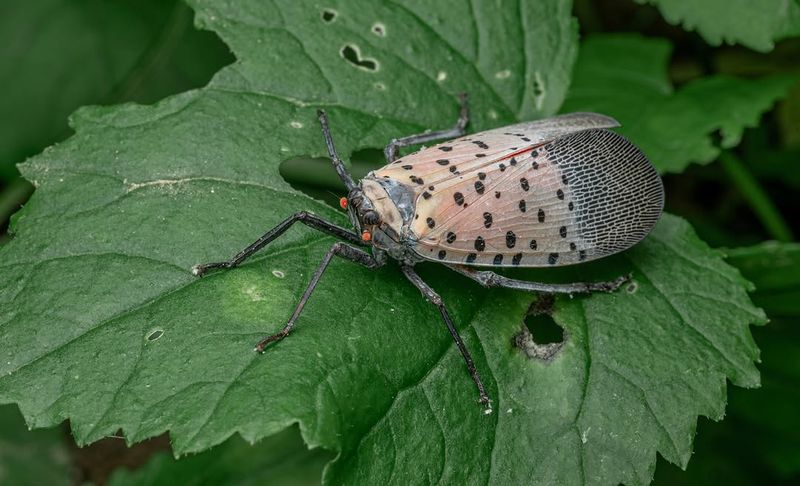
What makes this insect so recognizable is its striking appearance. The forewings are grayish with bold black spots, and when the wings open, you can see bright red hindwings underneath.
Adults grow to about an inch long, making them easy to spot on tree trunks and fences during late summer and fall.
Adults typically emerge during summer and become especially active from late July all the way into fall. Pennsylvania guidance specifically points to September as the start of the main egg-laying stage.
That timing matters a lot for homeowners who want to get ahead of the problem. The spotted lanternfly feeds on plant sap by piercing stems and trunks with its mouthparts. It targets a wide range of plants, including grapes, apples, hops, and hardwood trees.
While established trees can often handle some feeding pressure, repeated attacks from large populations can seriously weaken them over time.
One of the most important host plants for this insect is the tree of heaven, an invasive tree that also came from Asia. Spotted lanternflies are strongly attracted to it.
However, they are far from picky and will feed on dozens of other plant species too, which is part of what makes them so difficult to manage across Pennsylvania landscapes.
Egg Laying Usually Begins In Early Fall
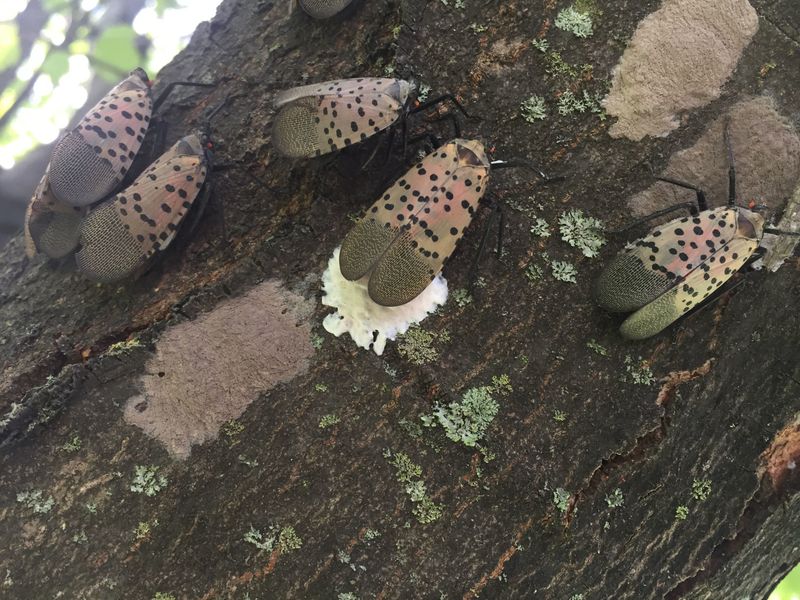
Fall is when spotted lanternfly activity shifts into a new and more serious phase. Female spotted lanternflies generally begin depositing egg masses in September and continue through November.
In milder years, egg laying can even stretch into December before freezing temperatures finally put a stop to it.
Your Pennsylvania Garden Changes Every Week. Your Plan Should Too.
Gardening in Pennsylvania changes quickly throughout the season. Every Friday you’ll receive a simple weekly plan showing exactly what to plant, prune, fertilize, harvest, and protect so you never miss the right timing.
During this entire period, adults keep feeding, mating, and laying eggs right up until the cold gets too harsh for them to survive.
A single female can produce one or more egg masses during her lifetime, and each mass holds a significant number of eggs packed tightly together under a protective coating.
Once the eggs are laid, they are remarkably tough. The masses stay outdoors through the entire winter, surviving snow, ice, and freezing temperatures without any problem.
When spring arrives, usually from late April into June, the eggs hatch and tiny nymphs begin crawling out to start feeding on plants.
That spring hatching cycle is exactly why fall action matters so much. Every egg mass you find and remove in the fall or winter is potentially dozens of nymphs that never get a chance to feed on your plants next year. The math is simple but powerful.
Homeowners sometimes assume that cold winters will handle the problem naturally. Unfortunately, spotted lanternfly eggs are well-adapted to survive typical Pennsylvania winters.
Counting on the weather alone is not a reliable strategy. Taking hands-on steps during the fall and winter months gives you a much better chance of reducing the population around your home before the following growing season even begins.
The Egg Masses Resemble Smears Of Dried Mud
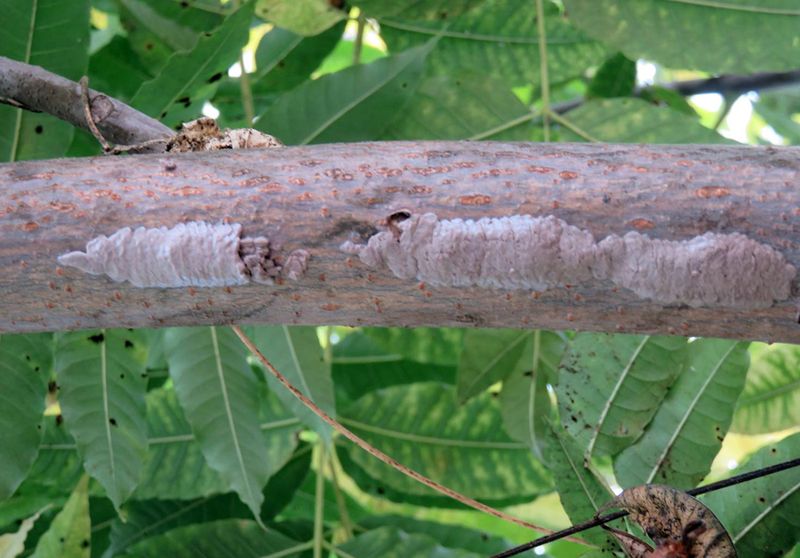
Spotting a spotted lanternfly egg mass for the first time can be surprisingly tricky. Freshly laid masses look pale, gray, and slightly waxy, almost like a smear of putty pressed against a surface.
They blend in well with bark, stone, and wood, which is part of what makes them so easy to miss.
As the weeks pass, the waxy coating dries out and changes. It darkens, shrinks, and develops a cracked texture that looks remarkably like dried mud or old chewing gum stuck to a surface.
At that stage, many people walk right past them without a second glance, not realizing what they are looking at.
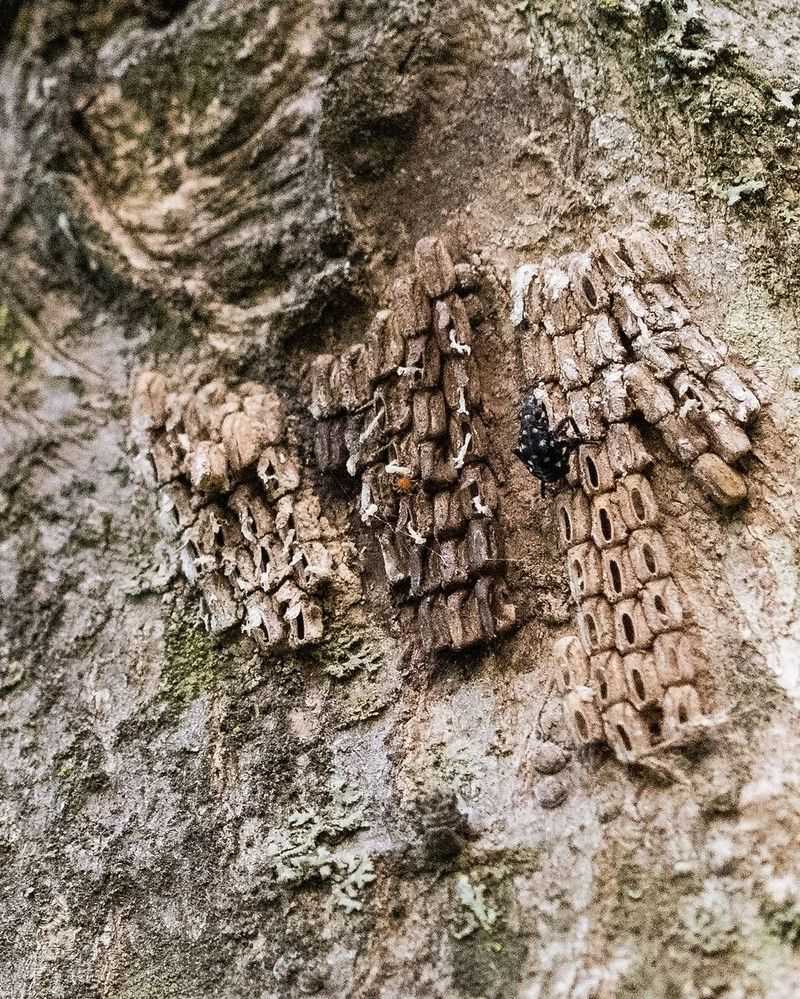
Each egg mass typically contains around 30 to 50 eggs arranged in neat rows beneath the protective coating. The eggs themselves are small, brownish, and seed-like in shape.
Older masses that have weathered through part of the winter may lose their coating entirely, leaving those brown eggs exposed and easier to identify.
Knowing what to look for at different stages of weathering is genuinely useful. A fresh mass and an old mass can look quite different, but both are equally worth removing.
Checking regularly from September through early spring gives you the best chance of catching masses at various stages.
Size can also help with identification. Most egg masses are roughly an inch long and about half an inch wide, though this can vary.
Running your fingers along rough tree bark or stone surfaces can sometimes help you feel a mass before you even see it clearly, especially in low-light conditions during a yard inspection.
They Can Lay Eggs On Almost Any Hard Surface
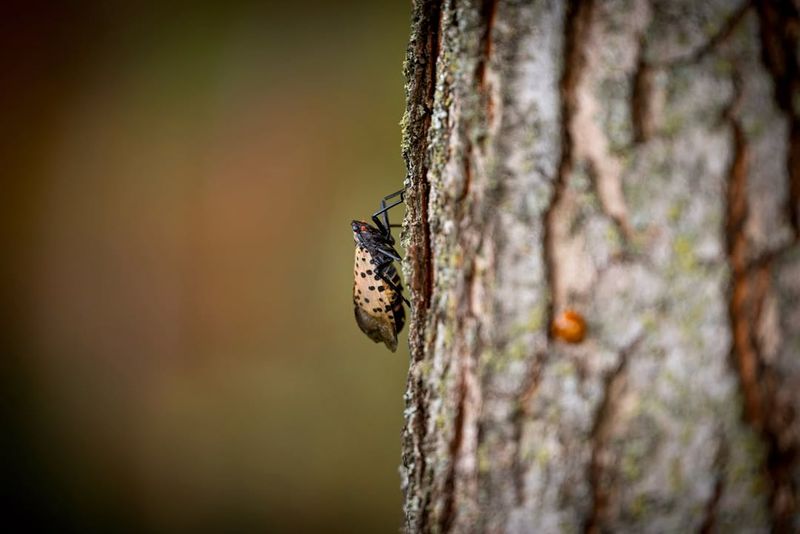
One of the most surprising things about spotted lanternfly egg laying is just how creative these insects get when choosing a spot.
Tree trunks and branches are the most common locations, but females are not limited to living plants at all. They will deposit eggs on almost any hard, relatively smooth surface they can find.
Stones, firewood stacks, wooden fences, and brick walls are all fair targets. Patio furniture, outdoor grills, garden tools left leaning against a shed, and decorative planters have all been found hosting egg masses.
Basically, if it is solid and outside, it is a potential egg-laying site during the fall season. Vehicles are a particularly important concern. Cars, trucks, trailers, and campers parked near infested areas can pick up egg masses without the owner ever noticing.
When those vehicles travel to other counties or states, they can carry spotted lanternfly eggs far beyond where the insect is already established, helping it spread to new areas.
Firewood is another high-risk item. People who move firewood from one property to another during fall and winter can unknowingly transport egg masses along with the wood.
Pennsylvania strongly advises buying and burning firewood locally to avoid accidentally spreading the insect to new locations.
Before moving any outdoor equipment, furniture, or vehicles during the fall and winter months, take a few minutes to inspect every surface carefully. Pay special attention to undersides, crevices, and rough textures where masses can hide.
A quick check takes very little time but can prevent a serious infestation from starting somewhere new. Being thorough really does make a difference.
Why The Eggs Matter Next Spring
Every single egg mass that survives the winter represents a fresh wave of trouble come spring. When temperatures warm up, usually sometime between late April and June, the eggs hatch and small nymphs emerge.
Early-stage nymphs are tiny and black with white spots, making them look almost like little beetles at first glance.
Those nymphs immediately start feeding on plant sap. They work their way through stems, leaves, and young shoots, gradually growing through several stages before developing wings and becoming adults in mid to late summer.
The feeding never really stops throughout this entire process. Large populations create a sticky waste product called honeydew as they feed. Honeydew drips onto surfaces below the feeding insects, coating leaves, furniture, decks, and anything else underneath.
That sugary residue encourages a black fungus called sooty mold to grow, which coats plant surfaces and blocks sunlight from reaching leaves.
Grapevines face some of the most serious risks from heavy spotted lanternfly feeding. Pennsylvania has a growing wine and grape industry, and spotted lanternfly pressure on vineyards can reduce fruit quality and even affect vine survival over multiple seasons.
Hop yards and apple orchards face similar challenges. For most established landscape trees and shrubs, spotted lanternfly feeding is more of a stress factor than an immediate threat.
However, repeated heavy infestations over several years can weaken plants and make them more vulnerable to other problems.
Young trees and newly planted ornamentals are at greater risk than mature, well-established ones. Reducing the egg population each fall directly lowers the feeding pressure your plants face the following growing season, giving them a healthier start.
What Pennsylvania Homeowners Should Do
Taking action against spotted lanternfly egg masses is something every Pennsylvania homeowner can do, and it genuinely helps.
Start by walking your property from fall through early spring and inspecting trees, fences, stones, firewood, and any outdoor furniture or equipment. Look for those distinctive waxy smears or cracked mud-like patches on hard surfaces.
When you find a mass, scraping it off is the most effective removal method. Use a plastic card, putty knife, or stiff brush to scrape the mass into a container filled with rubbing alcohol or hand sanitizer.
The alcohol destroys the eggs quickly and reliably. You can also crush masses thoroughly against the surface if you do not have a container handy.
Vehicles and trailers deserve special attention before you drive anywhere new. Check wheel wells, bumpers, undercarriages, and flat surfaces on the roof or hood.
Spotted lanternfly egg masses have been found on all of these spots. A few minutes of inspection before a trip can prevent you from accidentally spreading the insect to a new county or even a new state.
Firewood movement is another key concern. Avoid moving firewood from infested areas to locations where spotted lanternfly has not yet been confirmed.
Buy local firewood and burn it where you buy it whenever possible. This single habit can significantly slow the spread of the insect across Pennsylvania and beyond.
The Pennsylvania Department of Agriculture encourages residents to report spotted lanternfly sightings, especially in areas where the insect has not yet been confirmed. Reporting helps officials track the spread and coordinate management efforts.
You can find reporting tools on the department’s official website, and every sighting report truly contributes to the broader effort to manage this invasive pest.