This Plant Blooms Right When Texas Needs Fall Color
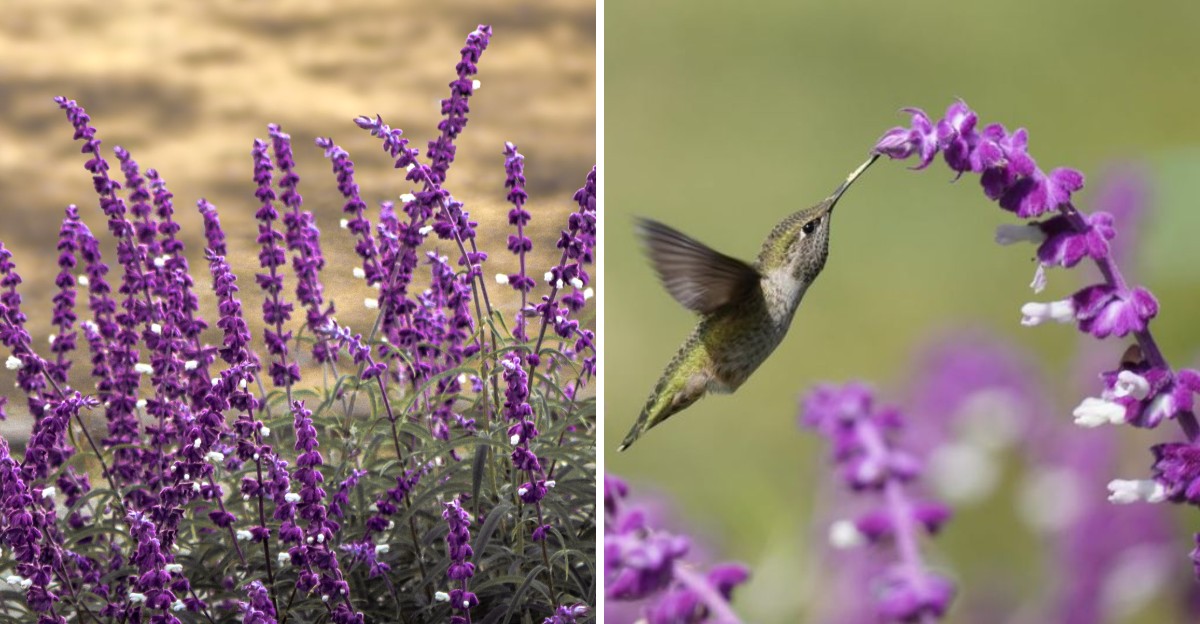
Some flowers are meant to be admired. This one practically begs to be touched. Its long, arching spikes are covered in fuzzy purple blooms that feel as soft as velvet.
Brush your hand across them, and you’ll understand why so many Texas gardeners fall for it the first time they see it in person.
The timing makes it even more special. By late summer, many flower beds are tired and faded. That’s exactly when this tough perennial starts its big show.
It keeps blooming through fall, often right up until the first freeze, filling the garden with rich color just when it’s needed most.
Hummingbirds and butterflies flock to it, and deer usually leave it alone. It also handles heat and dry spells like a pro. If your yard could use a burst of purple this season, this plant delivers in a big way.
The Texas Fall Favorite
Ask a group of Texas gardeners to name their favorite fall plant, and you will hear one answer again and again.
Mexican bush sage has earned a loyal fan club across the state. Its scientific name is Salvia leucantha, and it belongs to the huge sage family.
The plant comes from Mexico and Central America. There, it grows on sunny hillsides where the summers are hot and the rain can be hard to count on. Those tough beginnings explain why it feels so at home in Texas yards.
Technically, it is not a Texas native. Still, it fits in so well that many people assume it is. It handles our long summers, our sudden dry spells, and our rocky or sandy soils without much fuss.
As a shrubby perennial, it comes back year after year. You do not have to replant it every spring like an annual. One plant can keep giving color for many seasons with very little help from you.
Fun fact: the plant has been grown in gardens for well over a hundred years. Plant lovers in places like California and England grow it too, but Texas gardeners may enjoy it most because it fills such a big gap in fall.
Here is a practical tip if you are shopping for one. Look for it at local nurseries in spring or early summer. Planting at that time gives the roots several months to settle in before the fall bloom season starts.
Choose a healthy plant with green, fuzzy leaves and no signs of yellowing. A one-gallon pot is usually plenty. It grows fast, so even a small plant can turn into a big, bushy beauty by October.
Velvety Purple Blooms Through Fall
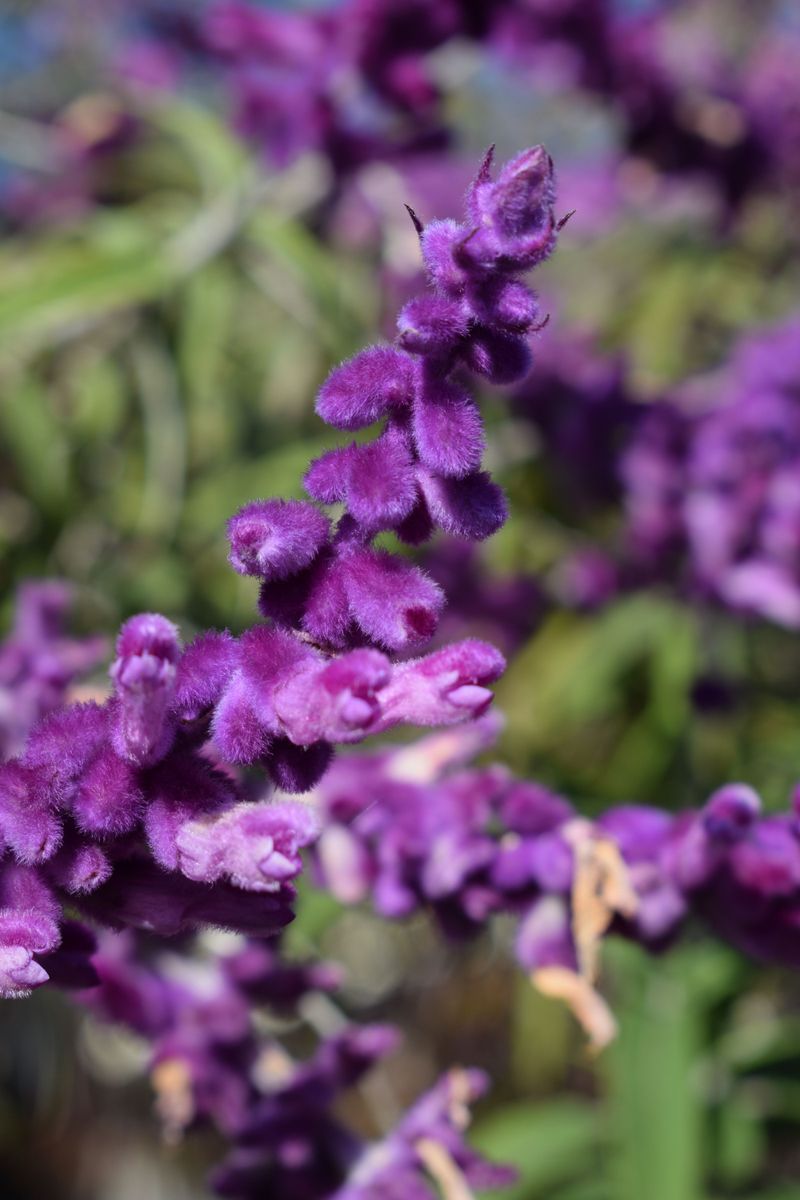
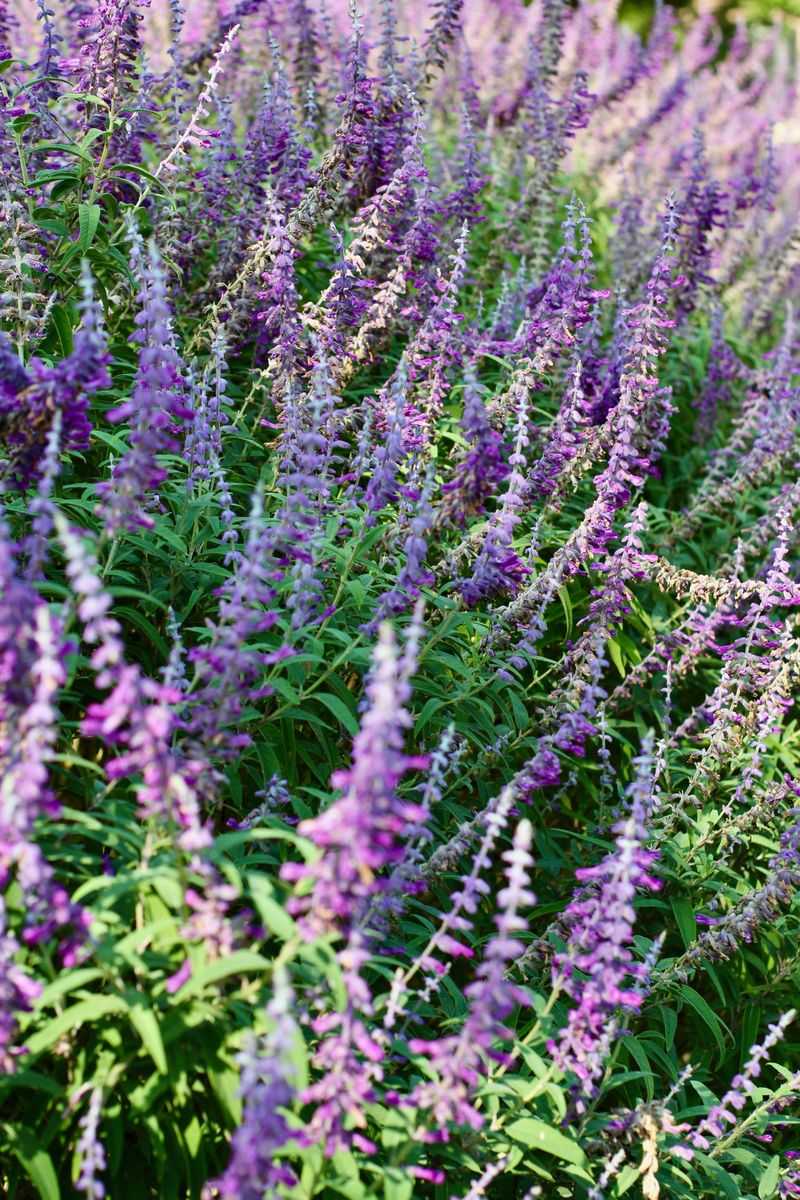
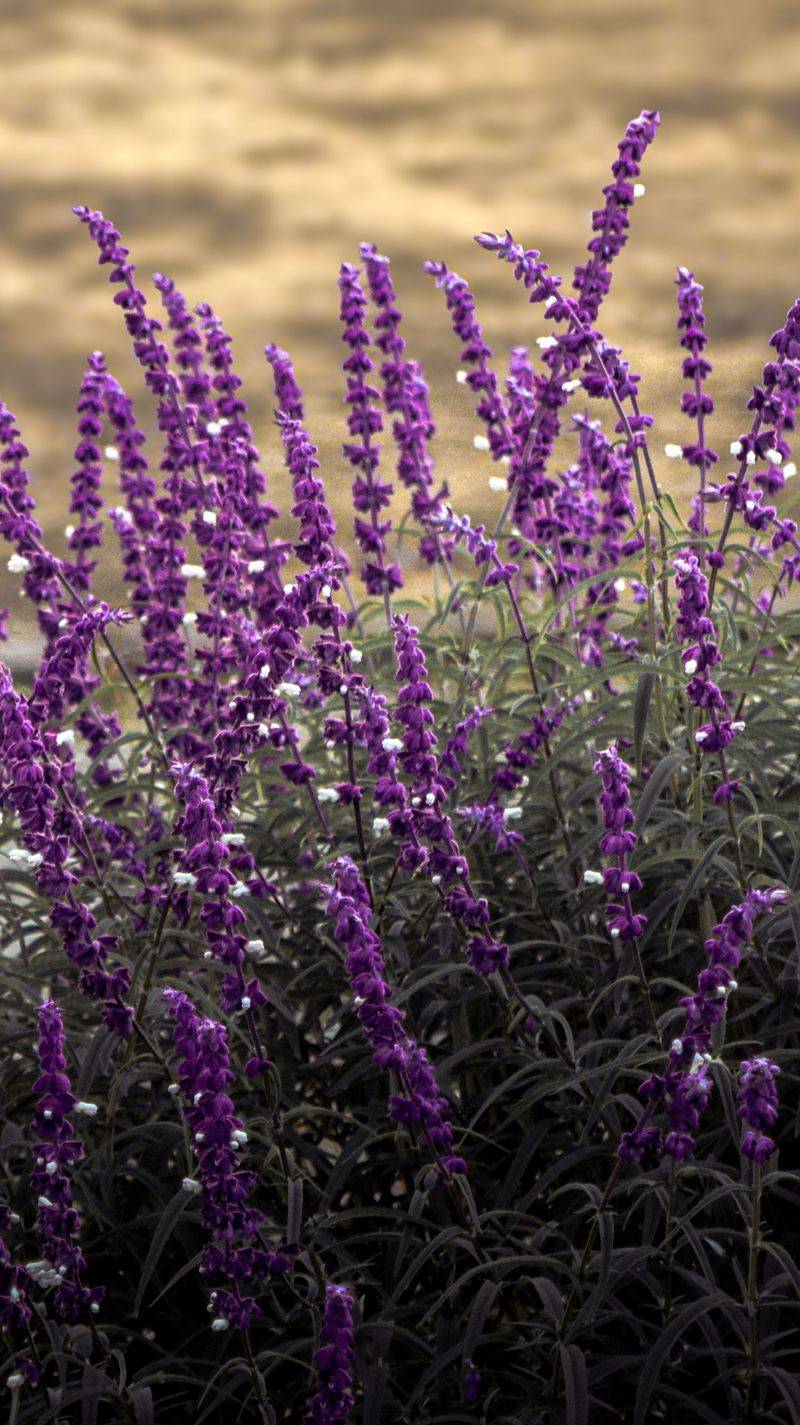
Run your fingers along one of its flower spikes, and you will understand why people can’t stop touching this plant. The blooms feel soft, almost like velvet or felt. That fuzzy texture is one of its most charming features.
The flowers grow on long, arching spikes. Each spike can stretch a foot or more and bends gently outward, like a fountain of purple. When a breeze blows, the whole plant seems to sway and dance.
Your Texas Garden Changes Every Week. Your Plan Should Too.
Gardening in Texas changes quickly throughout the season. Every Friday you’ll receive a simple weekly plan showing exactly what to plant, prune, fertilize, harvest, and protect so you never miss the right timing.
What you see as purple is mostly the calyx. That is the cup-like part that holds each flower. In many plants, small white tubes poke out of the purple cups, giving a lovely two-tone look. Some types are solid purple, and others are purple and white.
Timing is the real magic here. The plant may start showing a few blooms in late summer. Then, as days get shorter, it really takes off. The main show often peaks in October and can last until the first hard freeze.
That timing matters a lot in Texas. By fall, most summer flowers look worn out from the heat. Mexican bush sage steps in and keeps the garden bright when color is hard to find.
Want to enjoy the blooms indoors? Cut a few spikes and put them in a vase. They last a good while, and they also dry nicely. Hang a small bundle upside down in a dry room for a couple of weeks.
Pair it with plants that bloom yellow or orange in fall, like goldenrod or lantana. The purple and gold mix creates a cheerful autumn look that neighbors will notice.
Loved By Hummingbirds And Butterflies
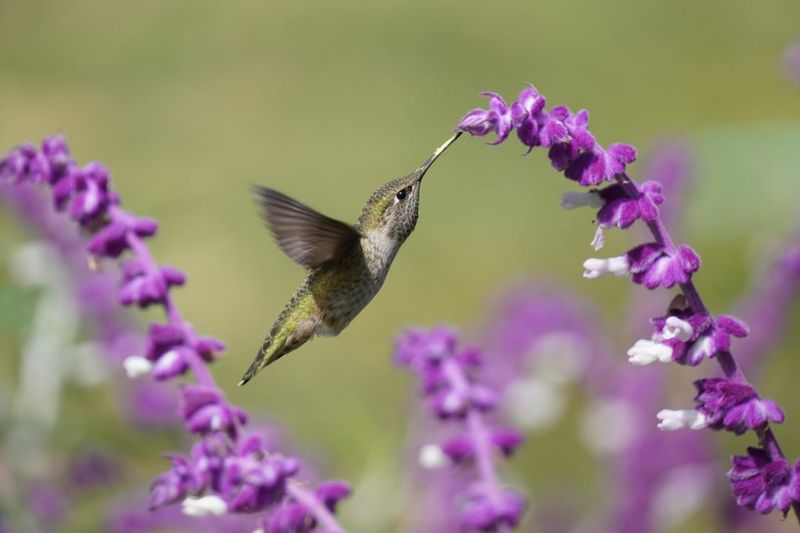
Sit near a blooming Mexican bush sage on a sunny October afternoon, and you might hear a tiny buzz zip past your ear. Chances are, it’s a hummingbird stopping for a snack. These little birds can’t seem to resist the plant.
The secret is in the flower shape. Each bloom is a narrow tube filled with sweet nectar. Hummingbirds have long beaks and tongues that fit right inside, so the flowers work like perfect little fuel cups.
Fall is a busy time for wildlife in Texas. Millions of birds and butterflies pass through the state as they travel south for winter.
Ruby-throated hummingbirds fly all the way to Mexico and Central America. They need plenty of energy for that long trip.
Monarch butterflies also cross Texas in big numbers each fall. They are heading to mountain forests in Mexico. Along the way, they stop at gardens to sip nectar, and Mexican bush sage is a welcome rest stop.
Bees join the party too. Since few flowers are blooming late in the season, this plant gives bees a food source when they really need it. That makes your garden a helpful pit stop for all kinds of pollinators.
Want more visitors? Plant a few bushes together instead of just one. A bigger patch of color is easier for birds and butterflies to spot from the air.
Skip bug sprays near the plant. Chemicals can harm the very creatures you want to attract. Add a shallow birdbath or a dish of water with a few pebbles nearby, and you will turn your yard into a lively wildlife hangout.
Tough Enough For Texas Heat And Drought
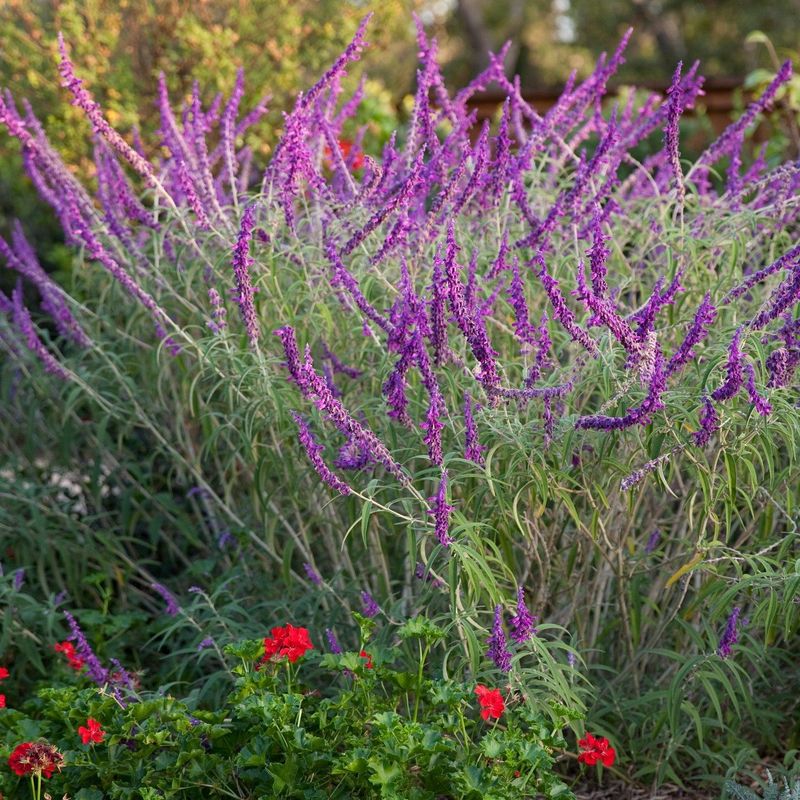
Texas summers can be brutal, and plenty of garden plants simply wilt and give up. Mexican bush sage is not one of them. Once its roots get settled, it handles triple-digit days like a champ.
The first season is the most important. Water a new plant about once or twice a week while it is getting established. After that first year, it usually needs only an occasional deep drink during long dry spells.
Deep watering is the key word. Instead of a quick sprinkle, soak the soil slowly so water reaches the roots. This helps the plant grow deeper roots that can find moisture on their own.
Sunshine is its best friend. Give it at least six hours of full sun each day. In too much shade, it grows tall and weak and produces fewer flowers.
Soil matters just as much. The plant hates soggy roots, so pick a spot that drains well. If you have heavy clay, mix in compost or plant it on a slightly raised bed or mound. Too much water can cause root rot faster than drought can cause trouble.
Here’s a bonus many Texans love. Deer usually leave this plant alone. The leaves are fuzzy and have a strong, herby smell that deer find unappealing. In areas like the Hill Country, where deer munch on almost everything, that is a big deal.
Skip heavy fertilizer, too. Rich feeding makes lots of leaves but fewer blooms. A little compost in spring is plenty for this hardy, low-maintenance shrub.
Simple Care For A Fuller Plant
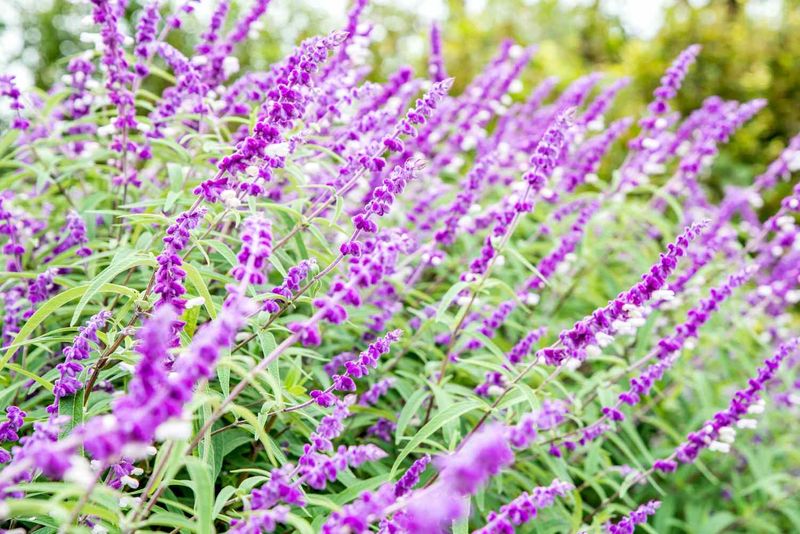
Left alone, Mexican bush sage can get a little wild. It often grows about 3 to 4 feet tall and just as wide. By fall, the heavy flower spikes can make the stems lean over and flop onto the ground.
Luckily, the fix is easy. A light trim in early summer helps the plant stay compact and sturdy. Think of it as a quick haircut that keeps things neat.
Aim for late May or early June. Use clean pruners and cut the stems back by about one third. You can also pinch off the tips of new shoots with your fingers.
Why does this work? When you cut a stem, the plant sends out new side branches. More branches mean a bushier shape. They also mean more spots for flowers to form later on.
Timing is everything, though. Avoid cutting it back after midsummer, around mid-July. The plant starts forming its flower buds as days get shorter. If you trim too late, you may snip off the very stems that would have bloomed in fall.
Already have a floppy plant? Don’t worry. You can tuck a simple plant ring or a few short stakes around it to hold the stems up. Planting it next to sturdy neighbors, like ornamental grasses, also gives it some support.
Leave enough room when you plant, too. Space each bush about 3 to 4 feet apart. Good airflow keeps the leaves healthy and gives every plant space to spread out and shine.
What Happens In Winter
The first time a hard freeze hits, new gardeners often panic. Their beautiful purple shrub turns brown and droopy overnight. It may look like the end, but there is good news hiding underground.
In North and Central Texas, a hard freeze usually knocks the plant back to the ground. The stems and leaves cannot handle the cold. The roots, however, are much tougher and often survive just fine.
When spring warms up, fresh green shoots usually pop up from the base. Within a few months, the plant grows back to full size. It is ready to bloom again by fall, as if nothing happened.
Mulch gives the roots extra protection. Spread a layer about 2 to 3 inches thick around the base in late fall. Shredded bark, pine needles, or chopped leaves all work well. Think of it as a cozy winter blanket.
Leave the brown stems in place during winter. They help shield the crown of the plant from cold winds. Wait until late winter, around February or early March, to cut them back.
Trim the old stems down to a few inches above the ground. This clears space for the new growth coming up. Be careful not to cut any green shoots that have already started.
Gardeners in South Texas and along the coast have it easier. Mild winters there may only nip the tips, and the plant can stay green most of the year.
No matter where you live, a little patience in winter pays off with another round of glorious fall color.