These Are The Texas Native Plants That Keep Producing Through Triple-Digit Heat Without Extra Water
Triple digit heat in Texas is not an exception. It is a season, and it arrives every year with the kind of consistency that separates plants that truly belong here from ones that are just tolerating the climate.
Most plants slow down significantly when temperatures hit that range, redirecting energy toward survival and away from growth and blooming. Texas native plants have a different relationship with that heat entirely.
Many of them were shaped by generations of exposure to exactly these conditions, and they respond to high temperatures in ways that would surprise gardeners used to working with non-natives. Some keep blooming.
Some keep producing. And they do it without supplemental water, running entirely on what Texas rainfall provides.
If you have ever wanted a garden that does not require you to drag a hose around during the worst weeks of summer, native plants are the most practical path to getting there.
1. Autumn Sage
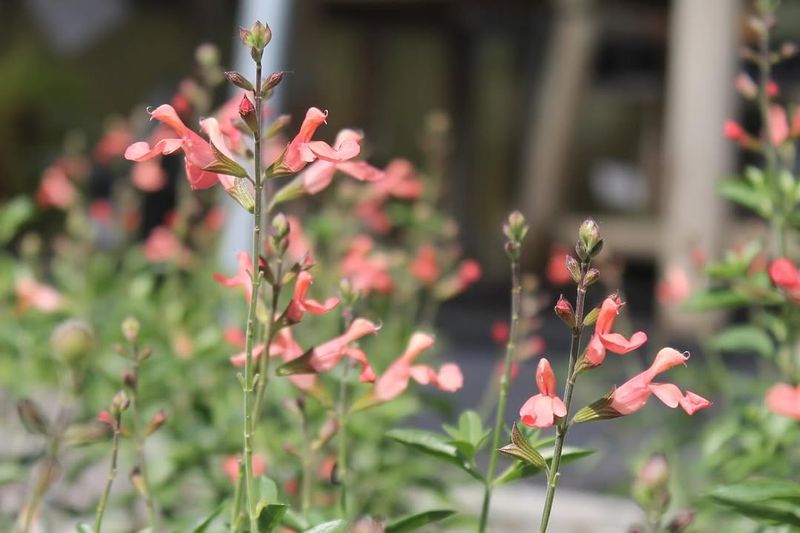
Ask any experienced Texas gardener which plant they trust most in a brutal summer, and autumn sage will almost always come up.
This compact, cheerful shrub pumps out bright red, pink, or coral blooms from spring all the way through fall, barely pausing even when temperatures refuse to drop below 100 degrees.
It is one of those rare plants that seems to get more energetic as the season heats up. Autumn sage (Salvia greggii) is native to the rocky slopes of the Chihuahuan Desert, which stretches across far West Texas and into Mexico. That origin story explains everything.
It evolved in a place where water is scarce, soil is thin, and the sun is relentless. Plant it in well-drained soil, give it a good soak when you first put it in the ground, and then mostly leave it alone.
Overwatering is actually more of a problem than underwatering with this plant. Hummingbirds absolutely love autumn sage.
The tubular flowers are perfectly shaped for hummingbird beaks, so you will likely see them hovering around your plants all summer long.
Butterflies and bees also visit regularly, making this a great choice for anyone who wants to support local pollinators. Deadheading spent blooms encourages even more flowering, but honestly, the plant produces so freely that it barely needs the help.
It stays relatively small, usually reaching two to three feet tall and wide, which makes it easy to fit into almost any garden space.
2. Blackfoot Daisy
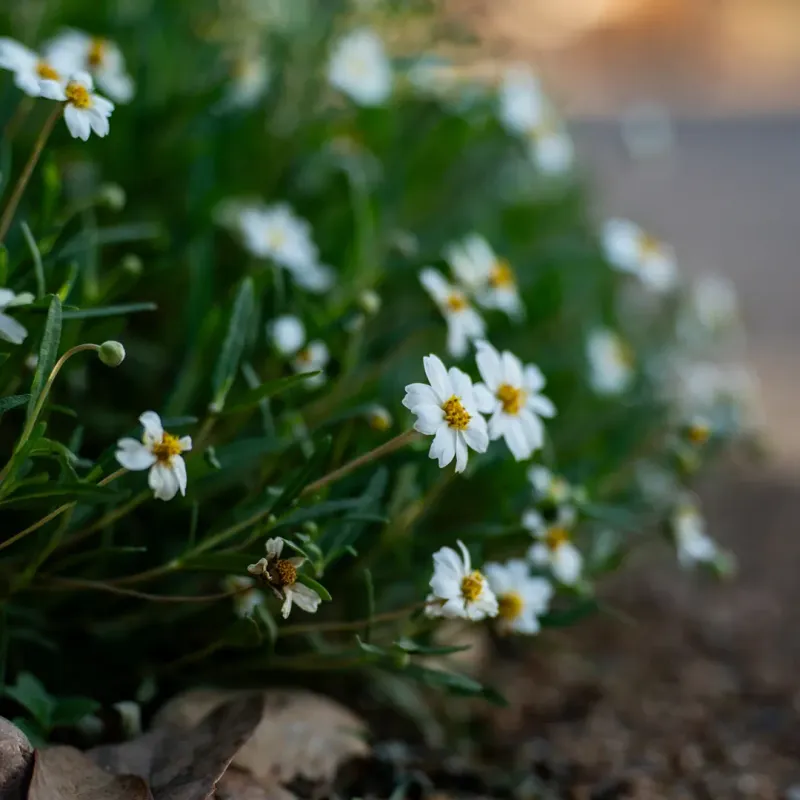
There is something almost magical about a plant that blooms harder during a drought. Blackfoot daisy (Melampodium leucanthum) does exactly that.
When summer stretches on and rainfall becomes a distant memory, this little wildflower just keeps cranking out its cheerful white and yellow blooms.
It looks delicate, but do not let that fool you. Blackfoot daisy is one of the toughest small plants native to Texas.
The name comes from the dark base of each flower head, which looks like a small black foot. Plants typically grow about one foot tall and spread up to two feet wide, forming a tidy, rounded mound covered in flowers.
Your Texas Garden Changes Every Week. Your Plan Should Too.
Gardening in Texas changes quickly throughout the season. Every Friday you’ll receive a simple weekly plan showing exactly what to plant, prune, fertilize, harvest, and protect so you never miss the right timing.
They thrive in rocky or sandy soil with excellent drainage. If your soil stays wet for long periods, blackfoot daisy will struggle.
But in the fast-draining conditions common across Central and West Texas, it absolutely flourishes.
One of the best things about blackfoot daisy is its incredibly long bloom season. In a good year, it can flower almost continuously from late winter through the first frost.
Even during the hottest, driest stretches of July and August, the blooms keep coming. Pollinators, especially bees and butterflies, are drawn to the flowers throughout the season.
Once established, this plant needs almost no supplemental water. You can plant it in a spot with full sun, forget about it for weeks at a time, and come back to find it still covered in flowers. Few plants make Texas gardening feel this easy and rewarding.
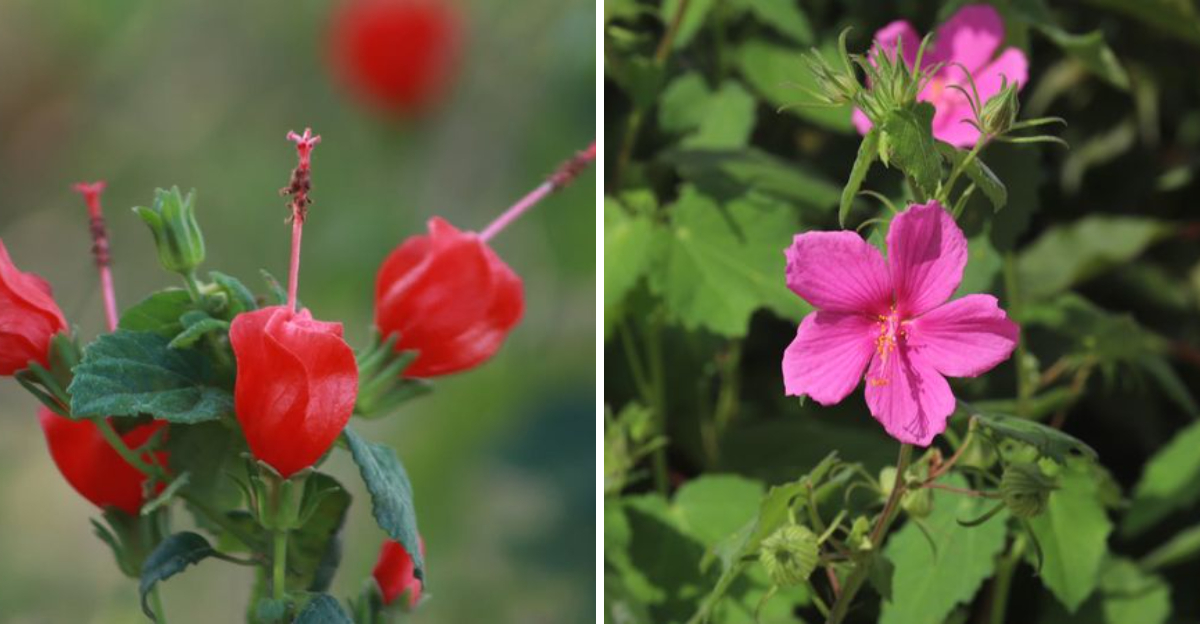
3. Turk’s Cap
Most heat-tolerant Texas natives prefer full sun, but Turk’s cap breaks that rule in the best possible way.
This bold, spreading plant actually prefers partial shade, which makes it a lifesaver for those tricky spots under trees or along shaded fences where other plants refuse to grow.
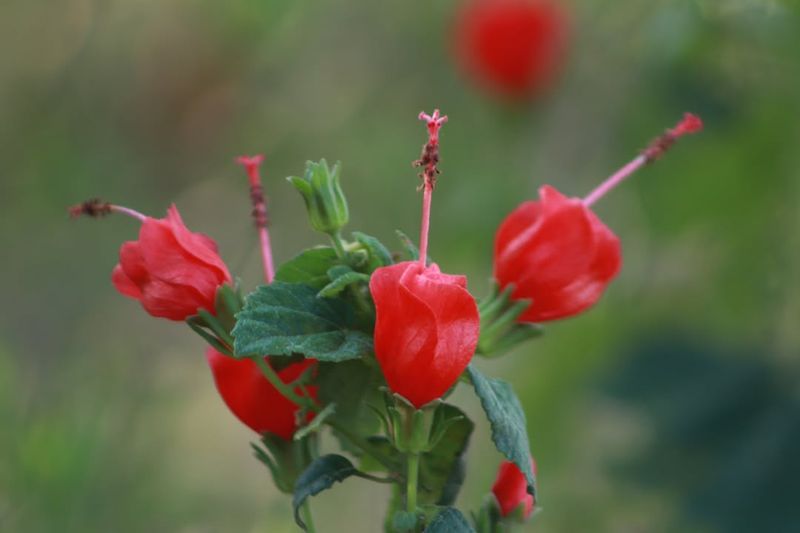
Once it gets established, Turk’s cap becomes nearly unstoppable, pushing through summer heat with lush green foliage and a steady supply of its signature twisted red blooms.
The flowers are unique and instantly recognizable. The petals never fully open, instead staying rolled into a tight spiral that resembles a tiny turban or cap.
Hummingbirds are wild about them, and butterflies frequently visit as well. The plant also produces small red fruits that birds love, so a mature Turk’s cap essentially becomes a wildlife feeding station throughout the warm months.
It is one of the most wildlife-friendly native plants you can grow in Texas. Turk’s cap (Malvaviscus arboreus var. drummondii) can grow surprisingly large, sometimes reaching six feet tall in ideal conditions, though it usually stays a bit smaller in hotter, drier spots.
It spreads over time and can fill in a large area, which is fantastic if you want low-maintenance ground coverage.
Water it regularly during its first growing season to help it get established, and after that it handles drought remarkably well. Cutting it back in late winter encourages fresh, vigorous growth each spring.
Gardeners who plant it once rarely regret the decision, since it just keeps coming back year after year, bigger and better each time.
4. Esperanza
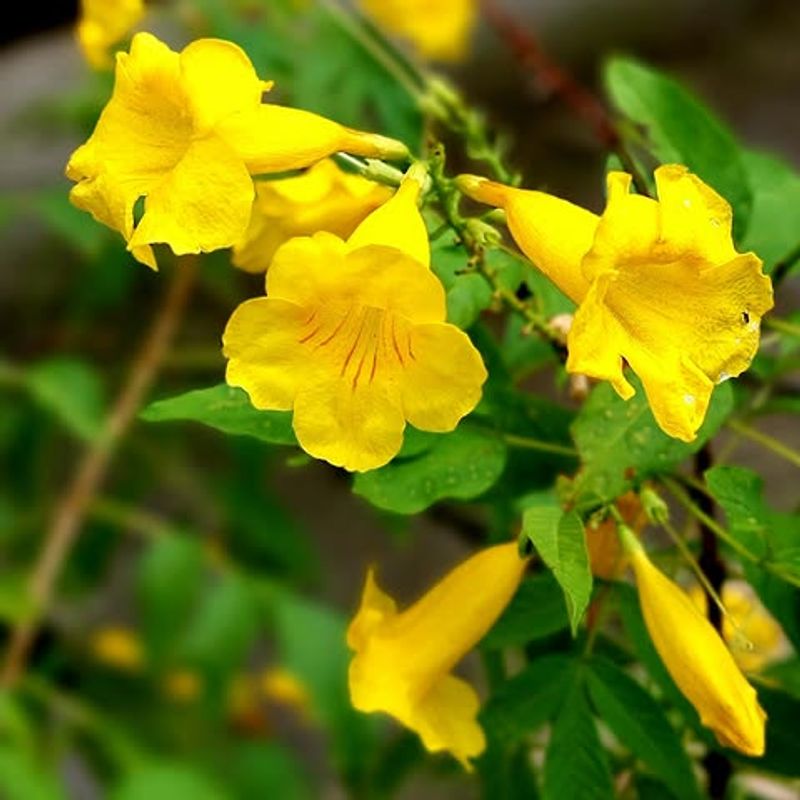
If you want one plant that practically screams Texas summer, esperanza is it. Also called yellow bells, this fast-growing shrub explodes with clusters of brilliant golden-yellow trumpet flowers from late spring all the way through fall.
Even when the heat index pushes past 110 degrees and rain has not fallen in weeks, esperanza just keeps producing blooms. It is bold, bright, and completely unfazed by conditions that make most plants struggle.
Esperanza (Tecoma stans) is native to Texas and the broader southwestern United States, as well as parts of Central and South America. Its name means hope in Spanish, which feels fitting for a plant that keeps going when everything else looks worn out.
It grows quickly, often reaching four to six feet tall in a single season, and it fills out into a full, bushy shape that looks great as a stand-alone specimen or as part of a mixed border. In South Texas, it can behave almost like a small tree.
Hummingbirds and butterflies are absolutely drawn to the trumpet-shaped flowers, making your yard a busy, lively place all summer long. Esperanza prefers full sun and well-drained soil.
It does not need rich soil or heavy fertilizing, and it handles drought with impressive ease once established. Watering deeply but infrequently during the first season helps it develop a strong root system.
After that, it mostly takes care of itself. Cutting it back hard in late winter or early spring keeps the plant tidy and encourages an even bigger flush of blooms when warm weather returns.
5. Flame Acanthus
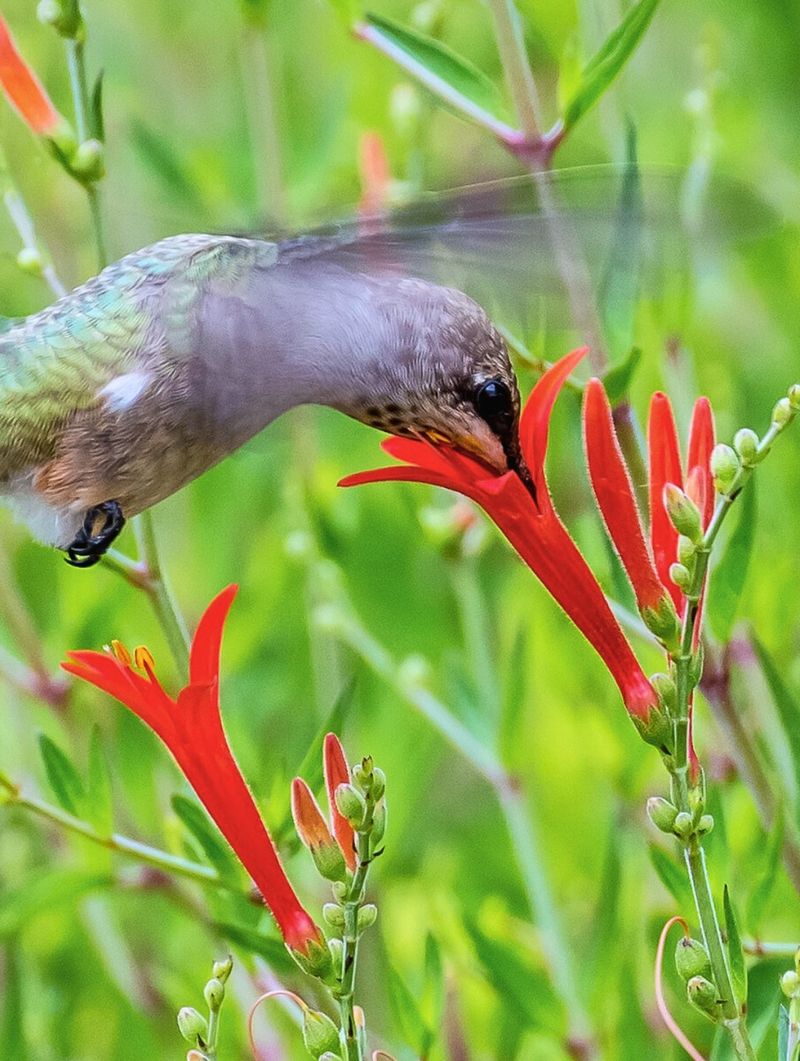
When August rolls around and most of the garden looks exhausted, flame acanthus is just getting started. This native Texas shrub earns its name with clusters of fiery orange-red tubular flowers that blaze against the summer sky.
It blooms most heavily during the hottest, driest part of the year, which is exactly when gardeners need a burst of color the most. It is the kind of plant that makes you look like a genius landscaper with almost no effort.
Flame acanthus (Anisacanthus quadrifidus var. wrightii) is native to the rocky limestone hills of Central and West Texas. It evolved in places where summer drought is simply the normal state of things, not an exception.
Because of that background, it handles heat and dry conditions without complaint. It grows into a rounded shrub, typically three to five feet tall and wide, and it works beautifully as a border plant, a foundation shrub, or even a loose informal hedge.
Hummingbirds treat flame acanthus like a favorite diner. They return to it again and again throughout the day, drawn by the nectar-rich flowers.
Butterflies also visit regularly. The plant is deer-resistant, which is a huge bonus for gardeners in areas with heavy deer pressure.
It grows best in full sun with well-drained soil and needs very little supplemental water once established. In winter, the stems may look bare, but do not be too hasty to remove them.
New growth emerges reliably each spring, and the plant comes back full and vigorous, ready to put on another spectacular summer show.
6. Mealy Blue Sage
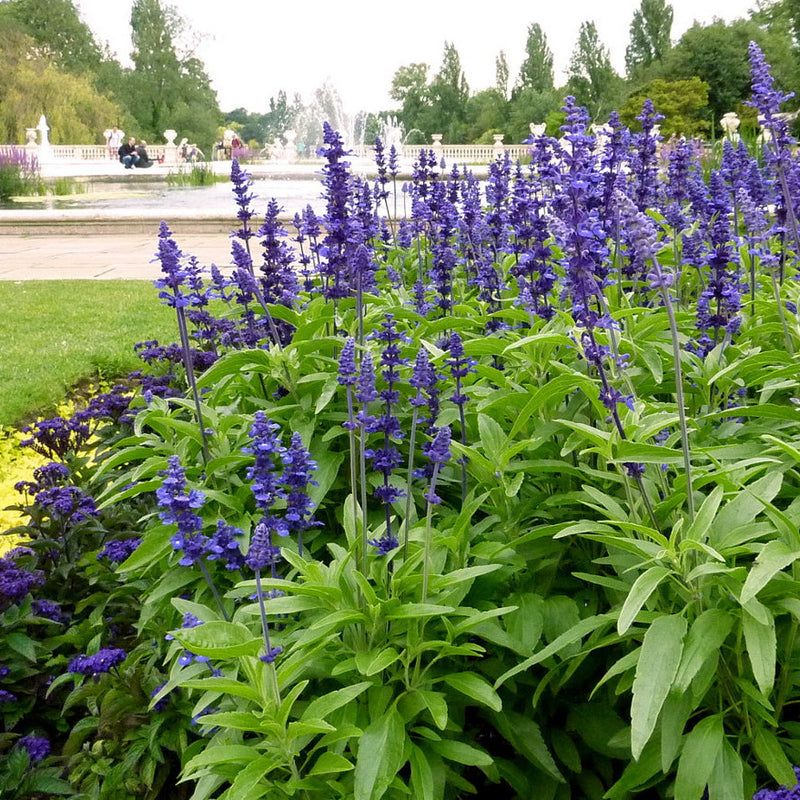
Blue flowers are genuinely hard to find in the summer garden, which makes mealy blue sage feel like a small treasure.
This native Texas perennial sends up tall spikes of soft lavender-blue blooms from spring through fall, providing consistent color during a season when many flowering plants have already faded.
The flowers have a slightly fuzzy or powdery look, which is where the name mealy comes from. It is not the most glamorous name, but the plant itself is quietly beautiful.
Mealy blue sage (Salvia farinacea) is one of the most reliable and low-maintenance natives you can grow in Texas. It thrives in full sun and handles poor, rocky, or sandy soil without complaint.
Drought tolerance is exceptional once the plant gets established in its first season. You do not need to fertilize it, amend the soil extensively, or fuss over it during heat waves.
It simply grows, blooms, and keeps doing its thing regardless of what the weather throws at it.
Pollinators go absolutely wild for mealy blue sage. Bumblebees, honeybees, and a wide variety of butterflies visit the flowers constantly throughout the season.
It is also a larval host plant for several native bee species, making it an important plant for supporting local ecosystems. The plant typically grows two to three feet tall and spreads into a tidy clump over time.
Cutting it back by about a third in midsummer can refresh the plant and encourage a fresh flush of blooms heading into fall. It is the kind of dependable, pretty, and purposeful plant every Texas garden should include.
7. Rock Rose
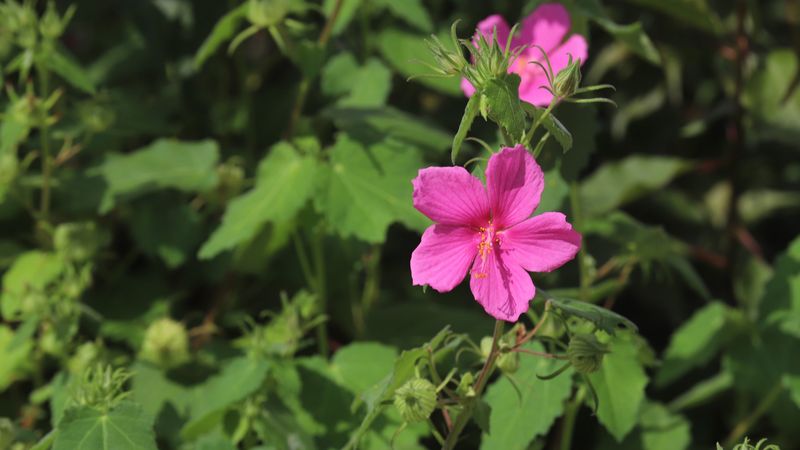
Pavonia lasiopetala does not get nearly enough credit. Commonly called rock rose, this cheerful Texas native produces its soft pink, hibiscus-like flowers all summer long, even in the kind of reflected heat that radiates off limestone walls, concrete driveways, and rocky hillsides.
Most plants wilt in those conditions. Rock rose seems to enjoy them. It is a plant built for the places in your yard that feel almost too harsh for anything to grow.
Rock rose is native to the Edwards Plateau region of Central Texas, where thin rocky soil and blazing summer sun are just facts of life. It typically grows two to four feet tall and has a somewhat open, airy structure with soft, velvety leaves.
The flowers are not huge, but they are produced in such abundance and over such a long season that the plant always looks full of color. Each flower lasts just one day, but new blooms open every morning, so the display never really stops.
One of the standout qualities of rock rose is how well it handles poor soil. You do not need to improve your soil or add lots of compost before planting it.
In fact, overly rich soil can make it grow too fast and floppy. Plant it in a sunny, dry spot, water it through its first summer to help it settle in, and then scale back dramatically.
Deer tend to leave it alone, which is a welcome bonus in many Texas neighborhoods. Butterflies and hummingbirds visit the blooms regularly, adding life and movement to even the hottest corners of your yard.