This Pretty Wildflower In Your Illinois Yard Might Be An Invasive Species
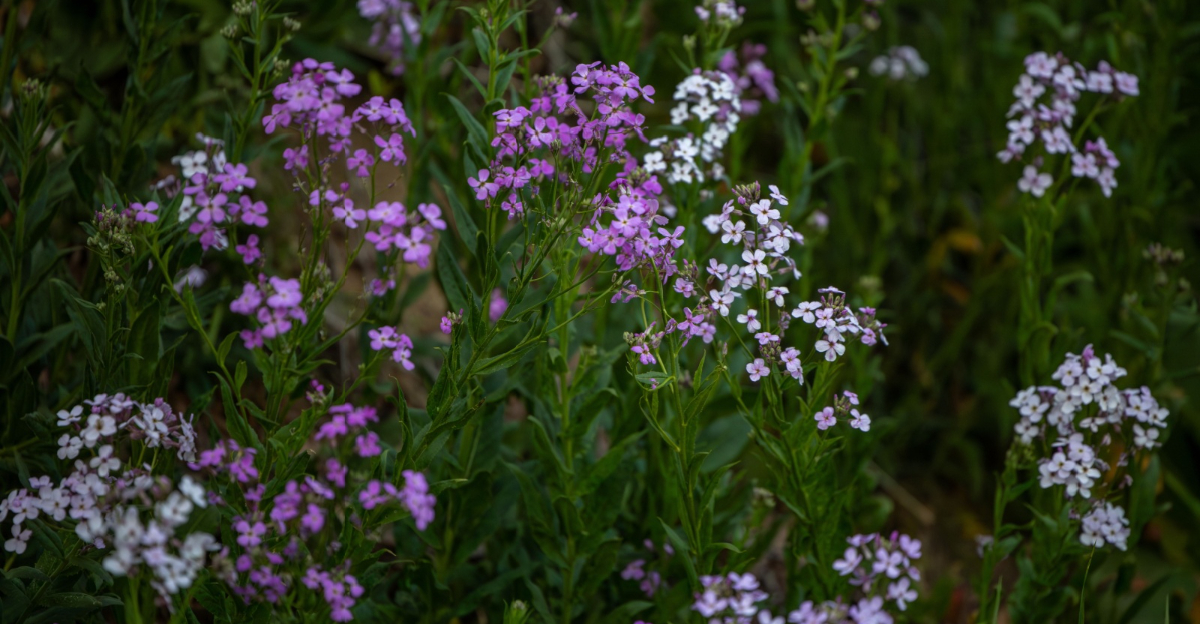
Every spring, Illinois yards get a little more colorful, and not always in a good way.
This particular plant shows up uninvited, looking so pretty that most homeowners actually thank it for coming.
Purple blooms, delicate petals, and you didn’t lift a finger.
What’s not to love?
Quite a bit, it turns out.
This charming plant has been fooling Midwest gardeners for decades, passing itself off as a native wildflower while quietly taking over everything around it.
It doesn’t bulldoze. It doesn’t look threatening. It just blooms, seeds, and spreads, season after season, while you admire it from your kitchen window.
By the time most people realize what they’re dealing with, it’s already next door.
The good news is that once you know what you’re actually dealing with, it’s easy to spot and even easier to remove.
All that’s left is replacing it with something your local ecosystem will genuinely appreciate.
Four Petals That Give It Away
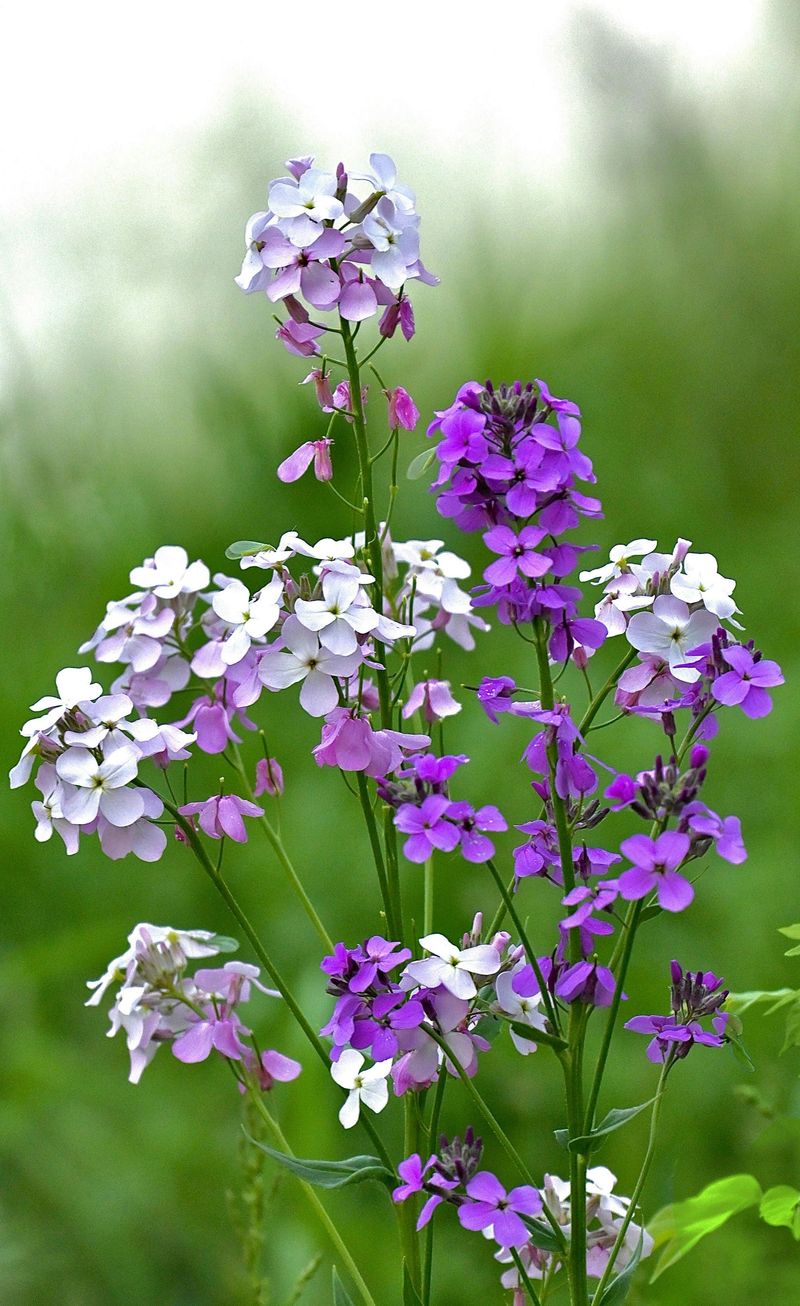
Four petals are the secret handshake of the mustard family, and Dame’s Rocket is a card-carrying member.
Most people mistake it for native phlox, but here is the fast trick: native phlox has five petals, while Dame’s Rocket has four.
Once you know that, you will never mix them up again.
Dame’s Rocket, known scientifically as Hesperis matronalis, produces tall stalks that can reach four feet high.
The blooms come in shades of purple, pink, and white, and they smell absolutely wonderful in the evening air.
That fragrance is part of what made European settlers bring it over in the 1600s as a garden plant.
The leaves are lance-shaped, slightly toothed along the edges, and covered in fine hairs.
They alternate up the stem in a pattern that feels almost architectural when you look closely.
Spotting these details early in the season, before full bloom, is your best chance to catch it before it spreads.
Recognizing this invasive wildflower in Illinois is the first step toward protecting your yard and the wild spaces nearby.
Once you train your eye, you will start seeing it everywhere, roadsides, forest edges, and suburban gardens alike.
A Wildflower Imposter In Plain Sight
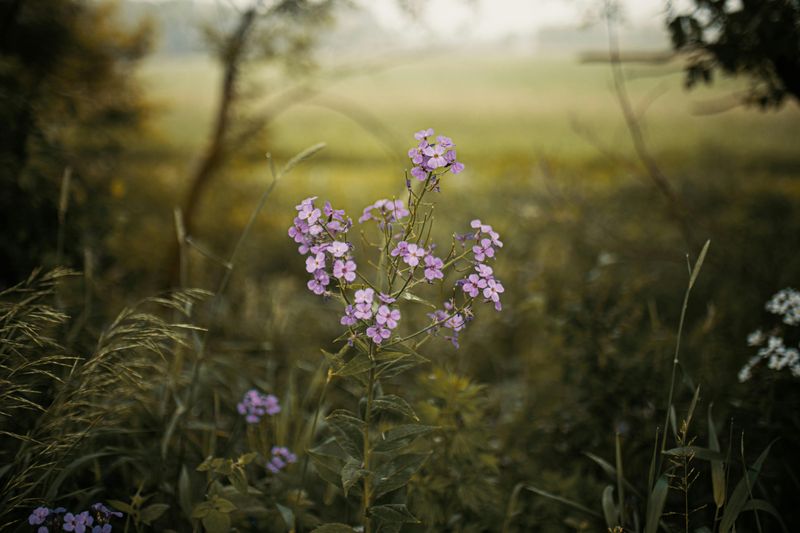
Imagine planting what you think is a native wildflower mix and accidentally releasing an ecological imposter into your backyard.
That is exactly what happens to thousands of Illinois homeowners every single year.
Dame’s Rocket is legally sold in many wildflower seed packets, often labeled simply as a colorful meadow bloom.
The plant looks so much like native species that even experienced gardeners get fooled.
Wild blue phlox, sweet William, and woodland phlox all share that same loose cluster of pastel flowers.
But those natives support local pollinators in ways Dame’s Rocket simply cannot match.
Honeybees and butterflies will visit Dame’s Rocket for nectar, so it is not completely useless to wildlife.
However, the specialist insects that evolved alongside native plants, like certain native bees, get almost nothing from it.
Your Illinois Garden Changes Every Week. Your Plan Should Too.
Gardening in Illinois changes quickly throughout the season. Every Friday you’ll receive a simple weekly plan showing exactly what to plant, prune, fertilize, harvest, and protect so you never miss the right timing.
Over time, a yard dominated by this species offers little to the specialist insects that depend on native plants.
Seed packet labeling varies widely, and not every species inside is clearly listed.
Always buy from reputable native plant nurseries and check the Latin name before anything goes in the ground.
A little label-reading now can prevent a whole lot of ecological headaches later, and your local pollinators will genuinely thank you for it.
The Speed Of Its Spread
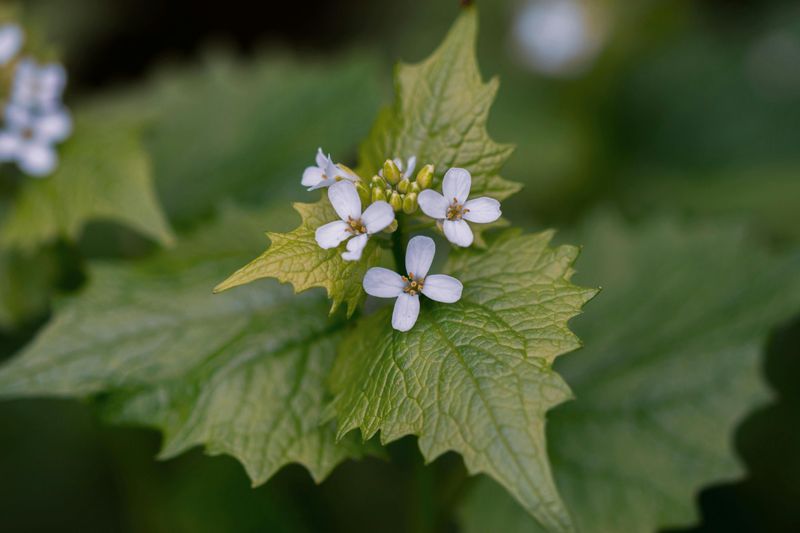
One Dame’s Rocket plant can produce up to thousands of seeds in a single growing season.
That number is not an exaggeration.
Those seeds travel by wind, water, animals, and even on your shoes after a walk through a weedy field.
By the time you notice a problem, the plant has already sent scouts far beyond your property line.
This species is biennial, meaning it grows leaves the first year and flowers the second.
That two-year cycle tricks people into thinking nothing bad is happening while the plant quietly builds its root system and prepares to explode.
When bloom time finally arrives, the seed production is staggering.
Illinois roadsides and forest preserves have documented significant Dame’s Rocket infestations over the past two decades.
The plant thrives in disturbed soil, which makes highway shoulders, construction sites, and freshly turned garden beds its favorite real estate.
Anywhere the ground has been recently disrupted is essentially a welcome mat for this fast-moving species.
Understanding how quickly this plant moves helps you act before the situation gets out of hand.
A single plant left to seed can turn into a sprawling patch within just two or three seasons.
The faster you act, the less ground it gains.
Its Impact On Illinois Ecosystems
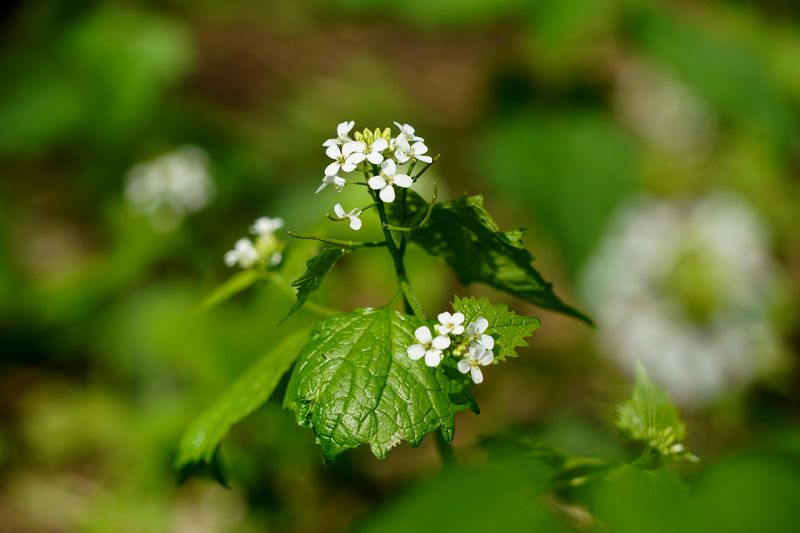
Native spring wildflowers in Illinois have been quietly disappearing.
Dame’s Rocket is one of the reasons why.
Plants like trout lily, wild ginger, and bloodroot depend on open forest floors to germinate and thrive.
When an aggressive non-native species moves in and shades that ground out, those delicate natives simply cannot compete.
The problem goes deeper than just crowded space.
Dame’s Rocket may affect the soil conditions around its roots in ways that can discourage native plant germination.
Over several seasons, a patch of this species can essentially redecorate an entire ecosystem to suit itself.
Birds that depend on native seed sources lose out when non-native plants dominate a landscape.
Insects that evolved to feed on specific native plants find nothing useful in a field of Dame’s Rocket.
Over time, the effects can travel up the food chain, from soil microbes to the birds that depend on native seed sources.
Illinois forest preserves and conservation groups spend significant resources trying to control infestations every single year.
Volunteer pull events, herbicide treatments, and replanting programs are all part of the ongoing battle.
Every yard that removes this species and replaces it with native plants becomes a small but meaningful victory for local biodiversity.
The ecosystem does not need a perfect solution, just a lot of people making slightly better choices.
The Right And Wrong Way To Remove It
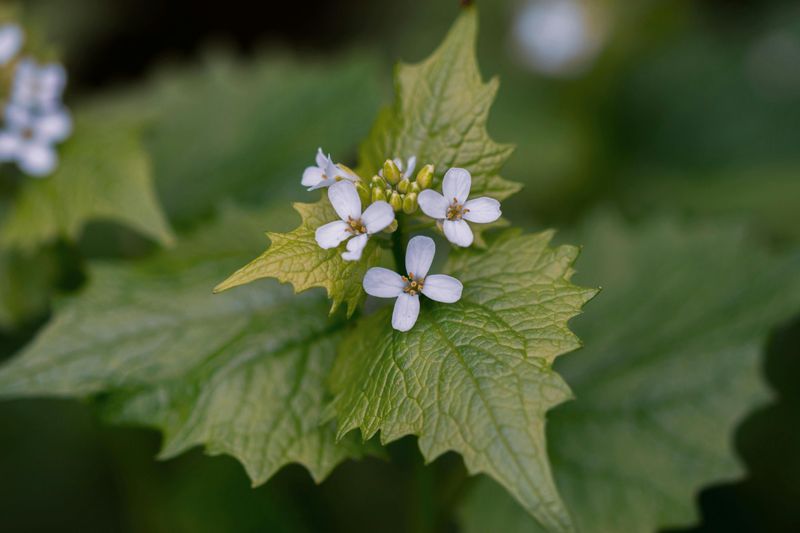
Pulling Dame’s Rocket out of the ground feels satisfying, but doing it wrong can actually make the problem worse.
If you yank the plant after it has already gone to seed, you scatter hundreds of seeds right back into the soil.
Timing your removal is everything with this species.
The best window for hand-pulling is early spring, before the plant bolts and blooms.
Grab the base of the stem as close to the soil as possible and pull slowly to get the taproot out intact.
Leaving root fragments behind often means the plant regrows, which defeats the whole purpose of the effort.
Bag everything you pull and put it in the trash, not the compost bin.
Composting Dame’s Rocket can allow seeds to survive and spread when you use that compost later in the season.
The trash is the only safe destination for this particular garden guest.
For large infestations, hand-pulling alone may not be enough, and that is completely okay to admit.
Consult your local Illinois extension office or a certified horticulturist for guidance on targeted herbicide use if needed.
Always follow label directions carefully and consider hiring a professional for anything beyond a manageable patch.
Removing this invasive wildflower correctly the first time saves you from doing the job all over again next spring.
Native Plants Worth Growing Instead
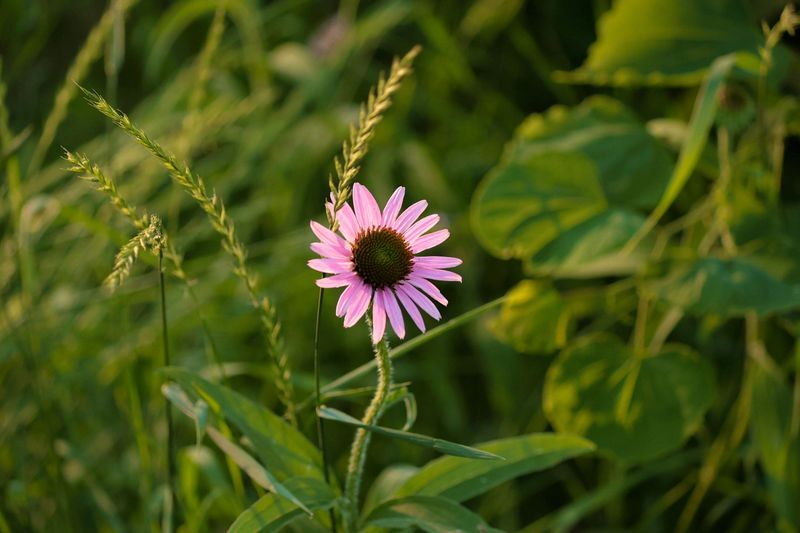
Swapping out Dame’s Rocket for native alternatives is one of the most rewarding things a gardener can do for local wildlife.
Native plants evolved alongside local insects and birds over thousands of years, creating relationships that non-native species simply cannot replicate.
Your yard can be just as gorgeous and ten times more useful to the ecosystem.
Wild blue phlox is the most obvious replacement since it looks almost identical to Dame’s Rocket from a distance.
It blooms in early spring, spreads gently without taking over, and supports native bees in ways that matter.
Plant it along a shaded border and watch it slowly form a soft, fragrant carpet over the years.
Prairie blazing star, purple coneflower, and wild bergamot are three more Illinois natives that bring serious color to a sunny yard.
All three are drought-tolerant once established, meaning less watering and less maintenance for you.
Monarch butterflies, goldfinches, and native bumblebees will show up almost immediately once these plants are in the ground.
Sourcing native plants from reputable Illinois nurseries ensures you are getting locally adapted genetics, not just a plant with a native-sounding name.
Ask specifically for straight-species plants rather than cultivars when possible, as cultivars sometimes lose traits that benefit wildlife.
Building a yard full of genuine natives is an investment that pays off in beauty, biodiversity, and the quiet satisfaction of doing something genuinely good.
What To Do If Your Yard Is Already Full Of It
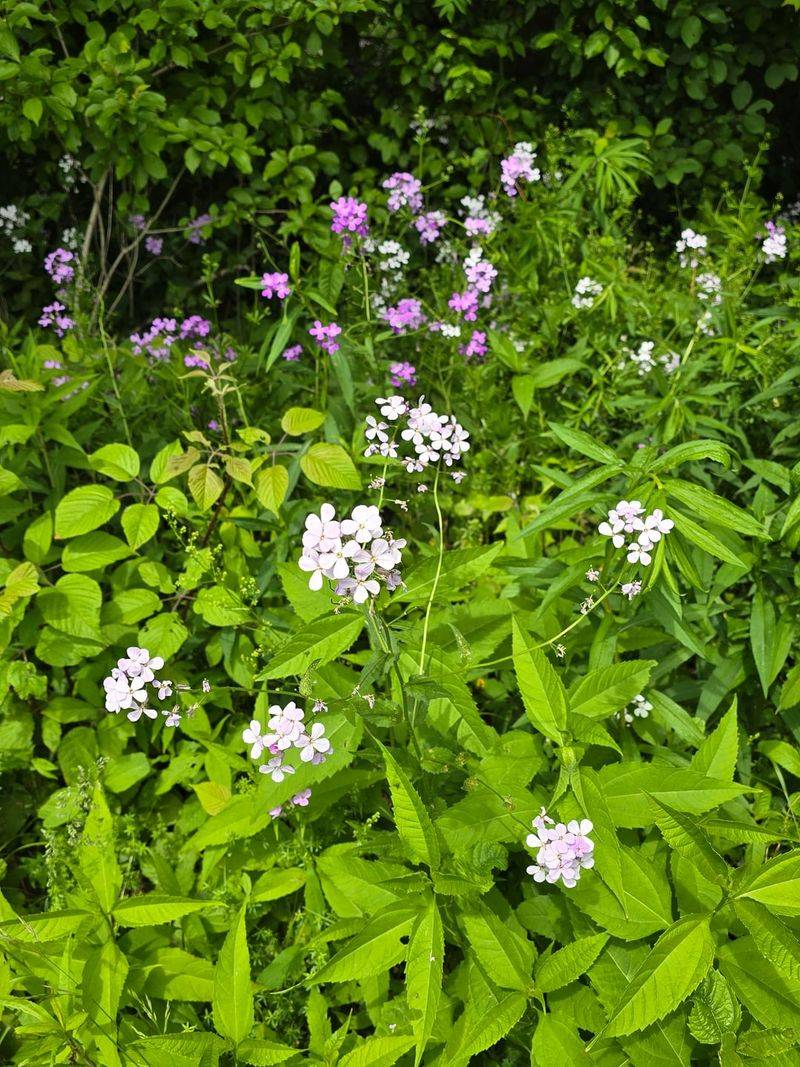
Discovering your entire back slope is covered in Dame’s Rocket can feel overwhelming, but do not panic.
Even large infestations can be managed with a consistent, multi-season approach.
Patience and persistence matter far more here than any single heroic garden intervention.
Start by mapping out where the plant is most dense and prioritize those areas first.
Removing the heaviest patches before they go to seed stops the next generation from even getting started.
Think of it less like a single battle and more like a gradual reclaiming of territory.
After removal, replant cleared areas quickly with native species to prevent Dame’s Rocket from simply returning.
Bare soil is an open invitation, so filling that space with something intentional is a crucial part of long-term control.
Native ground covers like wild ginger or Pennsylvania sedge work especially well for shady spots.
Connect with local conservation groups in Illinois who organize community removal events in forest preserves and natural areas.
These groups often provide free native plants to participants as a thank-you for their volunteer hours.
Your personal yard battle becomes part of a much larger regional effort when you join forces with neighbors and local organizations.
This invasive wildflower spread across Illinois one yard at a time, and it can be pushed back the same way, one determined gardener at a time.