This Saddle-Marked Plant Can Leave Virginia Gardeners Reaching For The Ice Pack
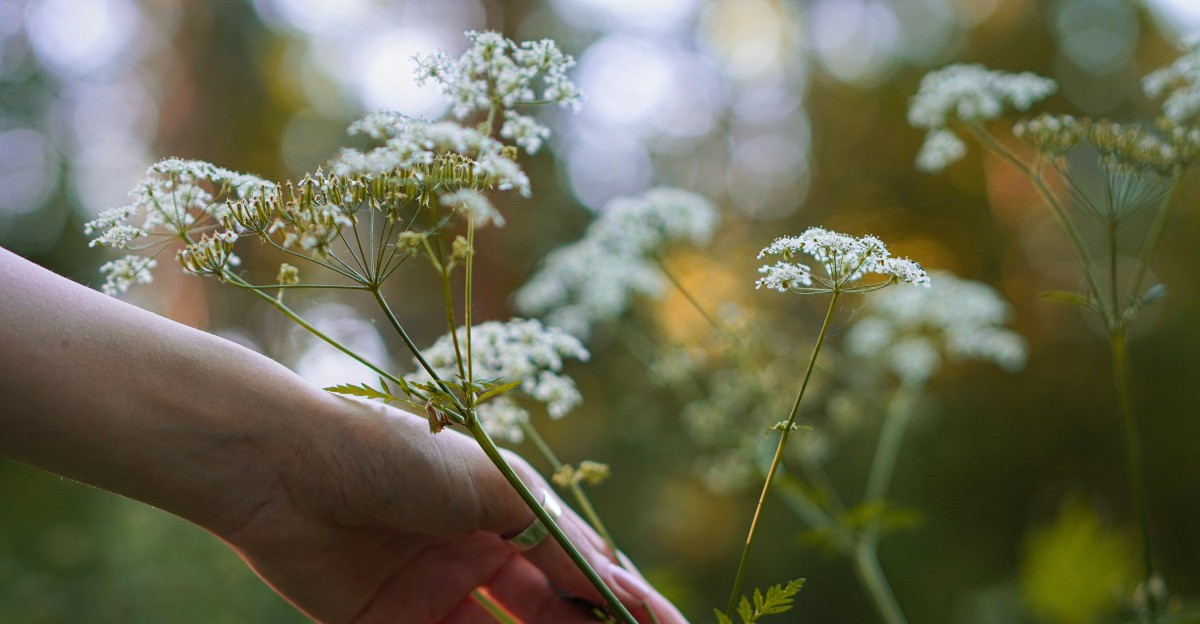
A single plant can stand taller than a basketball hoop and burn your skin with nothing more than its sap and a sunny afternoon. No thorns are involved. No sting either.
The trick hides in clear, watery juice inside thick, hollow stems splashed with reddish-purple blotches. Sunlight does the rest, and blisters can show up a day or two later. Scars and dark marks may linger for months.
I am surprised by how many gardeners in Virginia have never heard of it. You might walk past its giant, jagged leaves along a creek bank and think it looks tropical and fun.
A cousin in the same family even grows wild in roadside ditches and old fields across much of the state, and Virginia’s native look-alikes make the confusion worse.
So how do you tell the troublemaker from its look-alikes, some of which are native and milder but can still irritate skin? And what should you do if the sap reaches your arm?
Those Purple-Blotched Hogweed Stems Hide a Sunny Surprise
A plant that hurts you only after the sun comes out sounds like a riddle. The burn from giant hogweed works exactly that way, and doctors call it phytophotodermatitis.
The stem and leaves hold sap packed with chemicals called furanocoumarins. When that sap touches bare skin, it makes the skin extra sensitive to ultraviolet light. Sunshine then sparks a chemical reaction that damages skin cells, much like a bad burn.
No allergy is needed. Anyone can react, from kids playing in a field to a seasoned gardener pulling weeds in shorts. The sap is clear and watery, so you may not even notice it on your arm.
Redness often appears within a day. Over the next 36 to 72 hours, painful blisters can swell up, sometimes in streaks that match where a stalk brushed your skin.
That timing fools many people because they rarely connect the blisters to yesterday’s yard work.
The burn is the main reason Virginia lists giant hogweed as a noxious weed. Its sap gets into skin easily when stems are cut, snapped, or trimmed with a string trimmer.
Spray from a trimmer is a common way people get hurt, so keep power tools away from any plant you suspect.
Giant Hogweed Is the Saddle-Marked Culprit Behind the Burns
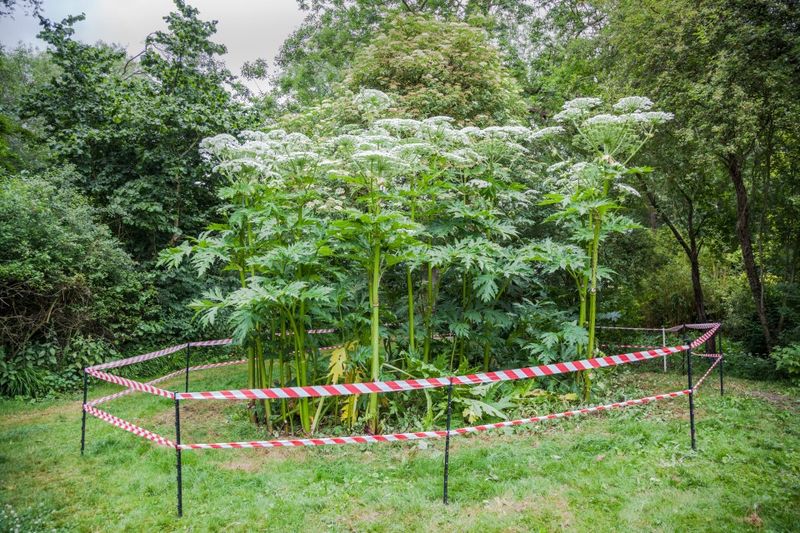
Size is your first big clue. Giant hogweed, or Heracleum mantegazzianum, can reach 15 feet or more, which makes most garden weeds look like toddlers. Look at the stem next. It is thick, hollow, and often 2 to 4 inches wide at the base.
Purplish-red splotches and coarse white hairs cover it, and the hairs gather heavily around the leaf joints. Those blotchy marks are one of the plant’s most reliable identifying features.
Leaves can stretch up to 5 feet across. They are deeply cut into jagged lobes, a bit like a giant, rough-edged maple or rhubarb leaf.
Flowers arrive from late spring into midsummer as flat white umbrellas that may span 2 to 3 feet.
The plant came from the Caucasus region and was first grown in the U.S. as an ornamental curiosity. It is now a federal noxious weed, and Virginia also regulates it.
Confirmed sightings in the state are fairly rare, mostly found in a few northern and western counties, so a report still matters to officials. Spotting one? Snap clear photos of the stem, leaf, and flower head, then keep your distance.
Cold Water and Shade Come First After Hogweed Sap Touches Skin
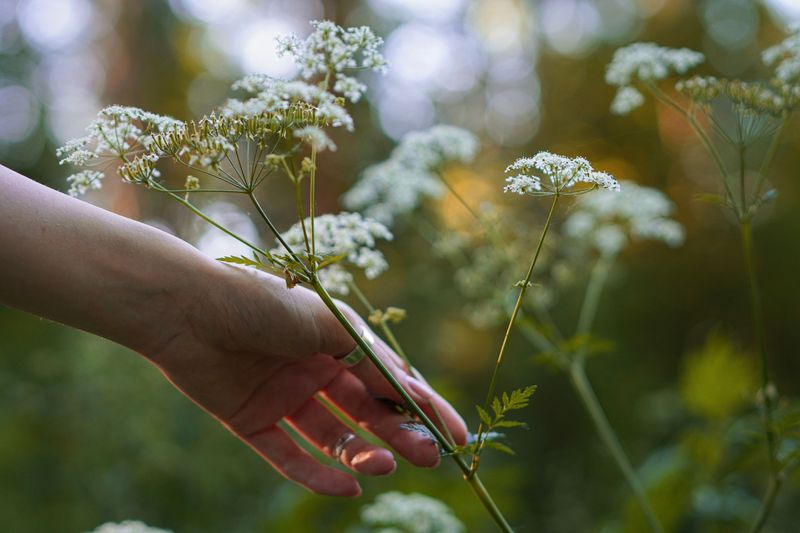
Speed beats everything here. The faster you act, the less sap has time to soak in and react with sunlight.
Get out of the sun right away. Head indoors or into deep shade, then wash the area with cool water and mild soap. Scrub gently but well, since the sap is clear and easy to miss.
Keep that skin covered for at least 48 hours afterward. Long sleeves, a loose bandage, or simply staying inside will help.
Even weak daylight through clouds can still trigger a reaction on freshly exposed skin. Got sap in your eyes? Rinse with clean water for several minutes and wear sunglasses. Then call a doctor, because eye exposure can be serious.
The ice pack from the headline helps after the fact. Cool compresses ease the heat and sting of a burn that has already started. Over-the-counter pain relievers and a doctor’s advice on creams can also help.
See a medical provider if blisters spread, look infected, or cover a large area. Large burns sometimes need the same care as a regular burn. Mention the plant by name so your provider knows what caused it.
Wild Parsnip’s Yellow Umbrellas Cause Far More Burns Than You Expect
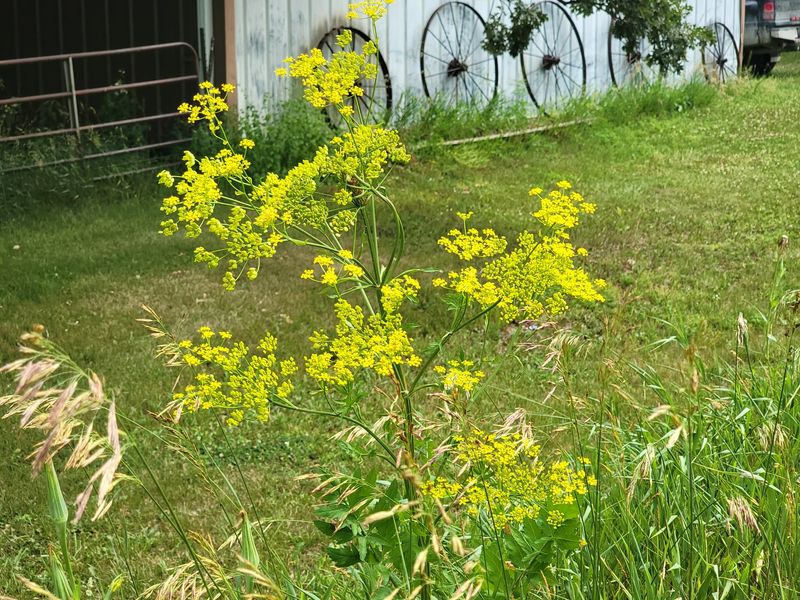
Honestly, the plant most Virginians are likely to meet is not giant hogweed at all. Wild parsnip is far more common, popping up along roadsides, pastures, and the edges of neglected fields.
It carries the same family of sun-activated chemicals. Brush against a broken stem on a bright day, and you can end up with the same red streaks and blisters. The look is quite different, though. Wild parsnip usually grows 2 to 5 feet tall.
Its stems are green and deeply grooved, with no purple blotches. Flowers form flat clusters of bright mustard-yellow blooms from late spring into summer.
Leaves are divided into toothed leaflets along a central stalk. Young plants spend their first year as a low rosette before shooting up a flower stalk the next season.
Fun fact: this is the wild form of the garden parsnip. It escaped cultivation long ago and spread widely across North America.
Mowing crews and hikers in shorts get burned most often. If a weedy yellow umbrella is near your trail or fence line, wear long pants and gloves before you pull or cut it.
Native Cow Parsnip Looks Like a Gentler Twin
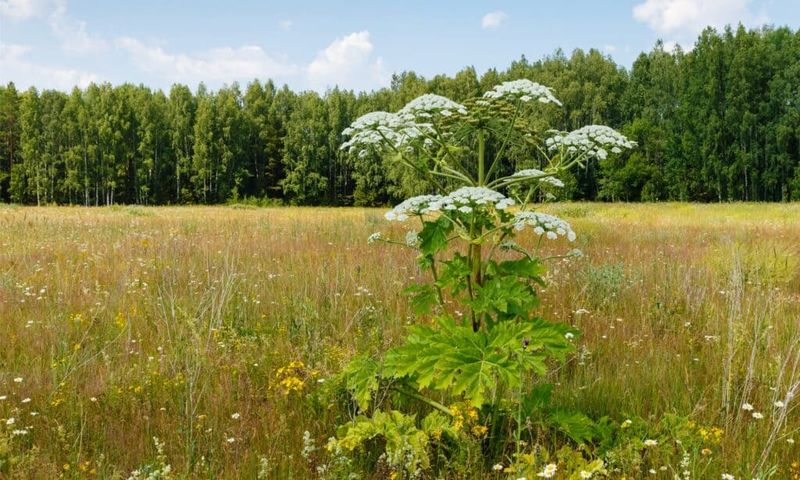
Plenty of hogweed scares turn out to be cow parsnip. It is a native relative, Heracleum maximum, and it grows in moist meadows and stream banks in parts of Virginia, especially in the mountains.
The resemblance is real. Both have white umbrella flowers and big lobed leaves. Cow parsnip is smaller, usually 5 to 8 feet tall, with flower heads under a foot wide.
Check the stem closely. Cow parsnip’s stem is green, grooved, and softly fuzzy, and it may show a faint purple tint. It lacks the bold purple splotches and stiff bristles of giant hogweed.
Leaves offer another clue. Cow parsnip leaves are wide and somewhat maple-shaped, while giant hogweed leaves are more sharply cut and much larger.
Native does not mean harmless, though. Cow parsnip sap can also cause sun-triggered skin burns, often milder ones. Treat it with the same respect and wear gloves near it.
The upside is that pollinators love its broad flower tops. Bees, beetles, and small wasps visit by the dozen.
If it grows in a wild corner where nobody brushes against it, many gardeners simply admire it from a comfortable distance.
Long Sleeves and Gloves Keep Hogweed Sap Off Your Arms
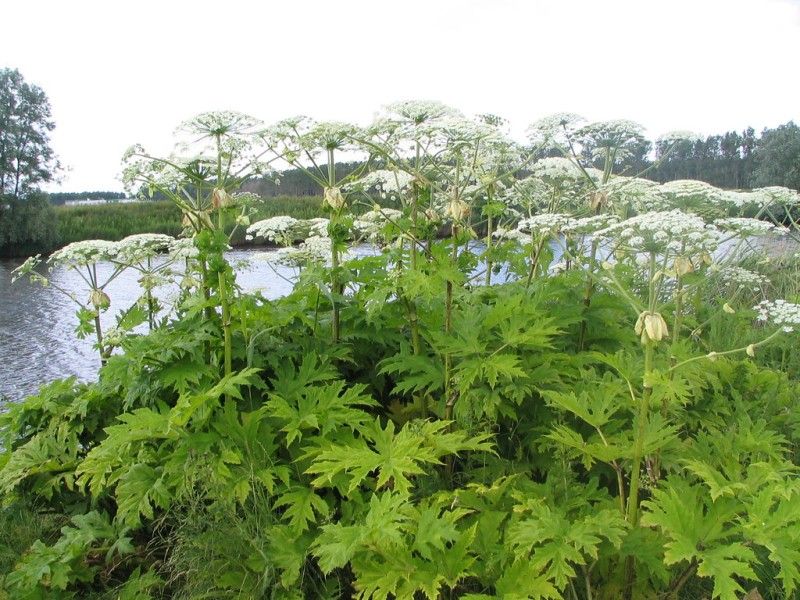
My favorite rule for summer weeding is simple: cover up before you get curious. A long-sleeved shirt has saved my forearms more times than I can count.
Wear long pants, closed shoes, and waterproof gloves around any tall plant with umbrella-shaped flowers. Cloth gloves can soak up sap, so rubber or nitrile works better. Add safety glasses, since snapped stems can spray.
Cloudy days and early mornings are smarter work times. Less sun means less chance of a reaction if a little sap slips through.
Skip the string trimmer and mower near these plants. Power tools fling sap and plant bits onto legs and faces, which is one of the most common ways people get burned.
Afterward, peel off gloves carefully so the outside never touches your skin. Wash clothing separately, and rinse tools with soap and water.
Teach kids this one too. Hollow hogweed and parsnip stems look like perfect pretend telescopes or pea shooters, and children have been burned that way.
Pets can carry sap on their fur as well. If your dog romps through a patch, rinse its coat wearing gloves.
Report That Giant Umbrella Weed Instead of Chopping It Yourself
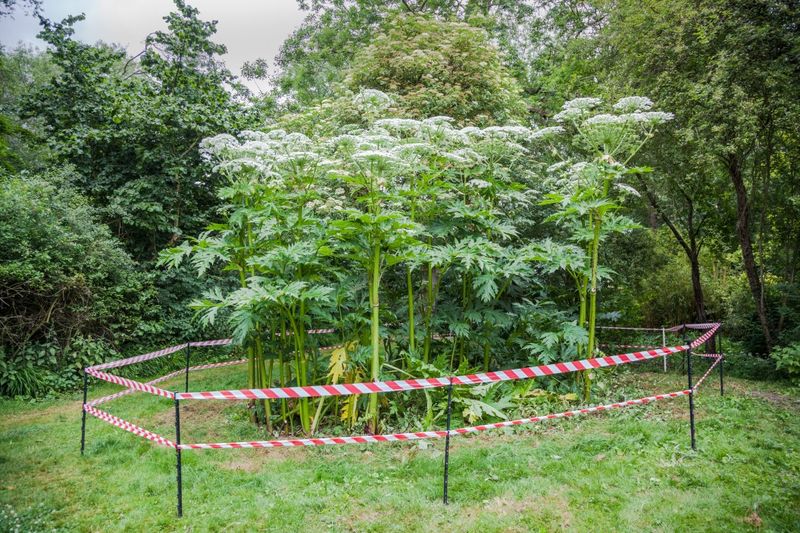
Grabbing a shovel feels natural when you find a scary weed. With suspected giant hogweed, a phone camera is the better first tool.
Take clear photos of the stem, a whole leaf, the flower head, and the full plant with something nearby for scale. Note the exact location.
Then reach out to your local Virginia Cooperative Extension office or the Virginia Department of Agriculture and Consumer Services. Experts can confirm the plant and explain removal options, which often involve trained crews.
Giant hogweed spreads by seed, and one plant can produce thousands. Seeds can stay viable in soil for several years, so follow-up checks matter for a long stretch.
For wild parsnip on your own land, careful removal is usually fine. Cut the root a few inches below ground before seeds form, wearing full protection. Bag flower heads rather than tossing them in compost.
Once a patch is cleared, replant with native perennials to crowd out new seedlings. Golden Alexanders, wild bergamot, and native grasses fill space nicely and feed pollinators.
Knowing these umbrella-topped plants by sight is your best summer habit, and it keeps the ice pack in the freezer.