This Strange Pretzel-Shaped Growth Is Appearing On Fallen Logs In Georgia
A blob with no brain can solve a maze.
Scientists watched a relative of this odd log dweller find the shortest path to food, and I still grin every time I remember it.
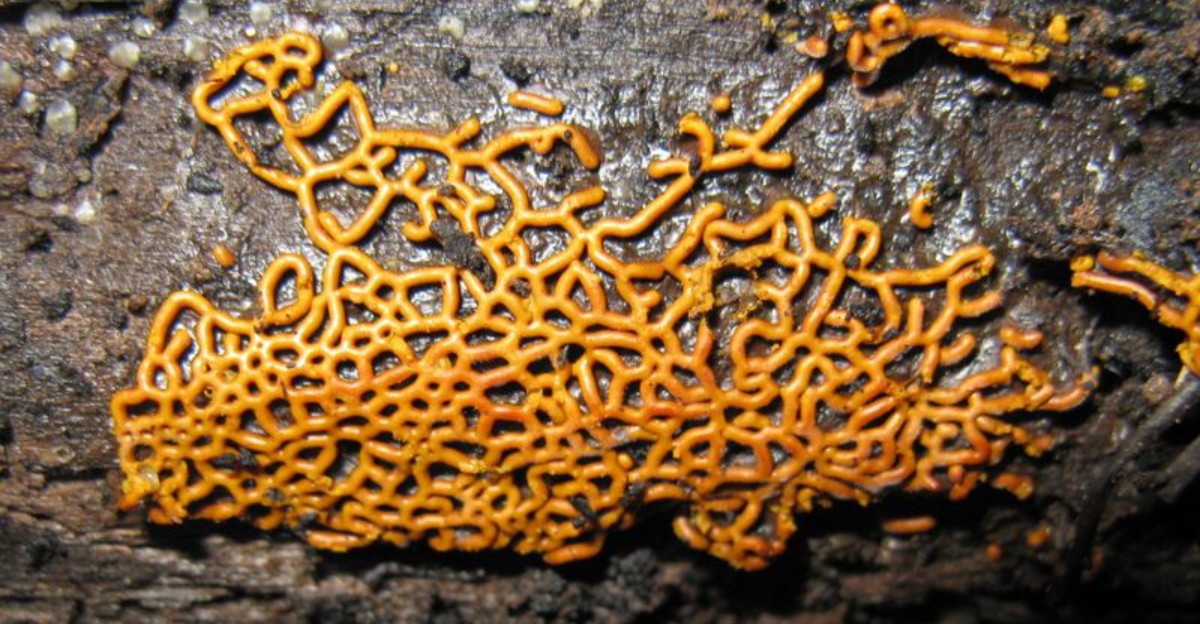
The one popping up on fallen logs in Georgia looks like someone spilled a bag of tiny golden pretzels in the woods. The twisty yellow loops are often smaller than a quarter.
They can show up after a summer rain and vanish within days. I love finds like this because they make an ordinary walk feel like a treasure hunt.
You could pass a dozen rotting logs and spot nothing. Then one damp morning, a shiny knot of gold catches your eye.
So what kind of creature crawls across wood, eats bacteria, and then ties itself into snack-shaped loops? The answer is stranger than any mushroom you have picked up.
1. Those Golden Pretzel Loops On The Log Are Not A Mushroom
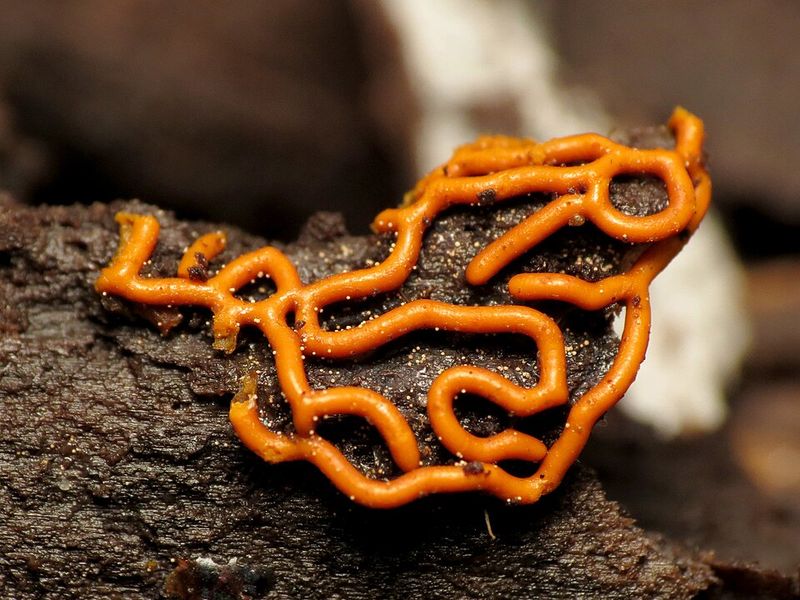
Most folks guess fungus the second they see it. That is a fair guess, but the twisty yellow growth is most likely Hemitrichia serpula, nicknamed the pretzel slime mold.
Slime molds are not fungi, plants, or animals. Scientists place them in a group called Myxomycetes, and they are more closely related to amoebas than to the mushrooms in your yard.
For years, they were lumped in with fungi because they make spores, which explains the mix-up.
The pretzel slime mold is easy to recognize once you know it. Look for thin, golden to mustard-colored strands that loop and connect into a lacy net.
The whole patch is often just an inch or two across.
I find it helps to crouch down and look closely. The strands have a slightly glossy, beaded look, almost like they were piped from a tiny frosting bag.
Nothing else on a forest floor looks quite like it.
A quick tip for identifying it: take a clear photo and upload it to a free app such as iNaturalist. Volunteer experts often confirm slime mold sightings within a day or two.
Your photo can even help researchers map where this species turns up.
2. A Creeping Yellow Slime Mold Builds Those Twists From Its Own Veins
Long before it looks like a snack, this organism is on the move. It starts life as a plasmodium, a slimy, yellowish mass with no cell walls that slowly crawls across wood and leaves.
The plasmodium spreads out in branching, vein-like channels. Inside, the goo flows back and forth in a rhythm you can sometimes see under a magnifying glass.
It travels only a short distance in a day, so do not expect a race.
When food or moisture runs low, the slime mold changes plans. Many slime molds form tiny stalked spore cases, but the pretzel slime mold does something special.
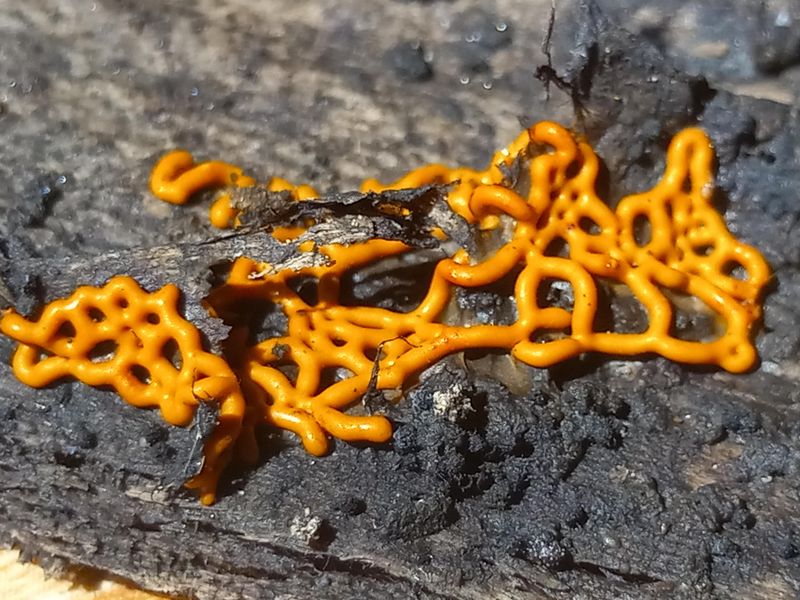
It hardens into a structure called a plasmodiocarp, which keeps the shape of the veins it was crawling in.
That is why the loops look so tangled and connected. You are basically looking at a frozen snapshot of the slime mold’s last travel route.
Your Georgia Garden Changes Every Week. Your Plan Should Too.
Gardening in Georgia changes quickly throughout the season. Every Friday you’ll receive a simple weekly plan showing exactly what to plant, prune, fertilize, harvest, and protect so you never miss the right timing.
Later, those golden tubes split open. A fluffy mass of yellow spores and fine threads spills out, ready to ride the breeze.
If you spot an older patch, it may look fuzzy instead of shiny, which simply means it is releasing the next generation.
3. Warm, Wet Weather Brings Pretzel Slime Mold Out On Rotting Logs
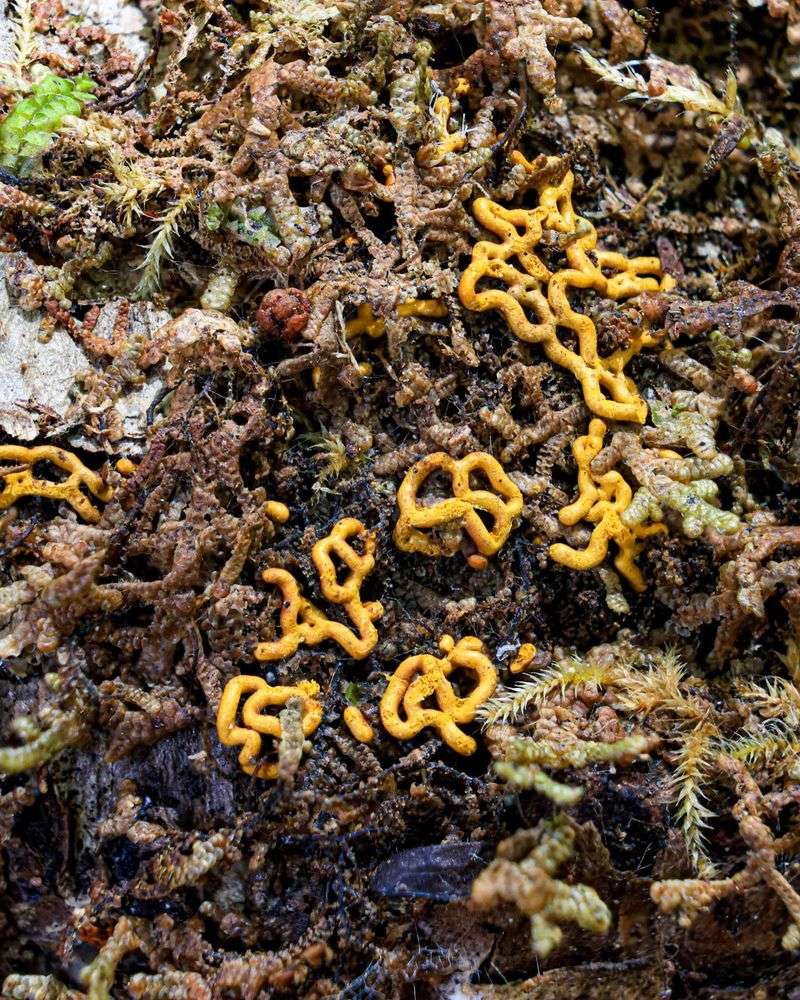
Rain is the trigger. Slime molds need moisture to move and feed, so a few soggy days followed by warm temperatures can make them pop up seemingly overnight.
Georgia’s long, humid growing season suits them well. You are most likely to spot pretzel slime mold from late spring into fall, especially after summer storms.
Woodlands in the Piedmont, the mountains, and the Coastal Plain all have plenty of shady, damp spots it enjoys.
There is no verified sign of a special outbreak this year. Slime molds are common and widespread, and more people simply notice them now that phone cameras make it easy to share odd finds online.
Here is where to look on your next walk:
Check the shaded side of fallen hardwood logs, especially soft, crumbly ones. Peek at damp leaf litter and mulch near the base of trees.
Scan wood chips in your own landscape beds after a rainy week.
Timing matters too. Morning hours after a wet night are often best, before the sun dries the surface.
Bring a small hand lens if you have one, because the details are tiny and surprisingly beautiful up close.
4. Your Garden Plants Are Safe From This Log-Loving Slime Mold
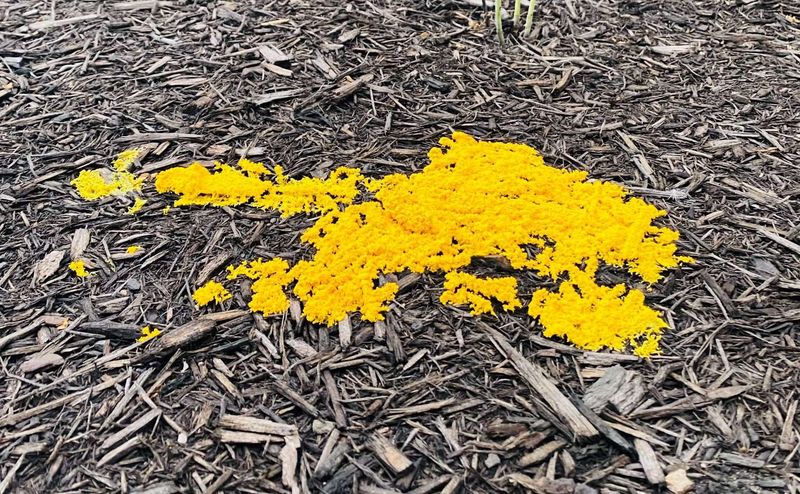
Relax and put the spray bottle down. Pretzel slime mold does not attack living plants, so your tomatoes, hostas, and shrubs have nothing to worry about.
Extension experts, including the University of Georgia, describe slime molds as harmless. They feed on bacteria, yeasts, fungal spores, and bits of decaying material, not healthy leaves or roots.
At most, a thick slime mold on a low leaf might shade it briefly, and that usually causes no lasting harm.
Chemical treatments are not needed. Fungicides are not recommended for slime molds, and the patch fades on its own once the weather dries out.
If one shows up in your mulch and you dislike the look, you have easy options. Rake the mulch to break it up and let it dry.
Scoop the patch into a bag and toss it with yard waste. Hose it off a hard surface.
It may return after the next big rain, and that is fine. Personally, I leave small patches alone.
They are a sign your mulch is breaking down and feeding the soil, which is exactly what you want mulch to do.
5. These Tiny Log Cleaners Help Feed The Forest Floor
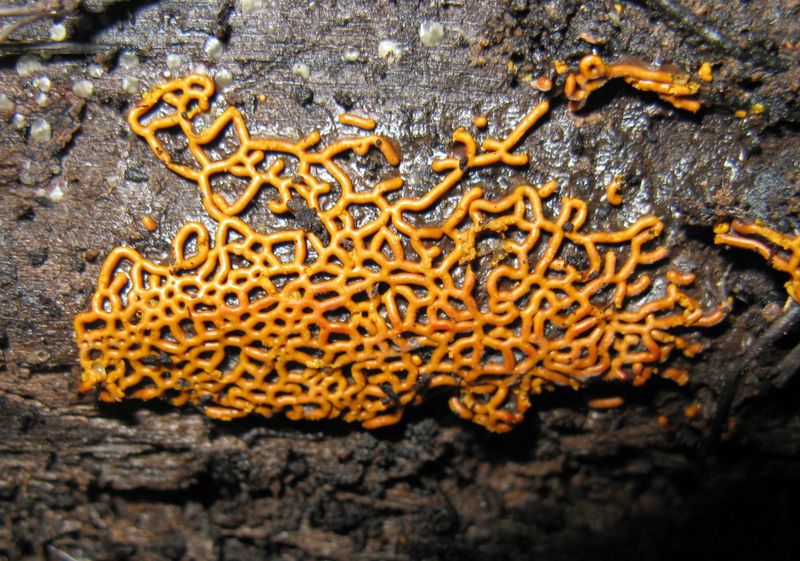
Every rotting log is a busy restaurant. Beetles, fungi, bacteria, and slime molds all take a seat, and each one plays a part in turning wood back into soil.
Slime molds mainly graze on bacteria and other microbes living on decaying matter. By eating them, they help control microbe populations and keep nutrients moving through the system.
Scientists see them as part of the decomposer community that keeps forests healthy.
That nutrient cycling matters for your yard too. When logs and leaves break down, they release nutrients and build spongy organic matter that holds water.
Want to welcome this kind of life at home? Consider these simple ideas:
Leave a fallen log or two in a shady corner instead of hauling everything away. Keep some leaf litter under trees and shrubs.
Use natural wood mulch in beds rather than rubber or stone.
You will also invite salamanders, fireflies, beetles, and ground-feeding birds that rely on that cool, damp habitat. A rotting log may not win any beauty contests, but it quietly supports a whole neighborhood of creatures.
Spotting a pretzel slime mold on it is a little bonus prize.
6. Look With Your Eyes, Not Your Fingers, Around Slime Mold Patches
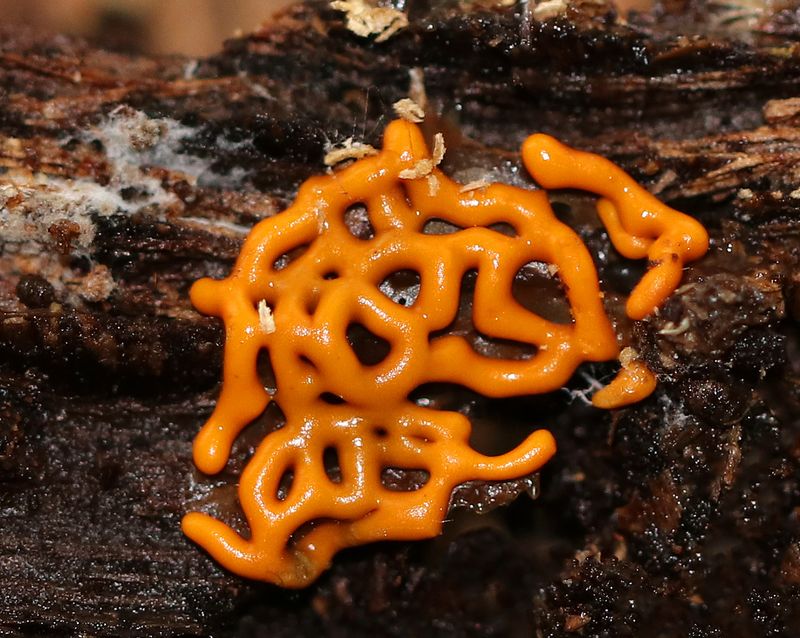
A gentle approach works best. Slime molds are not known to be poisonous to touch, and they pose no serious threat to people or pets, but a little care goes a long way.
Mature patches release clouds of fine spores. People with strong allergies or asthma may want to avoid poking dry, fuzzy patches near their face.
Washing your hands after handling garden material is a smart habit anyway.
Do not eat it, and keep curious dogs from snacking on it. Slime molds are not considered food, and it is wise to skip tasting any wild growth you cannot identify with certainty.
Photography is the most rewarding way to enjoy a find. Here are a few tips I swear by:
Get low and shoot level with the log. Use your phone’s macro or close-up mode, or tap to focus on the loops.
Shade the patch with your hand to soften harsh light. Place a coin nearby for scale in one shot.
Leave the patch where it is when you are done. If you visit again in a few days, you might catch it changing from glossy gold to a fluffy, spore-filled cloud.
7. A Brainless Blob That Solves Mazes Deserves A Second Look
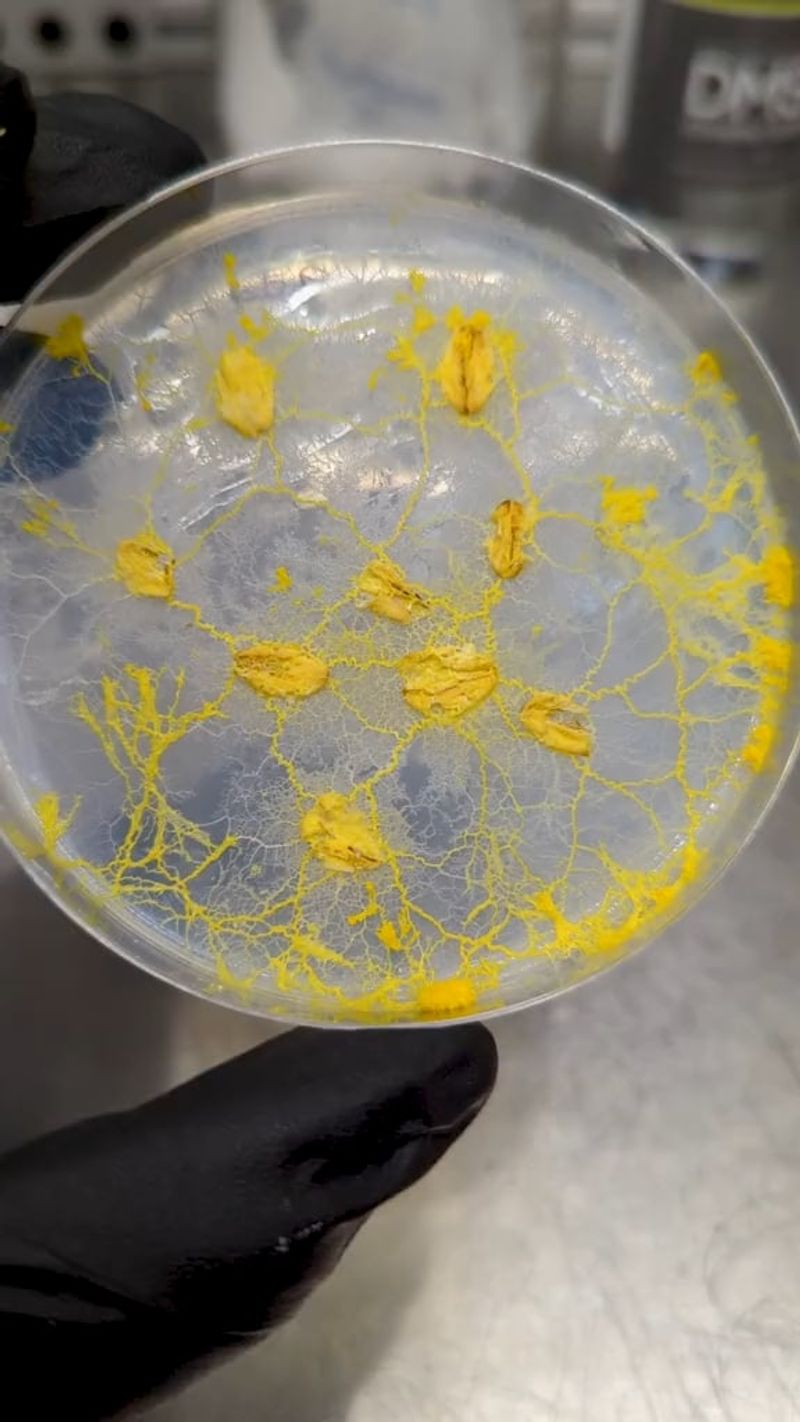
Here is the fun part that makes people stop scrolling. Slime molds have no brain or nerves, yet they can make choices that look surprisingly clever.
The famous lab example is a cousin called Physarum polycephalum, the many-headed slime mold. Researchers in Japan showed it could find the shortest route through a maze to reach food.
In another study, it grew a network linking oat flakes placed like cities around Tokyo, and the result looked a lot like the real rail map.
It does this by sending out feelers, strengthening paths that lead to food, and pulling back from unproductive routes. Some studies suggest it even leaves a slimy trail that helps it avoid places it has already searched.
Keep in mind that these experiments used that lab species, not the pretzel slime mold itself. Still, they belong to the same remarkable group.
Your best next step is simple. After the next good rain, take a slow walk past shady logs near your home or a state park trail in Georgia.
Look closely, snap a photo, and share it on iNaturalist. You might just spot your own golden pretzel tangle.