This Underused Native Shrub Is A Smarter Boxwood Alternative For Michigan Landscapes
Boxwood asks a lot from Michigan gardeners.
A neat green border can look beautiful for a while, then winter bronzing, disease pressure, leafminer damage, pruning demands, and weather stress start changing the picture.
Suddenly, that tidy hedge needs more attention than the rest of the bed combined.
There is another option. It is not an evergreen copy. It will not give you a clipped green wall in January, and it does not pretend to be formal.
Instead, this native shrub offers compact growth, summer flowers, deep roots, local wildlife value, and a softer shape that fits beautifully into modern Michigan landscapes.
That tradeoff matters.
Many gardeners no longer want every foundation bed to look rigid and polished year-round. They want plants that handle real conditions, support pollinators, and bring seasonal interest without constant fuss.
So which underused native shrub deserves a closer look as a smarter boxwood alternative?
Start with the low, flowering Michigan native that trades stiff evergreen formality for deep roots, summer bloom, and a lot more ecological value.
New Jersey Tea Is The Shrub
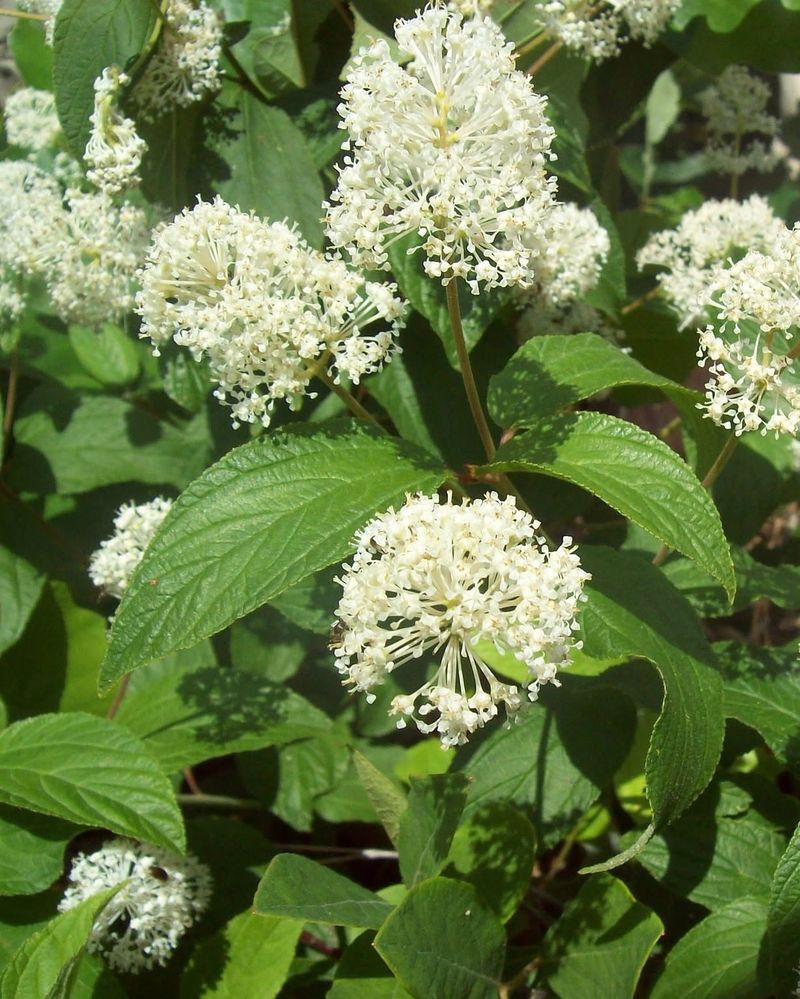
New Jersey tea is the native shrub worth knowing.
Its botanical name is Ceanothus americanus, and it grows naturally in parts of Michigan as well as other areas of eastern North America.
In the landscape, it forms a compact, rounded shape that works well where gardeners want a low shrub with more personality than a clipped evergreen.
The first thing to know is simple: it is deciduous.
That means it drops its leaves in autumn. It will not stay green through winter the way boxwood does, so it should not be sold as an exact replacement for a year-round evergreen hedge.
The shape is still useful. New Jersey tea typically grows about two to three feet tall with a similar spread, making it a strong candidate for low borders, sunny foundation beds, and naturalistic edging.
The leaves are clean and medium green during the growing season. They have a slightly textured look that gives the plant more depth than many plain-leaved shrubs.
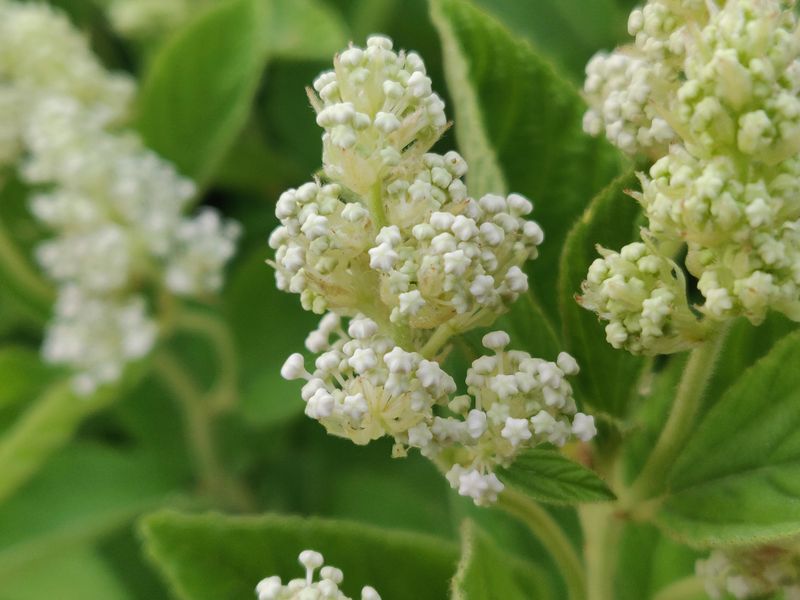
The flowers arrive in summer. Clusters of small white blooms create a soft, airy effect that boxwood cannot match.
The name adds charm. During the American Revolution era, the leaves were used as a tea substitute, which gives this quiet shrub a memorable story.
New Jersey tea is not trying to be boxwood.
It offers a different kind of structure, one that feels rooted in Michigan’s own landscapes.
Compact Growth Fits Low Borders
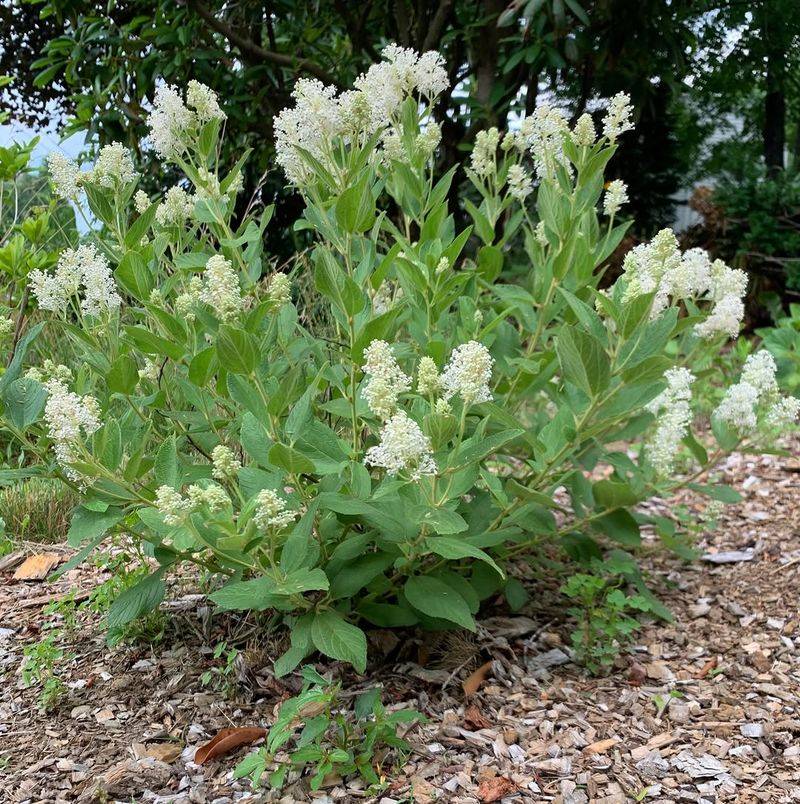
Compact size is one of this shrub’s biggest strengths.
New Jersey tea stays naturally low enough for borders, foundation plantings, path edges, and sunny front-of-bed positions. That makes it useful in places where a larger native shrub would quickly outgrow the space.
Mature plants usually reach around two to three feet tall. The spread is often similar, creating a rounded mound rather than a tall screen.
That scale is easy to work with. It can soften a walkway, edge a pollinator bed, or repeat along a slope without swallowing the design.
Your Michigan Garden Changes Every Week. Your Plan Should Too.
Gardening in Michigan changes quickly throughout the season. Every Friday you’ll receive a simple weekly plan showing exactly what to plant, prune, fertilize, harvest, and protect so you never miss the right timing.
Spacing matters from the start. Give each plant roughly three feet of room so it can develop its natural shape without crowding.
Foundation beds need extra breathing room. Set plants back from walls so air can move around the foliage and the shrub does not press against siding or brick.
Paths need a setback too. The branches grow in a relaxed way, and planting too close to the edge creates extra trimming work later.
Mass plantings look especially good. Several plants repeated together can create a low sweep of green and white that feels much softer than a stiff hedge.
The effect is informal. Gardeners who want sharp rectangles and tight corners may find it too loose.
That softness is the point.
New Jersey tea gives Michigan landscapes structure without forcing every border into a formal shape.
Deep Roots Handle Dry Soil
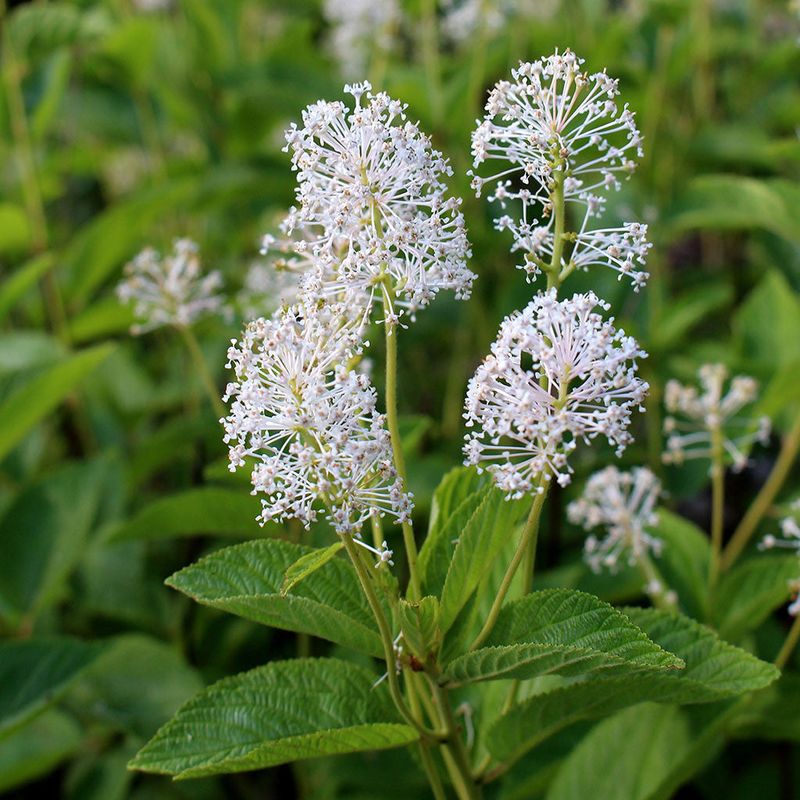
The roots are where this shrub quietly shines.
New Jersey tea develops a deep, substantial root system, including a strong taproot. That underground strength helps it handle dry summer spells better than many shallow-rooted landscape shrubs once it is established.
Surface dryness does not bother it as quickly. Roots that reach deeper can access moisture long after the top layer of soil has turned dusty.
That makes it useful in sunny Michigan beds. Dry slopes, open borders, sandy soils, and prairie-style plantings can all suit the plant when drainage is good.
The first season still matters. New plants need regular water while their roots move into the surrounding soil.
Deep watering is best. A slow soak encourages roots to grow downward instead of lingering near the surface.
After establishment, watering demands drop. A settled plant usually needs help only during extended dry periods.
The taproot creates one important warning. Mature plants can be difficult to move once established.
Choose the site carefully. Relocation later can damage the root system and set the plant back hard.
This is not a shrub for wet, heavy ground. Deep roots are an advantage only where the soil drains well.
Dry tolerance does not mean neglect on planting day.
Give the young shrub a strong first season, and it can become far more self-reliant in the years that follow.
White Blooms Feed Summer Pollinators
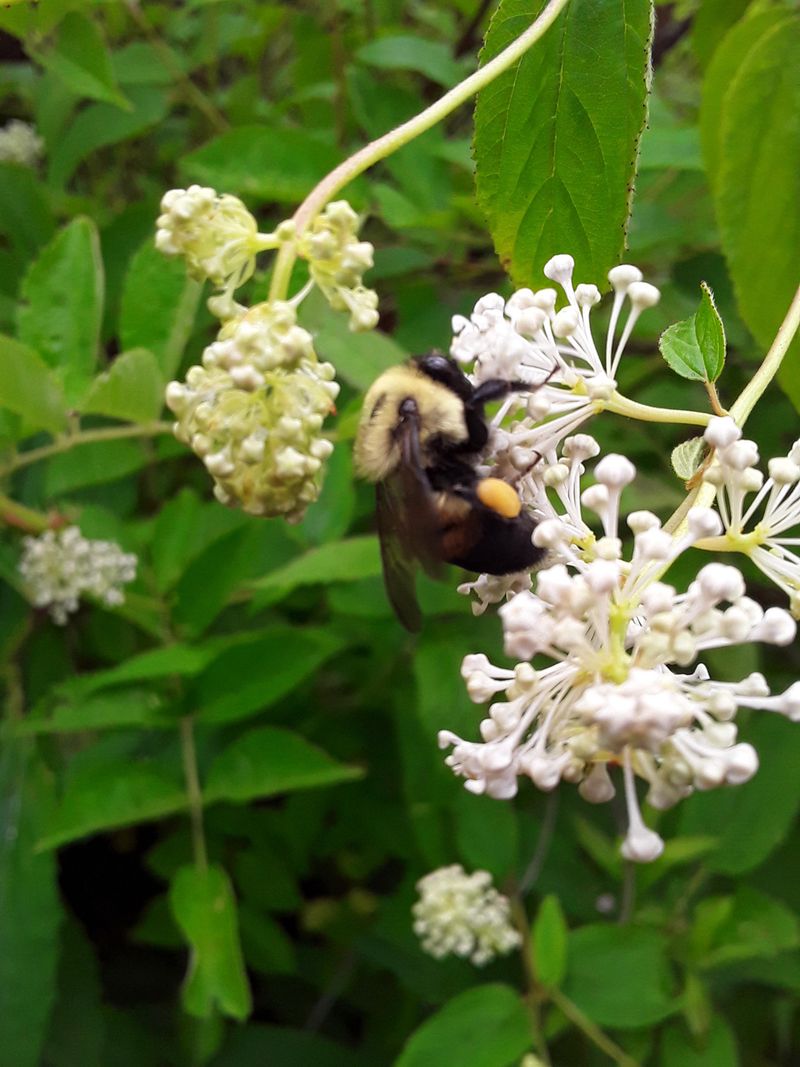
The summer flowers are a major upgrade over boxwood.
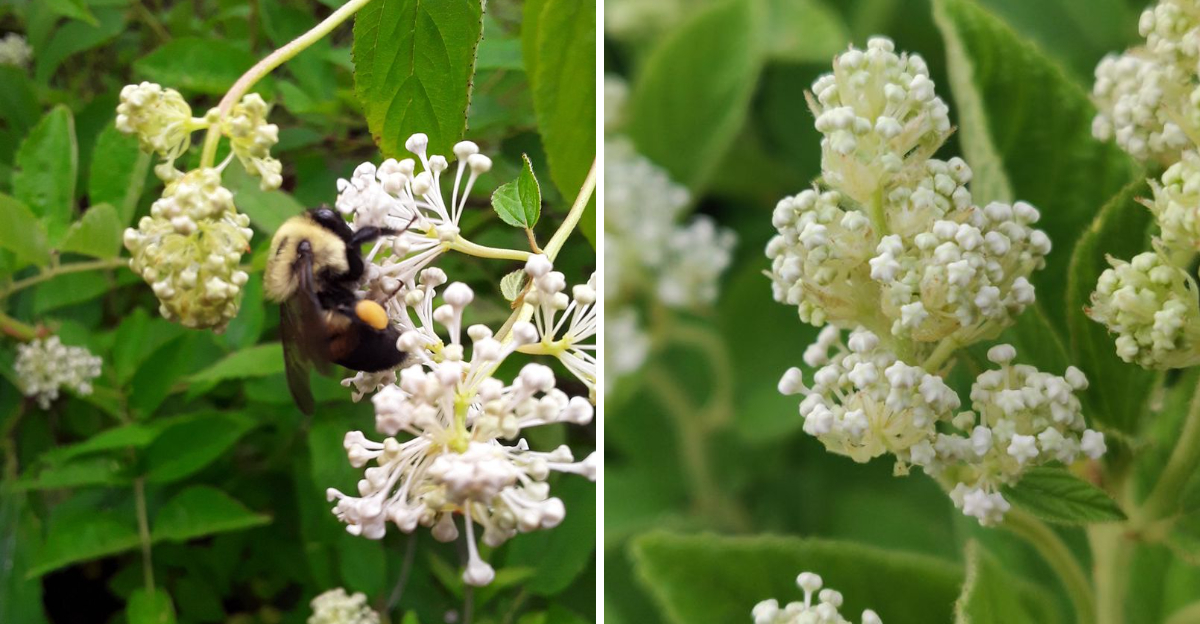
New Jersey tea produces clusters of small white blooms, often in June and July in Michigan. The flowers gather into airy, rounded clusters that brighten the shrub without looking overly formal.
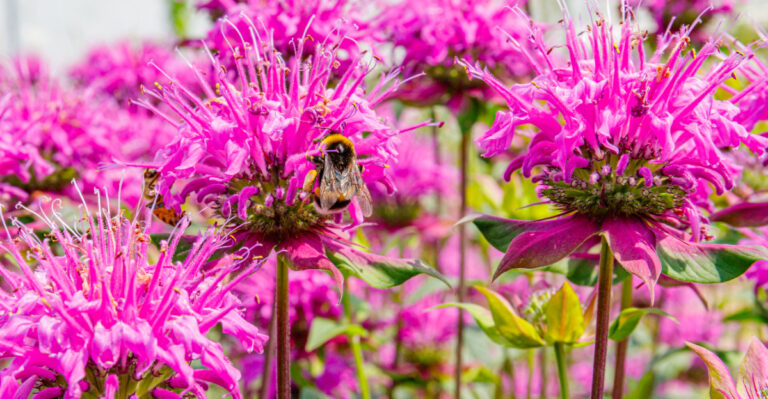
Pollinators notice quickly. Bumblebees, native bees, small wasps, butterflies, and other insects may visit when the shrub is in full bloom.
The flower shape helps. Small open blooms are accessible to many insects, not just one narrow group of specialists.
Bloom timing is useful too. By early to midsummer, many spring shrubs have finished, but pollinators are still busy.
The white flowers also bring visual lift. Against the green leaves, they create a fresh look that works well near paths, patios, and mixed borders.
The display lasts for several weeks in favorable conditions. Weather, site quality, and plant health can shift the exact timing.
A single shrub helps. A small group helps more, creating a stronger visual target and more foraging space.
Avoid spraying around the blooms. Insecticides used carelessly near flowering plants can reduce the same visitors this shrub is meant to support.
Boxwood may offer evergreen structure, but it rarely brings this level of summer activity.
New Jersey tea turns a low border into something alive, moving, and useful during the warmest part of the growing season.
Native Leaves Support Local Insects
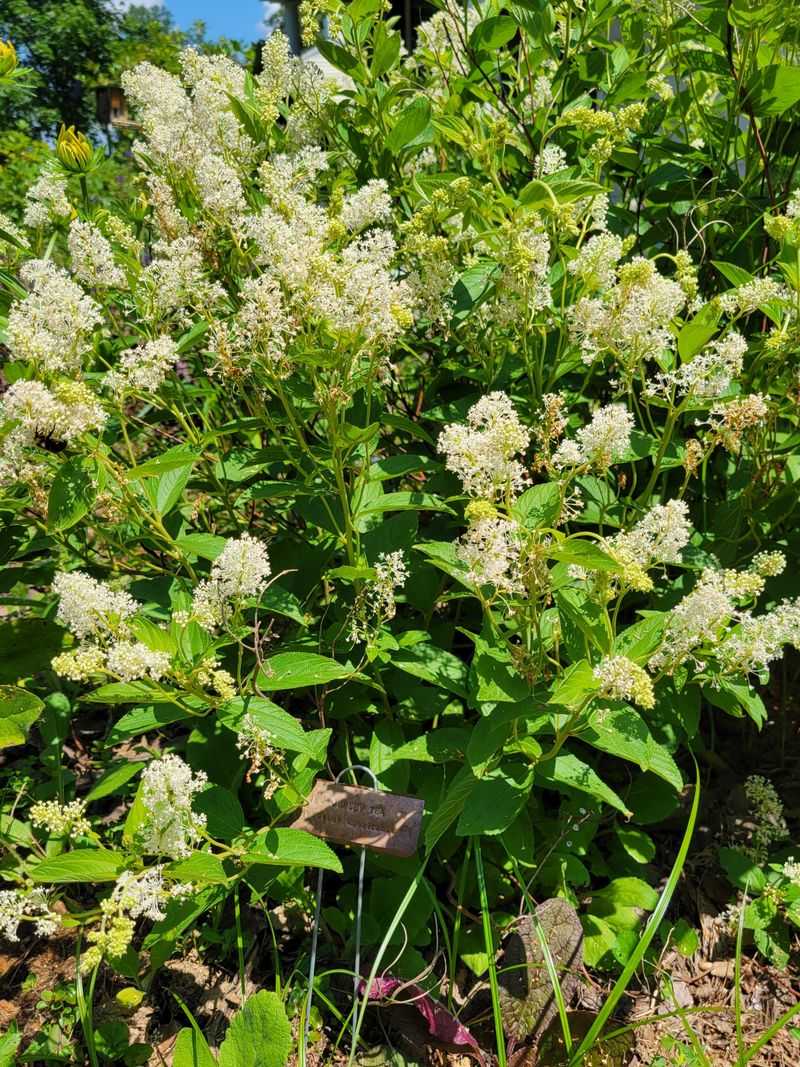
Leaves can feed a landscape in ways flowers cannot.
New Jersey tea belongs to the local plant community, and that matters for insects that evolved alongside native plants. Its foliage and flower buds can support certain caterpillars and other small wildlife connections that nonnative shrubs do not provide in the same way.
The Spring Azure butterfly is one example. Its caterpillars use plants in this group, which gives the shrub a role beyond adult pollinator visits.
That role continues up the food chain. Caterpillars and other insects become food for birds, especially during nesting season when young birds need protein-rich meals.
Boxwood does not offer the same native food-web value. It may provide evergreen cover, but it is not deeply connected to Michigan’s insect life.
A single shrub will not transform a yard alone. Habitat value grows when New Jersey tea is planted with other native shrubs, grasses, and perennials.
Leaf litter helps too. A perfectly cleaned bed removes shelter and overwintering space for many beneficial insects.
Reduced pesticide use matters. A native plant surrounded by routine sprays cannot support as much life.
Small imperfections are normal. A few chewed leaves can be a sign that the plant is doing ecological work.
This is one of the strongest reasons to use it.
New Jersey tea is not just a substitute shape in the border. It is a living part of the Michigan food web.
Full Sun Keeps Growth Sturdy
Sun brings out the best habit.
New Jersey tea performs strongest in full sun, where it grows denser, flowers more heavily, and keeps a sturdier shape. Give it six or more hours of direct light, and the shrub usually looks more compact and floriferous.
Hot sunny beds can suit it well. Once established, the deep root system helps it handle open exposure with confidence.
Light shade is acceptable. A plant along the edge of a tree canopy or near taller shrubs can still grow and bloom.
The tradeoff shows in the shape. In shadier spots, stems may become looser and flower production may decrease.
Deep shade is not ideal. Low light and damp soil can leave the shrub thin, floppy, and less impressive.
Morning sun with some afternoon relief can work. This combination may be helpful in especially hot or reflective locations.
Avoid crowded planting. Nearby shrubs that overtake the light will reduce the compact form that makes New Jersey tea useful.
Good airflow supports clean foliage. Sunny, open placement helps leaves dry after rain and dew.
Lean soil often pairs well with sun. Rich, heavily fertilized soil may push softer growth that does not look as tidy.
This plant does not need pampering.
It needs the kind of bright, open site where a prairie-edge or savanna shrub can feel at home.