Those Blue Berries Covering Indiana Junipers Aren’t Actually Berries
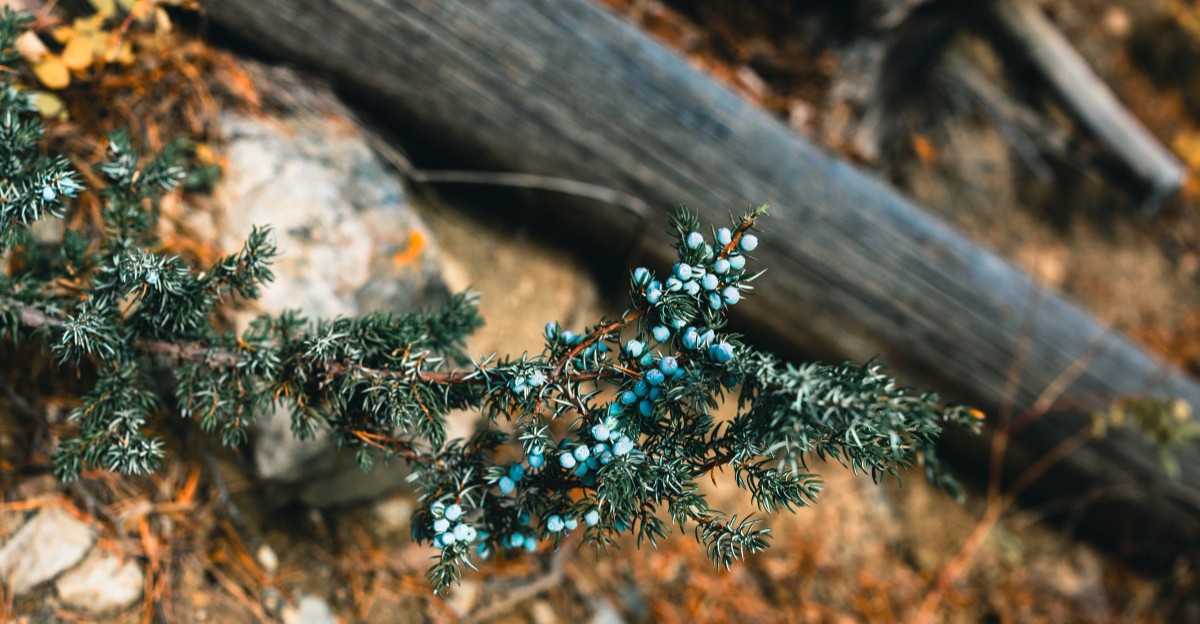
Those frosty blue beads you spot on certain evergreens are cones, not fruit. Botanists have a name for them, and it sounds like a spell from a fantasy novel.
I used to call them berries without a second thought. Every fall, I admire them along Indiana fencerows and old fields, glowing against dark green needles. It took me years to learn I had the label wrong the whole time.
Here’s what gets me most. Some of those little blue globes started growing more than a year before you noticed them. Flocks of hungry birds know exactly where to find them when winter food runs short.
Truth is, the real story behind these blue beads is stranger than any berry. They hide a clever trick that plants have used for millions of years. So what are they, if not berries?
Those Blue Juniper Beads Are Hiding a Secret Identity
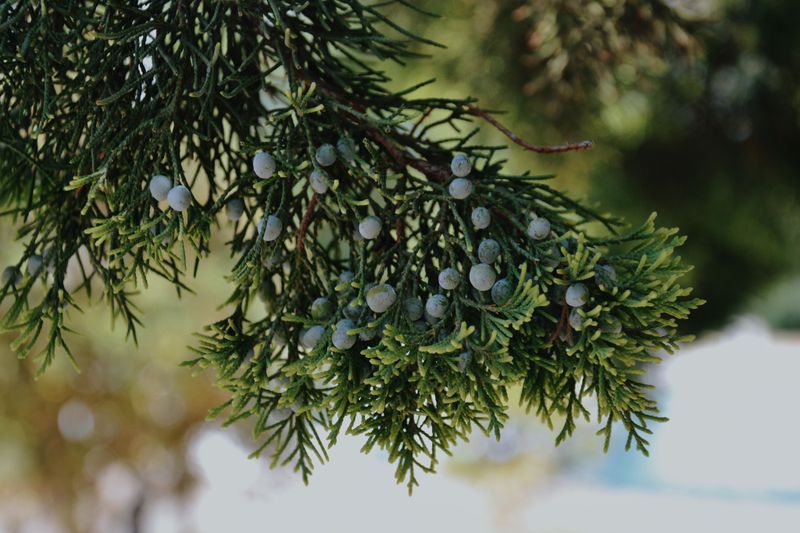
Grab a juniper branch next time you pass one and squeeze one of those blue beads gently. It feels soft, almost like a blueberry. Yet the plant producing it has no flowers at all.
Junipers are conifers, the same big family as pines, spruces, and firs. Conifers make seeds inside cones instead of inside fruit. So that plump blue ball is really a female seed cone dressed up in a very convincing costume.
I’ll say this much, the disguise fooled me for decades. Most people call them berries, and even cooks and spice jars use that word. Nobody is wrong for saying it in everyday talk, but a botanist would gently correct you.
Here is a quick way to see the truth for yourself. Look closely at the top of a ripe juniper cone with a magnifying glass. You may spot tiny bumps or faint lines where separate scales once met.
Those marks are clues left behind from the cone’s early days. A real blueberry or grape does not show that pattern. Once you see it, you will start noticing it on every juniper you walk past, and you might even point it out to friends.
Fleshy Fused Scales Turn a Juniper Cone Into a Fake Berry
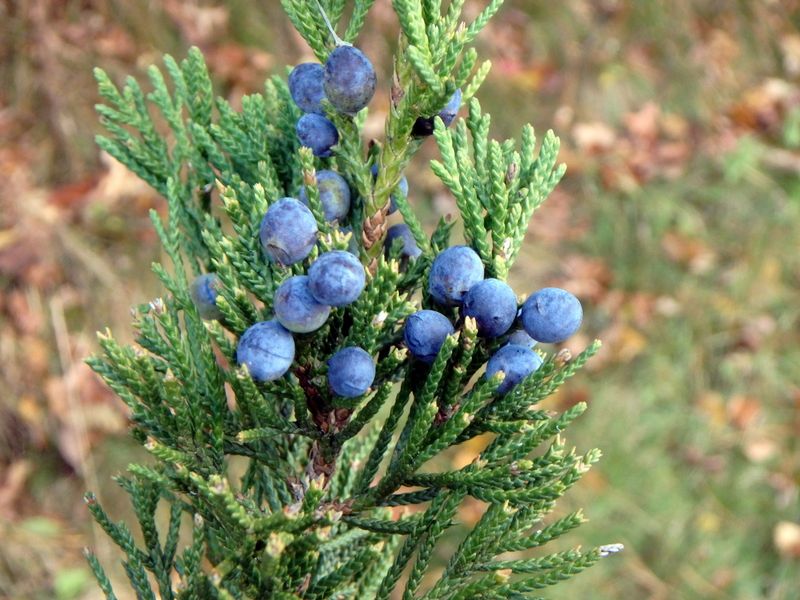
Botanists use a fun word for these cones, galbulus. It describes a cone whose scales grew soft, fleshy, and fused together into one smooth ball.
Compare that to a pinecone on a white pine. Its scales stay woody and open up like a little staircase so seeds can fall out. Juniper scales take a different path and seal shut, wrapping the seeds inside a sweet, resinous coat.
A true berry works another way. It grows from the ovary of a flower after pollination, like a tomato, grape, or blueberry. Junipers skip flowers entirely, so they cannot make true berries.
Not going to lie, this detail felt like trivia at first. Then I realized it explains why the cones taste piney instead of fruity. The flesh is packed with aromatic oils, the same oils that give juniper needles their sharp scent.
Try this at home with any juniper cone you collect. Cut it in half with a sharp knife and count the seeds. Eastern red cedar cones usually hold one or two, while common juniper cones may hold up to three. That small hidden cluster is the whole point of the costume.
Eastern Red Cedar Is the Juniper You Probably Pass Every Day
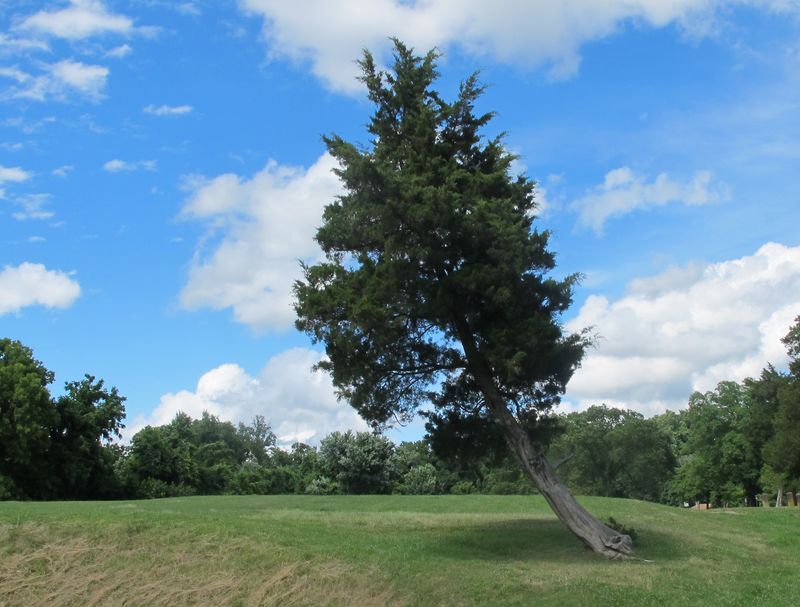
Despite the name, Eastern red cedar is not a true cedar at all. It is a juniper, Juniperus virginiana, and it is one of the most common evergreens in Indiana.
You’ll find it along fencerows, roadsides, old pastures, and rocky hillsides. Birds drop its seeds everywhere, so new trees pop up wherever there is sun and open ground. It handles dry, poor, and alkaline soil better than most trees.
Only female trees carry the blue cones. Male trees produce small tan pollen cones in late winter, which can give the whole tree a rusty, golden look. If your cedar never shows blue beads, it may simply be a male.
One fair warning for fruit growers. Eastern red cedar is the alternate host for cedar-apple rust, a fungus that spots apple and crabapple leaves. Purdue Extension suggests choosing rust-resistant apple varieties if cedars grow nearby.
Otherwise, this tree is a sturdy, low-fuss native. It grows well across the state in USDA zones 5 and 6. Give it full sun, and it will reward you with dense cover and a steady crop of blue cones for years.
Green and Blue Juniper Cones Can Share the Same Branch
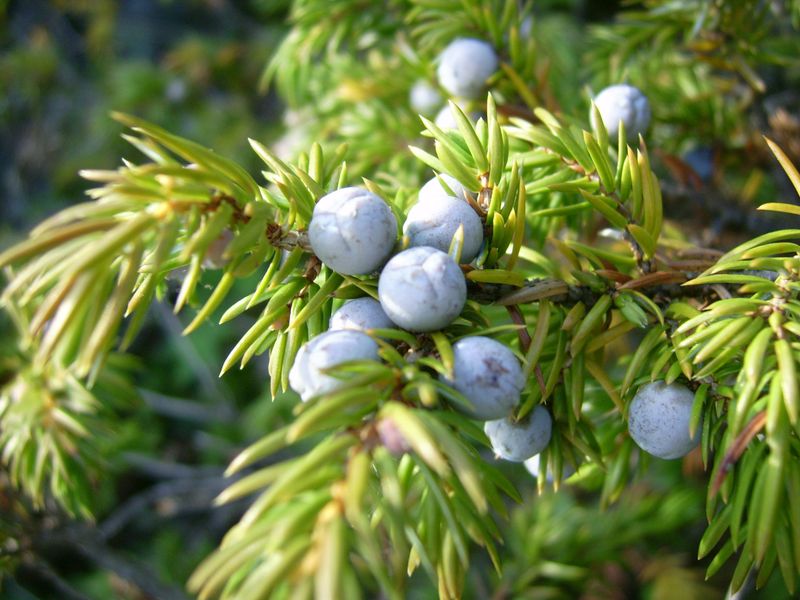
Don’t laugh, but I once thought a juniper with green and blue cones was just sick. Turns out it was doing exactly what it should.
Timing depends on the species. Eastern red cedar cones ripen in one growing season, turning frosty blue by fall. Common juniper takes longer, often two or even three years, so young green cones and ripe blue ones hang side by side.
That frosty, chalky coating has a purpose too. It is a natural wax called bloom. Rub it with your thumb, and the cone underneath looks much darker, almost purple-black.
Late fall and winter are the best times to spot ripe cones in Indiana. The bloom stands out beautifully against snow and gray skies. Many cones hang on well into spring unless birds clean them off first.
If you want to collect a few for crafts or seed starting, pick only the fully blue ones. Green cones have not finished developing their seeds. Leave plenty behind on the branch, since winter wildlife counts on that supply when other food runs thin.
Cone color tells you their age: young ones start green, shift to bluish green, then turn frosty blue when ripe. A branch with several shades at once is perfectly normal and healthy.
Cedar Waxwings Can Strip a Juniper of Its Blue Cones
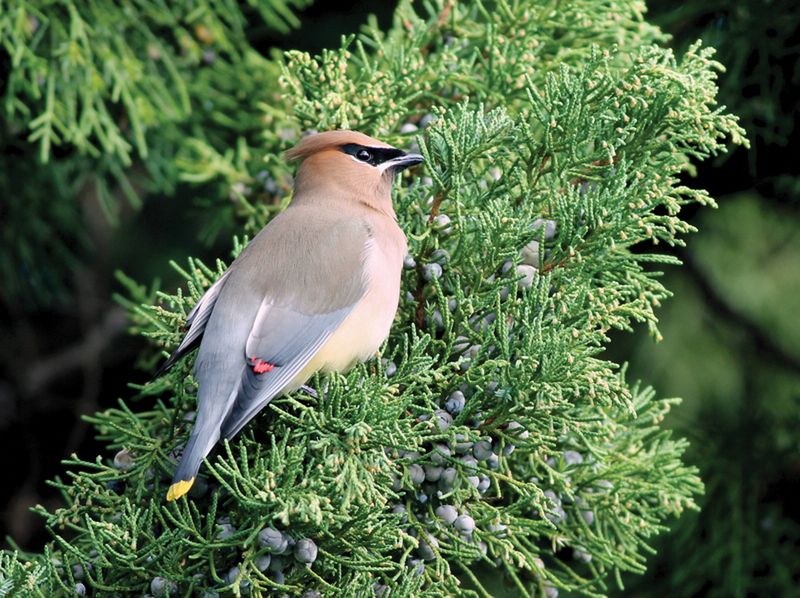
Few things beat the sight of a cedar waxwing flock landing on a loaded juniper. They earned their name partly from their love of these cones.
Robins, bluebirds, mockingbirds, and yellow-rumped warblers feast on them too. The cones hang on through winter, so they fill in when other food grows scarce. Wild turkeys, foxes, and opossums will happily eat fallen ones.
Here’s the clever part of the costume. A bird swallows the cone, digests the soft flesh, and later drops the seed somewhere new. Research shows seeds that pass through birds often sprout better than ones that simply fall.
That is why young cedars line so many fences. Birds perch on the wire, and a row of seedlings appears below a few years later.
Want more birds in your yard this winter? Plant a female Eastern red cedar or two in a sunny corner. The dense branches also offer shelter from wind and snow, and they make favored nesting spots in spring. Skip pruning heavily in fall, so the cone crop stays put for hungry visitors.
Think Twice Before Tasting a Wild Juniper Cone
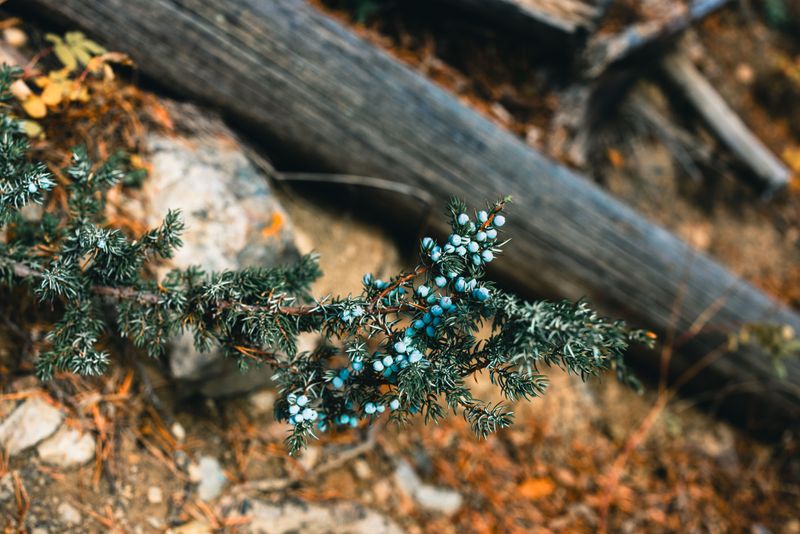
Fair warning, not every blue juniper cone belongs in your soup pot. Common juniper, Juniperus communis, supplies the cones sold as a kitchen spice. Cooks crush them to flavor game, sauerkraut, and marinades.
Some other species are bitter or can cause stomach upset. Savin juniper and certain ornamental types are considered unsafe to eat. Unless you can identify a plant with certainty, stick to store-bought spice.
Even the safe kind is strong stuff. Its oils can irritate kidneys when eaten in large amounts, and medical sources advise people who are pregnant to avoid it. A few crushed cones in a recipe is the typical amount, not a handful.
Pets deserve a mention too. Most dogs show little interest, but a curious puppy might nibble fallen cones and end up with an upset stomach. Rake up piles under heavy-bearing shrubs if your pup is a snacker.
Also watch for look-alikes in the yard. Blue-fruited plants such as some viburnums or invasive porcelain berry vines are not junipers. Junipers have needle-like or tiny overlapping scale leaves, which is the fastest way to tell them apart.
A Native Juniper Shrub Could Earn a Spot in Your Yard
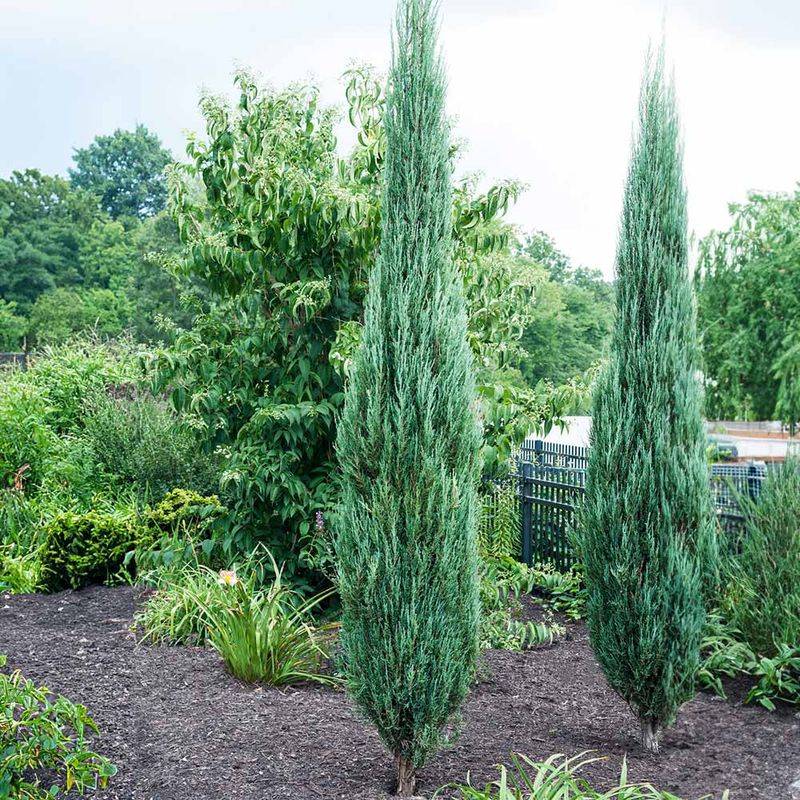
Once I learned the cone secret, I started seeing junipers as more than background shrubs. They are tough, useful, and full of quiet surprises.
For a native choice, look at Eastern red cedar for height or common juniper for a low, spreading form. Common juniper is uncommon in Indiana, so buy nursery-grown plants rather than digging wild ones. Both need full sun and soil that drains well.
Plant in spring or early fall, when roots can settle before summer heat. Water deeply through the first season, then let them fend for themselves. Established junipers handle drought, wind, and even roadside salt spray.
Skip heavy shearing, which leaves bare brown patches that rarely fill back in. Light tip pruning in late winter keeps shape without harming the plant.
Want those blue cones? Choose female plants, and keep a male nearby for pollination. Your reward is a living winter bird feeder, evergreen cover, and a great story for curious guests. Next time someone calls them berries, you can smile and share the cone secret.