Those Green Clumps In Bare Missouri Treetops Have A Holiday Connection
The scientific name of a certain Missouri treetop plant translates roughly to tree thief. I laughed the first time I learned that, because the name fits a little too well.
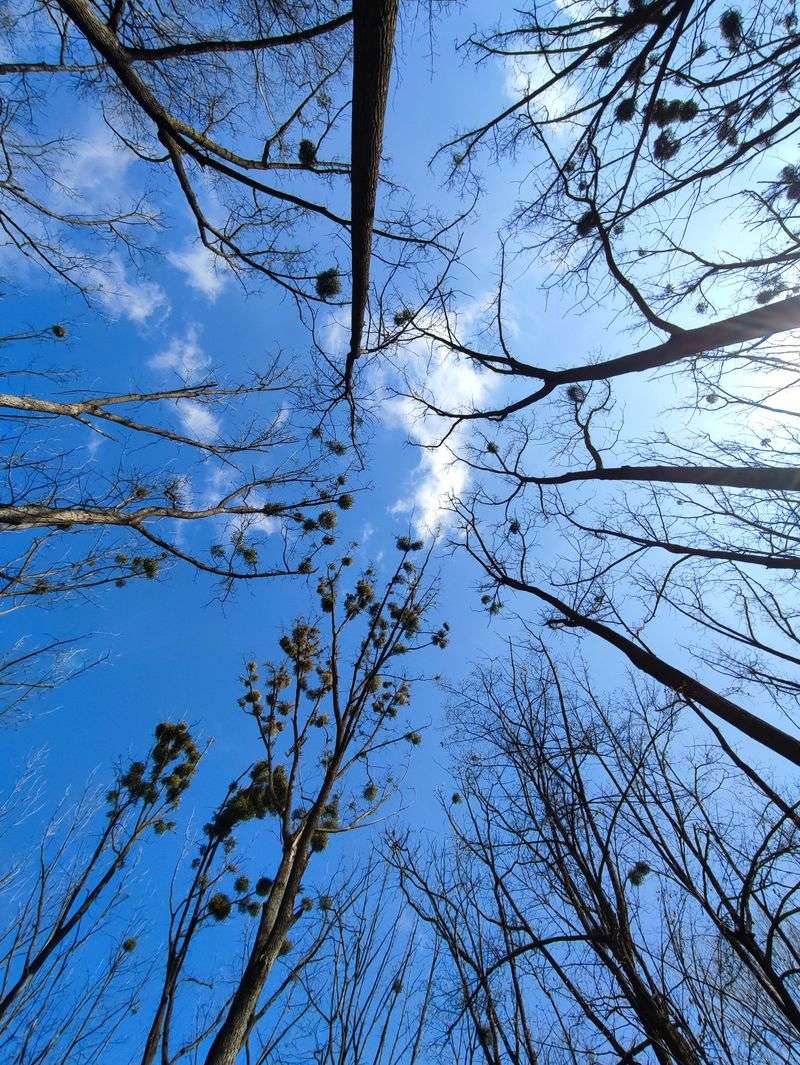
Once the leaves drop in late fall, you start noticing round green bundles perched high in sycamores and elms. They can look like bird nests, basketballs, or forgotten ornaments. Some grow several feet across, and they stay green all winter long.
I love how these clumps turn a gray drive into a scavenger hunt. You’re in for a fun surprise, because you have probably hung a sprig of this plant over a doorway. Your grandparents likely did too.
So how does a tiny evergreen end up living rent-free on a giant tree? And why do people pucker up beneath it every December? The answer is stranger, and sweeter, than most folks expect.
Those Green Balls In Winter Sycamores Are Not Bird Nests
Plenty of folks guess squirrel nests at first. I did too, until a friend handed me binoculars on a frosty December walk.
Those leafy green balls are American mistletoe, known to botanists as Phoradendron leucarpum. It is a native evergreen shrub that grows right on tree branches instead of in the soil. The Missouri Department of Conservation notes it shows up mostly in the southern half of the state, especially along streams and in the Ozarks.
Summer hides it well. Thick leaves on the host tree blend everything together, so the clumps disappear into the canopy. Once autumn strips the branches, the mistletoe suddenly pops out like green holiday decorations hung by nature.
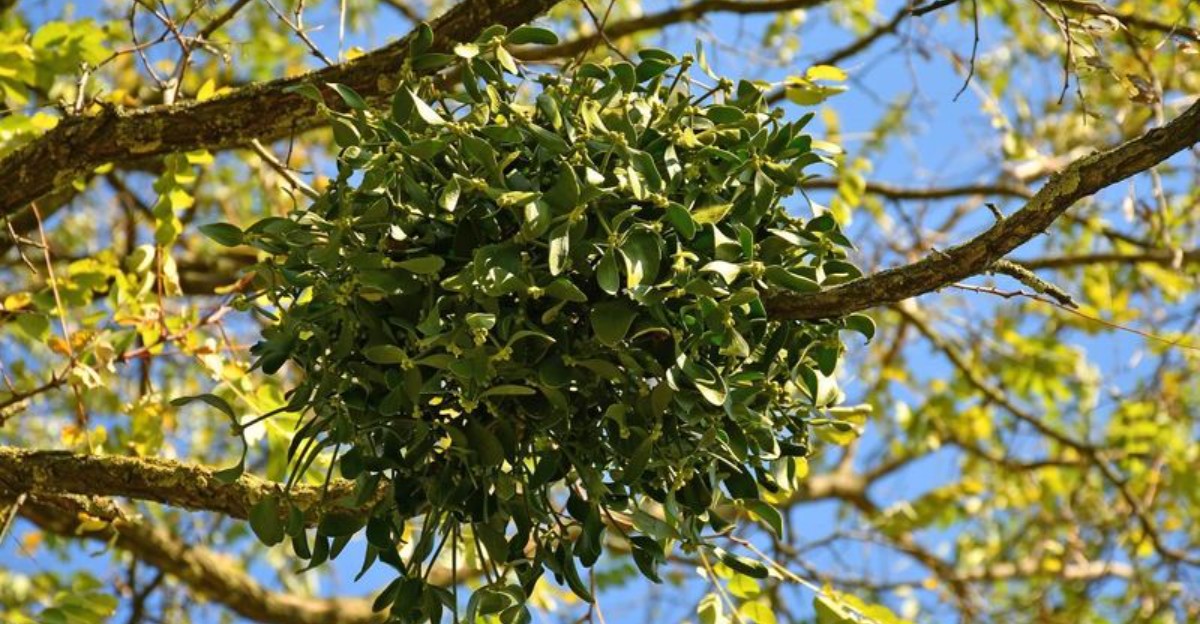
Look for oval leaves that feel thick and leathery. The stems branch in a forked pattern, and the whole clump has a rounded shape. Mature plants can stretch a few feet wide, which is why they get mistaken for nests.
A good pair of binoculars makes identification easy. Winter afternoons with low sunlight work great, because the green glows against bare gray limbs. Once you spot your first clump, you will likely start seeing them everywhere along creek roads and riverbanks.
A Kiss Under The Mistletoe Has Roots Going Way Back
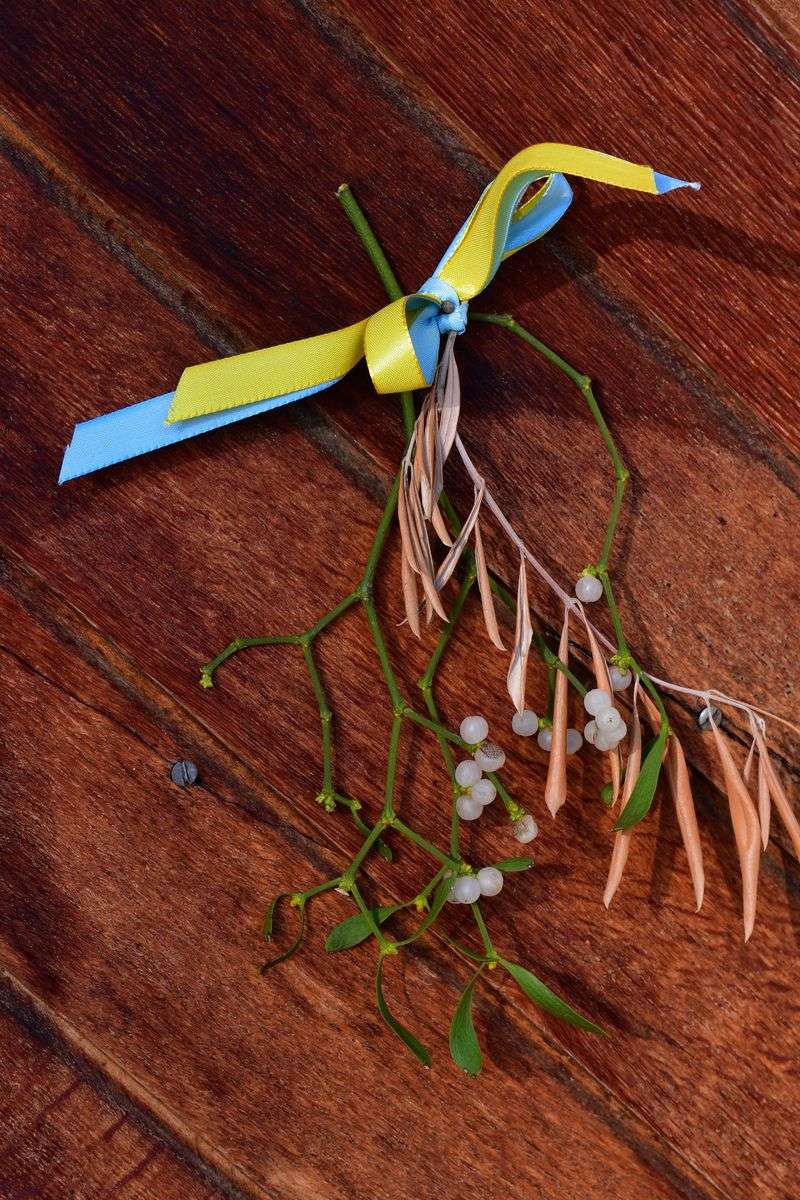
Here comes the holiday twist. That same plant hanging in the treetops is the one people tie with ribbon and hang over doorways each December.
The custom is surprisingly old. Ancient Celtic Druids prized mistletoe, partly because it stayed green when everything else went bare in winter. Writers in Roman times described them gathering it from oak trees during special ceremonies. Green life in the coldest season felt like a sign of hope and renewal.
Norse legend adds a dramatic story. The god Baldur was harmed with an arrow made of mistletoe, and later retellings turned the plant into a symbol of love and peace. Historians debate how much of that tale shaped modern habits, though.
The kissing part really caught on in England during the 1700s and 1800s. Victorian families made it a parlor game, with one berry plucked for every kiss until none remained.
Our American species differs from the European one in those old stories. Still, settlers adopted the native plant happily, and it became a classic part of American holidays. Personally, I think knowing the history makes that doorway sprig feel a lot more special.
That Tree Thief Mistletoe Still Makes Some Of Its Own Food
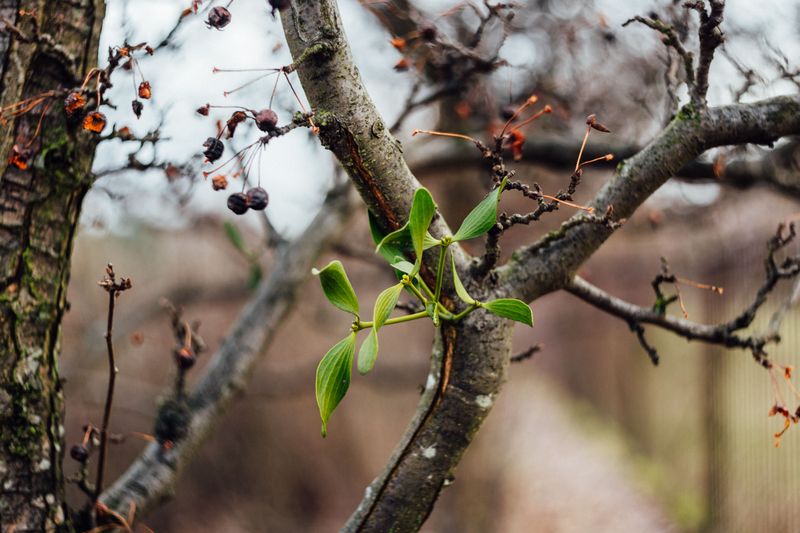
Call it a freeloader with a work ethic. The genus name Phoradendron comes from Greek words meaning tree thief, and the label is only half fair.
Mistletoe is a hemiparasite. It sends a special root-like structure, called a haustorium, into the branch of its host. Through that connection, it pulls water and minerals from the tree.
Those green leaves are doing real work, though. They use sunlight for photosynthesis and produce sugars for the plant. So mistletoe borrows plumbing but cooks some of its own meals.
Why live in a tree at all? Height gives it access to sunlight without competing with shrubs on the forest floor. Being up high also puts it right where berry-eating birds perch and rest.
You may notice swollen spots on a branch where a clump attaches. That bump forms as the tree and mistletoe tissue grow together over years. A single plant can live for many years on the same limb.
I find it fascinating that one plant has figured out a middle path between independence and dependence. It is a clever survival trick, even if the host tree might not agree.
Cedar Waxwings And Bluebirds Plant Mistletoe For Free
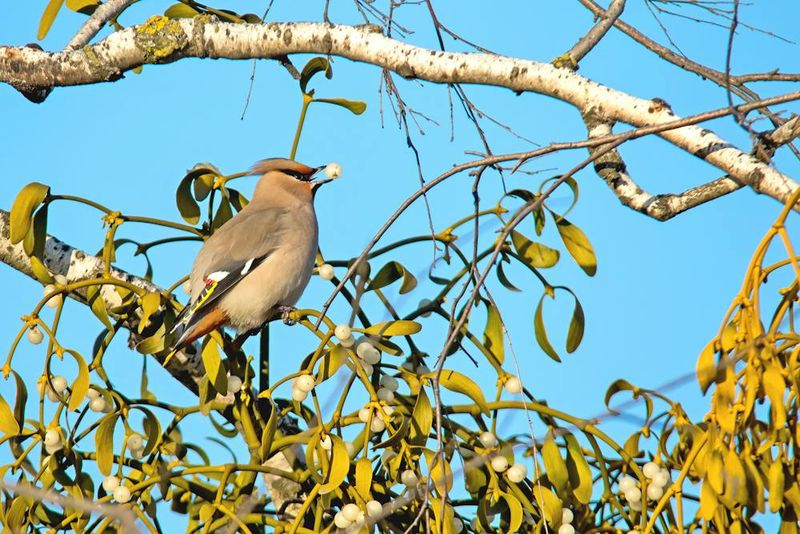
Birds are the gardeners here. Without them, mistletoe would have a very hard time moving from tree to tree.
Female plants produce small, waxy white berries that ripen in late fall and winter. Inside each berry is a single seed wrapped in sticky pulp. Bluebirds, cedar waxwings, robins, and other birds gobble them up when food gets scarce.
The seeds pass through quickly and land on branches in droppings. Sometimes a bird wipes its beak on a limb to clean off the gummy goo. Either way, the seed glues itself to the bark and waits.
Given time, it sprouts and pushes into the branch. Growth is slow, and a new plant may take several years before it makes berries of its own.
This explains why clumps often cluster in certain trees. Birds return to favorite perches, so one tree can collect many plants over time.
Want to watch the action? Set up near a mistletoe-heavy sycamore on a cold morning with binoculars and a thermos of cocoa. Flocks of waxwings arriving in a noisy, polite crowd make one of the best winter shows around.
Great Purple Hairstreak Butterflies Depend On These Clumps
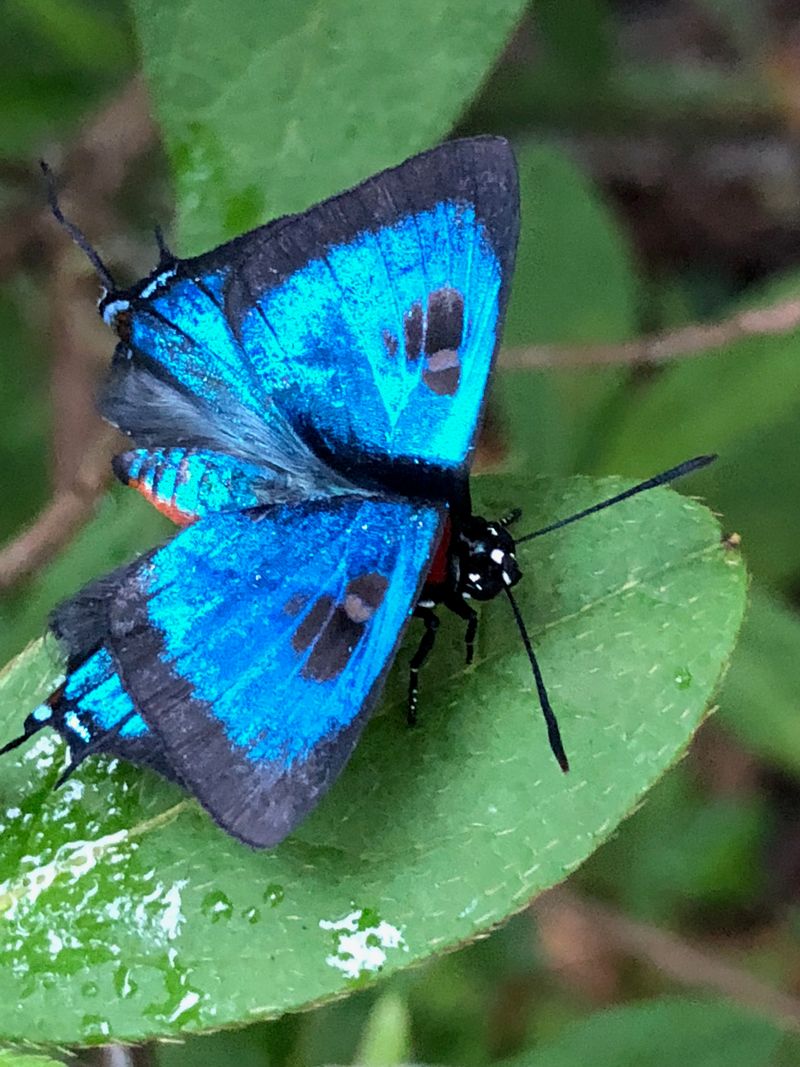
Few plants get a bad reputation and a fan club at the same time. Mistletoe pulls it off.
The great purple hairstreak is the star example. This butterfly flashes brilliant iridescent blue on the upper wings and has a bright orange belly. Its caterpillars feed on mistletoe leaves, and the National Wildlife Federation lists mistletoe as its host plant.
Birds benefit in winter, too. The thick, rounded clumps give chickadees and other small songbirds a sheltered place to duck out of icy wind. Some birds even tuck nests into large clumps when spring arrives.
Squirrels, deer, and other animals nibble on the leaves or berries when they can reach them. Research in other parts of the country has linked mistletoe to richer bird diversity in woodlands.
So that green ball is more than a curiosity. It acts like a small apartment building and grocery store rolled into one.
I used to think of it only as a tree pest. Learning about the hairstreak changed my mind, because one plant supports a surprising web of life. Nature rarely sorts neatly into heroes and villains.
Your Sycamores, Elms, And Oaks Can Usually Handle A Few Clumps
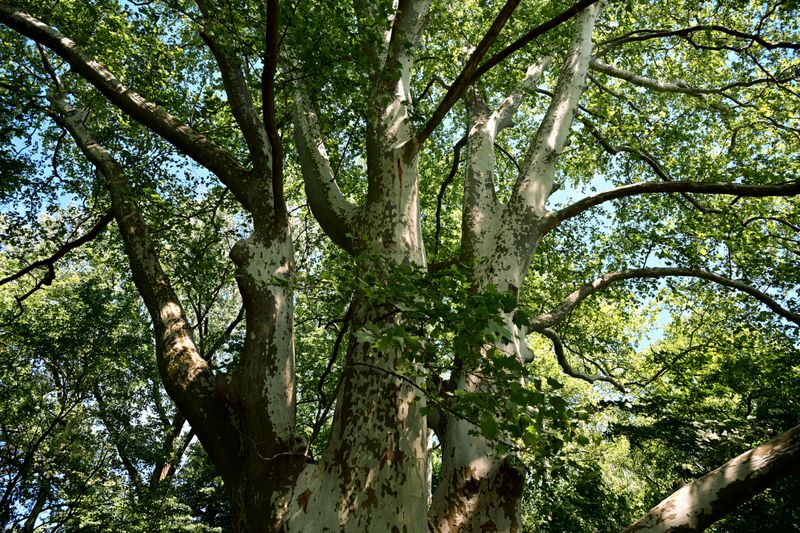
Worried about the big tree in your yard? Take a breath first.
In Missouri, mistletoe shows a strong liking for sycamores, especially along streams. It also grows on elms, oaks, river birch, black gum, maples, and several other hardwoods. Trees near water often carry the most clumps.
University of Missouri Extension notes that a few plants rarely cause serious harm to a healthy, mature tree. Trouble starts with heavy infestations. Branches carrying lots of mistletoe can weaken, grow oddly, or decline beyond the attachment point.
Stress makes things worse. A tree already struggling with drought, root damage, or old age has less energy to share. Those are the trees worth watching closely.
For control, pruning is the most reliable option. Cut infected branches at least a foot below the clump, since the haustorium grows inside the wood. Simply snapping off the leafy part often lets it sprout again.
High limbs are a job for a certified arborist, not a ladder and a hopeful attitude. Winter is a smart time to plan, because the clumps are easy to see. An arborist can judge whether removal is worth it.
Those White Mistletoe Berries Belong Out Of Reach Indoors
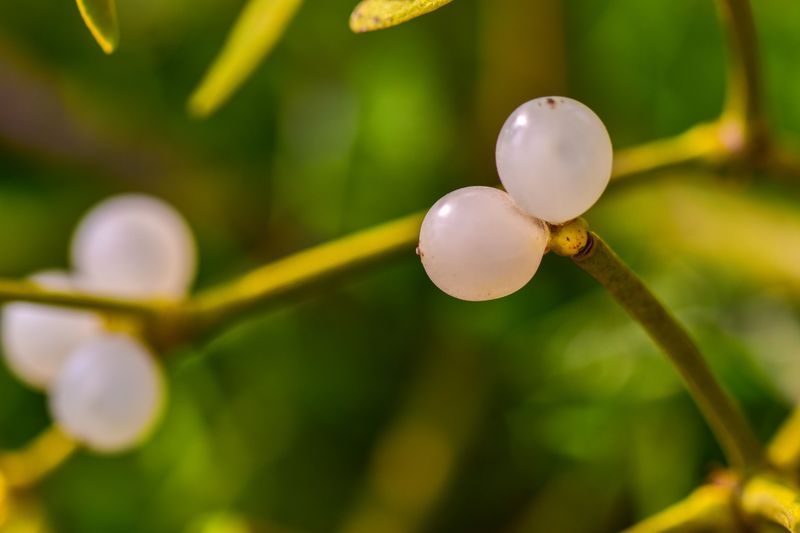
Before you clip a sprig for the front hall, one thing matters most. Mistletoe leaves, stems, and berries are considered toxic if eaten.
The Missouri Poison Center advises caution, especially in homes with toddlers or pets. Eating a berry or two often leads to stomach upset, but larger amounts can cause more serious problems. Dogs and cats may get vomiting, drooling, or worse.
Hang any real sprig high, well above curious hands and paws. Tie the berries in a small mesh bag so fallen ones do not end up on the floor. Toss it once the holidays wrap up.
Artificial mistletoe is the simplest worry-free choice. Many look surprisingly real, last for years, and still deliver the full kiss-under-the-doorway charm.
Also, respect the trees. Collecting on public land or someone else’s property usually needs permission, and harvesting high limbs is risky. Shooting clumps down, an old rural habit, is unsafe and often illegal.
My favorite tradition costs nothing. Grab binoculars, drive a creek road this winter, and count the green clumps with your family. Then call Poison Control at 1-800-222-1222 if anyone ever nibbles something they should not.