Those Little Brown Cones Hanging On Maryland Evergreens Aren’t Cones
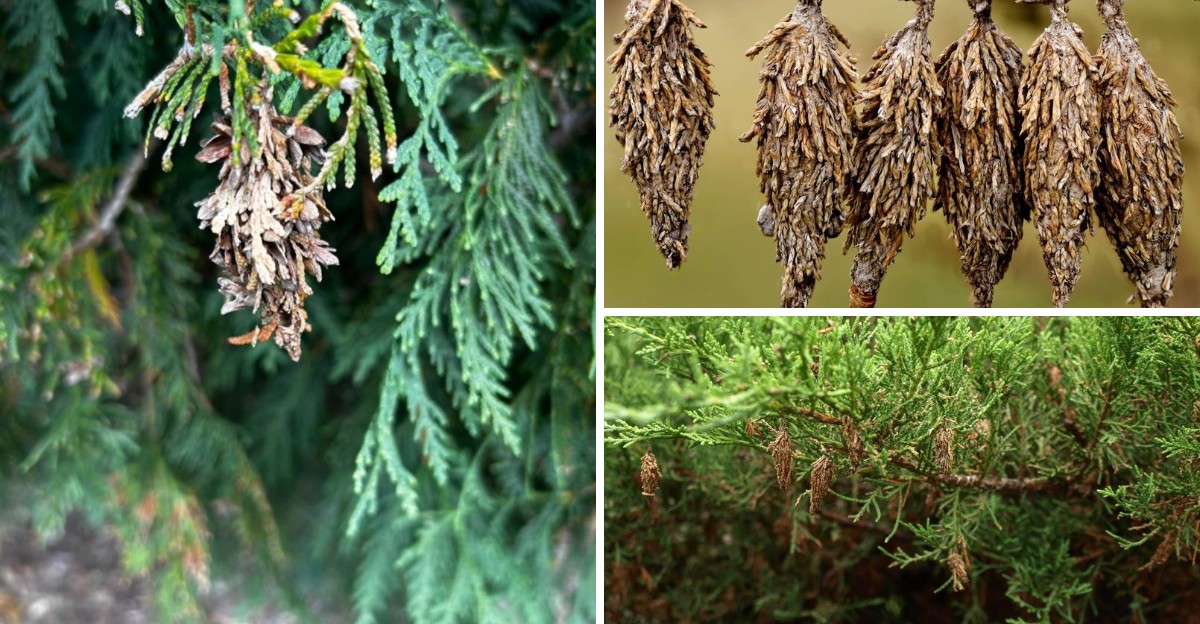
A single brown dangle on an arborvitae can hold hundreds of eggs, sometimes close to a thousand. That fact stopped me cold the first time I read it.
I’ll admit it, I spent two winters admiring those tidy little ornaments on my Maryland shrubs. They looked like tiny pinecones wrapped in shredded needles. Turns out they were silk bags built by a caterpillar, and the mother inside spent her whole adult life without wings.
What gets me most is the disguise. Each bag is stitched from bits of the very tree it hangs on, so it blends in like it belongs there. You can walk past one all summer and see nothing but another cone.
Not going to lie, I felt a little betrayed by my own hedge. So what are those bags really doing up there, and why does winter turn out to be the perfect moment to handle them?
Those Brown Pinecone Look-Alikes On Your Arborvitae Are Hiding Someone
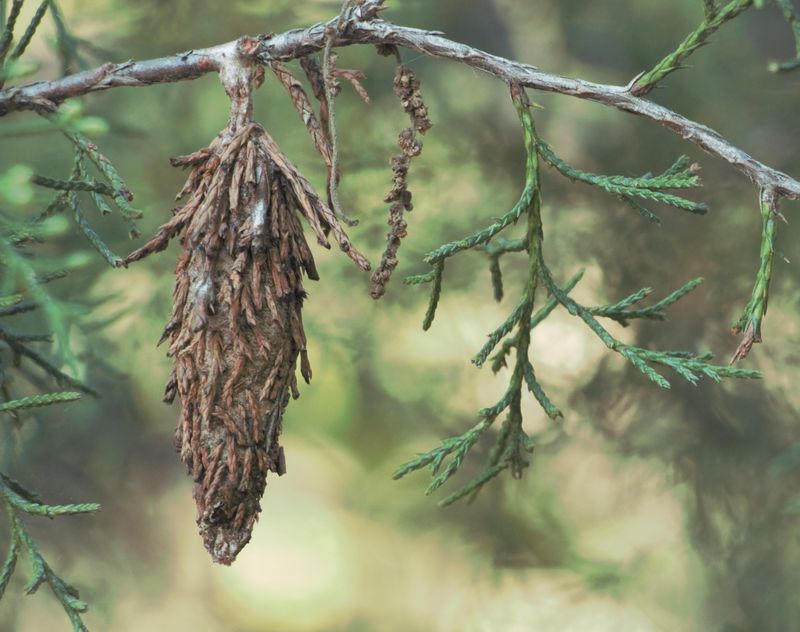
Pull one of those brown dangly things off a branch and try to break it open. It fights back, because it is made of tough silk woven around bits of needles and twigs.
What you are holding is a bagworm case, not a cone. Bagworms are the caterpillars of a native moth called Thyridopteryx ephemeraeformis, and University of Maryland Extension counts them among the most common evergreen pests in the state. Real cones are woody, scaly and grow from the branch itself.
Bagworm cases hang from a short silk strap and feel papery or leathery. A quick squeeze test helps. If the bag feels plump in fall or winter, there is probably an egg mass inside.
If it is light and hollow, it may be an empty male case or an old bag from a previous year. Old bags can cling to branches for a long time, so a shrub may look worse than it really is.
Now for the weird part. The female moth looks nothing like a moth, with no wings and barely any legs, and she stays inside the bag her whole adult life. The male is the flyer, a small dark moth with clear wings that searches out females in late summer.
So that cone collection on your hedge is really a moth neighborhood.
Bagworm Caterpillars Build Portable Silk Homes As They Munch
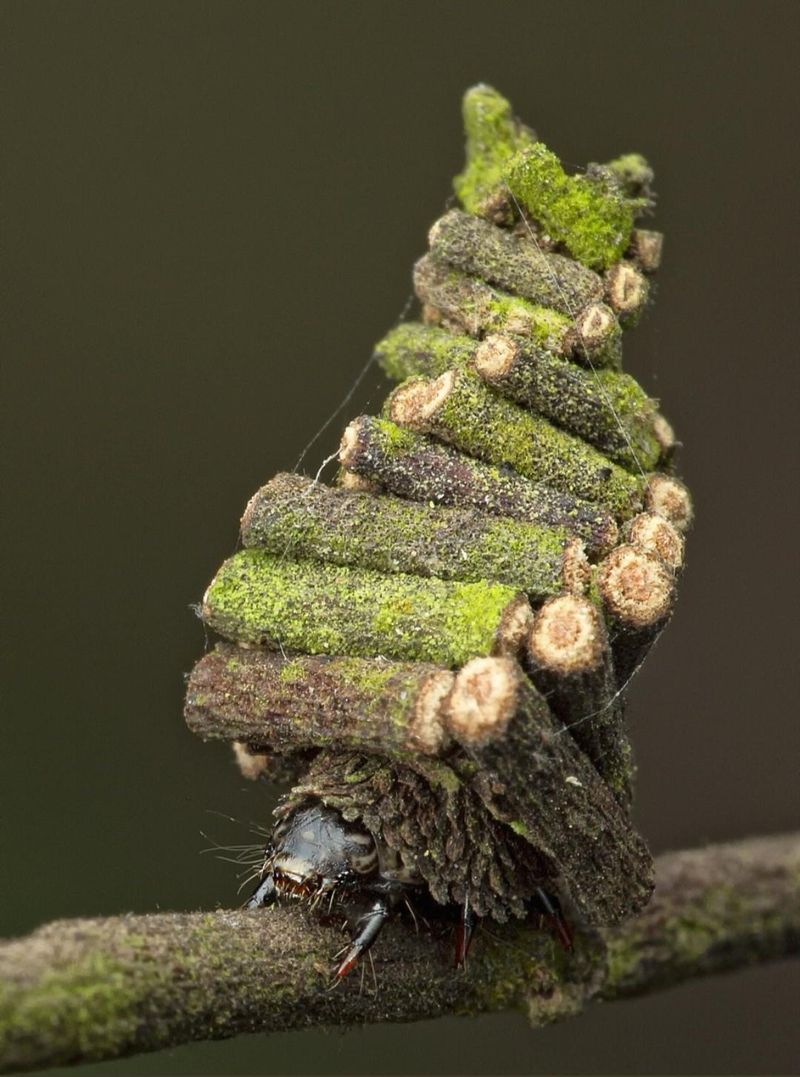
Every bagworm starts life as a speck smaller than a sesame seed, and the first thing it does is get dressed. Within hours of hatching, the tiny caterpillar spins a silk cone around itself and glues on scraps of the plant it is standing on.
As the caterpillar eats, it grows, and the bag grows with it. By late summer the case can reach about 1.5 to 2 inches long. The caterpillar pokes its head and front legs out the top to feed and drags its house along like a hermit crab.
In Maryland, feeding runs from roughly late May through August. Then the caterpillars fasten their bags tightly to a twig with a strong silk band and change into pupae. Males emerge as moths in September and go looking for mates.
After mating, the female lays somewhere between 500 and 1,000 eggs inside her case. Those eggs stay snug through the winter, protected by silk and the female’s old pupal skin.
Fun fact: young bagworms sometimes spread by ‘ballooning.’ They let out a silk thread and ride the breeze to a new shrub, which explains how they can show up on a plant that had none last year.
Snipping Bagworm Bags Off In Winter Is The Easiest Fix
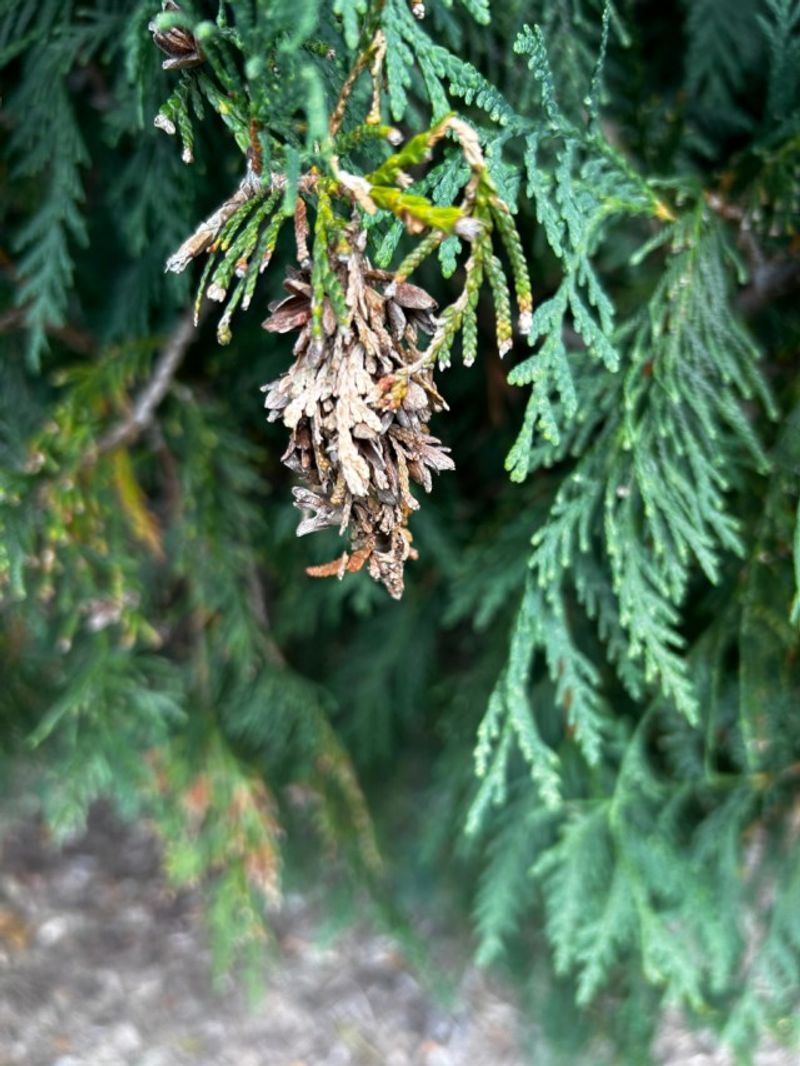
Grab a pair of snips and a bucket on a mild winter afternoon. Honestly, this is my favorite garden chore of the cold season, because it feels like a treasure hunt with a real payoff.
From late fall through early spring, every plump bag you remove takes hundreds of future caterpillars with it. Extension specialists recommend hand-picking as the top control method for home gardeners, especially on small shrubs and hedges. The eggs inside stay put until late May, so you have months to work.
Cut or peel each bag off carefully. That silk band wrapped around the twig is surprisingly strong, and if you leave it behind it can girdle the stem as the branch grows. Snip it free instead of yanking.
Toss the bags into a bucket of soapy water, or seal them in a bag for the trash. Dropping them on the ground is not enough, since the eggs can still hatch and crawl back up.
Tall trees are harder, so focus on what you can reach safely. A sturdy step stool is fine, but a wobbly ladder on frozen ground is not worth the risk. Even clearing the lower half of a tree makes a noticeable difference next summer.
Tiny New Bagworm Cases Pop Up On Branch Tips In Late Spring
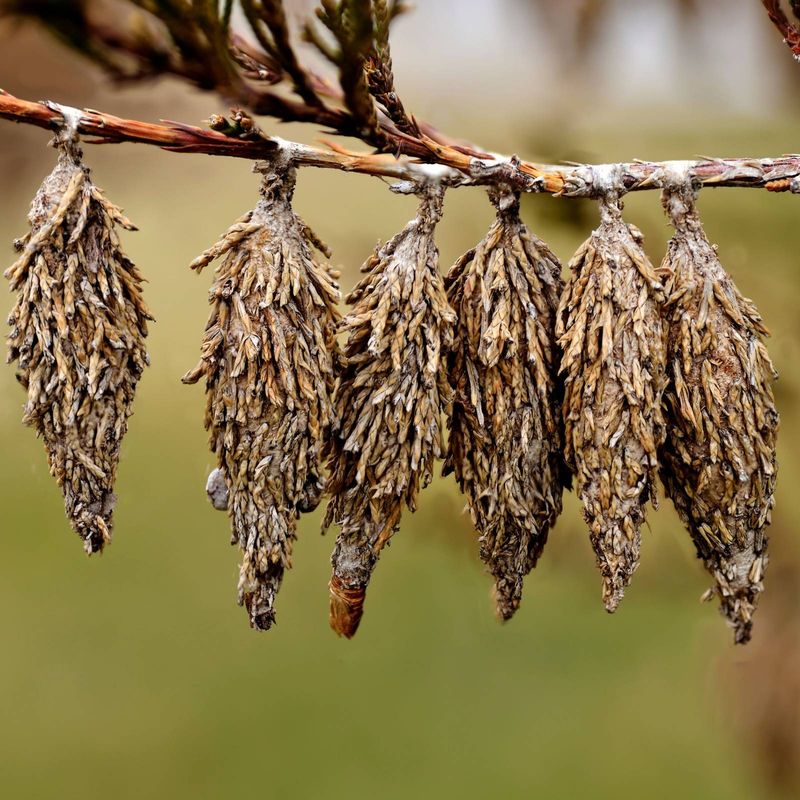
Missed a few bags over the winter? It happens to all of us, and late spring hands you a second chance.
Bagworm eggs in Maryland usually hatch from late May into June. The newborns are tiny, and their first little bags are only about an eighth of an inch long. Look closely at the tips of arborvitae and juniper sprigs for small upright cones that seem to wiggle, because that movement is the giveaway.
Young caterpillars are the easiest stage to control. A product containing Bacillus thuringiensis, often sold as Bt, works well at this point. It is a naturally occurring bacterium that affects caterpillars eating treated foliage, and it is low risk for people, pets and most beneficial insects.
Timing matters a lot. Bt works best on small larvae, generally in June, and it loses punch as caterpillars get bigger. By late August, larger caterpillars often seal themselves in and stop feeding, so sprays then mostly waste time and money.
Read and follow the label for whatever product you choose. Spray thoroughly so the foliage is well covered, and reapply if rain washes it off. Hatching can stretch over a few weeks, so a follow-up application often helps.
Junipers, Leyland Cypress And Arborvitae Top The Bagworm Menu
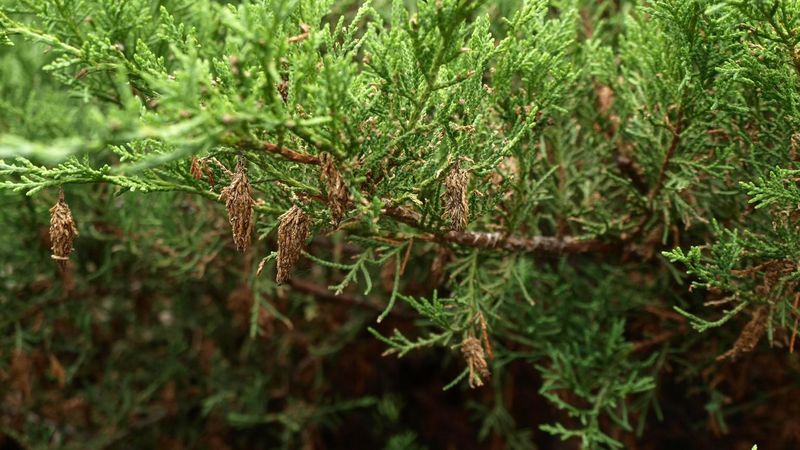
Bagworms are not picky eaters, but they have favorites. In Maryland landscapes, the usual targets are arborvitae, eastern red cedar, junipers and Leyland cypress. Spruce, pine and hemlock can also get hit.
Evergreens suffer more than other plants for one simple reason. Most needled evergreens cannot regrow foliage from bare woody stems the way a maple can leaf out again. Once a branch on an arborvitae or juniper loses all its needles, it often stays bare.
Deciduous trees get attacked too. Bagworms will munch on honeylocust, maple, sycamore, black locust and even roses. Those plants usually bounce back with fresh leaves, so the trouble tends to look worse than it is.
Leyland cypress hedges deserve special attention. They are planted in long, dense rows along property lines across central Maryland, and that tight arrangement gives caterpillars an easy highway from plant to plant.
When choosing new shrubs, think about variety. A mixed planting of native evergreens and flowering shrubs is less of a buffet than a single-species wall. Native options such as American holly or inkberry make lovely screens and are rarely bothered by bagworms. Your yard will look more interesting, too.
Pineapple-Shaped Spruce Galls Are A Different Cone Imposter
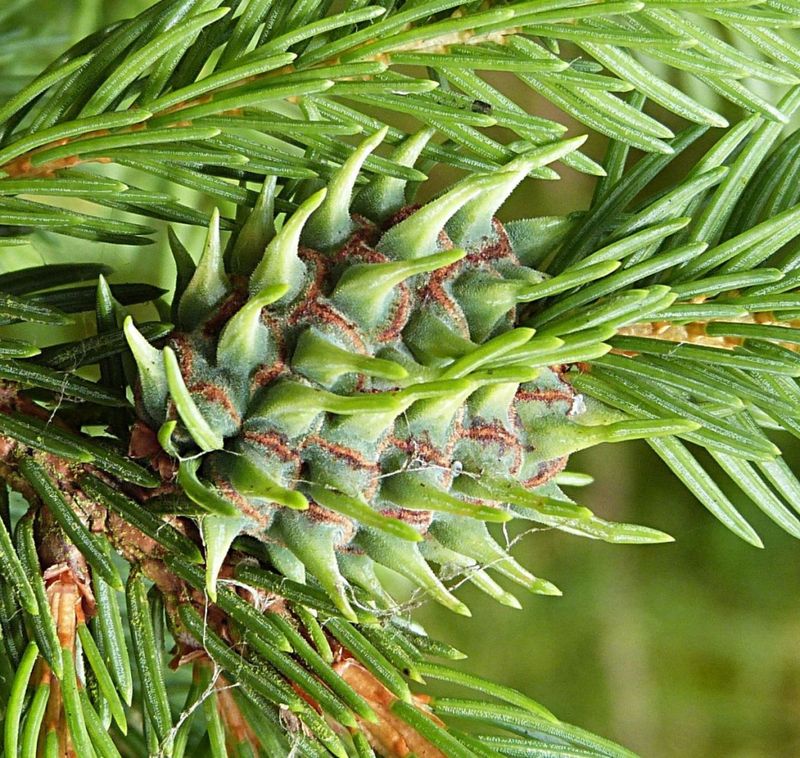
Not every fake cone in Maryland comes from a bagworm. If the brown lump is on a spruce, and it is stuck tight to the twig instead of hanging from a silk strap, you may be looking at a gall made by an adelgid.
Adelgids are tiny aphid relatives. In spring, they feed at the base of new spruce shoots, and the tree responds by swelling into a structure that looks like a little pineapple. The insects grow safely inside the chambers of that gall.
The eastern spruce gall adelgid forms galls at the base of new shoots, often on Norway and white spruce. The Cooley spruce gall adelgid makes longer galls, up to about three inches, usually at the shoot tips of Colorado blue spruce. Both start out green or purplish, crack open in late summer, then turn brown and hang on for years.
Galls are mostly a cosmetic problem. If they bother you, prune out the green galls in late spring or early summer before they open. Brown galls are already empty, so trimming them is purely for looks.
Spot swollen lumps on a true fir instead? Ask your local extension office to take a look.
Browning Branch Tips On Evergreens Can Signal A Heavy Bagworm Load
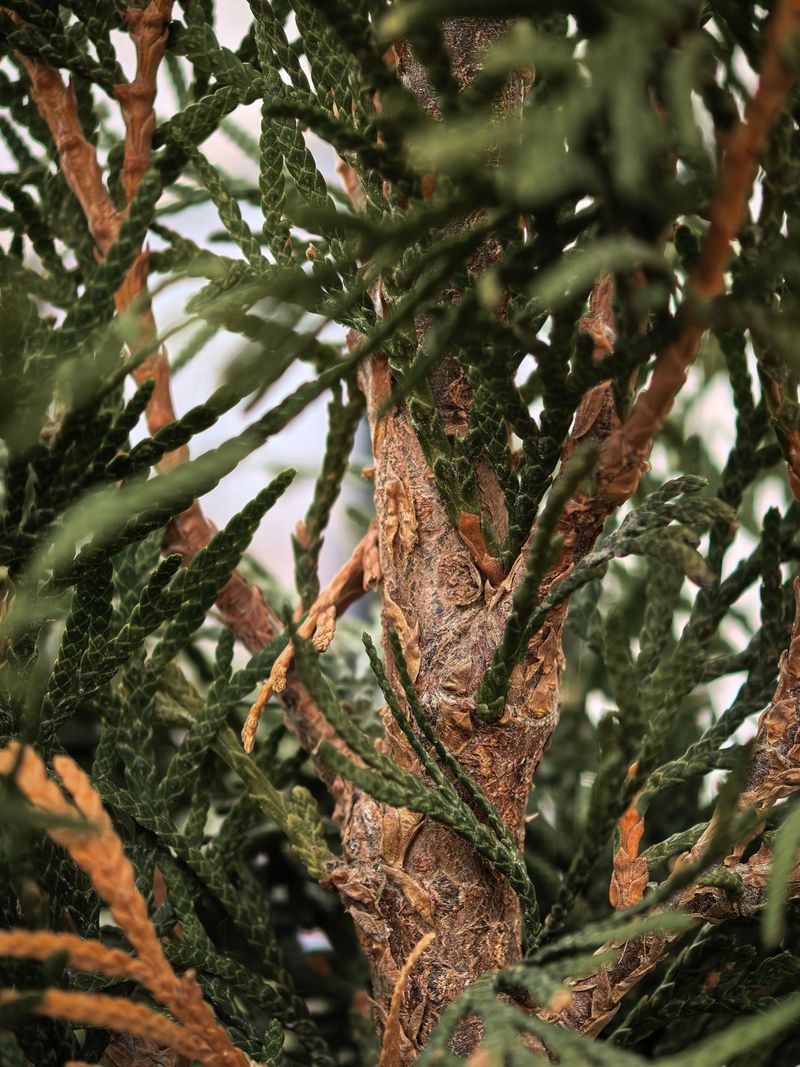
A Leyland cypress hedge can go from lush green to rusty brown in a few short weeks once bagworms hit their August growth spurt. Plenty of owners walk past the bags for months without a second glance.
Early feeding is easy to overlook. Small caterpillars nibble the outer layer of needles, leaving tips that look faded or scraped. As they grow, they strip whole sprigs, often starting near the top of the plant where young caterpillars first settle.
Heavy infestations can defoliate an evergreen in a single season. Two or three years of repeated stripping can leave a shrub badly weakened, and sometimes the plant does not recover. That is why spotting a few bags early matters so much.
Not every browning evergreen has bagworms, though. Drought stress, spider mites, root problems and normal fall needle drop all cause brown foliage too. Arborvitae, for instance, shed older inner needles each autumn, which is perfectly normal.
The quick way to tell? Look for the bags themselves, plus chewed needle tips near the outer edges. If you find browning without any bags or chewing, check soil moisture and tap a branch over white paper to look for tiny moving mites.
Chickadees, Tiny Wasps And A Yearly Shrub Walk Keep Bagworms In Check
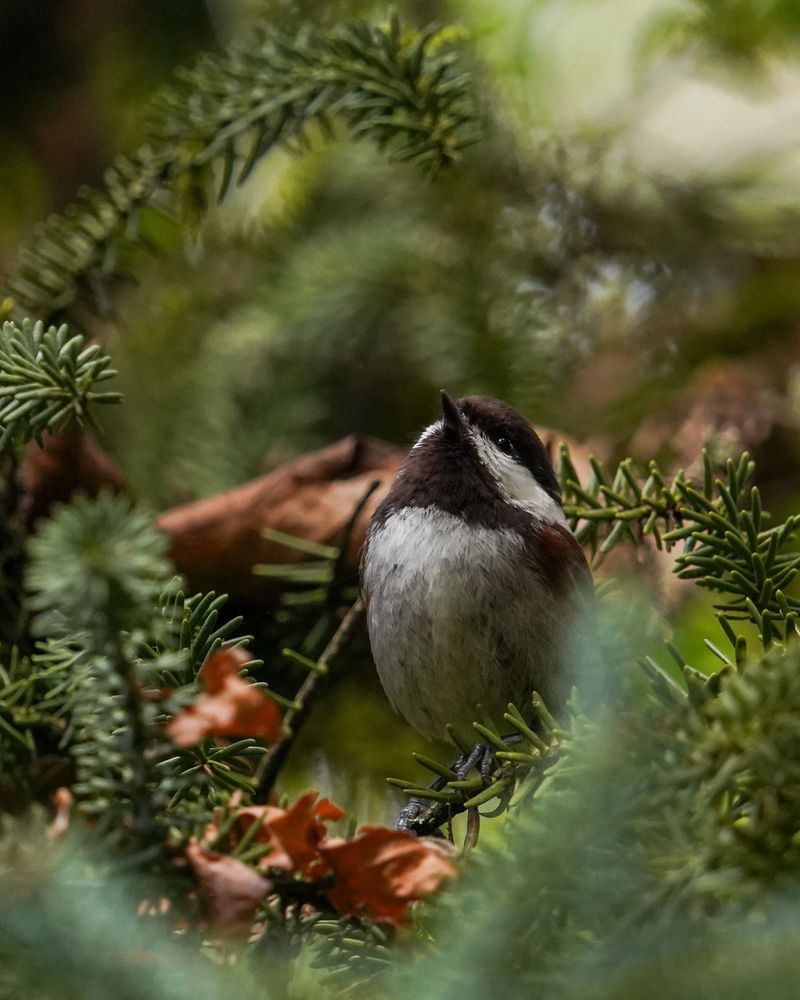
Mother Nature runs her own bagworm patrol, and it is worth inviting to your yard. Parasitic wasps lay eggs inside bagworm caterpillars and pupae, and in some years they knock populations way down. Birds such as chickadees and woodpeckers pick at bags too.
Broad-spectrum insecticides can harm those helpers, which is one more reason to favor hand-picking and Bt. Planting native flowers like goldenrod, asters and mountain mint gives small beneficial wasps nectar to fuel up on.
A simple yearly routine keeps things manageable. Walk your evergreens in late fall or winter and pick off bags. In early June, check branch tips for tiny new cases, then look again in midsummer for chewed needles and fresh bags you missed.
Chat with your neighbors, too. Caterpillars balloon across property lines, so a clean hedge next to an infested one may not stay clean for long.
My favorite takeaway is how much a little attention pays off. Those brown ‘cones’ are easy to ignore, but they are also easy to remove once you know what they are. A few minutes with snips this winter can save a hedge you spent years growing.