Those Little White Specks On Indiana Euonymus Shrubs Aren’t Frost
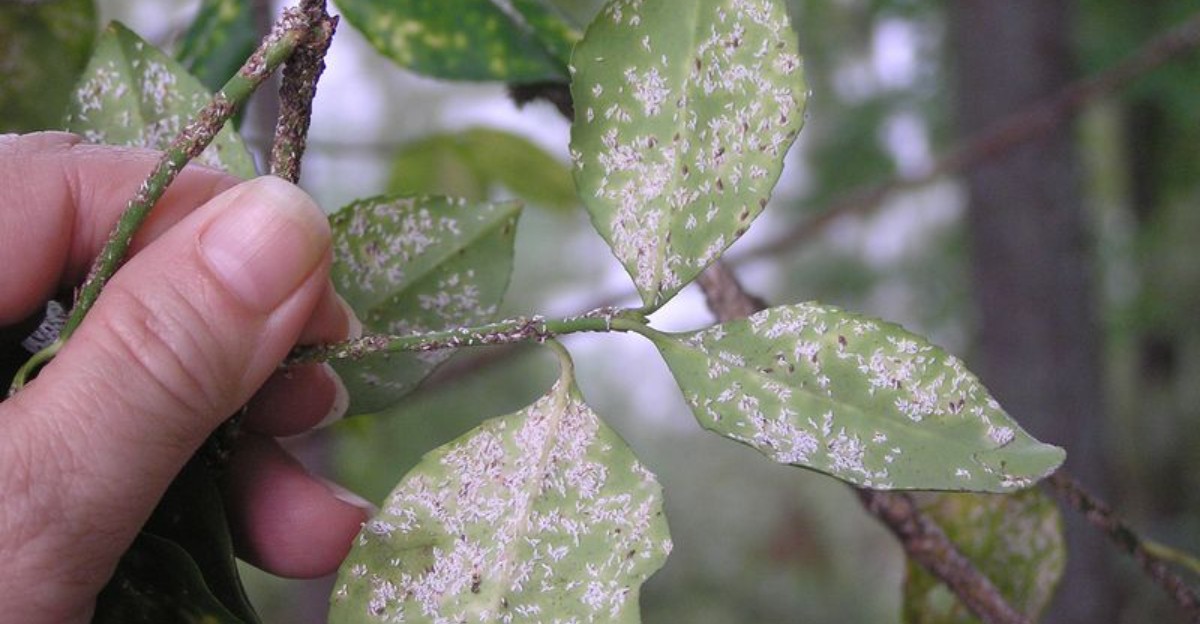
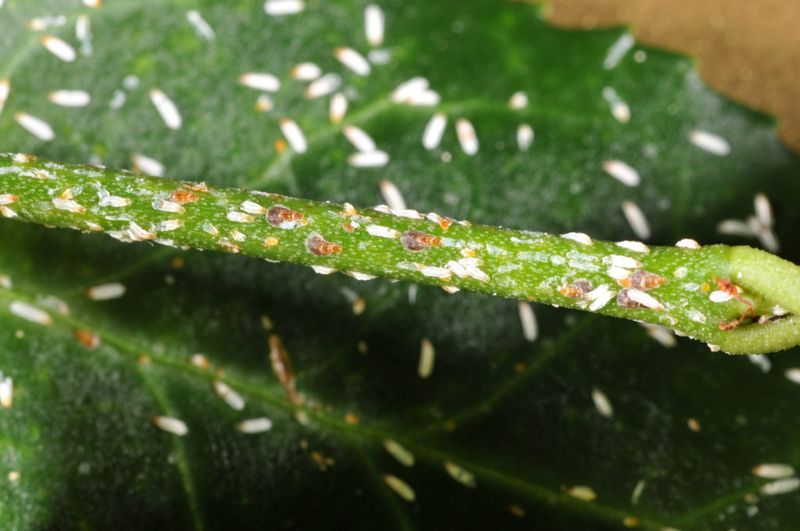
Those tiny white flecks on your evergreen hedge are actually male insects. Each one is a waxy, ridged shell about the size of a pencil dot, and they can pile up by the thousands.
I’m the first to admit I once brushed them off as frost. It was a sunny 50-degree afternoon in Indiana, and the white dusting refused to melt.
Here’s what gets me. The females hiding nearby look like dull brown bark bumps, so the real trouble blends right in. Meanwhile, the leaves slowly turn yellow and blotchy while you blame the weather.
So what’s sitting on your shrubs right now? A quick look at the stems might surprise you.
Those Snowy Flecks On Euonymus Leaves Are Wearing Tiny Shells
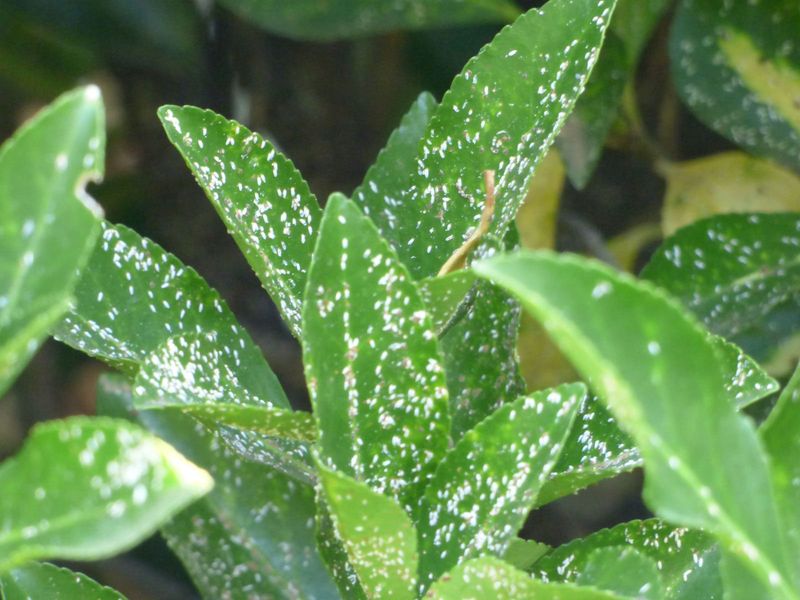
Grab a magnifying glass and look closely at one speck. You’ll see a narrow white shell with faint ridges running down its length, not a crystal of ice.
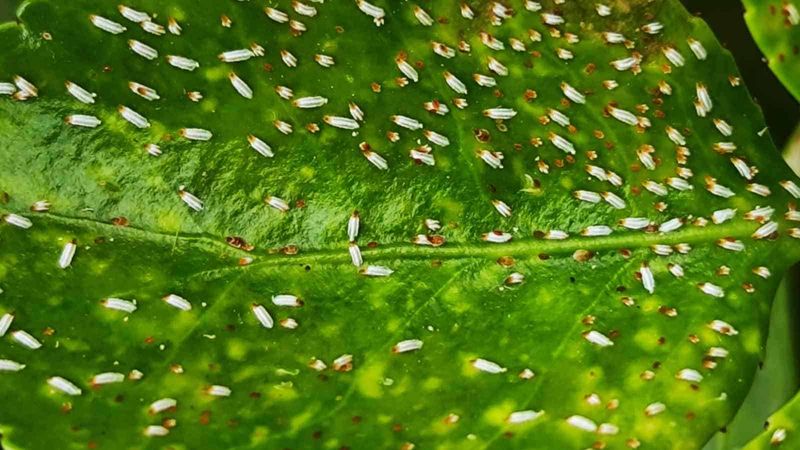
Those are the protective covers of male euonymus scale, an armored insect from Asia that showed up in North America over a century ago. Purdue Extension calls it one of the most common pests on euonymus across the state. Males cluster thickly on leaves and green stems, which is why shrubs can look sugar-dusted.
Females take a sneakier approach. Their covers are brownish-gray, shaped like a tiny oyster shell, and roughly 1/16 inch long. They mostly hide on older stems and branches, where they blend with the bark.
Try a simple test. Frost and dew melt or wipe away in seconds, but scale covers stay stuck tight. Flip a female cover with a fingernail and you may find a small orange-yellow body or eggs tucked underneath.
Fair warning, once you learn to spot them, you’ll notice them in parking lot plantings, foundation hedges, and even on climbing euonymus vines. It’s a bit like learning a new word and then hearing it everywhere you go.
Yellow Spots On Euonymus Leaves Show Where Scale Has Been Feeding
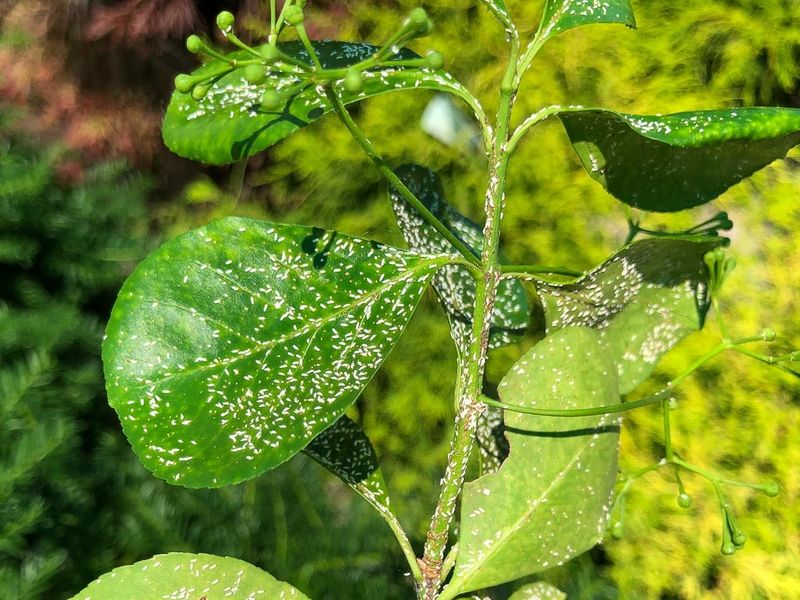
Turn a leaf over and check the top side too. Wherever scale insects settle, you’ll often see yellow or pale spots on the opposite surface.
Armored scales push slender mouthparts into the plant and feed on fluids from individual cells. Unlike aphids, they don’t produce sticky honeydew, so you won’t find shiny leaves or black sooty mold. The damage shows up as speckled, washed-out foliage instead.
As numbers climb, leaves can drop early and twigs may thin out. Heavily infested branches sometimes decline and stop leafing out, leaving bare patches in a once-tidy hedge. Shrubs that sit in stressful spots, like hot walls or dry soil, tend to struggle the most.
I learned the hard way that the yellowing comes before the shrub looks truly rough. By the time a hedge has open, leafless gaps, the colony has usually been building for a season or two.
Catching it early makes management far easier. A five-minute check of the inner stems each spring and late summer pays off. Look for white male covers on leaves and brown female bumps on wood, then mark which shrubs need attention first.
Orange Crawlers Hatching In Late May Are Your Best Target
Timing is the whole game with this pest. Euonymus scale spends winter as mated adult females snug under their shells, mostly untouched by cold.
Once spring warms up, each female lays eggs beneath her cover. In much of Indiana, the first wave of tiny orange-yellow crawlers usually appears from late May into June. A second generation typically follows in mid to late summer, often July into August, depending on local temperatures.
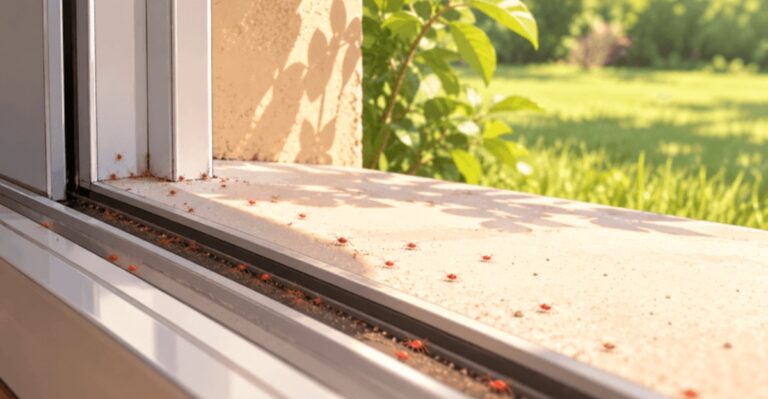
Crawlers are the only stage without a hard, waxy shell. They wander briefly, settle down, and start building their own covers within days. That short window is when sprays actually reach the insects.
Not going to lie, crawlers are hard to see with the naked eye. Wrap a strip of black electrical tape around a stem, sticky side out, and check it every few days. Orange specks stuck to the tape mean it’s go time.
Southern Indiana usually runs a week or two ahead of the northern counties. Purdue’s landscape reports often share crawler alerts, so it helps to follow them. Growing degree days are another handy guide for the first hatch, and your local extension office can tell you the target range for this species.
Horticultural Oil And Smart Pruning Bring Euonymus Scale Under Control
My favorite first move costs nothing but a pair of sharp pruners. Cutting out the worst stems removes a large share of the colony in one afternoon.
Bag those clippings and put them in the trash instead of the compost pile. Then thin the shrub a bit so light and spray can reach the interior branches.
Horticultural oil does much of the heavy lifting. A dormant-rate oil in late winter or early spring, before new growth, smothers many overwintering females. A lighter summer-rate oil works on crawlers in late spring and again in summer.
Read the label carefully every time. Oils can burn leaves on very hot days, usually above about 90 degrees, or when plants are drought stressed. Water shrubs a day or two before spraying.
Insecticidal soap also works on crawlers but needs direct contact. Some gardeners use systemic products like dinotefuran for heavy infestations, but follow labels closely to protect pollinators.
Patience matters here. Shells of controlled scale stay stuck to stems for a while, so look for fresh, plump females rather than old crusty covers to judge success.
Flour-Like Powdery Mildew Is A Different White Mess On Euonymus
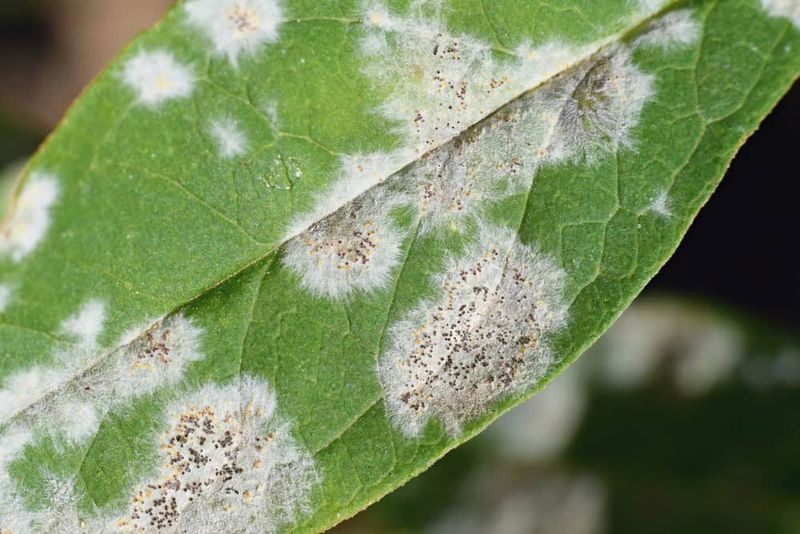
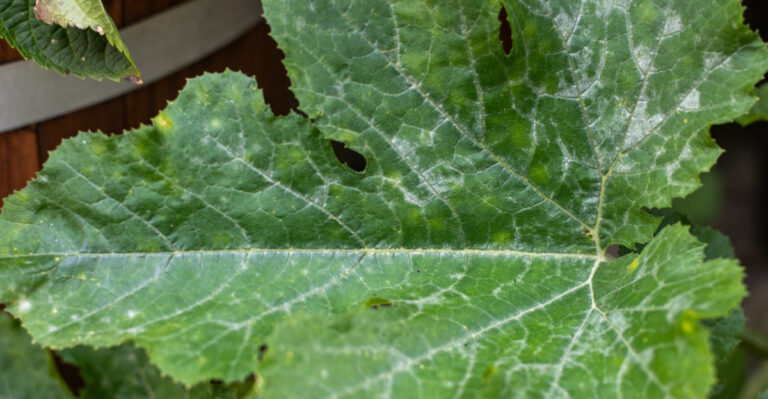
Sometimes the white stuff really does wipe right off. In that case, you may be dealing with powdery mildew, a fungal disease that looks like someone sprinkled flour on the leaves.
Japanese euonymus and some evergreen types are especially prone to it. The fungus starts as soft, round white patches, usually on upper leaf surfaces. Unlike most fungi, it doesn’t need wet leaves to get going, and it loves warm days followed by cool nights.
Here’s the easy way to tell the two apart. Rub the spot with your thumb. Powdery mildew smears into dust, while scale covers stay firmly glued in place.
Mildew rarely threatens the life of a shrub, but it can make leaves twist, yellow, and drop. Shady corners with poor air flow tend to be hot spots.
Improve circulation by thinning crowded branches and giving plants more room. Rake up fallen infected leaves. Go easy on nitrogen fertilizer, since soft new growth is a magnet for this fungus.
If it keeps returning, sulfur, potassium bicarbonate, or neem oil sprays can help when applied early and repeated per label directions.
Tiny Lady Beetles And Wasps Feast On Euonymus Scale
Guilty as charged, I once sprayed everything in sight the moment I saw a pest. That habit can backfire with scale.
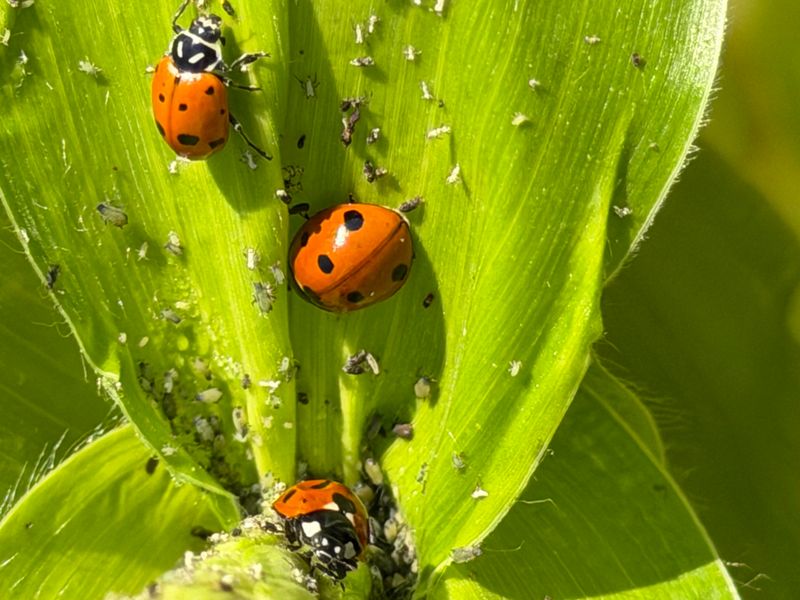
Several natural enemies target euonymus scale. The twice-stabbed lady beetle, a shiny black beetle with two red spots, eats scales readily. A small Asian lady beetle, Chilocorus kuwanae, was even released in parts of the country specifically to help control this pest.
Tiny parasitic wasps join in too. They lay eggs inside scales, and you might notice small round exit holes in old covers. Those holes are a sign the good guys are working.
Broad-spectrum insecticides can harm these helpers and lead to bigger scale flare-ups later. That’s one reason extension experts favor targeted options like horticultural oil, which breaks down quickly.
Planting a mix of flowers nearby gives beneficial insects nectar and shelter. Dill, yarrow, and native asters like New England aster are easy wins in Indiana gardens.
Natural enemies alone may not rescue a badly infested hedge. Still, they make a real difference when paired with pruning and well-timed oil sprays. Think of them as your free, round-the-clock pest patrol.
Stressed Euonymus Planted Against Hot Walls Attract The Most Scale

Ever notice that the hedge by the driveway looks worse than the one in the backyard? Location plays a bigger role than most people expect.
Euonymus scale tends to hit plants under stress the hardest. Shrubs squeezed against south or west facing brick walls bake in reflected heat. Others sit in compacted soil near sidewalks, where roots struggle to find water.
Mass plantings of the same shrub make things easier for scale too. Crawlers can move from plant to plant on wind, birds, and even your gardening gloves. A long row of identical euonymus is basically a buffet line.
Simple care helps shrubs fight back. Water deeply during dry stretches, especially in July and August when Indiana summers turn hot. Spread two to three inches of mulch, keeping it a few inches from the stems.
Skip heavy fertilizing. Lush, soft growth can actually favor some sap-feeding pests and mildew.
Check new shrubs before planting them. Nursery stock sometimes arrives with a few hitchhikers already settled on the stems. A quick look at the bark at the store can save years of headaches.
Swapping Badly Infested Euonymus For Native Shrubs Can Pay Off
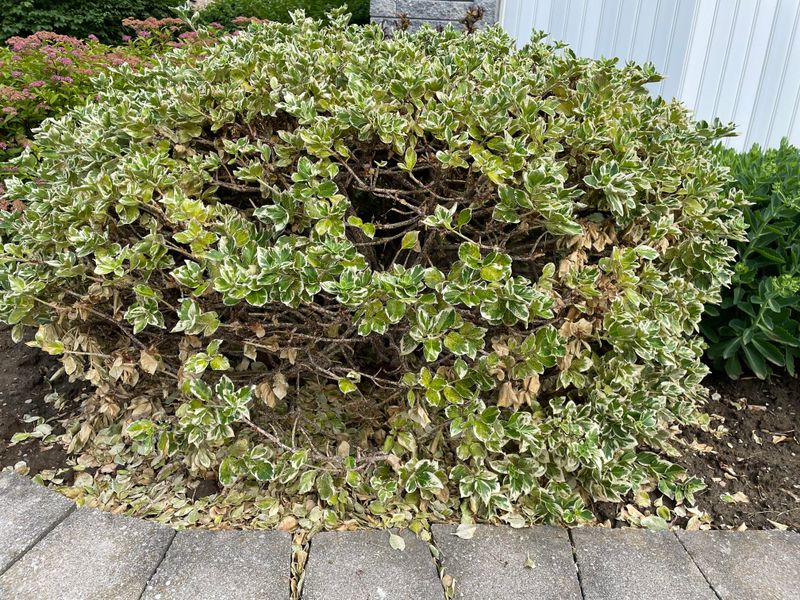
Trust me on this one, some shrubs aren’t worth the fight. If a euonymus has battled heavy scale for years, replacement may be the kindest choice for you and your yard.
There’s another reason to rethink some euonymus. Winged burning bush and wintercreeper are both listed as invasive in Indiana. The state’s terrestrial plant rule bans the sale of wintercreeper, and burning bush has been under scrutiny as well, so check current Indiana DNR guidance before buying.
Native shrubs can fill the same spots beautifully. Inkberry holly offers glossy evergreen leaves for hedges. Fragrant sumac, black chokeberry, and arrowwood viburnum bring fall color without the invasive baggage.
Native eastern wahoo, Euonymus atropurpureus, is even a cousin of the problem plants. It grows wild in Indiana woods and shows off pink-purple fruit in autumn.
Removing an old shrub is a good late fall or early spring job. Dig out the roots, bag scale-covered branches, and refresh the soil with compost.
Whatever you choose, keep checking stems a couple times a year. Those little white specks are much easier to handle when you spot them early.