Those Webbed Bundles On Maryland Trees Look Worse Than They Are
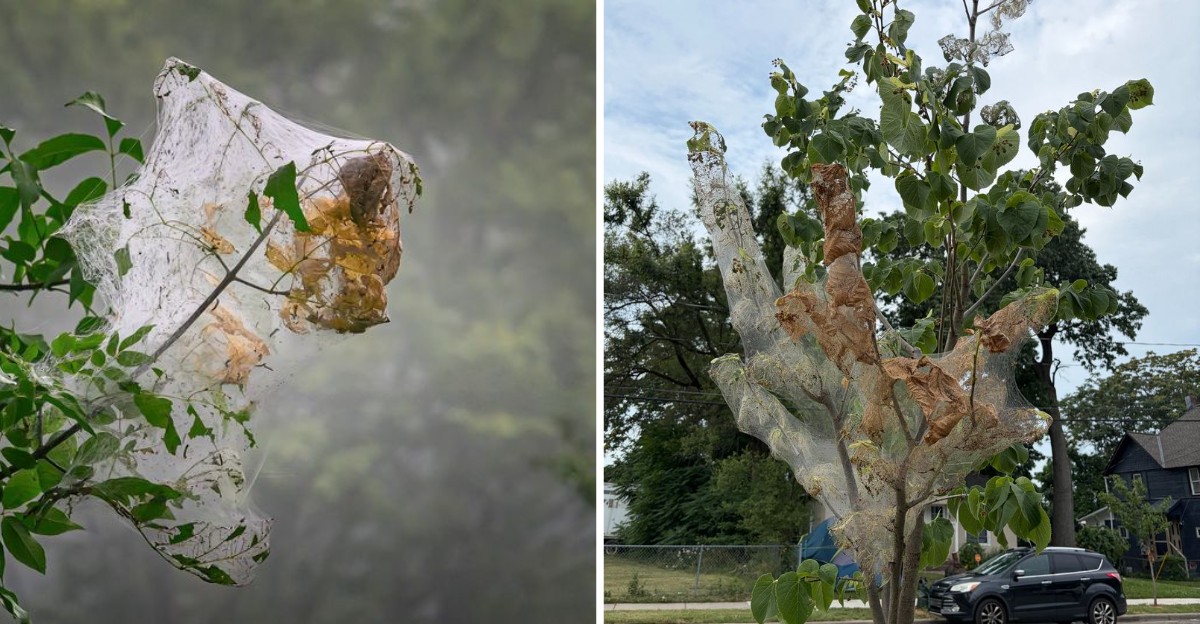
Take a walk down a Maryland street in September and you might notice something odd out at the tips of the tree branches. Pale, papery pouches hang there like forgotten cotton candy caught in the leaves.
Step closer and the whole thing gets stranger. The leaves inside are chewed down to lace, and the bundle shivers when you tap the branch below it.
Neighbors notice too, and the theories start flying fast. One person blames a mystery blight, another drags out a ladder and a garden hose with a grim look on their face.
The relief, for anyone squinting into the canopy from the sidewalk, is that the mess is far less dramatic than it appears. Behind that scruffy silk sits one of the most misunderstood residents in the Maryland treetops.
Fall Webworms And The Harmless Mess They Leave
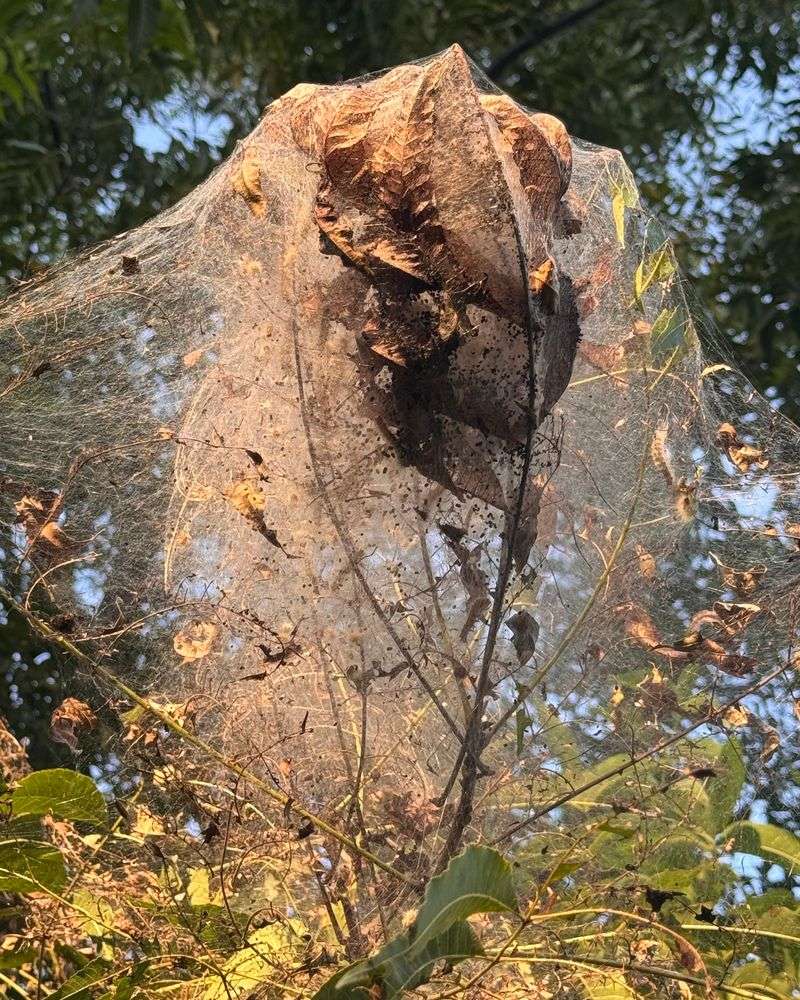
Those papery bundles are the work of fall webworm caterpillars, a native insect that has shared Maryland’s trees for generations. The caterpillars hatch from eggs on the underside of a leaf, then spin silk around their feeding spot for shelter.
As they grow, they stretch the web outward and wrap in more foliage. The result looks like a grubby sock dangling from a branch tip.
Timing is what throws people off. By late August and September, local trees have already banked most of the sugar they need for the cold months.
Losing a few leaf clusters at the branch ends barely registers, and those leaves were going to drop within weeks anyway. The damage stays cosmetic in nearly every situation.
A mature sycamore, black walnut, or cherry can carry a dozen nests and still push out a full canopy the following May. Young or recently planted trees are the one exception worth a closer look.
Here is a fun bit of trivia. The fall webworm is an American original that hitched a ride overseas generations ago and is now treated as a pest across parts of Europe and Asia.
On home soil, it faces a long roster of natural enemies, including dozens of parasitic wasps and flies plus birds that pick the nests apart. That pressure keeps most years surprisingly quiet.
Moths, Eggs, And The Silk That Follows
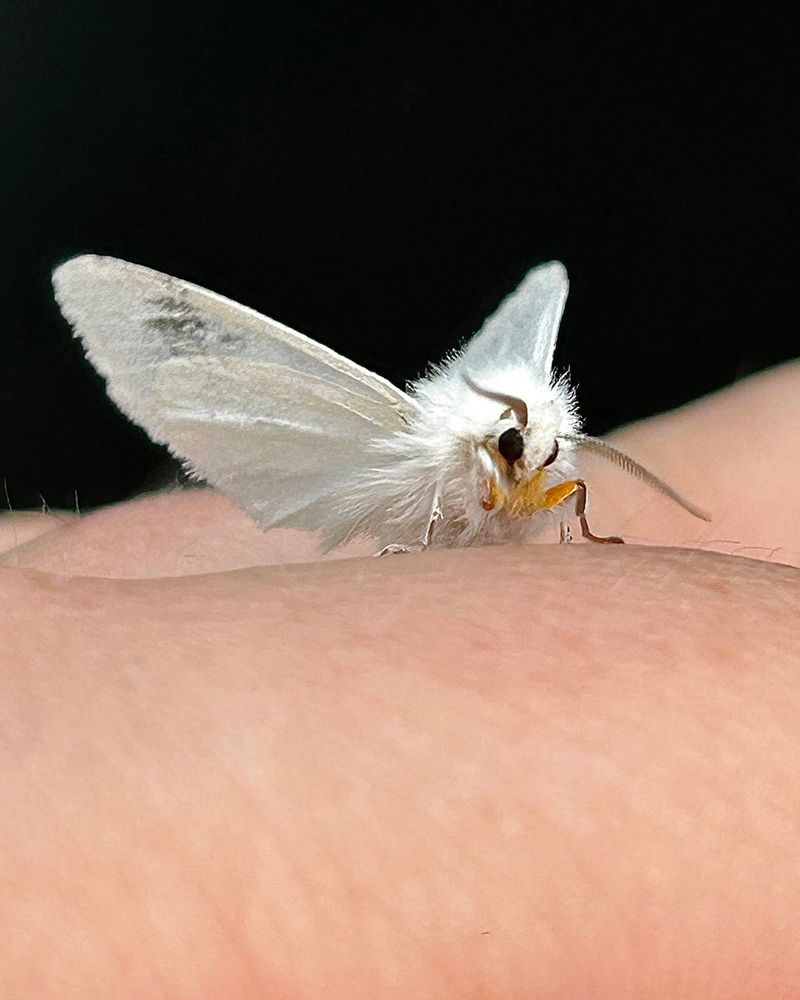
It starts with a moth so plain that most people walk right past it. The adult fall webworm is small and snowy-white, sometimes flecked with dark spots.
It flutters around porch lights on warm Maryland evenings from late spring through summer. A single female can lay several hundred eggs in one tidy patch on the underside of a leaf.
She then covers the batch with fuzzy hairs from her own body, like a tiny wool blanket. When the eggs hatch, the caterpillars feed together as a group.
Group living is exactly why the silk appears. The web is a shared dining tent that keeps predators out and holds in warmth and humidity.
Maryland usually sees two rounds of this insect each season. The early-summer batch is small and easy to miss, while the second wave builds the sprawling nests.
Your Maryland Garden Changes Every Week. Your Plan Should Too.
Gardening in Maryland changes quickly throughout the season. Every Friday you’ll receive a simple weekly plan showing exactly what to plant, prune, fertilize, harvest, and protect so you never miss the right timing.
Some years the webs seem to be on every other tree, and other years you have to hunt for one. Warm, steady weather helps the caterpillars grow quickly.
The bigger factor is the population of parasitic wasps, flies, and beetles working in the background. Host preference explains the rest.
Webworms favor walnut, pecan, hickory, cherry, crabapple, sweetgum, mulberry, and sycamore. That is why one yard gets decorated while the neighbor’s maples stay clean.
Placement follows the same logic. Females lay their eggs on sunlit outer foliage, so the nests show up at branch tips rather than deep inside the crown.
Late Summer And September Nest Building
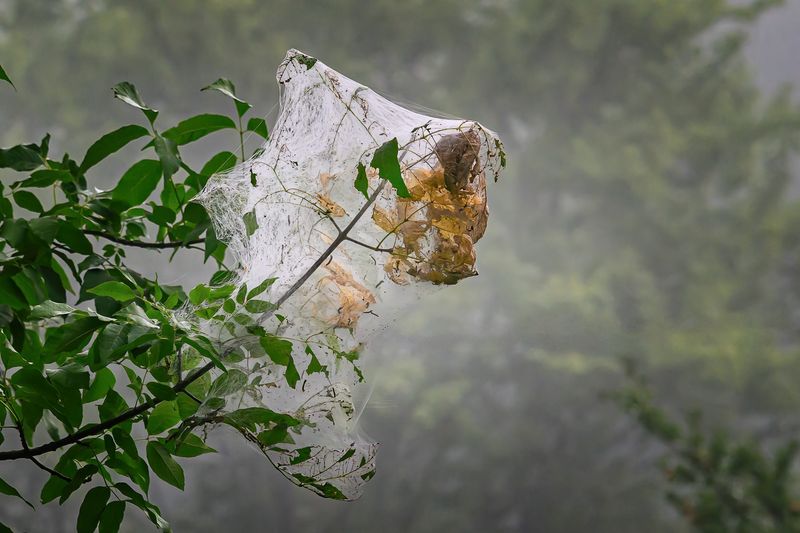
September is peak show season for these webs, and there is a simple reason behind it. The second generation of caterpillars has been feeding for weeks by then.
Each day of chewing means a bigger tent stretched over more leaves. A nest the size of a golf ball in August can swallow two or three feet of branch by mid-September.
That growth spurt is what makes a homeowner suddenly notice a tree they have walked past a hundred times. Most of the eating wraps up as the month goes on.
Full-grown caterpillars are tan or pale yellow with long wispy hairs and a dark stripe. They crawl away from the web to hide under loose bark, in leaf litter, or in a sheltered corner of a shed.
There they spin thin cocoons and wait out the cold months as pupae, ready to emerge as moths the following spring. What stays behind is the empty silk.
Weathered webs cling to branches long after the residents have moved on. That fools plenty of people into thinking the problem is still active in October and November.
Rain, wind, and winter ice eventually shred those rags and drop them to the ground. A nest spotted this late in the year is often a leftover rather than a live operation.
Common Overreactions In Maryland Yards
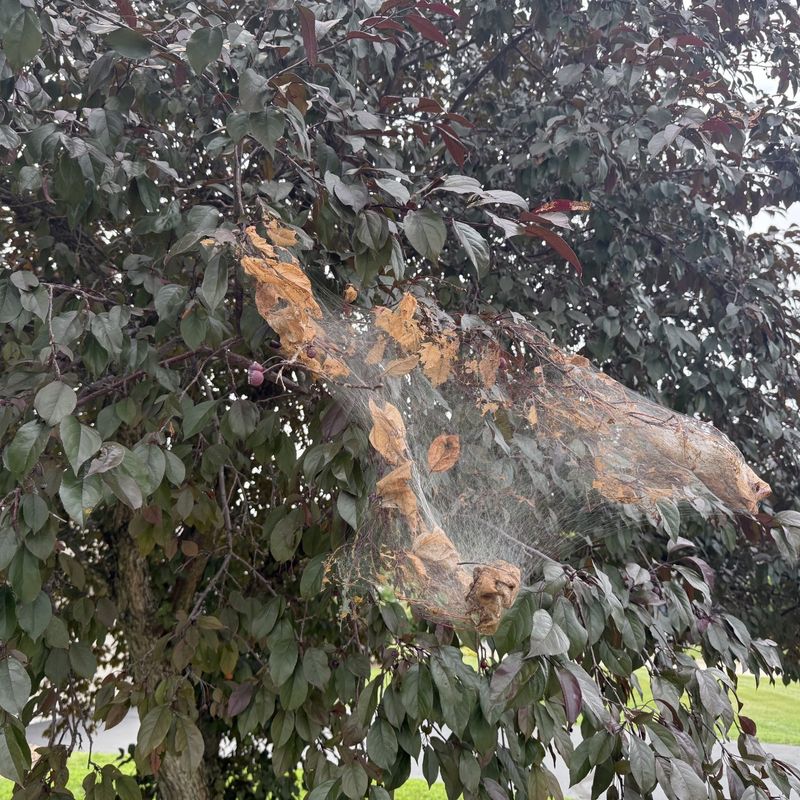
Every September, someone in Maryland reaches for a propane torch and a ladder. Burning a nest out of a tree is the single worst idea on the list.
The flame scorches living bark and opens wounds for decay. It also creates a real fire hazard in dry early-fall conditions.
Blanket spraying ranks a close second. Broad insecticides fired into a high canopy rarely reach caterpillars tucked inside silk, since the webbing sheds water and mist.
The spray that drifts elsewhere hits pollinators, lady beetles, and the parasitic wasps that keep webworm numbers down naturally. Then comes the chainsaw reflex.
Cutting off a large limb to remove one nest trades a few chewed leaves for a permanent gap in the canopy. It also leaves a fresh wound, which is a far bigger setback for the tree.
Pressure washing is another favorite that backfires. It strips bark and snaps small twigs while the caterpillars simply drop and climb back up.
Panic is the underlying mistake. Because the webs look so scruffy, people assume the tree is in trouble, and HOA notes or worried neighbors add to the urgency.
A calmer approach saves money and stress. Step back, look at how much of the canopy is actually involved, and remember that a crown still full of green leaves is coasting toward its normal autumn rest.
Simple Cleanup For Reachable Nests
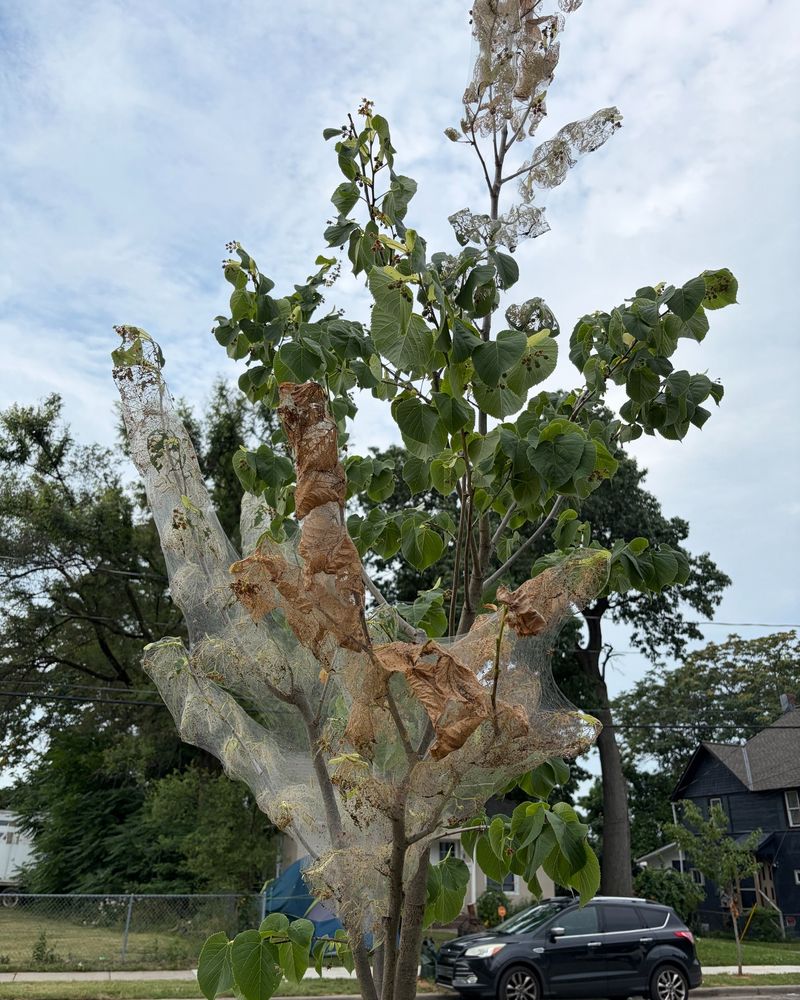
Sometimes a nest sits right over the patio or the mailbox, and leaving it there feels unreasonable. For those cases, cleanup is easy and takes about five minutes.
Clip the branch tip with a pole pruner and drop the whole bundle into a bucket of soapy water. You can also twist the web off with a stick or a rake head and toss it in the yard waste bin.
Gloves help, since the caterpillar hairs make some people itchy. A long handle keeps you off a wobbly ladder.
There is an even lazier option that works well. Poke the web open with a stick and walk away, because chickadees, wrens, orioles, and paper wasps find an exposed nest fast.
Those birds and wasps will clear it out for you. For small ornamental trees with young nests, a spray containing Bacillus thuringiensis or spinosad can work.
Break the web open first so the product reaches the leaves the caterpillars are actually eating. Small caterpillars respond far better than large ones, so early September beats late September.
Skip anything that involves fire, big cuts, or heavy chemicals in the upper canopy. If the nests sit high in a mature shade tree, the most sensible move is to admire them from the ground and let autumn handle the rest.
Tree Recovery And Long Term Yard Habits
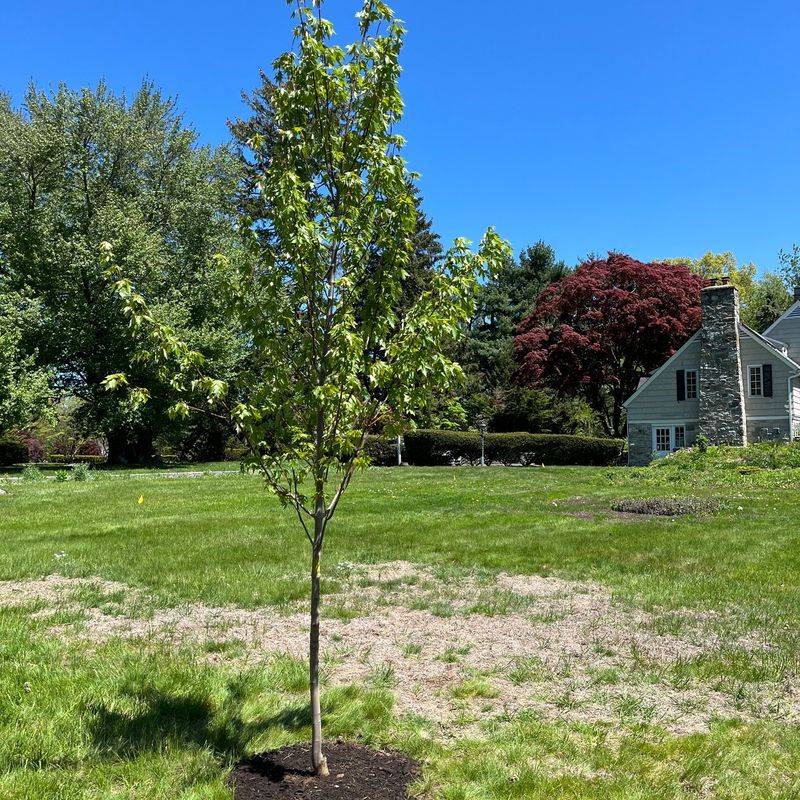
Come next May, the tree that looked so raggedy will be leafing out like nothing happened. Buds for the following spring were set long before the caterpillars showed up.
A September nibble at the branch tips has no say in what the canopy does next. Repeat visits are possible, though heavy webworm years rarely stack back to back.
Natural enemies build up when prey is plentiful. That tends to flatten the population the following season without any help from you.
Where you can make a real difference is general tree care. Water young and newly planted trees deeply during Maryland’s dry late-summer stretches.
Keep a wide mulch ring around the base instead of a mower scar, and go easy on high-nitrogen fertilizer that pushes soft, tasty growth. Backyard biodiversity does quiet work too.
Shrubs, flowering perennials, and a bird bath bring in the wrens, vireos, and wasps that patrol branch tips all summer. If you have a favorite small cherry or crabapple, check the undersides of leaves in June and July.
A thumb and a glove are all you need to catch egg masses and tiny starter webs early. Mostly, this is a case where patience pays.
A few odd bundles in the treetops each September are part of the seasonal rhythm in Maryland. The trees have been shrugging them off far longer than any of us have been watching.