Top Small Trees For Space-Saving Connecticut Yards
Connecticut homeowners know the struggle. You want a beautiful yard, but not at the cost of your limited space.
That’s where small trees really come in. They bring shade, character, and even a bit of wildlife into compact yards without taking over your outdoor living areas.
The right varieties can completely transform even the smallest space, adding structure and interest without making it feel crowded. Instead of overwhelming your yard, these trees fit right into it, working with the space you have rather than against it.
Throughout the seasons, they offer changing details that keep your landscape interesting without demanding constant attention.
Even better, they’re typically easier to care for than larger trees, making them a smart choice for anyone who wants a great-looking yard without all the upkeep.
1. Eastern Redbud (Cercis Canadensis)
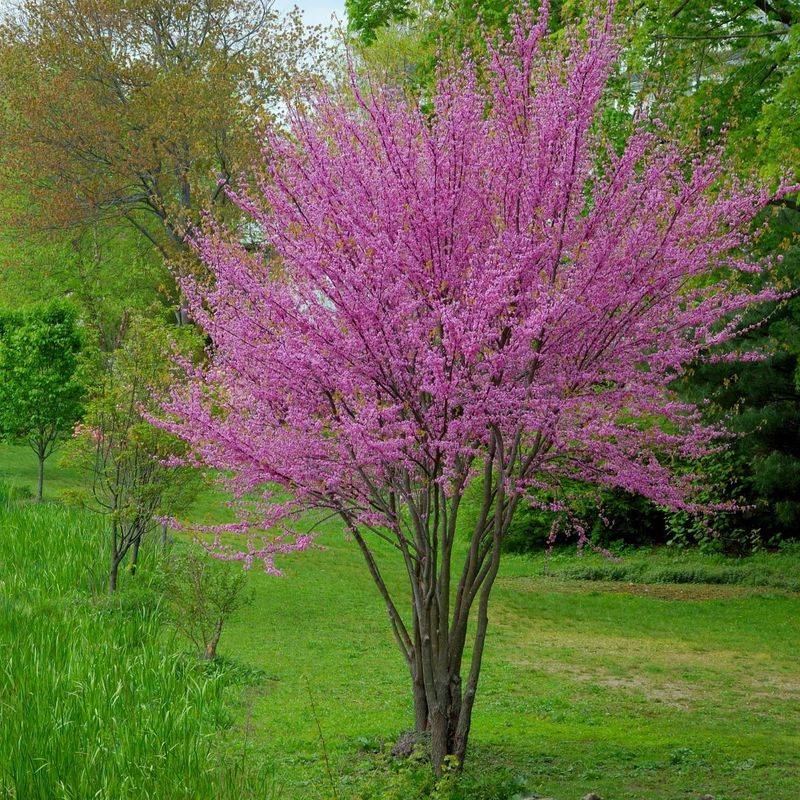
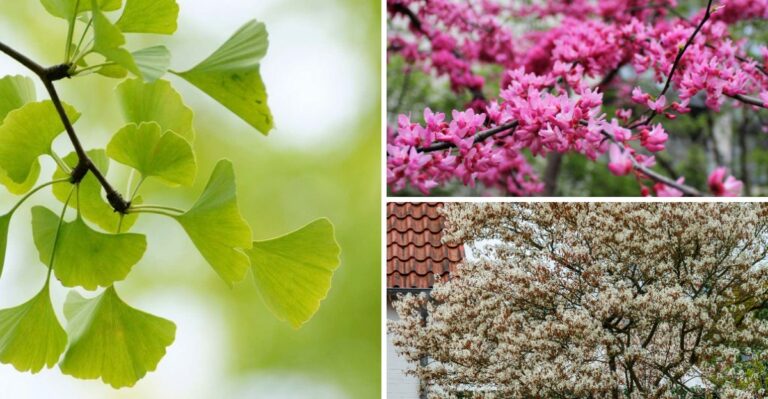
Picture this: early spring in Connecticut when everything still looks old, and suddenly your yard explodes with magenta-pink blooms before a single leaf appears. That’s the Eastern Redbud pulling off nature’s best magic trick.
I planted one five years ago near my patio, and every April, my neighbors literally stop their cars to gawk.
This native beauty tops out around 20-30 feet, making it perfect for tucked-in spaces where you want drama without the commitment of a massive oak. The heart-shaped leaves emerge after flowering, creating a lovely canopy that stays manageable.
You’ll get gorgeous yellow fall color too, which I wasn’t expecting but absolutely love.
Redbuds handle Connecticut’s clay soil surprisingly well once established. They prefer slightly acidic conditions and well-drained spots but aren’t terribly fussy.
The flowers grow directly on the branches and trunk, a weird phenomenon called cauliflory that makes the tree look absolutely enchanted.
Wildlife goes bonkers for Redbuds. Bees swarm the early blooms when not much else is available.
Goldfinches feast on the seedpods in summer. Even deer usually leave them alone, which in Connecticut is basically winning the lottery.
Plant yours where you’ll see it from a window. The spring show lasts about two weeks, and you’ll want front-row seats.
Space them at least 15 feet from structures since their mature spread matches their height. They grow relatively quickly for a small tree, giving you satisfaction without the decades-long wait.
2. Flowering Dogwood (Cornus florida)
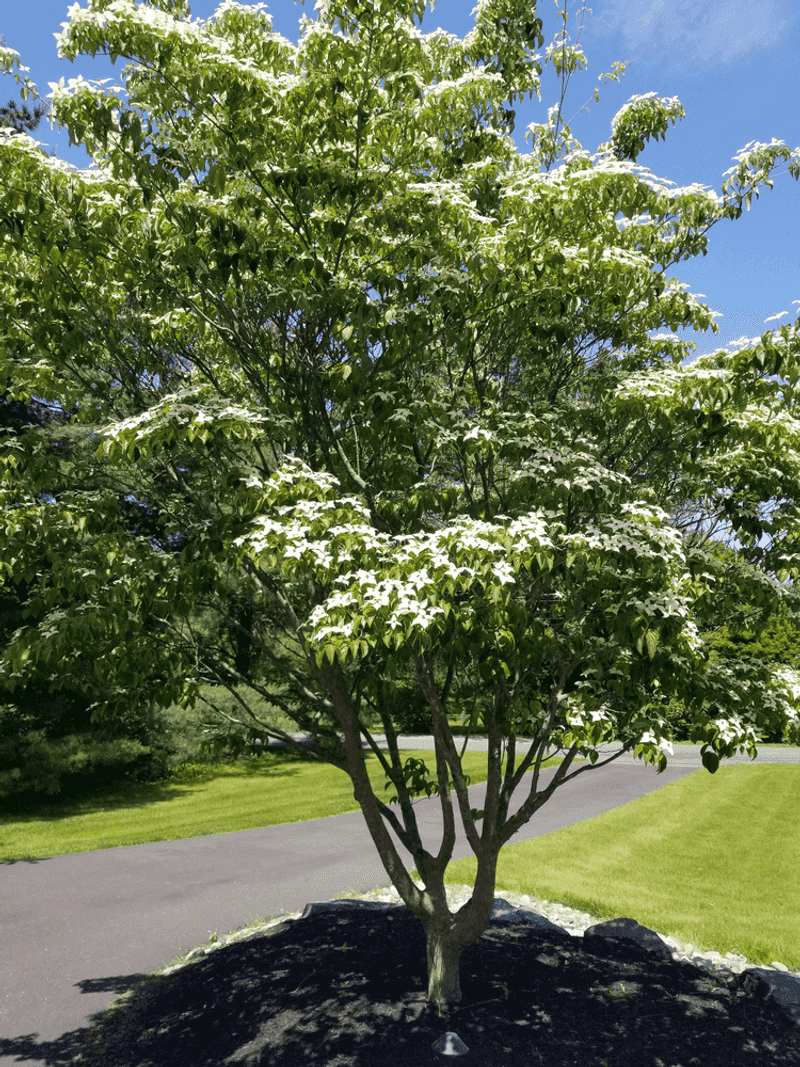
Connecticut’s state tree doesn’t mess around when it comes to four-season interest. Spring brings those iconic white or pink “flowers” that aren’t actually flowers at all but showy bracts surrounding tiny blooms.
Mind-blowing botanical trickery that looks spectacular either way.
Dogwoods max out around 20-25 feet with a graceful horizontal branching pattern that looks like nature’s own architectural blueprint. The layered structure creates visual interest even in winter when you can appreciate the branch architecture.
Red berries appear in fall, drawing every songbird within a five-mile radius to your yard.
Fall foliage turns deep burgundy-red, sometimes with purple undertones that photograph beautifully. The bark develops interesting blocky patterns as the tree matures, adding texture to winter landscapes.
Honestly, this tree works harder than most full-time employees.
Growing conditions matter with dogwoods. They prefer partial shade and consistent moisture, especially during establishment.
Full sun can stress them out in Connecticut’s hot summers. I’ve learned the hard way that they appreciate afternoon shade and mulch to keep roots cool.
Watch for anthracnose disease, which can plague dogwoods in humid climates. Proper spacing for air circulation helps tremendously.
Choose disease-resistant cultivars if you’re worried. Despite potential issues, a healthy dogwood becomes a landscape showpiece worth any extra attention.
Plant them as understory trees beneath taller shade trees, mimicking their natural woodland habitat. They tolerate our winter cold beautifully and reward you with spring blooms that make your entire neighborhood jealous.
3. Japanese Maple (Acer Palmatum)
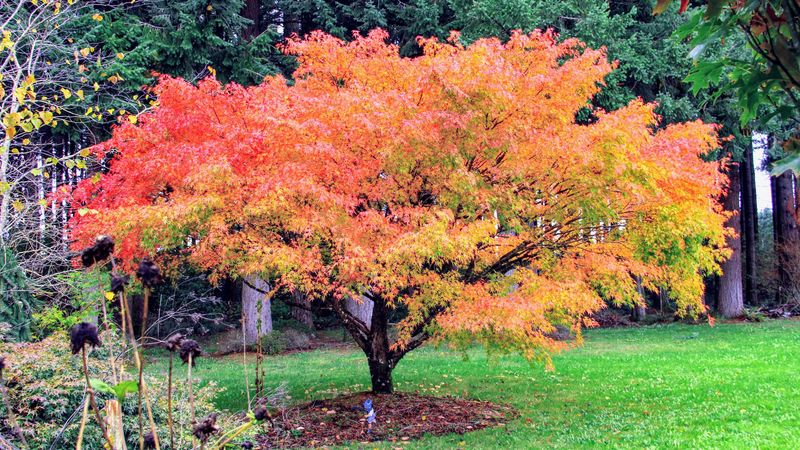
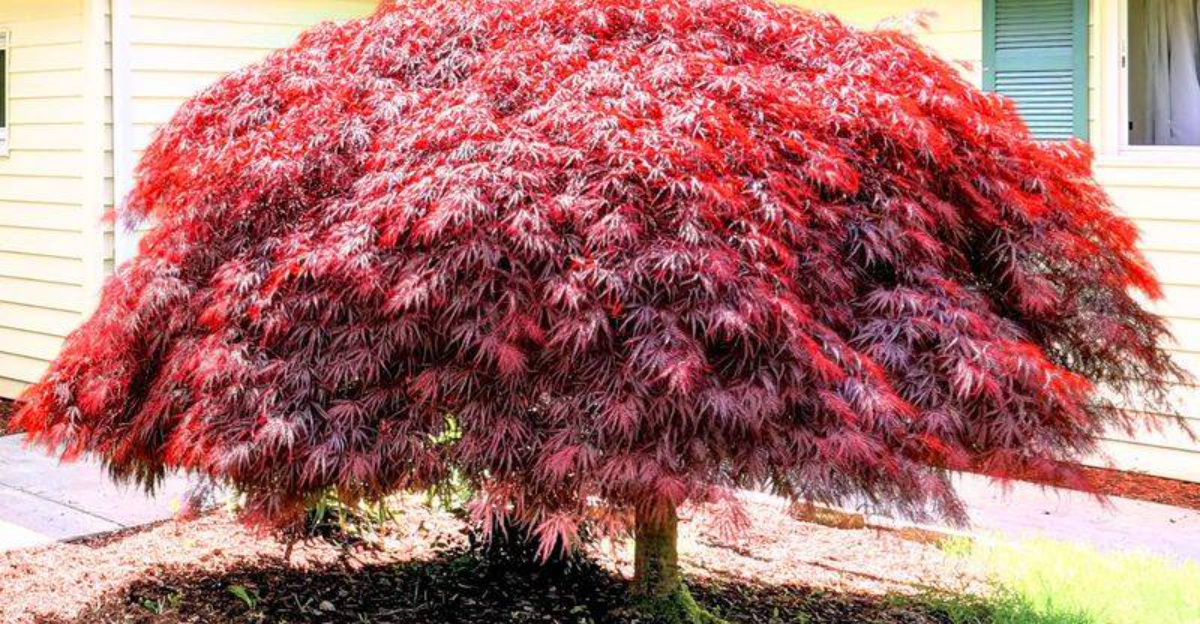
Few trees deliver pure artistry like Japanese Maples. Their delicate, lacy leaves come in colors ranging from bright green to deep burgundy to variegated combinations that look hand-painted.
Some varieties are so finely cut they resemble lace curtains in the wind.
Size varies depending on cultivar, but most stay under 20 feet, with many dwarf varieties topping out at just 6-8 feet. This flexibility lets you tuck them into the tiniest spaces or use them as focal points in larger beds.
I’ve seen them flourish in large containers on patios.
Fall color is downright spectacular. Even green-leaved varieties transform into blazing oranges, reds, and yellows that stop traffic.
Red-leaved types deepen to crimson so intense it almost glows. The show typically lasts several weeks in Connecticut’s cool autumn climate.
Protection from harsh sun and drying winds keeps Japanese Maples happiest. Morning sun with afternoon shade works perfectly.
They appreciate consistent moisture but hate wet feet, so well-drained soil is non-negotiable. Mulch helps maintain even soil moisture.
In winter, their branching structure becomes the main feature, often forming elegant silhouettes against the snow. Some varieties even have coral-red bark that adds extra visual interest.
Their natural shape is so graceful that they rarely need pruning beyond removing old branches. These trees grow slowly, which means patience pays off but also means less maintenance long-term.
Choose your planting spot carefully since transplanting mature specimens is challenging.
4. Serviceberry (Amelanchier Spp.)
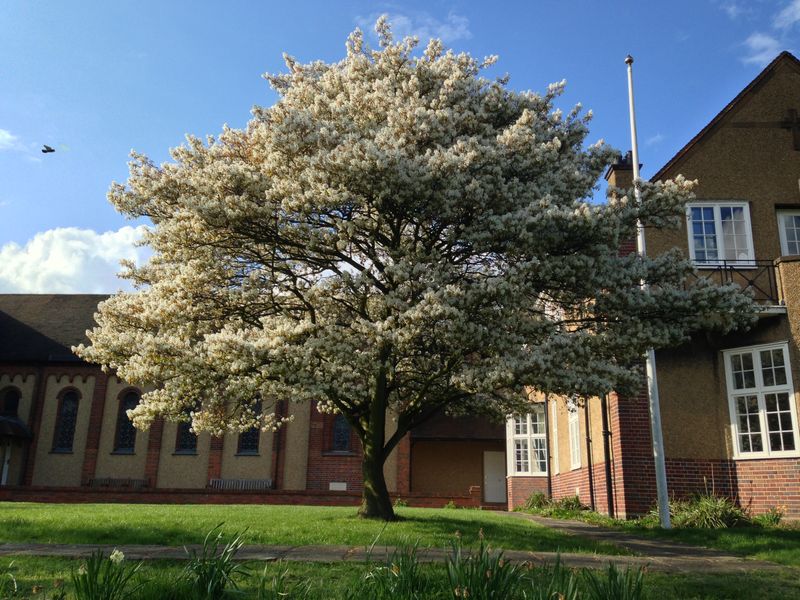
Serviceberries might be Connecticut’s best-kept landscaping secret. These multi-talented natives bloom early with clouds of white flowers, produce edible berries in June, and light up fall with orange-red foliage that rivals any exotic import.
The berries taste like blueberries with a hint of almond, assuming you can harvest them before the birds devour every single one. My serviceberry has become a certified bird buffet every June.
Robins, catbirds, and cedar waxwings throw absolute parties in the branches.
Most varieties grow 15-25 feet tall with a naturally graceful multi-stemmed form. You can prune them to single trunks if you prefer a more traditional tree shape.
Either way, they stay compact enough for small properties without feeling cramped.
Serviceberries handle Connecticut’s variable weather like champions. They tolerate our cold winters, occasional droughts, and even some shade.
Full sun produces more flowers and fruit, but they’ll perform admirably in partial shade too. Clay soil doesn’t faze them much.
Four-season interest makes serviceberries landscape workhorses. Spring flowers appear before most trees leaf out.
Summer brings dark green foliage and those delicious berries. Fall color glows warm and inviting.
Even winter bark has subtle appeal with its smooth gray surface.
Plant them near windows or patios where you can watch the wildlife action. Space them about 15 feet from structures.
They need virtually no maintenance once established. No serious pest problems plague them either, making them genuinely low-stress additions to your yard.
5. Crabapple (Malus, e.g., ‘Prairiefire’)
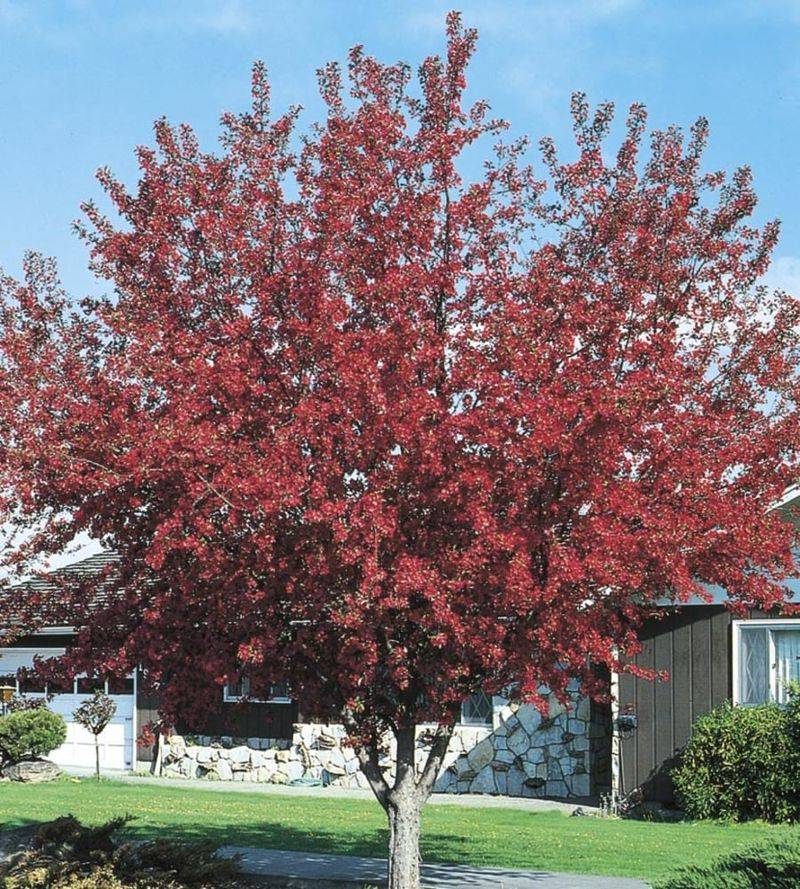
Crabapples have seriously upgraded their reputation from those disease-prone, messy trees that dropped mushy fruit everywhere. Modern cultivars like ‘Prairiefire’ bring knockout spring color without the maintenance nightmares that plagued older varieties.
‘Prairiefire’ explodes with deep pink-red flowers so abundant you can barely see the branches. The blooms smell fantastic too, a sweet fragrance that fills your entire yard.
New leaves emerge reddish-purple before maturing to dark green with bronze undertones.
Small persistent fruits in fall provide winter food for birds without creating a slip-and-slide mess in your yard. These ornamental crabapples are typically under a half-inch across and dry on the tree rather than rotting.
Way better than the golf-ball-sized fruit old varieties produced.
Disease resistance sets newer cultivars apart. ‘Prairiefire’ shows excellent resistance to apple scab, fire blight, and cedar-apple rust—the unholy trinity that destroyed old crabapples. You actually get to enjoy the tree instead of constantly treating problems.
Mature height reaches 20 feet with a rounded crown that provides nice light shade. They handle full sun and tolerate various soil types as long as drainage is decent.
Connecticut winters don’t bother them at all since they’re incredibly cold-hardy.
Pollinators go absolutely wild for crabapple blossoms. Plant one near your vegetable garden to attract beneficial insects.
The extended bloom period provides nectar when early-flowering plants are winding down. Space them at least 15-20 feet from buildings for proper air circulation and best disease prevention.
6. Sweetbay Magnolia (Magnolia Virginiana)
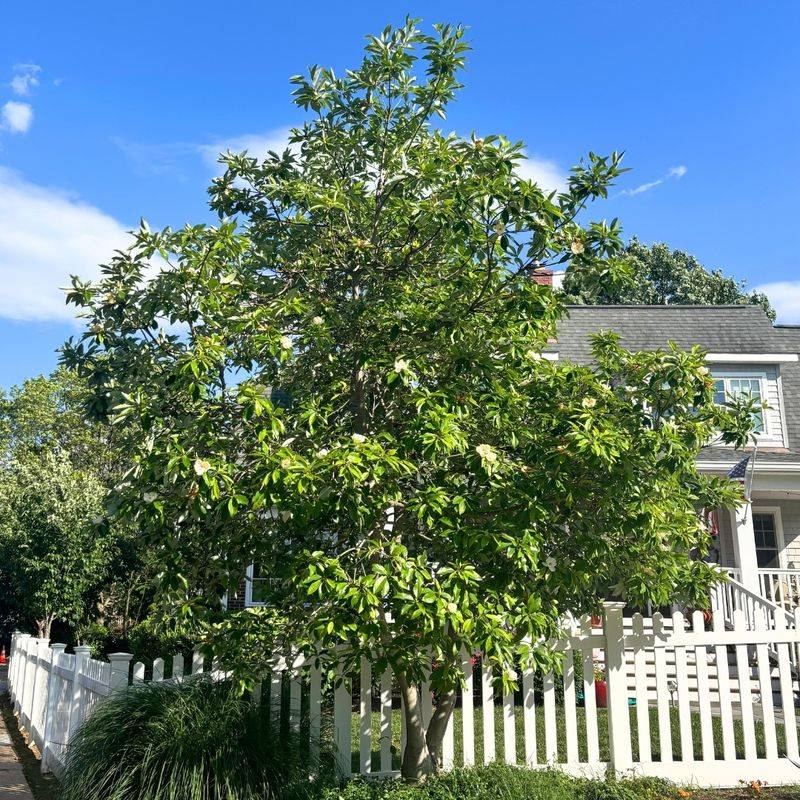
Forget those massive Southern Magnolias that require estate-sized properties. Sweetbay Magnolia brings all the elegance and fragrance in a Connecticut-friendly package that won’t swallow your entire yard whole.
Creamy white flowers bloom sporadically throughout summer, releasing an intoxicating lemony fragrance that draws you outside just to breathe deeply. Each blossom is about two to three inches across, substantial enough to make a statement without overwhelming the tree’s delicate proportions.
The scent alone justifies planting one near outdoor seating areas.
In Connecticut, Sweetbay typically grows 10-20 feet tall and often behaves as semi-evergreen, holding leaves through mild winters. The leaves themselves are beautiful: glossy green on top with silvery-white undersides that shimmer when breezes flip them over.
Visual interest even without flowers.
This magnolia actually tolerates wet soil better than most trees, making it perfect for those soggy problem areas in your yard. It naturally grows in swamps and stream banks, so Connecticut’s occasionally soggy clay soil doesn’t intimidate it.
Just don’t plant it in bone-dry locations.
Red seed cones appear in fall, looking like small exotic fruits. Birds appreciate them, and they add unexpected color to autumn landscapes.
The seeds dangle on threads before dropping, creating brief ornamental moments.
Sweetbay prefers acidic soil and full sun to partial shade. Mulch helps maintain the consistent moisture it loves.
Minimal pruning needed since it naturally grows with an attractive pyramidal shape. Honestly one of the easiest small magnolias you can grow in our climate.
7. Star Magnolia (Magnolia Stellata)
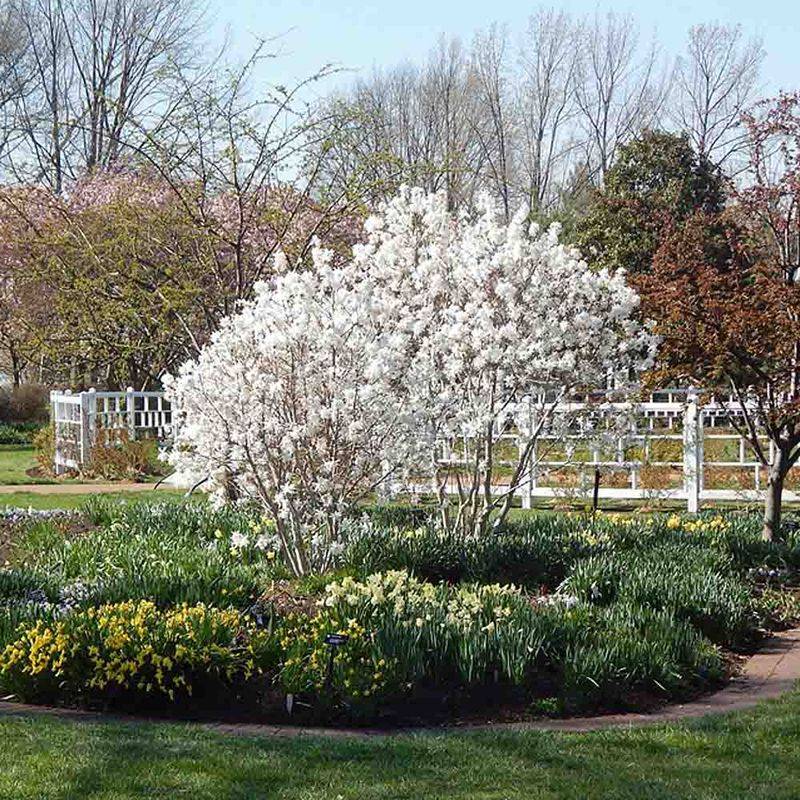
Star Magnolias bloom so early in spring that you’ll sometimes see snow clinging to those pristine white star-shaped flowers. Talk about commitment to putting on a show.
These tough little trees laugh in the face of Connecticut’s unpredictable March weather.
Each flower has 12-18 narrow petals radiating outward like a starburst, hence the name. They’re wildly fragrant with a sweet scent that announces spring has truly arrived.
Blooming happens before leaves emerge, so the entire tree becomes one massive flower display that stops everyone in their tracks.
Mature size stays compact at just 15-20 feet tall and wide, making Star Magnolias perfect for foundation plantings or small yard focal points. The dense, rounded form fills in nicely without requiring constant pruning.
Slow growth means you won’t be battling an overgrown monster in five years.
These magnolias prefer slightly acidic, well-drained soil enriched with organic matter. They handle Connecticut’s climate beautifully once established.
Morning sun with some afternoon shade helps protect flowers from late frost damage, though honestly, they’re tougher than they look.
Fall brings decent yellow color, nothing earth-shattering but pleasant enough. The real show happens in spring when the tree transforms into a cloud of white blooms.
I’ve learned to plant early-blooming bulbs underneath mine for a layered spring display.
Minimal pest problems plague Star Magnolias. Occasional scale insects might appear but rarely cause serious damage.
The biggest challenge is protecting flower buds from late hard freezes, though the tree will survive even if individual blooms get zapped.
8. Japanese Tree Lilac (Syringa Reticulata)
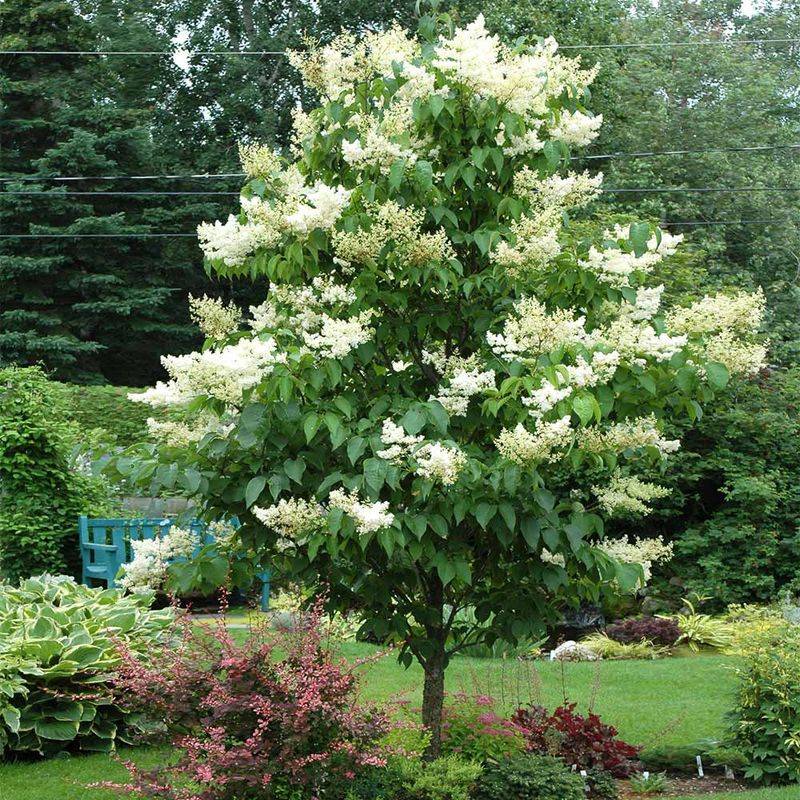
Most lilacs stay shrubby, but Japanese Tree Lilac grows into an actual tree form reaching 20-30 feet tall. Game-changer for anyone who loves lilac blooms but wants height and structure instead of another sprawling bush.
Enormous creamy-white flower panicles appear in early summer, filling a bloom gap after spring-flowering trees finish. Each cluster can reach 12 inches long and wide, creating spectacular displays.
The fragrance differs from classic lilacs, less sweet, more honey-like with subtle spicy notes that some people love and others find too intense.
Glossy reddish-brown bark resembles cherry tree bark, providing year-round visual interest that most lilacs can’t match. It peels slightly as the tree ages, adding texture to winter landscapes.
The naturally upright form requires minimal pruning to maintain an attractive shape.
Japanese Tree Lilacs tolerate urban conditions remarkably well. They handle pollution, compacted soil, and road salt better than many ornamentals.
This toughness makes them excellent street trees or foundation plantings near driveways where salt spray happens.
Powdery mildew rarely bothers this species unlike common lilacs that turn white and crispy by August. Borers occasionally attack stressed trees, but healthy specimens resist them easily.
Overall maintenance requirements stay refreshingly low.
Full sun produces the most abundant flowering. They adapt to various soil types as long as drainage is reasonable.
Space them at least 20 feet from structures since mature spread approaches 15-20 feet wide. The substantial size provides nice filtered shade for underneath plantings.
Blooming happens reliably every year without the pruning fussiness that affects common lilacs. Simply enjoy the show without worrying about removing spent flowers or maintaining specific old-wood-new-wood ratios.
9. Dwarf River Birch
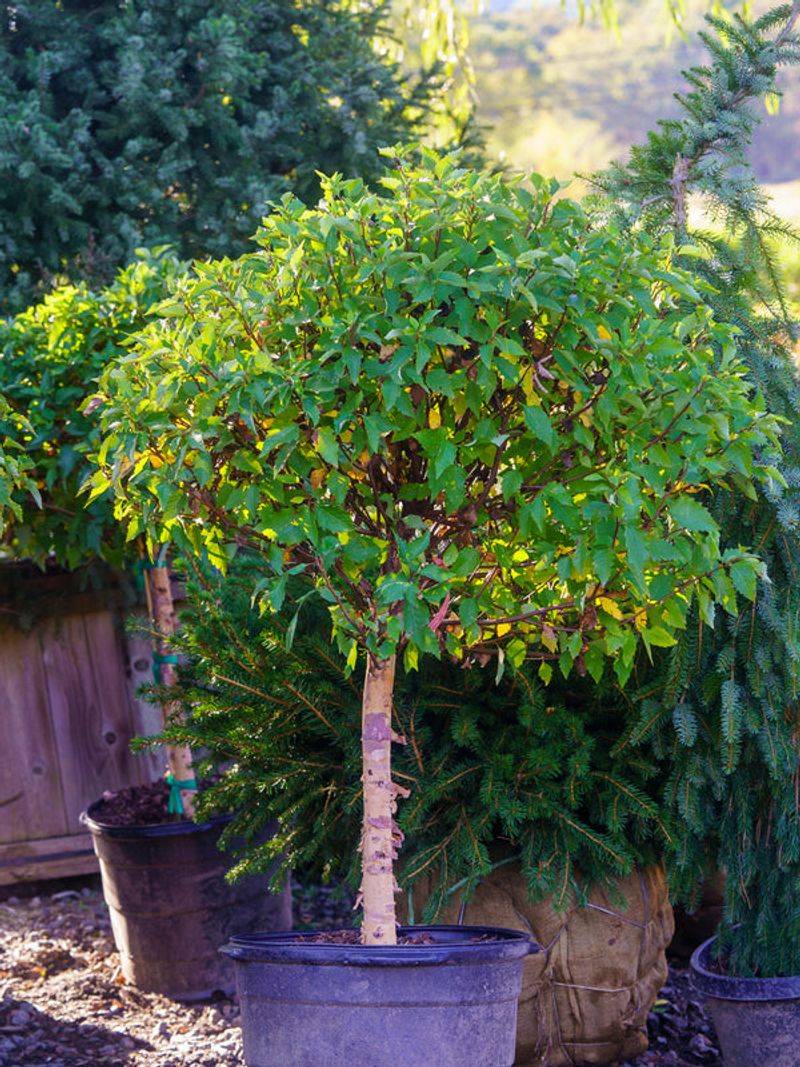
River Birch without the river-sized growth habit? Brilliant.
Dwarf varieties like ‘Little King’ or ‘Fox Valley’ deliver all that gorgeous exfoliating bark in a compact package that actually fits normal-sized yards.
The bark alone justifies planting one. Cinnamon-brown to salmon-pink layers peel and curl in papery sheets, creating texture that looks amazing against snow or green summer lawns.
It’s basically tree eye-candy that works every single season. I find myself staring at mine throughout winter when most landscapes look damaged.
Mature height stays around 10-12 feet depending on cultivar, with some varieties topping out even smaller. The multi-stemmed form creates a full, bushy appearance without requiring much intervention.
Natural growth habit is attractive enough that you’ll rarely need pruning shears.
River Birches tolerate wet soil better than most birches, making them perfect for those perpetually damp areas where other trees sulk. They also handle heat better than white-barked birches that struggle in Connecticut summers.
Adaptability to various conditions makes them genuinely user-friendly.
Yellow fall color isn’t show-stopping but provides nice seasonal change. The real stars are the bark and summer foliage that stays clean and attractive when bronze birch borers decimate other birch species.
Resistance to this devastating pest is absolutely worth celebrating.
Plant dwarf river birches where you’ll appreciate the bark up close, near patios, along walkways, or outside frequently used windows. They need minimal fertilization and handle our clay soil surprisingly well once established.
Water consistently during the first growing season, then they’re mostly self-sufficient.
10. Thundercloud Plum (Prunus Cerasifera)
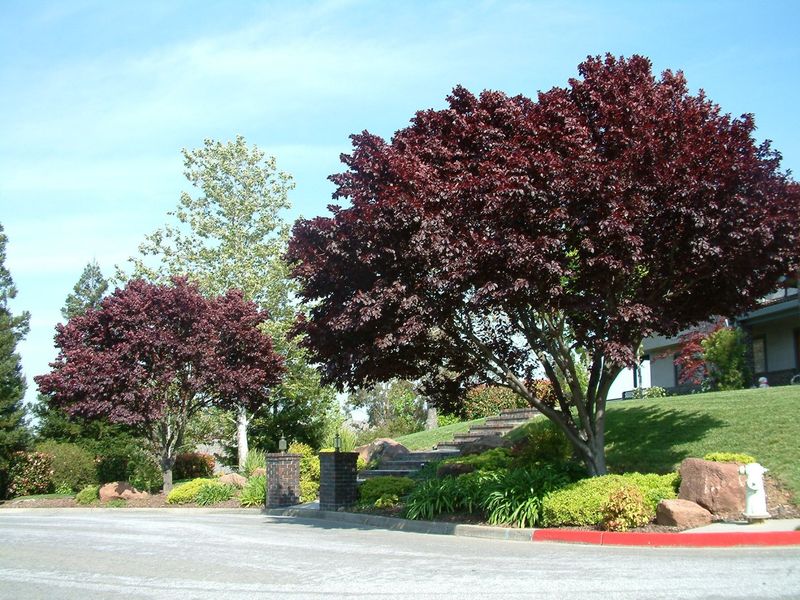
Want drama? Thundercloud Plum delivers with deep purple-red foliage that looks almost unreal in the landscape.
The color intensity rivals Japanese Maples but with faster growth and a different texture, creating striking contrast against green-leaved plants.
Pink blossoms cover bare branches in early spring before leaves emerge. The combination of pink flowers against dark branches is unexpectedly beautiful.
Blooms last about two weeks, creating a brief but memorable show that signals winter’s end.
The purple leaves maintain their color throughout summer, unlike some purple-leaved varieties that fade to greenish-bronze by July. This consistent color makes Thundercloud Plum valuable for season-long interest.
Yellow or red fall color provides a final flourish before leaf drop.
Size stays manageable at 15-25 feet tall with similar spread. The rounded crown creates nice light shade without the density that prevents grass growth underneath.
Pruning maintains desired size and shape easily since the tree responds well to trimming.
Full sun brings out the richest leaf color. Partial shade produces more subdued purple tones that still look attractive but lack the dramatic punch of sun-grown specimens.
Well-drained soil prevents root rot issues that plague plums in soggy locations.
Watch for aphids and Japanese beetles, which are often drawn to the foliage. Usually, they cause only minor cosmetic damage.
The small fruits attract birds and are quickly eaten, so mess is minimal.
Plant Thundercloud Plum as a specimen tree where its color can really stand out. Avoid grouping too many purple-leaved plants together, as the effect can feel visually heavy rather than striking.