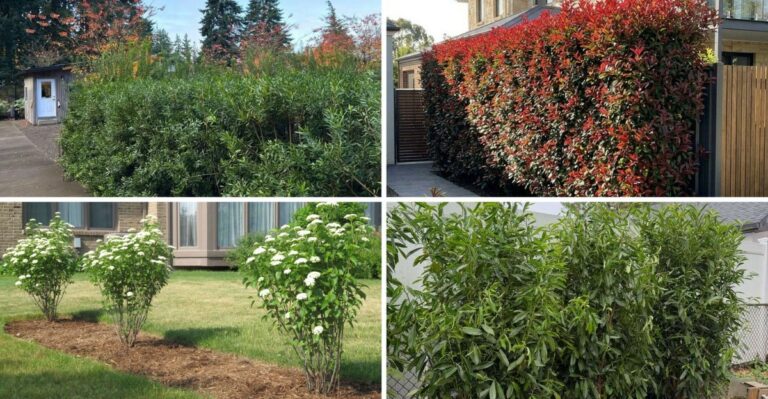
Trees And Shrubs To Plant In Fall (Why Fall Beats Spring)
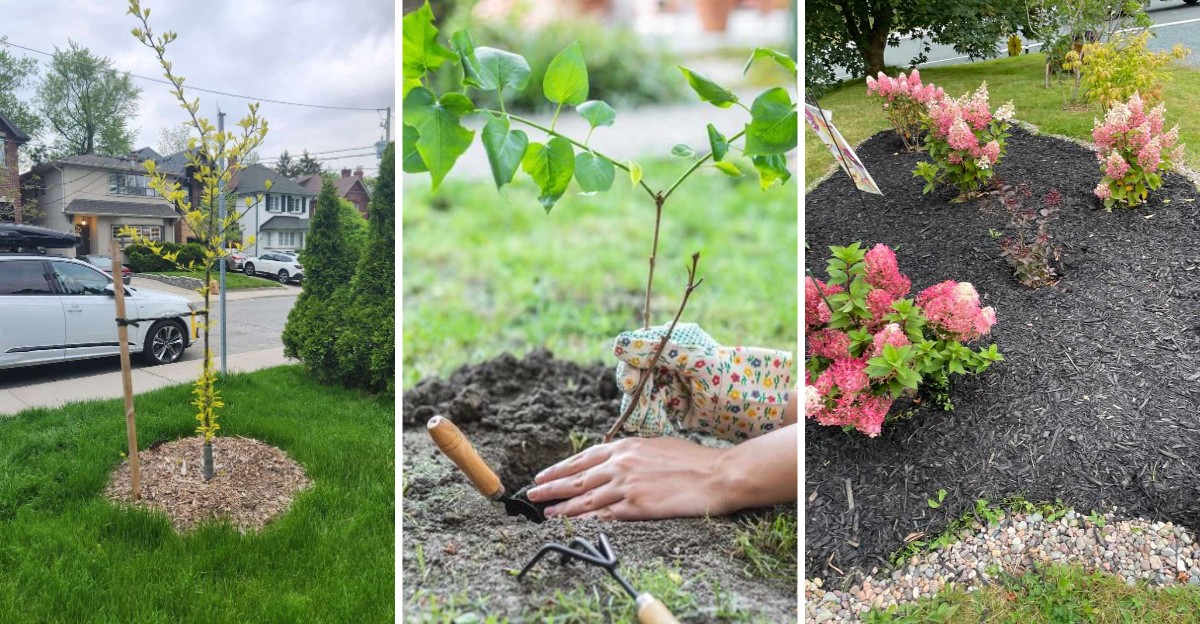
Tree roots can keep growing in soil as cool as about 40 degrees, long after the branches look bare. I find that fact exciting, because it means the underground part of a garden stays busy all fall.
October soil often holds summer warmth for weeks, even while the air above it turns chilly at night. That gap between warm ground and cool air lets new plants grow roots without pushing out tender leaves.
Many garden centers also mark down their potted stock in fall, since they would rather not store it over winter. You can often find healthy plants at lower prices, which makes trying something new feel less risky.
The quietest season in the yard turns out to be the busiest one for a brand new root. Who knew the roots deserved so much more credit than the leaves ever get?
1. Sugar Maple For Roots That Settle Before Frost
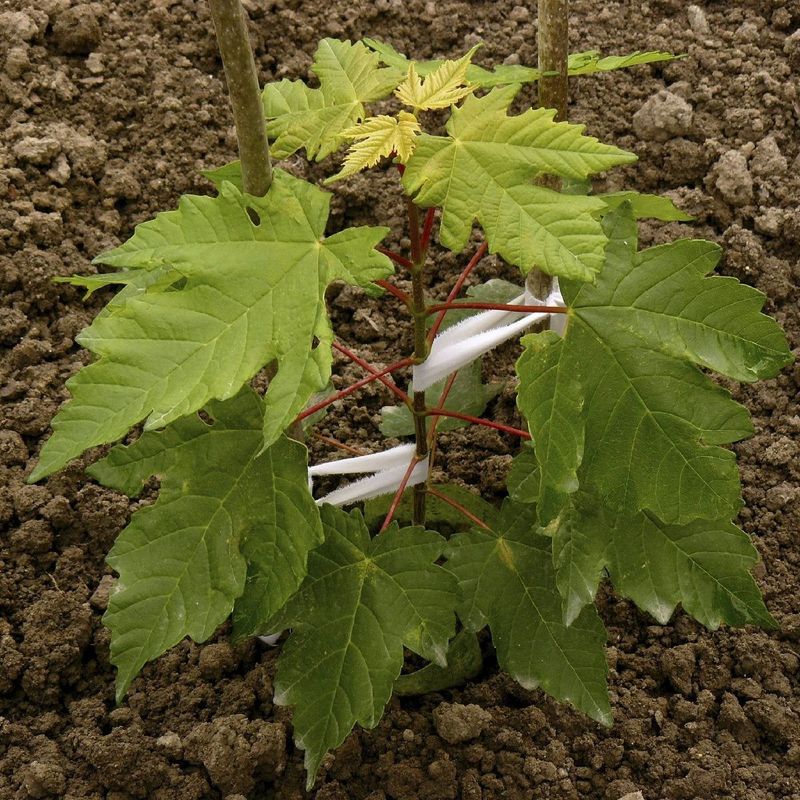
Sugar maple is a classic October pick, and it roots in well before the ground freezes. Fall is often the best time to plant most trees, according to many university extension services.
The reason comes down to roots, which keep growing in soil that stays above roughly 40 degrees Fahrenheit. In spring, a new tree must grow leaves and roots at the same time, which splits its energy.
In fall, the leaves are finishing their job, so most of the energy can go straight into roots. Cooler air also means less water escapes through the leaves, so the tree faces less stress than a summer transplant.
Timing still matters, since roots need several weeks of growth before the ground freezes. Most extension guides suggest planting deciduous trees at least six weeks before the soil typically freezes.
Sugar maple grows well in zones 3 through 8 and can reach sixty feet or more. Think about mature size before you dig, and give it plenty of room from houses, power lines, and sidewalks.
Call 811 before digging to locate utilities, then test drainage by filling a one-foot hole with water. If the water lingers longer than a day, pick another spot, because soggy fall soil can lead to root rot.
Northern gardeners should aim for early to mid October, while milder regions can often keep planting into November.
2. Linden For Shade That Handles Fall Planting
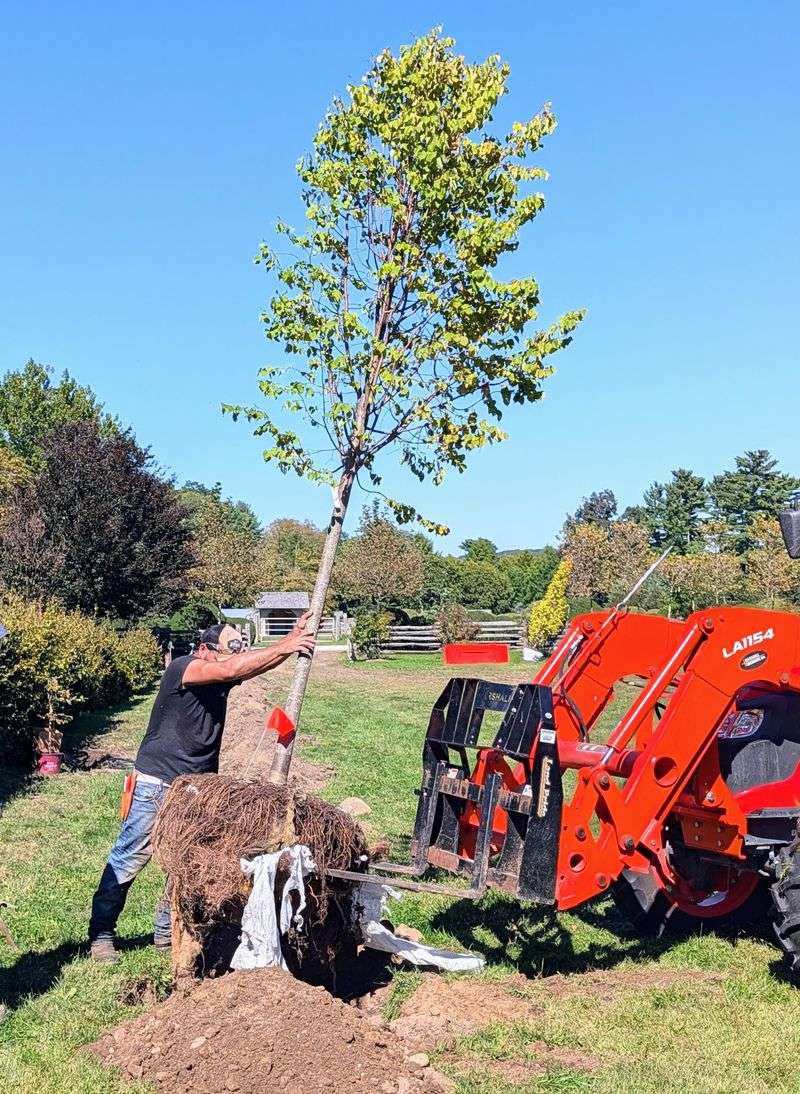
Linden handles fall planting better than many shade trees, and littleleaf linden is a popular choice. Several Midwest and Northeast extension programs list lindens among reliable fall plantings, and the heart-shaped leaves turn yellow in autumn.
Container trees and balled-and-burlapped trees both work in fall, though bare-root stock is usually easier to find in early spring. Container plants are the most forgiving choice for beginners, since their roots arrive packed in soil.
Many new trees that struggle were simply planted too deep, according to arborists. Burying the trunk flare, where the trunk widens at the base, can lead to rot and girdling roots over time.
Dig the hole two to three times wider than the root ball, but only as deep as the ball is tall. Wide holes let young roots spread sideways into loose soil, which is where most tree roots naturally grow.
Set the flare level with the ground or slightly above it, since the soil settles after watering. Laying a shovel handle across the hole makes a handy guide before you backfill.
Backfill with the native soil you dug out rather than mixing in lots of compost. Heavily amended holes can act like a bathtub, holding water and keeping roots from venturing outward.
Skip the fertilizer at planting time, because pushing new growth in fall is the opposite of what you want.
3. Honeylocust For Light Shade That Settles Fast
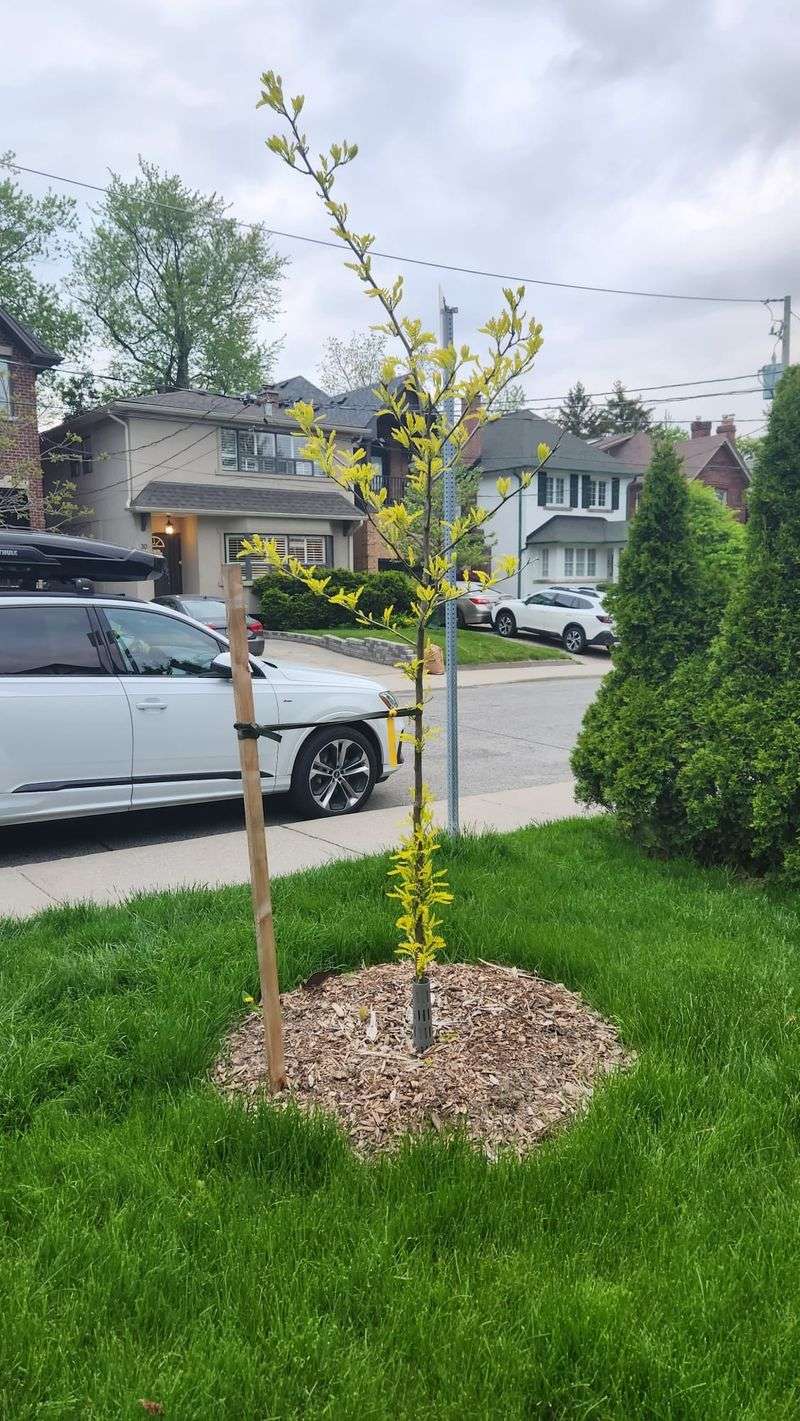
Honeylocust gives light shade and settles in fast. Its small leaflets let dappled sun through, and they drop in fall without forming a heavy layer to rake.
When you shop, look for a tree with a straight central trunk and branches spaced evenly around it. Skip any plant with circling roots at the surface, cracked bark, or a trunk that wobbles loosely in its pot.
Smaller trees usually establish faster than big ones, which surprises many first-time buyers who want instant shade. A young tree with a one-inch trunk often catches up to a larger transplant within a few growing seasons.
Tease apart circling roots on container plants, and cut any that wrap tightly around the root ball. For balled-and-burlapped trees, remove the wire basket and as much burlap as possible once the tree sits in place.
Spread mulch in a wide ring out to the branch tips, keeping it a few inches from the trunk. Piling mulch against bark, often called a mulch volcano, traps moisture and invites rot, insects, and hungry voles.
Young trunks may also need extra protection, since rabbits and mice often nibble bark in winter. A loose cylinder of hardware cloth or plastic tree guard helps reduce that damage.
Thin-barked young trees can crack on the south side during bright winter days, so some extension services suggest light-colored tree wrap for the first few winters.
4. Lilac For Blooms Next May
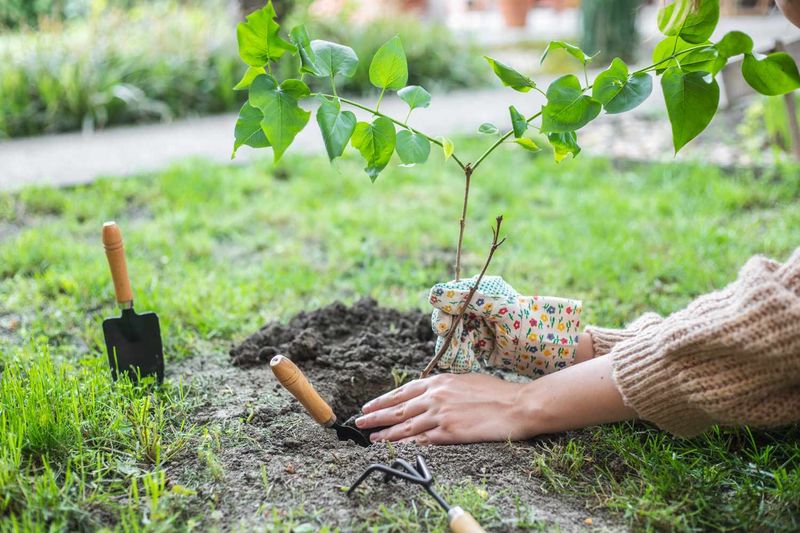
Lilac planted this fall can bloom as early as next May, though some plants take a year or two to flower. Last fall I tucked a small one beside my porch, and it bloomed the following spring without any fuss.
Many spring bloomers set their flower buds the summer before, so a plant bought now may already carry next spring’s blooms. Planting in fall gives the shrub a full season of root growth before it spends energy on flowers.
Be gentle with pruning right now, because cutting spring bloomers in fall removes those hidden buds. Wait until after they flower next spring, then trim any long or crossing branches.
Group shrubs in odd numbers, like three or five, for a natural look that feels planned without seeming stiff. Space each one according to its mature width, even if the bed looks empty for the first year.
Lilac prefers a sunny spot with soil that drains well, since wet roots lead to weak growth. Six hours of direct sun gives the best flowering.
Water the shrub deeply right after planting so the soil settles around the roots and removes air pockets. Lilacs also handle cold winters well, which is why they survive in old farmyards long after the houses are gone.
Forsythia, another sturdy spring bloomer, follows the same fall planting rules and pairs well with lilac.
5. Viburnum For Roots Busy Under Colorful Leaves
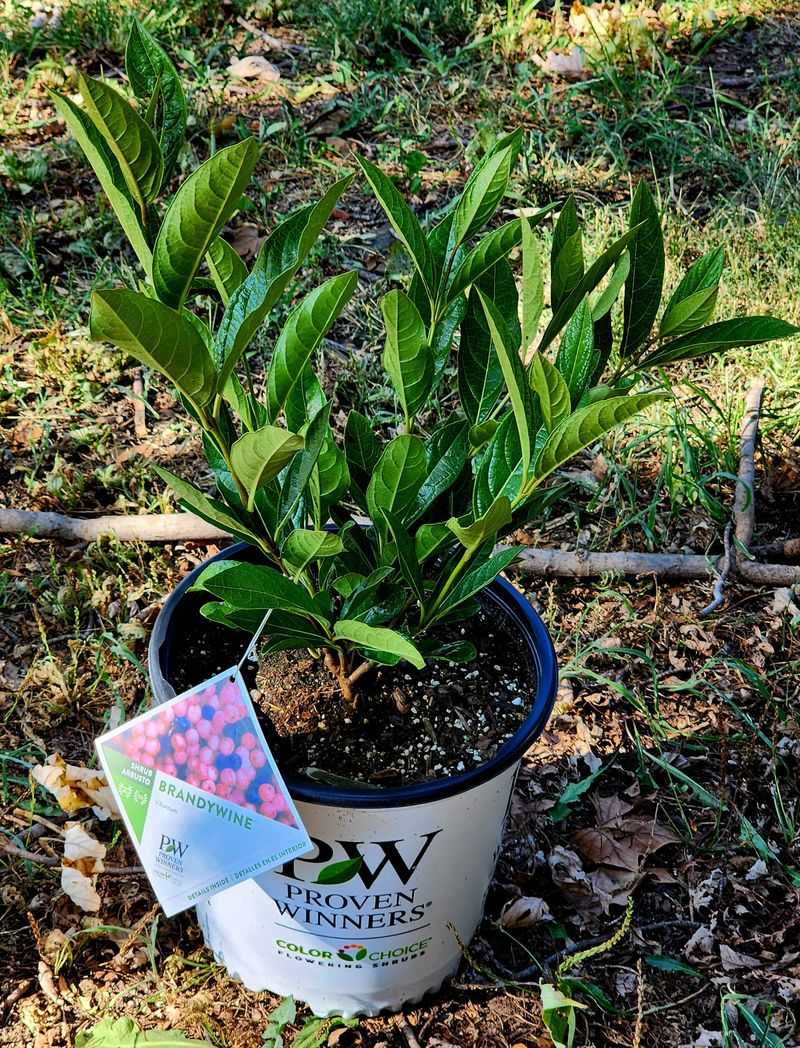
Viburnum grows roots while its leaves turn color, which makes fall a natural time to plant it. Fall color varies by species, from burgundy to orange, and many types also carry white spring flowers and berries that birds enjoy.
Check the hardiness zone on each tag, because a shrub rated for your zone has the best chance outdoors. Plants pushing the edge of their range are safer to plant in spring, when they get a year to settle.
Native viburnums deserve a spot on your list, since they often feed local pollinators and birds. Arrowwood and blackhaw are two native choices that many extension services recommend for wildlife gardens.
Space each shrub according to its mature width, even if the bed looks empty for the first year. Crowded plants compete for water and light, and airflow suffers between the branches.
Plant viburnum where it gets full sun to partial shade, since too much shade means fewer flowers and berries. Some species need a second plant nearby for good berry production, so check the tag for pollination needs.
Dig the hole wide rather than deep and set the root crown level with the soil. Backfill with native soil and water slowly until the ground settles.
A young viburnum in October often looks like a few bare sticks, yet the roots below are growing steadily. By spring it can leaf out faster than a shrub planted in May.
6. Panicle Hydrangea For Flowers After Cold Winters
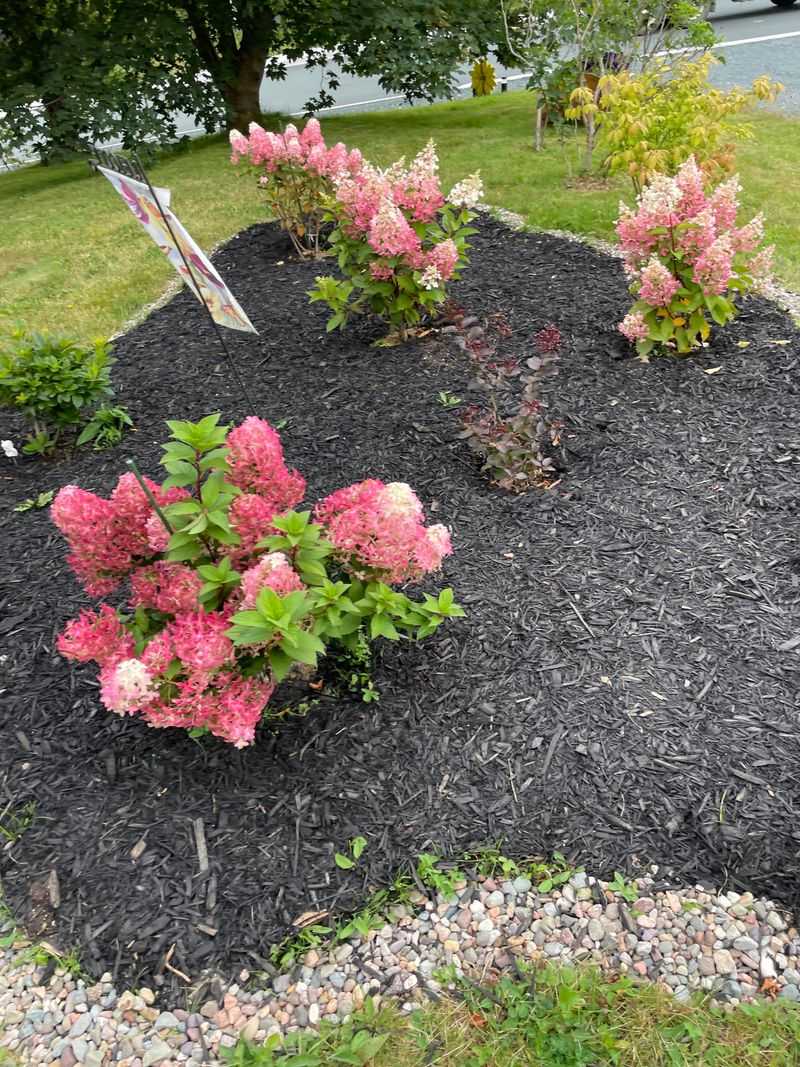
Panicle hydrangea handles cold winters better than many bigleaf types, and it blooms on new wood. A late planting rarely costs you a single flower the following summer.
Most extension services recommend about one inch of water per week for new plantings, from rain or your hose. Slow, deep soaking beats quick sprinkles, because it encourages roots to grow down instead of staying shallow.
An easy trick is to leave a garden hose trickling at the base for twenty to thirty minutes. You can also poke holes in a five-gallon bucket, fill it, and let it drain beside the shrub.
Checking the soil with your finger is the most reliable test, and it costs nothing. Push a finger two inches into the root ball, and water if it feels dry rather than cool and damp.
The root ball dries out faster than the soil around it, so a rainy week does not mean the plant got enough. Keep watering until the ground freezes, which may be late November or December in many northern areas.
Overwatering causes trouble too, especially in heavy clay that holds moisture for days after a storm. Yellowing leaves and a sour smell from the soil often point to roots sitting in water for too long.
Stick with the routine next spring and summer, since most shrubs need one to three years to fully establish.
7. Arborvitae For An Early Fall Start
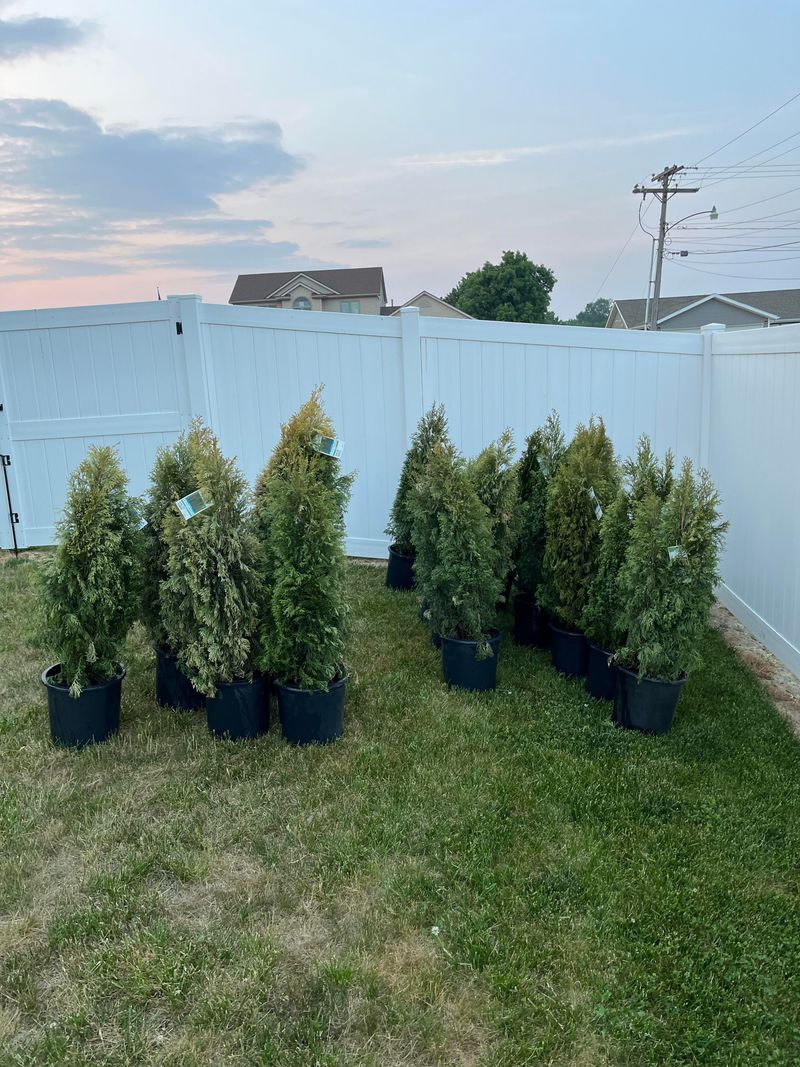
Arborvitae needs an earlier planting date than most other plants, because its foliage keeps losing water all winter. Roots that are not settled before the ground freezes leave the plant open to winter burn.
Many extension services suggest planting evergreens by early October in northern states, a few weeks earlier than deciduous plants. That date gives roots time to start drinking before cold soil slows their growth to a crawl.
If you missed that window, you do not need to give up. Gardeners in milder southern regions can plant evergreens through fall, while northern gardeners might wait until spring.
Winter burn shows up as brown or bronze foliage in late winter, usually on the side facing sun or wind. Frozen soil blocks water uptake while sunny days pull moisture from the foliage, and young plants feel it most.
Some gardeners protect young plants with burlap screens, which block wind without trapping heat. Set the burlap on stakes a few inches away from the plant rather than wrapping it tightly around the branches.
Anti-desiccant sprays are sold for winter protection, but research from several universities shows mixed results at best. Steady watering until the ground freezes is usually the more reliable way to help evergreens through their first winter.
Arborvitae prefers a spot with full sun and soil that drains well, since wet roots struggle in cold ground. A final deep soak right before freeze-up helps too, because evergreens keep losing moisture through winter.
8. Boxwood For Shelter Before Winter
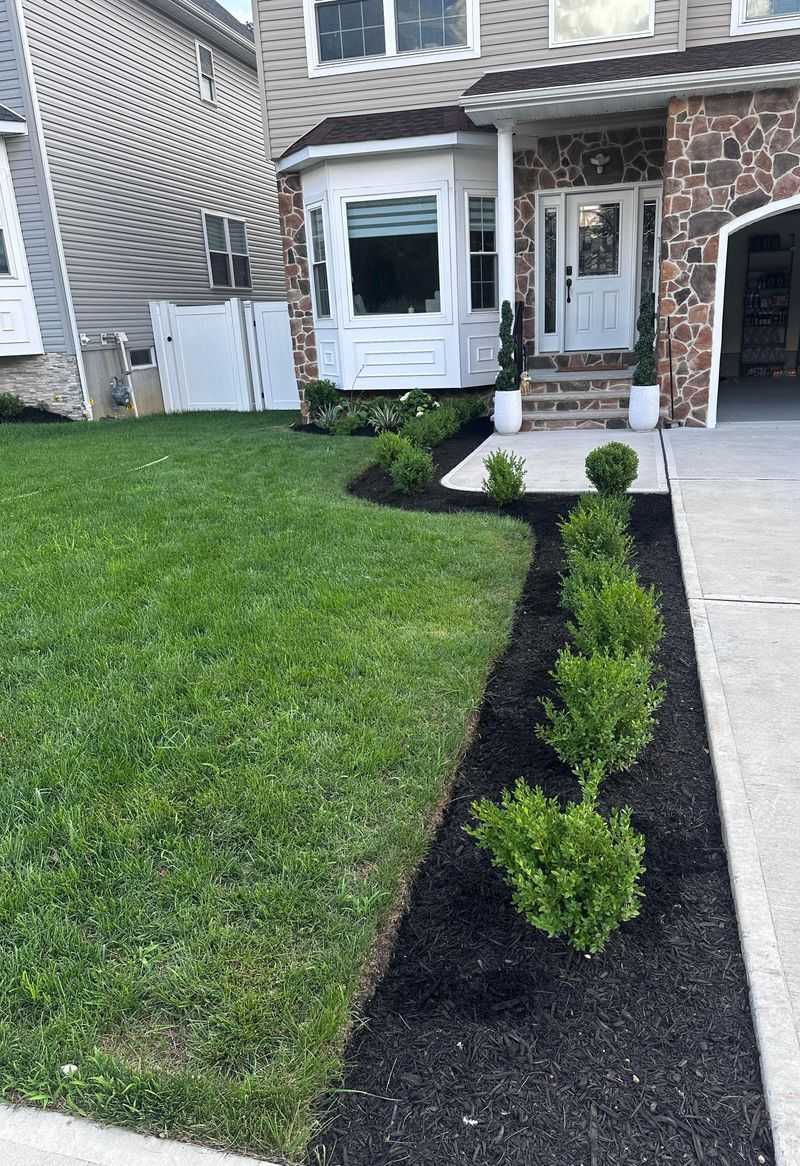
Boxwood needs shelter and water before winter, because its evergreen leaves keep losing moisture on cold days. A spot protected from harsh afternoon sun and drying northwest winds gives it an easier first winter.
Give the plant one final deep soak right before the ground freezes. A two to three inch layer of shredded bark or wood chips holds moisture and keeps soil temperatures steadier.
Steady temperatures matter because repeated freezing and thawing can push small plants right out of the ground. Gardeners call this frost heaving, and it often leaves roots exposed to cold, drying winds in late winter.
Fallen leaves make a free mulch, especially if you shred them with a mower first. Whole maple leaves can mat down into a soggy layer, while shredded ones break down and feed the soil slowly.
Fall planting works for most woody plants, but a handful of trees tend to sulk when moved in autumn. Magnolias, tulip trees, birches, black gum, hawthorns, and pin oak often recover slowly because of fleshy or sparse roots.
Lists vary from one university to another, so the science is not perfectly settled. If your heart is set on a magnolia or birch, a potted plant from a nursery is the safer bet.
Potted roots freeze more easily than roots in the ground, so sink the pots into soil or mulch until spring. Come April, I love spotting the first swollen buds and knowing those roots spent the cold months quietly preparing.