8 Trees You Should Never Plant In Your Ohio Yard
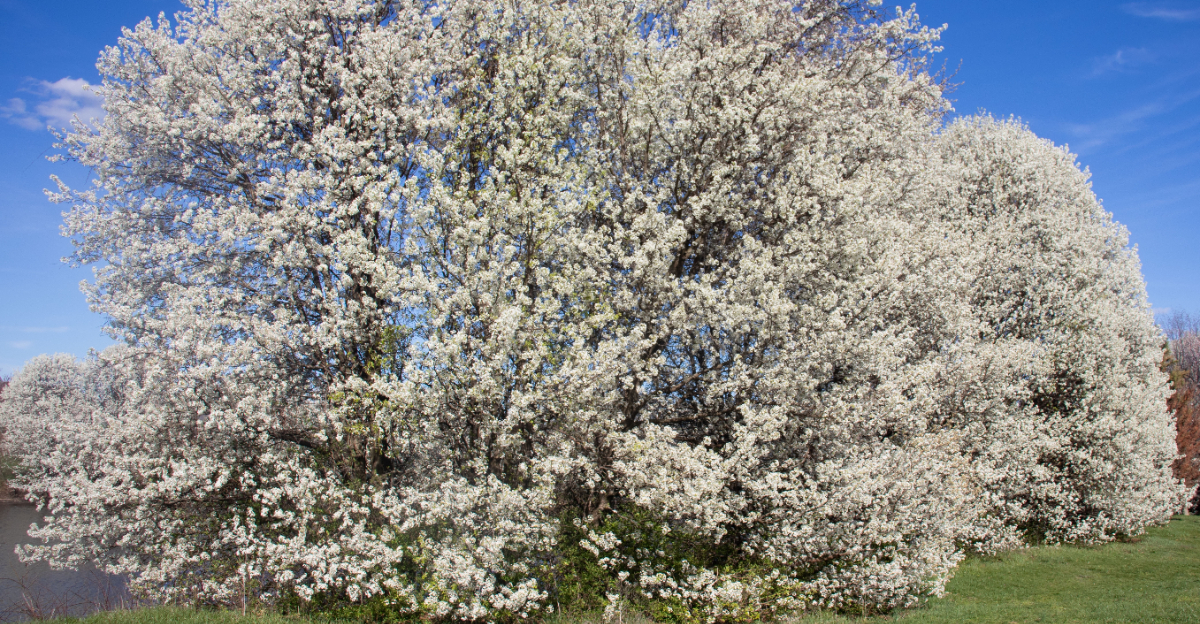
Ohio homeowners fall in love with a tree at the nursery, plant it over a weekend, and spend the next twenty years regretting it. Some trees look beautiful in a catalog and become a nightmare in an Ohio yard.
Roots that crack foundations. Canopies that snap under ice storms.
Fruit that draws pests by the thousands. Invasive root systems that strangle everything planted nearby.
The damage shows up slowly, then all at once, and removal costs far more than the original tree ever did. Ohio’s clay-heavy soil, brutal freeze-thaw cycles, and humid summers expose every weakness a problem tree carries.
What thrives in the Southeast or Pacific Northwest becomes a liability here, and what looks manageable at six feet tall becomes uncontrollable at sixty. Most of these mistakes are completely avoidable with the right information upfront.
The trees ahead have earned their reputation in Ohio yards the hard way, and your property deserves better.
1. Skip Callery Pear And Plant A Better Bloomer
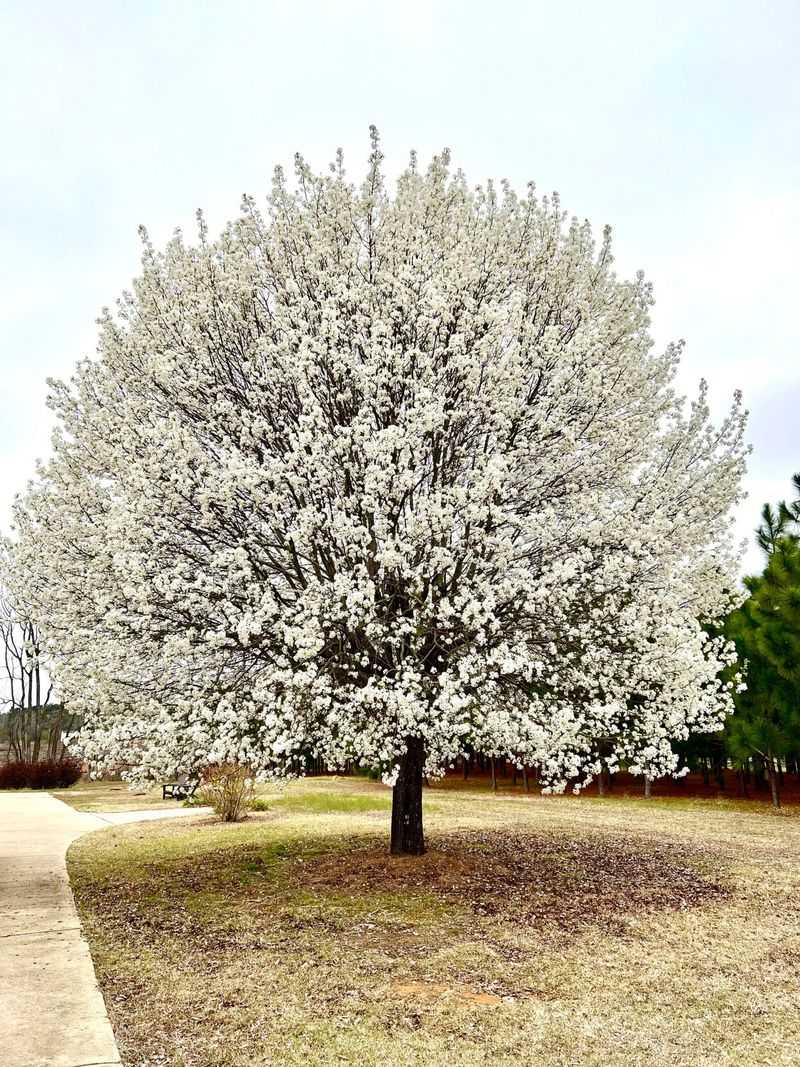
Every spring, those clouds of white blossoms on Callery pear trees look stunning lining driveways and streets. But behind that pretty display is one of the most problematic trees Ohio has dealt with in decades.
Ohio prohibits the sale, propagation, distribution, importation, and intentional spread of Callery pear, Pyrus calleryana, including Bradford pear and other Callery pear cultivars, under Ohio’s invasive plant rule.
This is a legal prohibition on adding or spreading the tree, not just a recommendation, though existing landscape trees are not subject to mandatory removal.
The problem is ecological as well as practical. Callery pear produces enormous numbers of small fruits that birds eat and spread into fields, roadsides, fence lines, and natural areas.
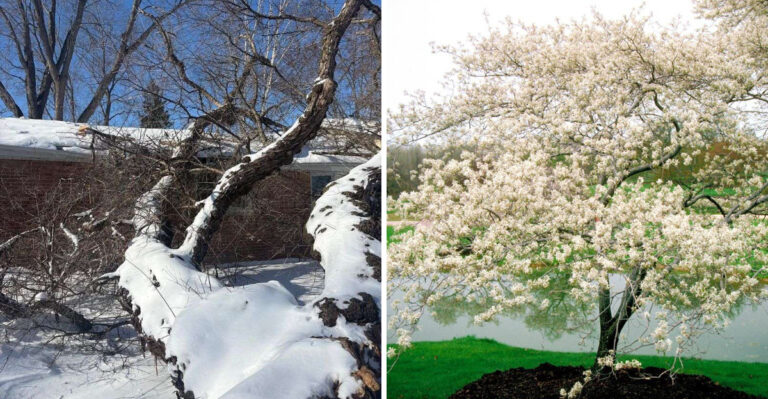
Once established in the wild, these trees form dense thickets that crowd out native vegetation. In yards, the branching structure is weak and prone to splitting, especially during ice storms and heavy snow, which are common winter events.
Existing trees already in older landscapes are still there, but gardeners should not add new ones. Better options are easy to find.
Serviceberry, Amelanchier arborea or Amelanchier laevis, gives you white spring flowers, edible berries for birds, and brilliant fall color in a smaller, yard-friendly size.
Eastern redbud, Cercis canadensis, offers rosy-pink spring blooms and works beautifully in smaller spaces.
Flowering dogwood, Cornus florida, provides layered spring beauty and excellent wildlife value. Blackhaw viburnum, Viburnum prunifolium, rounds out the list with fragrant white clusters and fall fruit that songbirds love.
2. Avoid Tree Of Heaven Before It Takes Over
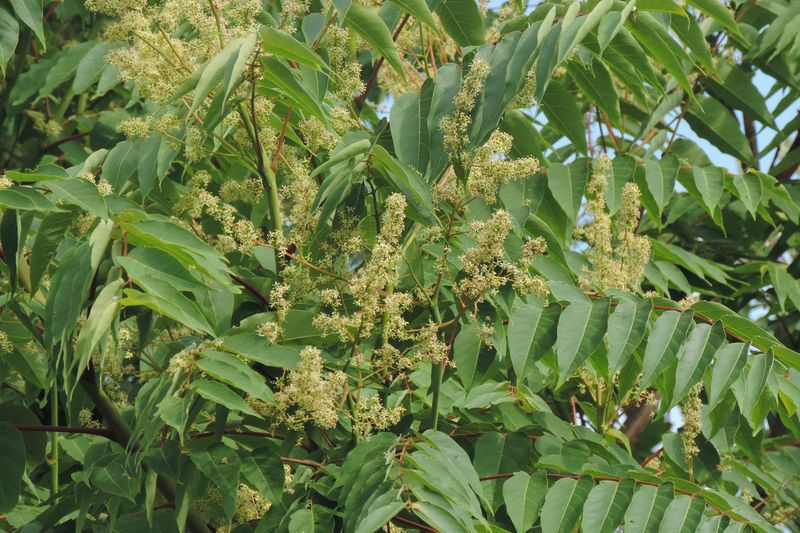
Spotted lanternfly has been spreading through the eastern United States, and tree of heaven, Ailanthus altissima, is its favorite host plant. That connection alone makes this fast-growing invasive tree a serious concern for gardeners.
But even before spotted lanternfly became a threat, tree of heaven was already considered one of the most aggressive invasive trees in Ohio, spreading rapidly through urban lots, roadsides, forest edges, and disturbed ground.
A single tree can produce up to 300,000 seeds per year. Root suckers sprout up around the base and throughout nearby soil, and cutting the tree without follow-up treatment often makes sprouting worse rather than better.
Your Ohio Garden Changes Every Week. Your Plan Should Too.
Gardening in Ohio changes quickly throughout the season. Every Friday you’ll receive a simple weekly plan showing exactly what to plant, prune, fertilize, harvest, and protect so you never miss the right timing.
Removal requires persistence, typically involving repeated cutting combined with targeted herbicide applications on the stump or stems. Homeowners who plant this tree hoping for fast shade end up with a long-term removal project instead.
Native alternatives provide fast growth and shade without those problems. Tulip tree, Liriodendron tulipifera, is one of the fastest-growing native trees and offers spectacular orange-yellow flowers in late spring.
Hackberry, Celtis occidentalis, tolerates tough urban conditions and supports dozens of native insects and birds. Black cherry, Prunus serotina, provides wildlife value and fall color.
Staghorn sumac, Rhus typhina, works well for smaller spaces and delivers fiery fall color that rivals almost anything in the Ohio landscape.
3. Pass On Norway Maple For Healthier Shade
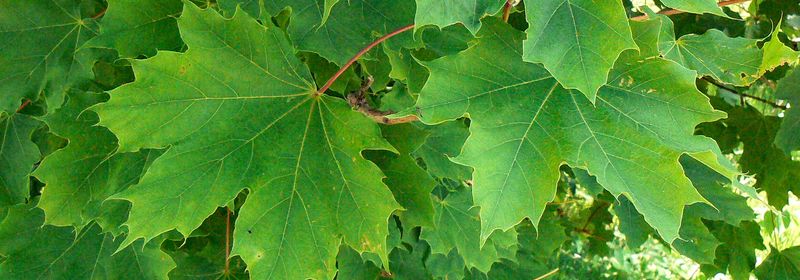
Norway maple, Acer platanoides, has been planted widely across neighborhoods because it looks like a reliable shade tree and tolerates tough urban conditions. The reality is more complicated.
Its canopy casts such dense shade that almost nothing grows beneath it, including lawn grass and native wildflowers. Shallow, aggressive roots compete with nearby plants for water and nutrients, making gardening under or around it frustrating.
Norway maple produces heavy crops of winged seeds that sprout readily in lawns, garden beds, and nearby natural areas.
Conservation and invasive-plant resources across the Midwest have flagged it as a tree that can spread into woodlands and displace native understory plants.
Although Ohio has not enacted a statewide legal ban as it has with Callery pear, Norway maple is widely recognized as an ecological problem by conservation and natural resource professionals across the state.
Sugar maple, Acer saccharum, is the classic replacement and gives you gorgeous fall color, excellent shade, and real wildlife value. Red maple, Acer rubrum, is more adaptable to wet or variable soils and lights up brilliantly in autumn.
Black maple, Acer nigrum, performs similarly to sugar maple and handles summers well.
American basswood, Tilia americana, is a wonderful choice for larger yards, offering fragrant summer flowers that pollinators absolutely love and a broad, graceful canopy that provides generous shade.
4. Leave Amur Corktree Out Of The Landscape
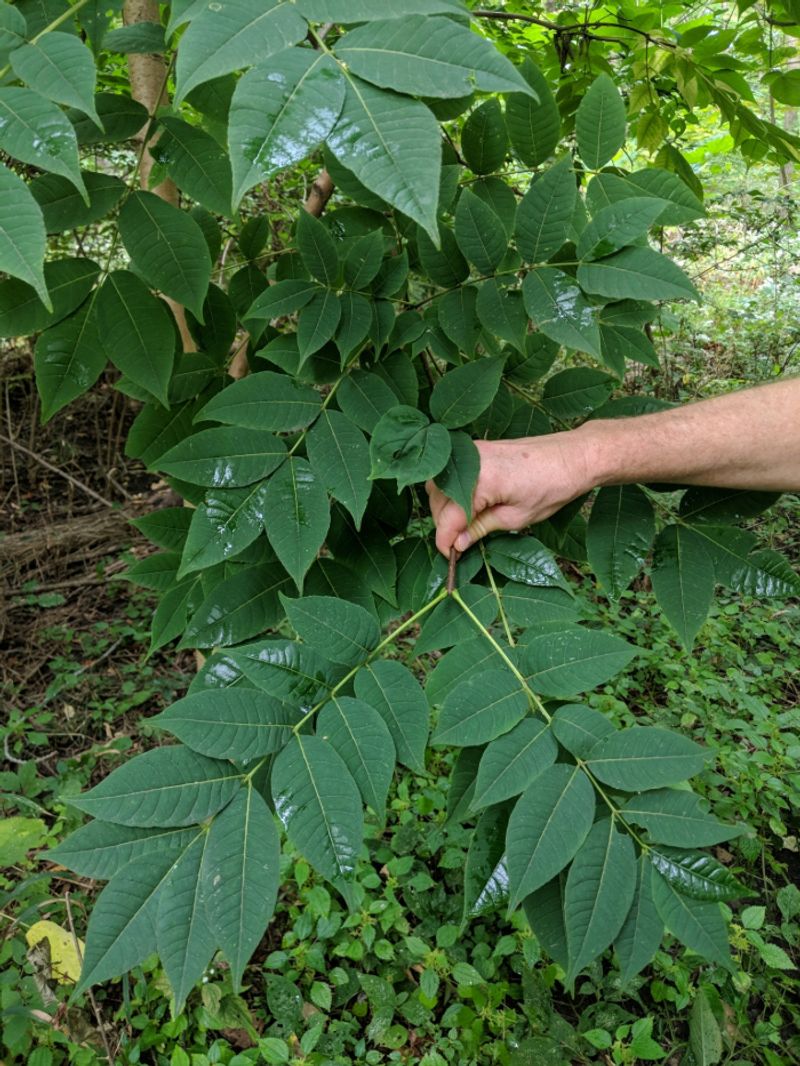
Amur corktree, Phellodendron amurense, was once promoted as an interesting ornamental because of its deeply furrowed, cork-like bark and open canopy. Landscape designers used it for decades in parks and institutional plantings across the Midwest.
The problem is that female trees produce large quantities of small black fruits that birds eat and spread into natural areas, where Amur corktree has established invasive populations in forests and natural areas.
Ohio forest-management and invasive-plant resources identify this tree as a concern, even though it is not currently on Ohio’s state prohibited invasive plant list.
Even male trees, which do not produce fruit, can contribute to spread by pollinating nearby female trees that then produce bird-dispersed fruit.
Choosing this tree for ornamental bark or structure is simply not worth the ecological cost given how many excellent native alternatives exist.
Kentucky coffeetree, Gymnocladus dioicus, is a standout native choice with rugged, ridged bark, bold compound leaves, and an open winter silhouette that looks striking in any yard.
Hophornbeam, Ostrya virginiana, is a smaller native tree with interesting papery seed clusters and handsome bark suited to shadier spots.
Yellowwood, Cladrastis kentukea, produces hanging clusters of fragrant white flowers in late spring and glows with golden fall color.
Black gum, Nyssa sylvatica, is hard to beat for fall foliage and provides exceptional wildlife value, especially for birds seeking late-season fruit.
5. Say No To White Mulberry Near Native Woods
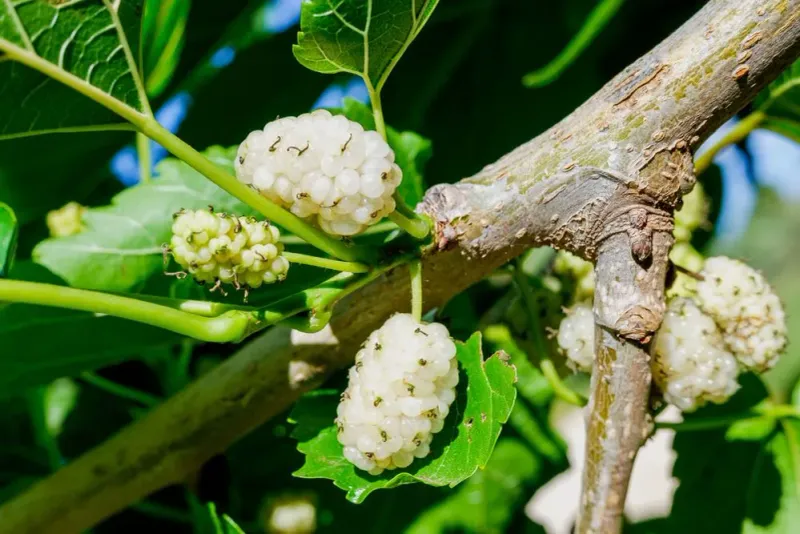
White mulberry, Morus alba, arrived in North America centuries ago when colonists tried to establish a silk industry, and it has been spreading ever since.
Along fence lines, roadsides, and woodland edges, white mulberry pops up constantly because birds eat the abundant fruit and deposit seeds everywhere.
The tree grows quickly, tolerates poor soil and neglect, and establishes itself in spots where it is difficult to manage.
The ecological concern goes beyond simple spread. White mulberry can hybridize with native red mulberry, Morus rubra, which is a species already under pressure in parts of its range.
This hybridization threatens the genetic integrity of native red mulberry populations. Near woodlands and natural areas, white mulberry competes aggressively with native plants and contributes to the degradation of forest edges that many wildlife species depend on.
Native red mulberry, Morus rubra, is the obvious replacement if you want fruit and wildlife value. It supports an impressive number of bird species and native insects without the invasive behavior of its Asian relative.
Serviceberry, Amelanchier arborea or Amelanchier laevis, delivers early-season fruit that birds and humans both enjoy, along with beautiful spring flowers. Pawpaw, Asimina triloba, is a uniquely Ohio-friendly native with large tropical-looking leaves and sweet fruit.
American plum, Prunus americana, fills out a yard with fragrant white spring flowers and small fruits that wildlife finds irresistible through summer and fall.
6. Keep Princess Tree Away From Ohio Yards
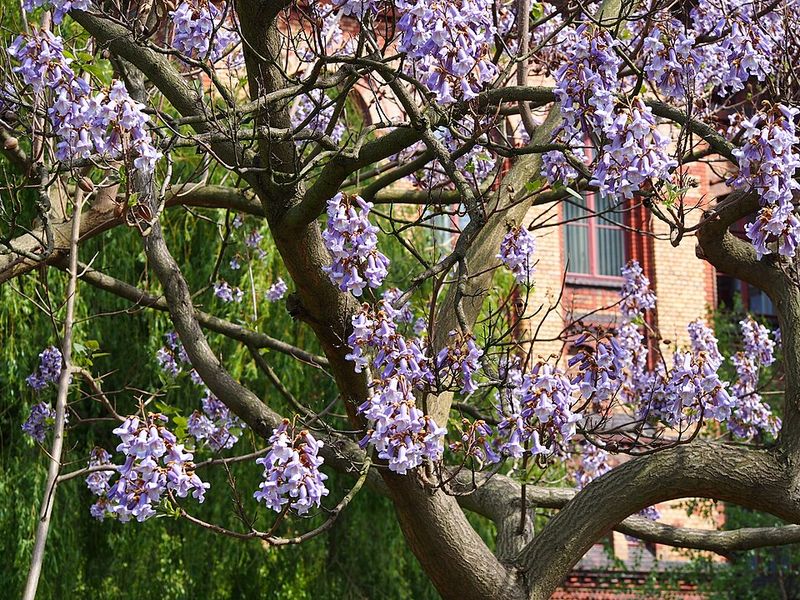
Few trees stop people in their tracks the way princess tree, Paulownia tomentosa, does when its large purple flower clusters open in spring. Also called empress tree, it grows extraordinarily fast, sometimes adding several feet per year under good conditions.
That speed and those showy flowers make it tempting, but the appeal fades quickly once you understand what this tree does to the surrounding landscape.
Princess tree produces enormous quantities of tiny, winged seeds that travel on the wind and sprout in disturbed soil, rocky slopes, roadsides, and forest gaps throughout the state. It is a persistent presence along highway corridors and stream banks.
The wood can be brittle, and branches may break under heavy ice or wind loads. Once established, princess tree is difficult to remove because it resprouts vigorously from the base after cutting.
Gardeners who want a dramatic flowering tree have several outstanding native options. Catalpa, Catalpa speciosa, grows quickly and produces bold, heart-shaped leaves with showy white flower clusters in early summer.
Eastern redbud, Cercis canadensis, is smaller but delivers rosy-pink spring color and heart-shaped leaves that look beautiful all season. Flowering dogwood, Cornus florida, is a beloved native with layered white or pink spring blooms and brilliant red fall berries.
Cucumber magnolia, Magnolia acuminata, is Ohio’s only native magnolia and offers large leaves, interesting seed cones, and a stately presence in larger yards.
7. Choose Better Options Than Common Buckthorn
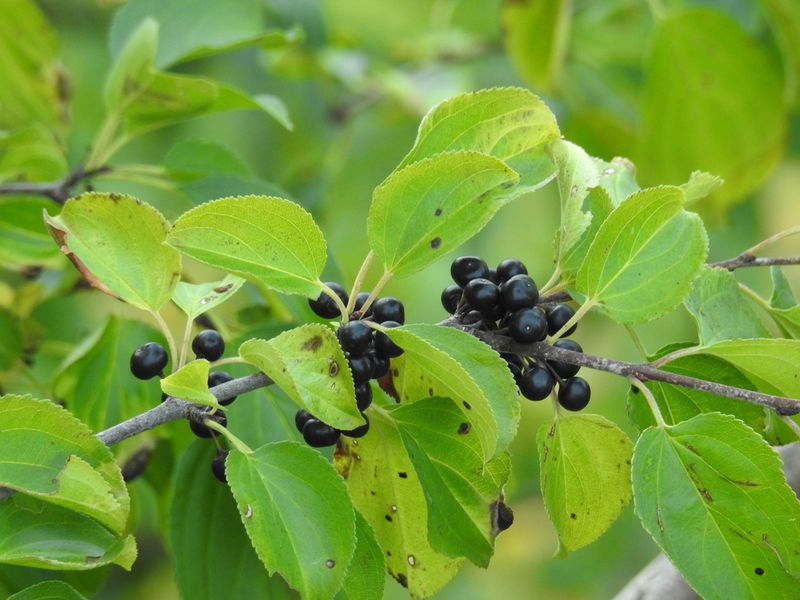
Common buckthorn, Rhamnus cathartica, has a sneaky way of appearing useful. Its dense branching makes it look like a natural privacy screen or hedge, and it tolerates shade, poor soil, and neglect better than almost anything else.
But that toughness is exactly what makes it such a persistent problem in natural areas. Birds eat the dark berries and spread seeds into woodlands, parks, and natural areas where buckthorn forms dense thickets that crowd out native tree seedlings and wildflowers.
Buckthorn leafs out earlier in spring and holds its leaves later in fall than most native plants, giving it a competitive edge over native understory species that struggle to grow in its deep shade.
Ohio conservation organizations and natural area managers spend significant resources managing buckthorn in public lands.
Choosing it for a privacy planting puts that same problem right next to your yard.
American hornbeam, Carpinus caroliniana, is a beautiful native understory tree that provides excellent screening without invasive spread, and its muscular, fluted trunk adds year-round visual interest.
Blackhaw viburnum, Viburnum prunifolium, is a multi-stemmed shrubby tree that works perfectly as a privacy screen and feeds birds through winter.
American hazelnut, Corylus americana, is a tough, wildlife-friendly native shrub-tree that works on challenging sites.
Eastern red cedar, Juniperus virginiana, is Ohio’s best native evergreen option for dense year-round screening and provides critical winter shelter for birds.
8. Replace Crack Willow With Better Wet-Site Choices
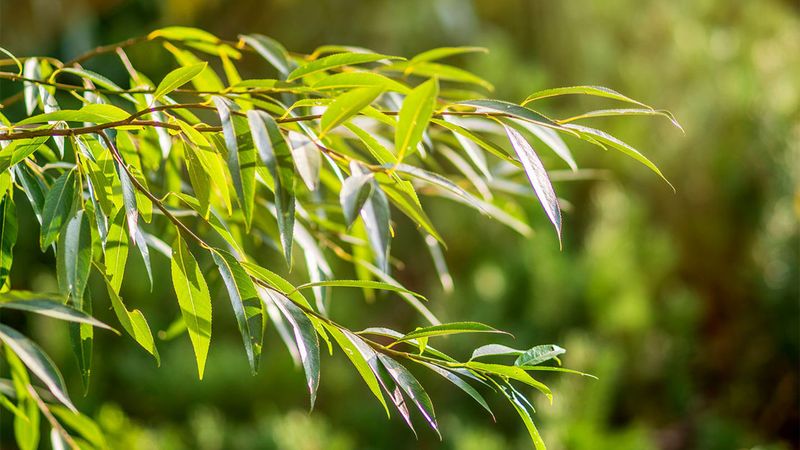
Wet yards, low spots, and stream banks in Ohio are challenging places to plant, and crack willow, Salix fragilis, can seem like a practical solution because it grows quickly in saturated soil.
The trouble is that crack willow is listed as an invasive species, and its biology makes spread almost inevitable.
Branches snap off easily in wind and storms, and those broken twigs root wherever they land along waterways, establishing new trees downstream with very little effort.
In a yard setting, crack willow creates ongoing maintenance work as brittle branches litter the ground after every significant storm.
Near streams, ditches, and ponds, it can displace native wetland vegetation and alter the character of riparian areas that support native fish, amphibians, and invertebrates.
Removing an established crack willow from a streambank is considerably harder than choosing a better tree from the start.
Black willow, Salix nigra, is native willow and handles wet soil beautifully without the invasive behavior of its imported relative.
River birch, Betula nigra, is one of the most popular and reliable native trees for wet sites, offering peeling cinnamon-colored bark and strong branch structure.
Sycamore, Platanus occidentalis, thrives along waterways and grows into a magnificent, long-lived canopy tree.
Swamp white oak, Quercus bicolor, is a durable native oak that handles periodic flooding and provides exceptional wildlife value and strong, lasting shade for generations.