Trellis Ideas Arizona Gardeners Can Use To Save Space And Add Charm
Arizona gardeners learn pretty quickly that plants love to spread out and claim territory like tiny green squatters.
One minute you have a neat little raised bed, and the next your tomatoes are leaning into the walkway while cucumber vines wander off like they pay the mortgage.
That is where a good trellis comes in. Adding vertical growing space can make a garden feel bigger, cleaner, and a lot more interesting to look at.
Suddenly fences become growing areas, patios gain greenery without losing floor space, and even a small gravel yard starts feeling lush and productive. Trellises also bring a surprising amount of personality to an Arizona landscape.
A simple wire panel, wooden frame, or arched structure can turn ordinary plants into a real focal point.
Plus, there is something oddly satisfying about seeing vines climb exactly where you want them to for once.
1. Cattle Panel Trellis Supports Vining Vegetables
Few things change a vegetable garden as quickly as adding a cattle panel trellis.
These heavy-duty wire panels, usually made from galvanized steel, are incredibly strong and can support the weight of heavy vining crops like winter squash, melons, and cucumbers without bending or warping in Arizona’s intense summer heat.
Cattle panels are typically sold in 16-foot lengths, making them easy to arch over a raised bed or stand upright along a garden row.
When arched, they create a tunnel effect that shades the soil beneath, which helps retain moisture during Arizona’s driest months.
That shade can also protect cool-season crops planted below from unexpected warm spells.
Setting up a cattle panel trellis usually requires T-posts or rebar stakes driven into the ground on each side of the bed. The panel is then secured with zip ties or wire clips.
Because the openings in the grid are large, harvesting fruits and vegetables is straightforward without wrestling through tight mesh.
Cattle panel trellises can last many seasons with minimal maintenance, making them a practical long-term investment for Arizona vegetable gardeners who want reliable vertical support year after year.
2. A-Frame Trellis Fits Raised Garden Beds
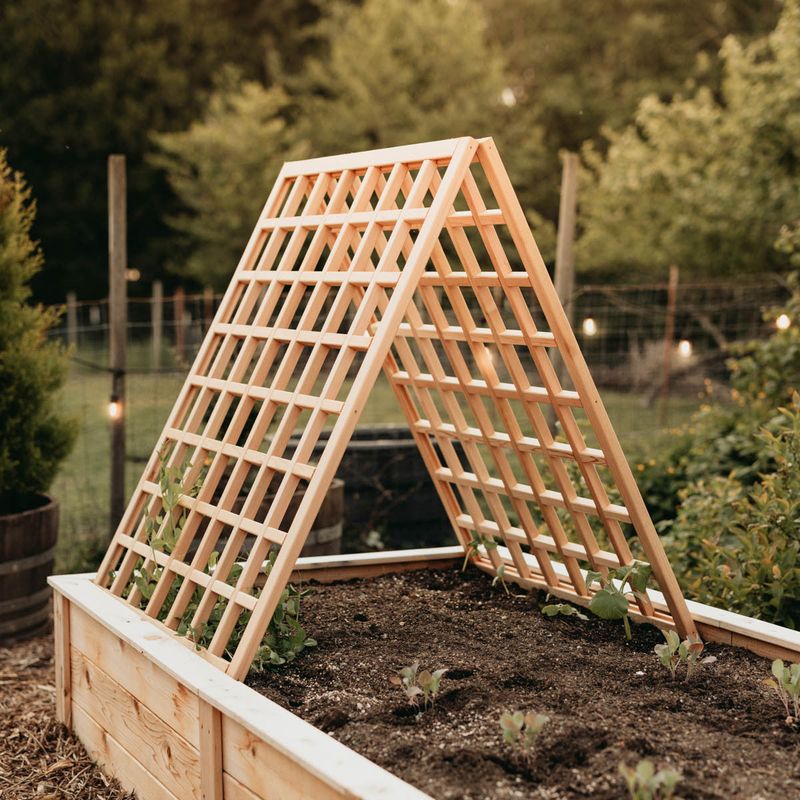
Raised bed gardening is popular across Arizona because it gives gardeners control over soil quality and drainage, two things that can be tricky in desert environments.
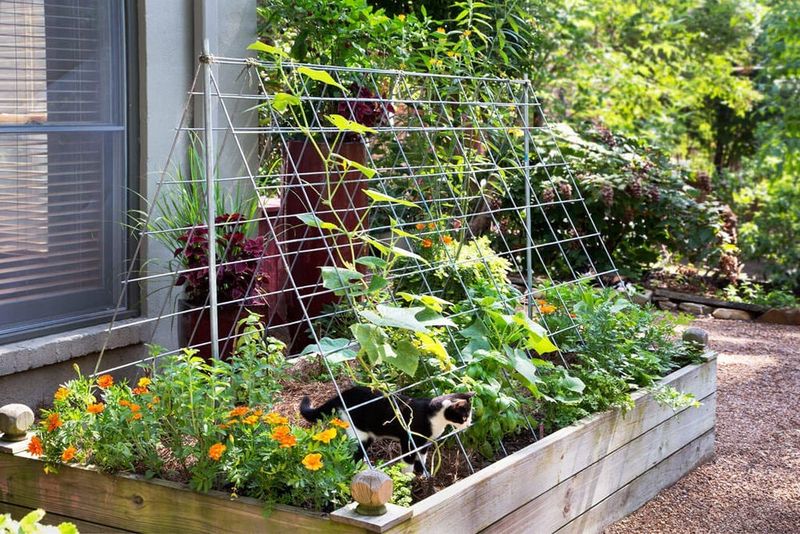
An A-frame trellis fits naturally into this setup, leaning inward from both sides of the bed to create a sturdy, self-supporting structure that does not require posts driven into the ground.
The angled design makes an A-frame trellis especially useful for growing cucumbers, pole beans, and peas. Vines climb up both sides of the frame, and fruits hang down through the center, making them easy to spot and pick.
In Arizona’s warm growing seasons, this kind of vertical layout also improves airflow around plants, which can reduce issues caused by humidity during the monsoon months.
A-frame trellises can be built from wood, PVC pipe, or metal conduit, and they fold flat for easy storage between growing seasons.
Many Arizona gardeners appreciate this feature because it frees up space during the hottest summer months when some beds are resting.
Your Arizona Garden Changes Every Week. Your Plan Should Too.
Gardening in Arizona changes quickly throughout the season. Every Friday you’ll receive a simple weekly plan showing exactly what to plant, prune, fertilize, harvest, and protect so you never miss the right timing.
Whether you are growing a spring crop of snap peas or a fall harvest of climbing beans, an A-frame trellis is a reliable and adaptable tool for any raised bed setup.
3. String Trellis Saves Space For Tomatoes And Cucumbers
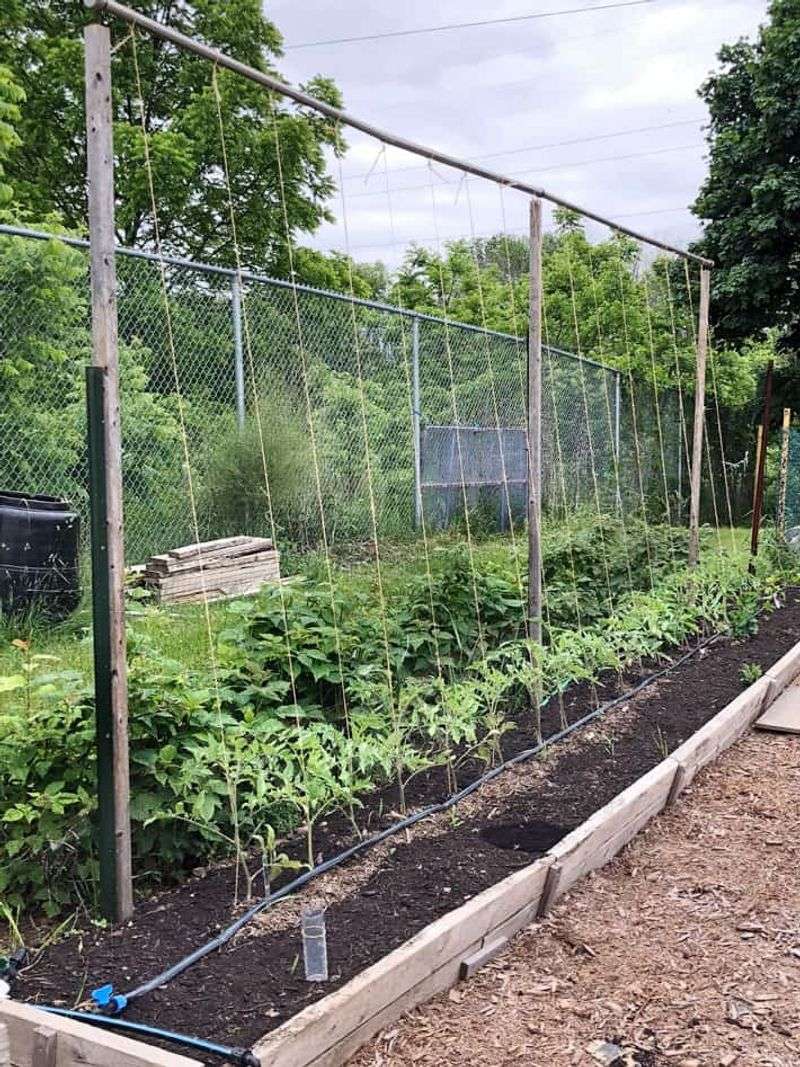
String trellises have been used in commercial greenhouses for years, and home gardeners in Arizona are catching on to just how effective they are in small spaces.
The setup is simple: a horizontal bar or pipe is mounted above the garden bed, and lengths of garden twine hang down to the base of each plant.
As the plant grows, you gently twist the stem around the string to guide it upward.
Tomatoes and cucumbers respond especially well to this method. Indeterminate tomato varieties, which keep growing and producing throughout the season, benefit from the continuous vertical support that a string trellis provides.
In Arizona’s long warm season, these plants can grow quite tall, and a string system keeps them tidy and off the ground without needing heavy cages or stakes.
One of the biggest advantages of a string trellis is how little space it takes up. The footprint is minimal, which matters in compact Arizona yards and patio gardens.
At the end of the season, the twine can be composted and replaced, making cleanup easy. This system works well attached to a pergola, fence, or simple overhead pipe frame, giving Arizona gardeners a flexible and low-cost vertical growing option.
4. Bamboo Teepee Trellis Adds Charm For Beans
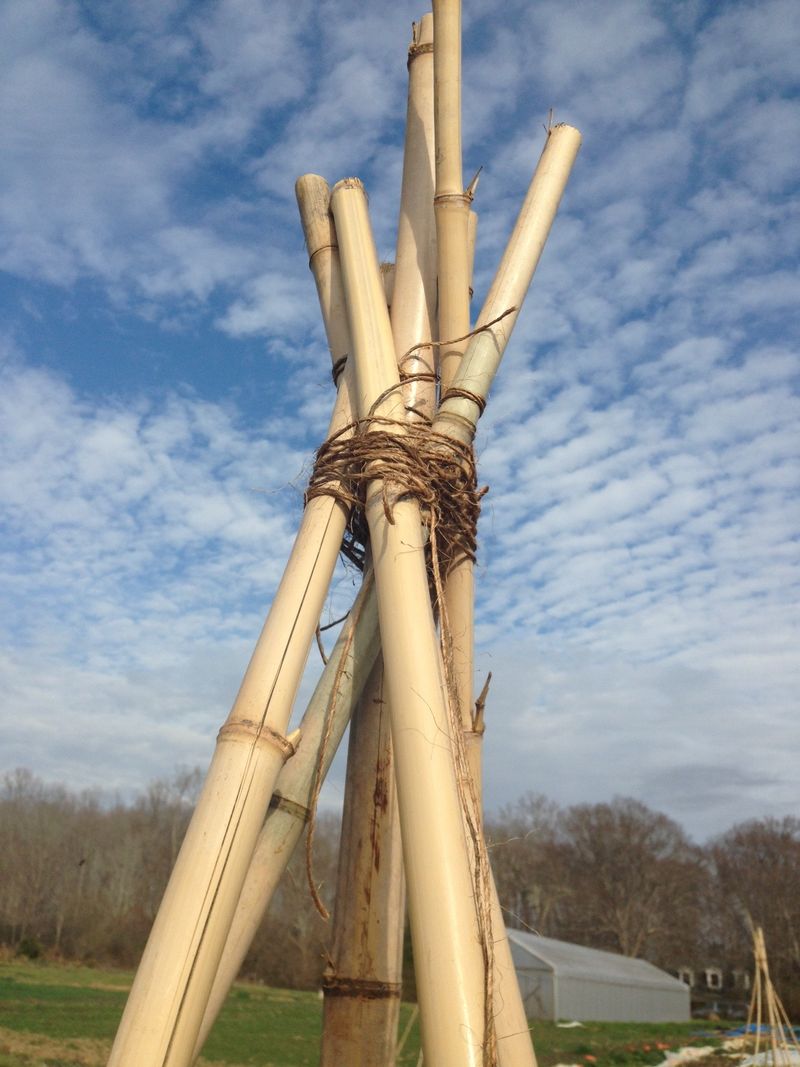
There is something naturally appealing about a bamboo teepee trellis standing in the middle of a garden bed.
The classic look has been used in kitchen gardens for generations, and it holds up just as well today, especially for growing pole beans in Arizona’s warm spring and fall seasons.
Building a teepee trellis is straightforward. Six to eight bamboo poles are pushed into the soil in a circle, then gathered and tied together at the top with garden twine or wire.
Bean seeds are planted at the base of each pole, and the vines spiral upward naturally as they grow. The result is a lush, leafy column that produces a steady harvest throughout the season.
Beyond function, a bamboo teepee adds real visual charm to an Arizona garden. It creates a focal point in a vegetable bed and gives the space a cottage-garden feel that contrasts nicely with the surrounding desert landscape.
Bamboo poles are lightweight, affordable, and easy to find at most garden centers. They can be reused for several seasons if stored out of direct sun when not in use.
For gardeners who want a trellis that is both practical and pleasing to look at, a bamboo teepee is a wonderful option.
5. Wall-Mounted Trellis Works Well On Patios
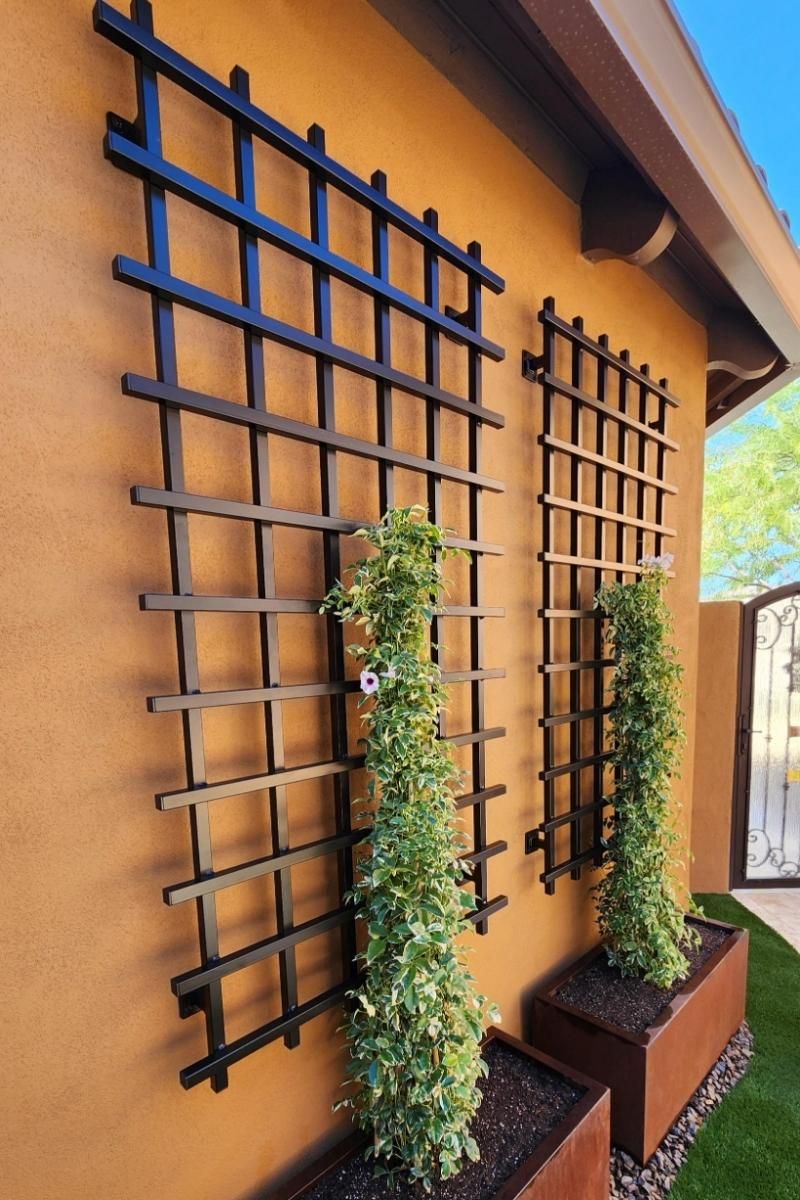
Patio spaces in Arizona are often used as outdoor living rooms, and a wall-mounted trellis can make those spaces feel more like a garden retreat.
Attached directly to a fence, block wall, or stucco exterior, these trellises turn a bare vertical surface into a living display of climbing plants without taking up any floor space at all.
Wall-mounted trellises come in many materials, including powder-coated steel, wrought iron, cedar wood, and PVC-coated wire.
In Arizona’s climate, powder-coated metal and treated wood tend to hold up best against intense UV exposure and dry heat.
Mounting the trellis a few inches away from the wall allows air to circulate behind the plants, which helps prevent moisture buildup during monsoon season.
For patio container gardens, a wall-mounted trellis paired with a large pot creates a compact vertical garden that works well in tight spaces.
Climbing plants like mandevilla, black-eyed Susan vine, and even small-fruited tomatoes can be trained up the trellis from a container below.
Arizona homeowners with limited yard space often find that a patio wall is one of the most underused growing surfaces available, and a simple trellis is all it takes to put it to good use.
6. Metal Obelisk Trellis Adds Height To Containers
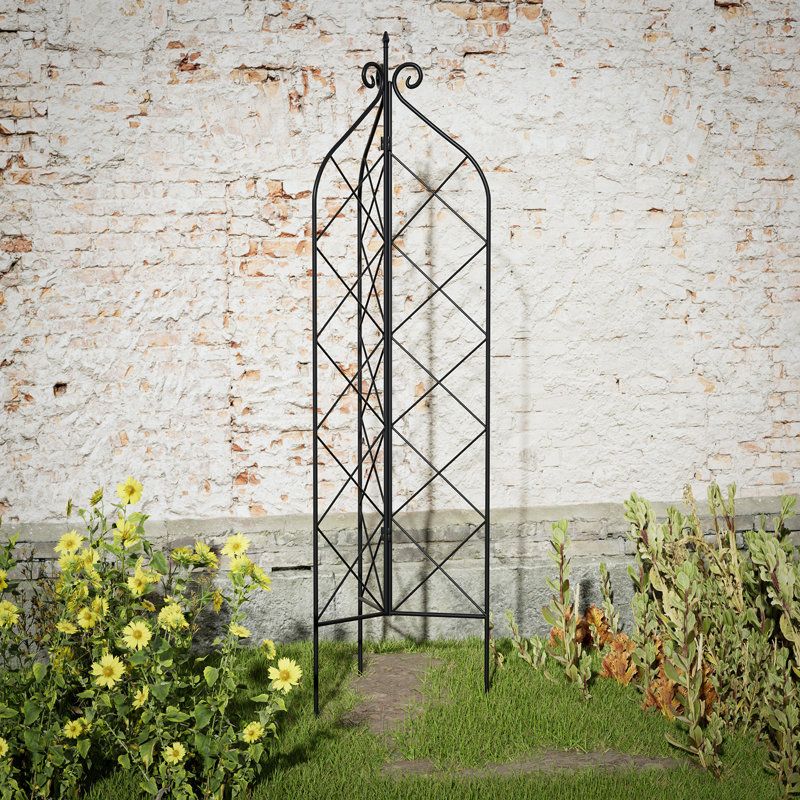
Container gardening is one of the most flexible approaches for Arizona homeowners who want to grow plants on patios, balconies, or in gravel landscapes where in-ground planting is not practical.
A metal obelisk trellis placed inside a large container adds instant height and structure, turning a simple pot into a dramatic vertical display.
Obelisk trellises are typically four-sided and taper to a point at the top. They are usually made from powder-coated steel or wrought iron, both of which handle Arizona’s heat and sun exposure reasonably well.
The narrow footprint of an obelisk makes it ideal for container use since it does not take up much horizontal space inside the pot while still providing plenty of climbing surface.
Vining plants like sweet potato vine, climbing roses, and small varieties of cucumber or beans can be trained up an obelisk from a large container.
The trellis holds the plant upright, keeps it from sprawling across the patio, and adds an architectural element that makes the container planting look intentional and polished.
In Arizona’s outdoor living spaces, where patios often serve as the main garden area, a metal obelisk trellis is a practical and attractive way to grow vertically without needing any ground space at all.
7. Arched Trellis Creates A Garden Focal Point
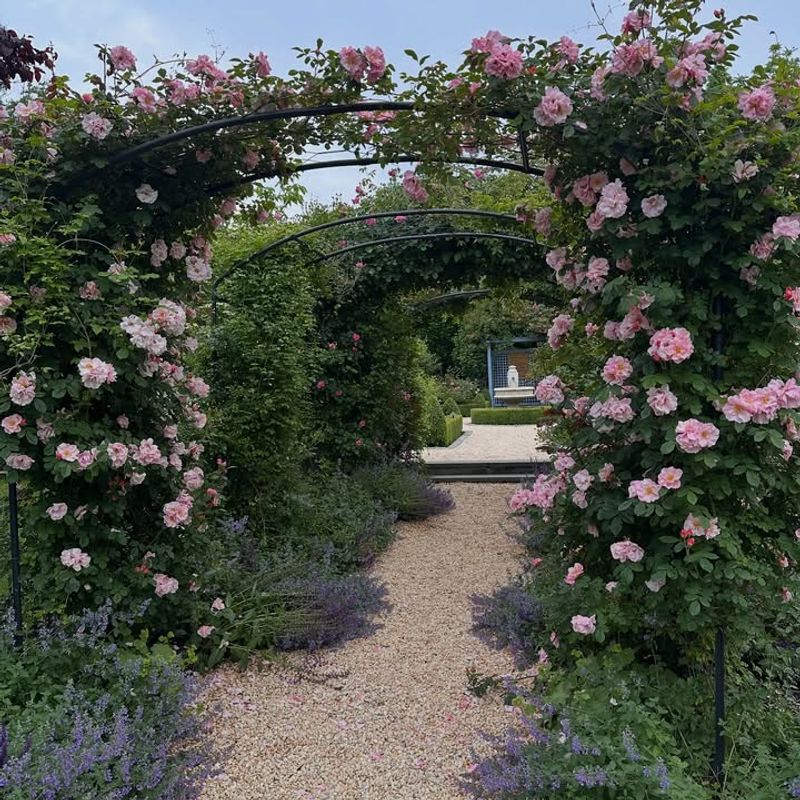
Walking through a vine-covered arch in a garden feels like crossing into a different world, and that sense of arrival is something Arizona gardeners can create right in their own backyards.
An arched trellis placed over a garden path or raised bed area becomes an instant focal point that draws the eye and gives the landscape a sense of structure and intention.
Arched trellises are available in metal, wood, and vinyl, and they range from simple rounded designs to more ornate styles with decorative scrollwork.
In Arizona’s sunny climate, powder-coated steel arches tend to hold up well over time without needing much upkeep.
Placing the arch where it frames a view, such as at the entrance to a vegetable garden or along a gravel walkway, makes the most of its visual impact.
Climbing roses, bougainvillea, and passionfruit vine are among the plants that work well on an arched trellis in Arizona. These plants thrive in full sun and can cover an arch quickly during the growing season.
Keep in mind that large arches may need to be anchored securely, especially in areas of Arizona that experience strong monsoon winds. Proper anchoring keeps the structure stable and the plants safely supported throughout the season.
8. Fence Trellis Turns Boundaries Into Growing Space
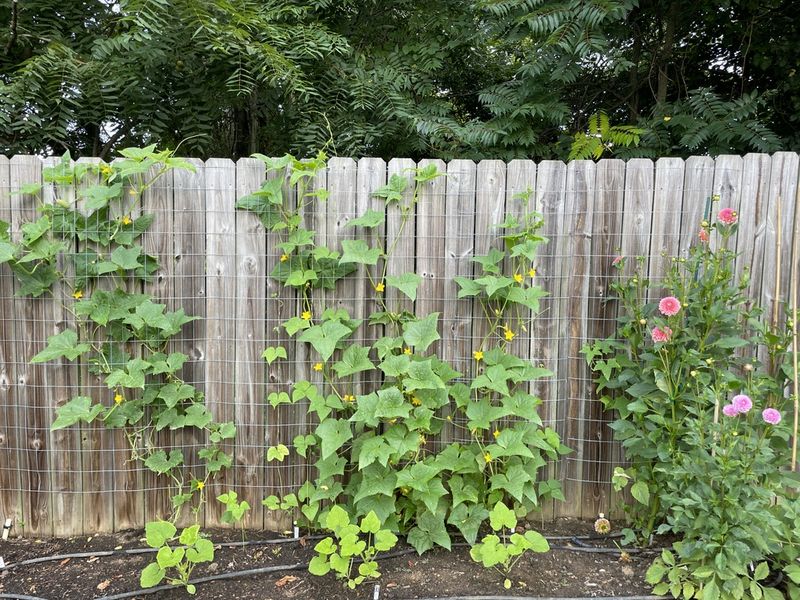
Most Arizona backyards have some kind of perimeter fence, and that fence is one of the most overlooked growing surfaces in the entire yard.
By attaching a trellis panel or training plants directly along the fence line, gardeners can turn a simple boundary into a productive and attractive vertical garden without using any extra ground space.
Wooden fences can support lightweight wire mesh or lattice panels attached with staples or screws. Block walls, which are common in Arizona, work well with mounted hook systems or cable wire setups that give vines something to grip.
Either way, the goal is to create a surface that plants can climb without damaging the fence structure over time.
Cucumbers, squash, and climbing beans are practical choices for a fence trellis in a vegetable garden. For a more decorative look, bougainvillea, queen’s wreath vine, or coral vine bring color and texture to a plain fence line.
In Arizona’s warm climate, these vining plants can grow vigorously and fill a fence quickly, providing privacy, shade, and visual interest all at once.
A fence trellis is one of the simplest ways to expand growing space without expanding the garden footprint.
9. Tomato Cage Trellis Supports Compact Garden Plants
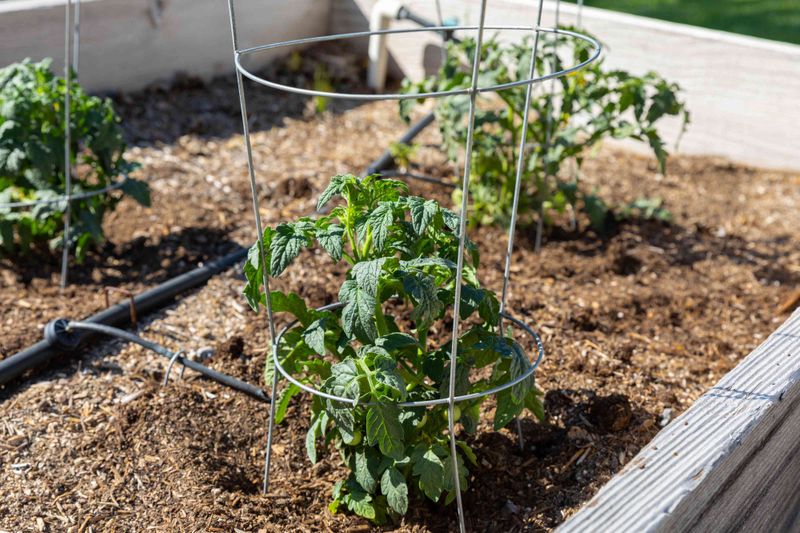
Tomato cages may seem like the most basic trellis option, but do not underestimate how useful they are in compact Arizona gardens.
A sturdy tomato cage keeps plants upright, improves airflow between branches, and makes harvesting much easier compared to letting plants sprawl across the soil or a raised bed surface.
Standard cone-shaped wire cages work for smaller determinate tomato varieties, but heavy-gauge square cages or reinforced ring cages are a better choice for larger indeterminate plants that produce all season long.
In Arizona’s extended warm season, tomatoes can grow quite large, so a cage with real structural strength makes a noticeable difference in how well the plant stays supported.
Beyond tomatoes, cages work well for peppers, eggplants, and even tomatillos, all of which are popular in Arizona vegetable gardens.
Placing a cage over a young plant early in the season is much easier than trying to wrestle one onto a fully grown plant later.
Tomato cages also double as support for lightweight row cover fabric during unexpected cold snaps in winter growing areas.
For gardeners working in smaller raised beds or patio containers, a compact tomato cage trellis is one of the most versatile and affordable tools available.