What Arizona Porches Have When Houseplants Thrive Through August Heat
August in Arizona is the kind of month that makes even the most enthusiastic plant parent reconsider every outdoor decision they’ve made since spring.
Triple digit heat, hot dry winds, blazing direct sun, and containers that go from moist to bone dry at a speed that feels almost personal.
It’s a lot. And if you’ve been keeping houseplants on an outdoor porch this summer, you’ve probably already noticed that some of them are handling it better than others.
Here’s the thing though: a covered porch in August can actually work surprisingly well for certain houseplants when the conditions line up correctly. The right light levels, decent wind protection, proper containers, and consistent watering all play a role.
The key word is certain. Not every houseplant belongs outside in an Arizona August, and knowing the difference matters more than most people realize.
1. Protection From Intense Afternoon Sun
A west-facing porch in Arizona can feel like the inside of an oven by mid-afternoon, especially during August when the sun angle and heat intensity peak together.
Houseplants that normally live indoors near a bright window are accustomed to filtered or indirect light, not the concentrated solar radiation that beats down on an exposed outdoor surface.
Moving those plants into that kind of direct afternoon exposure without protection can cause leaf scorch, bleaching, and serious stress to the foliage and root system.
Bright indirect light and filtered light are very different from full Arizona sun.
A covered porch with a solid or latticed roof can intercept some of that intensity, but the amount of shade actually reaching the plants depends on the roof depth, wall placement, and which direction the porch faces.
A north-facing porch may offer consistent shade throughout the day, while a covered east-facing porch might receive gentler morning light that fades before the worst afternoon heat arrives.
Plants like pothos, peace lilies, and certain ferns can manage in bright indirect light but are not suited to direct afternoon sun, even for short periods.
Reflected heat from concrete floors, stucco walls, and nearby pavers can add additional stress beyond what the sun alone delivers.
Choosing the shadiest, most protected corner of the porch gives heat-sensitive houseplants the best chance of managing August without significant leaf damage.
2. Shelter From Hot, Dry Wind
Warm winds moving through an exposed Arizona patio during August can pull moisture from container soil and plant foliage faster than most people expect.
This process, called transpiration and evaporative moisture loss, accelerates significantly when hot dry air moves continuously across leaves and exposed soil surfaces.
A plant that might need watering every two days in a calm indoor setting could need attention much more frequently when sitting in a breezy outdoor location during an Arizona summer.
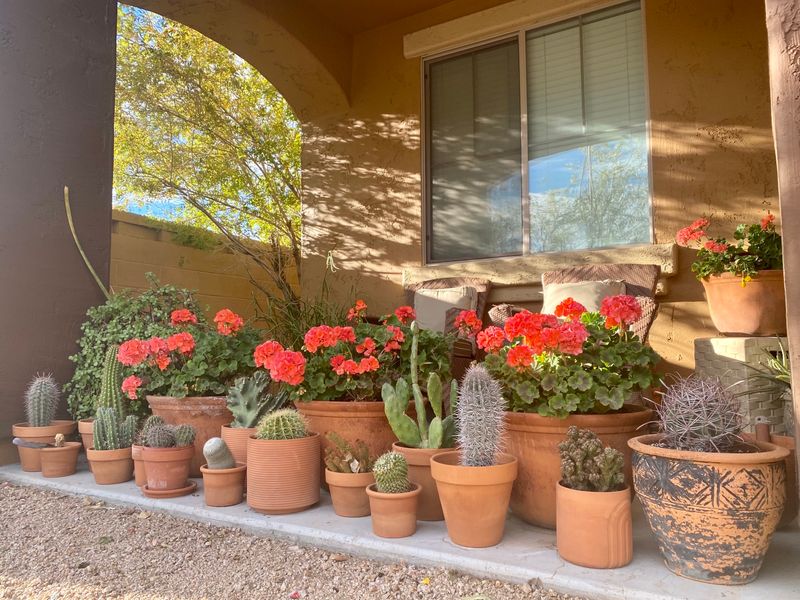
A covered porch with solid walls or partial enclosures on the windward side can reduce how much hot moving air reaches the plants. This kind of shelter does not need to be airtight or completely enclosed.
Even a partial barrier, like a low stucco wall, a dense hedge nearby, or a porch positioned against the house on one side, can meaningfully reduce the wind speed and dry air exposure that plants experience.
Your Arizona Garden Changes Every Week. Your Plan Should Too.
Gardening in Arizona changes quickly throughout the season. Every Friday you’ll receive a simple weekly plan showing exactly what to plant, prune, fertilize, harvest, and protect so you never miss the right timing.
Completely still air is not the goal, since some air movement around plants supports healthy gas exchange and can reduce fungal issues. The difference between a gentle breeze and a sustained hot desert wind is significant for container plants.
A porch that buffers the worst of afternoon wind while still allowing some air circulation gives suitable houseplants a more stable environment than a fully open patio would.
Checking the soil in wind-exposed containers more frequently during August is a practical habit worth building.
3. Containers With Reliable Drainage
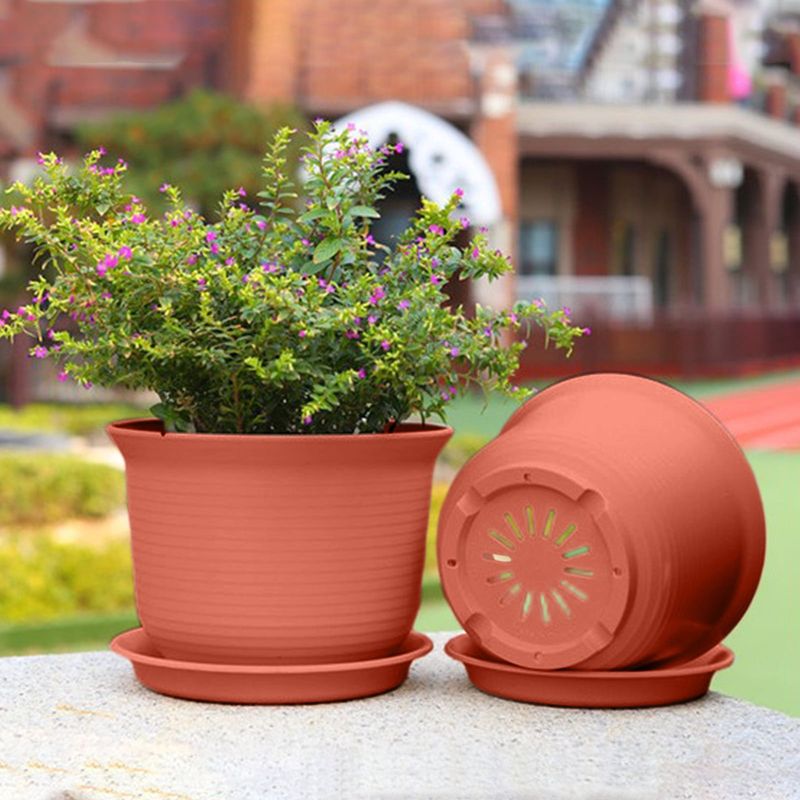
Every container holding a houseplant on an Arizona porch needs openings that allow excess irrigation water to move out of the root zone.
Without drainage holes, water accumulates at the bottom of the pot, creating saturated conditions that restrict oxygen from reaching roots.
Roots sitting in standing water for extended periods can deteriorate, even when the surface of the soil looks dry and the temperatures outside are extreme.
Drainage holes serve a second purpose beyond removing excess water. As water moves through the potting medium and exits from the bottom, it carries dissolved air into the root zone, which supports healthy root function.
In a container without drainage, that exchange does not happen effectively, and the soil structure can compact and become anaerobic over time. Arizona’s intense summer heat does not protect a plant from root problems caused by poor drainage.
Decorative pots without drainage holes can still be used when a properly drained inner container sits inside them. In that setup, the inner pot with drainage holes holds the plant and potting medium, while the decorative outer pot catches overflow.
Checking regularly that the outer container is not collecting and holding water is important, especially during monsoon periods when humidity and rainfall can change quickly.
Reliable drainage is one of the most straightforward container conditions to provide, and skipping it creates problems that heat and sunlight management alone cannot fix.
4. Pots Large Enough To Buffer Heat And Drying
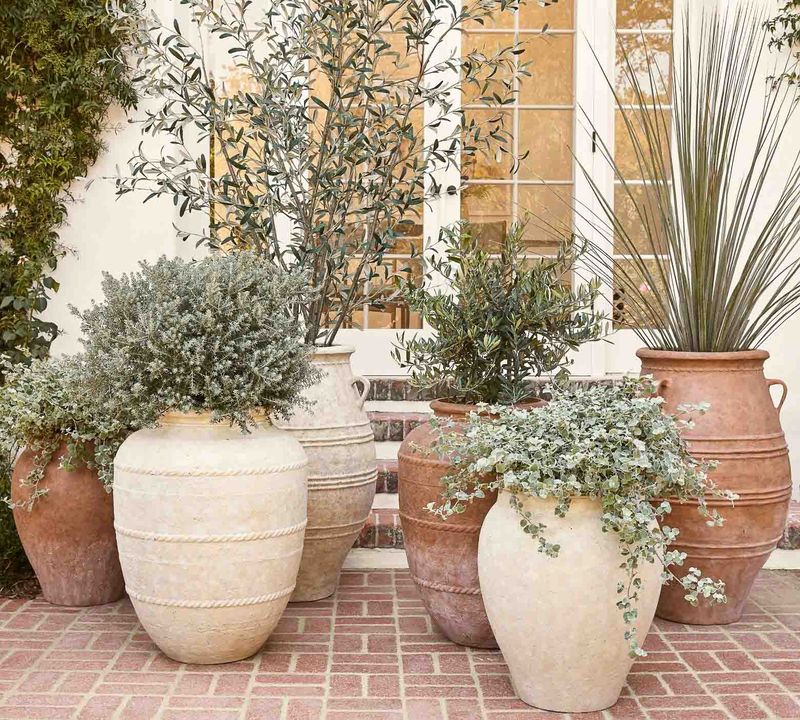
Moisture disappearing from small pots is one of the most common frustrations Arizona gardeners face when keeping houseplants outdoors in summer.
A four-inch or six-inch container holds a limited volume of potting medium, and that small amount of soil can dry from surface to bottom within hours on a hot August afternoon, especially when any direct sun or warm wind reaches it.
The roots of a plant in a small pot have very little buffer against rapid temperature and moisture swings.
Larger containers hold more soil volume, which means they retain moisture longer and experience slower temperature changes throughout the day.
A plant that dries out completely in a small pot every day is under constant stress, even if it is watered faithfully each morning.
Moving a suitable houseplant into a slightly larger container can extend the time between waterings and reduce the extreme root-zone temperature spikes that small pots experience when exposed to Arizona’s summer conditions.
Matching pot size to the plant still matters. Putting a small root system into an oversized container can create its own moisture management challenges, since the large volume of unused soil around the roots may stay wet for too long.
A container that is one size up from what the plant currently fills is often a reasonable starting point.
Heavy pots also tend to stay cooler than thin-walled plastic pots, and placing containers on a raised surface or plant stand can reduce heat absorbed from hot porch flooring.
5. A Potting Mix That Balances Moisture And Drainage
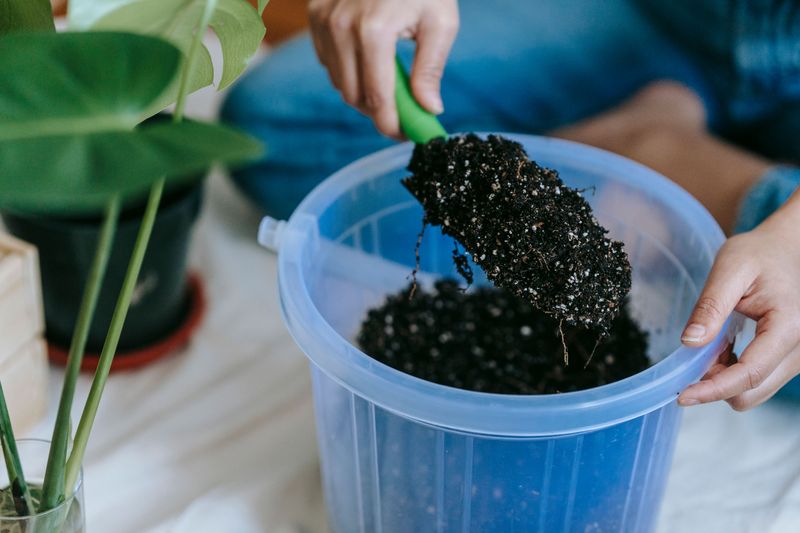
Ordinary garden soil does not belong in containers.
It compacts quickly in pots, restricts drainage, and can become hard and hydrophobic during Arizona’s dry summer heat, meaning water runs off the surface or channels down the sides of the pot without actually moistening the root zone.
A quality commercial potting mix formulated for containers provides a structure that holds some moisture while still allowing excess water to drain and air to move through the medium.
University of Arizona container-gardening guidance points to the importance of potting media that balance moisture retention with adequate aeration and drainage.
Some mixes designed for cacti and succulents drain very quickly, which may not suit moisture-loving houseplants that need more consistent hydration during dry August conditions.
On the other hand, a mix that holds too much water can stay saturated at the root zone, creating problems even when drainage holes are present.
Adding perlite to a standard potting mix can improve drainage and aeration without significantly reducing moisture retention.
Some gardeners also find that topdressing the surface of the container with a thin layer of mulch or bark chips can slow surface evaporation slightly during the hottest part of the day.
Refreshing or replacing potting mix that has broken down and compacted over time helps containers perform better and gives roots a healthier environment to work with throughout the summer season.
6. Watering Adjusted To Heat And Soil Moisture
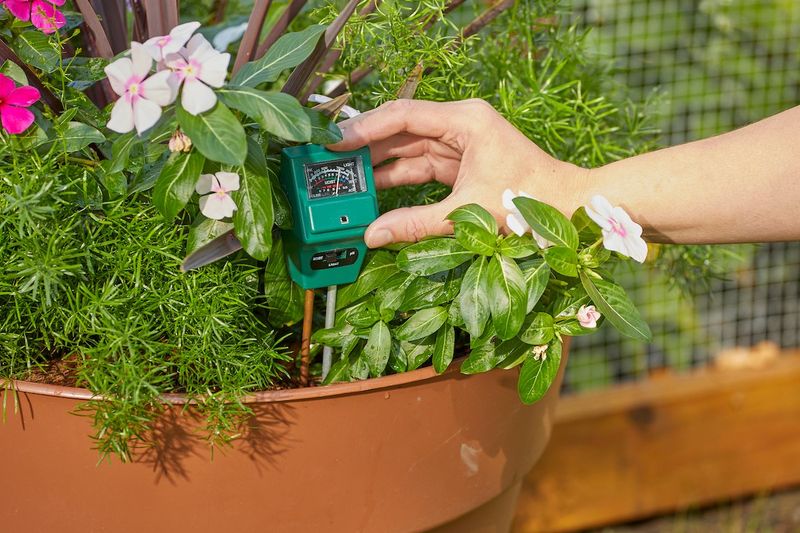
Checking the soil before reaching for the watering can is one of the most practical habits an Arizona gardener can develop during August.
Watering on a fixed daily schedule without checking actual soil moisture can lead to overwatering just as easily as underwatering, since porch conditions change from day to day.
A cloudy monsoon morning with higher humidity may leave containers much wetter than a clear, hot, windy afternoon would.
Plants in sunnier, hotter, or windier porch spots lose moisture from their containers faster than plants sitting in shadier or more protected areas of the same porch.
Container size, potting mix composition, and the specific water needs of each plant species all influence how quickly the soil dries.
Sticking a finger an inch or two into the potting medium gives a much more accurate picture of moisture conditions than looking at the surface alone.
Arizona’s monsoon season, which typically runs from mid-June through September, can bring temporary cloud cover, rainfall, and increased humidity that shift porch conditions noticeably.
However, covered porches often receive little or no direct rainfall during a storm, so the containers may stay just as dry as they were before the rain arrived.
Assuming that a monsoon event watered the plants without checking the containers is a common mistake.
Adjusting watering frequency based on observed conditions rather than a preset routine gives plants a more consistent and appropriate moisture supply throughout the month.
7. Thorough Watering Without Standing Water
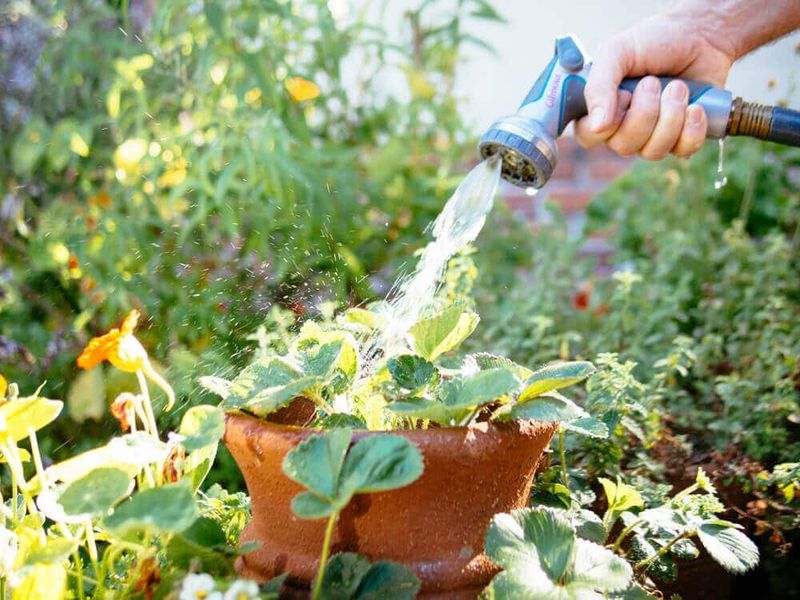
When a container plant on an Arizona porch needs water, the goal is to moisten the potting medium throughout the root zone, not just dampen the surface.
Light, frequent watering that only wets the top inch or two of soil can leave the lower root zone dry while encouraging surface roots that are more vulnerable to heat and drying.
Watering until moisture moves through the entire container and begins to drain from the bottom is a more reliable approach for most houseplants.
After thorough watering, excess water should drain freely and not collect inside the pot or in the saucer beneath it for extended periods. Roots sitting in pooled drainage water can experience prolonged saturation, which reduces oxygen availability in the root zone.
Emptying saucers after each watering session, or using saucers with a raised platform that keeps the pot bottom above the collected water, helps prevent this problem during an Arizona summer.
Very dry potting mix can sometimes become hydrophobic, meaning water runs off the surface or moves quickly down the sides of the pot without penetrating the core of the root zone.
If this happens, watering slowly and in stages, or briefly submerging a smaller container in water until the medium rehydrates, can help restore moisture more evenly.
Keeping potting mix from drying out completely in the first place, by checking containers regularly during August, reduces the chance of encountering this situation.
8. Plants Matched To The Porch’s Light And Heat
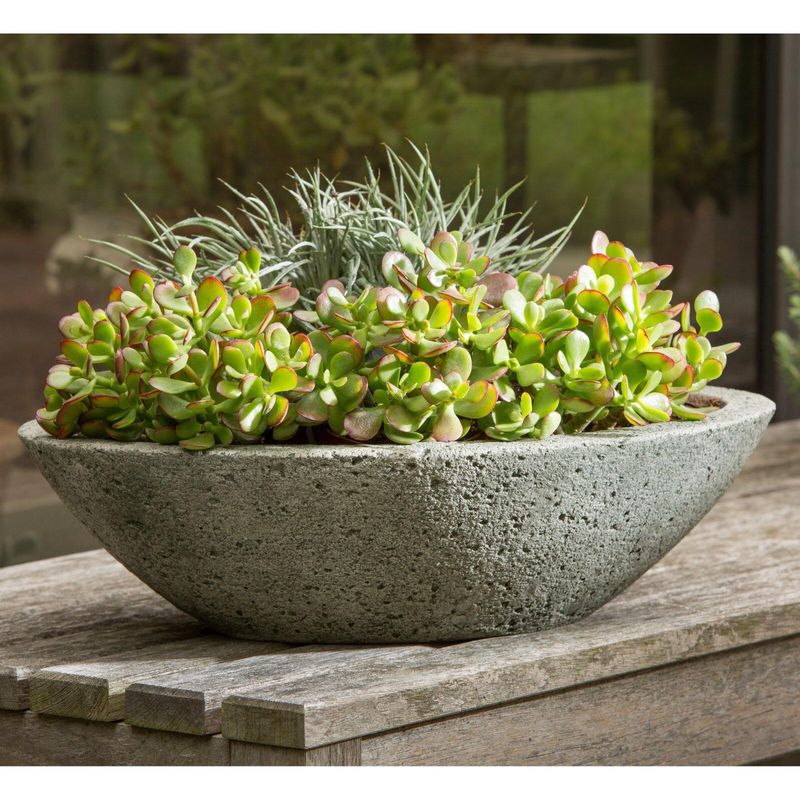
Porch success in Arizona during August starts with an honest look at what the porch actually offers, not what seems ideal in theory.
A north-facing covered porch can provide consistent shade and cooler reflected temperatures throughout the day, making it a reasonable environment for shade-tolerant houseplants like snake plants, ZZ plants, or cast iron plants.
A west-facing porch that receives strong afternoon sun and radiates heat from light-colored walls is a very different situation, and placing the same plants there without additional shade would likely result in significant stress.
Porch orientation, roof depth, wall color, flooring material, nearby structures, and prevailing wind direction all shape the microclimate that plants experience.
Reflected heat from light-colored stucco or concrete pavers can raise temperatures around containers well above the ambient air temperature.
Measuring or observing how many hours of direct sun reach different spots on the porch, and at what time of day, gives a much clearer picture of where specific plants might cope and where they would struggle.
No single plant list covers every Arizona porch situation, because the range of conditions across the state and across different porch designs is wide.
Choosing plants whose natural light and temperature preferences align with what the porch genuinely provides, rather than forcing heat-sensitive species into a challenging exposure, is the most reliable approach.
Seasonal adjustment, moving plants to more suitable spots as conditions shift during monsoon or as summer progresses, can also help suitable plants manage August more comfortably.