What California Homeowners Should Know Before Planting A Eucalyptus Tree
A eucalyptus tree can sound dreamy in a California yard, all silvery leaves, fast growth, and breezy curb appeal. Then reality walks in holding a rake, a water bill, and a wildfire warning.
These trees can grow big, shed messy bark and leaves, and become a serious headache in the wrong spot. They may also raise concerns near homes, fences, power lines, sidewalks, or dry slopes.
That does not mean every homeowner must treat eucalyptus like a villain with roots. It means planting one should never be an impulse buy after a pretty nursery stroll.
Before you give it a permanent address, think hard about space, maintenance, fire risk, and long-term size. A eucalyptus can make a bold landscape statement, but only if your yard can handle the commitment.
1. Eucalyptus Is Not A Small-Yard Tree
Some trees are content staying small. Eucalyptus is not one of them.
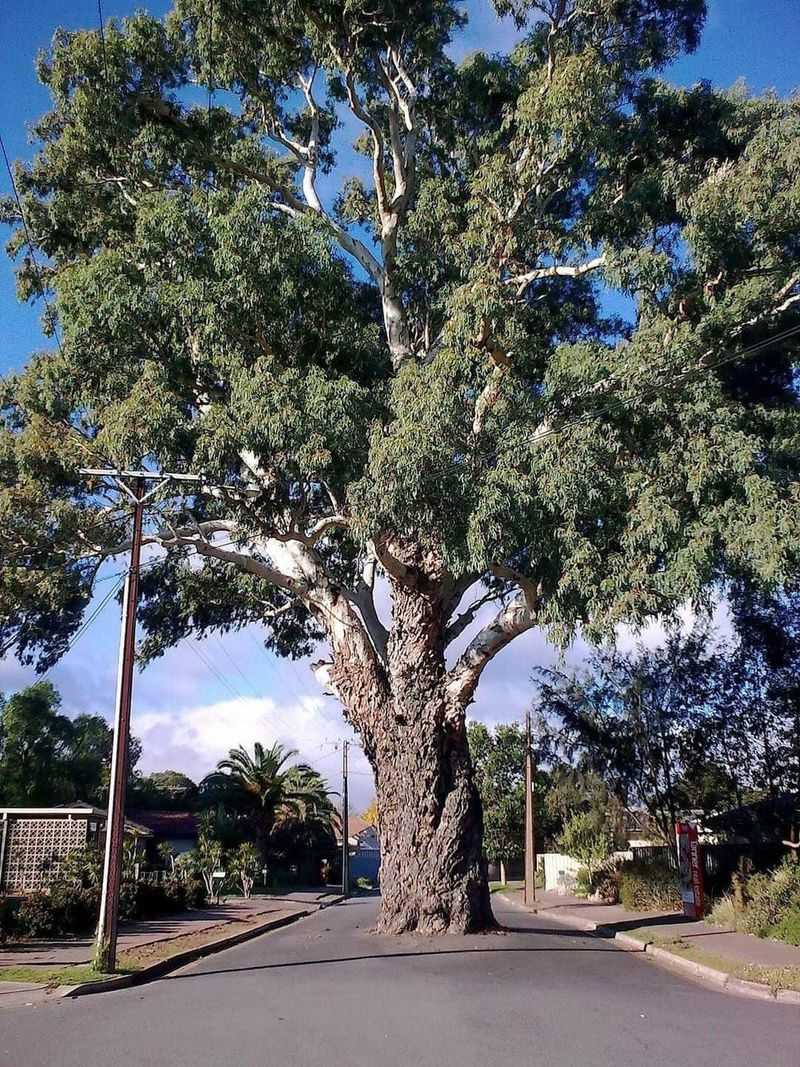
The blue gum species, which is one of the most common types planted across California, can grow over 200 feet tall in ideal conditions.
Even in a typical suburban yard, you can expect it to reach 60 to 100 feet without much effort on its part.
Most city lots simply do not have that kind of vertical or horizontal room. As the tree grows taller, its canopy spreads outward too.
That means nearby fences, rooftops, and utility lines can all end up in its path. Many homeowners plant a young eucalyptus thinking it will stay manageable, then spend years dealing with a tree that has outgrown everything around it.
Professional trimming can help, but it is expensive and needs to happen regularly. Large trees also require specialized equipment and certified arborists, which drives the cost up even further.
Some estimates put annual maintenance costs in the hundreds to thousands of dollars range for a mature eucalyptus.
Before planting, measure your yard carefully. Think about the full-grown size of the tree, not just how it looks as a sapling.
If your yard is smaller than half an acre, a eucalyptus will likely cause more trouble than joy over time. Choosing a smaller native tree might serve your space much better in the long run.
2. Blue Gum Can Become Invasive Near The Coast
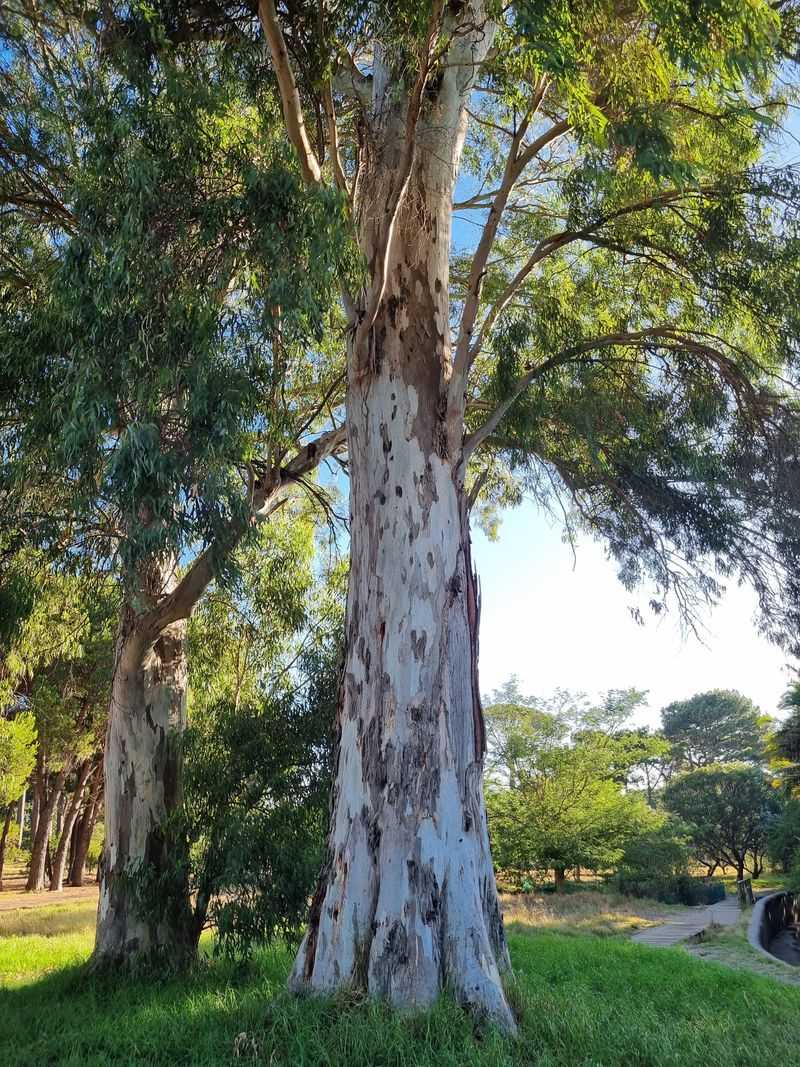
Eucalyptus globulus, commonly called blue gum, was brought to California in the 1800s. People thought it would be a fast-growing source of timber and windbreaks.
What they did not expect was how aggressively it would spread beyond planted areas, especially near the coast where fog and mild temperatures create perfect growing conditions.
Blue gum drops seeds constantly. A single mature tree can release thousands of seeds each year.
Those seeds travel on the wind and sprout quickly in disturbed soil. Over time, groves of eucalyptus can push out native plants like coyote brush, coastal sage, and native grasses.
This disrupts local ecosystems that birds, pollinators, and other wildlife depend on.
In northern coastal regions, land managers have spent millions of dollars trying to control eucalyptus spread.
Parks and nature reserves near the Bay Area and Central Coast have ongoing removal programs because the trees outcompete nearly everything around them.
Your California Garden Changes Every Week. Your Plan Should Too.
Gardening in California changes quickly throughout the season. Every Friday you’ll receive a simple weekly plan showing exactly what to plant, prune, fertilize, harvest, and protect so you never miss the right timing.
If your property sits near open land, a park, or a natural area, planting blue gum could contribute to this problem. Seeds from your yard can travel far beyond your fence line.
Some counties have even added blue gum to their invasive species lists. Checking with your local agricultural commissioner or county extension office before planting is a smart first step to avoid unintended environmental damage.
3. Shedding Bark Adds Fire-Season Fuel
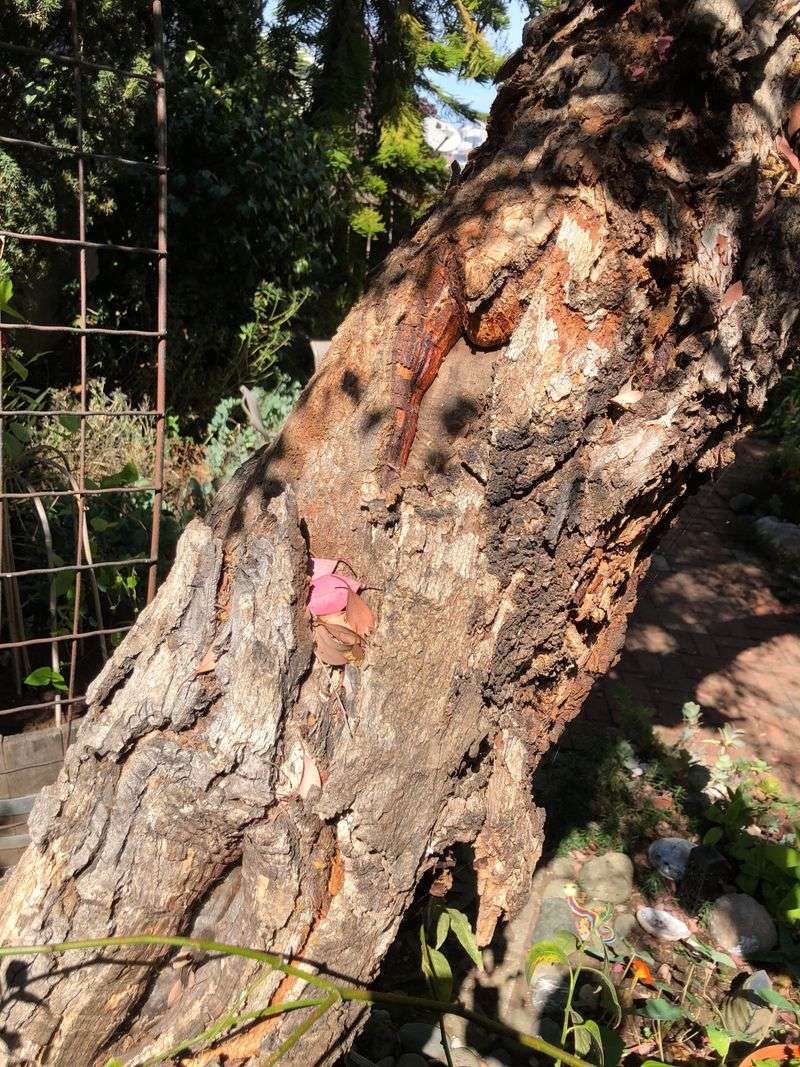
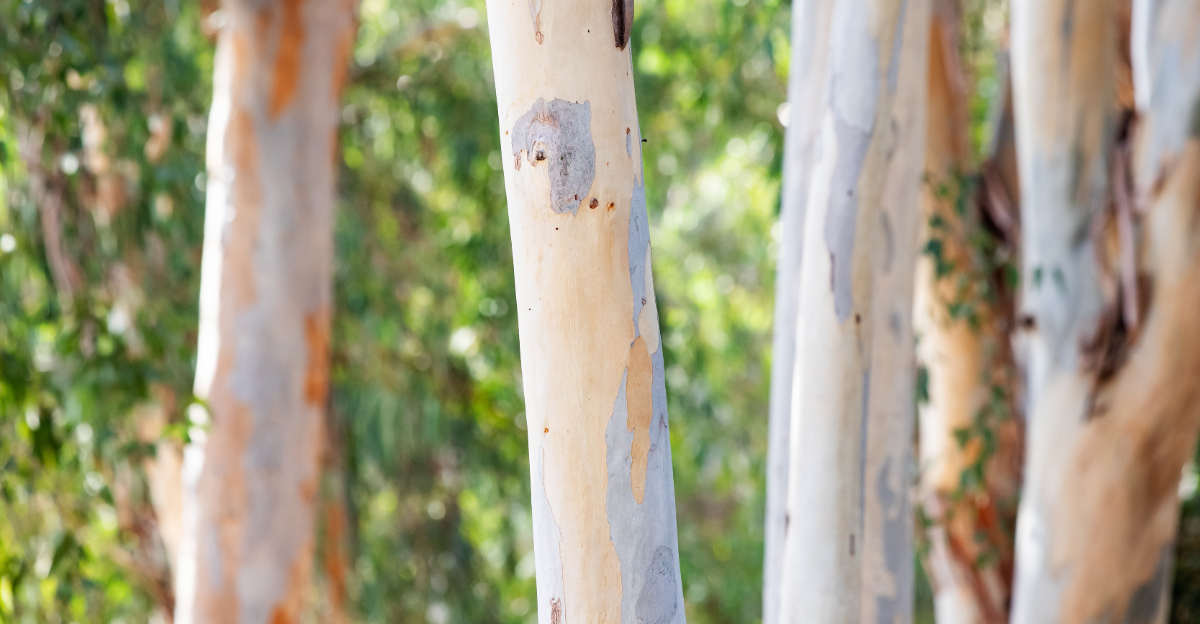
One of the most overlooked hazards of eucalyptus trees is their bark. These trees shed long, ribbon-like strips of bark throughout the year.
During dry months, that bark curls up and dries out quickly. It piles around the base of the tree and can blow across your yard or into neighboring properties.
Dry eucalyptus bark is highly flammable. Fire experts have noted that burning bark strips can travel over a mile in strong winds during a wildfire.
This is called ember cast, and it is one of the main ways wildfires jump across roads, firebreaks, and even neighborhoods. A single tree near your home could contribute to fire spread in ways that go far beyond your own property line.
During fire season, which now stretches through much of the year in California, keeping bark cleaned up is a constant job.
Homeowners with eucalyptus trees often find themselves raking every week just to manage the accumulation.
Even then, a single windy day can undo hours of yard work.
Fire-safe landscaping guidelines from CAL FIRE recommend keeping flammable debris cleared within 100 feet of your home. A eucalyptus tree makes meeting that standard significantly harder.
If you live in a high fire hazard severity zone, this bark issue alone may be reason enough to reconsider planting one of these trees in your yard.
4. Leaf Litter Builds Up Fast Beneath The Canopy
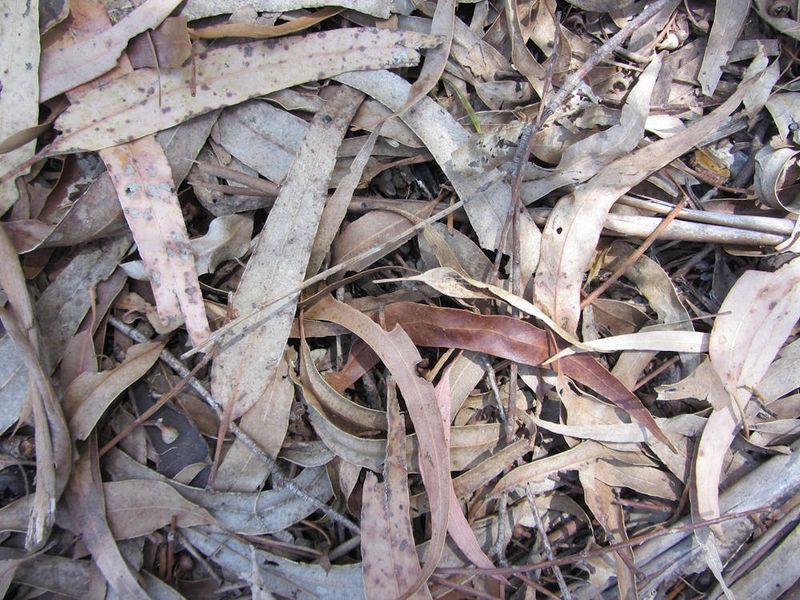
Walk under a mature eucalyptus tree and you will notice something right away. The ground beneath it is usually covered in a thick, dry carpet of leaves, seed pods, and woody debris.
Eucalyptus drops leaf litter year-round, not just in autumn like many other trees. This constant shedding creates a cleanup challenge that never really ends.
The oils in eucalyptus leaves slow down decomposition. Unlike oak leaves or maple leaves that break down into rich compost over time, eucalyptus litter tends to stick around.
It builds into deep layers that smother other plants and make the soil beneath the tree nearly unusable for gardening.
That leaf litter also dries out fast in warm weather. A dry layer several inches thick right under a tree is a fire risk sitting on your property.
Combine that with the shed bark strips mentioned earlier, and you have a significant fuel load building up season after season.
Some homeowners use leaf blowers and rakes to manage the mess, but it is a time-consuming routine. Others hire landscape crews to keep up with it, which adds to the long-term cost of owning one of these trees.
If you enjoy a tidy, low-maintenance yard, a eucalyptus will likely frustrate you. The sheer volume of material it drops is something most people are not prepared for when they bring home that small nursery sapling.
5. Oily Foliage Raises Fire Concerns
That fresh, medicinal scent eucalyptus is famous for? It comes from volatile oils stored inside every single leaf.
These oils are what give the tree its distinctive smell, but they also make the foliage extraordinarily flammable. When temperatures rise and humidity drops, those oils can actually vaporize and surround the tree in a cloud of flammable vapor.
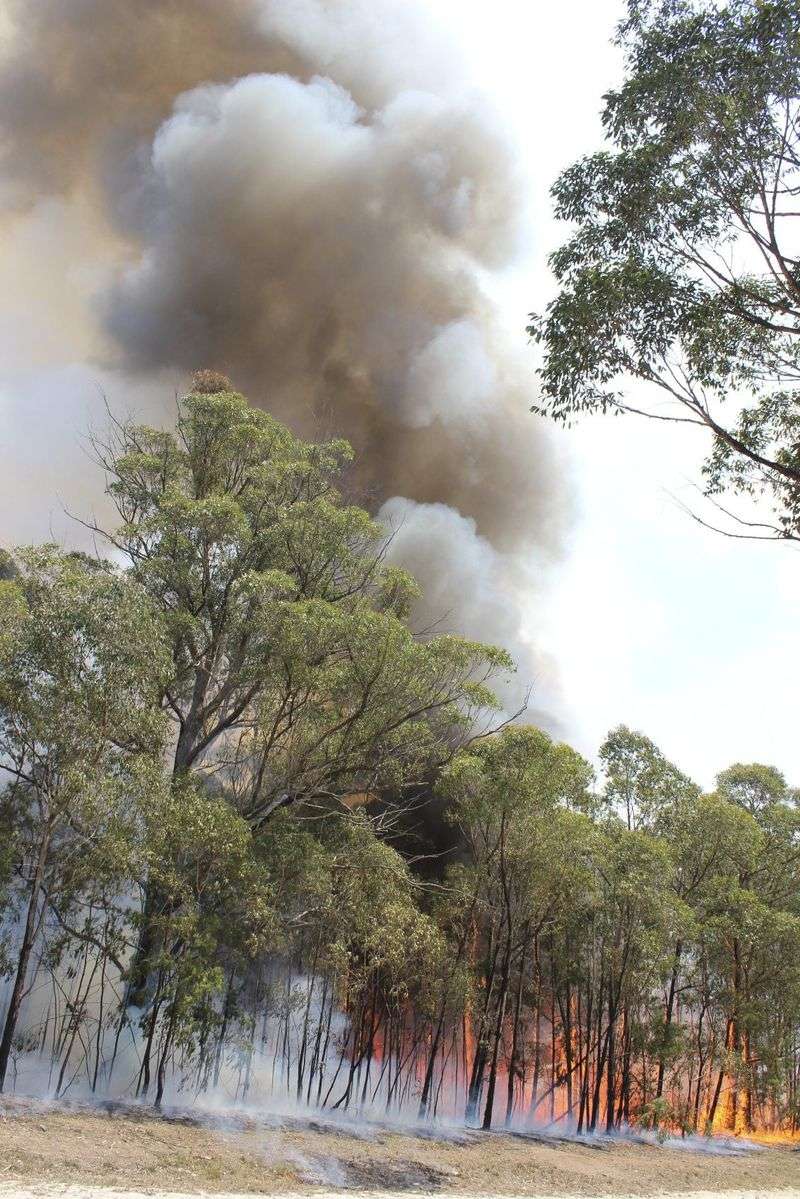
During a wildfire, eucalyptus trees do not just burn. They can explode.
Firefighters who have battled blazes in eucalyptus groves describe the trees as acting like giant torches. The oil-rich leaves ignite fast, burn hot, and send flaming debris high into the air.
This makes firefighting much harder and puts nearby structures at serious risk.
California has seen this firsthand. The 1991 Oakland Hills fire, one of the worst urban wildfires in American history, burned through an area heavily populated with eucalyptus trees.
Fire officials pointed to those trees as a major factor in how rapidly the fire spread and intensified.
Even on a smaller scale, a eucalyptus in your yard raises the fire risk profile of your entire property. Home insurance companies in high-risk areas have started factoring in tree species when setting rates or deciding on coverage.
Before planting, talk to your insurance provider about how a eucalyptus tree might affect your policy. That conversation could save you a lot of money and stress later.
6. Roots Need More Room Than Most Yards Offer
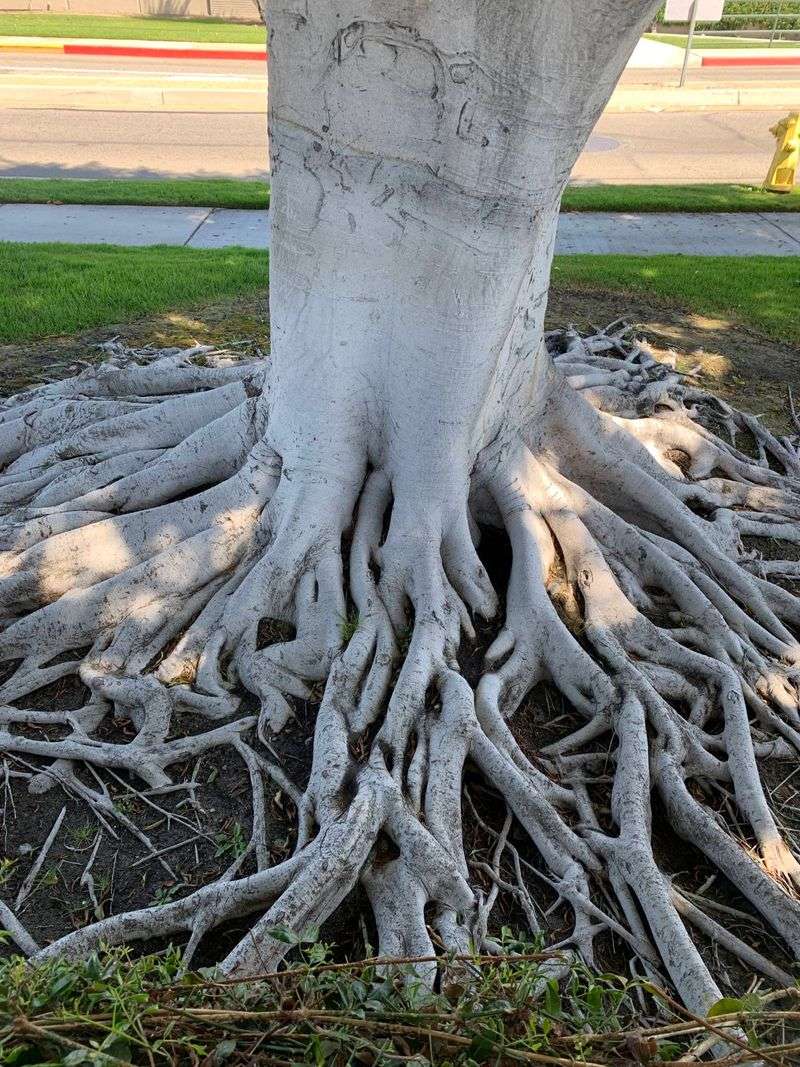
Few things surprise homeowners more than what eucalyptus roots can do underground. These trees develop an aggressive root system that spreads wide and digs deep in search of water.
In drought-prone areas of California, that search can be relentless. Roots will follow any available moisture source, including irrigation pipes, sewer lines, and septic systems.
Cracked driveways, lifted sidewalks, and damaged foundations have all been traced back to eucalyptus roots in residential settings. Plumbing repairs caused by root intrusion can cost thousands of dollars.
In some cases, the damage is severe enough to affect a home’s structural integrity, which creates problems when homeowners try to sell or refinance their property.
Root spread is hard to predict exactly, but a general rule is that roots can extend one to three times the height of the tree. For a 60-foot eucalyptus, that means roots potentially reaching 60 to 180 feet outward in all directions.
Most suburban lots do not offer that kind of clear, open space. Neighbors can also be affected. Roots do not stop at property lines.
If your tree’s roots damage a neighbor’s fence, driveway, or landscaping, you could be held legally responsible for repair costs.
Before planting near any structure, utility line, or property boundary, consult with a licensed arborist who can help you evaluate the risk honestly and thoroughly.
7. Falling Limbs Can Become A Real Hazard
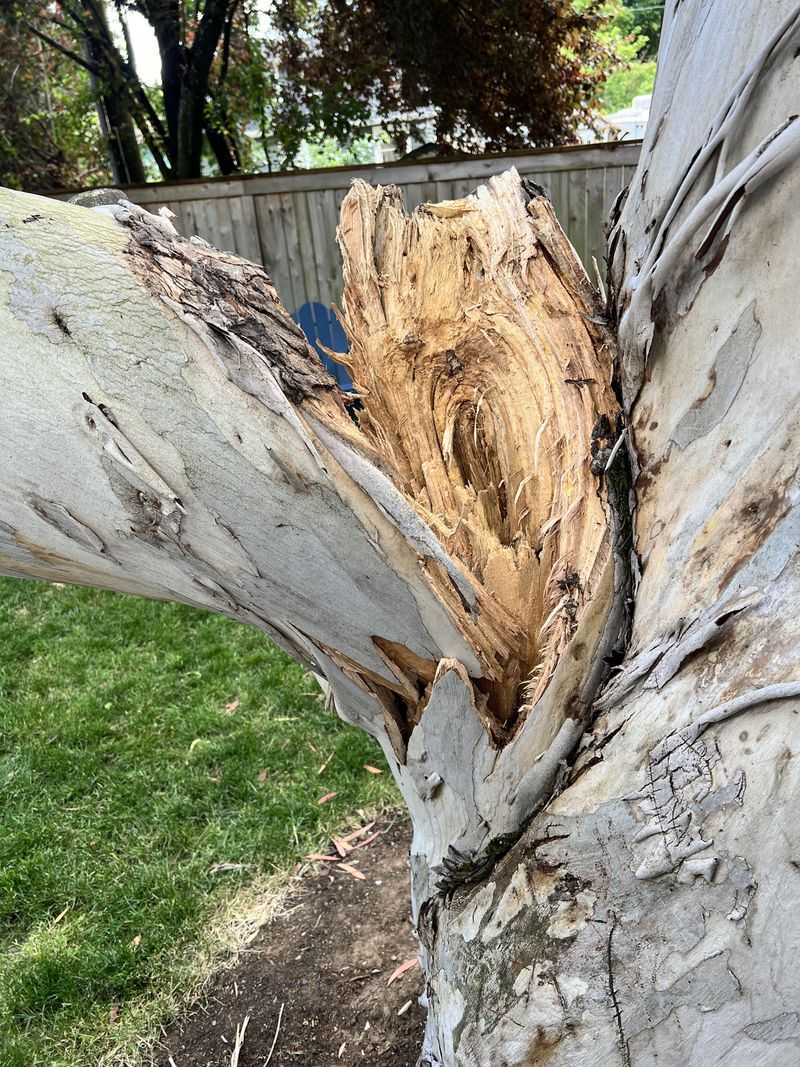
Eucalyptus trees have a well-earned reputation for dropping limbs without warning. Unlike many trees that show signs of weakness before a branch falls, eucalyptus can shed large, heavy limbs on a calm, clear day.
Arborists sometimes call this phenomenon sudden limb failure, and it is more common in eucalyptus than in almost any other tree species.
The problem gets worse in hot, dry weather. When temperatures spike and humidity drops, eucalyptus trees can shed limbs as a way of reducing water loss.
This natural response is a survival mechanism for the tree, but it creates a serious danger for anything underneath. Cars, rooftops, fences, pets, and people can all be at risk.
Homeowners with eucalyptus trees near patios, play areas, or parking spots face real liability concerns. If a falling limb damages a neighbor’s property or injures someone, the tree’s owner can be held responsible.
Legal claims involving falling tree limbs can be costly and stressful, even when the damage seems minor at first.
Regular inspections by a certified arborist can help identify weak or overloaded branches before they fall. But even with professional care, the risk never fully goes away.
Many insurance adjusters now flag large eucalyptus trees near structures as a liability concern during home inspections. If safety is a priority for your California household, the unpredictable nature of this tree deserves serious thought before you ever plant one.
8. Dense Shade Makes Underplanting Difficult
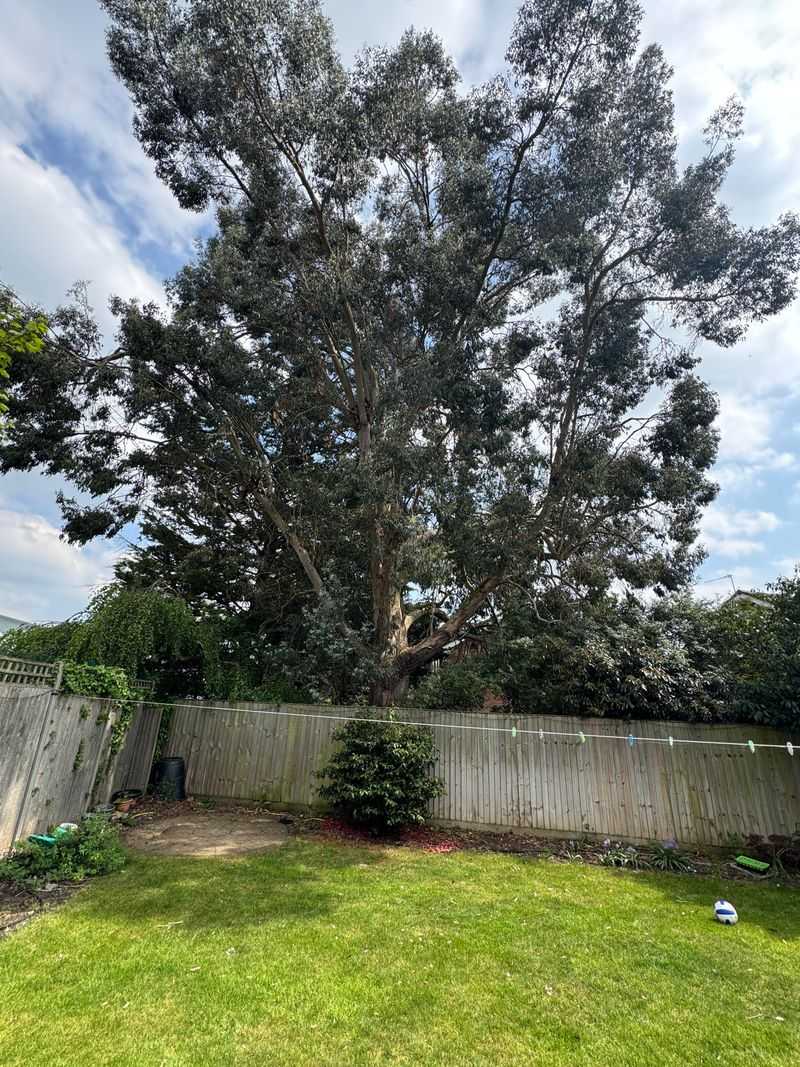
California gardeners who love layering plants often struggle with eucalyptus trees. Once a eucalyptus matures, its canopy becomes so dense and wide that very little sunlight reaches the ground beneath it.
Combined with the thick leaf litter and the allelopathic compounds the tree releases into the soil, growing other plants underneath becomes nearly impossible.
Allelopathy is a process where a plant releases chemicals that suppress the growth of competing plants nearby. Eucalyptus does this effectively.
Even when you clear away the leaf debris and try to establish ground cover or flowering plants beneath the canopy, those chemical compounds in the soil often prevent germination and root development.
Many homeowners end up with a bare, compacted patch of ground under their eucalyptus that looks out of place in an otherwise lush yard. Some try bark mulch or gravel to make the area look intentional, but the space remains functionally unusable for most garden plants.
Native plants that evolved alongside eucalyptus in Australia have adapted to these conditions, but most garden varieties sold in American nurseries have not.
If you were hoping to create a layered landscape with a canopy tree, shrubs, and ground cover all working together, a eucalyptus will likely block that vision.
A native oak or bay tree would offer shade while still allowing for a diverse and thriving understory of plants beneath it.
9. Local Rules May Limit Removal Later
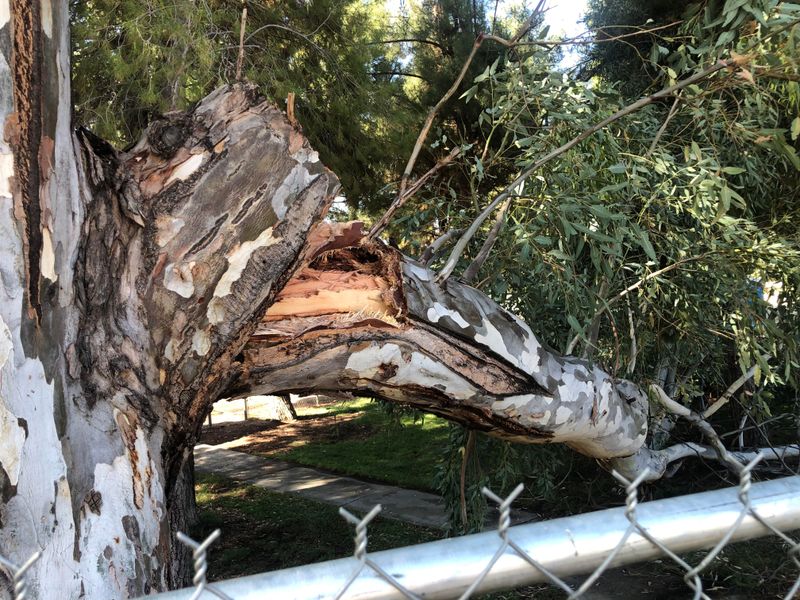
Here is something many people do not think about until it is too late. Once a eucalyptus tree reaches a certain size, removing it may require a permit from your city or county.
Many municipalities across our state have tree protection ordinances that apply to trees over a specific trunk diameter or height.
These rules exist to preserve the urban tree canopy, but they can leave homeowners feeling stuck with a tree they no longer want.
Permit applications can take weeks or even months to process. Some cities require a certified arborist report, neighbor notifications, and even public hearings before approving removal of a large protected tree.
In some cases, permits are denied entirely, meaning the tree stays whether you want it to or not.
Even when removal is approved, the cost can be enormous. Taking down a large eucalyptus safely requires cranes, chippers, and a crew of experienced professionals.
Stump grinding, debris hauling, and site cleanup add to the total. Homeowners have reported spending anywhere from several thousand to tens of thousands of dollars on a single removal job.
Before planting, call your local planning department and ask about tree protection ordinances in your area. Find out at what point a tree becomes regulated and what the removal process involves.
A little research now can prevent a very expensive and frustrating situation years down the road when that small sapling has grown into something much larger than you planned for.