What California Plants Actually Look Like When They Have Sunscald Not Drought
Here is a scenario that plays out in California gardens every single summer. A plant starts looking rough, leaves are pale, patches are appearing, something is clearly wrong, and the hose comes out immediately.
Completely understandable instinct. The problem is that grabbing more water is not always the right answer, and in some cases it can actually make things worse.
Sunscald is one of those sneaky issues that looks a lot like drought stress at first glance but has nothing to do with water at all.
It is straight-up sun damage, and California summers, especially in inland areas where afternoons can push well past 100 degrees, are prime conditions for it.
The good news is that once you know what to look for, telling the two apart is actually pretty straightforward. And getting it right can save your plants a lot of unnecessary stress.
1. Bleached Patches Show Up On Exposed Sides
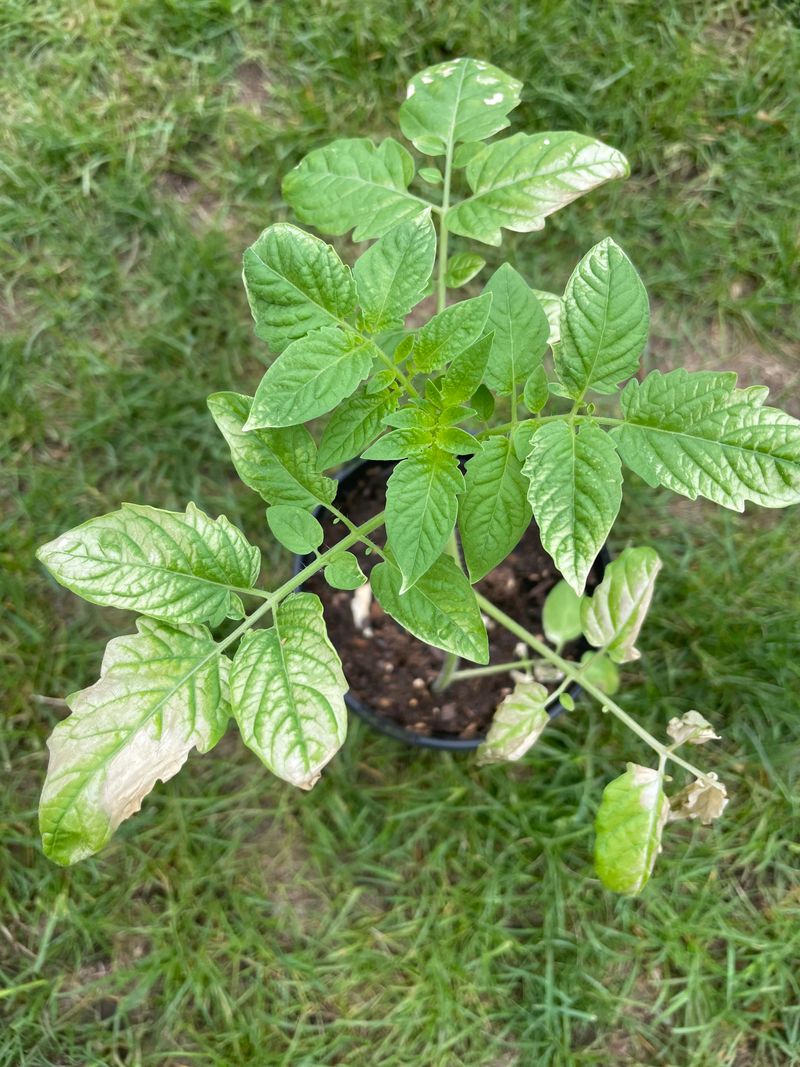
Hot afternoon sun in California can bleach the color right out of a leaf, leaving behind patches that look almost white or cream-colored.
These pale areas usually appear on the side of the plant that faces the strongest light, often the south or west side.
The rest of the leaf may still look completely green and healthy.
That contrast is one of the biggest clues that sunscald is the problem rather than drought. When a plant is not getting enough water, the yellowing or browning tends to spread more evenly across leaves and throughout the canopy.
With sunscald, the bleaching stays focused on exposed tissue that took the direct hit from intense solar radiation.
Many California gardeners notice this pattern on plants that were recently moved outdoors, transplanted into a sunnier spot, or exposed after nearby plants were removed.
Young leaves are especially vulnerable because their protective layers are not fully developed yet.
Before adjusting your irrigation schedule, check whether the bleached areas line up with the angle of afternoon sun.
If they do, extra water probably will not fix the problem, but adding temporary shade cloth during the hottest part of the day often helps the plant recover.
2. Leaves Look Glazed, Shiny, Or Silvery
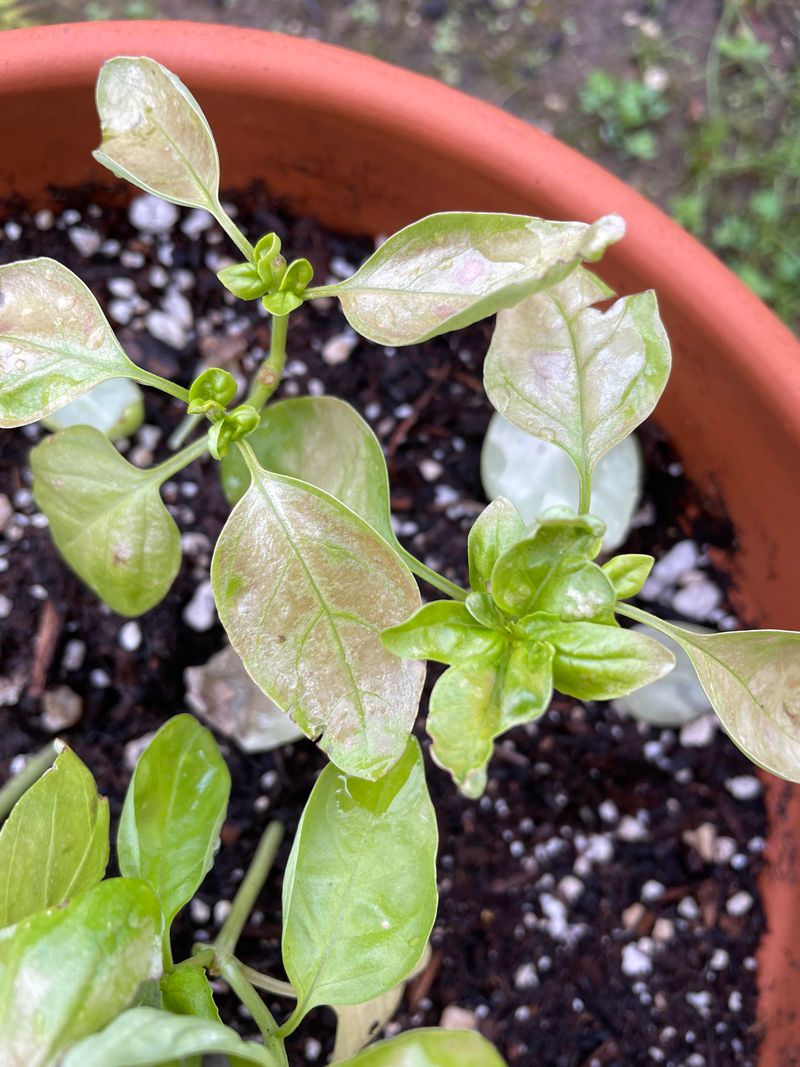
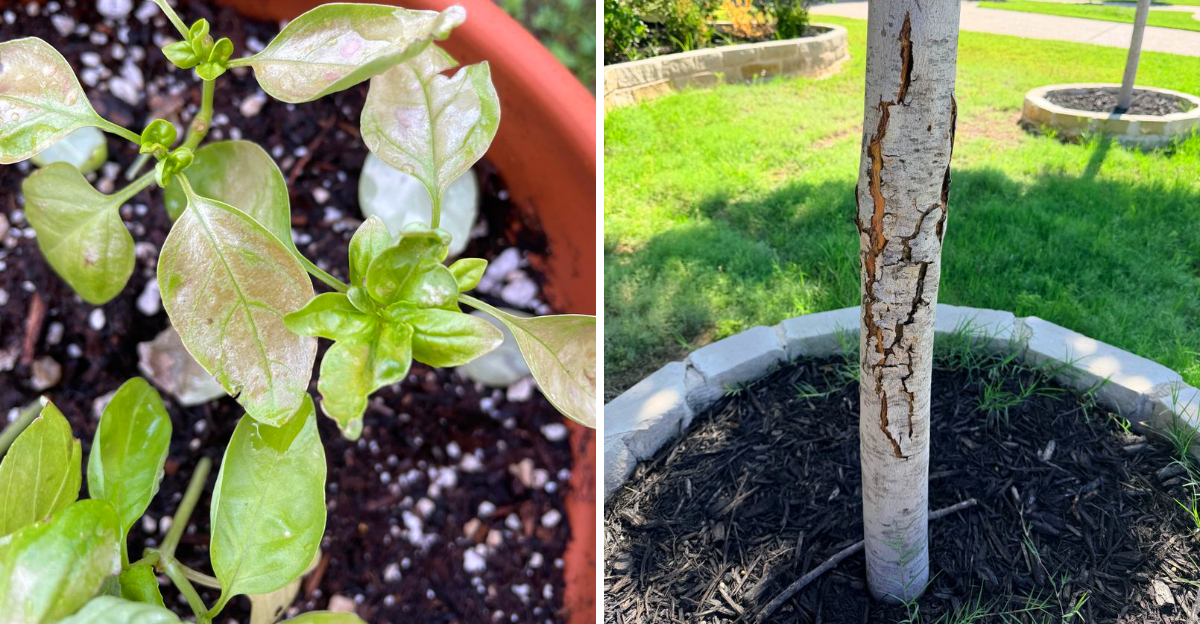
A glazed or silvery sheen on leaf surfaces is one of the stranger-looking sunscald symptoms, and it often catches gardeners off guard because it does not look like the typical brown scorching they expect.
The shiny appearance happens when cell tissue just beneath the leaf surface breaks down from heat and solar exposure, leaving behind a collapsed, papery layer that reflects light differently than healthy tissue.
Pepper plants, tomatoes, and squash in California vegetable gardens sometimes develop this symptom during heat waves, especially on leaves that are angled directly toward the afternoon sun.
The affected leaves may feel slightly dry or papery to the touch, even when the soil around the plant has plenty of moisture.
That soil check is important, because glazed leaves combined with moist soil point strongly toward sunscald rather than drought.
Drought-stressed leaves, by comparison, tend to wilt, curl inward, or feel limp before they show surface discoloration.
Your California Garden Changes Every Week. Your Plan Should Too.
Gardening in California changes quickly throughout the season. Every Friday you’ll receive a simple weekly plan showing exactly what to plant, prune, fertilize, harvest, and protect so you never miss the right timing.
The glazed sunscald look usually appears on leaves that are still structurally upright and firm.
If you notice this silvery sheen on your plants during a California heat spell, moving containers to a shadier location or adding a shade cloth over raised beds can help protect new growth from further sun injury.
3. Brown Blotches Form Where Sun Hits Directly
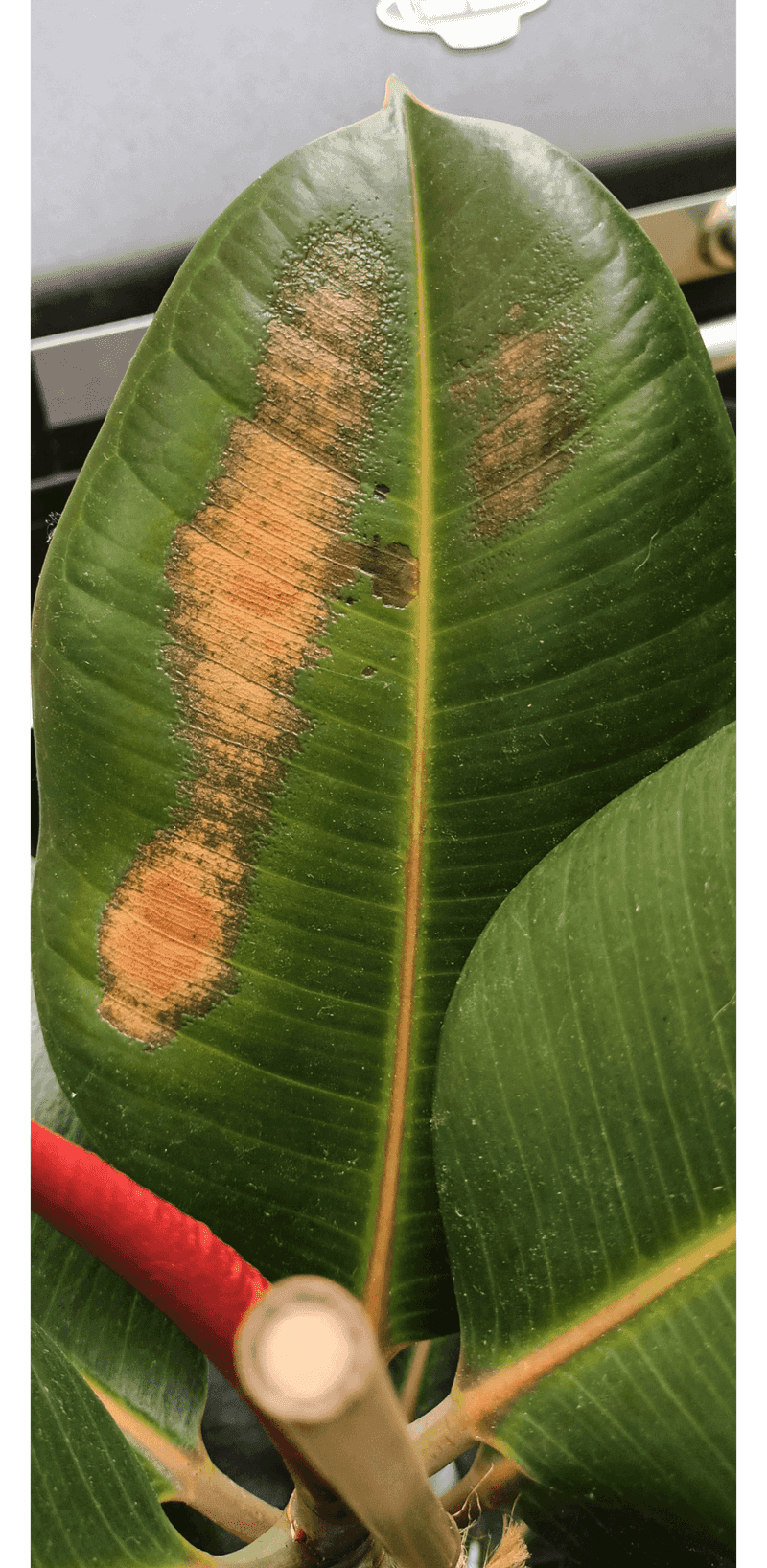
Irregular brown blotches on leaves are easy to confuse with fungal disease, nutrient deficiency, or drought stress, but the location of those blotches tells the real story.
Sunscald-related browning tends to show up right where the sun makes contact with the leaf surface, often forming a sharp boundary between the damaged tissue and the surrounding healthy green area.
In California inland gardens, this kind of browning can develop surprisingly fast during a heat wave.
A leaf that looked fine in the morning may show brown patches by late afternoon after hours of direct sun exposure.
The damage is essentially a surface burn, and it happens more readily on soft, tender foliage that has not had time to adjust to intense light conditions.
Drought stress browning usually starts at leaf tips and edges before moving inward, and it tends to affect leaves across the whole plant rather than just the ones facing the sun.
If the brown blotches on your plants are clustered on one side and the soil feels reasonably moist a few inches down, sunscald is a more likely explanation than thirst.
Providing afternoon shade and avoiding overhead watering during peak heat hours can help reduce further browning on sensitive plants.
4. Fruit Turns Pale, Leathery, Or Sunken
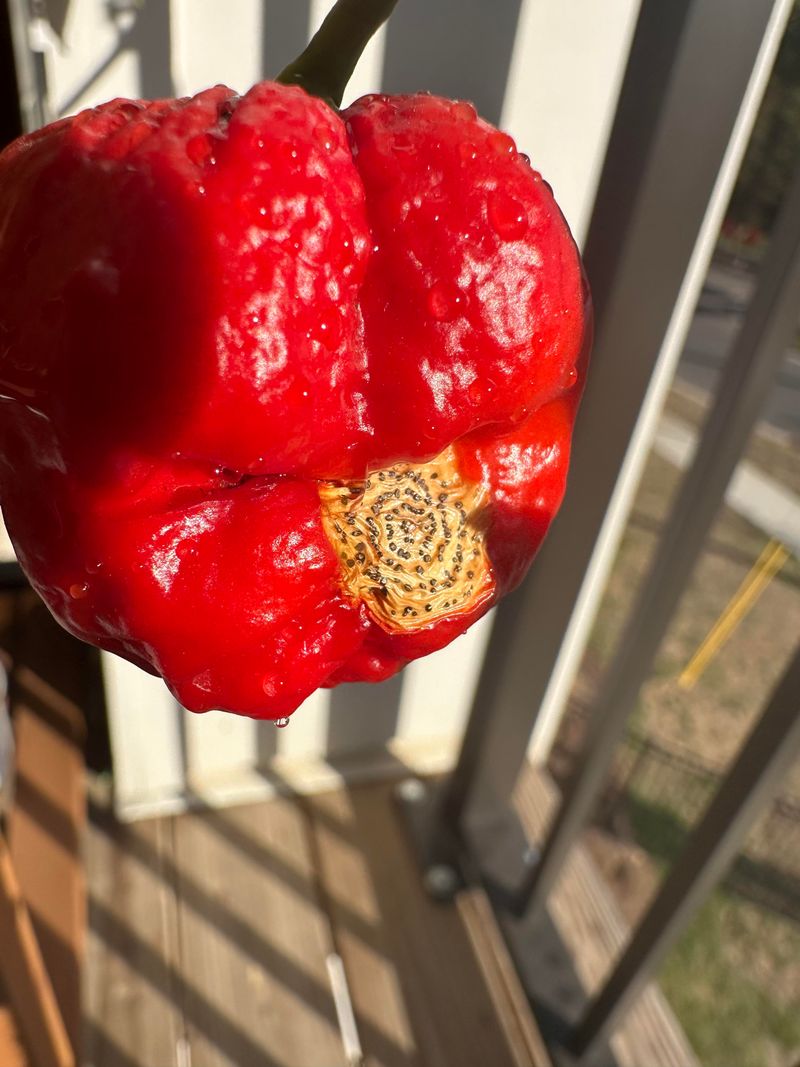
Pale, leathery patches on tomatoes, peppers, and squash are a classic sign of sunscald on fruit, and they show up frequently in California vegetable gardens during the long, hot growing season.
The affected area is usually on the side of the fruit that faces the most direct sunlight, and it often starts as a light yellow or white spot before gradually becoming papery and sunken as the damage progresses.
Many gardeners mistake this for a watering problem, especially if the fruit also looks slightly shriveled.
But sunscald fruit damage is localized to the exposed surface rather than spread evenly across the whole fruit.
The rest of the tomato or pepper may look perfectly normal and continue ripening without any issues.
Fruit that loses its leaf canopy cover is especially at risk. If you recently pruned heavily or if foliage dropped off due to disease, the fruit underneath suddenly becomes exposed to full sun it was not prepared for.
In California, afternoons with temperatures above 95 degrees can be enough to cause visible fruit sunscald within a few hours.
Keeping fruit shaded by healthy foliage is the best natural protection, and using row cover fabric or shade cloth during extreme heat events can prevent further damage to exposed fruit.
5. Damage Stays Mostly On Exposed Leaves And Fruit
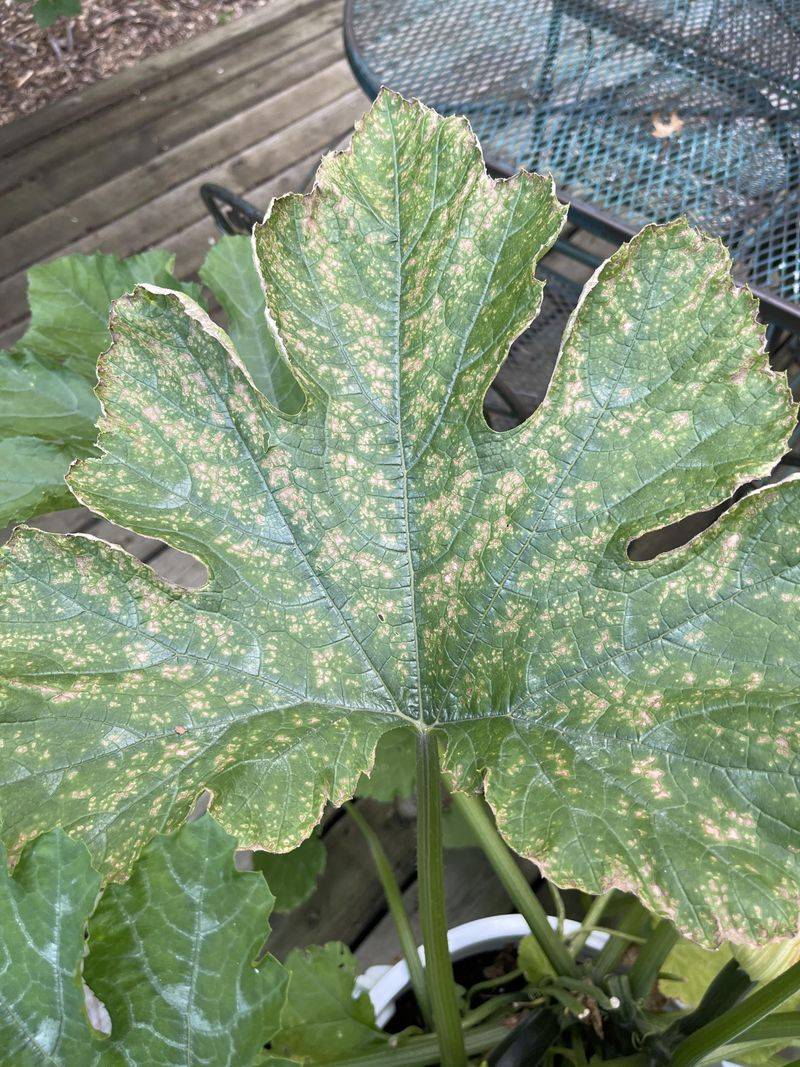
One of the most reliable ways to tell sunscald apart from drought stress is to look at where the damage is concentrated.
Sunscald almost always stays on the parts of the plant that are directly exposed to intense sunlight, while the leaves and fruit tucked inside the canopy or shaded by other foliage tend to look completely fine.
Drought stress does not follow that same pattern. When a plant is not getting enough water, the stress shows up more broadly because the whole root system is struggling to supply moisture to the entire plant.
You may see wilting, yellowing, or tip burn across many leaves at once rather than damage focused on one side or one layer of the canopy.
Walking around your plant and checking the shaded side can be a quick and useful diagnostic step.
If the inner leaves look healthy while the outer, sun-facing leaves show bleaching or browning, that pattern points toward sun exposure as the main issue.
California gardeners with plants growing near south-facing walls, reflective surfaces, or open western exposures often see this kind of one-sided damage during summer.
Checking soil moisture a few inches down at the same time helps confirm whether water stress is also a factor or whether sun protection is the only fix needed.
6. Young Bark Cracks, Splits, Or Peels
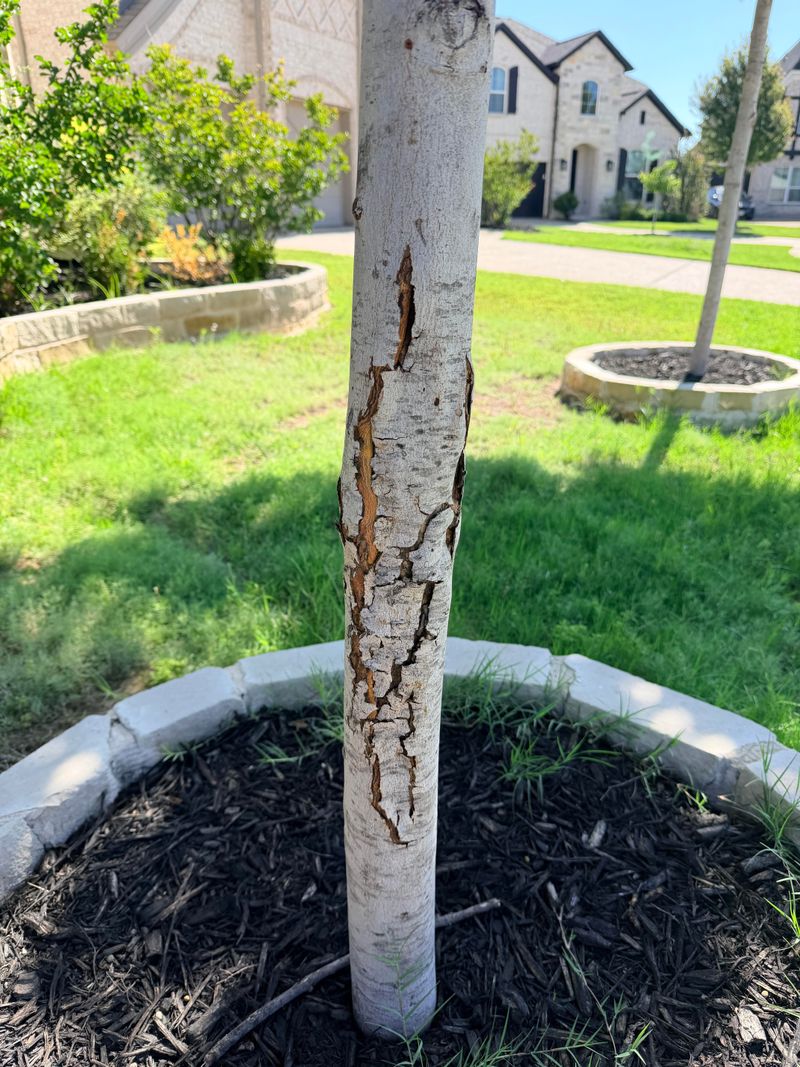
Smooth, thin bark on young trees is surprisingly vulnerable to sun injury, and California homeowners planting new fruit trees or ornamentals sometimes notice cracking or peeling on the trunk before the tree has even settled into the landscape.
The damage tends to appear on the southwest side of the trunk, where afternoon sun hits hardest and temperatures on the bark surface can climb well above air temperature.
Sunscald on young bark happens because the exposed tissue heats up rapidly during the day and then cools quickly in the evening.
That repeated cycle of expansion and contraction stresses the bark, eventually causing it to crack, split, or peel away from the wood beneath.
It can look like the tree is diseased or severely water-stressed, but the pattern of damage on just one side of the trunk is the giveaway.
Drought stress on young trees tends to show up in the canopy first, with wilting leaves and early leaf drop, rather than starting with bark damage.
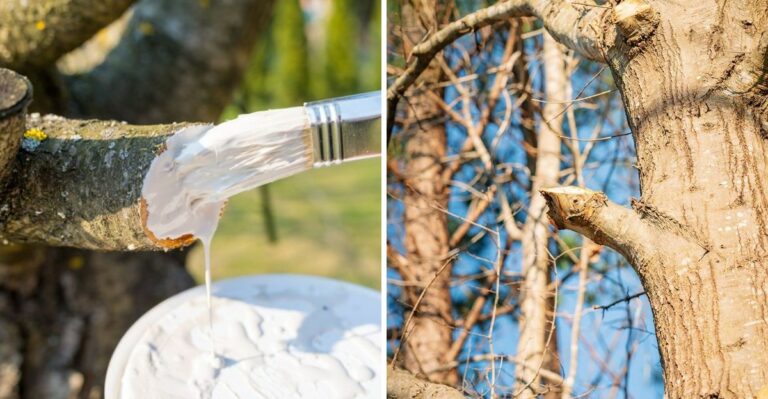
Wrapping young tree trunks with light-colored tree wrap or painting them with diluted white interior latex paint are two common approaches used in California orchards and home gardens to reflect sunlight and reduce bark temperature.
Removing the wrap after the first or second year allows the bark to toughen naturally as the tree matures.
7. Recent Pruning Leaves Plants More Exposed
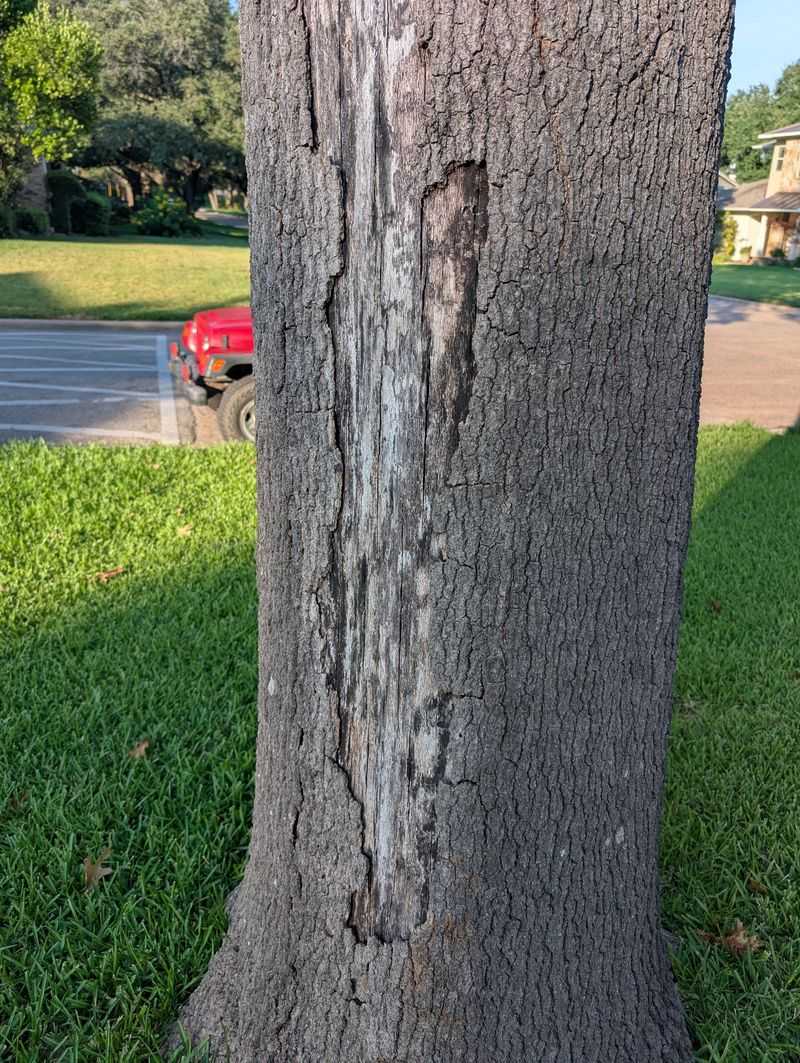
Pruning is one of the most common reasons plants in California suddenly develop sunscald symptoms, because removing foliage can expose bark, stems, and fruit that were previously shaded and protected.
A citrus tree that was pruned back hard in late spring may develop bleached or cracked bark on its newly exposed branches within a few weeks as summer temperatures climb.
The tricky part is that heavy pruning can also stress a plant by reducing its ability to move water and nutrients efficiently.
That means a recently pruned plant might show signs that look like both drought stress and sunscald at the same time.
Checking the soil moisture and looking at where the damage is concentrated can help sort out which problem is more urgent.
Timing pruning thoughtfully can reduce the risk significantly. In California, major pruning is often better done in late winter or early spring before intense heat arrives, giving plants time to push out new growth that can shade the exposed areas naturally.
If summer pruning is necessary, consider leaving some extra interior growth for shade or covering vulnerable branches with shade cloth temporarily.
Painting exposed cuts and bark with diluted white latex paint is another option that reflects heat and reduces the risk of sun injury on bare wood.
8. Soil Moisture Seems Fine But Leaves Still Scorch
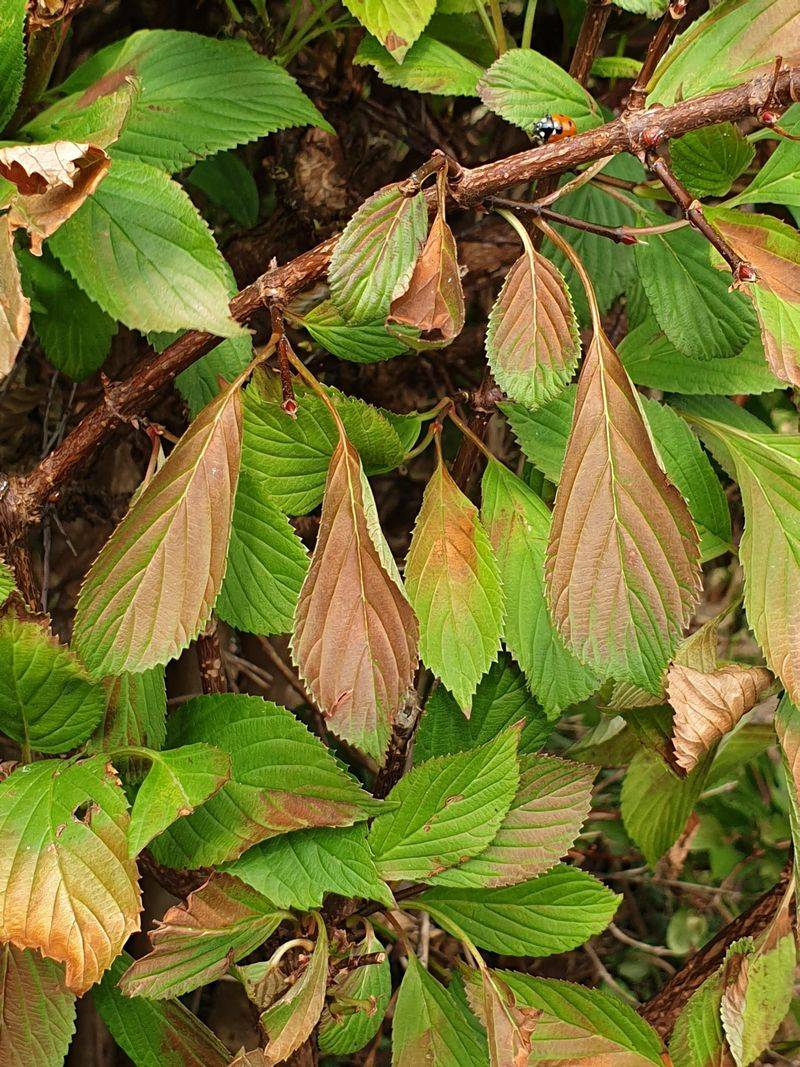
Pushing a finger two to three inches into the soil and finding it still moist while your plant is showing scorched, brown, or bleached leaves is one of the clearest signals that sun exposure, not water shortage, is driving the problem.
Many California gardeners make the mistake of increasing irrigation after seeing leaf scorch, only to find the damage continues or even worsens.
Overwatering a plant that is already getting enough moisture can lead to its own set of problems, including root issues that actually make the plant less able to handle heat stress.
If the soil is consistently moist and the plant is still showing leaf scorch, stepping back and evaluating the sun exposure makes more sense than turning up the drip timer.
That said, plants under moderate water stress can become more sensitive to sunscald because they lose some of their ability to cool leaf tissue through transpiration.
In California during a heat wave, even a plant with decent soil moisture may struggle if temperatures spike suddenly and the sun angle shifts to hit previously shaded leaves.
The practical takeaway is to maintain consistent, appropriate irrigation so the plant is not additionally stressed, then focus on shade and positioning as the main tools for managing sun injury rather than reaching for more water as the first response.
9. South And Southwest Sides Show More Damage
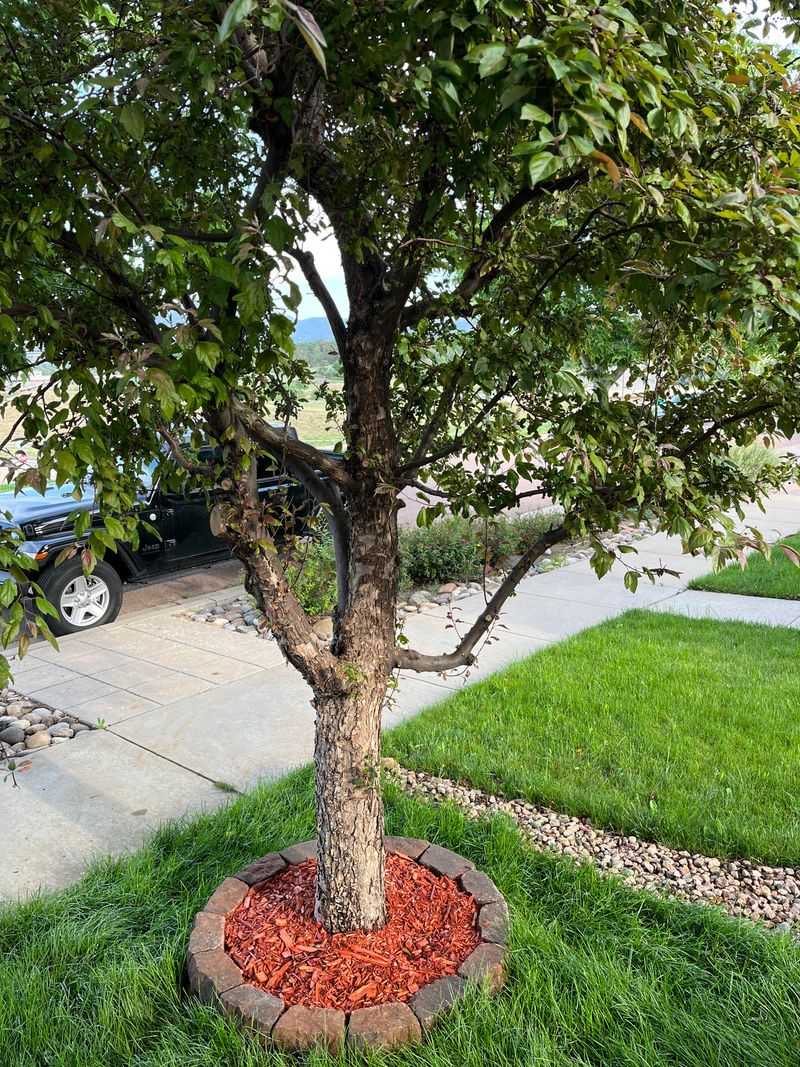
Standing back and looking at which side of a plant shows the most damage can be one of the fastest ways to confirm sunscald in a California garden.
The south and southwest sides of plants, trees, and shrubs receive the most direct and intense solar radiation during the afternoon hours, making them the most common location for bleached leaves, cracked bark, and scorched fruit.
North-facing sides of the same plant often look noticeably healthier, with greener leaves and undamaged fruit.
That kind of directional damage pattern is not something drought stress typically produces.
Water shortage affects the whole root zone and tends to show stress symptoms more uniformly across the plant rather than favoring one compass direction.
In California, the combination of a low sun angle during afternoon hours and high ambient temperatures during summer creates especially harsh conditions for south and southwest exposures.
Plants growing near light-colored walls, concrete patios, or gravel mulch on those sides face reflected heat in addition to direct sun, which can intensify the damage.
Repositioning containers, adding a shade structure on the southwest side, or planting taller companion plants to provide afternoon shade are practical steps California gardeners can take to protect vulnerable plants from this directional sun injury.
None of these fixes require changing your watering routine, which is an important distinction when sunscald rather than drought stress is the actual problem.
10. Shade And Leaf Cover Help Reduce Future Injury
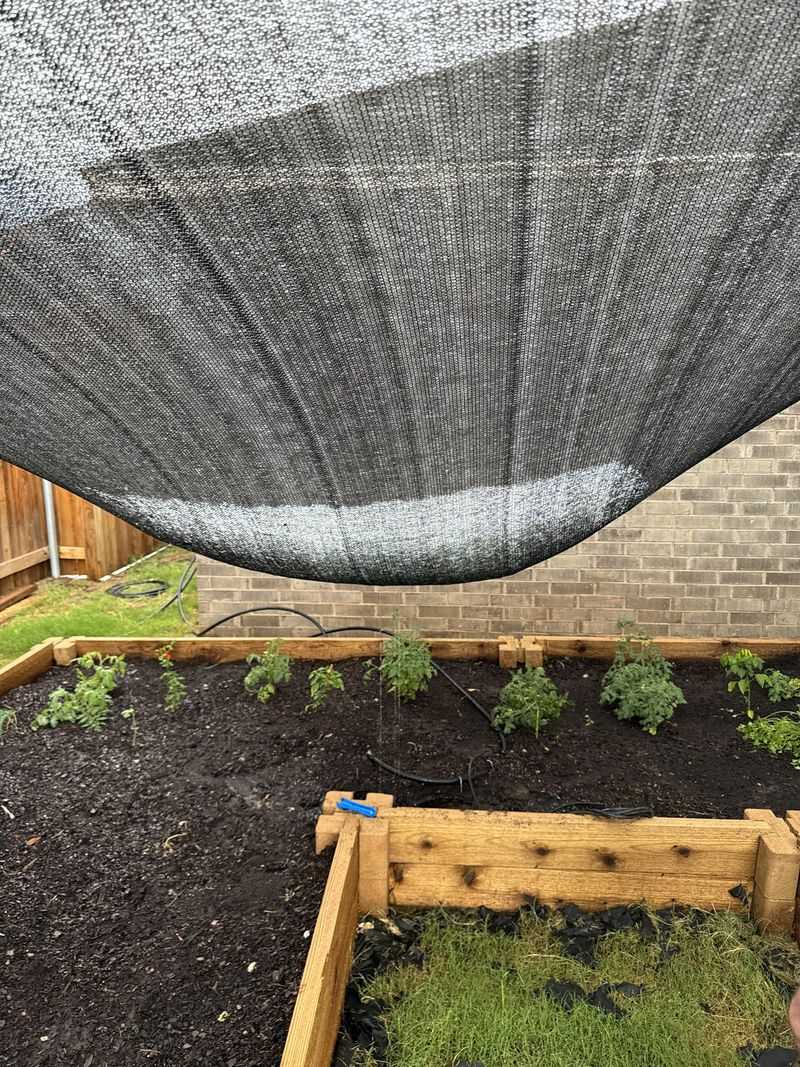
Shade cloth stretched over raised beds, containers, or young trees is one of the most practical tools California gardeners have for managing sunscald during intense summer heat.
A 30 to 50 percent shade cloth can reduce leaf surface temperatures meaningfully without blocking so much light that plant growth slows down.
This makes it a reasonable middle ground for vegetable gardens and fruiting plants that need sun but struggle with afternoon heat extremes.
Keeping plants well-leafed out is another form of natural protection. Foliage shades the fruit, stems, and bark below it, and that canopy cover is often the reason interior plant tissue stays healthy while outer leaves take the brunt of sun exposure.
Practices that preserve leaf cover, like avoiding heavy summer pruning and managing pests that strip foliage, indirectly reduce sunscald risk.
Mulching around the base of plants helps maintain soil moisture and keeps root zone temperatures more stable, which supports better plant hydration and may slightly improve a plant’s ability to handle heat stress through transpiration.
In California gardens, combining consistent irrigation, appropriate shade during peak afternoon hours, and thoughtful plant placement relative to walls and reflective surfaces gives plants the best chance of getting through summer without significant sun injury.
Small adjustments often make a noticeable difference by the following season.