What Cedar-Apple Rust Galls Look Like On Michigan Junipers Before Spring
A gardener trimming back a juniper hedge in late November notices something odd. A scatter of small brown knots clinging to the twigs, hard as dried beans.
Easy to mistake for old cones at first glance, the kind of thing that gets ignored during a quick fall cleanup pass through the yard.
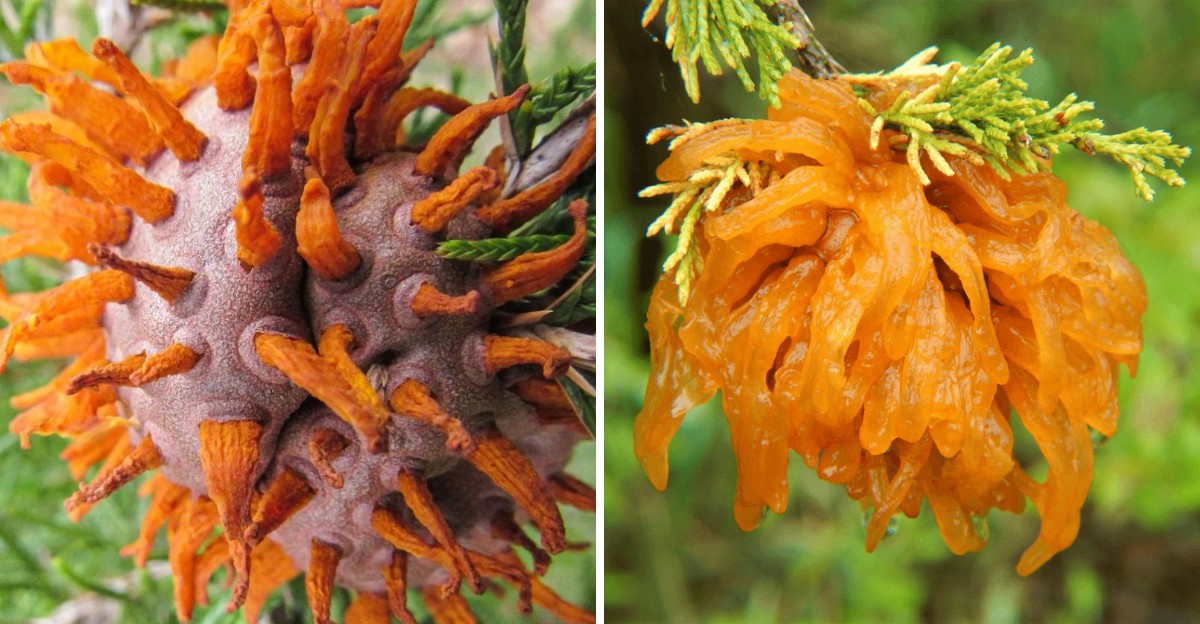
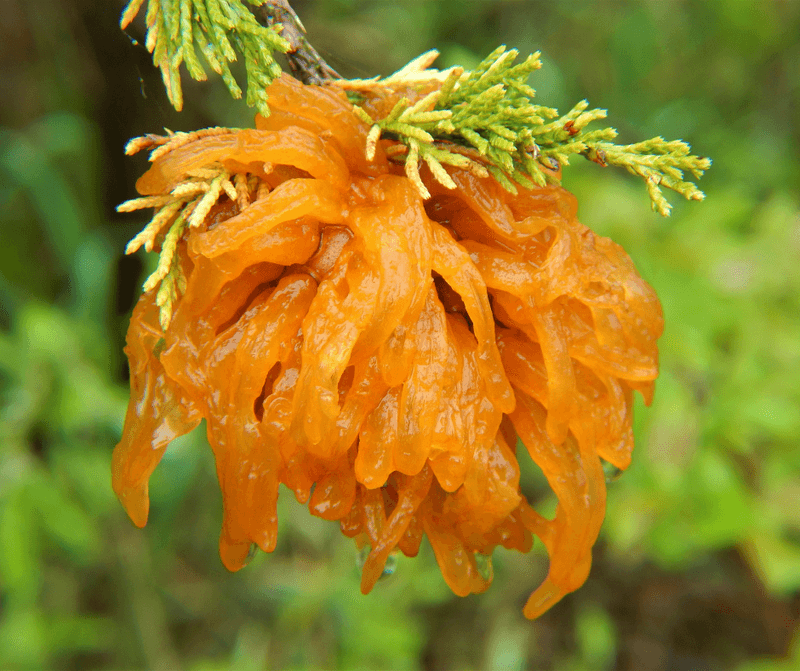
Come the first warm rain of spring, those same knots will erupt into slimy orange horns that look like something from another planet entirely.
Most homeowners never notice the problem until that dramatic orange stage arrives, by which point spores have already started moving through the neighborhood.
Learning to spot the brown stage now, months before the fireworks, gives you a real chance to stop trouble before it reaches your apple or crabapple trees.
Small Brown Galls Form On Twigs
Late in the season, a juniper that looked perfectly healthy all summer can suddenly show odd bumps along its younger twigs without much warning.
Those bumps are cedar-apple rust galls, and they start out so small that most people walk right past them without noticing anything unusual.
The fungus behind them moved in months earlier on spores that drifted over from an infected apple or crabapple leaf nearby in the neighborhood.
Infection usually happens in mid to late summer, when wet weather lets spores land and take hold on juniper needles and green twig tissue.
Nothing visible happens for a long stretch after that. MSU Extension notes that the first small swellings generally show up around seven months later.
Look for them on newer growth near the tips of branches rather than on thick older wood sitting deeper in the shrub.
Eastern red cedar is the classic host in Michigan, though ornamental landscape junipers get hit too depending on how close they sit to infected apple trees.
Checking is easiest when you slow down and turn a few branches over by hand, taking your time rather than rushing through a quick glance.
Galls sit tight against the twig, often tucked behind needles where a quick glance misses them entirely without closer inspection.
Galls Look Like Tiny Woody Knots
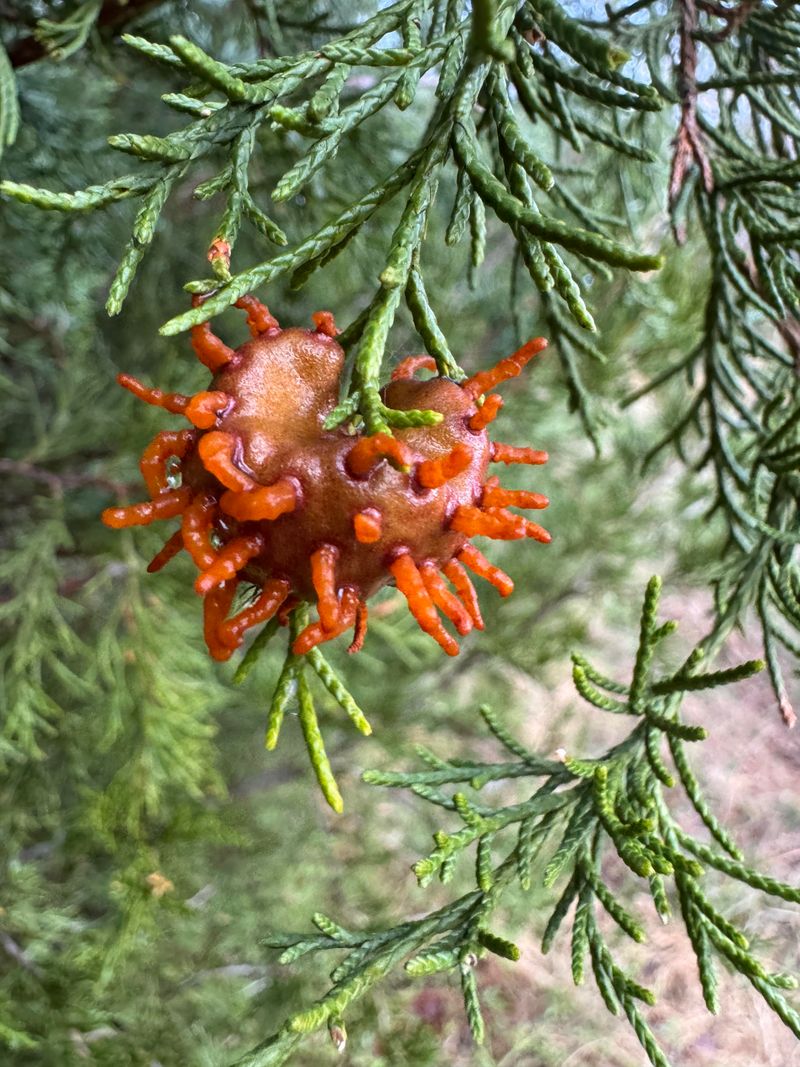
Picture a dried pea glued to a twig, and you have a decent idea of a young cedar-apple rust gall sitting on the branch.
The surface feels firm and slightly bumpy, more like hardened wood than soft green plant tissue you might expect from a fungal growth.
Press one with a fingernail, and it does not squish at all, staying firm under pressure the way a healthy bud never would.
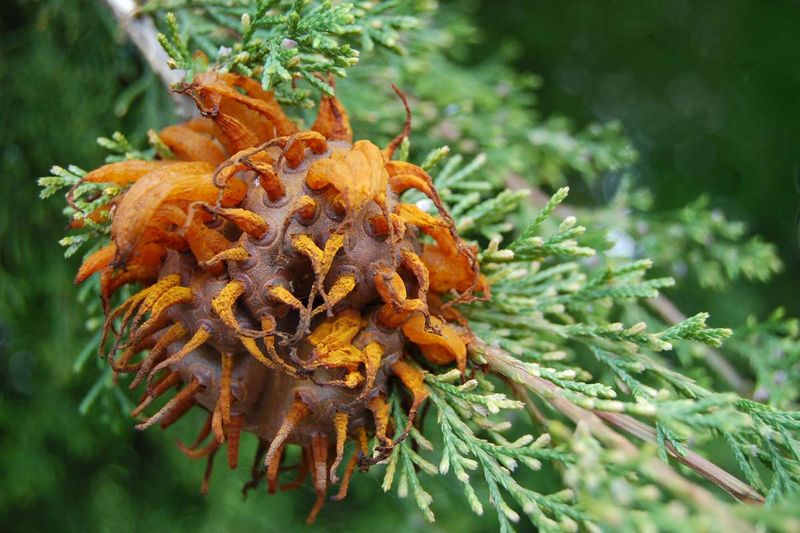
Mature galls turn nearly round or kidney shaped, and the outside develops a pattern of shallow dents scattered across the whole surface.
Each dent marks the spot where an orange horn will eventually push out once spring rain arrives and triggers the transformation.
A short stalk holds the gall to the twig, so it looks stuck on rather than swollen out of the branch itself.
Nothing about the pre-spring gall is sticky, slimy, or bright orange at this stage of its development through the fall and winter months.
Your Michigan Garden Changes Every Week. Your Plan Should Too.
Gardening in Michigan changes quickly throughout the season. Every Friday you’ll receive a simple weekly plan showing exactly what to plant, prune, fertilize, harvest, and protect so you never miss the right timing.
That gelatinous stage comes later, and mixing up the two is the most common mistake homeowners make when trying to identify the problem.
In the cold months you are hunting for a hard, dull, unremarkable little knot that could easily pass for a cone or an old insect gall.
Size Increases Through Fall And Winter
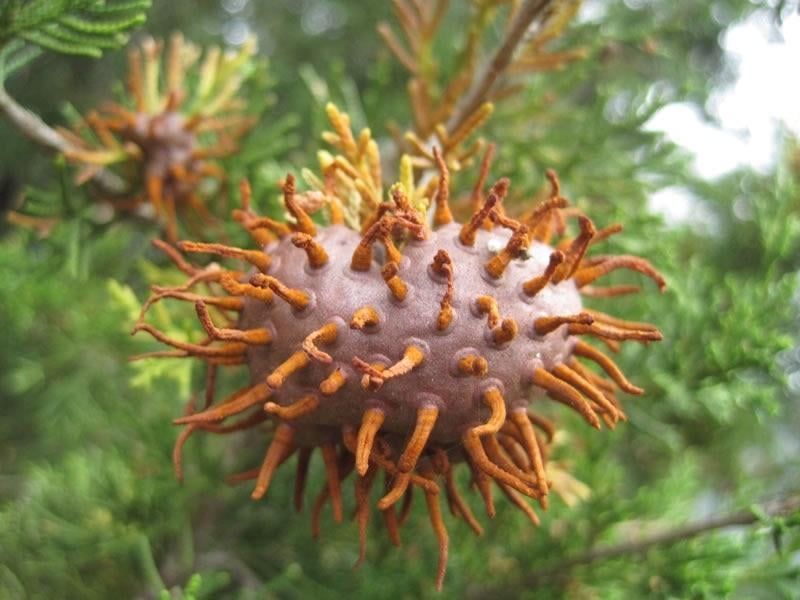
Timing is what trips people up with these galls, because they do not balloon overnight the way some fungal problems seem to appear.
A gall that appears in its first year stays tiny, often no bigger than a pea, and it sits through the first winter looking harmless.
The second growing season is when real enlargement happens across the whole structure. Warm weather and steady moisture let the fungus expand considerably.
By late summer and fall of that second year, a gall can reach golf ball size, roughly one to two inches across the widest point.
Michigan winters put growth on pause entirely during the coldest stretches. Frozen months add little bulk, so what you see in January reflects fall growth.
That makes late winter a fair time to judge how heavy the infection really is on a given shrub before spring rain arrives.
Older galls left on the shrub past their second spring look shriveled, cracked, and lifeless once they have already released their spores.
Fat, firm, dimpled galls are the ones worth worrying about, since they are loaded and waiting for the first warm rains to trigger release.
Comparing a few galls side by side on the same branch usually shows both age classes at once, which makes the two-year rhythm click.
Color Shifts From Green To Brown
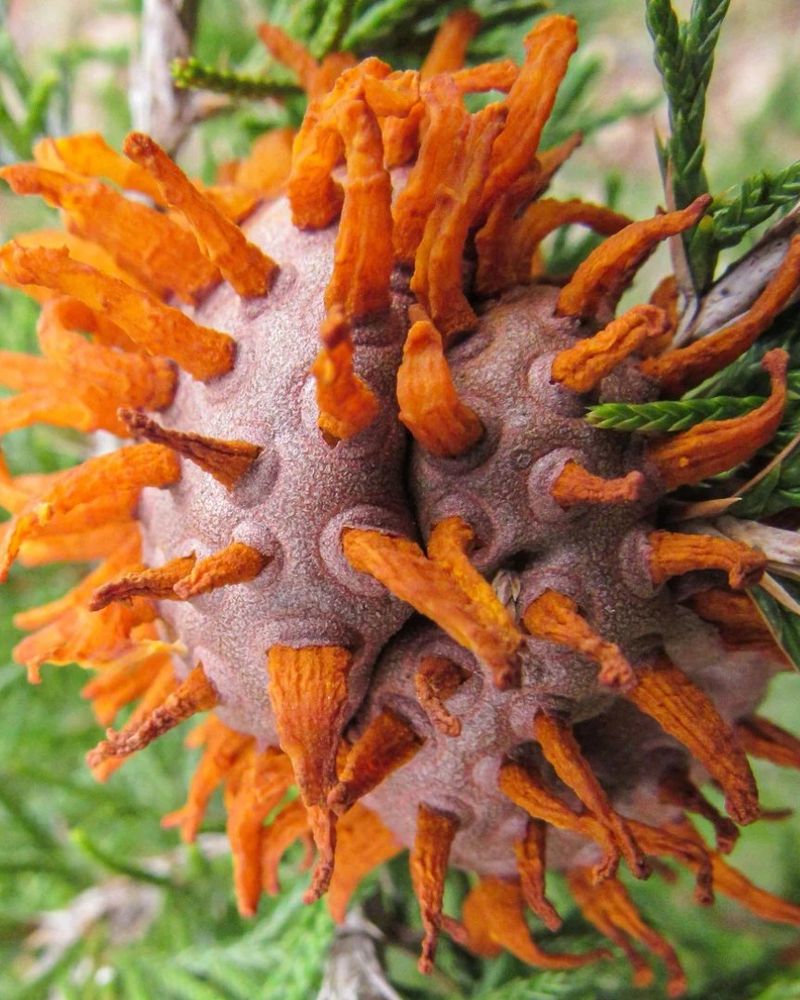
Color tells a quiet story on a juniper twig throughout the whole infection cycle. Fresh galls start out greenish, sometimes olive or grayish green.
Blending in so well with the needles that they practically vanish from view during a casual walk through the yard checking on plants.
As months pass, the green drains away, and a reddish brown or chocolate tone takes over the whole surface of the gall.
By the second autumn, most galls read as dull brown, which stands out much better against the blue-green foliage typical of eastern red cedar.
Winter light and frost can dull them further, adding a gray, weathered cast to the whole knot sitting on the branch.
Wet weather darkens them temporarily, while dry cold days leave them looking chalky and pale against the surrounding green needles nearby.
That brown phase is exactly the window this whole discussion focuses on, and it is when identification is easiest without the drama of spring.
One caution worth remembering here. Brown alone does not confirm cedar-apple rust on its own without checking a few other details first.
Check for the round shape, the short stalk, and the shallow pits scattered across the surface before deciding what you are actually looking at.
Spring Rain Triggers The Orange Horns
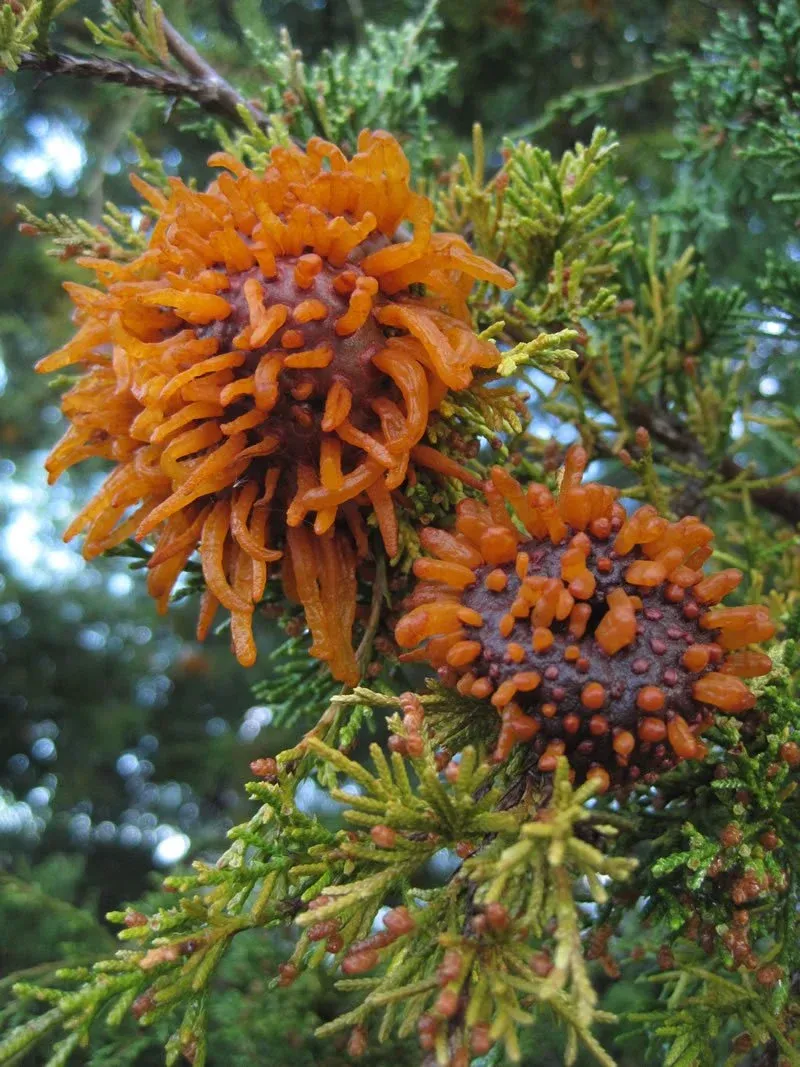
Everything changes after a warm spring rain finally arrives following months of quiet dormancy through the coldest part of winter. Once temperatures climb, moisture soaks into the gall.
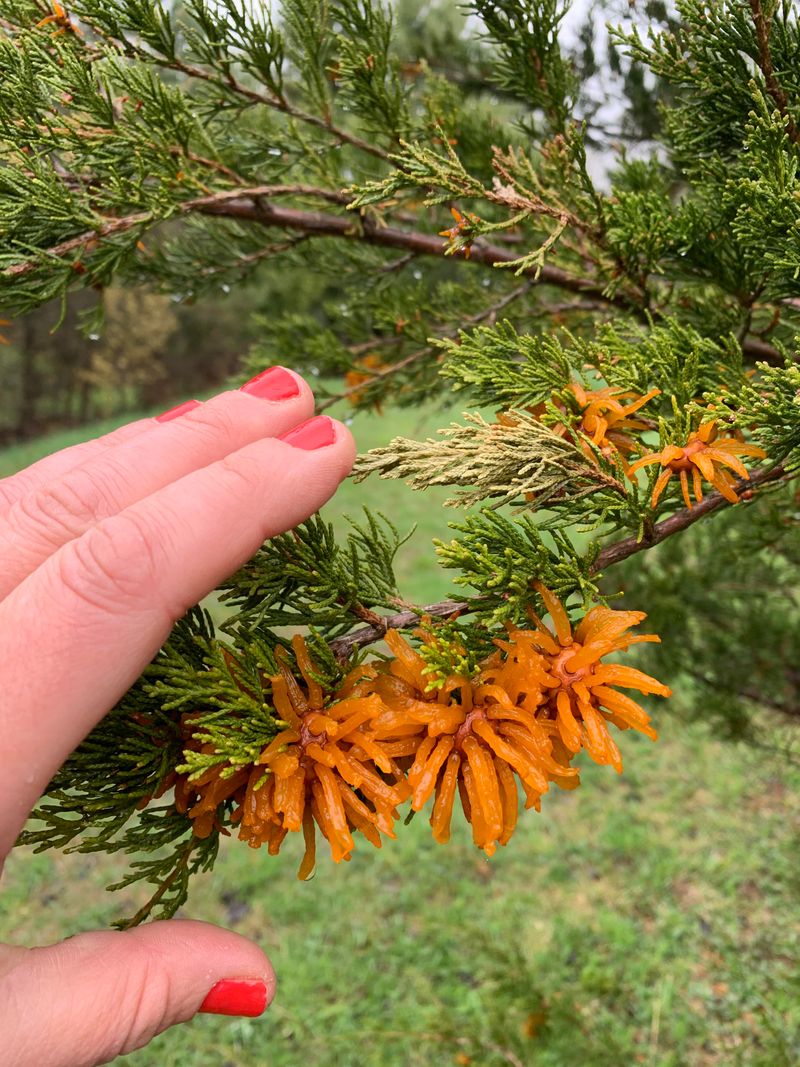
Those dry dimples swell and push out gelatinous orange horns, called telial horns, that can stretch an inch or two long from the surface.
The transformation is fast, sometimes within hours, and the shrub looks like it sprouted jellyfish overnight without much warning beforehand.
In Michigan the show usually runs from April into May, often lining up with apple bloom happening in nearby orchards and backyard trees.
Horns shrivel when things dry out, then plump up again with the next soaking rain, repeating several times throughout the wet spring stretch.
Each horn releases teliospores that germinate into basidiospores, and wind carries those spores to apple and crabapple leaves nearby in the area.
The gall itself goes inactive after it finishes sporulating, so that particular knot will not perform again next year once it has released everything.
Plenty of homeowners only notice the disease at this dramatic stage, which is unfortunate, because by then spores are already moving through the air.
Removing Galls Now Limits Spring Spread
Pruning shears turn into disease control in late winter when used at the right moment before spring rain arrives and triggers the whole cycle.
Cutting off visible galls before spring rains arrive removes the spore supply before it ever launches into the surrounding neighborhood and nearby trees.
Snip a few inches below each gall on healthy wood, then bag the clippings for the trash or burn them where local rules allow.
Leaving pruned galls lying on the ground is a mistake, since a wet gall can still push out horns and release spores from the soil.
February and March, ahead of warm rain, hit the sweet spot in Michigan for this kind of preventive pruning work around the yard.
Honest expectations matter here though. Removal helps most on small, well-shaped junipers where you can actually reach and inspect every branch carefully.
Tall eastern red cedars in a fencerow are another story entirely, and spores from surrounding trees travel a few hundred feet routinely.
MSU Extension points out that clearing junipers within a few hundred feet of a backyard apple tree reduces pressure, though complete elimination is rarely practical.
Wipe your pruners with rubbing alcohol between plants out of habit, keeping good sanitation practices going throughout the whole pruning session.
Nearby Apple Trees Face The Real Risk
Two hosts, one fungus, that is the whole puzzle of cedar-apple rust explained simply. The pathogen cannot finish its life cycle without both a juniper and an apple tree.
Spring basidiospores drifting off juniper galls land on young apple leaves, fruit, and twigs, producing bright yellow-orange spots by early summer each year.
Heavily spotted leaves drop early, which weakens the tree and can shrink the crop considerably if the infection runs severe enough that season.
Fruit infections leave blemishes that ruin the look of the harvest, making apples less appealing even when the tree itself survives just fine.
Later in summer, those apple lesions grow tube-like structures underneath and send aeciospores back to junipers, closing the loop between the two hosts.
Junipers infected during that summer window will not show galls until the following season, continuing the whole two-year cycle described throughout this piece.
Start to finish, the cycle runs roughly two years between the two hosts trading spores back and forth across the growing seasons.
Protection for apples starts around the pink bud stage, with fungicide sprays continuing through petal fall when wet weather overlaps with gall activity.
Choosing resistant varieties beats spraying every time for gardeners planning a new orchard. Liberty and Enterprise show strong resistance, while Jonathan gets hammered badly.