What Early Falling Leaves Are Telling You About Your Massachusetts Trees
Your old oak is dropping leaves in August, weeks before autumn arrives. Something feels wrong the moment you notice the ground turning brown early.
Trees rarely stay silent about stress, and yours is speaking loudly now. Drought, disease, and root damage all send similar warning signs.
Massachusetts summers have grown hotter and drier, confusing tree biology fast. Some homeowners across Massachusetts have reported healthy canopies thinning without an obvious cause.
Leaves falling now often signal deeper trouble beneath the bark or soil. Ignoring this pattern risks losing mature trees within a few seasons.
Every yellowing leaf carries a message worth decoding without delay. Waiting costs you time you cannot ever get back later.
Understanding what triggers premature leaf drop protects your entire property value. Knowledge now prevents costly removal and replacement expenses down the road.
Patience will not save a struggling tree from further decline. You need answers before your tree loses even more than leaves.
Trees Dropping Leaves Early Across Massachusetts Yards
Walk outside on a warm August morning and find leaves everywhere. That sight surprises many homeowners, and for good reason.
Early falling leaves across Massachusetts yards have become a growing concern for tree owners. The pattern shows up in maples, oaks, birches, and elms alike.
What early falling leaves are telling you about your Massachusetts trees depends on several clues. Leaf color, timing, and location on the tree all matter.
Some trees drop leaves starting at the crown, which signals one type of problem. Others shed from the bottom up, pointing to something entirely different.
Pay attention to whether the leaves look burned, spotted, or simply yellow. Each appearance tells its own story about what is happening underground or on the bark.
New England summers have grown hotter and drier over the past decade. Trees that once thrived without much help are now struggling to keep up.
You might notice one tree in your yard dropping leaves while the one right next to it looks perfectly fine. Species, root depth, and soil quality all play a role in which trees show stress first.
The good news is that catching early leaf drop quickly gives you real options. Acting fast can save a tree that would otherwise decline over the next few seasons.
Do not assume early leaf drop is just a quirky seasonal thing. Your tree is showing a warning sign worth paying attention to before winter arrives.
Drought Stress And Why Trees Shed Leaves To Cope
When the ground becomes extremely dry, trees respond quickly to conserve resources. They drop leaves to reduce water loss they cannot sustain.
Drought stress is one of the top reasons for early leaf loss in New England yards. A tree sheds foliage the same way a camel conserves energy in the desert.
Leaves release moisture into the air constantly through a process called transpiration. When roots cannot pull enough water from dry soil, the tree reduces water loss by shedding leaves.
Regional climate patterns suggest summer droughts have trended longer and more intense in recent years. Even a few weeks without rain can put significant stress on a shallow-rooted tree.
Your Massachusetts Garden Changes Every Week. Your Plan Should Too.
Gardening in Massachusetts changes quickly throughout the season. Every Friday you’ll receive a simple weekly plan showing exactly what to plant, prune, fertilize, harvest, and protect so you never miss the right timing.
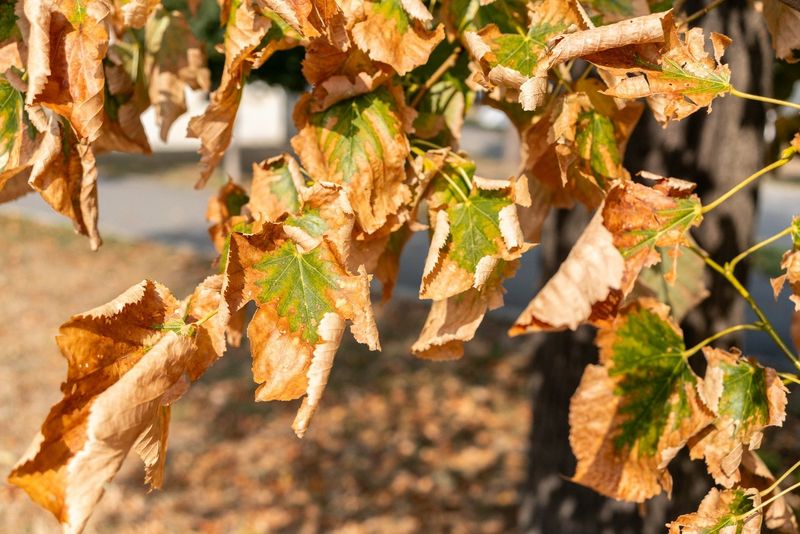
Look at the leaves before they fall to spot drought stress early. Curling edges, a crispy brown border, or a dull grayish-green color are all warning signs.
Younger trees and recently planted ones are especially vulnerable to dry spells. Their root systems have not spread wide enough to find deeper moisture in the soil.
Deep watering once or twice a week does far more good than light daily sprinkles. Water needs to reach well below the surface, deep into the root zone, to actually help roots.
A layer of mulch around the base of your tree works like a lid on a pot. It holds soil moisture in and keeps roots cooler during heat waves.
Drought stress rarely causes lasting harm to a healthy tree in one season, but repeated dry summers add up fast. Give your trees a drink before the soil cracks open.
Disease And Pest Damage That Trigger Premature Leaf Loss
Tiny insects and invisible fungi can cause significant leaf loss before September even starts. The damage often looks subtle at first, then accelerates fast.
Several diseases common to New England trees cause premature leaf drop as a direct symptom. Anthracnose and tar spot are among the most frequent culprits in hardwoods across the region, while apple scab primarily affects apple and crabapple trees.
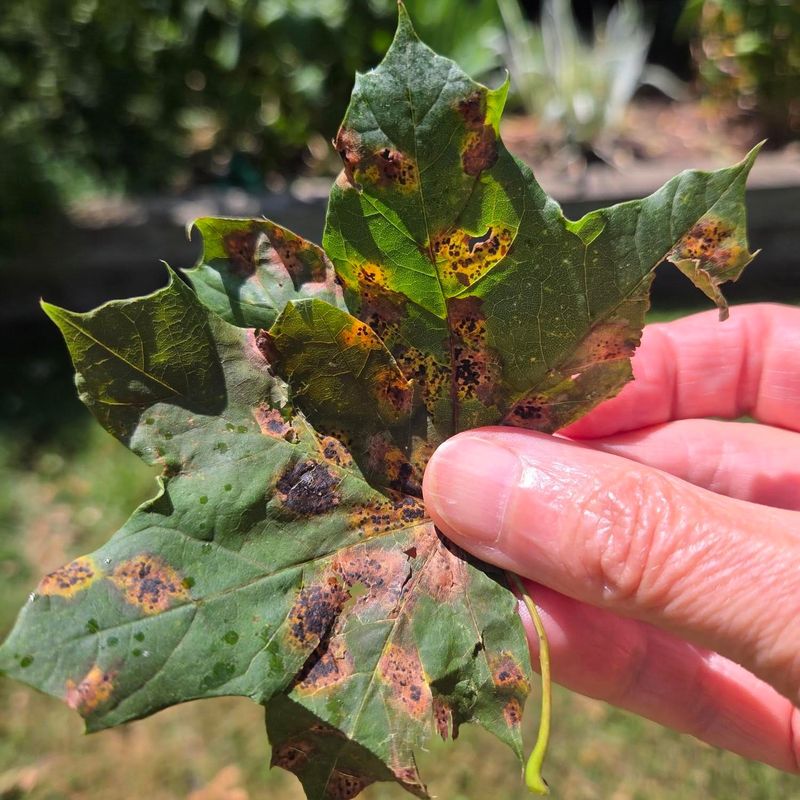
Anthracnose creates brown, water-soaked blotches on leaves that spread quickly in wet spring weather. By midsummer, infected leaves fall weeks before they should.
Tar spot looks alarming with its bold black patches on maple leaves. While it rarely threatens the long-term health of a mature tree, it does cause early shedding each season.
Pest pressure adds another layer of trouble for stressed trees. Caterpillars, scale insects, and borers all weaken a tree’s ability to hold onto its foliage.
Emerald ash borers have significantly damaged ash tree populations across the region over the past two decades. A tree under borer infestation often drops leaves from the top down in a telltale pattern.
Spider mites thrive in hot, dry summers and can cause stippled, pale leaves that fall prematurely. You might not even see the mites without a magnifying glass, but the damage is obvious.
Check the undersides of falling leaves for spots, webbing, or tiny eggs. Those small details help you figure out whether you are dealing with a fungal issue or an insect problem.
Early diagnosis leads to better outcomes every time. Catching a pest or disease problem in July beats scrambling to save a tree in October.
Normal Seasonal Adjustments Versus Signs Of Real Trouble
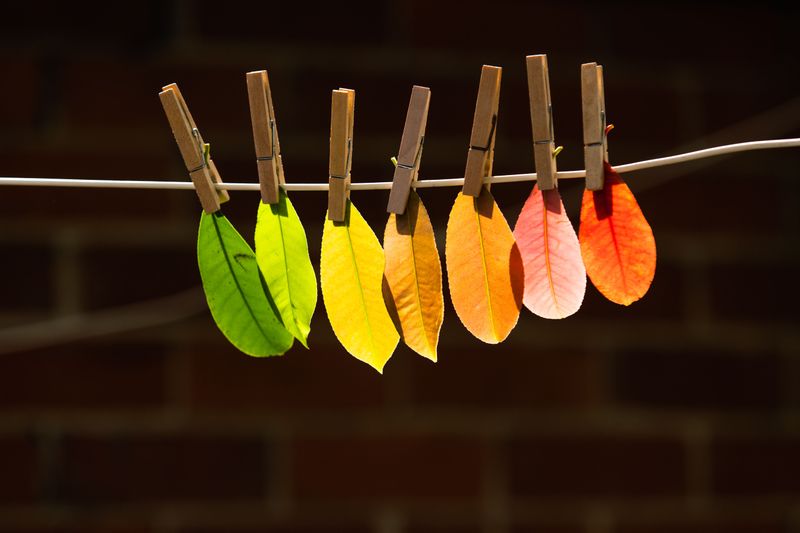
Not every falling leaf in August means something is wrong. Some trees drop a small percentage of leaves early as a completely normal adjustment.
Knowing the difference between natural leaf thinning and actual distress saves homeowners a lot of unnecessary worry. The key is watching for patterns, not just individual leaves on the ground.
A healthy tree might shed a few older interior leaves when days get shorter in late summer. This is the tree tidying itself up, not sending an SOS.
Trouble shows up when large sections of the canopy thin out rapidly. If you can suddenly see the sky through spots that were dense just two weeks ago, pay closer attention.
Color matters a great deal when sorting normal from abnormal. Pale yellow or light green leaves dropping in small numbers early on are less alarming than brown, spotted, or scorched ones.
Timing also helps separate the two scenarios. A tree that loses leaves three or four weeks ahead of its neighbors in the same species is worth a second look.
Some trees, like silver maples and honey locusts, naturally shed earlier than others. Knowing your specific tree species helps set realistic expectations for what normal looks like.
Compare your tree to others of the same type in the neighborhood. That gap is worth investigating further.
Normal is a range, not a fixed date on the calendar. When a tree falls well outside that range, a closer physical inspection is warranted.
How To Tell If Your Tree Is Actually In Danger
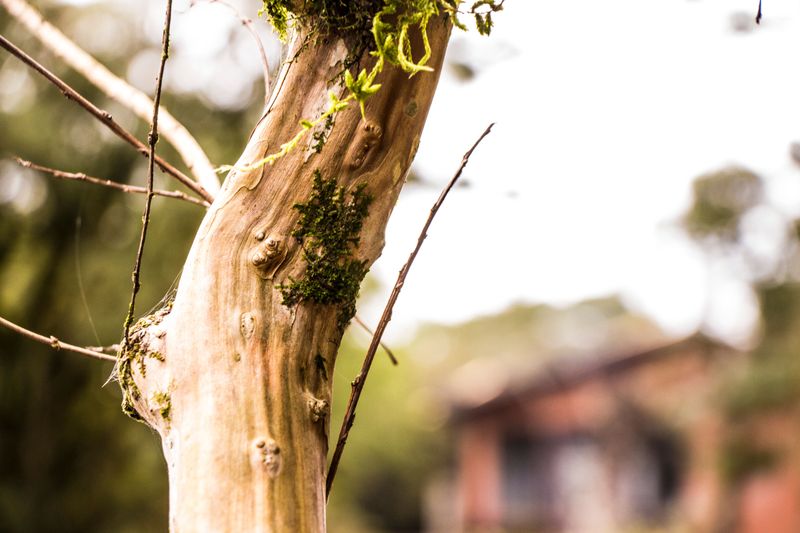
Scratch a small patch of bark with your fingernail and look at the color underneath. Green means that section is alive; brown or gray means that section is no longer alive.
That simple scratch test is one of the fastest ways to assess real danger in a struggling tree. Start near the base and work your way up to the mid-canopy.
Check the trunk carefully for cracks, soft spots, or areas where bark is peeling away without new growth underneath. Fungal conks, which look like shelves or brackets growing from the trunk, signal serious internal decay.
Roots matter as much as branches when evaluating tree health. Heaving soil around the base, exposed roots, or a slight lean that was not there before all point to root system problems.
Look up into the canopy from directly below the tree. Bare branches with no leaves, or branches where bark is hanging loose, are structural red flags that go beyond simple leaf drop.
A tree that drops leaves early AND shows bark damage AND leans slightly is showing multiple signs of stress at once. One symptom alone might not be urgent, but several together usually are.
Arborists certified by the International Society of Arboriculture are trained to assess exactly these situations. A professional evaluation costs far less than emergency removal after a tree fails.
Take photos of concerning spots over several weeks to track whether conditions are worsening. That visual record helps any professional you bring in give a faster and more accurate assessment.
Danger is not always visible from the outside. Some of the most compromised trees show few symptoms until damage becomes advanced.
Steps To Protect Your Trees Before The Next Growing Season
Fall is not the end of the story for a struggling tree. It is actually the best window to set things right before spring growth begins.
Start by raking up and removing fallen leaves from under stressed trees as soon as possible. Diseased leaves left on the ground over winter become a source of reinfection when temperatures warm up again.
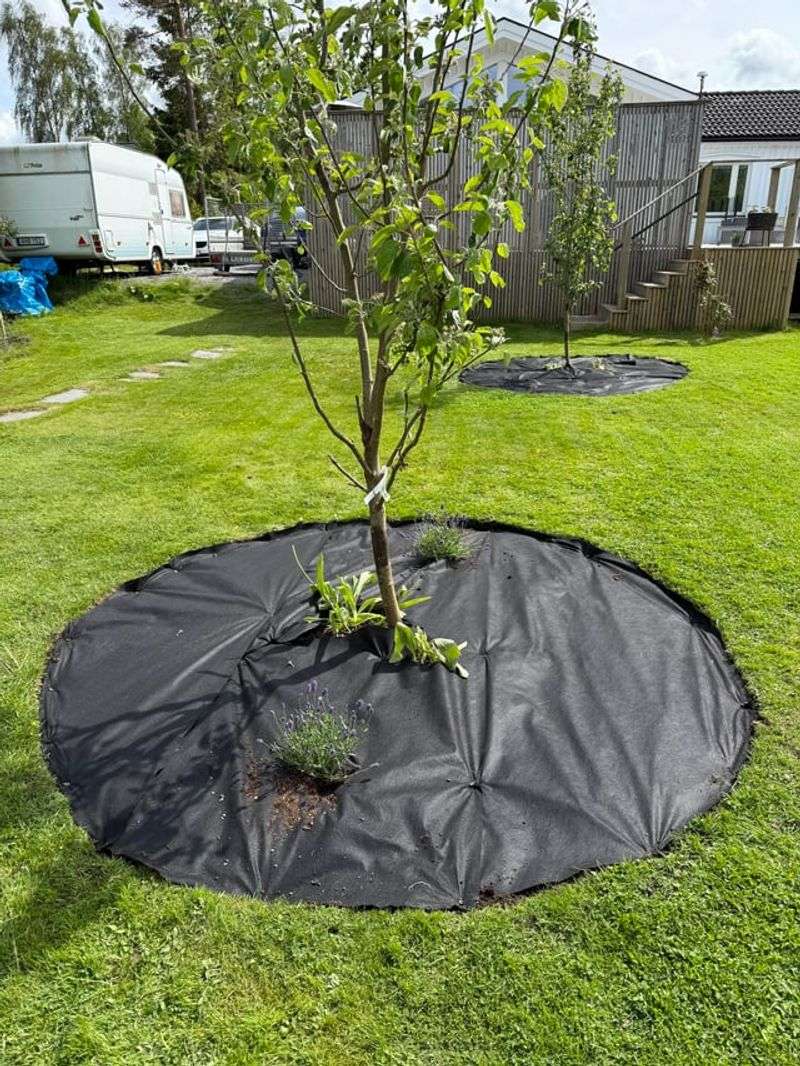
Add a fresh layer of organic mulch, two to four inches deep, around the base of each tree, keeping it a few inches away from the trunk. Mulch regulates soil temperature, holds moisture, and feeds soil organisms that support root health.
Fall is an ideal time for deep root fertilization if a certified arborist recommends it. Nutrients applied now get absorbed slowly through winter and support strong spring growth.
Prune out any lifeless or damaged branches before the first hard freeze. Removing weak wood reduces entry points for insects and pathogens looking for a winter home.
If drought stress caused the early leaf drop this season, plan a watering schedule for next summer before you forget. Set a reminder in your phone for late June when dry spells typically begin in the region.
Talk to a local arborist about whether any of your trees would benefit from a preventive fungicide or pest treatment in early spring. Getting ahead of problems costs far less than treating a full-blown outbreak.
What early falling leaves are telling you about your Massachusetts trees is ultimately a message worth acting on. A little effort this fall puts your yard in a much stronger position come spring.