What Fading Michigan Mum Blooms Are Telling You About Your Plants

Few things say fall in Michigan quite like a porch full of bright, cheerful mums, so it feels a little sad when those blooms start to droop and fade.
The good news is that fading flowers are often just your plant’s way of talking to you, and once you learn its language, caring for mums gets a lot easier.
Sometimes fading simply means a great season is winding down naturally, right on schedule as cooler temperatures signal the plant to slow its bloom production.
Other times, it’s a sign of something more specific, like thirsty roots that missed a watering, soggy soil that’s holding onto too much moisture, or a chilly overnight temperature that stressed the plant more than expected.
1. Older Blooms Naturally Fade
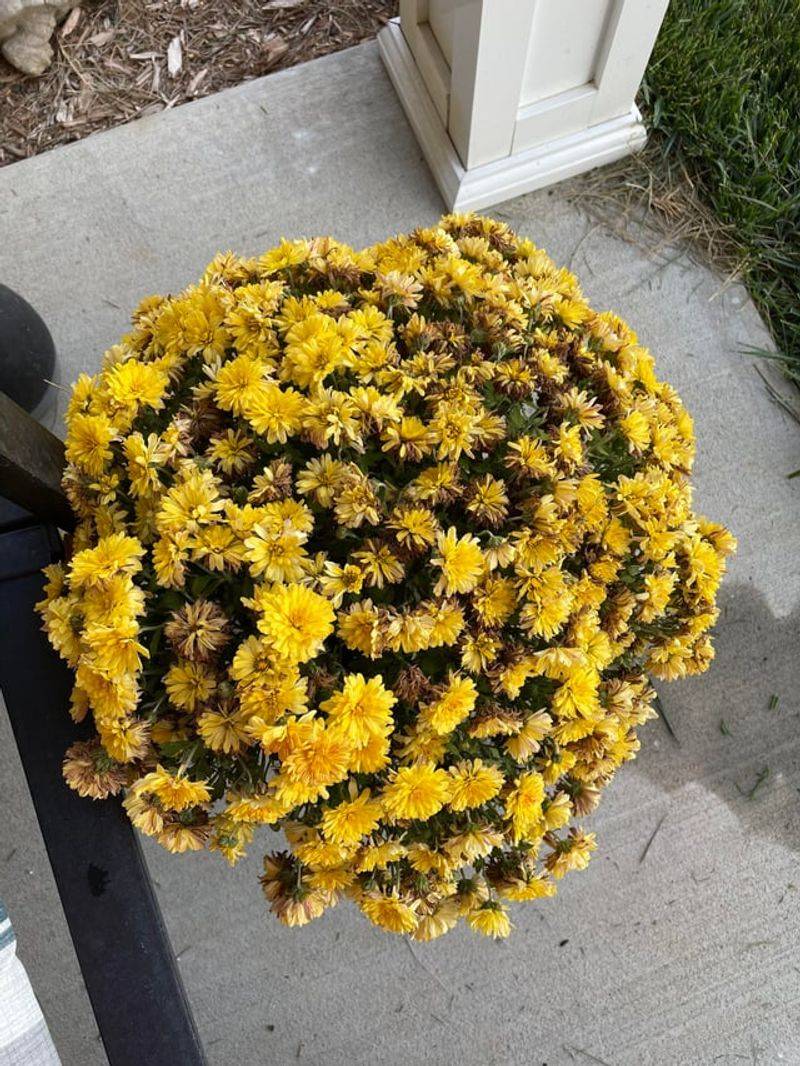
Picture a mum in early October, covered in so many buds you can barely see the leaves. Every one of those buds opens on its own schedule, so the first flowers to arrive are also the first to leave.
A few browning petals in the middle of a colorful plant are usually just the oldest blooms taking their bow.
Each mum flower has a limited lifespan, often a few weeks once it fully opens. Over time, the petals lose moisture, the bright pigments break down, and the edges start to curl or turn tan.
The plant also stops sending as much energy to older flowers once they have done their job of showing off.
Garden mums are short-day plants, which means they start blooming when nights grow longer in late summer and fall. Most varieties set all their buds in one big wave rather than making new ones all season long.
Once that wave passes its peak, you will notice more faded flowers than fresh ones, and that shift is completely normal.
So how can you tell normal aging from trouble? Look closely at where the fading happens. Natural aging starts with the oldest, fully open flowers, while the leaves stay green and the stems stay firm.
A helpful trick is to count the tight buds still waiting to open. If plenty remain, your mum has more color to give.
If nearly every bud has opened and the flowers are softening, the plant is simply wrapping up its show for the year, right on time.
2. Cool Fall Temperatures Change Flowering

Michigan falls can swing from shorts weather to jacket weather in a single week. Mums actually love a bit of that crisp air at first, and cool nights often make their colors look deeper and richer.
The trouble starts when the chill keeps sliding lower as October turns into November.
Plants run on chemistry, and chemistry slows down in the cold. When daytime highs drop into the 40s and nights hover near freezing, mums grow more slowly and open new buds at a much lazier pace.
Some tight buds that formed late may never open at all, especially on plants bought later in the season.
Cold weather also changes how long open flowers hold up. Petals can lose their shine, colors can dull, and blooms may start to droop sooner than they would in mild weather.
Your Michigan Garden Changes Every Week. Your Plan Should Too.
Gardening in Michigan changes quickly throughout the season. Every Friday you’ll receive a simple weekly plan showing exactly what to plant, prune, fertilize, harvest, and protect so you never miss the right timing.
In northern Michigan and the Upper Peninsula, these changes often show up weeks earlier than they do in the southern part of the state.
A little planning helps you get more from each plant. Buy mums with lots of closed buds and only a few open flowers, since those plants still have their best weeks ahead.
Place pots near a south-facing wall or on a sunny porch, where stored warmth can soften chilly nights.
Keep an eye on your local forecast, too. When a string of cold days rolls in, a gradual slowdown in flowering is simply the season speaking. Your mum is reading the same weather report you are, and it knows winter is on the way.
3. Dry Soil Can Speed Up Wilting

That cheerful mum from the garden center probably arrived in a pot packed tight with roots. Growers raise them that way to get a full, round shape, but it leaves very little soil to hold water.
On a sunny, breezy fall day, a container mum can go from happy to droopy in just a few hours.
When roots run short on moisture, the plant saves itself first. Leaves go limp, flowers wilt, and blooms may brown around the edges much sooner than normal.
Repeated dry spells can make buds shrivel before they ever open, which cuts your color season short.
Newly planted mums face a similar problem. Their roots are still sitting in the original root ball, so they cannot reach moisture in the surrounding garden soil yet.
Until those roots spread out, they depend on you for steady drinks. Here is a simple habit that works. Push a finger about an inch into the soil each morning, and water when it feels dry.
For pots, water slowly until it runs out the bottom, then check again the next day, because tight root balls sometimes shed water the first time around.
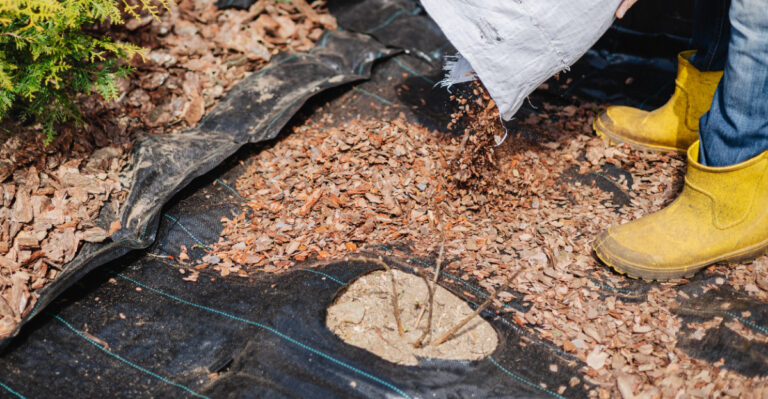
Soaking a very dry pot in a bucket or saucer for about 20 minutes can help rewet the whole root ball. In garden beds, a layer of shredded mulch keeps soil from drying out so fast.
Try to water at the base instead of over the flowers, which helps petals stay cleaner and last longer. Steady moisture keeps your mum looking fresh far longer than any fancy product ever could.
4. Too Much Water Can Also Cause Stress
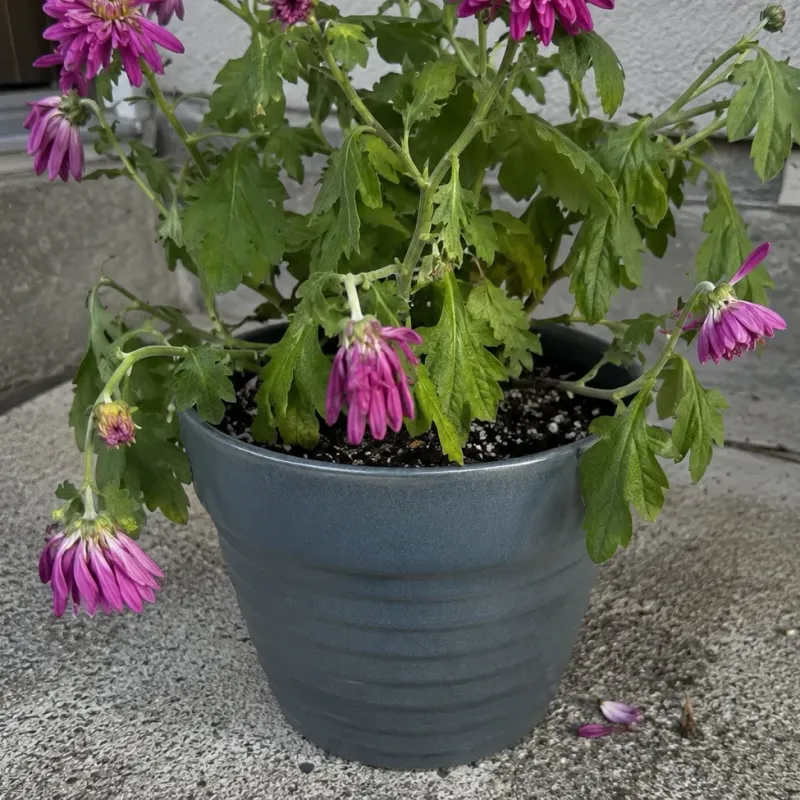
Oddly enough, a mum sitting in soggy soil can look almost exactly like one that is thirsty. The leaves droop, the flowers sag, and many gardeners respond by grabbing the watering can again.
Sadly, that extra splash only makes the real problem worse. Roots need air as well as water. When soil stays soaked for days, the tiny spaces that normally hold oxygen fill with water instead, and roots start to suffocate.
Weak roots cannot pull up moisture well, so the plant wilts even though it is standing in plenty of water.
Wet, airless soil also invites root rot, a problem caused by fungus-like organisms that thrive in waterlogged conditions. Watch for yellowing lower leaves, stems that feel soft near the soil line, or a sour smell coming from the pot.
Browning flowers paired with these signs point to a drainage issue rather than normal aging.
Decorative pots are often the sneaky culprits. Many have no drainage holes, and even nursery pots can end up sitting in a saucer full of water after a rainy Michigan week.
Always dump out standing water, and set pots on small feet or bricks so they can drain freely.
Heavy clay soil, common in many parts of southeast Michigan, can hold water for a long time too. Planting mums in raised spots or mixing in compost helps extra water drain away.
Before watering again, check the soil with your finger, and wait if it still feels damp. Finding that happy middle ground between soggy and parched gives your mum its best shot at a long, colorful finish.
5. Pinching Off Spent Flowers Can Improve The Display

Grab a pair of clean snips and a cup of coffee, because this is one of the most relaxing garden chores around. Removing faded mum flowers takes only a few minutes, and the difference can be surprising.
A plant freckled with brown blooms suddenly looks bright and tidy again. Old flowers do more than spoil the view. Faded petals can hold moisture and give gray mold, also called botrytis, a place to start during damp fall weather.
Clearing them away keeps the plant cleaner and lets air move more freely around the remaining flowers.
To do it right, follow the spent flower down its short stem to the next leaf or bud and make a clean cut there. Pinching with your fingers works fine for small stems. Try not to snip off tight buds by accident, since those are your future color.
Some gardeners hope that removing old blooms will keep a mum flowering all the way to Thanksgiving. It helps keep the plant looking tidy and removes fading flowers, but it cannot create a new flush once the plant’s available buds have finished developing.
Still, most garden mums set their buds in one main round, so cleanup cannot create a brand new flush once that supply runs out.
Think of it as polishing the show rather than extending it forever. Once most flowers have faded and few buds are left, you can trim stems back or simply enjoy the natural look.
Many Michigan gardeners leave hardy mum stems standing through winter to help protect the crown. Either way, a quick weekly tidy keeps your porch looking its best.
6. Frost Can Quickly Damage Open Flowers
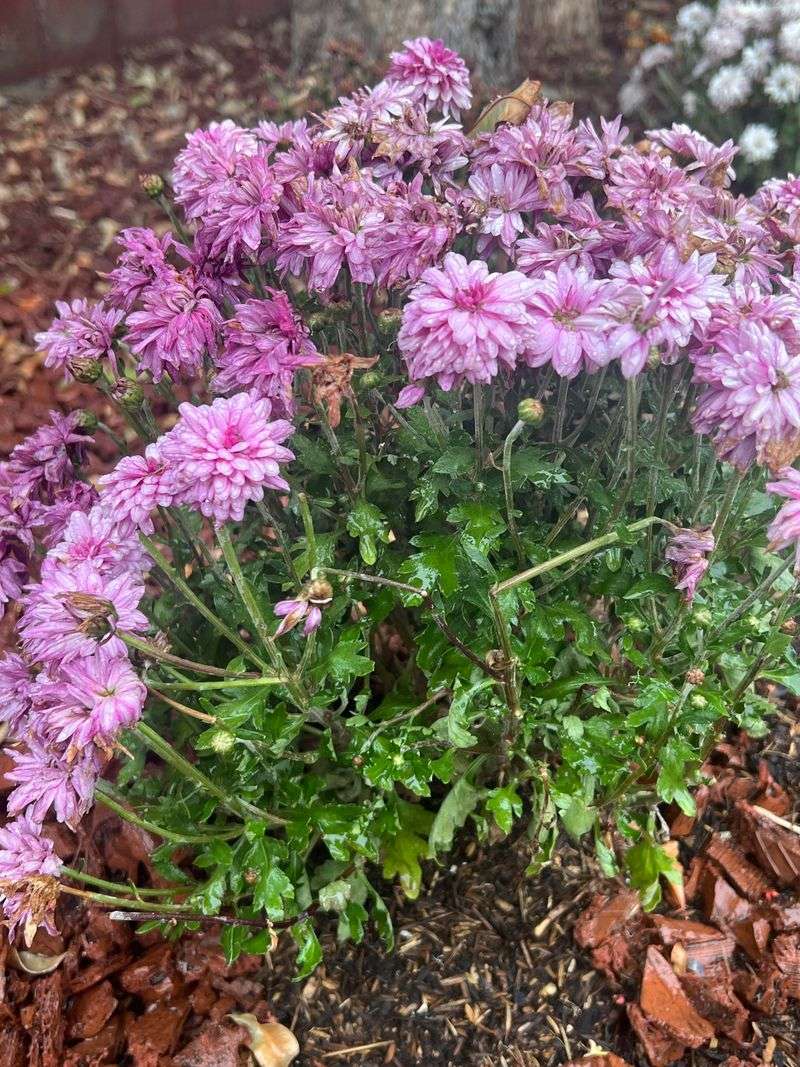
You head outside one October morning, coffee in hand, and find the lawn sparkling white. By afternoon, your once perky mums look limp, dark, and a little mushy. Before you panic, remember that Jack Frost probably paid a visit overnight.
Frost forms when temperatures drop near or below freezing, often on clear, calm nights. Ice crystals can form inside plant tissue and damage cell walls, especially in soft petals and tender new growth.
When the sun warms things up, those damaged spots may wilt, turn brown or black, or collapse almost overnight.
Because the change happens so fast, many gardeners assume a disease has struck. Frost damage, though, usually appears all at once and shows up most on the top and outer parts of the plant.
Flowers tucked lower or closer to a wall may look fine, which is a strong clue that cold caused the harm.
Mums are tougher than they look. A light frost may only scorch open petals, while hard freezes in the mid to upper 20s cause heavier damage.
Hardy garden mums planted in the ground can often push through light frosts and keep going with their remaining buds.
Protection is easy when you watch the forecast. On frosty nights, cover plants with an old bedsheet, a lightweight frost cloth, or a cardboard box, and remove it in the morning. Skip plastic touching the leaves, since it can transfer cold.
Potted mums can simply move into a garage or onto a covered porch overnight. A few minutes of effort can buy your flowers several more weeks of bright color.
7. Watch For Signs Beyond Fading Flowers

Good gardeners are a bit like detectives. A faded flower is just one clue, and the leaves, stems, and soil often tell the rest of the story. A quick look saves guesswork.
Start with the leaves. Healthy mum foliage should look mostly green and firm, even late in the season.
Dark or yellow spots, especially ones that grow larger and merge, can point to leaf spot diseases, while a white, powdery coating signals powdery mildew.
Next, check for wilting that does not bounce back. If a plant stays droopy even after a good watering and the soil has the right moisture, something may be wrong with the roots or stems.
Look near the soil line for dark, soft, or cracked areas on the stems, which can hint at rot.
Unusual colors deserve attention, too. Leaves that turn bronze, pale, or streaked, or flowers that open twisted and misshapen, may be signs of insects or a virus. Flip a few leaves over and look for tiny aphids, spider mite webbing, or sticky residue.
Most problems are easier to handle when you catch them early. Snip off spotted leaves and toss them in the trash rather than the compost pile, and space plants so air can move between them.
Water at the soil instead of over the top to keep foliage dry. If the leaves stay clean and green while only the oldest flowers fade, relax. Your mum is aging gracefully, and that is exactly what it should be doing this time of year.
8. Fading Blooms Do Not Always Mean Your Plant Is Failing

Every flower show has a final act, and mums are no exception. Their fading color is a natural part of the yearly rhythm, not a sign that you did something wrong. Hardy garden mums may even return next spring with fresh green shoots.
Mums follow the seasons closely. They bloom when nights stretch longer, then slow down as cold weather settles in and the plant prepares to rest.
Many garden mums are perennials in Michigan, though some sold mainly for fall decor are grown more like annuals and may not survive a tough winter.
A few smart habits help your plants finish strong. Water when the top inch of soil feels dry, and make sure pots and beds drain well so roots never sit in soggy ground.
Remove spent flowers regularly to keep the plant tidy and help remaining buds shine.
Cold protection matters, too. Cover plants or move pots indoors on frosty nights, and give in-ground mums a thick layer of mulch, such as straw or shredded leaves, after the ground starts to freeze.
Want a better chance of seeing your mums again? Plant them in the ground by early fall if you can, since roots need several weeks to settle in before winter.
Come spring, look for new growth at the base and trim away old stems. Then pinch the tips a few times until early July to get a bushy, bud-packed plant.
With a little care, those fading fall blooms become the promise of another bright season ahead.