What Michigan Gardeners Should Do With Basil In August For Bigger Fuller Plants
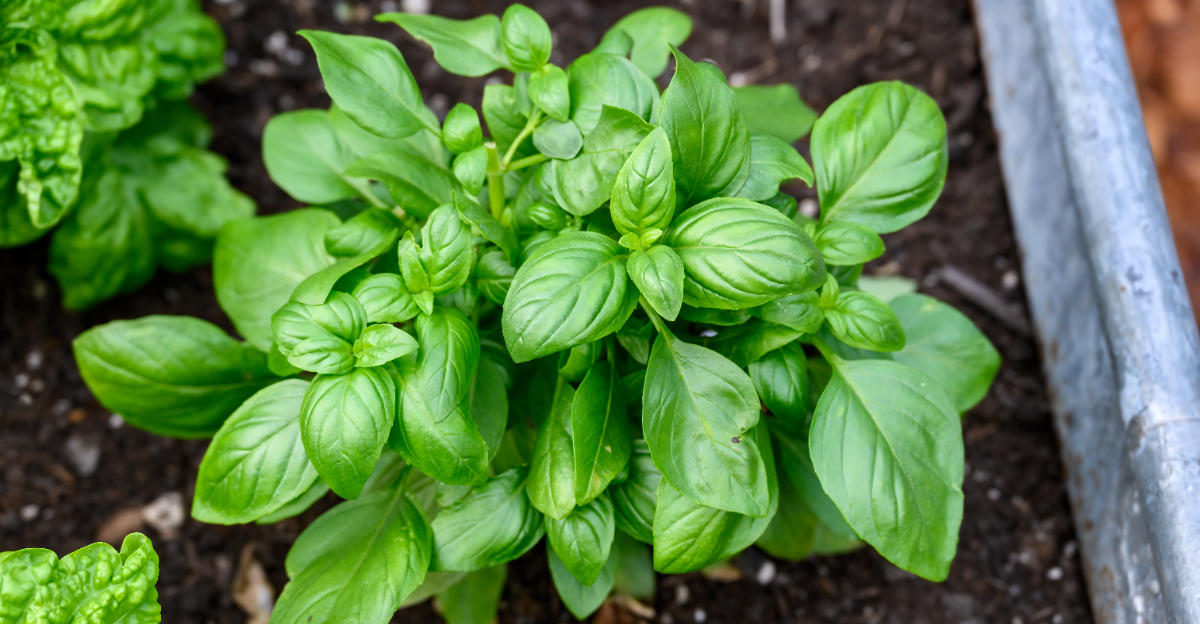
Regular harvesting and pinching are the key habits Michigan gardeners need in August to keep basil growing bigger and fuller rather than leggy and sparse.
Pinching stems just above a leaf node encourages branching, resulting in noticeably fuller plants over just a few weeks.
Removing any flower buds immediately helps redirect the plant’s energy back toward leaf production instead of seed development.
Harvesting consistently, even more than you might need right away, keeps basil productive throughout the rest of summer.
Cutting back stems by about a third when plants start looking leggy helps reset growth for a fuller shape.
Watering consistently supports this regrowth, since basil’s shallow roots dry out quickly during August heat.
Feeding plants with a diluted fertilizer every few weeks also supports continued fullness through the season.
Staying consistent with these habits now keeps basil thriving and productive right through early fall.
1. Cut Each Stem Just Above A Pair Of Leaves
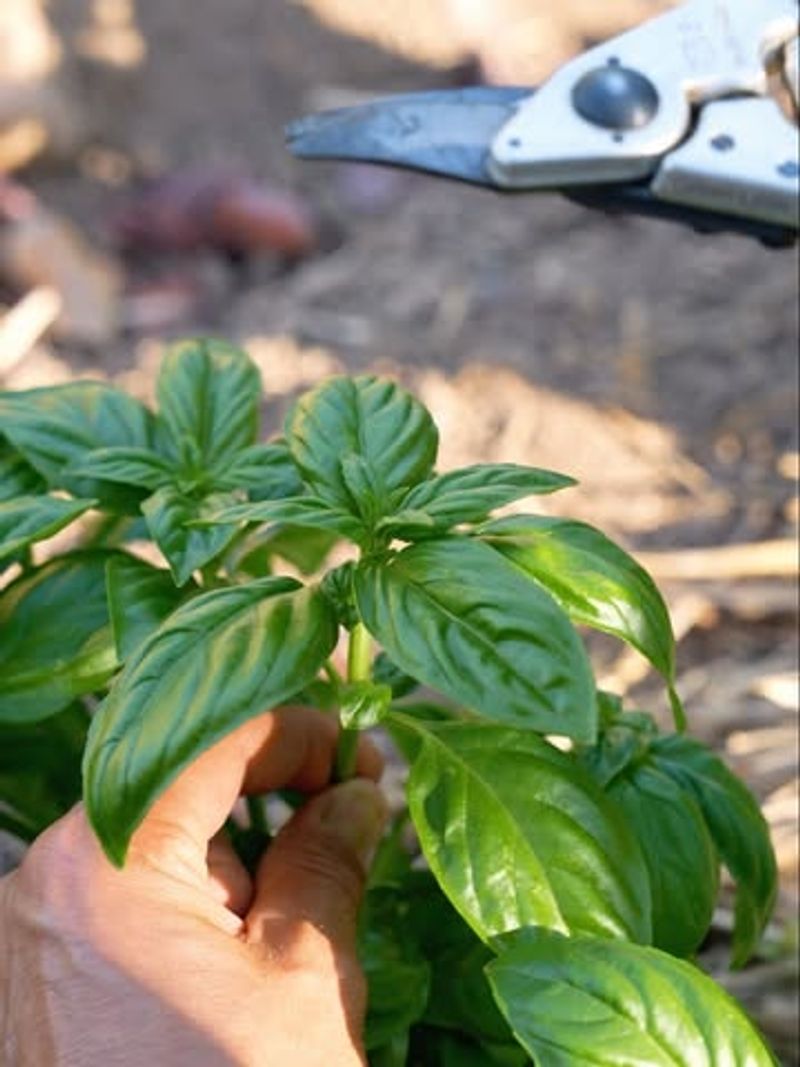
Snipping your basil in exactly the right spot sounds like a small detail, but it makes a surprisingly big difference.
When you cut a stem just above a healthy pair of leaves, the plant responds by pushing out two new shoots from just below that cut.
Instead of one long, straight stem reaching upward, you get two branches growing outward. That branching pattern is exactly what creates a fuller, bushier plant over time.
Work across several growing tips on the same plant rather than focusing all your cuts on one area. Spreading your pruning around helps the plant develop an even, balanced shape from all sides.
A lopsided basil plant is usually the result of cutting the same spots repeatedly while ignoring others.
Take a step back occasionally and look at the overall shape before deciding where to snip next.
One thing to watch for is cutting into the bare, woody sections near the bottom of older stems.
Those lower portions often lack enough healthy leaves to support strong new growth, so cuts made there tend to produce disappointing results.
Always aim for sections of the stem that still have at least two or three sets of healthy, green leaves above the point where you plan to cut.
Keeping this habit going every week or two through August will steadily build a plant that looks full, healthy, and incredibly productive all the way until Michigan’s first cool nights arrive in September.
2. Remove Flower Buds As Soon As They Appear
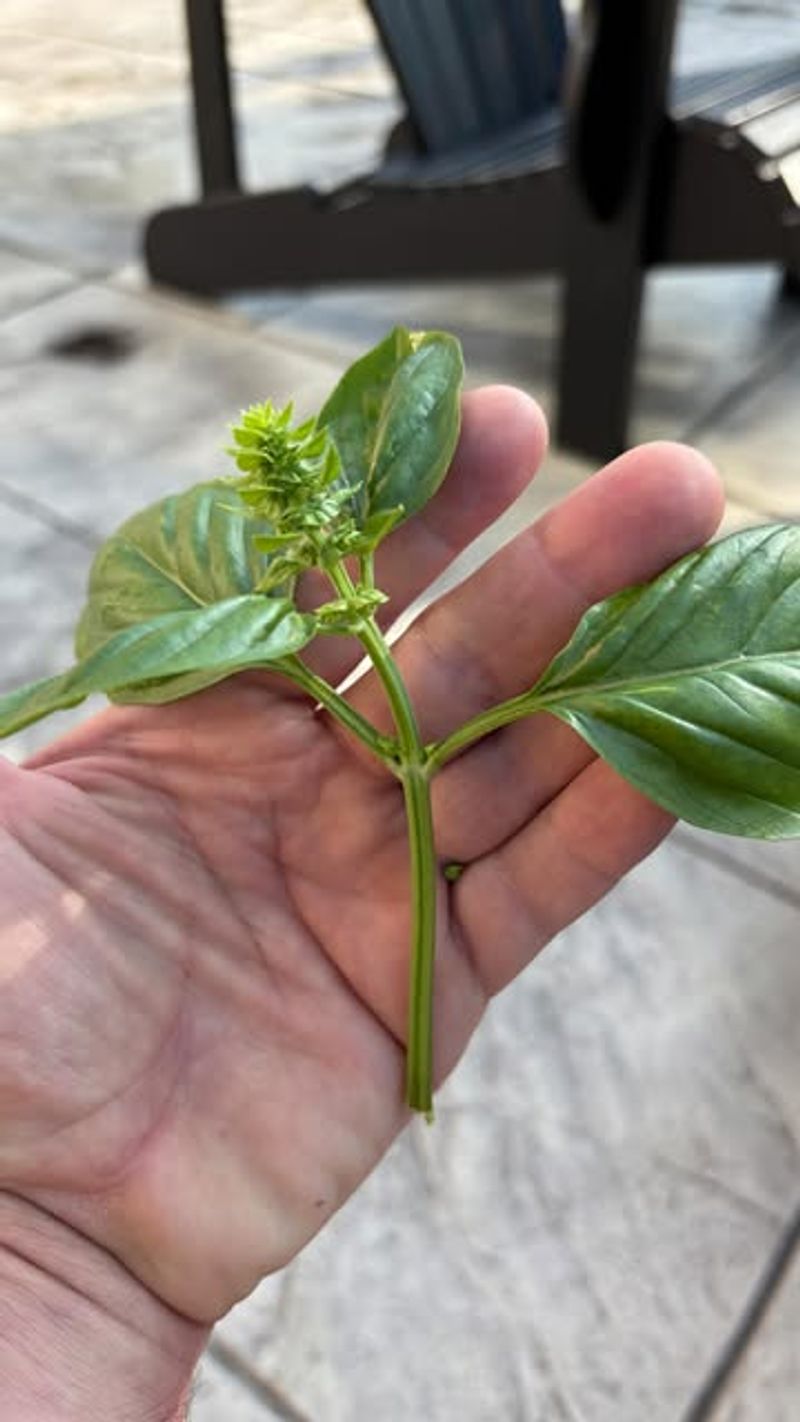
Basil has a biological mission, and by August it is working hard to complete it.
As days stay long and temperatures stay warm, the plant naturally shifts its energy toward producing flowers and eventually seeds. For gardeners focused on harvesting flavorful leaves, that shift is not great news.
Flower buds pull energy away from foliage and can cause leaves to become smaller and less flavorful if left unchecked.
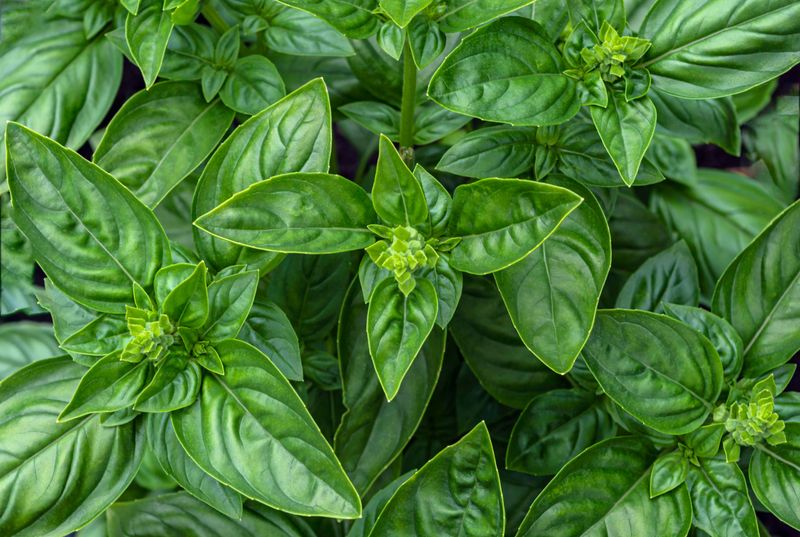
Catching flower buds early makes the job much easier. Look for the small, tight cluster of tiny leaves forming at the very tip of each stem. Pinch off not just the bud itself but also the short stem section just beneath it.
Your Michigan Garden Changes Every Week. Your Plan Should Too.
Gardening in Michigan changes quickly throughout the season. Every Friday you’ll receive a simple weekly plan showing exactly what to plant, prune, fertilize, harvest, and protect so you never miss the right timing.
Removing that extra inch or two encourages the plant to branch from the leaf pairs lower down rather than simply re-sending a new bud from the same spot. Not every gardener needs to remove all flower buds from every plant.
Basil flowers are actually quite attractive to bees, butterflies, and other beneficial pollinators visiting your Michigan garden.
If supporting those visitors matters more to you than maximizing your leaf harvest, leaving a few plants to flower fully is a perfectly reasonable choice.
You can enjoy the best of both worlds by keeping some plants pinched for kitchen use and allowing others to bloom freely for wildlife.
Just remember that once a plant sets seed, leaf production slows considerably, so be intentional about which plants you manage and which ones you allow to follow their natural cycle through the rest of summer.
3. Harvest Stem Tips Instead Of Picking Only Large Leaves
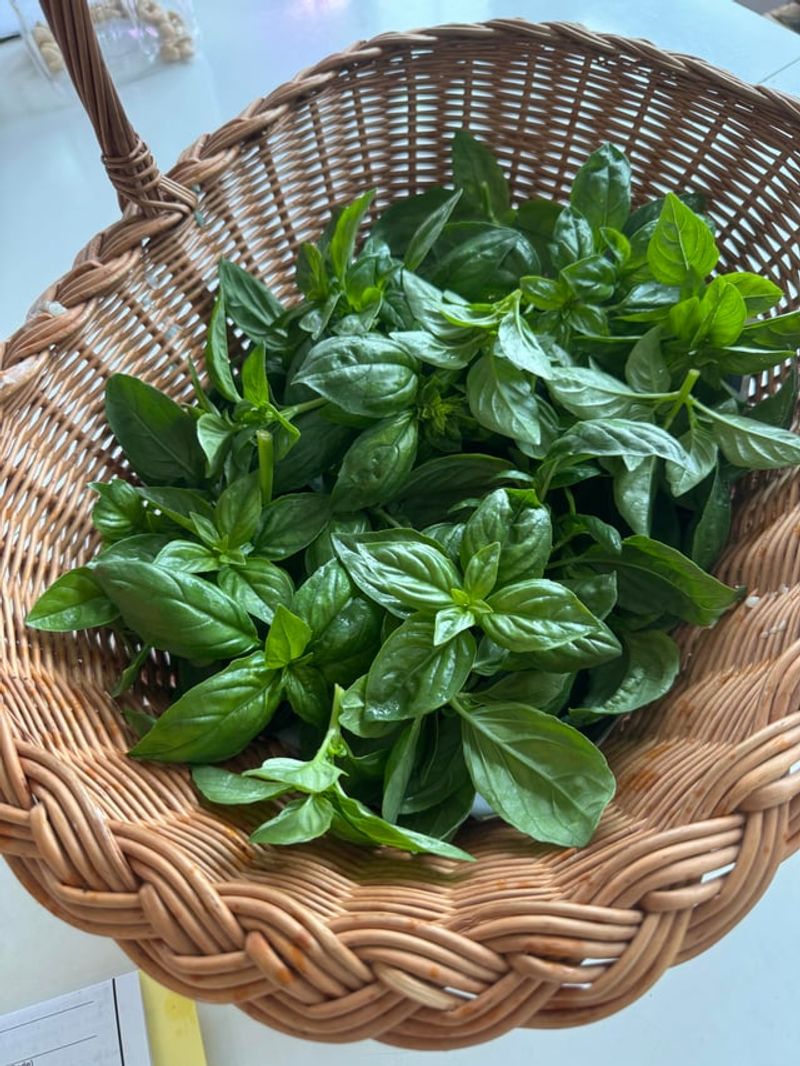
Grabbing the biggest leaves off your basil plant feels satisfying in the moment, but it is actually one of the least effective ways to harvest.
When you repeatedly pull only the large lower leaves, the plant keeps growing taller from the top while the base becomes bare and sparse.
Over time, that pattern creates a tall, thin plant with leaves clustered way up high and nothing but bare stem below.
It looks awkward and produces far less than a well-managed plant. A smarter approach is to harvest several inches of the tender stem tip along with its attached leaves.
Make your cut just above a leaf pair, the same technique used when pruning for fullness. Not only do you walk away with a useful bunch of fresh basil for the kitchen, but you also trigger branching below the cut.
Every stem tip you harvest this way effectively becomes two new stems growing back in its place. Frequency matters here just as much as technique.
Rather than waiting for stems to grow very long before harvesting aggressively all at once, aim for moderate harvests every week or so.
Frequent, lighter harvests keep the plant actively branching and growing throughout August.
Think of it like a feedback loop where your kitchen use directly drives the plant to become bushier and more productive.
Michigan gardeners who adopt this rhythm often find their basil plants look noticeably fuller by mid-August compared to plants that were only harvested occasionally or stripped of large leaves without any consistent pruning strategy.
4. Leave Enough Foliage For Quick Regrowth
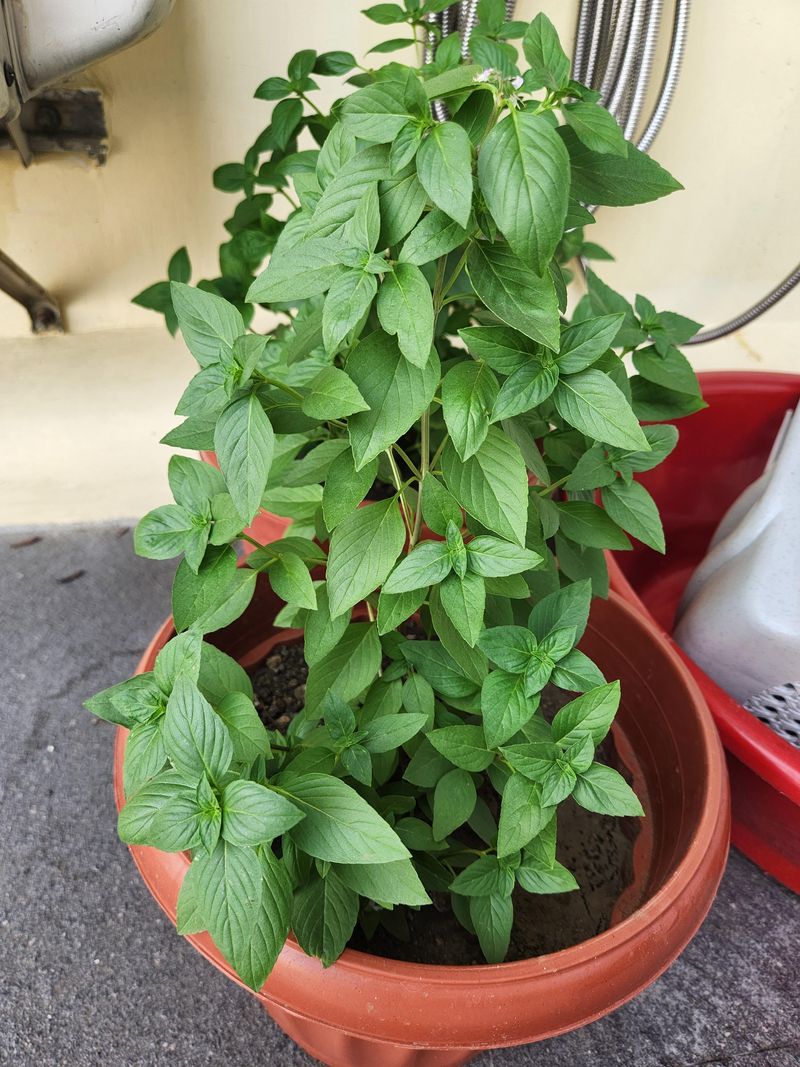
Every leaf on a basil plant is a tiny solar panel. Leaves capture sunlight and convert it into the energy that fuels new growth, root development, and overall plant health.
When too many leaves are removed at once, the plant loses much of its ability to power itself back up quickly.
That is why knowing how much to leave behind is just as important as knowing how much to take.
A reliable guideline is to leave at least four to six inches of healthy shoot growth on every stem you harvest from.
That means there should still be two or three sets of green, healthy leaves remaining after each cut.
For small plants, recently transplanted basil, or any plant that has been dealing with drought stress or inconsistent watering, be even more conservative.
Those plants need extra foliage to recover and should not be pushed with heavy harvesting until they show strong, vigorous new growth.
It can be tempting to harvest heavily when your basil looks lush and you want to make a big batch of pesto or sauce before the season winds down.
That is completely understandable, and a large harvest is not a problem as long as you leave enough foliage behind to support recovery.
Spreading a big harvest across several plants rather than stripping one plant completely is a practical strategy that keeps your whole basil patch productive.
Michigan gardeners who respect this balance tend to enjoy a steady, generous supply of fresh basil from mid-July all the way through the end of August and into early September.
5. Give Basil At Least Six Hours Of Bright Sunlight
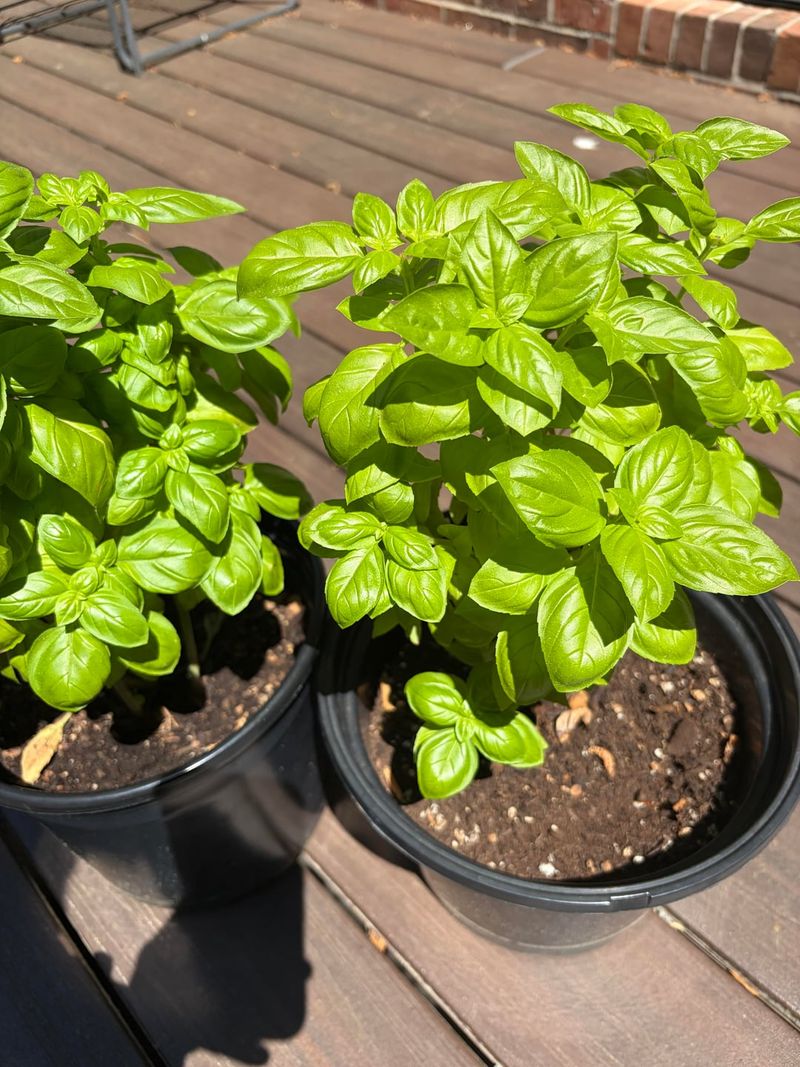
Sunlight is not optional for basil. It is the single most important environmental factor driving compact, flavorful, productive growth.
Basil is a sun-loving herb that evolved in warm, bright climates, and it performs best when it receives a full six to eight hours of direct sunlight every day.
Plants that get less than that tend to stretch upward in search of more light, producing long, weak stems with smaller leaves and less intense flavor.
In Michigan, August sunshine is usually reliable and strong, but garden layouts can still create shading problems.
A spot that received full sun in June may be partially shaded by mid-summer once nearby plants have filled in and grown taller.
Check your basil’s actual light exposure during the brightest part of the day and not just in the morning or late afternoon when the angle is lower.
If surrounding plants or structures are blocking several hours of peak sunlight, it may be worth thinning nearby plants or relocating your basil. Container growers have a real advantage here because pots can be moved.
If your potted basil is looking leggy or pale despite regular pruning, try shifting it to a sunnier spot on your patio, deck, or driveway.
Just keep a close eye on soil moisture after making the move, because containers sitting in full August sun can dry out surprisingly fast.
Checking the soil every day and watering as needed will keep your plant thriving in its new brighter location without any risk of stress from drying roots.
6. Keep The Root Zone Consistently Moist
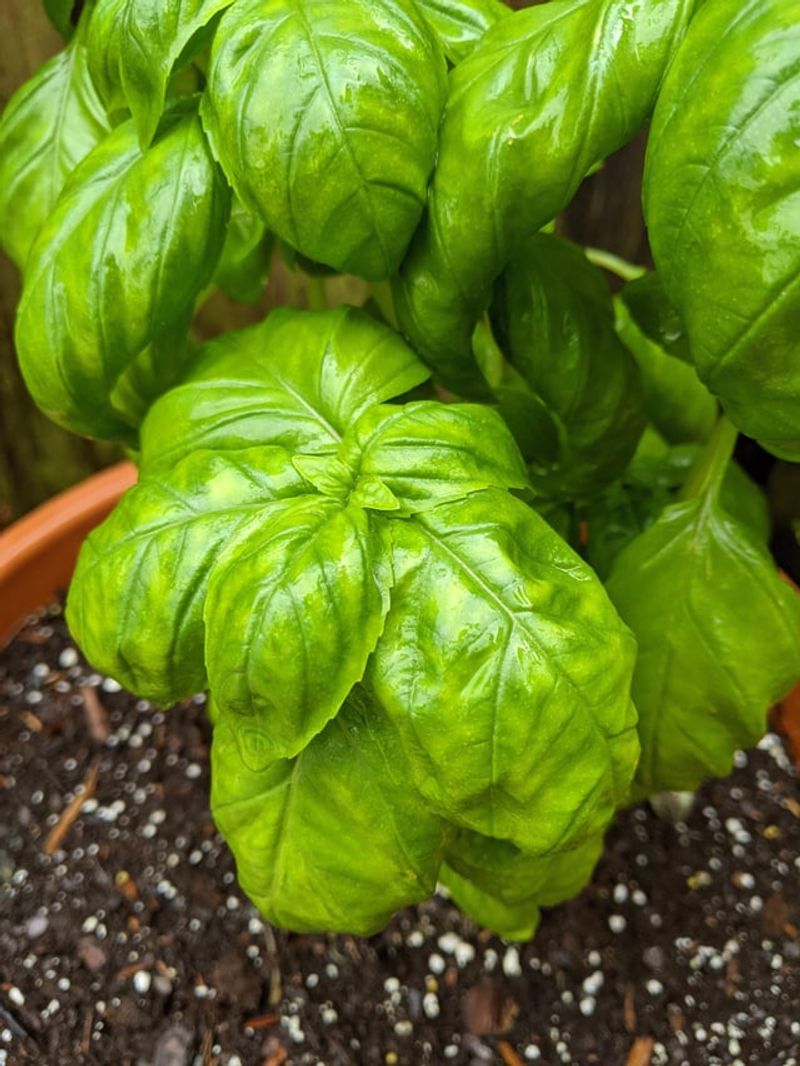
Basil wilts fast and makes no secret of it. On a hot August afternoon in Michigan, a thirsty basil plant can go from perky to dramatically droopy in just a few hours.
While some herbs tolerate dry conditions fairly well, basil genuinely struggles when its root zone dries out repeatedly.
Consistent moisture is one of the most straightforward ways to support strong, steady growth throughout the month.
For garden beds, the most reliable way to check moisture is to push a finger about an inch into the soil near the base of the plant. If it feels dry at that depth, it is time to water.
When you do water, do it deeply enough that moisture reaches well below the surface where the roots are actively feeding.
A shallow sprinkle that only wets the top layer of soil does very little to support a plant on a hot day.
Container basil needs even more attention because potting mix dries out much faster than garden soil. During peak August heat, pots may need watering every single day.
Always water near the soil surface rather than soaking the leaves repeatedly, as wet foliage over long periods can encourage fungal problems.
Double-check that every container has open drainage holes at the bottom, because basil sitting in waterlogged soil develops root problems that no amount of pruning or fertilizing can fix.
Getting the watering routine right is one of the simplest and most impactful things you can do to support bigger, healthier basil all month long.
7. Use Fertilizer Sparingly
More fertilizer does not always mean more growth, and with basil that is especially true.
Overfertilizing can push out a flush of soft, watery leaf growth that looks impressive at first but is actually more vulnerable to pests, disease, and stress.
If the underlying issues causing poor growth are related to low light, irregular watering, overcrowding, or root problems, adding extra fertilizer will not solve any of them.
It may even make things worse by encouraging weak, fast growth on an already struggling plant.
For basil growing directly in garden beds that were amended with compost at the start of the season, supplemental fertilizer is often unnecessary.
Healthy, rich garden soil typically provides everything basil needs to grow well. Pay attention to how your plants look.
Pale yellow leaves, very slow growth, or noticeably small new leaves can sometimes signal a nutrient gap, and those situations may justify a light feeding with a balanced, water-soluble fertilizer.
Container basil is a different story. Nutrients wash out of pots every time you water, so plants grown in containers can genuinely benefit from occasional light feeding during a long growing season.
Use a diluted solution rather than full strength, and follow the product label directions carefully. Applying a heavy dose in hopes of forcing dramatic August growth tends to backfire.
A gentle, consistent approach works far better with basil than any aggressive feeding strategy.
Keep the focus on good light, steady moisture, and regular pruning, and fertilizer becomes a helpful supplement rather than a crutch.
8. Check New Growth For Basil Downy Mildew
A plant can be perfectly pruned, well watered, and sitting in full sun, but if Basil Downy Mildew moves in, all that effort gets undermined fast.
This disease has become increasingly common in Michigan gardens over the past decade, and August warm, humid nights create ideal conditions for it to spread.
Knowing what to look for early can save your harvest and protect the rest of your planting.
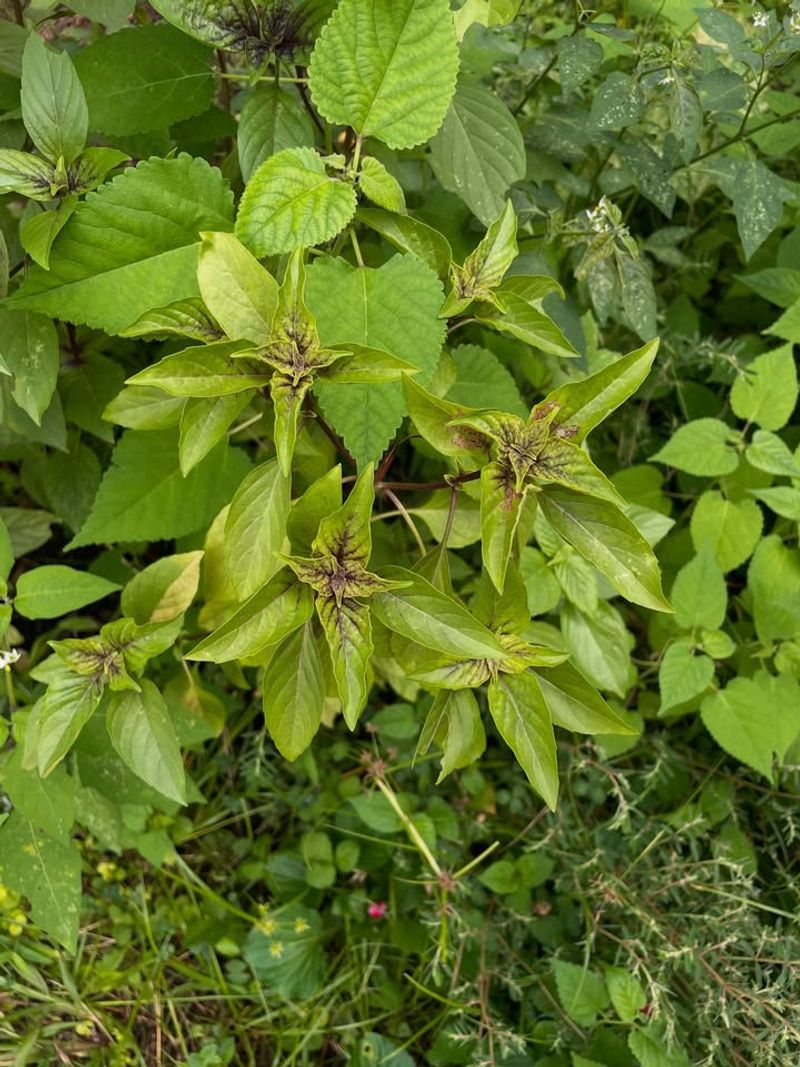
The first signs usually appear on the upper surface of leaves as irregular yellow or pale green patches that might initially look like a nutrient problem or drought stress. Flip the leaf over and look at the underside.
If you see a dark gray or purple fuzzy coating beneath those yellow areas, that is a strong indicator of Basil Downy Mildew and not a simple nutrient issue.
Catching it at this stage gives you the best chance to respond effectively before it spreads through the whole bed.
Remove and discard any heavily affected plant material right away, and avoid leaving it in your compost pile where spores can persist.
Improve air circulation around your plants by spacing them adequately and removing any overcrowded foliage.
Water at the base of the plant rather than overhead, and try to water in the morning so the soil surface dries before evening.
For future seasons, look for downy mildew resistant basil varieties, which are now widely available and perform much better in humid Michigan summers.
Before cool autumn weather rolls in, harvest and preserve all the healthy basil you can so nothing goes to waste.