What Florida Sunshine Mimosa Needs In May So It Spreads Without Getting Ragged
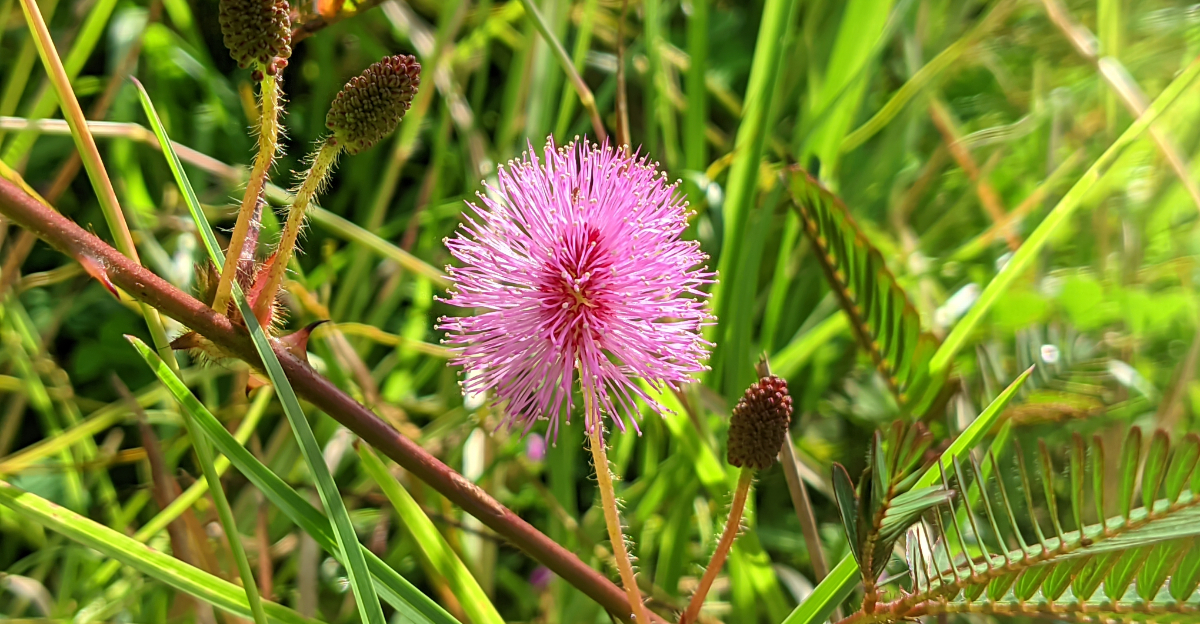
May is the month that makes or breaks a Sunshine Mimosa planting, and most gardeners don’t realize it until the damage is already done.
This ground cover has a well-earned reputation for spreading beautifully across Florida landscapes, that low, lush, pink-flowered carpet look that seems to take care of itself.
And it can, but not without a little direction in the right season. Left completely on its own in May, Sunshine Mimosa tends to spread unevenly, thin out in spots, and start looking scraggly right when your landscape should be hitting its peak.
The good news is that a few targeted moves this month set the tone for the entire growing season. Not a full maintenance overhaul, not hours of weekend labor, just the right attention at the right time.
Nail the basics in May and Sunshine Mimosa does exactly what it’s famous for, spreading thick, staying full, and covering ground in a way that looks intentional from every angle.
1. Give Sunshine Mimosa Room To Run
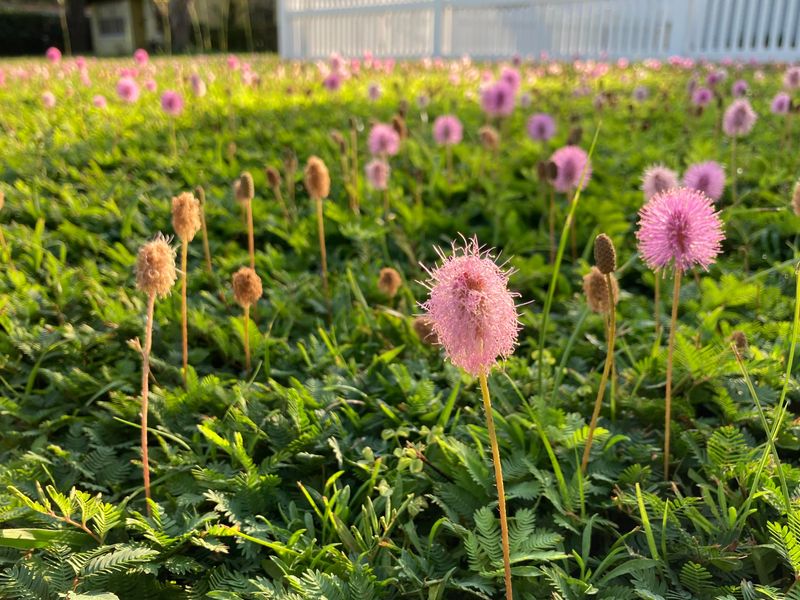
Room is not a luxury for sunshine mimosa, it is a requirement. Mimosa strigillosa spreads by sending out low, creeping stems that root as they go, building a soft mat that can cover a surprising amount of ground when nothing is crowding it.
In May, as growth picks up speed ahead of the rainy season, any competition from nearby shrubs, ornamental grasses, or dense plantings can force those runners to weave awkwardly rather than fill in cleanly.
Open, sunny ground is where this groundcover truly performs. It works beautifully along lawn edges, down gentle slopes, around mailbox beds, and across wide, sun-drenched areas where other low-growing options struggle in Florida’s heat.
The key is giving it enough unobstructed space so the mat can knit together evenly rather than growing in one direction while leaving gaps elsewhere.
Tight, formal beds are not the right fit. If the space requires clean edges and predictable borders, sunshine mimosa will need consistent management to stay contained, which can work against its natural spreading habit.
Removing competing weeds and low-growing plants from the edges of an established patch in May gives the runners clear ground to claim before summer rain speeds everything up.
Open space in May translates directly into fuller, more uniform coverage by midsummer.
2. Water Deeply Before Summer Heat Peaks
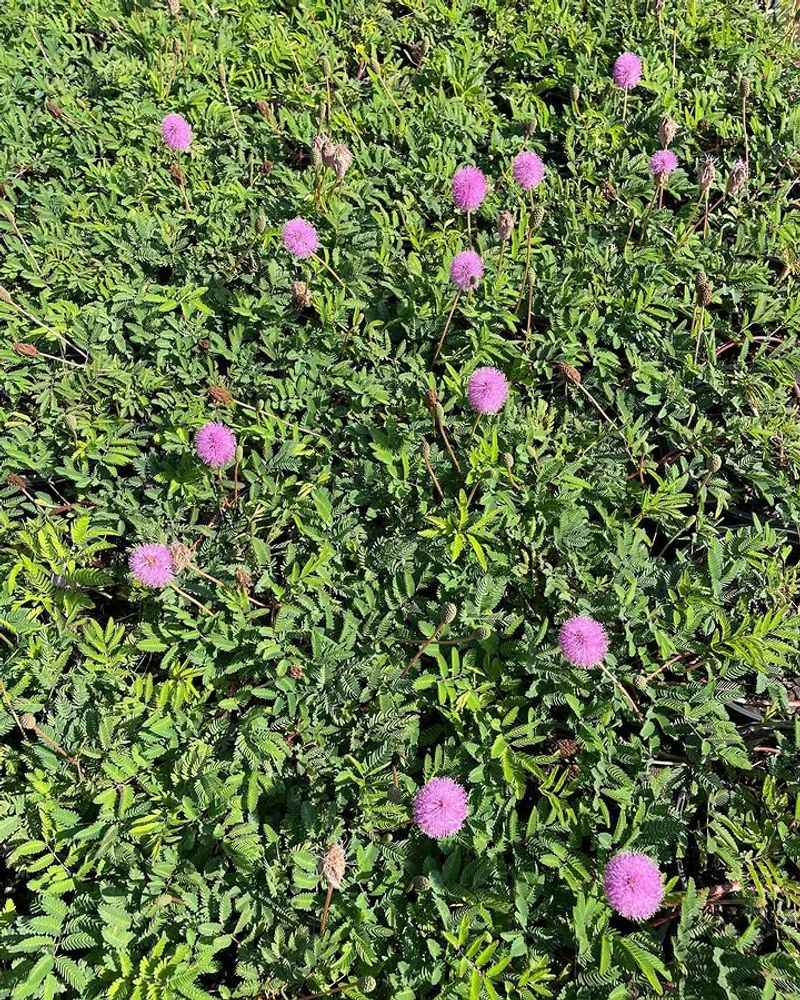
Established sunshine mimosa is impressively tough once its roots have settled in, but May can be a tricky month for newer plantings before the rainy season arrives in full.
In North Florida especially, late spring can bring dry spells that stress young runners before they have had time to anchor properly.
A deep soak once or twice a week does far more good than a light daily sprinkle that barely reaches the root zone.
The goal is to encourage roots to chase moisture downward, not stay near the surface where heat and evaporation work against them. Check the soil before reaching for the hose.
If the top inch or two is still damp, hold off. Overwatering can lead to root problems just as easily as drought stress can slow coverage.
Your Florida Garden Changes Every Week. Your Plan Should Too.
Gardening in Florida changes quickly throughout the season. Every Friday you’ll receive a simple weekly plan showing exactly what to plant, prune, fertilize, harvest, and protect so you never miss the right timing.
South Florida gardeners may already be seeing afternoon showers by mid-May, which changes the math considerably.
In those areas, supplemental watering may taper off naturally as the wet season takes hold, but it is worth monitoring newer plugs that have not yet rooted deeply.
Drip irrigation or slow, targeted watering near the base of young starts is more effective than overhead sprinklers that wet the foliage without penetrating the soil. Getting moisture right in May sets the foundation for strong, even growth through summer.
3. Trim Ragged Edges After Spring Growth
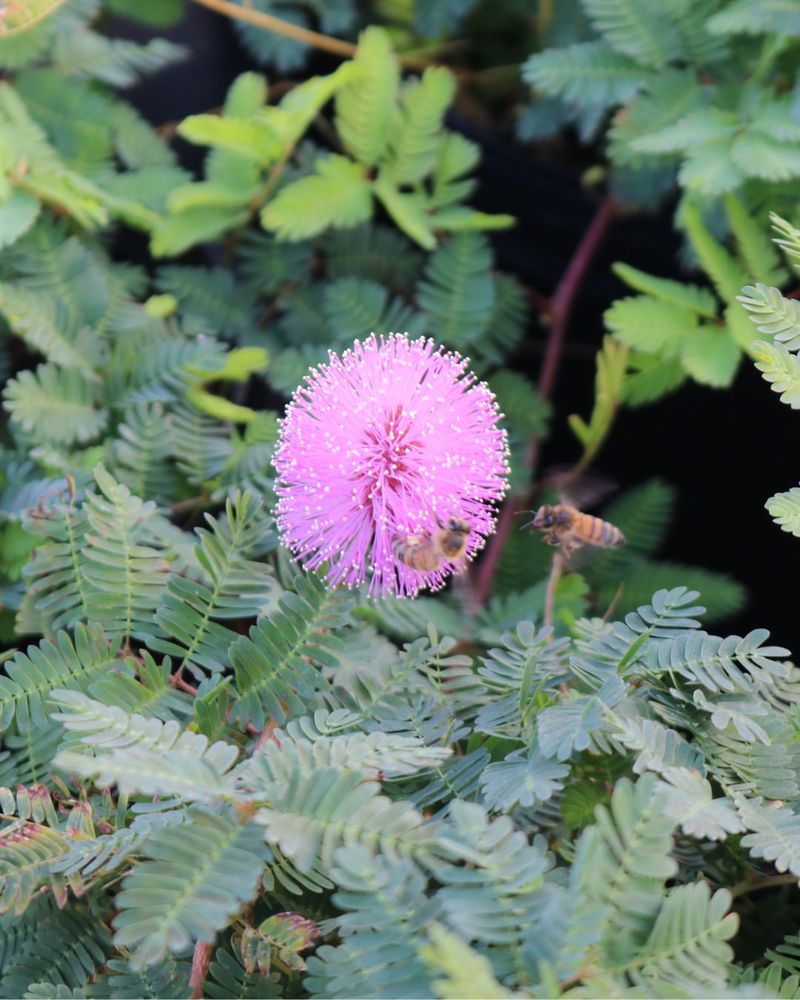
Spring growth can be generous with sunshine mimosa, and by May some patches start to look more like they are escaping than filling in.
Runners that have crept into walkways, edged over landscape borders, or tangled with nearby plants can make an otherwise healthy groundcover look unkempt.
A light cleanup trim in May brings the edges back without setting the whole patch back.
The goal here is shaping, not scalping. Clean hand shears or a string trimmer used carefully along the perimeter can redirect growth and neaten the look without removing so much that the mat thins out in the middle.
Focus on stray stems that have wandered far from the main patch and any sections where runners have piled on top of each other without rooting down cleanly.
If a mower is used along a lawn-edge transition, raise the deck height so only the outermost tips are touched. Cutting too short stresses the stems and reduces the density that makes sunshine mimosa’s coverage so effective.
Sharp blades matter here. Dull equipment tears rather than cuts, leaving ragged stem ends that look rough and can slow regrowth.
A single well-timed trim in May, done lightly and with clean tools, keeps the patch looking intentional and healthy heading into the most active growth period of the year.
4. Feed Lightly Or Skip Fertilizer
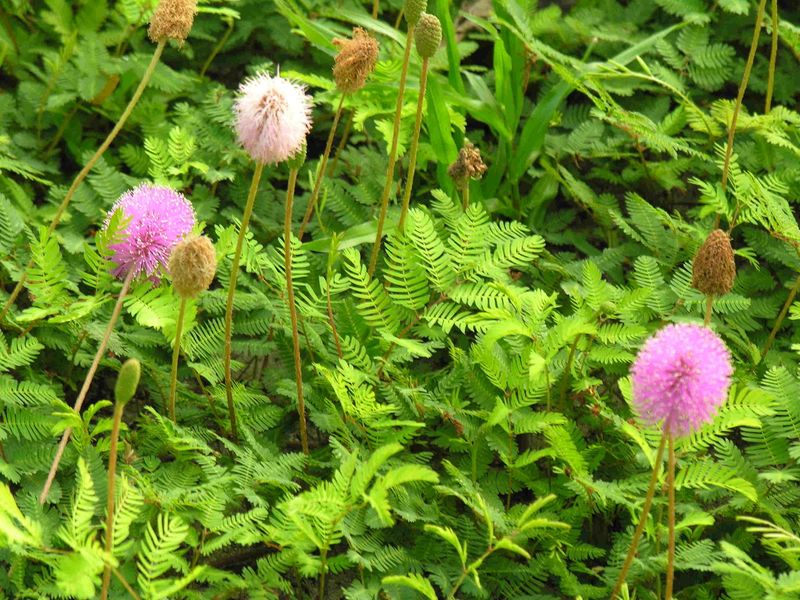
Sunshine mimosa has a quiet secret that many Florida gardeners do not expect: it fixes its own nitrogen through root nodules, similar to other legumes. That means heavy fertilizing is not just unnecessary, it can actually push the plant in the wrong direction.
Too much nitrogen encourages fast, leafy growth that looks uneven and can make the mat harder to manage while also inviting weed competition alongside it.
In most established Florida landscapes, sunshine mimosa does fine without any supplemental feeding at all.
If growth is genuinely weak and a soil test has confirmed a specific deficiency, a light application of a balanced, slow-release fertilizer is the most targeted response.
Guessing and adding fertilizer anyway is one of the most common mistakes Florida gardeners make with native groundcovers.
May is also a bad month to fertilize heavily near waterways or in areas where runoff is a concern, since Florida’s approaching rainy season can carry excess nutrients into stormwater systems quickly.
UF/IFAS extension guidance consistently recommends restraint with native Florida plants that are adapted to the state’s naturally low-nutrient sandy soils.
Skip the feeding this month unless you have a clear, confirmed reason to act. A healthy sunshine mimosa in the right spot will spread and bloom without any fertilizer push from you.
5. Keep Weeds From Breaking The Mat
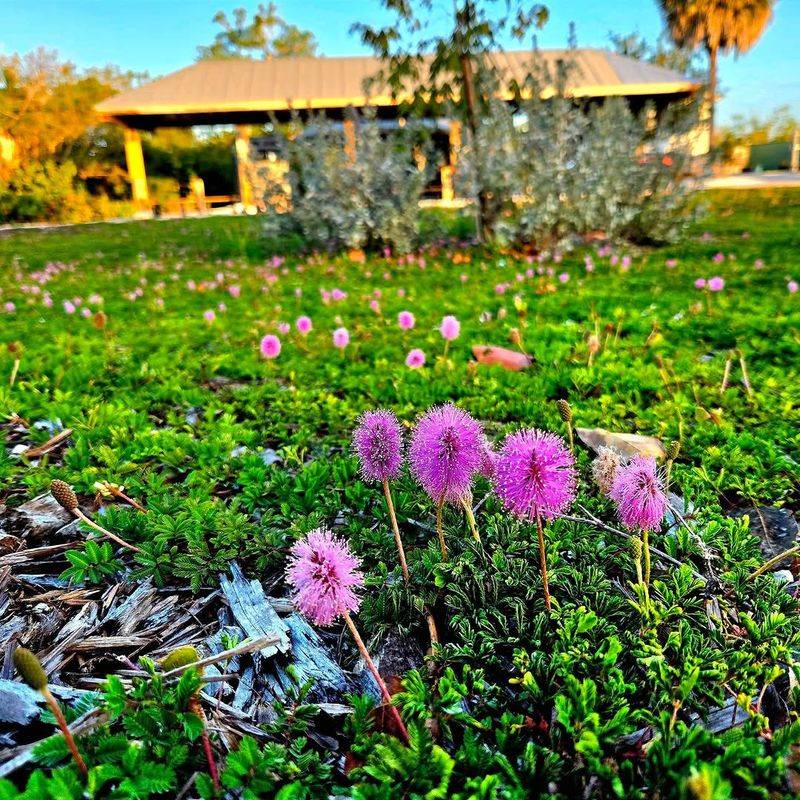
Weeds and sunshine mimosa have a complicated relationship in May.
As warmth and moisture increase heading into summer, fast-growing weeds like chamberbitter, dollarweed, and Florida pusley can push up through gaps in the mat and interrupt the carpet-like coverage that makes this groundcover so appealing.
Once weeds establish and seed, catching up becomes much harder.
Hand-pulling is the most reliable method for weeds that have worked their way into an established patch. Get them early, before they seed, and try to pull the full root rather than just snapping the stem.
For gaps around young starts, a thin layer of mulch can slow weed germination without smothering the runners trying to spread across the surface.
Avoid deep mulch layers directly over the mat since sunshine mimosa roots as it runs and needs soil contact to do that effectively.
Broad herbicide applications over the groundcover are risky and generally not appropriate unless a specific product is labeled for use around Mimosa strigillosa and the target weed.
Many common weed destroyers will harm or set back the groundcover along with the weeds.
Spot treatment with careful application is a better approach when chemical control is truly needed.
Catching weeds in May, before the rainy season amplifies everything, saves a significant amount of work later in summer when conditions make weed pressure much harder to manage.
6. Check Bare Spots Before Rainy Season
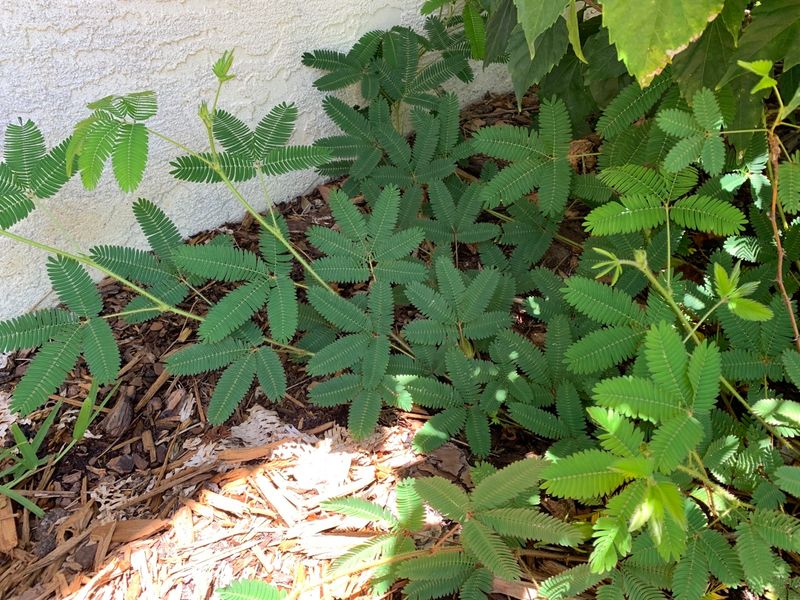
Bare spots in a sunshine mimosa patch are not always a sign of failure, but they do need attention before the rainy season arrives and makes uneven growth worse.
May is the ideal month to walk the bed carefully and note where coverage has thinned, where foot traffic has compacted the soil, or where shade from a nearby tree has crept in since last season.
Identifying the cause matters as much as fixing the visible symptom.
If the bare area is getting less than six hours of direct sun, sunshine mimosa will not fill it in reliably no matter how many plugs are added. Shade is one of the most common reasons patches stay thin along edges near structures or under tree canopies that have filled out over the years.
In those spots, a different groundcover species is a more practical solution.
Where sun is adequate, bare spots can often be addressed by guiding nearby runners toward the gap and pressing the stem gently against moist soil so it can root. Adding new plugs from a nursery or from a healthy section of the existing patch works well too.
Improve soil contact by raking away any debris, then water the area consistently for the first few weeks. Do not assume a bare spot needs fertilizer before checking whether the real issue is drainage, compaction, shade, or irrigation coverage.
7. Mow High Where It Meets Lawn
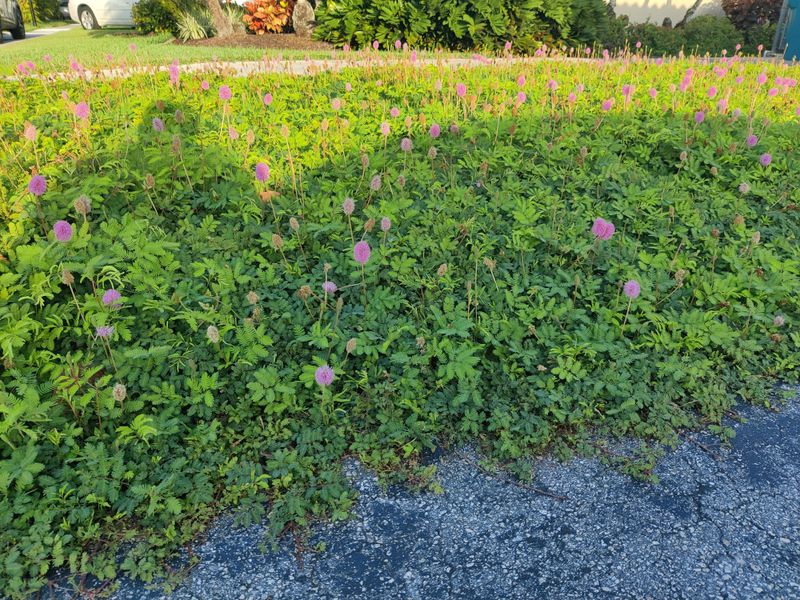
Sunshine mimosa and lawn turf often share a border in Florida yards, and managing that transition in May takes a bit of thought.
Mimosa strigillosa can handle occasional mowing, which is one of the traits that makes it attractive for lawn-alternative areas and transitional beds.
However, cutting too low too often removes the stems and foliage that support blooming and dense mat formation.
Where the groundcover meets turf, raising the mower deck to its highest setting creates a much more forgiving pass. At a higher cut, the mower clips only the uppermost growth and keeps a tidy edge without stripping the mat down to bare stems.
Sharp blades are essential. A dull blade shreds the soft stems of sunshine mimosa rather than cutting cleanly, which leads to browning tips and a rough appearance that takes weeks to recover from.
In areas where foot traffic is heavy or where lawn equipment passes frequently, consider installing a simple border or edging strip to separate the groundcover from the mowed turf zone.
This reduces accidental scalping and gives the mat a defined boundary to fill toward rather than getting clipped back every week.
Mowing is a useful tool for managing this groundcover at transitions, but it works best when used intentionally and at the right height rather than as a routine pass during regular lawn maintenance.
8. Protect The Pink Blooms From Overcutting
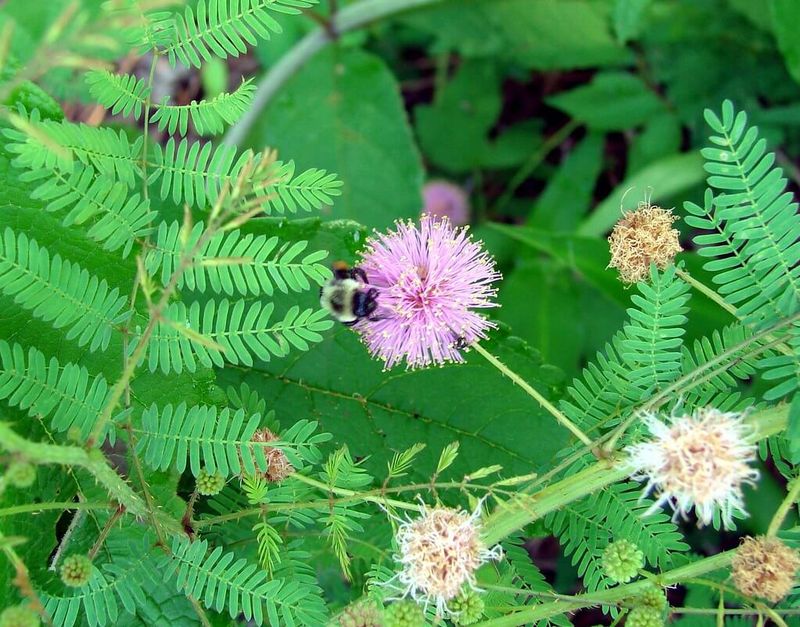
Those pink powderpuff blooms are the reason most Florida gardeners fall for sunshine mimosa in the first place.
Small bees, butterflies, and other native pollinators visit the flowers regularly, making this groundcover genuinely useful in a habitat garden, not just decorative.
Frequent trimming or aggressive mowing through the blooming period cuts the flowers off before pollinators and gardeners get to enjoy them.
May is one of the more active blooming months for Mimosa strigillosa in Florida, so timing any cleanup cuts thoughtfully helps preserve the floral display.
If trimming is needed for shape or edge management, focus on the perimeter and let the interior of the mat bloom undisturbed.
Even a small section left uncut keeps the pollinator value intact while still letting you maintain a tidy overall appearance.
Sections that are mowed regularly along lawn transitions will bloom less frequently than areas left to grow freely, which is a reasonable trade-off in zones where a neat edge matters.
But in open beds, slopes, or naturalistic areas where the goal is coverage and ecological value, holding back on cutting through late spring and early summer lets the groundcover deliver its full seasonal show.
The blooms close at night and reopen each morning, so a patch in full flower on a sunny May morning is one of those simple garden rewards that is worth protecting with a little scheduling and restraint.