Why Georgia Gardeners Should Think Twice Before Removing This Large Spider
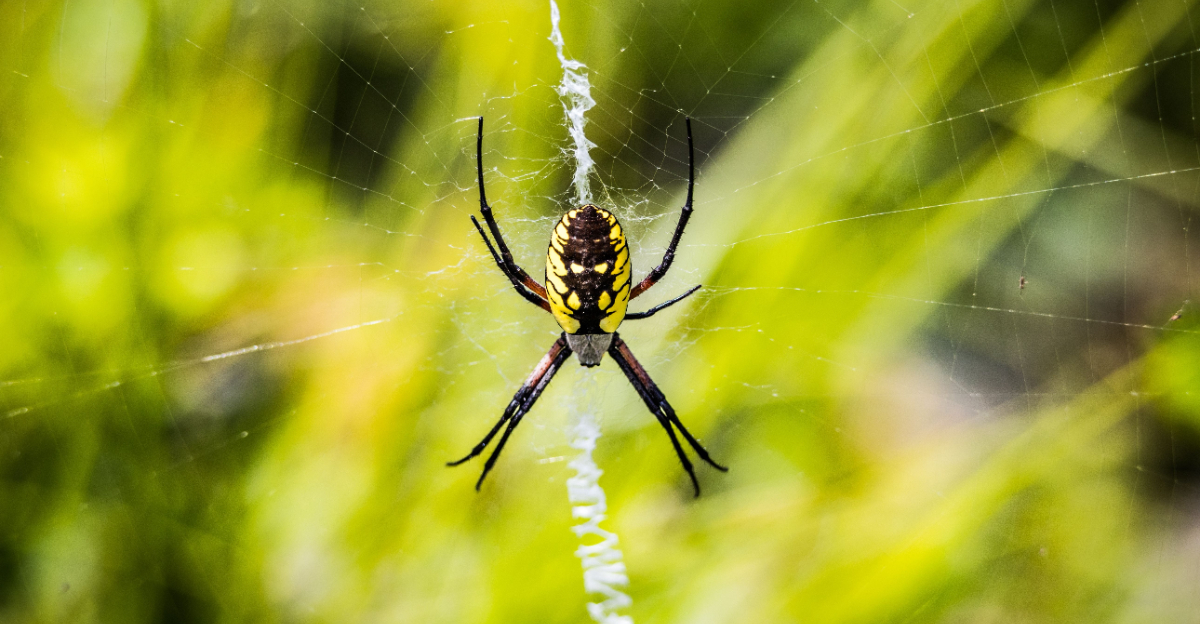
Not every large spider in your yard is there to cause trouble. Some are doing far more good than most people ever realize.
The first reaction is often to grab a broom or spray before taking a closer look. That quick decision can remove one of the most helpful hunters around your home.
Size has a way of changing how we see wildlife. The biggest spiders often have the worst reputation, even when they spend their time keeping other pests in check.
Large spiders appear in Georgia every summer, and they usually have a reason for choosing that spot. Their presence can reveal more about your yard than you might expect.
Before you chase the next one away, know what you are looking at.
One surprising fact may completely change your opinion of this misunderstood visitor.
1. Yellow Garden Spider Catches Many Garden Pests
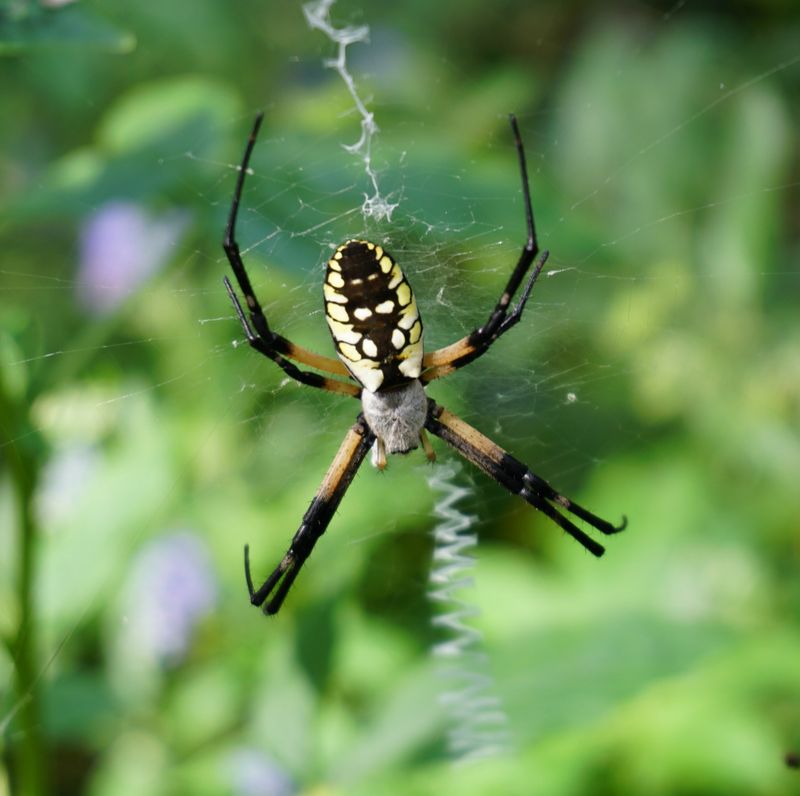
Pest control does not get more natural than this. Yellow garden spiders spin large orb webs specifically designed to trap flying and crawling insects that cause real damage to garden plants.
Grasshoppers, aphids, beetles, and moths are among the insects these spiders catch on a regular basis. Each of those insects can strip leaves, puncture stems, or spread plant disease if left unchecked.
A single spider positioned near your tomatoes or squash can intercept a surprising number of pests before they ever reach the plants. No sprays, no pellets, no waiting for a product to arrive.
Spiders do not pick and choose only harmful bugs, so some beneficial insects can get caught too. That is a real tradeoff worth acknowledging.
Still, the overall impact on pest populations tends to lean positive.
Gardeners in the Southeast often deal with intense summer insect pressure. Hot, humid conditions bring out bugs in large numbers from late spring through early fall.
Having a natural predator already working in the garden provides consistent, low-effort support throughout that window.
Rather than viewing the web as an obstacle, think of it as a passive trap running around the clock. No maintenance required.
Just a spider doing exactly what it evolved to do.
2. Bites Are Rare Unless The Spider Is Handled
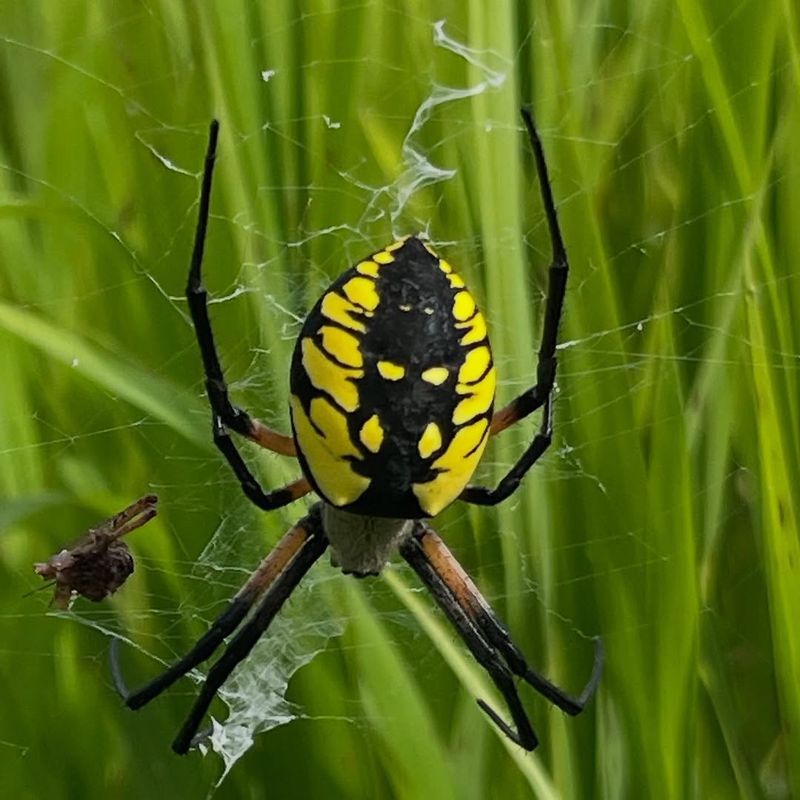
Grabbing this spider is the one thing most likely to cause a bite. Left alone, yellow garden spiders have very little interest in people walking nearby.
Argiope aurantia is not an aggressive species. When startled, the spider’s typical response is to retreat or vibrate its web rapidly, not to charge or attack.
Bites can happen when the spider is accidentally squeezed or picked up directly. Even then, the bite is generally described as similar to a mild bee sting for most healthy adults.
Reactions vary by individual, so anyone with sensitivities should still exercise caution.
Children and pets are more likely to disturb a web out of curiosity. Teaching kids to observe without touching is a practical habit that reduces the chance of any unwanted contact.
Wearing gloves while working near webs is a reasonable precaution if you are pruning or harvesting in areas where spiders are active. That simple habit covers most situations without requiring you to remove the spider at all.
Your Georgia Garden Changes Every Week. Your Plan Should Too.
Gardening in Georgia changes quickly throughout the season. Every Friday you’ll receive a simple weekly plan showing exactly what to plant, prune, fertilize, harvest, and protect so you never miss the right timing.
Keeping a respectful distance is genuinely enough in most cases. These spiders are not looking for conflict.
They are focused on catching food, building webs, and surviving the season. Coexisting with them is far easier than many gardeners initially expect.
3. Large Webs Do Not Damage Healthy Plants
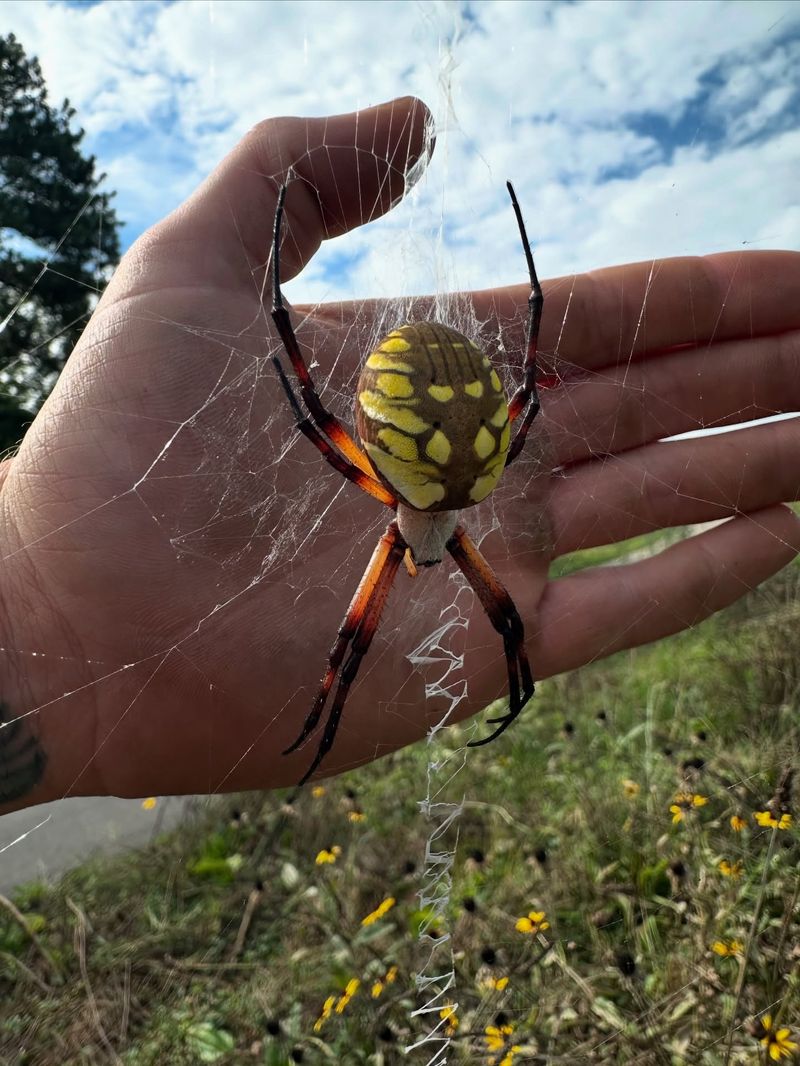
Webs look dramatic, but they do not hurt the plants they are anchored to. Yellow garden spider webs are attached to stems, stakes, and surrounding structures using silk anchor lines.
Silk threads are incredibly lightweight. Plants do not experience stress from supporting a web, and no tissue is punctured or compressed by the attachment points.
Healthy plants with good structure and regular watering are not affected by a nearby web. The spider is not feeding on the plant, drawing nutrients from it, or interfering with pollination in a meaningful way.
Some gardeners worry the web will block sunlight from reaching leaves. In practice, the open lattice structure of an orb web allows plenty of light to pass through.
Leaves directly behind a web are not meaningfully shaded.
Webs do get rebuilt frequently. Argiope aurantia often consumes and rebuilds its web within a single day cycle, so any disruption to the surrounding area is short-lived and minimal.
One exception worth noting: if you are working with very young seedlings or fragile transplants, check the area before disturbing anything. Web removal in those spots should be done carefully to avoid snapping tender stems.
Outside of that specific situation, most established plants in a Georgia garden handle a nearby web without any noticeable issue.
4. Most Adults Stay In One Small Area
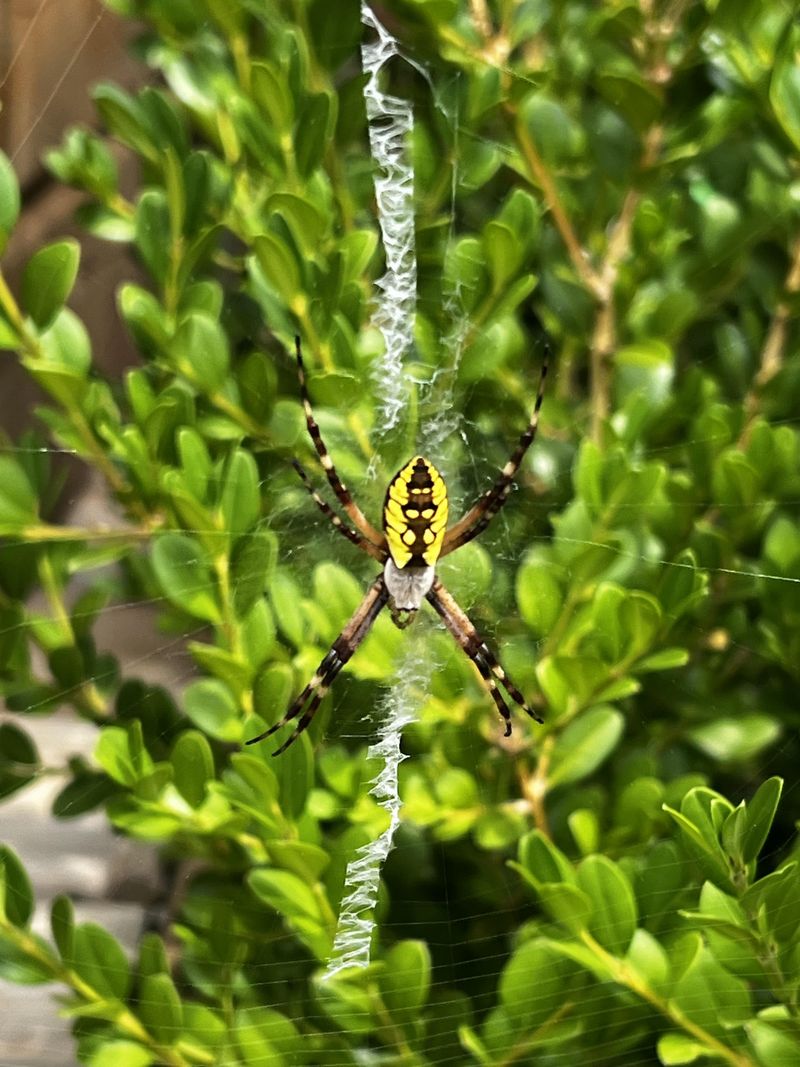
Wandering spiders are far more unsettling than ones that stay put. Yellow garden spiders tend to pick a spot and stick with it for weeks at a time.
Once an adult female builds a web in a productive location, she rarely moves unless the web is repeatedly destroyed or food becomes scarce. That predictability makes coexisting with her much easier.
Knowing exactly where the spider is located lets gardeners plan their movements. You can harvest, weed, and water without surprises once you have spotted the web’s position.
Adult males are smaller and do move around more, especially during mating season in late summer. However, they are far less visible and their webs are much smaller and less elaborate.
Females can reach about one inch in body length, making them visually striking. That size often alarms people at first glance.
Understanding that she is essentially parked in one corner of the garden changes the whole dynamic.
Marking the web location with a small garden stake nearby is a practical trick some gardeners use. It acts as a visual reminder when you are carrying tools or moving quickly through a crowded bed.
Stationary behavior is actually a sign that the spider is thriving. A well-fed spider in a good location has no reason to relocate.
That consistency works in the gardener’s favor.
5. Egg Sacs Remain Through The Winter
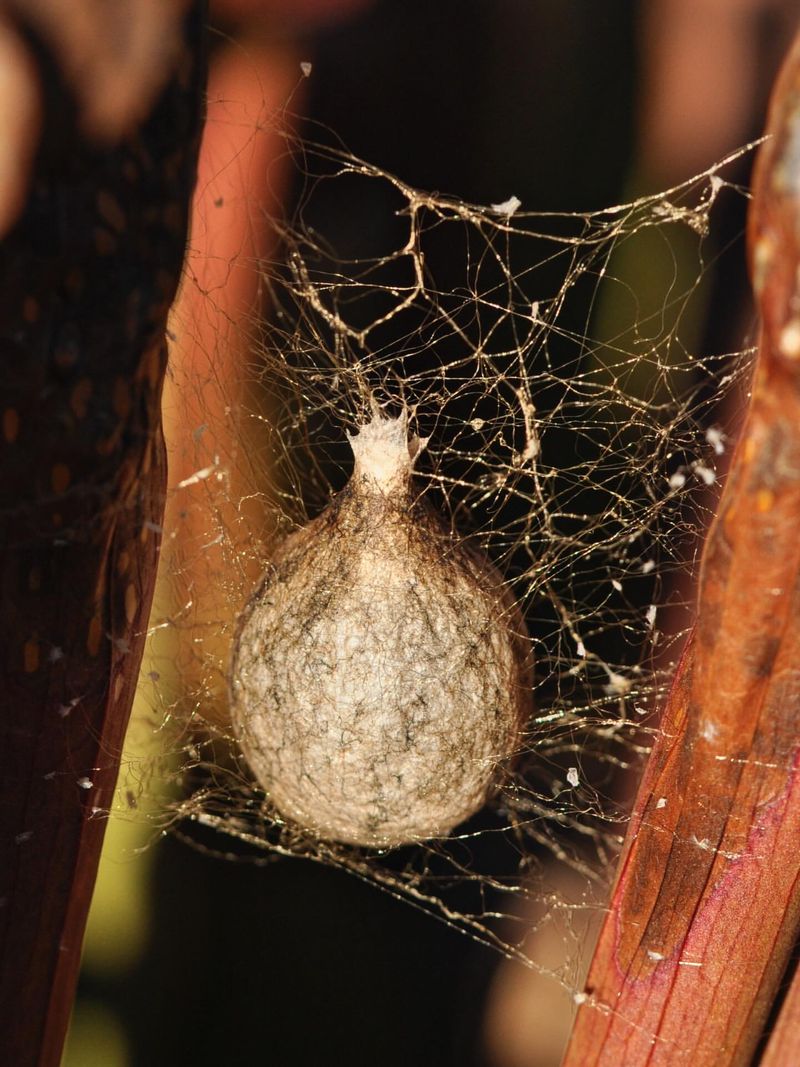
After the growing season ends, the spider’s work is not quite finished. Female yellow garden spiders produce one or more egg sacs in late summer or early fall before the cold sets in.
Each sac is a tough, papery brown casing attached to plant stems or garden structures. Inside, hundreds of tiny spiderlings wait out the cold months in a protected cluster.
Spiderlings emerge in spring when temperatures rise. Most will disperse quickly by releasing silk threads that catch the breeze, a behavior called ballooning.
Only a small number will settle nearby.
Gardeners sometimes accidentally remove egg sacs while doing fall cleanup.
Cutting back dried plant material is a common seasonal task, and egg sacs can easily be mistaken for old seed pods or debris.
Before clearing out dried stems, take a slow look at what is attached. Egg sacs are roughly the size of a marble, tan or brownish in color, and have a papery texture.
Leaving them in place requires no effort at all.
Relocating a sac to a sheltered spot like a brush pile or the base of a shrub is an option if you need to clear the area. Sudden temperature swings can affect exposed sacs, so tucking them somewhere protected makes sense in colder parts of the state.
6. Birds And Wasps Keep Populations In Check
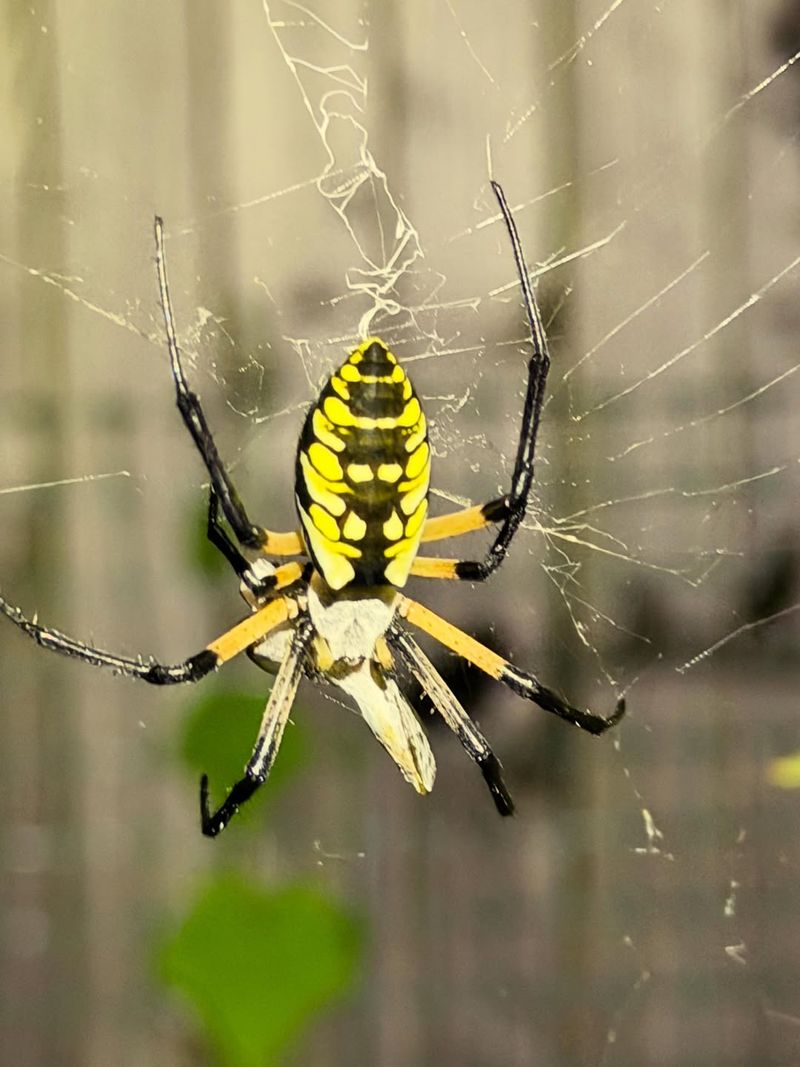
Population explosions of yellow garden spiders are not something most gardeners need to worry about. Natural predators keep their numbers balanced without any human involvement.
Several wasp species are known to parasitize or prey on Argiope spiders. Some lay eggs directly on the spider or its egg sac.
The wasp larvae then feed on the host as they develop.
Birds also take spiders when the opportunity arises. Wrens, mockingbirds, and other small birds that frequent Georgia gardens are capable of picking a spider from its web.
Lizards, including fence lizards common in the Southeast, will consume spiders they encounter while foraging along garden borders and fences.
Because of this natural regulation, yellow garden spider populations tend to stay relatively low in any given yard. Seeing two or three in a large garden over an entire season is fairly typical.
A sudden surge in numbers is uncommon under normal conditions.
Healthy garden ecosystems with diverse plants and minimal pesticide use tend to support stronger predator communities. When those communities are active, no single species tends to dominate.
Spraying broadly for insects can actually remove the very predators that keep spider numbers in check, creating more imbalance rather than less.
7. Moving The Web Is Often Enough
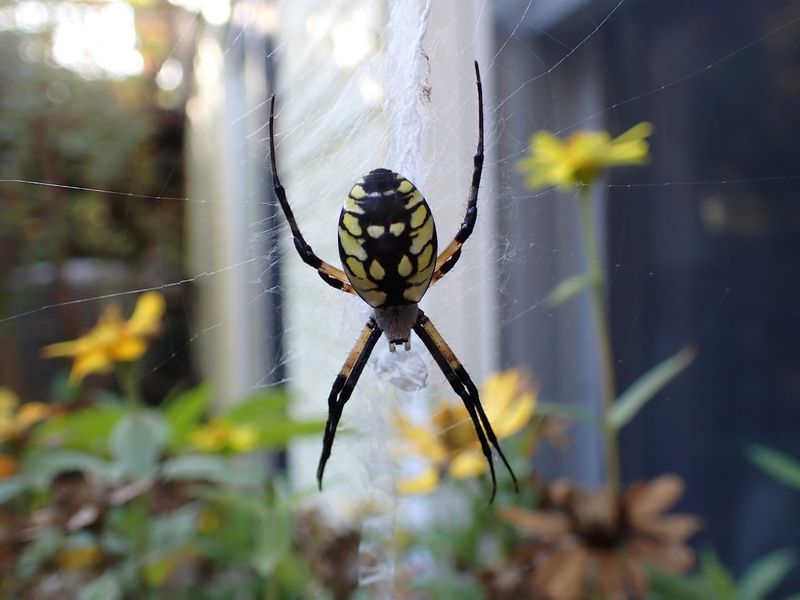
Removal does not have to mean elimination. If a yellow garden spider has built its web somewhere genuinely inconvenient, relocating it is a practical middle ground.
Use a long stick or garden stake to gently encourage the spider onto a branch or stem. Move slowly and avoid direct contact.
Spiders respond better to gradual movement than sudden disturbance.
Choose a relocation spot with similar light conditions and nearby vegetation. A shrub border, a tall ornamental grass clump, or a section of fence with good insect traffic are all reasonable destinations.
Spiders may rebuild in the same general area if the original spot is highly favorable. That is normal behavior.
Repeating the relocation once or twice is usually enough to redirect the spider toward a more suitable location.
Destroying the web without moving the spider tends to result in the spider rebuilding nearby anyway. Relocation is often more effective than simple web removal when your goal is to shift the spider away from a specific area.
Gardeners who grow up in the South often develop a practical attitude toward spiders over time. Seeing them as part of the working garden, rather than as threats, changes how manageable they feel.
A relocated spider in a corner of the yard is still doing its job. That is a win for the whole garden ecosystem.