What Happens To Florida Basil Plants During A Heatwave And How To Help
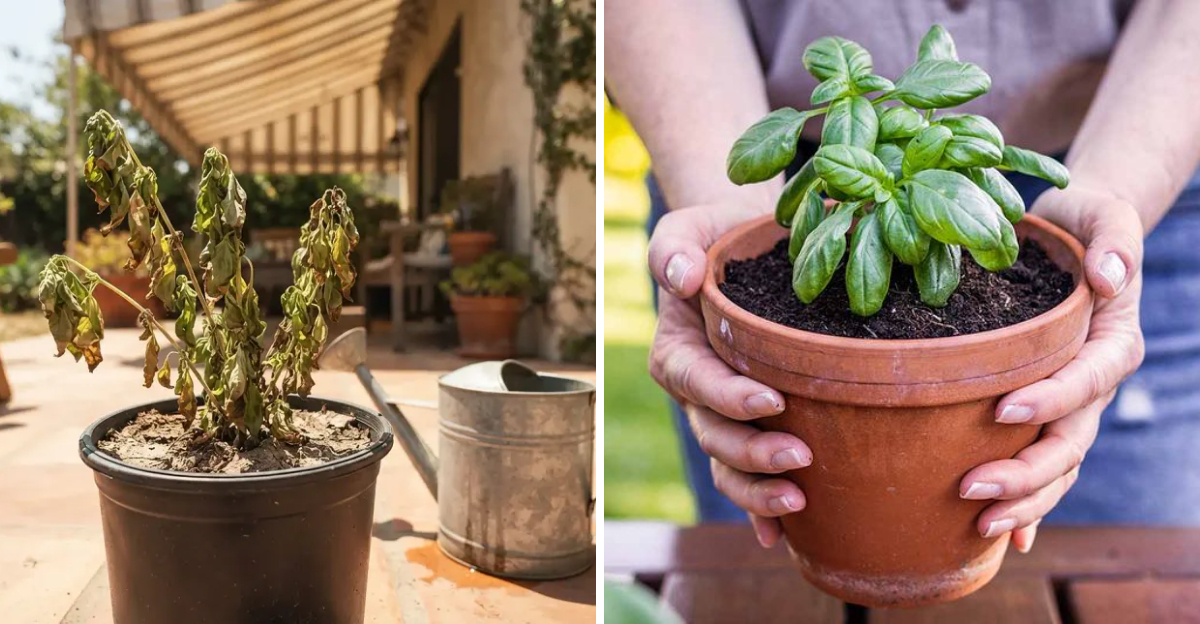
Florida basil during a heatwave does not hide what it is going through. Wilting by midmorning, leaves that cup inward, a plant that looked productive yesterday and looks defeated by ten in the morning.
The instinct is to water immediately and heavily. That instinct is usually wrong.
Basil under heatwave stress is dealing with more than dehydration. Root zone temperature, soil oxygen levels, and a plant system running close to its limit all factor into what is actually happening.
Water alone does not fix all of it and sometimes compounds the problem. Florida heatwaves are short but intense.
Basil that gets the right response during that stretch recovers quickly and picks back up where it left off. Basil that gets the wrong response spends the week after the heatwave recovering from the intervention instead of the heat.
What actually helps is specific. And it is not always what feels most obvious in the moment.
1. Leaves Wilt Fast When Roots Cannot Keep Up
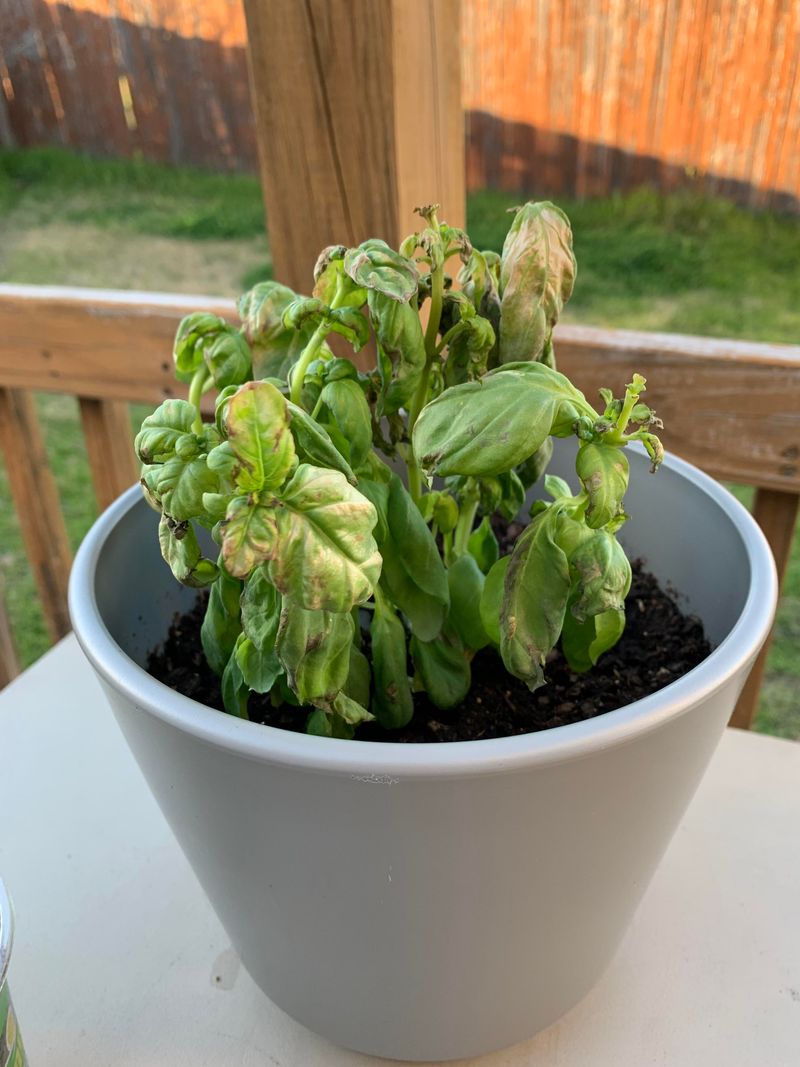
Stepping outside at two in the afternoon to find your basil completely collapsed can feel alarming, but it does not always mean the plant is beyond recovery. Wilting during peak heat is often the plant’s response to a water-demand problem, not a permanent injury.
Basil leaves release moisture through tiny pores called stomata, and when the afternoon sun is intense, leaves lose water faster than roots can pull it from the soil.
Dry soil makes this worse. When the root zone dries out, even partially, the plant cannot replace lost moisture quickly enough.
Hot containers, especially dark plastic pots or small terracotta pots sitting on concrete, heat up fast and speed up soil drying. Reflected heat from driveways, railings, and walls adds even more stress to the roots below.
Before you grab the hose, press a finger about an inch into the soil. If it feels dry, water slowly and evenly until water drains from the bottom.
If it still feels moist, wait a bit and check again in an hour. Flooding a plant that is wilting from heat alone, rather than dry soil, will not help and can cause drainage problems over time.
Many basil plants that wilt midday will perk back up when evening temperatures drop, especially if roots are healthy and moisture is present.
2. Afternoon Sun Can Scorch Tender Growth
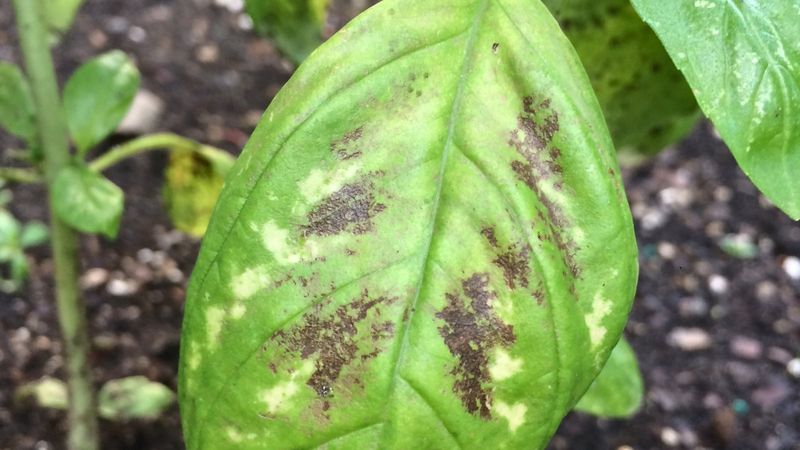
Florida patio gardeners and balcony growers often discover scorch damage the hard way. After a few days of brutal afternoon sun, tender basil leaves develop pale patches, crispy brown edges, or a washed-out yellow color that was not there the week before.
Reflected heat from nearby walls, light-colored pavement, or metal railings can push temperatures around the plant even higher than the air temperature already is.
Basil genuinely needs bright light to grow well. Moving it into deep shade for several days is not the answer and can shock a plant that has been growing in sun.
The goal is to protect basil from the harshest part of the day, roughly noon to four. Still give it morning sun and decent light overall.
Your Florida Garden Changes Every Week. Your Plan Should Too.
Gardening in Florida changes quickly throughout the season. Every Friday you’ll receive a simple weekly plan showing exactly what to plant, prune, fertilize, harvest, and protect so you never miss the right timing.
A simple fix for container growers is moving the pot to a spot that gets morning sun but is shaded by a fence, eave, or larger plant during the hottest hours.
For basil growing near a south- or west-facing wall, afternoon sun combined with radiant heat from the surface can be especially harsh on new growth.
Thin, pale, or curling leaves at the tips of stems are often the first sign that the plant needs a slight change in position, not a dramatic move into darkness.
3. Containers Dry Out Before Gardeners Notice
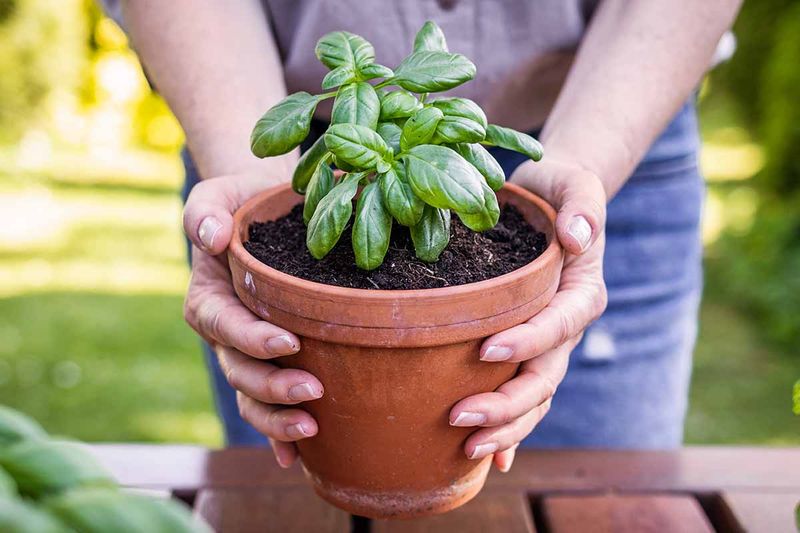
Porch pots and patio containers behave very differently from in-ground herb beds during a heatwave. A small pot can go from nicely moist to bone dry in a single afternoon when temperatures climb and direct sun hits the sides of the container.
Dark-colored pots absorb heat quickly and transfer it to the root zone, which speeds up moisture loss even more.
Hanging baskets are another high-risk situation. Wind exposure and limited soil volume mean they can dry out twice as fast as a pot sitting on a shaded shelf.
Terracotta pots, while attractive and breathable, also lose moisture through their walls, which adds to the challenge during extreme heat stretches.
Checking a container by weight is one of the most reliable methods during a heatwave. Lift the pot when it is freshly watered and note how it feels.
Check it again the next morning and afternoon. A pot that feels noticeably lighter by midday probably needs water.
Always make sure drainage holes are clear and functioning. Sitting water in a saucer beneath the pot can cause root problems over time, even when the top of the soil feels dry.
Daily checks during a heatwave are not excessive; they are just practical for anyone growing herbs in containers during a warm-weather summer.
4. Flowers Appear When Basil Feels Stressed
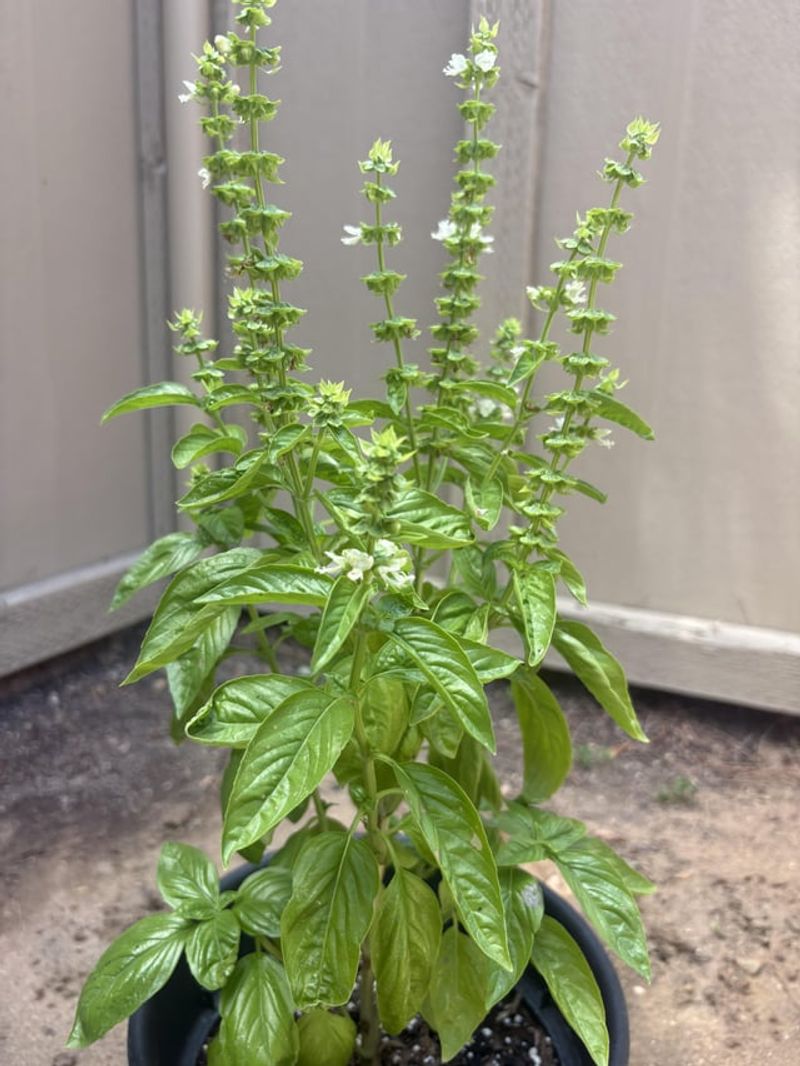
Spotting a tall flower spike pushing up through the center of your basil plant is a sign worth paying attention to.
Bolting, which is the shift from leaf production to flowering and seed set, can happen when basil is stressed by heat, inconsistent watering, or simply reaching maturity.
Once the plant starts putting energy into flowers, leaf production slows and the remaining leaves can develop a slightly stronger or more bitter flavor.
Pinching flower spikes off early, before they fully open, is a straightforward way to redirect the plant’s energy back toward leaves. Use clean fingers or small scissors to snip the spike just above a pair of healthy leaves.
This simple step can extend the productive life of the plant by encouraging new side shoots and fresh leaf growth.
One thing to keep realistic about is that removing flowers does not fix every problem. If the plant is also dealing with dry roots, poor drainage, or too much reflected heat, pinching flowers alone will not bring it back to full health.
Think of flower removal as one useful tool in a broader set of adjustments. During a heatwave, combine it with better watering timing, a slight shift in pot placement if needed, and patience.
Basil that is well-supported through stress will often push out new leaves after flower spikes are managed.
5. Shallow Watering Leaves Roots Struggling
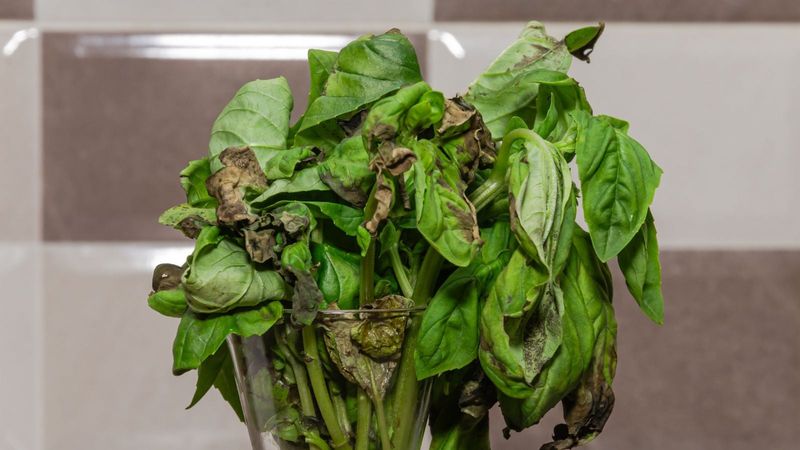
A quick splash of water over the top of a pot or bed might look like enough, but it rarely reaches the root zone where basil actually needs moisture.
During a heatwave, surface soil can dry within an hour or two, leaving deeper roots without the steady moisture they need.
Shallow watering encourages roots to stay near the surface, where heat and drying happen fastest.
Watering deeply and evenly is a better approach. For containers, water slowly until it flows freely from the drainage holes, then stop.
For garden beds and raised beds, water at the base of the plant rather than overhead, and let it soak in before moving on.
Watering early in the morning gives the soil time to absorb moisture before peak afternoon heat arrives and reduces the amount lost to evaporation.
Sandy soil, which is common across much of Florida, drains quickly and may need more frequent checks during hot stretches. Raised beds can also dry faster than in-ground beds depending on their depth and construction.
After any rain, check the actual soil moisture before assuming the plant got enough. A heavy afternoon storm might wet the top inch without reaching the roots, especially in a dense or compacted potting mix.
Adjust your watering based on what you observe, not on a fixed daily schedule.
6. Heavy Fertilizer Pushes Weak Heat Stressed Growth
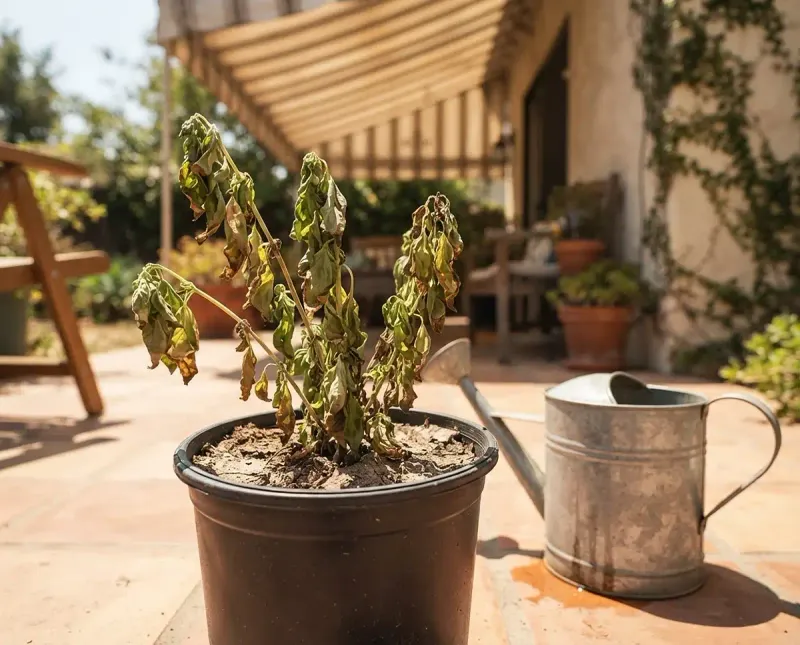
When a basil plant looks tired and pale during a heatwave, the instinct to feed it is understandable. Fertilizer seems like a logical boost, but applying heavy doses when roots are dry, overheated, or sitting in poor drainage can actually make things worse.
Concentrated fertilizer reaching stressed roots can cause salt buildup and add physical stress to tissue that is already struggling to function normally.
Basil in containers benefits from regular feeding during healthy growing conditions, but extreme heat is not the right moment to push fast, lush growth. Tender new growth produced during a heatwave is often weak and more vulnerable to sun scorch and moisture stress than growth that develops under steadier conditions.
UF/IFAS herb-growing guidance generally recommends feeding container herbs when they are actively growing and healthy, not when they are recovering from stress.
If you have been following a regular fertilizer schedule and the plant was healthy before the heatwave hit, there is no need to add an emergency dose. Focus first on correcting watering, drainage, and sun exposure.
Once temperatures ease and the plant shows signs of steady recovery, a light, balanced fertilizer applied according to label directions can help support new growth. Patience during the hottest stretch is more useful than fertilizer.
Letting the plant stabilize before feeding is a smarter, lower-risk approach for summer herb growers.
7. Mulch Helps Soil Stay Cooler Longer
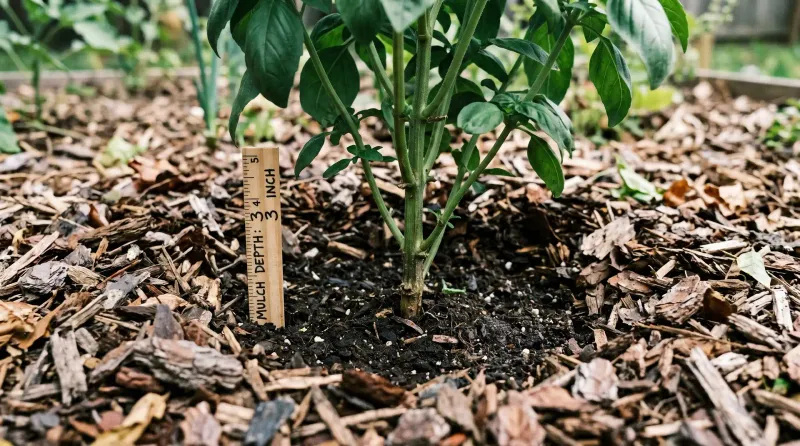
Garden bed and raised bed growers have a practical advantage during a heatwave that container growers sometimes overlook. A layer of organic mulch around basil plants can lower soil temperature and slow moisture evaporation.
It also reduces the impact of direct sun hitting bare soil. Even a two- to three-inch layer of straw, shredded leaves, or pine bark can make a noticeable difference during a brutal heat stretch.
The key detail is placement. Mulch should be spread around the base of the plant, not piled directly against the stem.
Keeping mulch a couple of inches away from the main stem helps prevent moisture buildup and reduces the risk of rot at the base. Florida-Friendly Landscaping resources consistently recommend this approach for summer herb and vegetable beds.
Container growers are not completely left out. A thin layer of shredded bark or coconut coir on top of the potting mix can slow surface drying in a pot.
Make sure the drainage holes at the bottom of the container remain unblocked. Do not make the mulch layer so thick that water cannot reach the roots below.
Mulch works best as a support tool alongside good watering habits, not as a substitute for checking soil moisture regularly.
Combined with morning watering and smart pot placement, it is one of the most low-effort improvements a summer herb gardener can make.
8. Light Harvesting Helps Basil Bounce Back
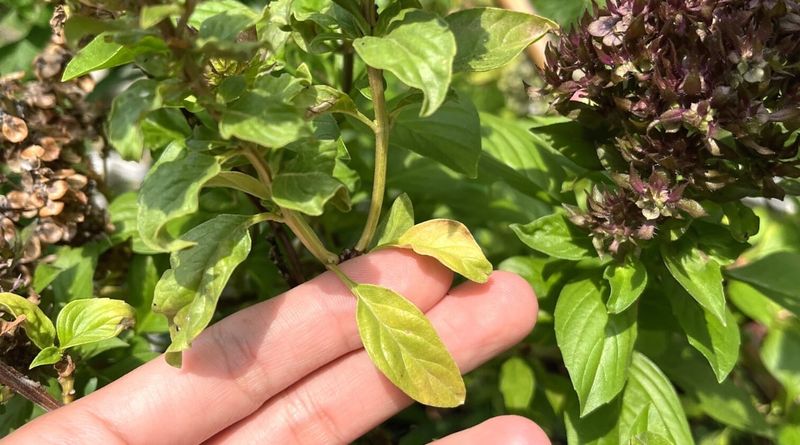
Reaching for scissors and cutting a basil plant back heavily during a heatwave is one of the most common mistakes warm-weather herb growers make.
Heavy pruning removes a significant portion of the leaf area the plant is using to capture light and manage its own recovery.
During extreme heat, a plant that has already lost moisture is working to stabilize. It does not need the added burden of regrowing large amounts of stem and foliage.
Light harvesting is a smarter move. Snipping a few stems just above a leaf node, where two leaves meet the stem, encourages side branching without removing too much at once.
Taking small amounts every few days is gentler than one big cut. Removing flower spikes during this time also counts as a form of light harvesting, redirecting energy without stressing the plant further.
Wait until the plant looks hydrated, upright, and steady before doing any reshaping or larger harvest. Morning is the best time to harvest because the plant has had cooler overnight hours to recover and leaves are typically at their most hydrated.
Once temperatures ease after the heatwave passes, basil often rebounds surprisingly well. That is especially true when it has had steady moisture, proper sun exposure, and gentle care.
Consistent attention during the hard stretch is what makes the difference between a plant that struggles through and one that thrives again when conditions improve.