Pennsylvania Trees That Cause The Fewest Problems Near Power Lines
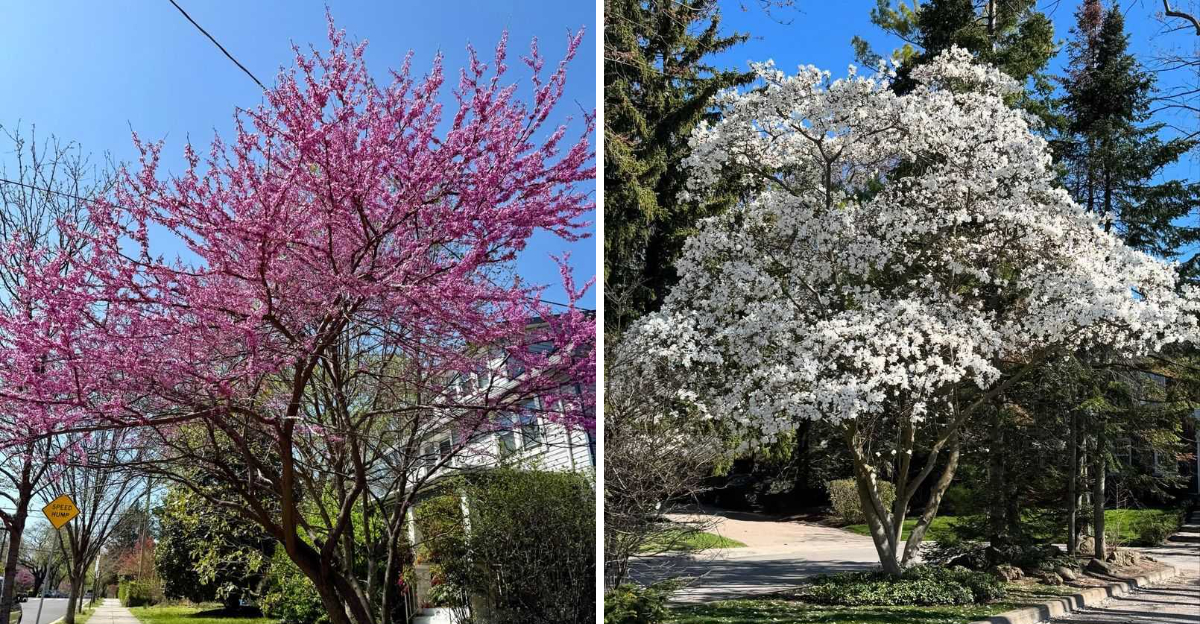
Planting a tree near a power line in Pennsylvania is one of those yard decisions that looks completely reasonable for several years.
Then, it becomes a problem that someone else manages on their terms, usually in the form of utility company pruning that leaves the tree looking disfigured, or a situation that escalates to full removal at significant cost and inconvenience.
The root of the problem, in every sense, is tree selection. A tree that matures within a safe clearance threshold near power lines needs almost no management in relation to the line and can live out its natural lifespan without conflict or compromise.
A tree that eventually pushes into the restricted zone gets repeatedly cut back in ways that damage its structure, reduce its beauty, and create the kind of ongoing maintenance headache that could have been entirely avoided with a better choice at planting time.
Pennsylvania has genuinely beautiful, ecologically valuable trees that stay at sizes compatible with power line proximity, and the selection is wider than most homeowners realize.
1. Serviceberry
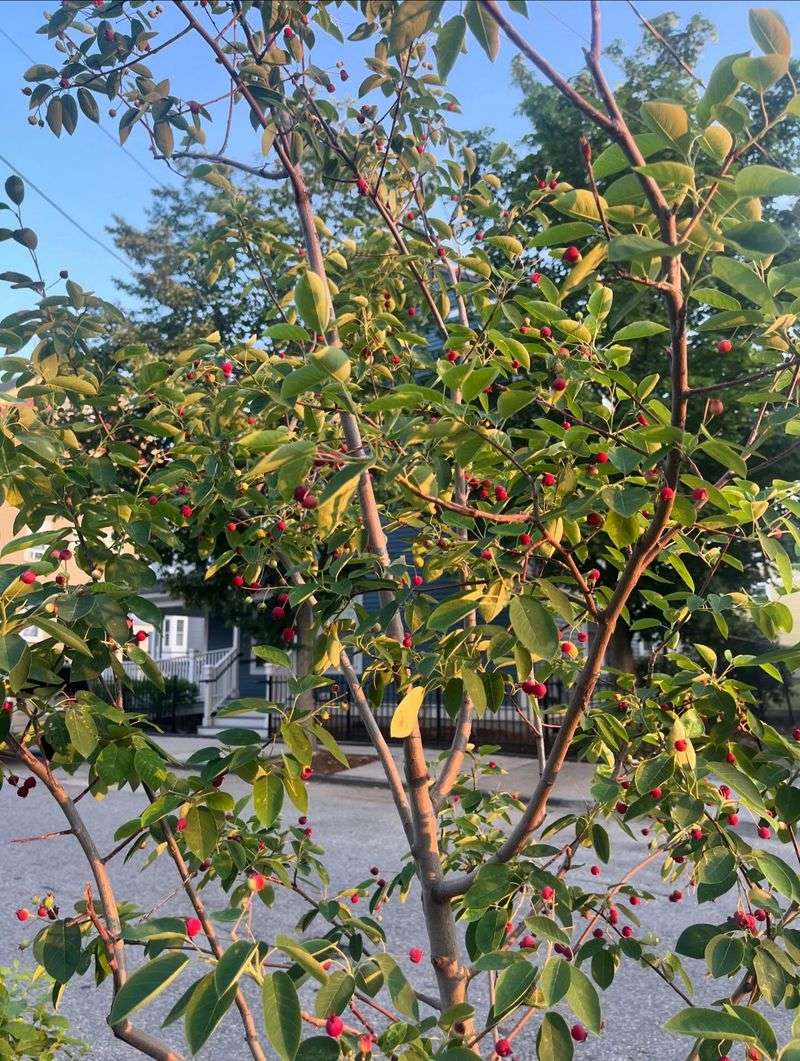
Serviceberry is one of those trees that quietly does everything right. It blooms in early spring with delicate white flowers that appear right around the time the forsythia fades.
Then come small, round berries that ripen from red to deep purple by early summer. Birds go absolutely wild for them, making this tree a favorite for anyone who enjoys backyard wildlife.
From a practical standpoint, Serviceberry is a great choice near overhead utility lines. Compact varieties typically stay between 15 and 25 feet tall, which keeps them safely out of conflict with most residential power lines.
Some cultivars grow even shorter, so it pays to check the mature size before you buy. Look for varieties labeled as multi-stem shrub forms if you want something especially low-growing.
The fall color is another reason homeowners love this tree. The leaves shift to shades of orange, red, and gold in autumn, putting on a display that rivals much larger trees.
It is a four-season tree in the truest sense, offering something interesting to look at no matter the time of year.
Serviceberry grows well in full sun to partial shade and adapts to a range of soil types, including moist and slightly acidic soils. It is native to Pennsylvania, which means it supports local pollinators and wildlife naturally.
Established trees are fairly low-maintenance and do not require heavy pruning to stay in shape. If you want a compact, wildlife-friendly tree that fits comfortably beneath utility corridors, Serviceberry earns a top spot on the list.
2. Eastern Redbud
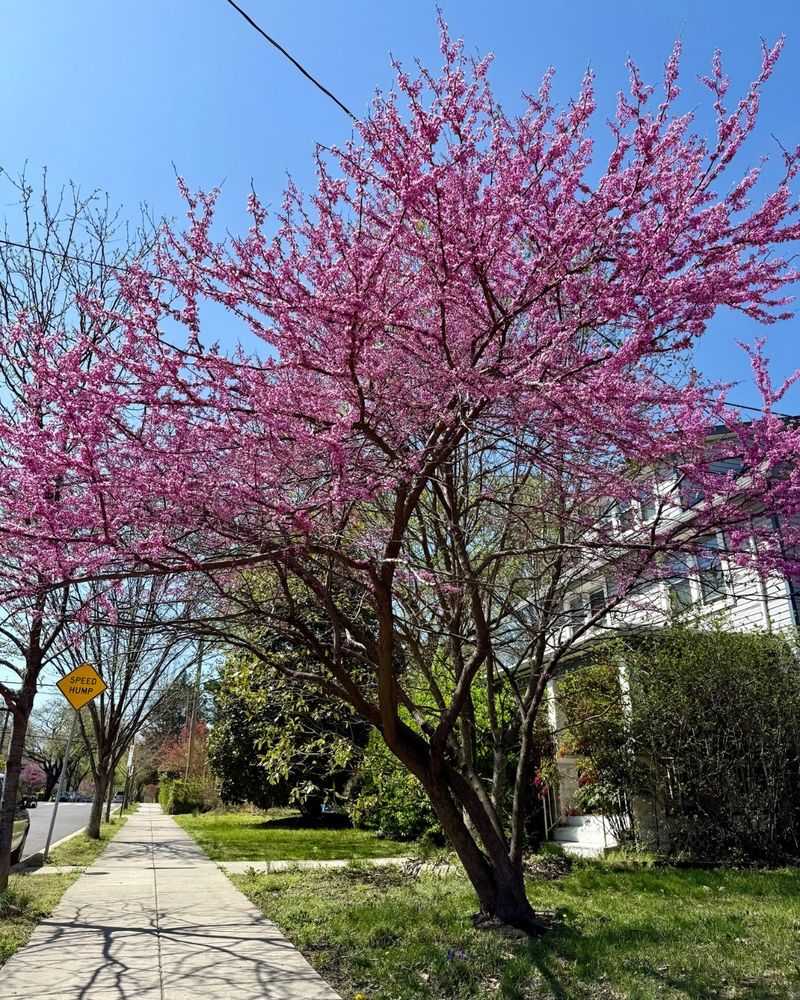
Few springtime sights are as cheerful as an Eastern Redbud bursting into bloom. Before a single leaf appears, the entire tree covers itself in tiny, bright pink-purple flowers, making it one of the most eye-catching trees you can plant in a Pennsylvania yard.
It blooms early in the season, often in April, and the show lasts for a couple of weeks. What makes this tree such a smart pick near power lines is its size. Eastern Redbuds typically grow between 20 and 30 feet tall, and many stay on the shorter end of that range.
Your Pennsylvania Garden Changes Every Week. Your Plan Should Too.
Gardening in Pennsylvania changes quickly throughout the season. Every Friday you’ll receive a simple weekly plan showing exactly what to plant, prune, fertilize, harvest, and protect so you never miss the right timing.
That height keeps them well below most utility lines, which means less trimming and fewer conflicts with your local electric company.
The tree is also native to Pennsylvania, so it fits right into the local ecosystem. Native bees absolutely love the flowers, and the heart-shaped leaves add a soft, rounded look throughout summer.
In fall, the foliage turns yellow, giving you one more season of visual interest before the leaves drop.
Eastern Redbuds prefer full sun to partial shade and do well in most average soils. They are not demanding trees, which is part of their appeal.
You do not need to fuss over them much once they are established. Just give them enough space to spread their canopy, which can reach 25 to 35 feet wide, and they will reward you with years of seasonal beauty.
For a small ornamental tree that truly earns its spot in the landscape, the Eastern Redbud is hard to beat.
3. Flowering Dogwood
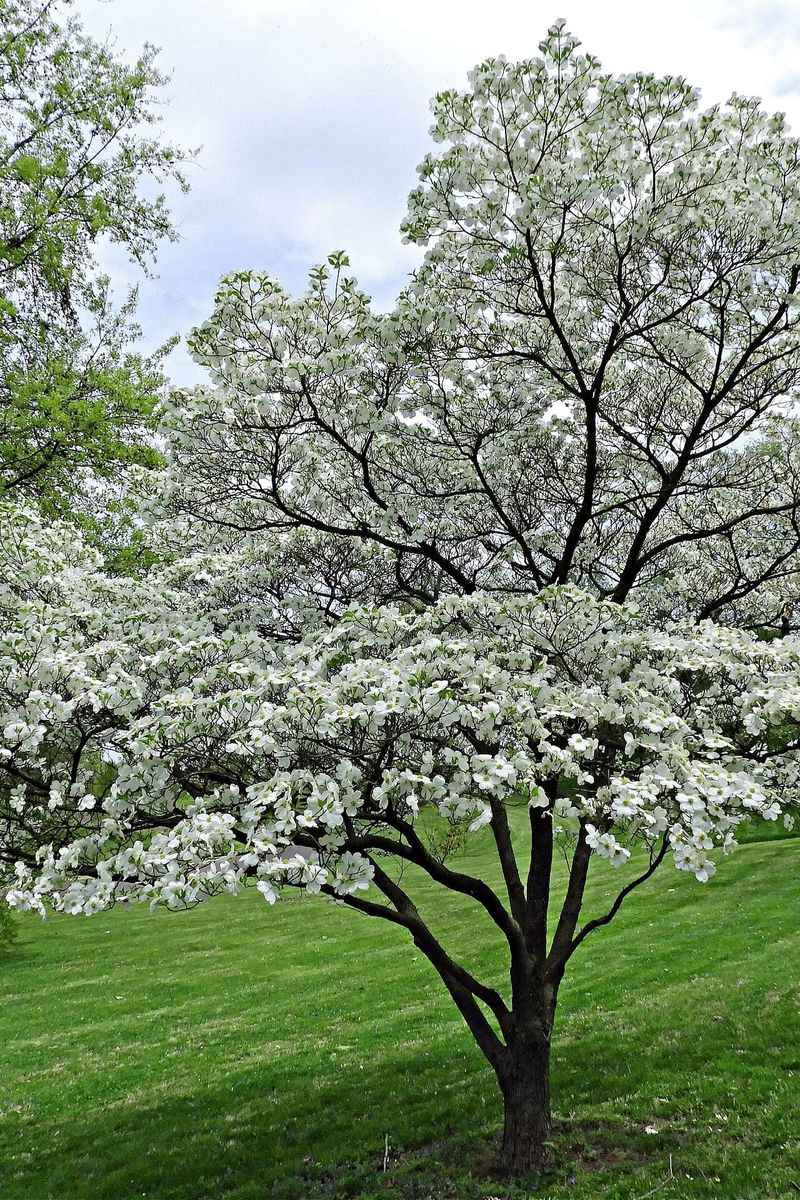
Walk through almost any Pennsylvania woodland in May and you will likely spot the Flowering Dogwood glowing among taller trees. Its large white or pink bracts, which most people call flowers, seem to float in the air like scattered tissue paper.
It is one of the most beloved native trees in the eastern United States, and for good reason. For homeowners worried about power line conflicts, the Flowering Dogwood offers real peace of mind.
This tree typically matures between 15 and 30 feet tall, with most specimens staying closer to the lower end in open residential settings.
That modest height makes it naturally compatible with many utility corridors, reducing the need for aggressive trimming that can ruin a tree’s shape.
Beyond the spring bloom, Flowering Dogwood delivers throughout the year. The foliage turns a rich red-purple in fall, and the bright red berries that follow are a favorite food source for migrating birds.
Even in winter, the layered branching pattern gives the tree a sculptural quality that adds interest to the yard.
Dogwoods prefer partial shade, especially in the afternoon, which mimics their natural forest edge habitat. They do best in moist, well-drained, slightly acidic soil.
Planting them with a layer of mulch helps retain moisture and keeps the roots cool in summer heat. One thing to watch for is dogwood anthracnose, a fungal disease that can weaken the tree in wet conditions.
Choosing a resistant variety and ensuring good air circulation around the tree goes a long way toward keeping it healthy and thriving for many years.
4. Washington Hawthorn
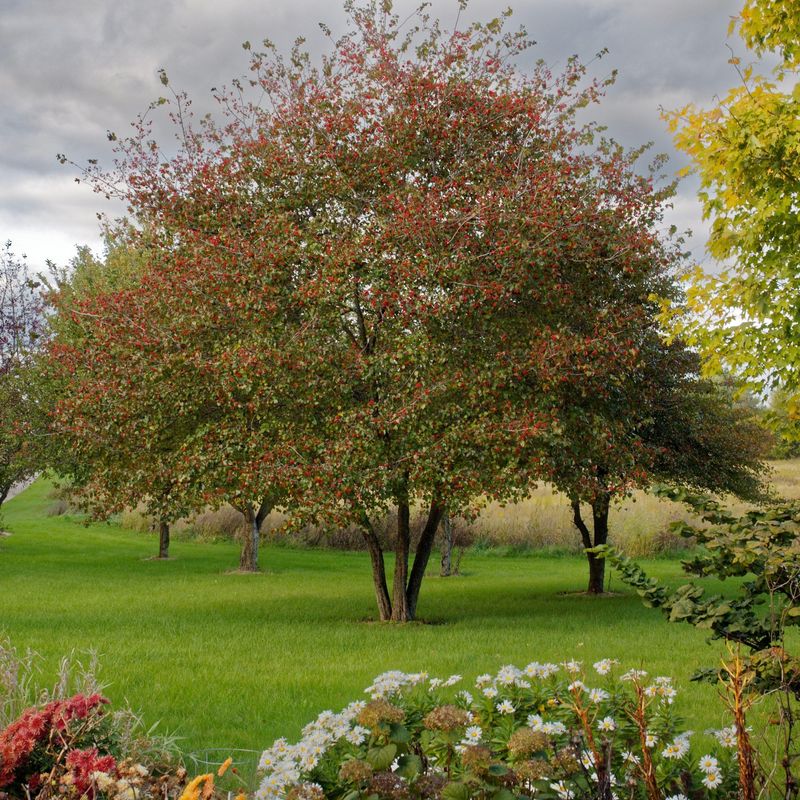
Washington Hawthorn is a tough, no-nonsense tree that earns its keep in almost any landscape. It produces clusters of small white flowers in late spring, followed by brilliant red berries that cling to the branches well into winter.
Those berries are a lifeline for birds during cold months, making this tree a true asset for wildlife-friendly yards in Pennsylvania.
One of the biggest reasons to consider Washington Hawthorn near power lines is its predictable size. This tree typically matures between 20 and 30 feet tall, with a rounded shape that stays fairly tidy without a lot of intervention.
That compact profile makes it a practical choice for spots where overhead wires limit how tall a tree can grow.
The fall foliage adds another layer of appeal. The leaves shift to shades of orange, red, and purple before dropping, giving the tree a warm seasonal glow.
Combined with the persistent red berries and the white spring flowers, Washington Hawthorn delivers interest across multiple seasons without demanding much from the homeowner.
One thing to be aware of is the thorns. Washington Hawthorn has sharp, long thorns along its branches, which can make pruning a bit of an adventure.
Wearing thick gloves and long sleeves is strongly recommended when working around this tree. Plant it away from high-traffic areas like walkways or play spaces to avoid accidental scrapes.
Despite that one quirk, Washington Hawthorn is a resilient, adaptable tree that handles urban conditions well. It tolerates pollution, compacted soil, and drought once established, making it a dependable option for challenging Pennsylvania landscapes.
5. Crabapple
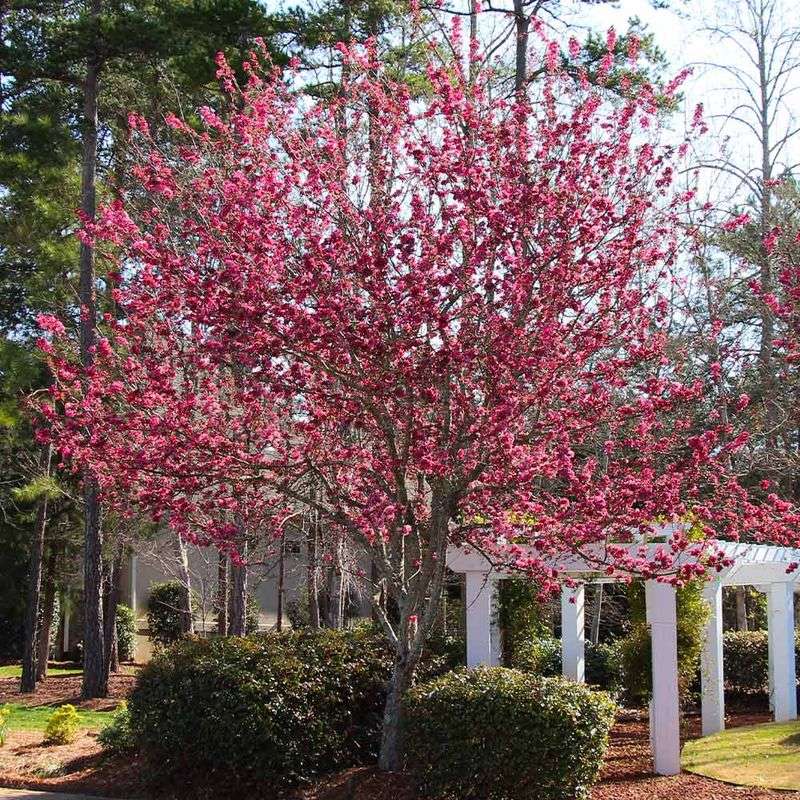
There is something almost magical about a crabapple tree in full bloom. The branches load up with flowers in shades of white, pink, or deep rose every spring, creating a cloud of color that stops people in their tracks.
Crabapples have been a staple of American landscapes for generations, and they remain one of the most popular ornamental trees available at Pennsylvania nurseries.
When it comes to planting near power lines, the key is choosing the right cultivar. Many modern crabapple varieties have been specifically bred to stay compact, often maturing below 25 feet.
Some popular choices include ‘Prairifire,’ ‘Sargent,’ and ‘Sugar Tyme,’ all of which offer beautiful blooms while keeping their height in check. Always confirm the mature size before purchasing, since crabapple cultivars vary quite a bit.
Beyond the flowers, crabapples offer persistent small fruits that birds enjoy throughout fall and winter. Many newer cultivars also have improved disease resistance, which means less worry about common problems like apple scab and fire blight.
Choosing a disease-resistant variety saves you time and frustration in the long run.
Crabapples prefer full sun and well-drained soil. They are adaptable to a range of soil types but do not love wet feet for extended periods.
Minimal pruning is needed if you select a naturally compact variety, which is good news for anyone planting beneath utility lines where you want to avoid constant maintenance.
With the right cultivar, a crabapple near your power lines can be a low-effort, high-reward addition to your Pennsylvania yard for decades to come.
6. Star Magnolia
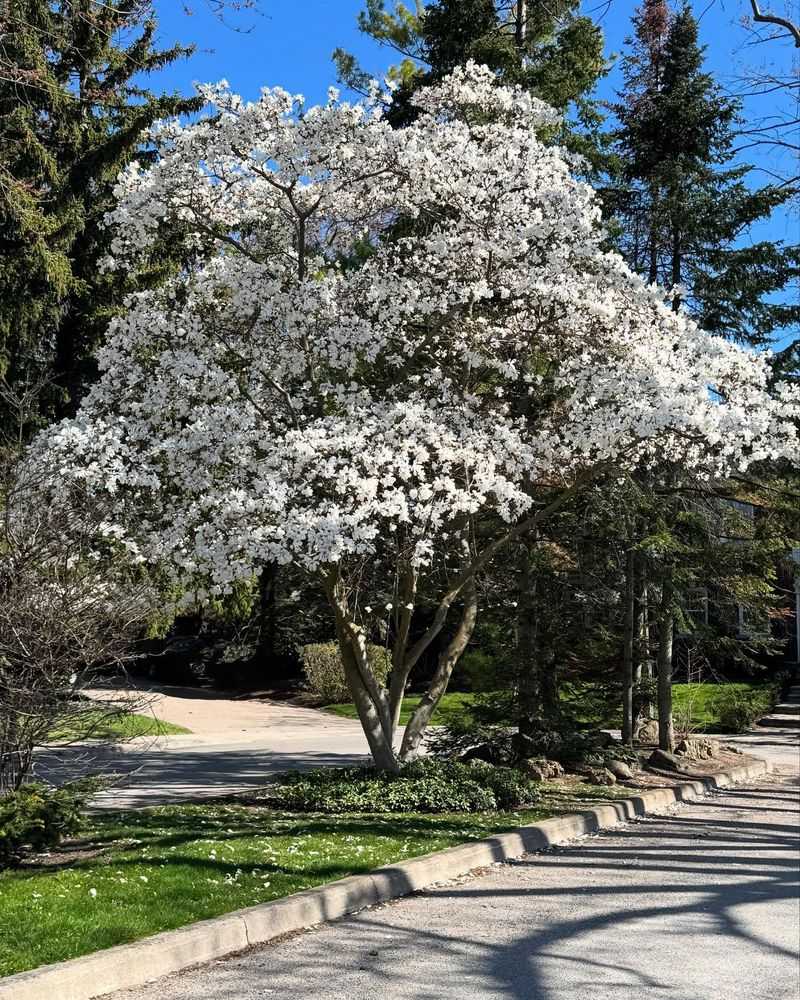
If you want a tree that makes a dramatic statement without taking up a lot of vertical space, Star Magnolia is worth a serious look. It bursts into bloom in early spring, often in March, before most other trees have even thought about waking up.
The large, star-shaped white flowers cover the entire tree, creating a stunning display that signals the end of winter in Pennsylvania yards.
Size is where Star Magnolia really shines as a power line-friendly option. This tree typically reaches only 10 to 20 feet tall at maturity, making it one of the smallest trees on this list.
That modest stature means it sits well below most overhead utility lines, greatly reducing the chance of conflicts with utility crews. You can enjoy the tree’s natural shape without worrying about heavy trimming.
Star Magnolia grows slowly, which is actually a benefit in restricted spaces. Slow growth means fewer surprises and a tree that stays predictable over time.
The multi-stemmed form adds a shrub-like quality that works beautifully as a focal point in the landscape or planted against a fence or building corner.
One thing to keep in mind is that the early blooms are vulnerable to late spring frosts, which are not uncommon in Pennsylvania. A late freeze can brown the flowers quickly, though the tree itself recovers fine and will bloom again the following year.
Planting in a spot with some protection from north winds can help. Star Magnolia prefers full sun to partial shade and moist, well-drained, slightly acidic soil for the best results.
7. Japanese Tree Lilac
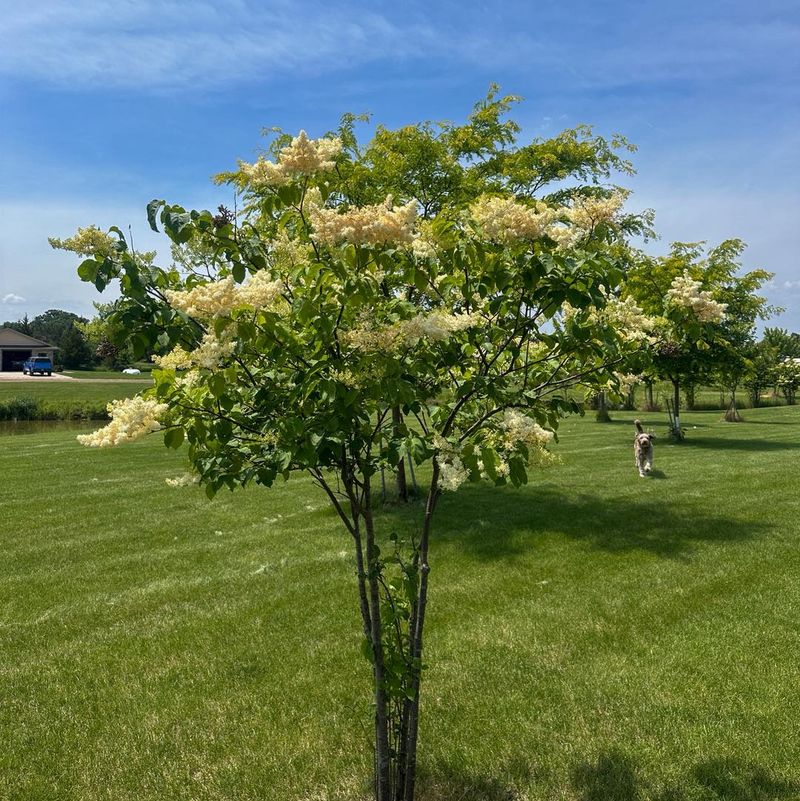
Most people think of lilacs as shrubs, so it comes as a pleasant surprise to learn that the Japanese Tree Lilac grows as a proper small tree.
It blooms in June and July, which is later than most flowering trees, filling a gap in the seasonal display when many spring bloomers have already finished.
The large, creamy white flower clusters are fragrant and showy, attracting butterflies and other pollinators throughout the summer.
Japanese Tree Lilac typically matures between 20 and 30 feet tall with an upright, oval shape that stays fairly neat on its own. That growth habit makes it a solid candidate for spots near overhead utility lines where height is a concern.
The tree rarely needs heavy pruning to maintain its form, which is a big plus in utility-restricted areas where aggressive cutting can cause problems.
Another appealing quality is its toughness. Japanese Tree Lilac handles urban conditions remarkably well.
It tolerates pollution, road salt, heat, and a range of soil types, making it a practical choice for Pennsylvania homeowners dealing with less-than-ideal planting spots. It is also resistant to many of the pests and diseases that trouble other ornamental trees.
For the best flowering, plant Japanese Tree Lilac in full sun. It can tolerate some light shade, but bloom production tends to drop off without enough direct sunlight.
The tree looks attractive even out of bloom, with glossy dark green leaves that hold up well through summer heat.
If you want a summer-blooming tree that stays manageable in height and requires minimal fuss, Japanese Tree Lilac is a genuinely rewarding choice for Pennsylvania landscapes.