What It Means When A Javelina Keeps Showing Up In Your Arizona Yard
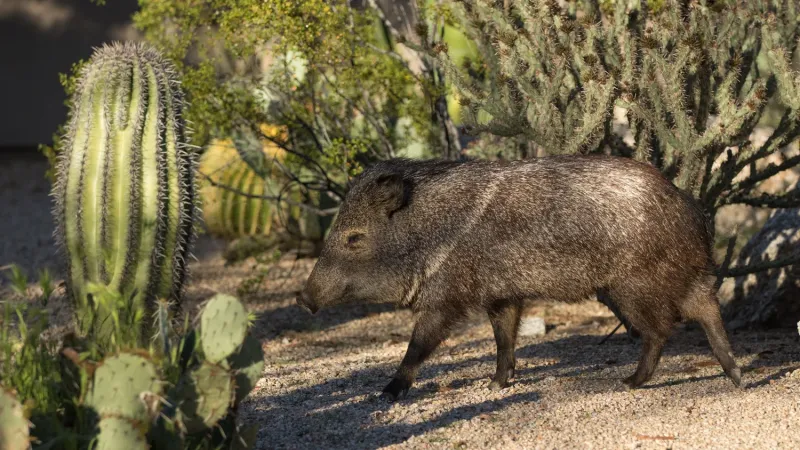
Spotting a javelina once in your Arizona yard is memorable, but seeing the same stocky, bristle-haired animal return again and again raises a fair question: why here, and why so often? The answer is rarely dramatic.
Your yard may offer something useful to the animal, or it may simply sit along a route the herd travels regularly through the desert. Either way, a pattern of visits is worth paying attention to, and the steps you take in response can make a real difference.
A repeat visit is a clue, not a verdict
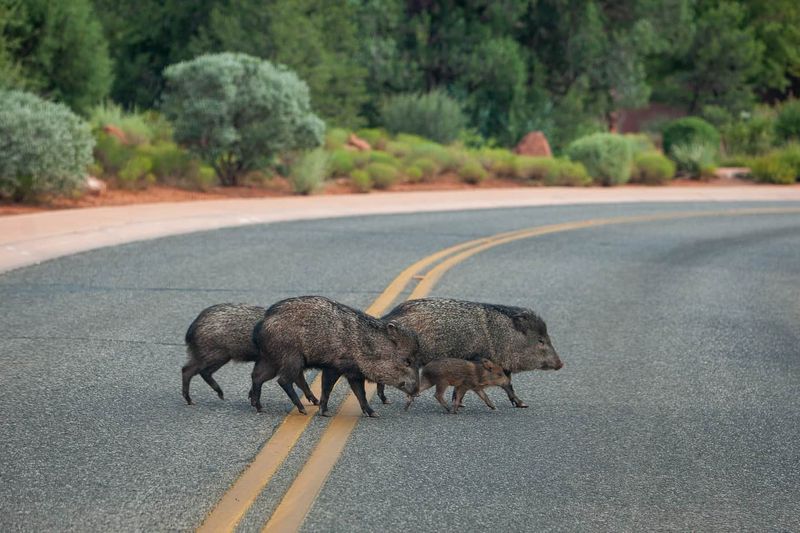
Seeing a javelina trot through your yard once could mean almost anything. Seeing the same animal, or the same small herd, show up week after week is a different kind of observation, and it deserves a closer look at what your yard might be offering.
The useful way to read a recurring visit is as a prompt to check the yard, not as proof that something is obviously wrong or that you have identified the cause. Your property may have food, water, shade, or a sheltered corner that the animal finds worth returning to.
Or the javelina may be moving along a wash or a corridor of dense vegetation that runs near your lot, and your yard simply falls along that path.
Arizona Game and Fish guidance on living with javelina notes that these animals commonly travel through washes and dense vegetation and may visit semi-urban homes near natural desert. A repeated sighting is useful information, but it does not tell you on its own whether the yard is the destination or just the route.
A familiar desert route can bring javelina back
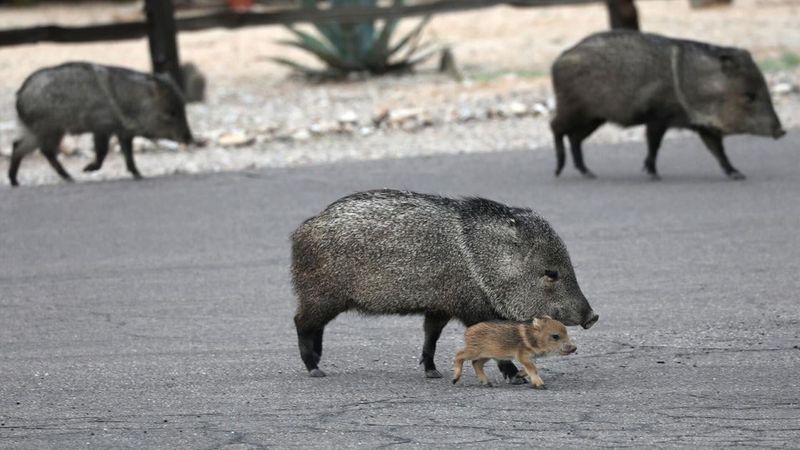
Javelina are peccaries, not wild pigs, and they live in tight-knit herds that tend to follow the same travel corridors day after day. Washes, arroyos, and stretches of dense vegetation serve as natural highways for these animals, and neighborhoods built near the Sonoran Desert often sit directly across those routes.
Most javelina activity happens at night, which is why many homeowners never actually see the animals that are moving through their area regularly. Cold weather can shift that pattern, bringing herds out during daylight hours when warmth is easier to find.
If you are suddenly seeing javelina in the middle of the afternoon in winter, the temperature may be the main reason.
Because herds return to familiar ground, a yard that falls along an established route may receive visits regardless of what is inside the fence. The herd is not necessarily choosing your yard over others nearby.
They may be passing through your block the same way they passed through it last season, following a path shaped by the wash or the strip of natural desert behind your street. That context matters when you start trying to figure out whether a yard change would actually reduce sightings.
Food, water, and shelter may make a yard appealing
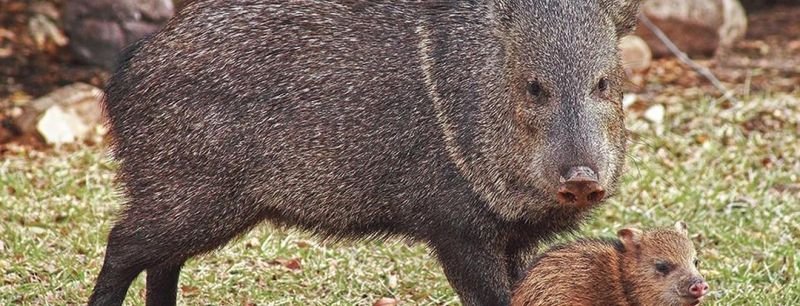
Javelina eat mostly plants. Succulents, cacti, bulbs, tubers, beans, and seeds make up a large part of their diet, but they will also take advantage of grubs, insects, garbage, and food scraps when those are available.
Your Arizona Garden Changes Every Week. Your Plan Should Too.
Gardening in Arizona changes quickly throughout the season. Every Friday you’ll receive a simple weekly plan showing exactly what to plant, prune, fertilize, harvest, and protect so you never miss the right timing.
A yard that offers tender new plantings, ripe fruit on the ground, or an accessible compost pile is offering something genuinely useful to an animal that spends most of its time foraging.
Beyond food, several other yard features could factor in. Standing water or a dripping irrigation line gives the animal a drink without effort.
Moist soil near garden beds or a lawn edge can signal that grubs or roots are close to the surface. Shaded spots under a porch, a storage shed, or dense low shrubs offer the kind of sheltered rest area a herd might seek during the hottest part of the day.
None of these possibilities is a confirmed explanation for any individual visit. The list of potential attractants from Arizona Game and Fish is broad precisely because javelina behavior varies.
A yard with birdseed on the ground and a dripping hose may draw repeated visits for reasons that have nothing to do with your plantings, or vice versa. The honest approach is to scan for as many of these possibilities as you can before deciding what to change.
Give the animal space and keep dogs protected
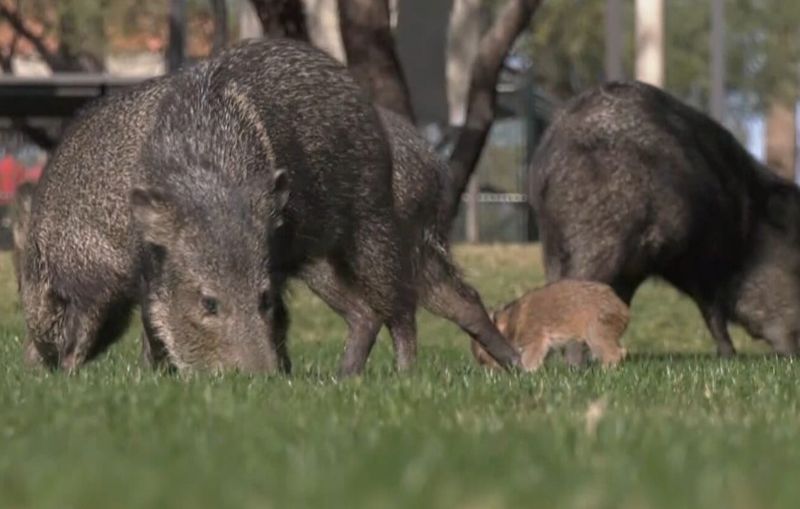
Javelina are not predators, and most encounters in a yard end without incident. That said, treating them as completely harmless would be a mistake.
These animals can inflict serious bite wounds, and they may act defensively when they feel cornered, when they are protecting young, or when a dog gets too close.
Poor eyesight plays a role in how javelina behave in close quarters. An animal that appears to be charging may actually be trying to locate an escape route.
The movement can look aggressive when the animal is simply disoriented and reacting to a perceived threat nearby. Giving the animal room to move away on its own is the safest response in almost every situation.
Dogs and javelina are a particularly risky combination. A dog that runs at a javelina, or that gets between a javelina and its herd, can trigger a defensive reaction quickly.
Keep dogs leashed when you are outside and unsure of what is in the yard, and make sure any outdoor enclosure is secure enough that a curious javelina cannot wander in. If a javelina becomes aggressive or ends up trapped somewhere on your property, contact Arizona Game and Fish rather than trying to handle the situation yourself.
Trapping javelina is unlawful, and any bite from one requires immediate medical attention.
Remove easy rewards before changing the yard
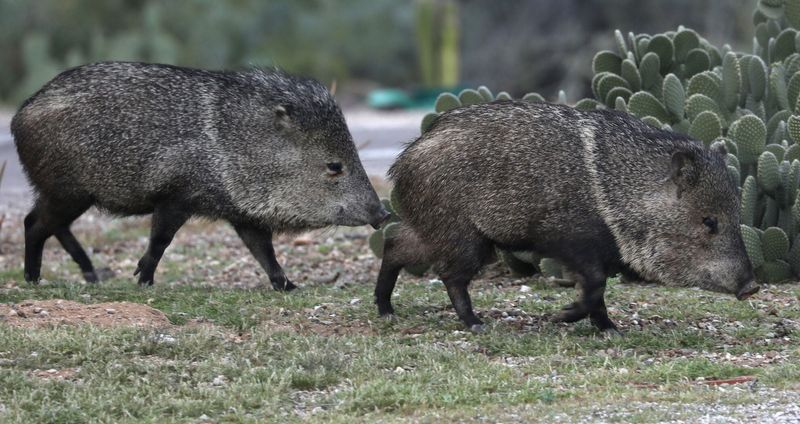
Before spending money on fencing or replacing plants, start with the simplest changes. Many yards offer javelina an easy meal without the homeowner realizing it, and removing those easy rewards costs nothing but a few minutes of attention.
Bring pet food inside after each feeding and do not leave bowls outside overnight. Pick up fallen fruit from citrus and other trees as soon as it drops.
Clean up birdseed that has collected under feeders, since spilled seed on the ground is exactly the kind of low-effort food source javelina will return to. Secure garbage cans with a latch or move them to a spot the animals cannot reach, and manage compost so it does not smell like a free meal.
Water sources are worth checking as well. A low birdbath, a leaky drip line, or a shallow dish left outside can all serve as a convenient stop on a hot day.
Block access to any crawl space, gap under a porch, or dense shrubby area that could serve as a resting spot. These steps are not a guarantee that visits will stop, especially if your yard sits along a regular travel corridor.
What they do is reduce the specific rewards that might make your yard worth seeking out rather than simply passing through.
Barriers can help, but no plant or fence is foolproof
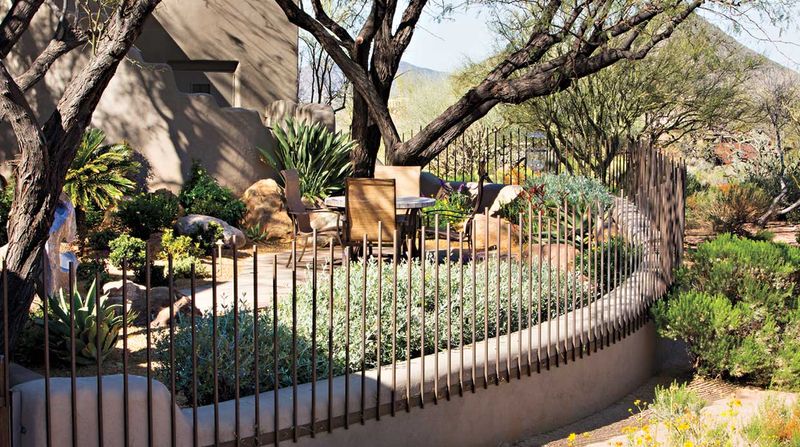
Physical barriers are the most reliable tool available if you want to keep javelina out of a specific part of your yard. University of Arizona Cooperative Extension guidance on fencing for wildlife notes that fences or walls at least 4 feet tall and buried at least 8 inches into the ground can serve as an effective barrier.
Arizona Game and Fish describes a similar approach for yard perimeters, with a concrete footer buried 8 to 12 inches to prevent animals from rooting underneath. If you are considering electric fencing, check your local ordinances before installing it, since rules vary by municipality.
No fence is a guarantee. A determined animal or a large herd moving through an established corridor may still find a way past a barrier that is not perfectly continuous.
Inspect the perimeter for gaps, low spots, or areas where the footing has shifted, and address those before assuming the fence is working as intended.
Plant selection is another layer of the strategy, though it comes with real limits. A 2025 Cooperative Extension resource on javelina plant resistance ratings describes certain plants as less susceptible to damage, but makes clear that diet shifts with food availability and that behavior varies with temperature and rainfall.
Those ratings are useful starting points, not reliable deterrents. Exclusion by a physical barrier remains the surest way to protect a garden bed or a valued planting from damage.
Let the pattern guide a calm yard check
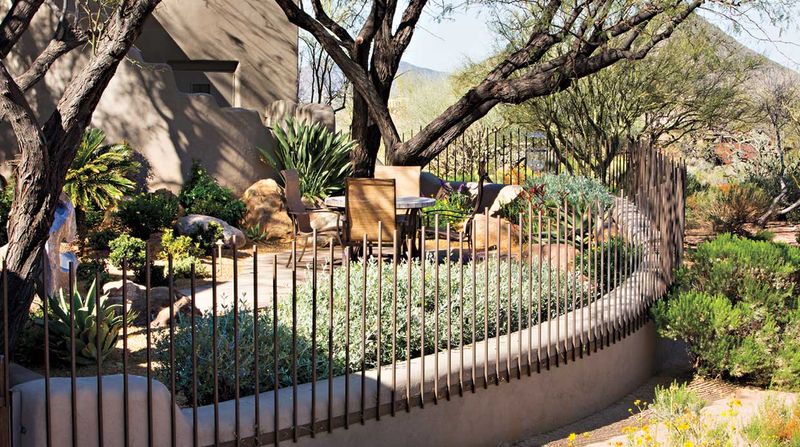
A javelina that keeps showing up is telling you something worth knowing, even if it cannot tell you exactly what. The pattern is a reason to look carefully at what your yard offers, make a few sensible changes, and then observe whether anything shifts.
Work through the list of possible attractants, adjust what you can, and give the changes time to matter. Keep in mind that the animal may be passing through regardless, especially if a wash or a stretch of natural desert runs near your property.
Some visits will continue no matter what you do, and that is a reasonable outcome in a region where the desert and the neighborhood share the same ground.
The javelina is not delivering a verdict on your yard. It is doing what desert animals do, moving through familiar territory in search of what it needs.
Your job is simply to make sure your yard is not the easiest stop on that route.