What It Means When A Sharp-Shinned Hawk Hunts Near Your California Bird Feeder
A sudden burst of wings near a backyard feeder, followed by total silence, can leave the whole yard feeling unsettled.
Finches vanish, sparrows freeze in the shrubs, and for a few long minutes nothing moves at all.
Something swift passed through, and it had little interest in seed.
Moments like this happen across California more often than many households realize, particularly as the seasons turn.
The visitor behind them plays an important role in the wild, and it follows patterns that make its arrival easier to understand.
A few thoughtful changes around the feeder can shift the odds in favor of the songbirds without turning the yard against a remarkable native hunter.
Calm observation, it turns out, reveals a surprising amount.
It Is Hunting Small Songbirds
A cloud of house finches bursting off a feeder like popcorn, followed a second later by a slim hawk shooting through the empty space, tells the whole story.
Seed was never on its menu.
Sharp-shinned hawks eat birds. According to the Cornell Lab of Ornithology, songbirds make up about 90 percent of their diet.
Sparrows, finches, juncos, warblers, and chickadees are common targets in California yards.
A feeder catches the hawk’s attention simply because it gathers so many small birds in one place. To a sharpie, it looks like a busy cafeteria.
The hawk isn’t being cruel or greedy. It’s doing exactly what its body was built to do.
Hawks also play a quiet role in keeping songbird populations healthy. They often catch birds that are slower, sick, or less alert.
Over time, this pressure helps the quickest and most watchful birds survive and raise young.
Watching a hunt can feel hard, especially after growing fond of a particular chickadee. Each catch, though, feeds a wild animal that may be crossing a long migration.
Many hunts end without success. Songbirds are quick and often spot danger first, so the hawk frequently swoops in and leaves empty-taloned.
Afterward, it may perch nearby for a while, resting and watching for another opening.
Songbirds usually return to the feeder within minutes to an hour once the hawk moves on.
Feeders Make Hunting Easy
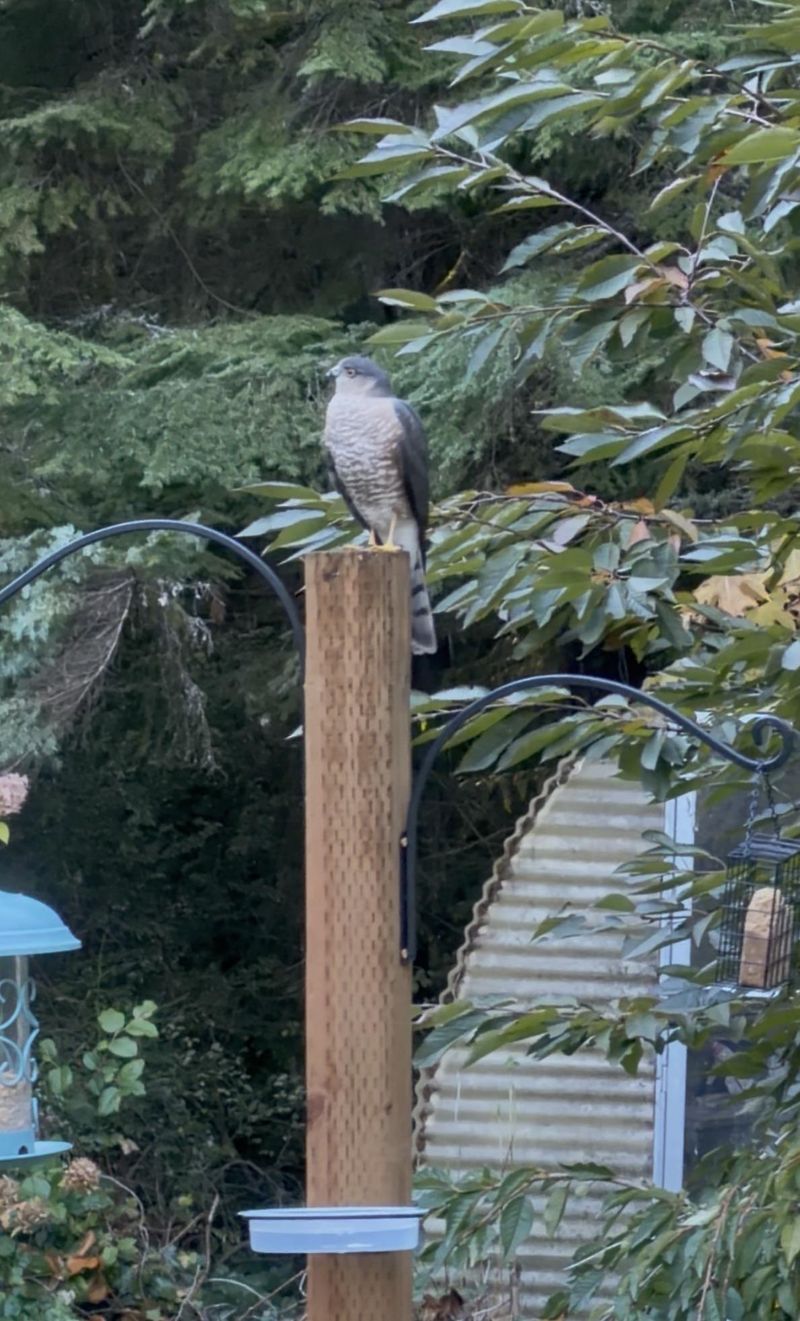
Ten birds crowded on one feeder looks cheerful to people. To a hungry hawk, it looks like a buffet with a bright neon sign.
Feeders pull many small birds into one predictable place.
In the wild, songbirds spread out across fields, trees, and shrubs, so a hawk has to search hard. A feeder brings dozens together, often at the same times daily.
Audubon notes that hawks quickly learn where feeders are. A sharp-shinned hawk may return to the same yard again and again, like a regular at a diner.
Feeding birds can also be a little distracted. Focused on cracking seeds, they may miss a hawk slipping along a fence line.
Ground feeders such as sparrows, juncos, and towhees can be especially easy to surprise, particularly near open patios.
Spilled seed under the feeder adds to the problem by drawing birds onto open ground with fewer hiding spots. Raking up hulls every few days helps.
Your California Garden Changes Every Week. Your Plan Should Too.
Gardening in California changes quickly throughout the season. Every Friday you’ll receive a simple weekly plan showing exactly what to plant, prune, fertilize, harvest, and protect so you never miss the right timing.
Tray feeders and seed scattered on lawns leave birds similarly exposed. Hanging feeders placed near cover usually work better.
Clean feeders matter too. Scrubbing them every week or two with a mild bleach solution, then rinsing and drying, helps limit diseases that weaken birds.
Weakened, slower birds make even easier targets, so hygiene supports the whole flock.
Feeding birds is a generous habit. Small adjustments simply make the yard less of a hunting hotspot.
Sharp-Shinned Hawks Are Small And Fast
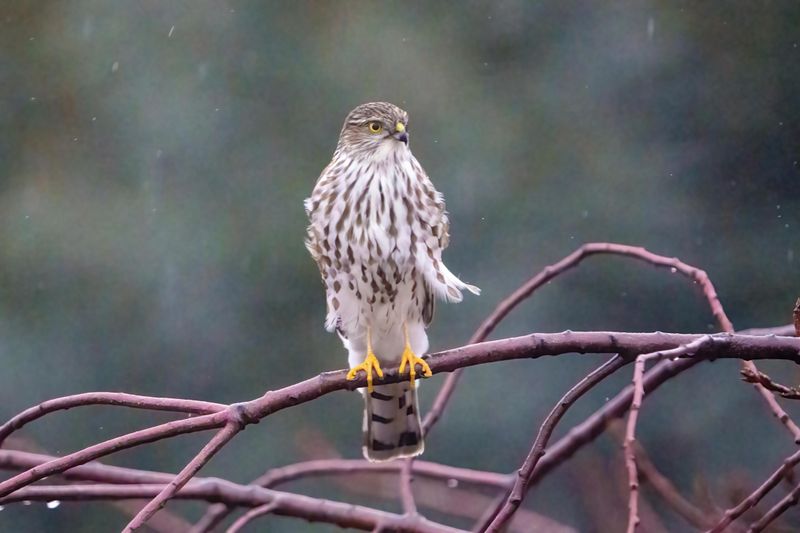
A blink can be enough to miss one. Sharp-shinned hawks are the smallest hawks in the United States and Canada, moving like feathered rockets through tight spaces.
The Cornell Lab places them between a robin and a crow in size, and males run noticeably smaller than females.
An adult male may weigh only about 3 to 4 ounces, close to the weight of a deck of cards.
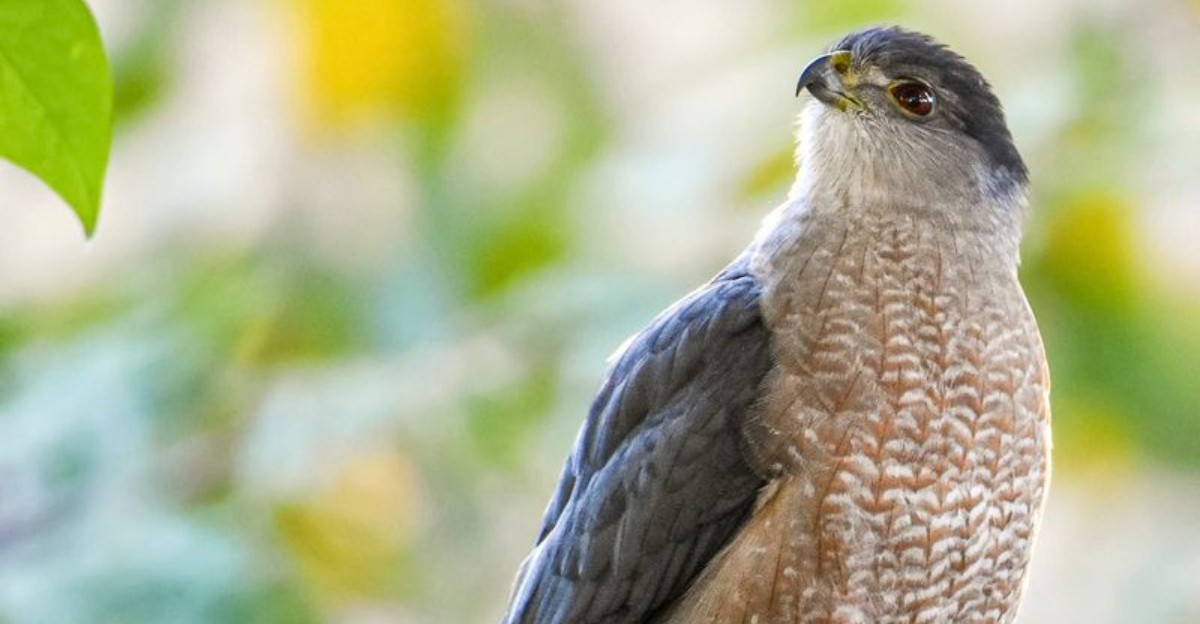
Adults have slate blue-gray backs and orange bars across their chests. Their eyes glow red or orange, and their legs are long and thin.
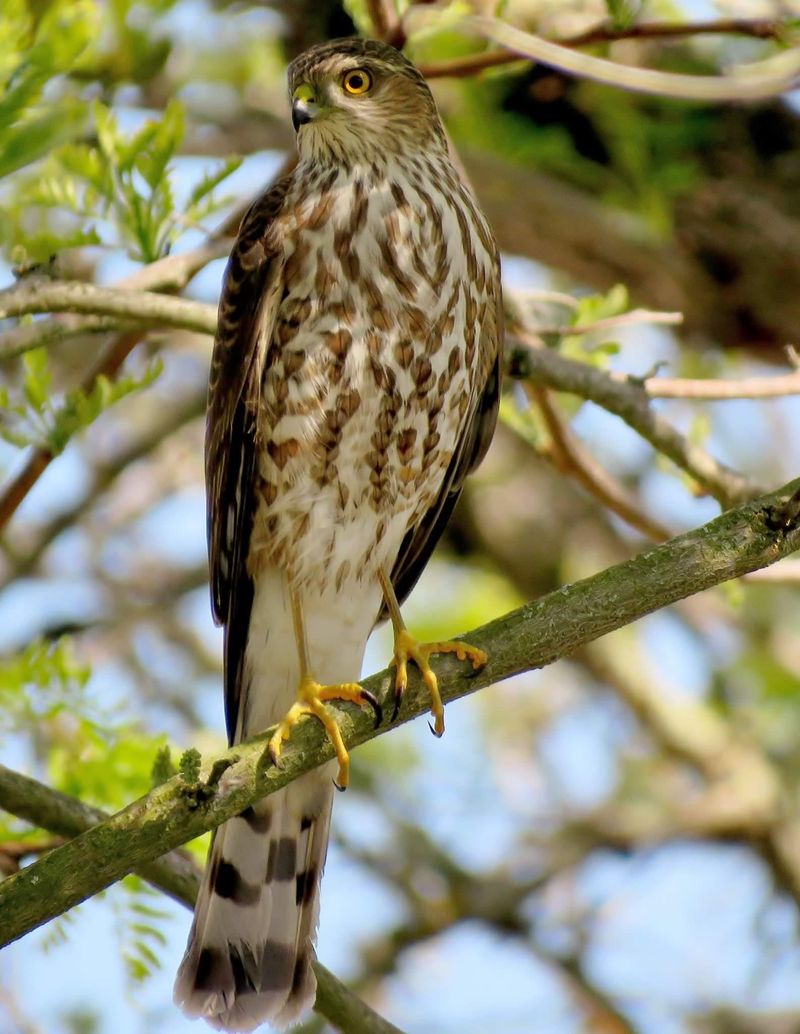
Young birds are brown with streaky chests, which often confuses backyard watchers during their first fall.
The tail offers another clue. It’s long, narrow, and usually looks square or notched at the tip, while short, rounded wings let the hawk twist between branches.
That shape suits ambush hunting perfectly. A sharpie often hides in a tree, then bursts out in a sudden dash through shrubs, around corners, and over fences.
Binoculars rarely come up in time.
Open-air flight carries a clue as well. A quick flap, flap, flap, followed by a short glide, often points to a small accipiter like this one.
The name comes from a slim, flattened ridge along the front of the lower legs, which looks a bit like a sharp edge.
Few backyard birds pack so much speed into such a compact frame, which explains why many sightings last only a second or two.
Fall Migration Brings More Hawks
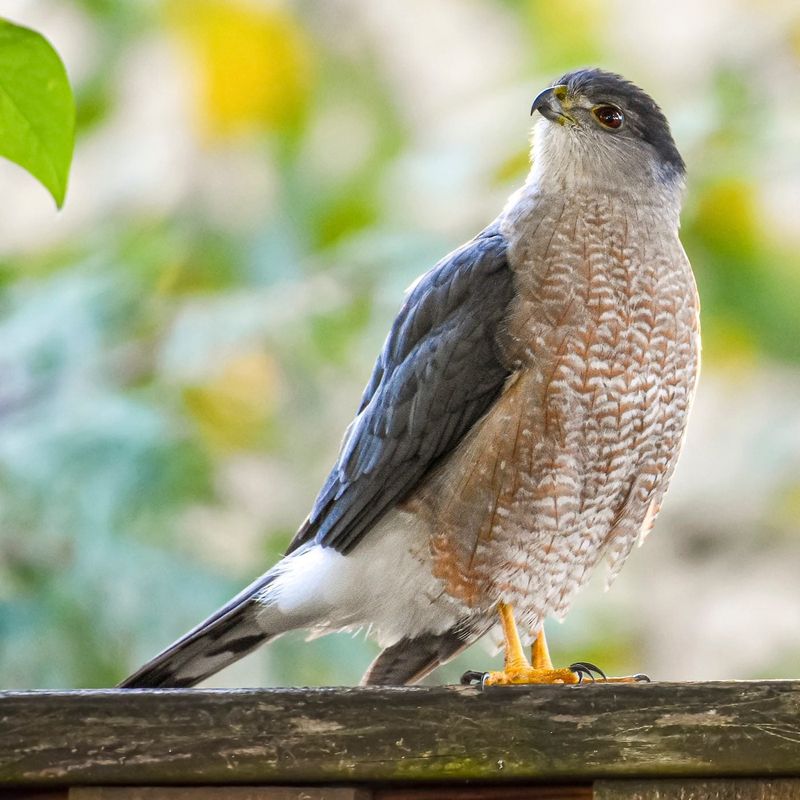
Cooler air arrives in September, and suddenly a hawk appears near the feeder every few days. That pattern isn’t imagined, since fall migration is in full swing.
Many sharp-shinned hawks nest in northern forests across Canada and the western mountains. As days shorten, they head south.
California sits right along their path, and plenty stay through winter.
The Golden Gate Raptor Observatory, based in the Marin Headlands, counts thousands of raptors passing each fall, and sharp-shinned hawks rank among the most common birds tallied.
The busiest stretch often runs from late September into October.
Songbirds migrate at the same time, and hawks follow those moving flocks, a bit like fans tailing a tour bus. More traveling songbirds means more chances for a meal.
Winter keeps the action going. Some hawks settle into neighborhoods with good cover and plenty of feeders, while others pass through for a day or two.
By spring, most sharpies leave lowland yards. They return north or to mountain forests to nest, becoming shy and hard to spot.
Sightings concentrated from fall through early spring fit their yearly travel schedule well.
Mid to late October often brings some of the heaviest backyard activity, as migrants mix with hawks arriving to spend the winter.
A simple sighting log, noting dates and times, can reveal personal patterns. Projects such as eBird and Project FeederWatch also welcome these records from California households.
Hawks Are Protected By Law
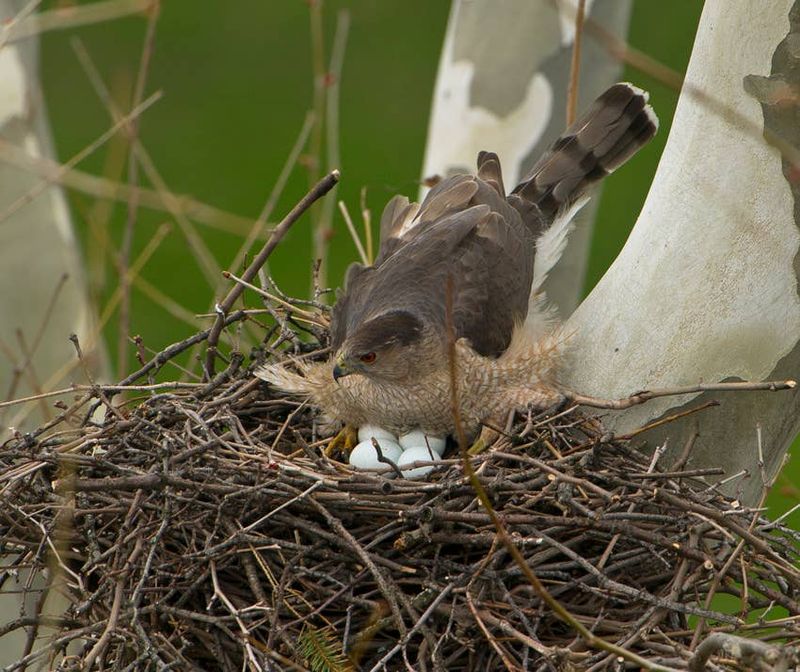
Frustration can tempt people to shoo, chase, or trap a hawk. That impulse is best set aside, since sharp-shinned hawks are protected and interfering can bring serious trouble.
The federal Migratory Bird Treaty Act covers nearly all native birds, including hawks. It prohibits harming, capturing, or harassing them without a special permit.
Their nests, eggs, and feathers are protected too.
California adds its own layer. The California Fish and Game Code protects birds of prey, and the California Department of Fish and Wildlife enforces it.
Violations can lead to substantial fines and other penalties.
Harassment covers more than many expect. Throwing objects, repeatedly chasing the bird, or setting traps all count, and keeping a found feather requires a permit as well.
Hawks were not always treated kindly. In the past, many were shot as pests, and pesticides such as DDT also took a heavy toll on their numbers.
With protections in place, sharp-shinned hawk populations have recovered considerably across much of North America.
The better approach changes the yard rather than the hawk. Adjusting feeders, adding cover, or taking a short feeding break all respect the law and the bird.
An injured hawk is best left to a licensed wildlife rehabilitation center rather than handled at home. CDFW lists approved centers on its website.
Rehabilitators know how to help safely, and a quick call often brings clear instructions within minutes.
Cover And Shrubs Give Birds A Chance To Escape
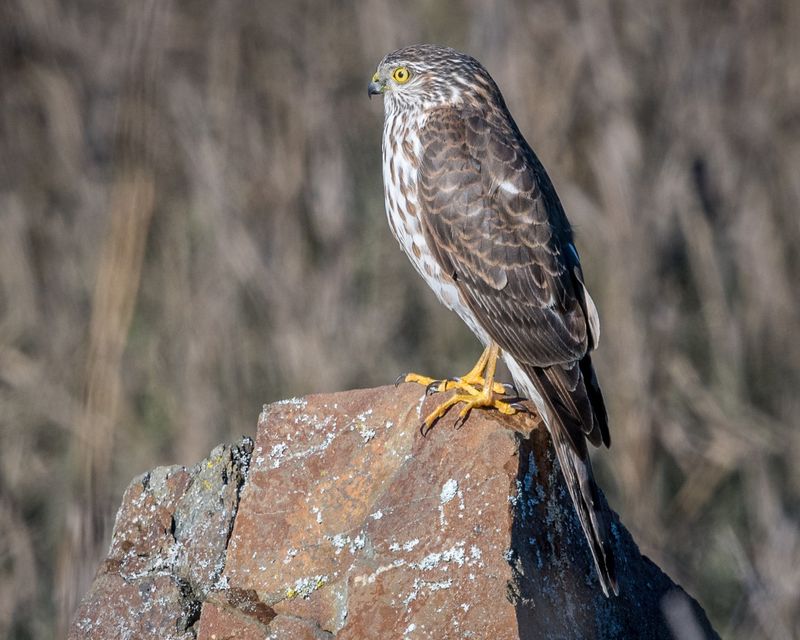
A chickadee caught in the open has few choices. A chickadee a few feet from a thick shrub has a plan, and feeder placement can make that difference.
Audubon suggests placing feeders near shrubs or trees that offer escape cover. When a hawk swoops in, songbirds dart into dense branches, and many hawks give up quickly.
Cover about 10 feet from the feeder works well. That distance allows a fast escape while leaving too little room for a cat to hide and pounce.
Prickly or tightly packed plants work best.
Native California shrubs make smart picks. Toyon, coffeeberry, California wild rose, and manzanita offer thick shelter, plus berries, flowers, and insects that feed birds year round.
In fire-prone areas, these shrubs belong beyond the first five feet of the house, in line with Zone 0 guidance.
A loose brush pile in a back corner gives small birds safe rooms. It works best well away from structures, fences, and anything combustible.
Windows deserve attention too, since panicked birds often strike glass while fleeing. Feeders within about three feet of windows, or more than 30 feet away, reduce collisions.
Window decals or screens add extra protection.
A short feeding break of a week or two can also encourage a persistent hawk to hunt elsewhere. Songbirds simply spread out and forage naturally meanwhile.
Keeping cats indoors protects the same songbirds from a second, far less natural threat.