7 Fragrant Plants That Bloom In California In Winter
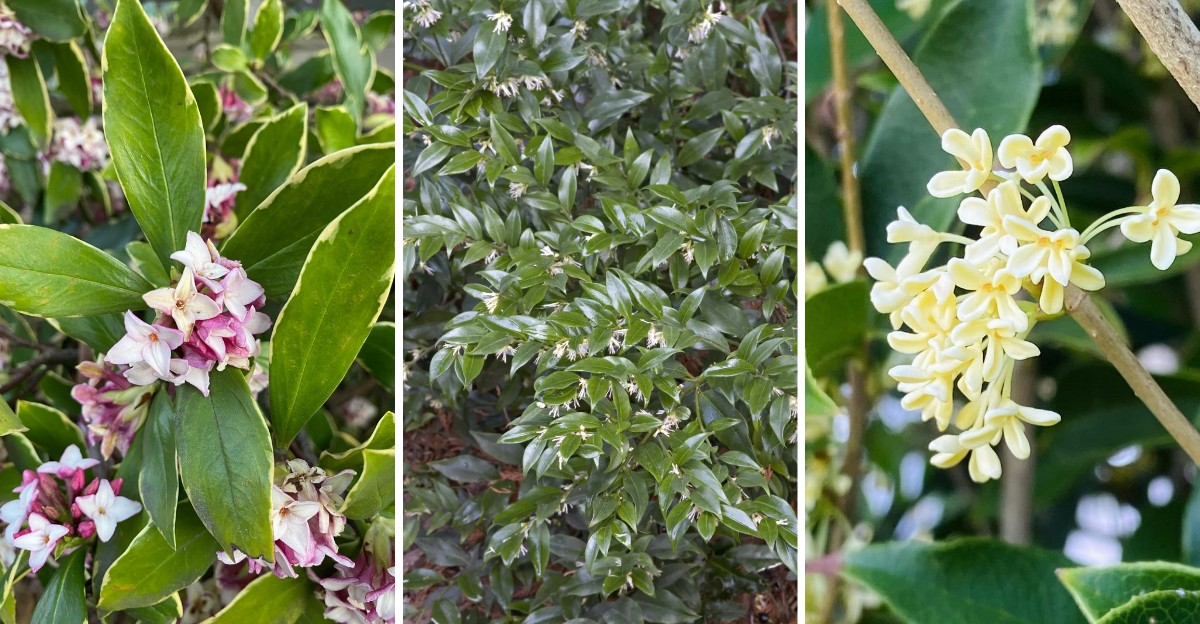
A tiny winter flower can release a fragrance strong enough to perfume an entire garden path, even on a chilly February morning. Sweet box is particularly good at this trick, hiding its creamy blooms beneath glossy leaves while sending out a surprisingly rich honey scent.
Nobody asked, but I think winter deserves more credit in the fragrance department. California gardeners can enjoy scented flowers for months while many other regions are waiting for warmer weather and the return of spring.
Some shrubs produce sweet, delicate perfumes, while others bring citrus, spice, or even hints of apricot. A handful are California natives, and several come from Mediterranean or Asian gardens with growing conditions that suit milder parts of the state.
Which of these fragrant favorites would make the best addition beside your front door? One little shrub could turn an ordinary winter morning into the loveliest part of your day.
1. Chaparral Currant
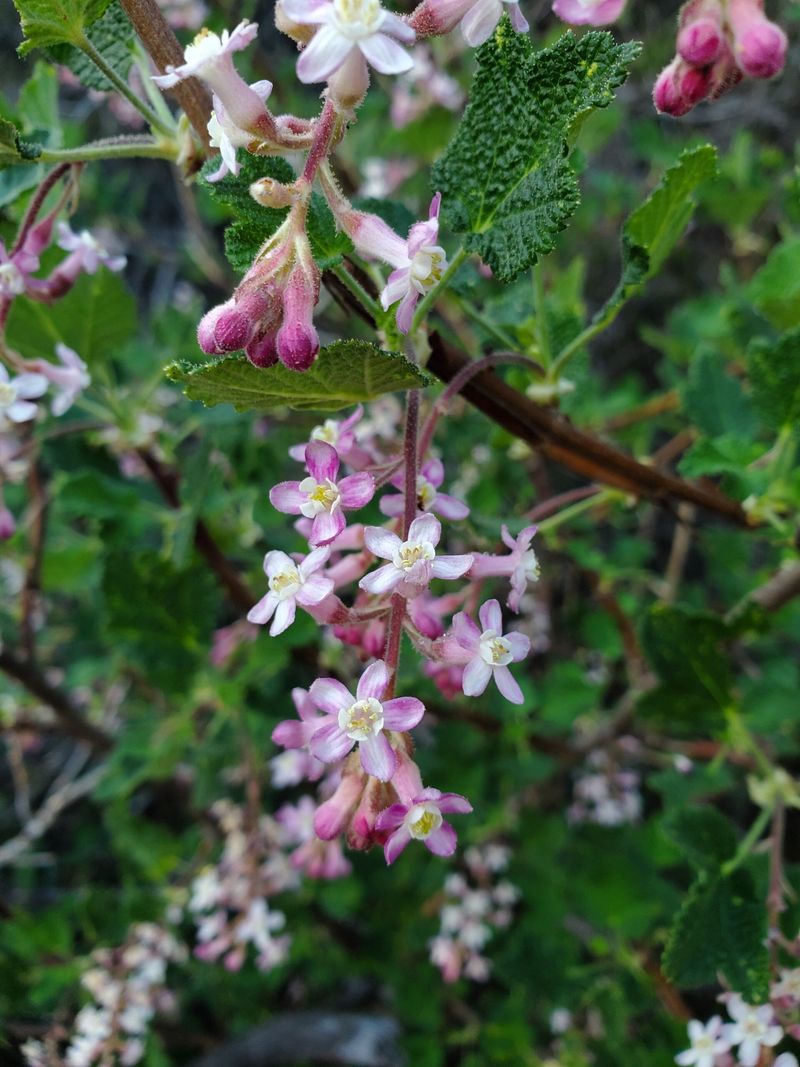
Hummingbirds seem to have a secret calendar that marks the exact week this native shrub starts blooming each fall. I love watching them zip between the dangling pink clusters while most of my garden is still resting.
Chaparral currant, or Ribes malvaceum, grows wild on dry hillsides and can bloom anywhere from October through March. Each hanging cluster holds roughly ten to twenty-five small tubular flowers in soft pink or rosy shades.
Brush the fuzzy three-lobed leaves with your hand, and you will catch a spicy, resin-like aroma right away. Some gardeners find the smell a little strong, but I think it smells exactly like a sunny hillside.
Plants usually reach four to ten feet tall and wide, so give them room near a path or fence. Coastal gardeners can plant in full sun, while inland gardens do better with some afternoon shade.
Drainage matters more than soil type, since this shrub handles clay, loam, or rocky ground if water moves through. Once roots settle in, it needs very little water, and heavy summer watering can cause real trouble.
Late fall is a smart time to plant, because winter rains help young roots grow deep without extra effort. You might notice the shrub dropping its leaves in summer, which is a normal part of its dry-season rest.
After the flowers fade, small blue-purple berries form, and local birds rarely leave many behind for long. Deer tend to leave it mostly alone, which makes it a handy choice for gardens near open hillsides.
2. Laurustinus
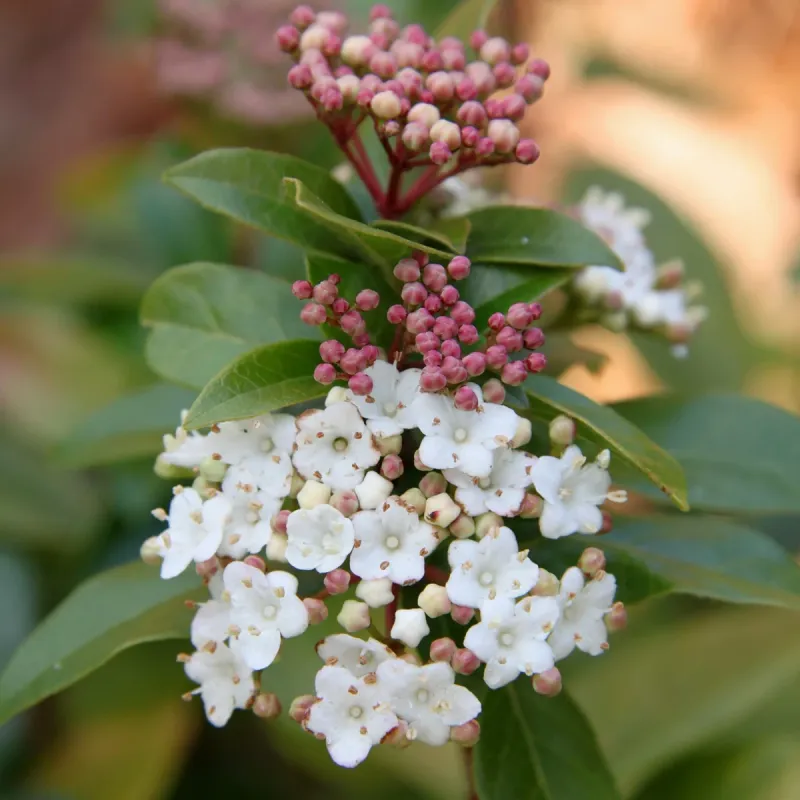
Pink buds that open into white flowers make this shrub look like it changed outfits halfway through the season. I enjoy seeing both colors on the same cluster during cloudy weeks when the garden needs some cheer.
Laurustinus, known to botanists as Viburnum tinus, comes from the Mediterranean region and handles our dry summers quite well. Blooms often appear in November and keep going into spring, giving you months of steady flower power.
The scent is light and sweet rather than bold, so you may notice it most when standing close. Personally, I like it as a quiet background perfume near a gate or a front walk where people pause.
Plants can grow six to twelve feet tall with glossy, leathery leaves that stay green all year long. That dense growth makes laurustinus a favorite for privacy hedges, and it takes light shearing after flowering ends.
Give it full sun or part shade, with some afternoon relief in hot inland valleys and foothill areas. Rich, well-drained soil keeps it happiest, though established shrubs handle dry spells better than you might expect.
After the flowers, metallic blue berries show up and slowly darken toward black as the months move along. Keep pets and small children from snacking on them, since eating many berries can cause mild stomach upset.
Deer usually skip this shrub, which is welcome news for gardeners living near wooded canyons or open land. Compact varieties like Spring Bouquet fit smaller yards and still bring that lovely pink and white show.
3. Winter Daphne
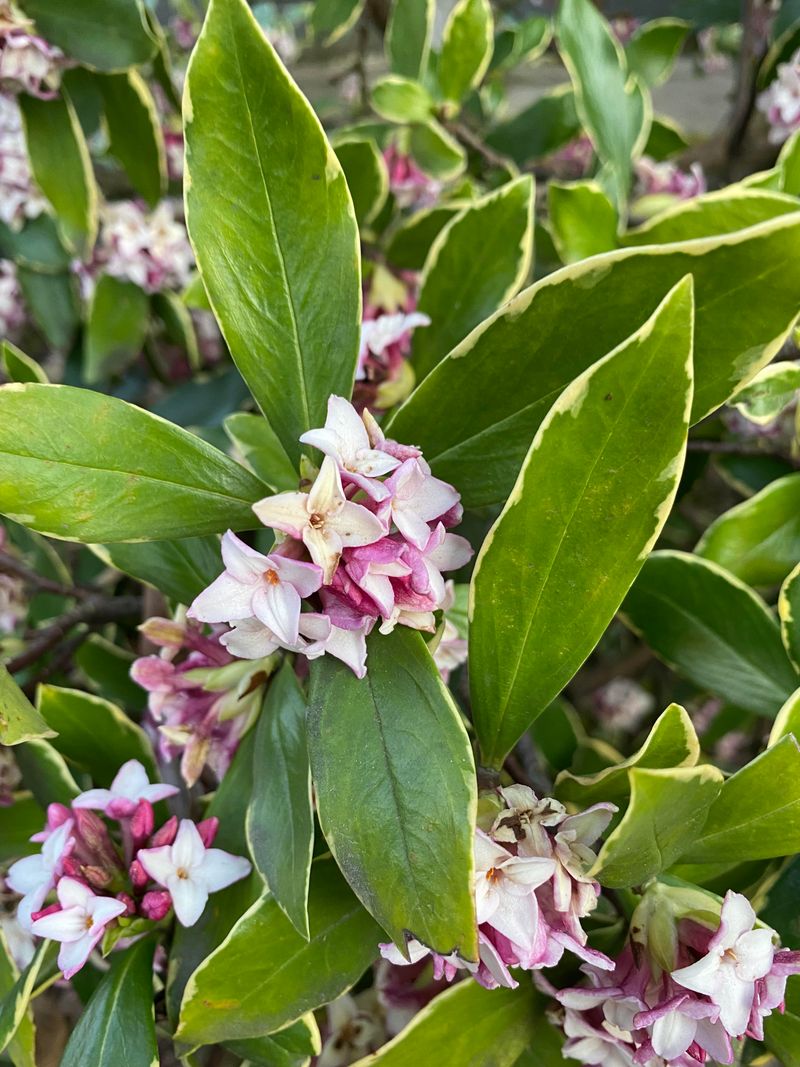
One small branch of this shrub in a vase can make an entire kitchen smell like a fancy perfume shop. Friends who visit my garden in February usually stop mid-sentence and ask what that amazing citrusy smell is.
Winter daphne, or Daphne odora, opens clusters of pink and white flowers from rosy buds, often from January to March. The fragrance mixes sweet floral notes with a bright lemony edge that many gardeners call the best winter scent anywhere.
Most plants stay three to five feet tall and wide, growing slowly with narrow, shiny leaves on neat stems. The popular Aureomarginata variety has creamy yellow leaf edges that brighten shady corners even when flowers are gone.
I believe placement is the whole secret with daphne, because it strongly dislikes being moved once it settles in. Choose a spot with morning sun and afternoon shade, ideally near a doorway where you can enjoy the perfume.
Soil needs to drain very well, since soggy roots are the most common reason these shrubs suddenly decline. Water regularly during dry spells, but let the top inch or so dry a little before watering again.
Every part of this plant is poisonous if eaten, and the sap can irritate skin and eyes for some people. Wear gloves when trimming, and plant it away from spots where curious kids or pets like to chew.
Daphne can be a little moody and sometimes lives a shorter life than other shrubs in the garden. Still, I happily plant a new one whenever needed, because those winter weeks of fragrance feel worth every bit of effort.
4. Paperbush
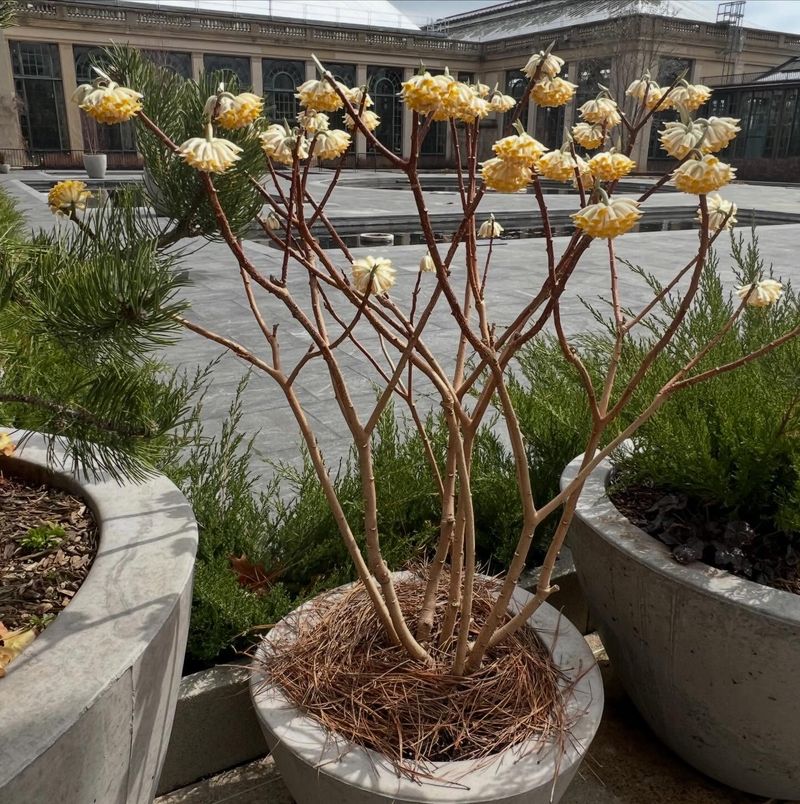
Bare branches covered in fuzzy silver buds look like someone decorated the shrub with tiny pom-poms for the holidays. You will want to touch them, and honestly, I have never met a gardener who could resist trying.
Paperbush, or Edgeworthia chrysantha, comes from China, where its bark has long been used to make fine paper. In Japan, a close relative supplies fibers for high-quality paper, including some used for banknotes.
From late winter into early spring, those silver buds open into round clusters of drooping yellow tubular flowers. The scent reminds people of honey or cloves, and the flowers last for weeks on the leafless stems.
Branches grow in a neat three-way pattern, giving the shrub a tidy look even when it has no leaves. Most plants reach four to six feet tall and wide, though older shrubs can grow taller in good conditions.
Partial shade suits paperbush best, especially in warmer regions where strong afternoon sun can scorch its soft leaves. Big blue-green leaves appear in spring and turn yellow in fall before dropping to reveal next season’s buds.
Soil should stay evenly moist but drain well, with plenty of compost mixed in to keep roots comfortable. Slightly acidic soil works nicely, and a layer of mulch helps hold moisture through warm summer months.
It fits best in cooler, milder gardens rather than hot desert areas where summers run long and harsh. No serious pest troubles are widely reported, which makes this quirky shrub a fairly easygoing addition.
5. Sweet Box
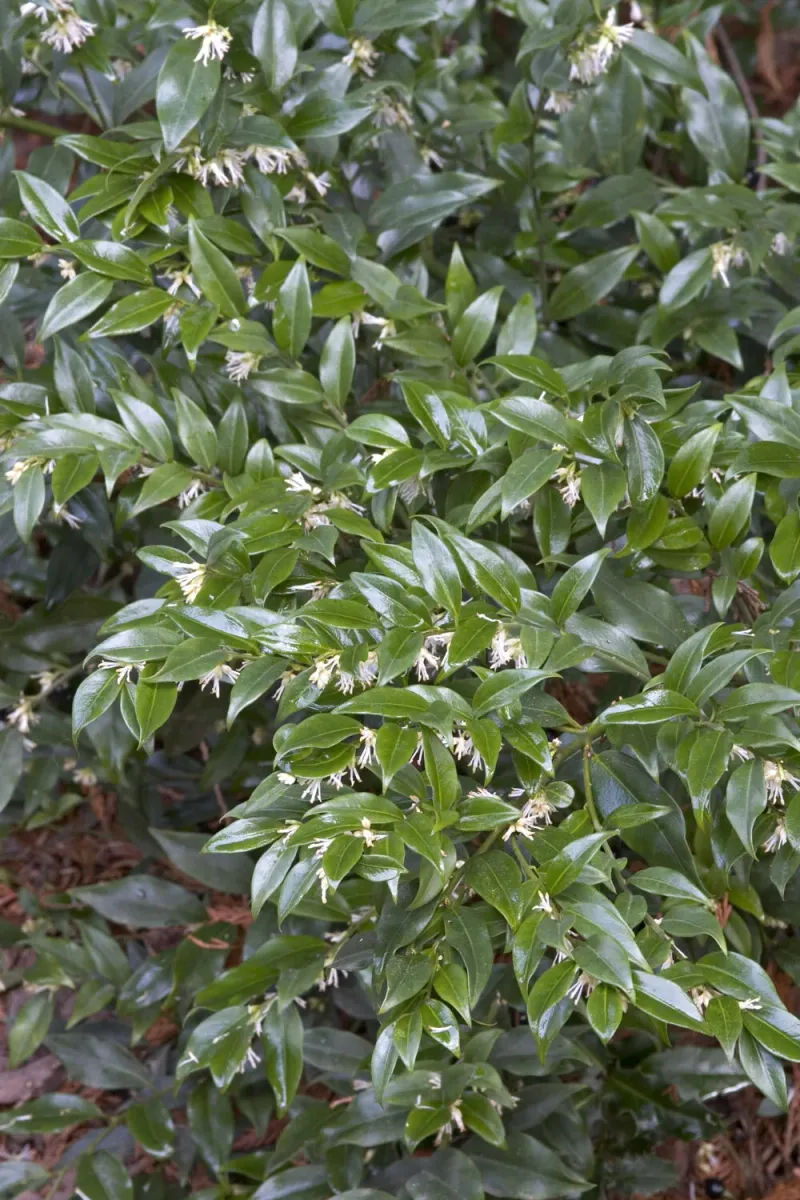
Shady corners usually get stuck with boring plants, but this little shrub quietly turns them into the best smelling spot outside. I first noticed mine because the whole side yard smelled like vanilla cookies on a cold morning.
Sweet box, or Sarcococca ruscifolia, produces tiny creamy flowers that hide beneath its glossy, deep green leaves. They have no real petals, yet their honeyed fragrance can drift several yards on calm winter days.
Flowers usually appear from December into March, offering early nectar for bees on warmer afternoons. Afterward, small round berries form, starting dark red and slowly ripening to black as weeks pass.
Most plants grow three to five feet tall and wide, with a dense, rounded shape that looks tidy year-round. You rarely need to prune it, which makes this a wonderful choice for busy gardeners who want easy beauty.
Plant it in partial or full shade, such as north-facing beds or under trees where few flowers bloom. Strong afternoon sun tends to yellow the leaves, so shade really helps this shrub look its glossy best.
Moist, well-drained soil with plenty of organic matter gives young plants a strong start in their first year. Once established, sweet box handles dry shade surprisingly well, though occasional deep watering keeps it happier.
Deer usually ignore it, and serious pest or disease problems are uncommon for this tough little shrub. My tip is to plant it beside a walkway or entry, because the perfume is easy to miss from far away.
6. Catalina Ceanothus
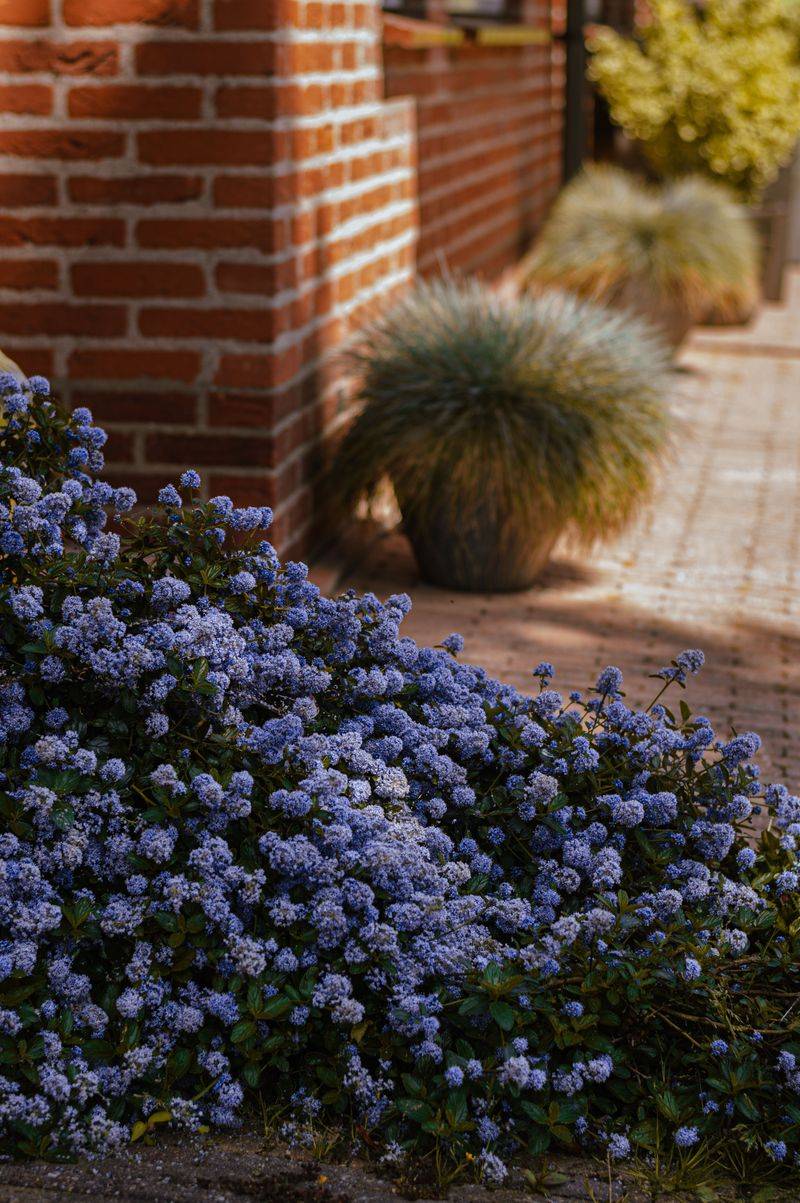
Islands off the southern coast gave us this towering native shrub that buzzes with bees when it blooms. Standing beside one in full flower feels a bit like walking into a giant honey jar with a pale blue lid.
Catalina ceanothus, or Ceanothus arboreus, grows naturally on the Channel Islands and can reach twelve to twenty-five feet tall. You can let it grow as a big shrub or prune it into a small, shady tree.
Spikes of pale blue to lavender flowers appear from late winter into spring, often starting around February. Their sweet, honey-like scent pulls in bees and butterflies, while hummingbirds also stop by for a quick visit.
The broad leaves are dull green on top and fuzzy white underneath, which explains its other name, feltleaf ceanothus. That soft underside is fun to show kids, since it feels a lot like a cozy flannel shirt.
Full sun or light shade works well, and good drainage is the single biggest need for this native. Heavy summer watering after the first year often shortens its life, so let it stay fairly dry once established.
This species prefers mild coastal gardens, since it handles only light frost near the thirty-five degree mark. Gardeners in colder inland areas can choose hardier ceanothus types that still deliver blue blooms and pollinator activity.
Deer sometimes nibble on young growth, so a simple cage helps during the first year or two. I think this is one of the most generous native shrubs for anyone who wants pollinators visiting before spring arrives.
7. Sweet Olive
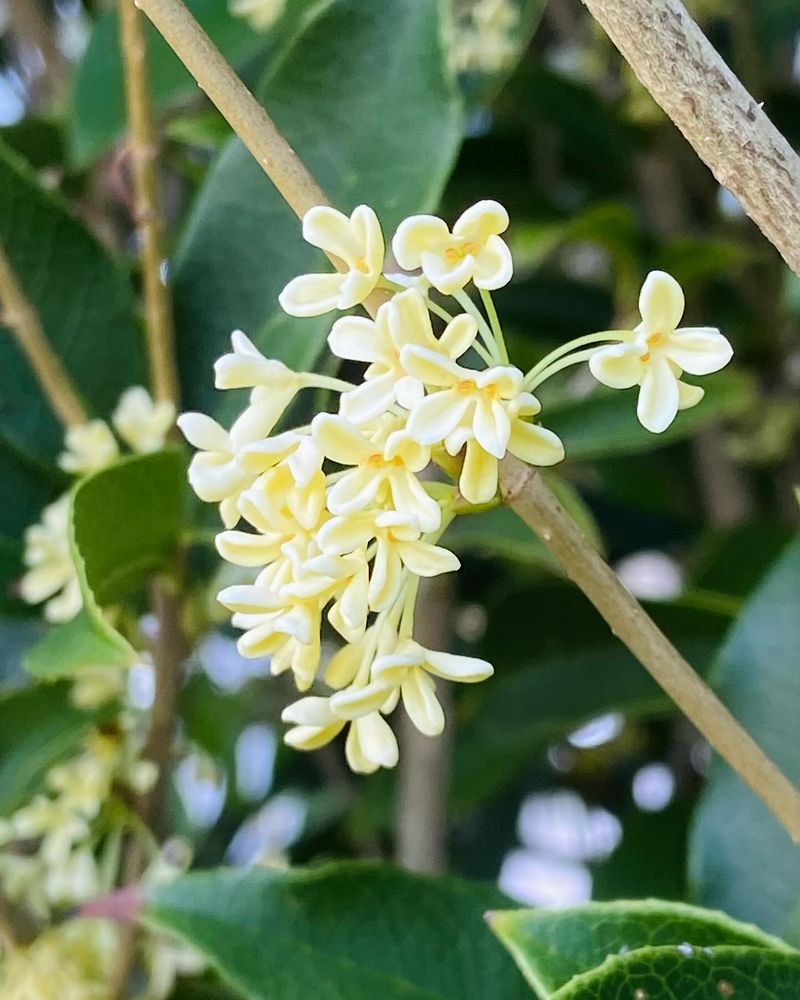
Apricots in winter sounds impossible, yet that fruity smell is exactly what drifts from this shrub on cool evenings. Many people search their yard for ripe fruit before realizing the scent comes from tiny cream-colored flowers.
Sweet olive, or Osmanthus fragrans, is native to Asia and has been grown in Chinese gardens for centuries. Its flowers are used to flavor teas and sweets there, and the plant appears in many autumn festival traditions.
Peak blooming often happens from late fall into early winter, with lighter flushes showing up through the year. In mild coastal climates, I have caught that sweet perfume during random months and smiled every single time.
Plants usually grow eight to ten feet tall, with glossy oval leaves that sometimes have small toothed edges. It works nicely as a screen, a small tree, or a large container plant near a sunny patio seat.
Coastal gardeners can plant it in full sun, while inland gardens benefit from morning sun and light afternoon shade. Hot, drying winds and reflected heat from walls tend to stress it, so pick a sheltered spot when possible.
Well-drained soil keeps roots healthy, and regular watering helps during the first couple of years after planting. Mature shrubs get by on moderate water, which fits nicely into many waterwise California yards today.
You need to sniff it in the morning or early evening, when the scent usually feels strongest and sweetest. Deer tend to pass it by, leaving you plenty of flowers for cutting and enjoying indoors.