What It Means When An Eastern Indigo Snake Shows Up In Your Florida Yard
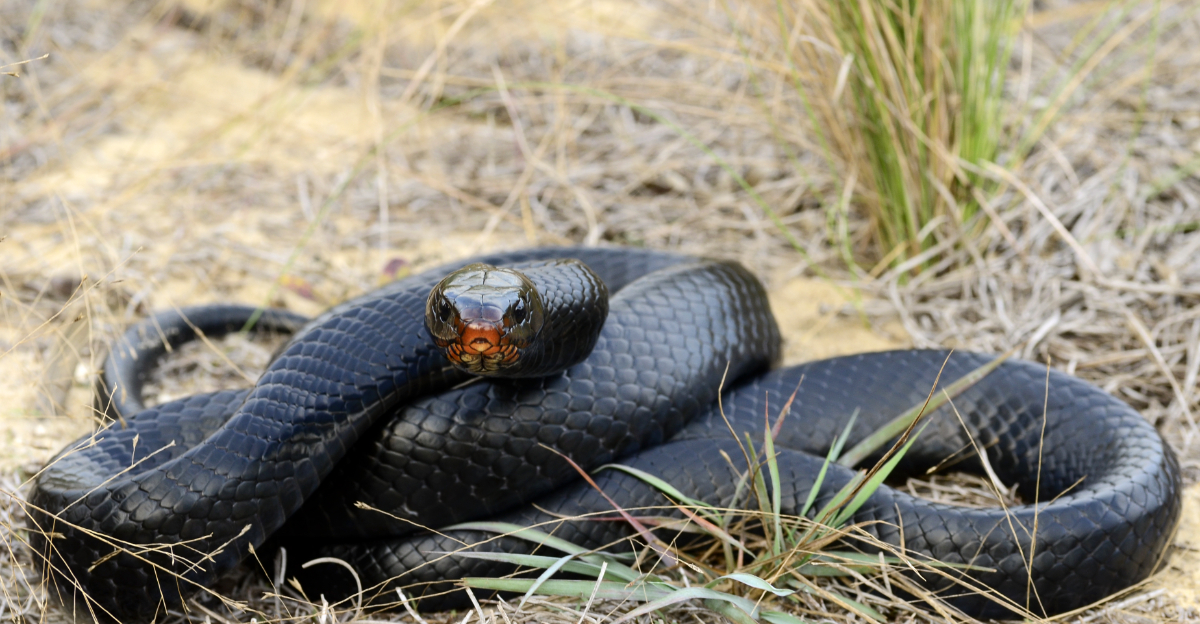
A six-foot blue-black snake stretched across your Florida yard can stop you in your tracks. An Eastern indigo snake has that effect.
Its size alone feels dramatic, but its presence can tell you something far more interesting about the land around your home. This snake does not wander through every yard, and a visit can point to habitat conditions that many homeowners never notice.
The clue may sit in the brush line, beneath a quiet patch of cover, or beyond the fence where your property meets wilder ground. Before fear takes over, look at what the snake’s arrival may actually say about your yard.
Eastern indigos play a distinct role in Florida’s ecosystems, and a close encounter can reveal more than a simple wildlife surprise.
Sometimes the most striking visitor in the grass is also a sign that your little corner of Florida still has a strong connection to the landscape beyond it.
1. That Giant Black Snake May Just Be Passing Through
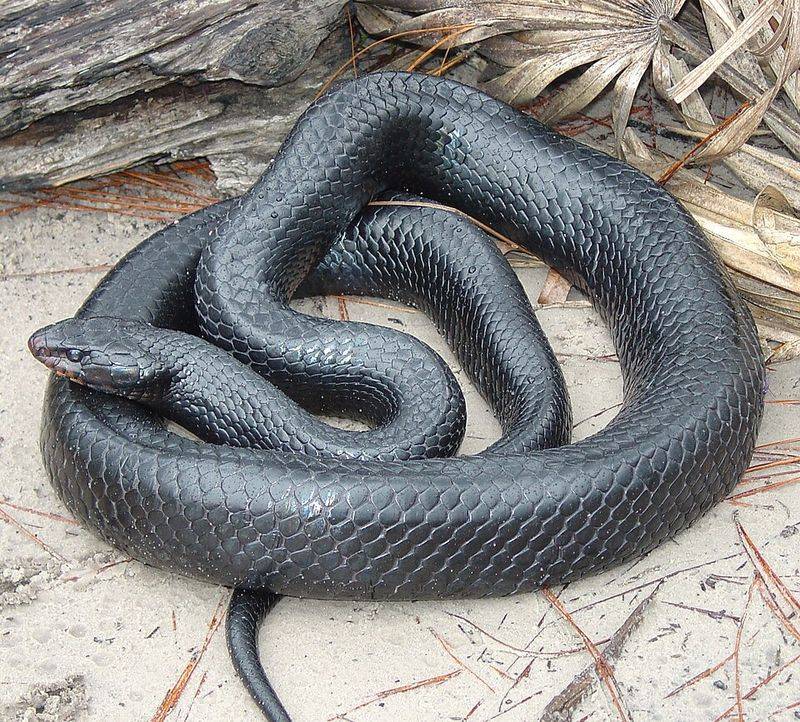
A snake crossing a driveway in the early morning is easy to misread as a visitor settling in for good. Most of the time, that is simply not what is happening.
Eastern indigo snakes are wide-ranging travelers, and a brief appearance on your property often means exactly that: brief.
Research cited by the Florida Fish and Wildlife Conservation Commission indicates that indigo snakes can move across remarkably large areas.
Males especially are known to cover significant ground while searching for food, mates, and suitable shelter throughout different seasons.
A manicured lawn or garden path may represent only a narrow crossing point along a route that stretches far beyond your fence line.
Snakes do not read property boundaries the way people do. A yard, a wooded lot edge, a drainage swale, and a neighbor’s garden may all form part of one continuous movement corridor in the snake’s experience.
Watching one move steadily in a single direction is a good clue it has somewhere specific to go.
A single sighting does not mean the snake has claimed your yard as territory. Indigo snakes tend to keep moving, following scent trails, prey activity, and seasonal cues across a shifting landscape.
The yard was likely just one small step in a much longer journey.
2. Your Yard May Border More Wild Habitat Than It Looks
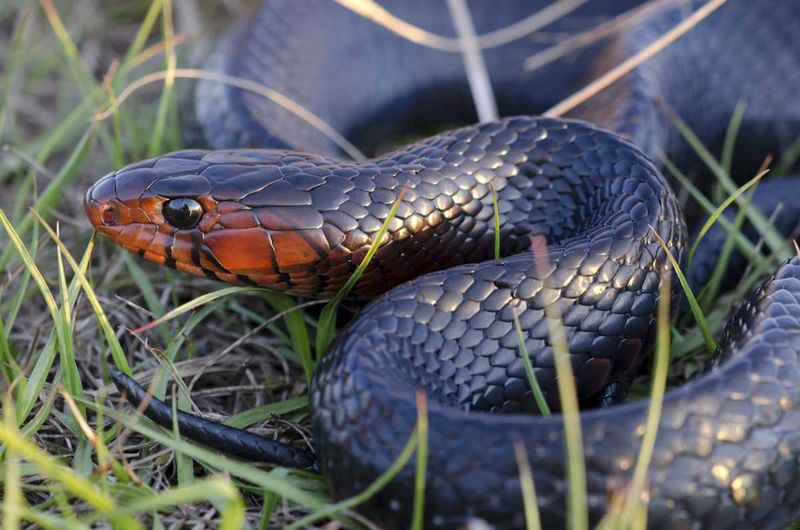
Beyond a wooden fence or a line of hedges, the landscape can look very different. Eastern indigo snakes use several habitat types throughout their range.
These include pine flatwoods, scrub, hardwood hammocks, grassy wetland edges, and undeveloped corridors.
Homes near preserves, conservation easements, wooded drainage corridors, or undeveloped land are more likely to see a passing snake. Homes surrounded by pavement and closely cropped turf are less likely to do so.
The Florida Museum of Natural History notes that this species uses a wide variety of natural habitat types, moving between them depending on season and need.
A sighting near your property line, especially on the side facing woods or a retention area, can say more about the surrounding landscape than about your yard itself. The snake likely entered from habitat nearby and continued toward more habitat on the other side.
Your Florida Garden Changes Every Week. Your Plan Should Too.
Gardening in Florida changes quickly throughout the season. Every Friday you’ll receive a simple weekly plan showing exactly what to plant, prune, fertilize, harvest, and protect so you never miss the right timing.
A tidy lawn does not attract indigo snakes the way natural ground cover, leaf litter, logs, and brushy edges do. Seeing one cross your yard does not mean your lawn is prime habitat.
More likely, your property sits between two natural areas the snake is connecting as it moves through the broader landscape on its own schedule.
3. Gopher Tortoise Burrows Can Explain The Visit
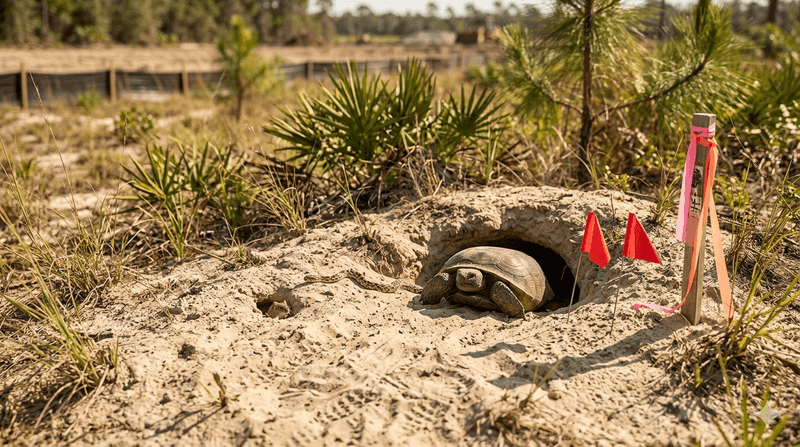
Sandy mounds with a distinctive half-moon opening at ground level are easy to overlook in a weedy corner of a property.
Gopher tortoise burrows, though, are significant structures in the lives of many animals, and Eastern indigo snakes have a well-documented relationship with them.
According to the U.S. Fish and Wildlife Service, indigo snakes use gopher tortoise burrows as refuges, particularly during cooler weather and seasonal temperature extremes.
The burrows stay at relatively stable temperatures year-round, making them valuable shelter for a reptile that cannot regulate its own body heat internally.
If your property or a neighboring lot has a gopher tortoise present, that burrow becomes a potential draw for other wildlife in the area, including passing indigo snakes. This does not mean every indigo sighting guarantees a burrow is steps away.
The snake may have used a burrow elsewhere and simply moved through your yard later.
Gopher tortoise burrows should never be probed, blocked, or disturbed. Both the tortoise and any animals sheltering inside are protected.
Appreciating this habitat relationship from a respectful distance is the right approach. The burrow itself is a sign of a functioning piece of natural habitat, and that matters well beyond any single snake sighting.
4. Indigo Snakes Need Far More Space Than One Yard
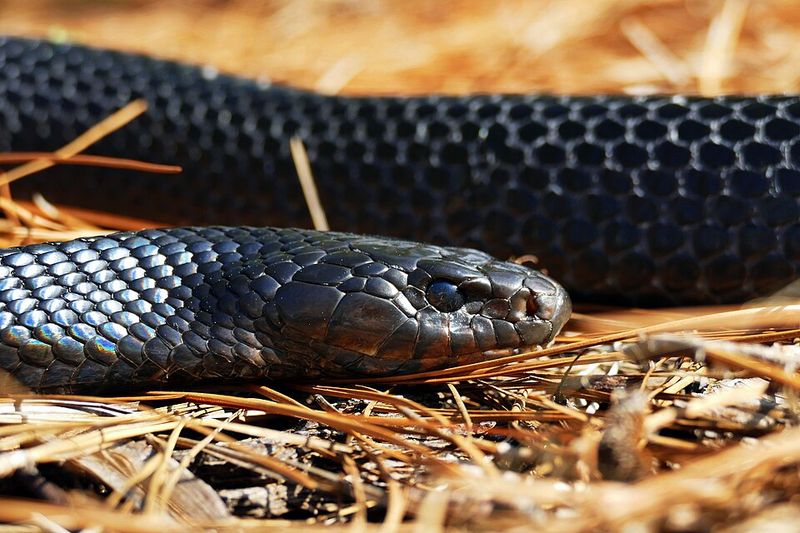
Scale matters a lot when thinking about a species like this. Eastern indigo snakes are among the longest native snakes in North America, and their home ranges reflect that size in a meaningful way.
Studies referenced by the Florida Fish and Wildlife Conservation Commission show that male indigo snakes can use home ranges covering hundreds of acres.
Even conservative estimates place their movement well beyond what any single residential lot could support.
Females tend to have somewhat smaller ranges, but the scale still dwarfs most suburban properties.
Roads, fences, developed parcels, and cleared land all create obstacles for a snake that needs to move freely across a large area.
Fragmented habitat forces animals to cross developed areas, which is partly why a snake might appear in a yard that seems far from wild land.
Connectivity between natural patches is critical for a species with such broad spatial needs.
Seeing one in your yard does not mean your property is large enough to sustain it. The snake is almost certainly using many properties, preserves, road margins, and natural corridors as part of a much bigger picture.
One yard is just one tile in a mosaic that stretches across a much wider landscape, and the snake will move on when its route calls for it.
5. Other Snakes Can Put Your Yard On The Hunting Route
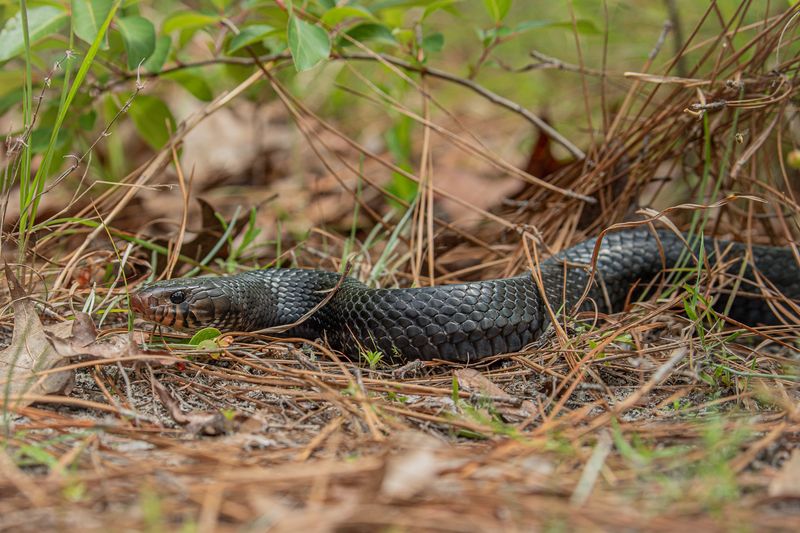
Prey availability shapes where any predator chooses to travel, and indigo snakes are active, opportunistic hunters. Their diet includes a wide range of vertebrates, and they are particularly well known for consuming other snakes, including venomous species.
According to the Florida Museum of Natural History, Eastern indigo snakes eat a wide range of small animals. Their diet can include lizards, frogs, and small mammals depending on local availability.
A yard or garden edge with plenty of skinks, frogs, or small rodents can become part of a larger hunting route. That can happen without any deliberate invitation from the homeowner.
Brushy borders, log piles, rock edges, and overgrown corners near a fence tend to concentrate small prey animals. A snake moving through the area will investigate those spots along the way.
Seeing one nose along a garden bed or move deliberately through leaf litter usually means it is following a scent trail toward something worth pursuing.
Indigo snakes are not a guaranteed solution to venomous snakes near a home, and it would be inaccurate to treat them that way. Their ecological role as a generalist predator keeps local food webs balanced, but they travel where prey takes them.
If prey is present in your yard, the yard may simply fit naturally into a longer hunting circuit the snake already uses.
6. Not Every Glossy Black Snake Is An Indigo
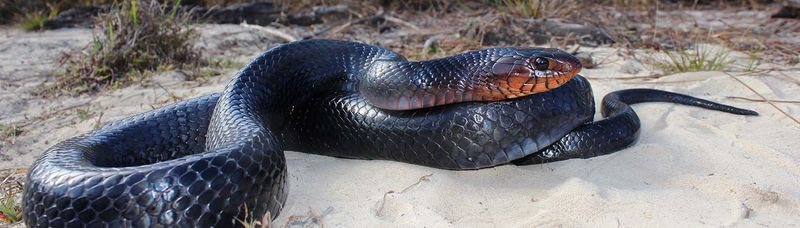
A large black snake moving quickly across a lawn can be startling, and it is tempting to assume the worst or the best right away. Accurate identification matters, especially because Eastern indigo snakes have legal protections that other species do not share.
Black racers, which are common throughout Florida, are frequently mistaken for indigo snakes. Both species are dark and move with confidence.
Racers tend to be slender and faster-moving, while indigo snakes are typically heavier-bodied and move in a more deliberate, unhurried way. Indigo snakes also have a distinctive glossy sheen across their scales that can appear almost iridescent in sunlight.
Some individuals show reddish or orange-brown coloration around the chin and throat area, which can be a helpful broad clue when observed from a distance. However, relying on one feature alone is not reliable identification.
Lighting, angle, and distance all affect how colors appear in the field.
The safest approach is to observe carefully from where you are standing and, if possible, take a photograph with your phone or camera. Never approach a snake to get a closer look at its head, scales, or eyes.
A good photo taken from a safe distance can be shared with a wildlife biologist or submitted to a state wildlife reporting tool for a more confident identification.
7. This Protected Native Needs Space Not Handling
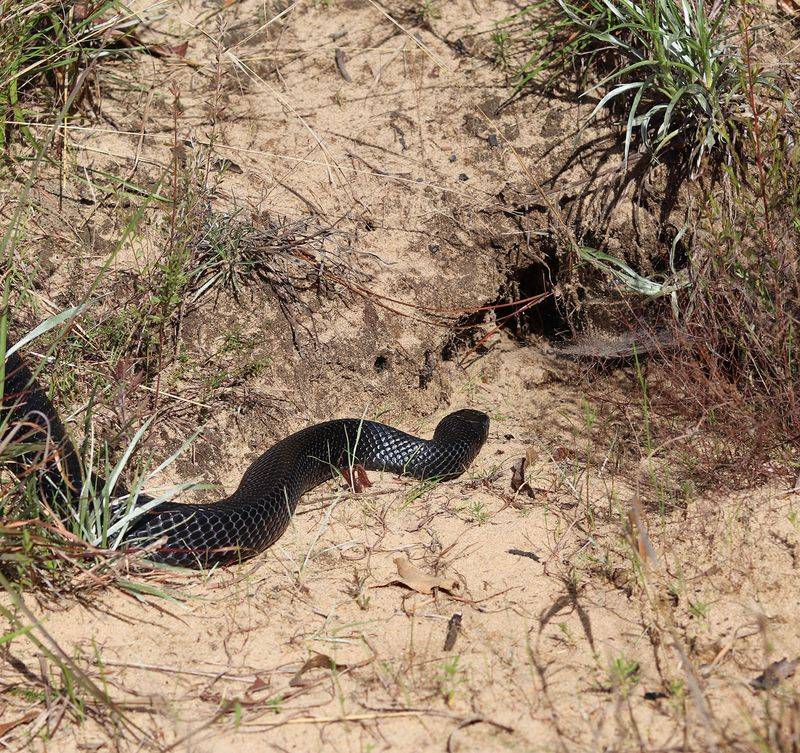
Calm, steady observation is the right response when one of these snakes appears near a home. Eastern indigo snakes are federally listed as threatened under the Endangered Species Act, and that status carries real legal weight for anyone who encounters one.
Capturing, harassing, harming, or relocating an Eastern indigo snake without proper federal and state authorization is prohibited. The U.S.
Fish and Wildlife Service enforces these protections, and they apply whether the snake is on public or private land. Homeowners do not need to do anything beyond giving the animal space and letting it move on its own.
This species is nonvenomous, which sometimes makes people feel comfortable reaching toward one. That impulse should be resisted.
Handling any wild snake causes stress to the animal and can result in a defensive bite, even from a nonvenomous species. Beyond the animal’s wellbeing, handling a protected species without authorization is a legal matter.
A sighting is not an emergency. The snake is not a threat to people, pets, or property in any meaningful way.
Simply stepping back, keeping children and pets calm and at a distance, and watching quietly is all that is needed. Most indigo snakes will move along within a few minutes once they sense open space ahead of them and no obstruction blocking their route.
8. One Sighting Can Reveal A Bigger Habitat Connection
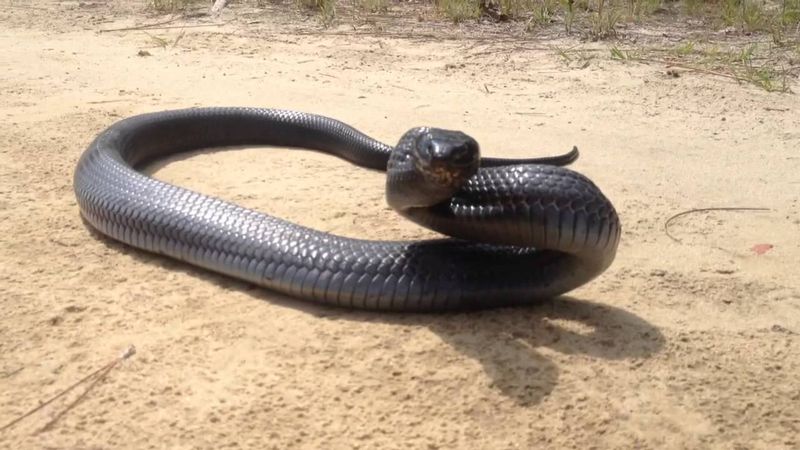
Watching a large, glossy snake move steadily across a yard and disappear into the vegetation beyond a fence is a small window into something much larger. That moment connects a homeowner to a landscape network that most people never get to see directly.
An Eastern indigo snake moving through a property can reflect several habitat factors at once. These include a large home range, available prey, nearby refuges, and connected habitat patches that support movement.
None of those threads starts or ends at a property line.
A single sighting does not confirm the surrounding ecosystem is untouched or pristine. Indigo snakes do cross disturbed areas and move through landscapes that are far from perfect.
What the sighting does suggest is that enough connected habitat exists within a broader area to support at least some movement by a species with demanding spatial needs.
That is worth sitting with for a moment. An ordinary suburban yard can still sit within a much larger wildlife corridor.
That corridor may connect preserves, wetlands, scrub patches, and wooded edges far beyond what a homeowner can see. The snake was not visiting your yard.
It was traveling through a landscape that happens to include it.