Why Arkansas Hummingbird Feeders Need Extra Attention Right Now
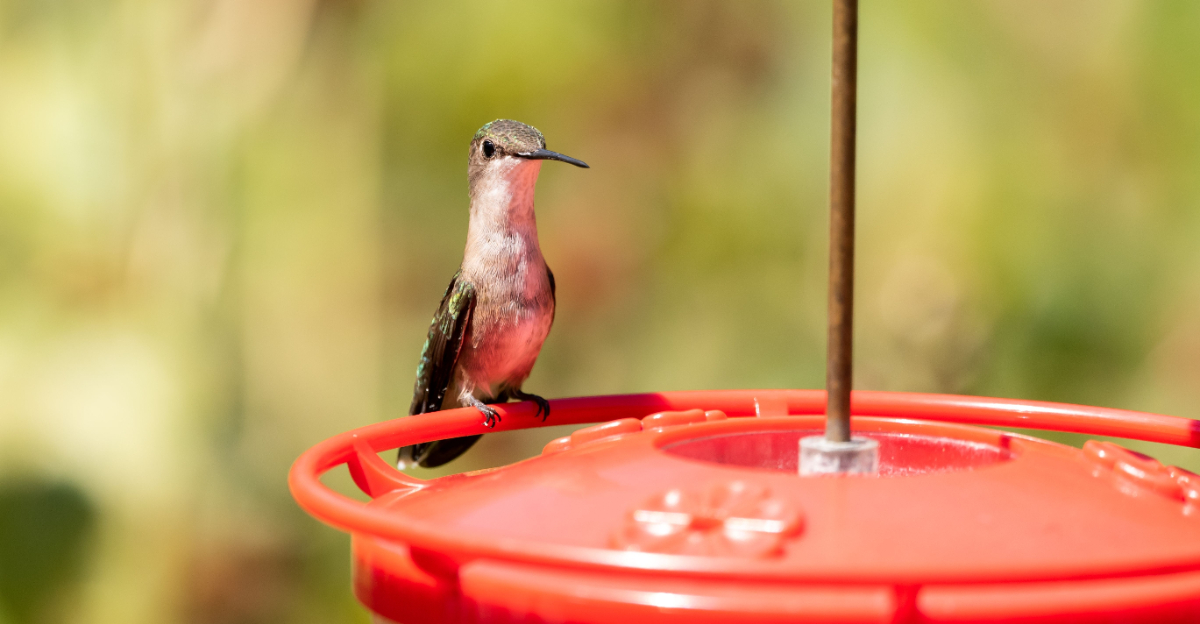
Ruby-throated hummingbirds are pouring through Arkansas right now, burning fuel faster than almost any creature alive. Their hearts race so hard that missing a meal can undo weeks of stored preparation.
You will barely register them at the feeder, since a visit ends before you finish turning your head. Sugar water becomes the difference between a bird that reaches the Gulf and a bird that stalls short.
Arkansas gardeners often pull their feeders early, convinced the traffic has already thinned out. Heaviest movement, though, tends to arrive well after that assumption takes hold.
Cloudy nectar sours quickly in late summer heat, turning a fuel stop into something birds refuse. Whether they leave stronger or weaker depends entirely on what happens at that feeder this week.
Migration Pressure Is Peaking Across The State
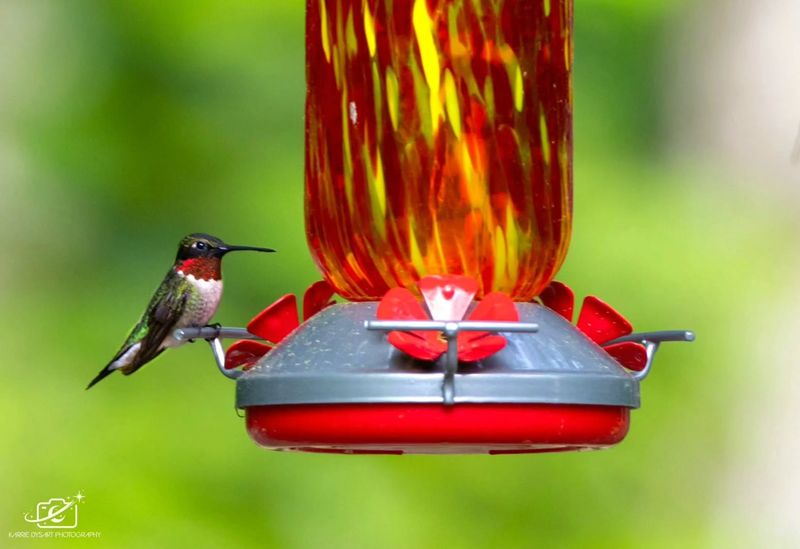
Small body, staggering distance. The ruby-throated hummingbird weighs less than a nickel, yet many of them cross the Gulf of Mexico without landing once.
That flight can stretch over 500 miles without rest or food. Arkansas hummingbird feeders become critical fuel stations along this demanding route.
Most ruby-throats begin heading south in late July and continue through October. Birds passing through Arkansas are often not local residents but long-distance travelers just passing by.
Their metabolism is staggering. A hummingbird can consume up to twice its body weight in nectar on a heavy feeding day during migration.
Long gaps between reliable feeding stops force birds to spend more energy searching than they recover. That is why a contaminated feeder does more harm than an empty one ever could.
Many people assume hummingbirds leave because summer ends. The truth is, they leave because their internal clock tells them to go south.
Shorter daylight hours trigger migration instinct, not temperature drops. So even warm September days will see hummingbirds departing on schedule.
Keeping your feeder stocked through mid-October gives late migrants a real advantage. You might even spot a rare western species blown off course.
Arkansas sits in a prime corridor for multiple hummingbird species during fall. A well-maintained feeder could attract something unexpected and exciting.
Every feeder in the state is part of a bigger picture. Your maintenance routine feeds directly into one of the longest migrations any bird this size attempts.
Signs Your Feeder Needs More Frequent Cleaning
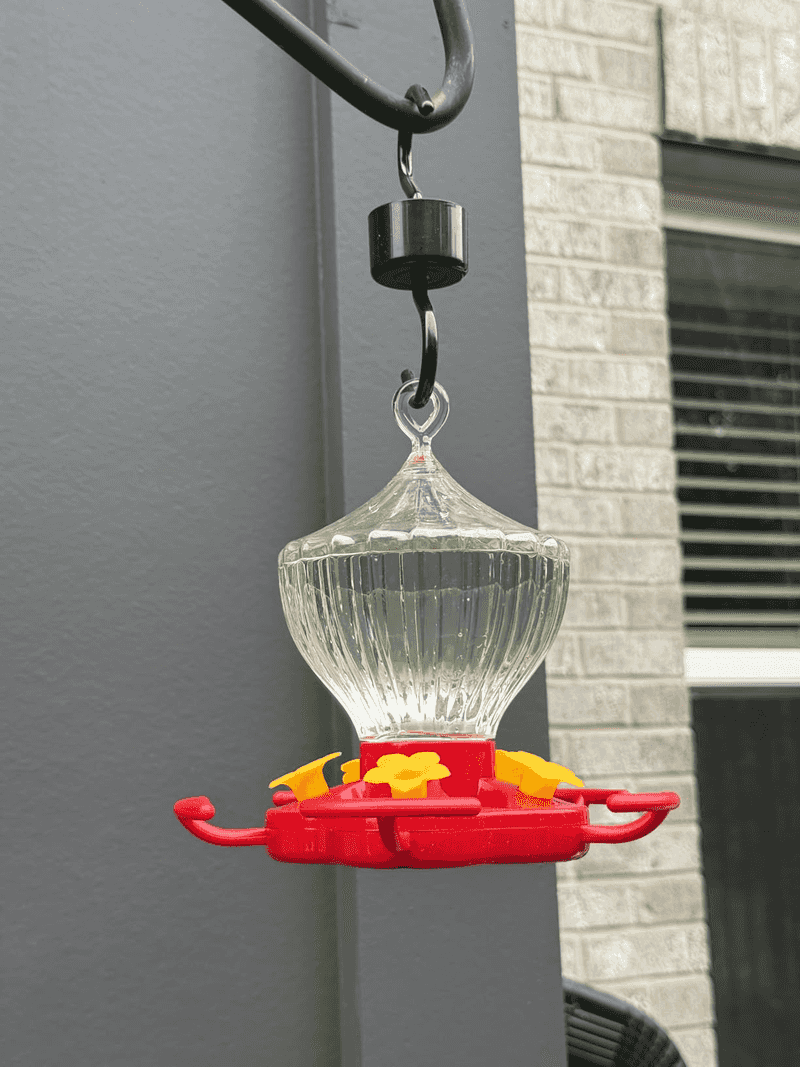
Cloudy nectar is a red flag. If the liquid in your feeder looks murky or foggy, harmful bacteria and mold have already taken hold.
Arkansas summers stay punishingly hot and humid. That combination turns fresh nectar into a breeding ground for pathogens within 24 to 48 hours.
Black spots inside the feeding ports are a clear sign of mold growth. Mold can make hummingbirds seriously ill, so those dark patches deserve immediate attention.
A sticky film on the outside of the feeder is another warning. Drips and spills attract insects and encourage bacterial growth on the surface.
During peak summer heat, a cleaning every two days is the standard most experienced birders follow. When temperatures drop below 80 degrees, every three to four days is acceptable.
Your Arkansas Garden Changes Every Week. Your Plan Should Too.
Gardening in Arkansas changes quickly throughout the season. Every Friday you’ll receive a simple weekly plan showing exactly what to plant, prune, fertilize, harvest, and protect so you never miss the right timing.
Use a bottle brush and hot water for a thorough cleaning at each refill. Skip the soap if possible, since residue can harm the birds.
White vinegar diluted in water works well for stubborn mold spots. Rinse everything thoroughly so no vinegar smell or taste lingers behind.
Hummingbirds have an excellent memory for feeding sites, and many will skip a feeder that smells off. A bird that visits once and leaves unhappy may not come back.
Check the feeding ports closely for tiny black dots or debris. Even a small blockage forces birds to work harder for less reward.
Consistent cleaning keeps your feeder inviting and safe all season long. Clean nectar is the single factor most directly under your control.
The Right Nectar Ratio And Common Mistakes To Avoid
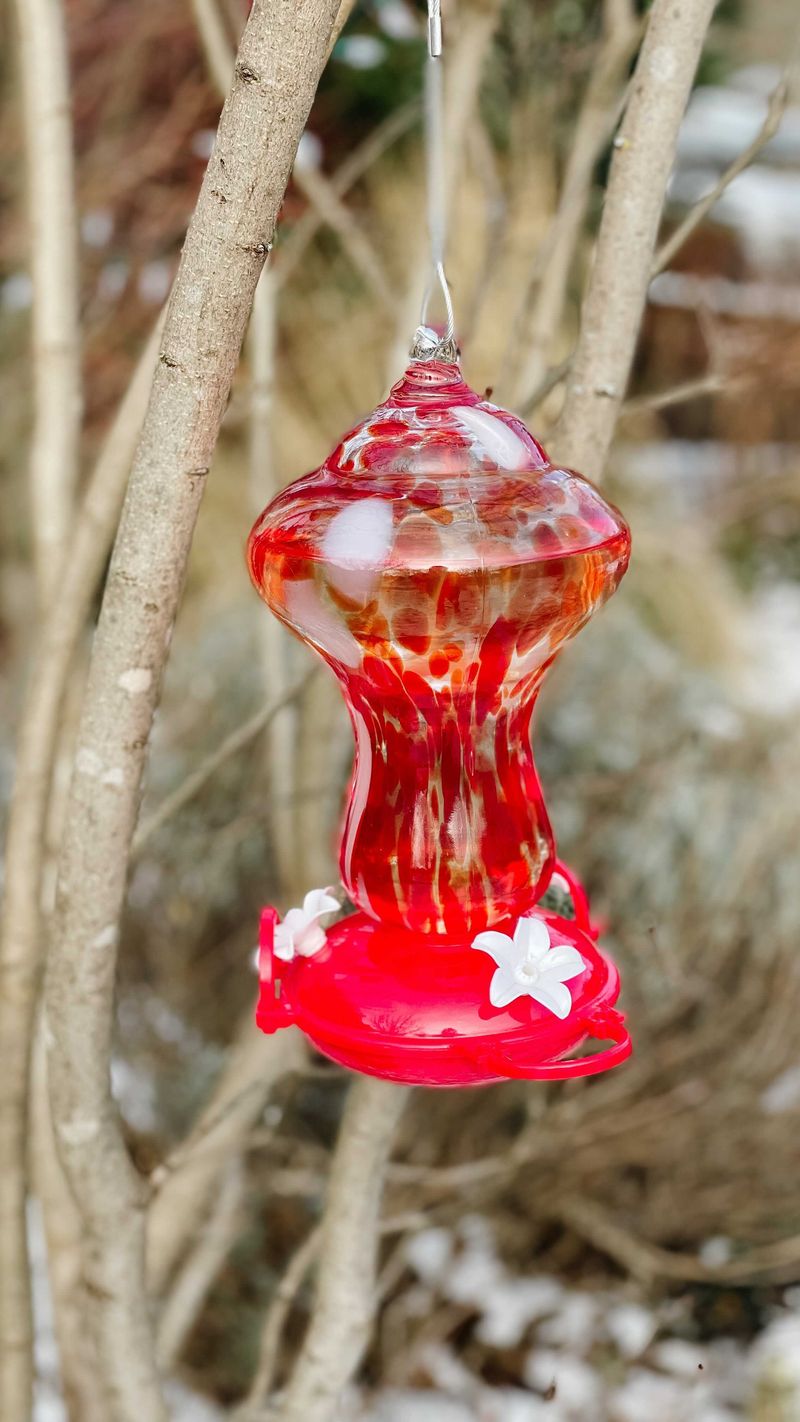
Simple syrup is all hummingbirds need. The correct ratio is one part plain white sugar to four parts water, nothing more.
Warm water helps the sugar dissolve completely without leaving grit at the bottom. Let the mixture cool before filling your feeder so you do not crack the plastic.
Red dye is one of the most common mistakes backyard birders make. The artificial coloring is unnecessary since the red feeder parts already attract birds naturally.
Honey might seem like a natural choice, but skip it entirely. Honey ferments quickly and can cause a serious fungal infection in hummingbirds.
Brown sugar, powdered sugar, and artificial sweeteners are all wrong choices too. Plain white granulated sugar remains the one option that matches natural nectar closely enough.
Some people make the nectar too sweet, thinking more sugar means more energy. A stronger concentration draws water out of the bird and works against hydration during hot weather.
Others make it too weak, which leaves birds burning more energy than they gain. Stick to the four-to-one ratio with each batch you mix.
Store unused nectar in the refrigerator for up to two weeks. Label the container with the date so you always know how fresh it is.
Topping off old nectar with fresh nectar without cleaning first defeats the entire effort. Mixing old and new liquid speeds up spoilage and undoes the work.
Getting the recipe right is genuinely easy once you know the rules. Consistent, clean nectar is what turns a one-time visit into steady traffic.
Feeder Placement That Keeps Birds Safe From Wasps
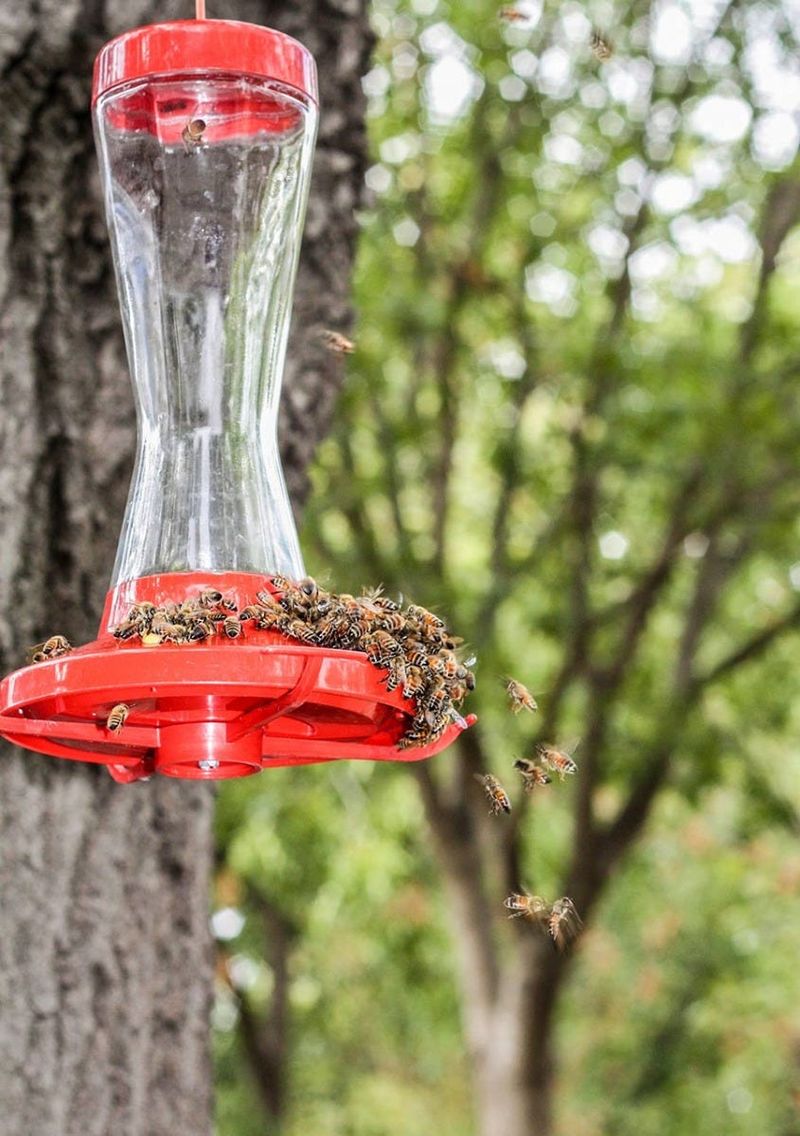
Wasps are relentless, and they love nectar just as much as hummingbirds do. Poor feeder placement basically sends them an open invitation.
Hanging your feeder in partial shade is the single best move you can make. Shade slows nectar fermentation and makes the feeder less visible to foraging insects.
Avoid placing feeders near fruit trees or flowering shrubs that already attract wasps. Clustering food sources together concentrates insect pressure in exactly the wrong spot.
Saucer-style feeders are naturally harder for wasps to access than traditional bottle feeders. The nectar sits lower in the dish, out of reach for most insects.
Bee guards fitted over the feeding ports block wasps while leaving room for a hummingbird’s bill. The narrow mesh sits too far above the nectar for a wasp to reach it.
Insecticide sprays have no place anywhere near a feeder. Those chemicals are toxic to hummingbirds and can contaminate the nectar instantly.
Moving the feeder just a few feet can sometimes confuse wasps enough to give up. Insects tend to patrol a fixed location rather than searching broadly.
Ant moats filled with water are another smart tool for feeder protection. Hang one above the feeder to block ants from crawling down the line.
Keeping the outside of the feeder dry and clean removes the sticky residue that attracts pests. A quick wipe-down every day takes less than a minute.
Smart placement turns your feeder into a peaceful refuge for hummingbirds. A feeder free of insect traffic gets far more use than one wasps have taken over.
Timing The End Of Your Feeder Season
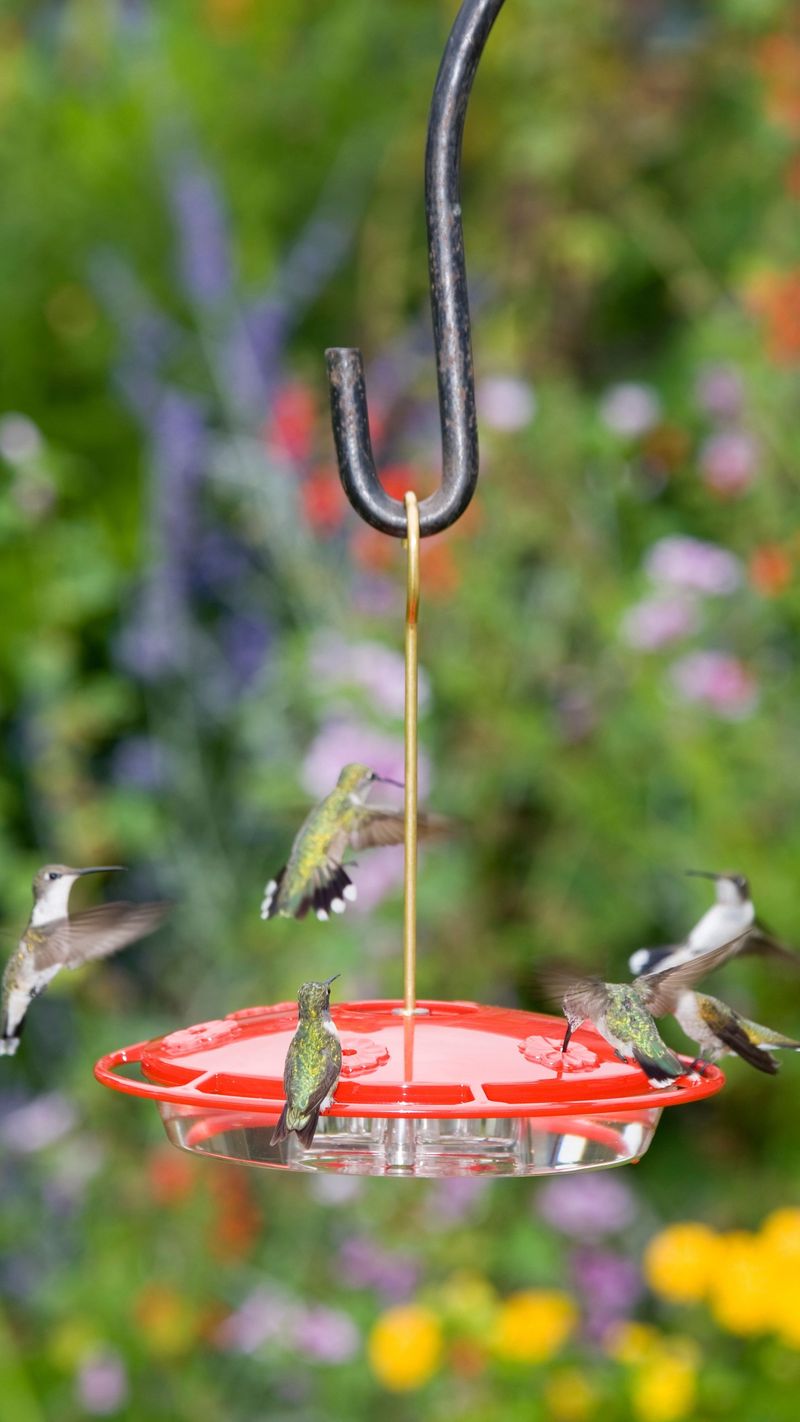
Leaving your feeder up will not stop hummingbirds from migrating south. That is one of the most persistent myths in backyard birding.
Hummingbirds migrate based on daylight length, not food availability. Fresh nectar does not override the biological clock driving that departure.
In Arkansas, most ruby-throated hummingbirds have departed by mid-October. However, rare western species sometimes appear between October and December.
Leaving feeders up through Thanksgiving can actually help those unexpected visitors survive. A rufous hummingbird spotted at a late-season feeder is a genuine treat.
If you go two full weeks without a single sighting, taking the feeder down is reasonable. Clean it thoroughly and store it properly so it is ready for spring.
Some birders keep one feeder up year-round just in case. That low-effort commitment occasionally produces a rare winter sighting worth talking about for years.
Spring migrants begin arriving in Arkansas as early as the final week of March. Having your feeder cleaned and ready by the middle of March gives early arrivals an immediate source of fuel.
Do not wait until you see a hummingbird to put the feeder back out. Early migrants need fuel fast after their long northward journey.
Fixed dates for spring setup and fall takedown remove the guesswork entirely. Consistency is what separates a functional feeding station from a decorative one.
Knowing when to step back is just as important as knowing when to help. Timing your feeder season right shows real respect for the hummingbird’s natural rhythm.
Native Plants That Support Migrating Hummingbirds
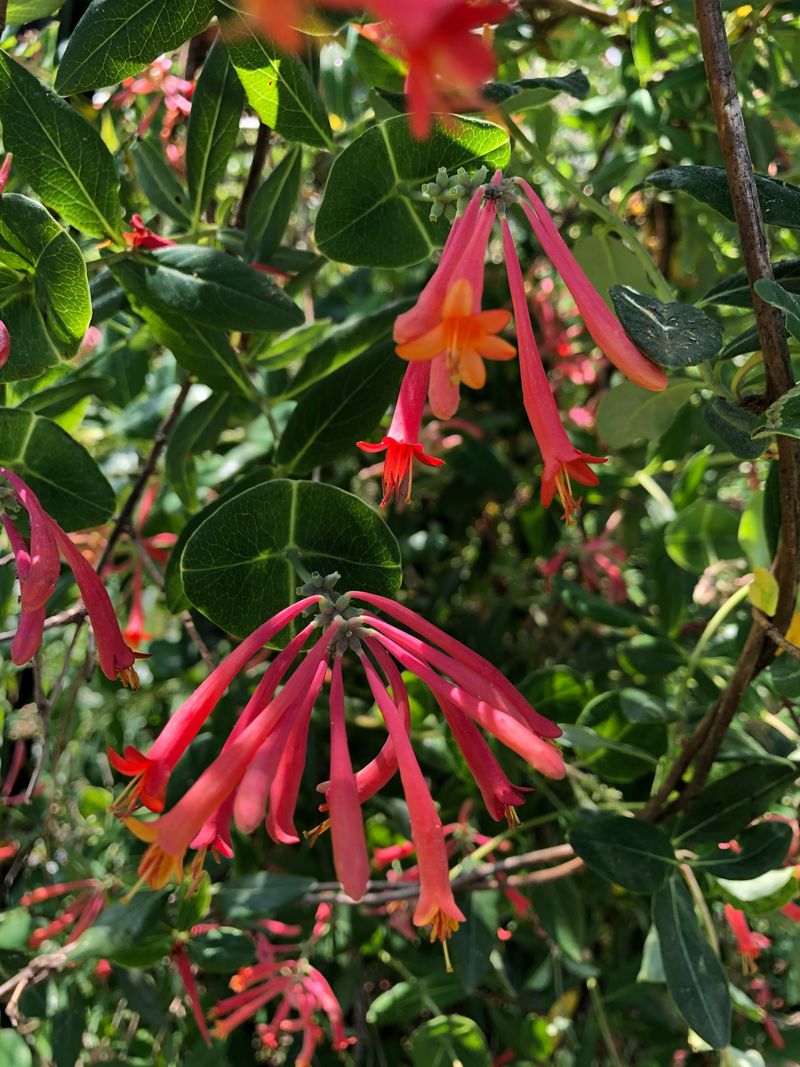
Feeders are helpful, but native plants are where hummingbirds truly thrive. Plants offer nectar, insects, and nesting material all in one natural package.
Trumpet vine is one of the best native choices for Arkansas gardeners. Its bold orange-red blooms match the shape of a hummingbird’s long, curved bill almost exactly.
Cardinal flower blooms in late summer and peaks right during migration season. That timing is no accident, since the plant and the bird shaped each other over thousands of years.
Coral honeysuckle is a native vine that produces tubular red flowers all season long. Unlike the invasive Japanese variety, coral honeysuckle supports local wildlife without spreading aggressively.
Bee balm, also called Monarda, produces shaggy red or pink blossoms that hummingbirds adore. Planting it near your feeder creates a layered feeding zone that birds will circle repeatedly.
Salvia species, especially red sage, bloom repeatedly through summer and into fall. They are drought-tolerant, low-maintenance, and incredibly attractive to passing migrants.
Native plants also attract the small insects that hummingbirds eat for protein. Nectar covers the energy demand, while insects supply the protein that keeps muscle and feathers in working order.
Grouping plants together in clusters creates a more visible and efficient feeding patch. A single plant might get overlooked, while a bold cluster of blooms pulls birds down from a passing flight path.
Mixing native plants with a clean feeder gives Arkansas hummingbird feeders serious competition from nature itself. That combination turns a backyard into a genuine migration stopover worth returning to season after season.