What It Means When Crows Gather In Your California Backyard
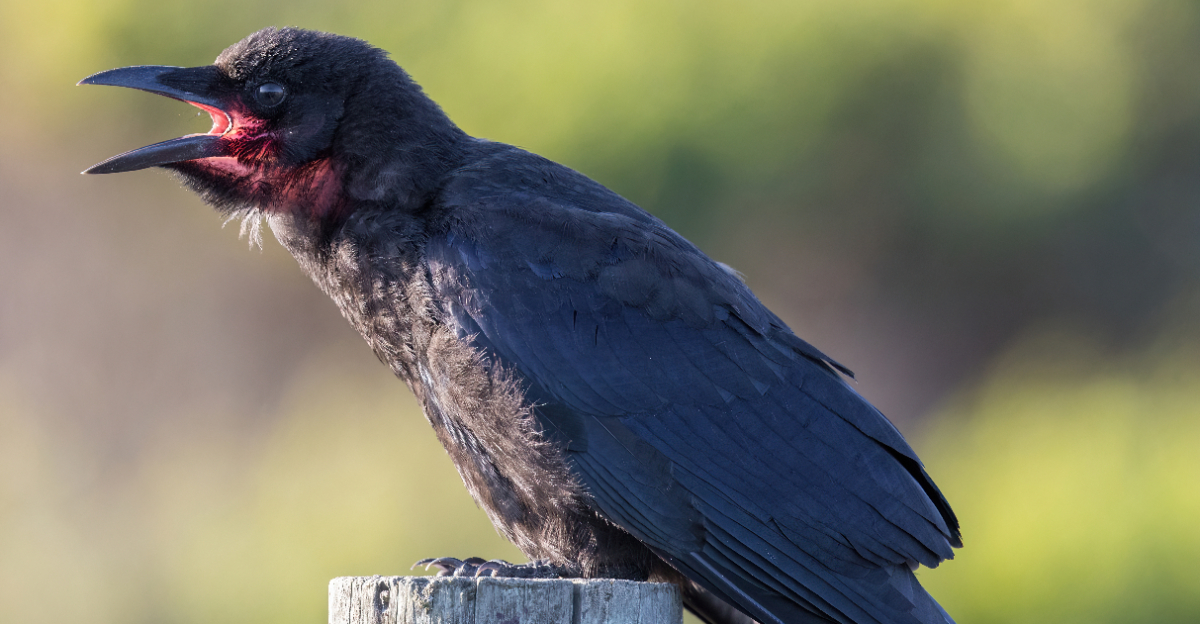
A dozen crows on the roof can make a California morning feel like the opening scene of something.
One calls. Three answer. Another drops into the oak tree, and suddenly your backyard looks booked for a meeting.
So what did your lawn do to earn an audience?
The answer is usually less spooky and more interesting than the scene suggests.
Crows notice patterns. They notice food. They notice danger, family members, useful trees, and places worth another visit. A backyard can become part of that daily map before you even notice a change.
The time of day gives away plenty.
A noisy crowd at noon may tell a different story from a quiet line of birds near sunset. A group on the lawn may have another reason entirely.
Before you blame bad luck or start a negotiation with the roofline, watch what the birds do next.
Their direction, noise, and favorite corner can turn that black-feathered mystery into a surprisingly readable backyard story.
And yes, they probably noticed you too.
1. Read The Crowd Before You Read Too Much Into It
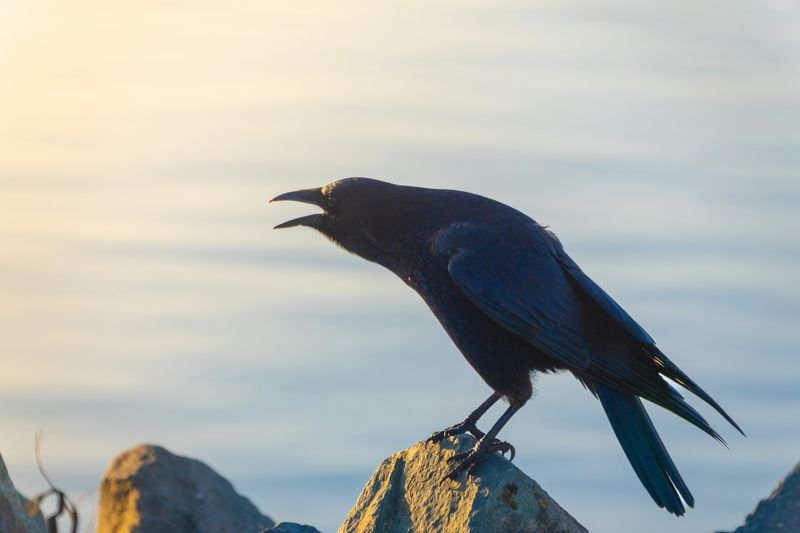
A dozen crows in one tree can look like a neighborhood committee with very serious business.
Most of the time, the explanation starts with company.
American crows are highly social birds. Family groups can include a parent pair plus young from earlier years, and those relatives may stay together through much of the year. Larger groups can also form around food or shared roost sites.
That makes the number of birds worth a closer look.
Two or three crows that move together across the lawn may belong to one family. A much larger crowd that arrives from several directions can point toward a food source, a nearby threat, or a communal stop.
Listen to the noise too.
Relaxed caws, pauses, and birds that hop between branches create a very different scene from a sudden burst of sharp calls. The second pattern may deserve a quick glance toward the sky or a nearby tree.
Spend a minute with the group before you decide your backyard has become crow headquarters.
Watch who follows whom. Notice the first bird that drops to the ground. See how the others respond or stay high in the canopy.
That little observation can turn apparent chaos into a social scene.
The birds are not a jury for your lawn choices.
They may simply follow a family habit: stay close, stay alert, and keep excellent attendance.
2. Check What Your Backyard Put On The Menu
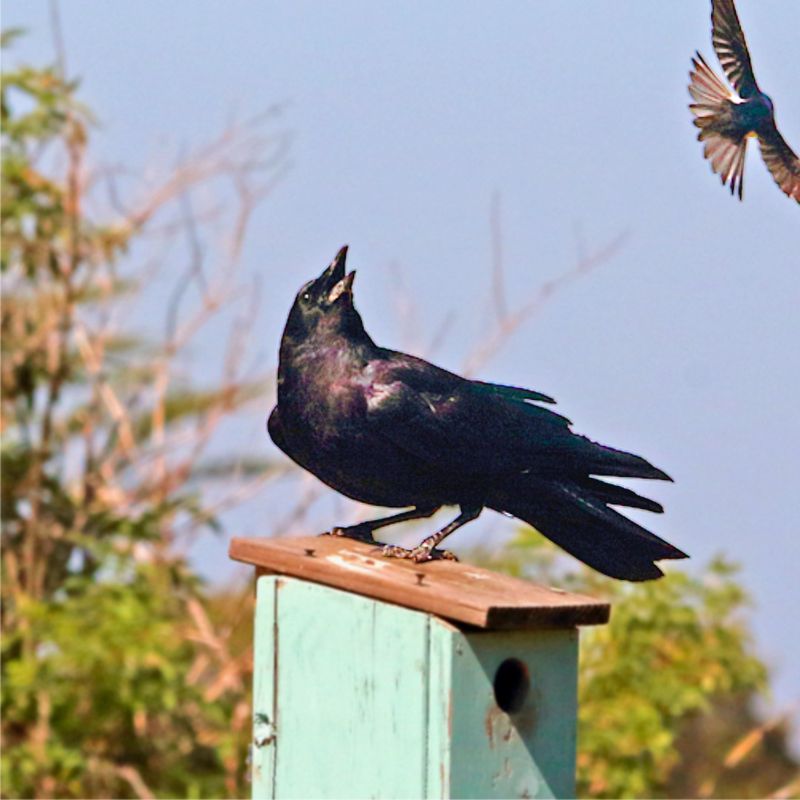
Crows have a remarkable talent. They spot the one snack you forgot outside.
A California backyard can offer plenty even when it does not look like a bird buffet to you.
Pet food, loose trash, spilled seed, fallen nuts, fruit, and insects can all attract crows. California wildlife guidance also notes that urban food waste helps make cities useful habitat for them.
Start with the obvious clues.
Check beneath bird feeders. Look around trash cans after collection day. Scan the patio for pet kibble. Then inspect fruit trees for anything soft or split on the ground.
Your California Garden Changes Every Week. Your Plan Should Too.
Gardening in California changes quickly throughout the season. Every Friday you’ll receive a simple weekly plan showing exactly what to plant, prune, fertilize, harvest, and protect so you never miss the right timing.
One reliable reward can be enough to put your yard on a regular route.
Crows also remember useful places well, so a repeat visit does not need a fresh invitation each morning. A yard that pays out several days in a row can earn another look.
Make the easy calories less easy.
Secure trash lids. Take pet bowls indoors after meals. Sweep seed from beneath feeders. Pick up dropped fruit before it sits for days.
You do not need to remove every natural food source from the property.
The goal is simple. Accidental handouts should not become the main attraction.
Your crow visitors may appreciate your hospitality.
Your garbage lid never agreed to host brunch, and the patio certainly did not volunteer as the dessert table.
3. Watch For The Sunset Commute
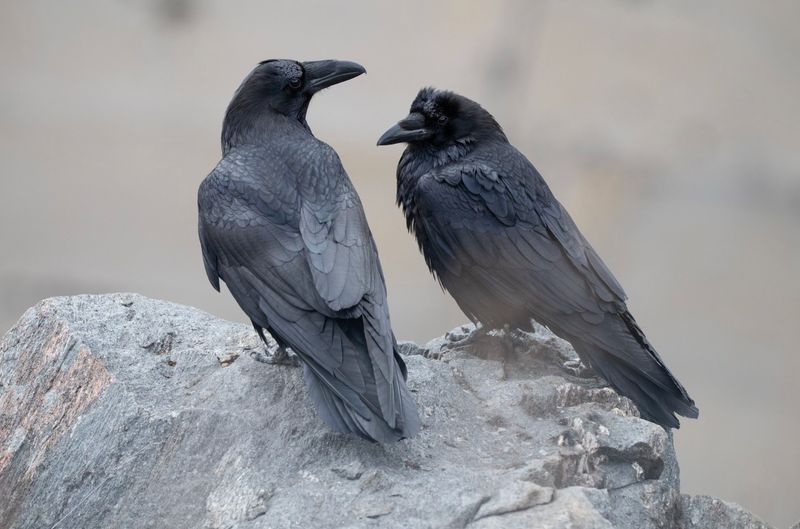
A backyard full of crows near sunset may have less to do with your yard than the trip beyond it.
American crows can gather in large communal roosts, especially outside nest season. Some winter roosts contain hundreds or thousands of birds, with groups that travel to shared overnight sites.
Your tree may serve as the lobby.
Watch the clock for a few evenings.
Birds that arrive around the same time, pause in tall trees or on rooftops, then leave together in one direction may be on the way to a larger roost. California cities can suit these gatherings because urban areas offer tall trees, food, warmer surfaces, and fewer predators in some settings.
That can make the scene look far more dramatic than the reason behind it.
Your oak may simply sit in a convenient spot between dinner and bedtime.
Notice the departure rather than only the arrival. A flock that clears out near dusk gives you an important clue. Birds that remain through the night tell a different story.
Season matters too.
Large roost groups often become more noticeable in cooler months, while smaller family groups dominate more of the year.
So that crowded roofline may not mean your yard suddenly became irresistible.
It may just have excellent connections.
Apparently, even crows appreciate a good layover before the final flight of the evening.
4. Follow The Noise To A Hawk Or Owl
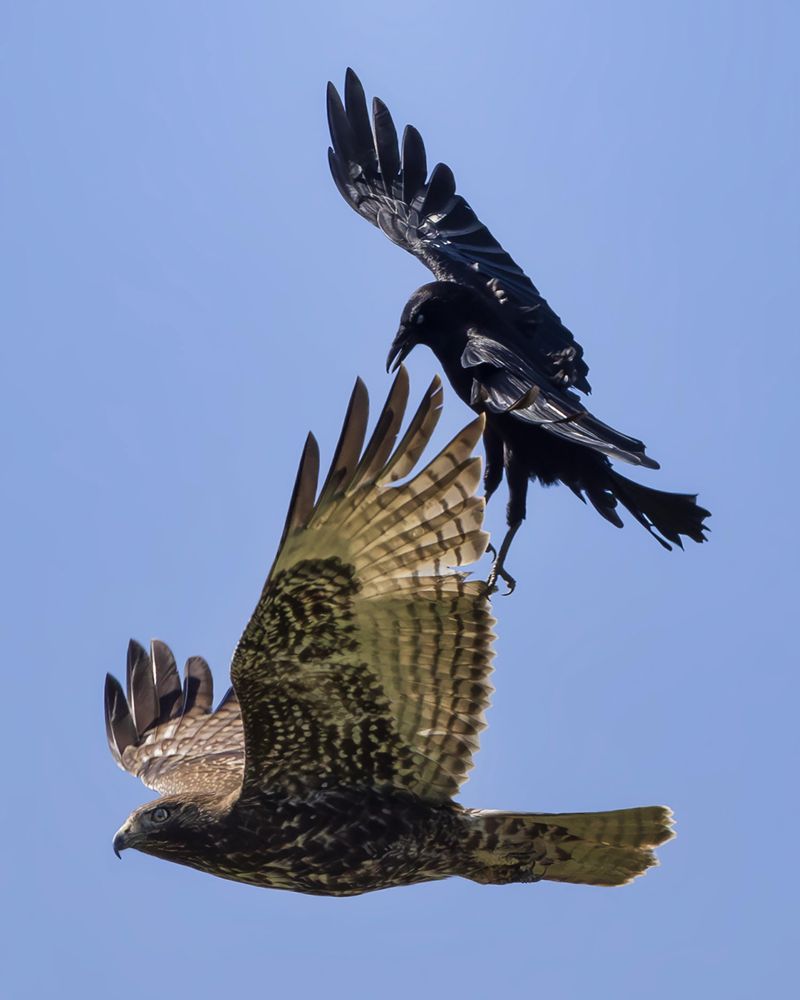
A quiet backyard can turn into a crow alarm system in seconds.
One bird shouts. More arrive. Then several circle the same tree with far more enthusiasm than your morning coffee deserves.
Look up.
Crows often mob hawks, owls, and other animals they treat as threats. The birds may call, follow, or swoop near the intruder until it leaves the area.
California bird observers regularly document crows that mob hawks, and the behavior can also help younger birds learn what deserves caution.
The sound usually gives this scene away.
A casual group can be noisy, but a mob often sounds urgent and repetitive. Several birds may focus their attention on one perch, one section of canopy, or one bird overhead.
You do not need to intervene.
Stand back and watch from a safe spot. A hawk may lift off after a few minutes, and the crow crowd can dissolve almost as quickly as it formed.
That sudden exit is another clue.
Food groups tend to linger where the reward sits. A mob has a target, and once that target moves, the whole production may wrap up.
Your yard did not become the site of a crow argument for no reason.
There may be a hawk in the pine with the worst table reservation in California.
The crows simply noticed first.
5. Check Beneath The Fruit Trees
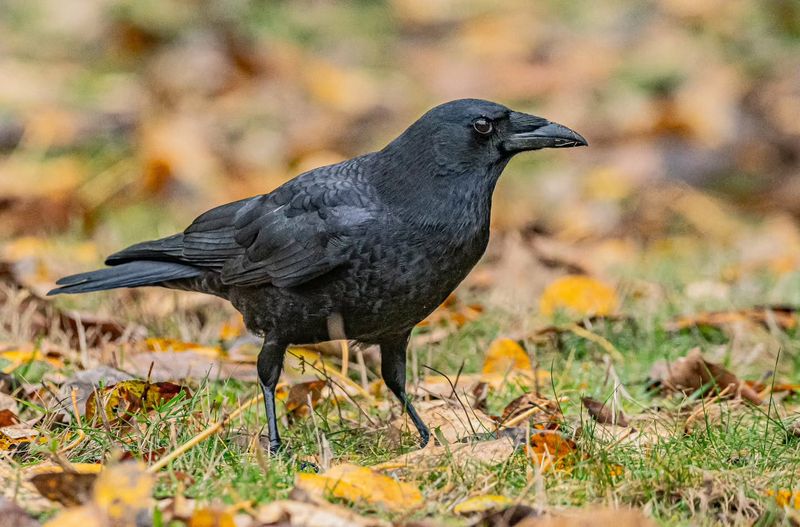
Fruit trees can turn a calm backyard into crow real estate without much warning.
The clue may be directly under the branches.
Crows are opportunistic omnivores, and California guidance notes that they take foods such as stone fruit, nuts, berries, and other items they can find with little effort. Fallen fruit can be especially convenient because it already sits within easy reach.
Walk beneath the tree after a windy afternoon.
Soft figs, split plums, dropped persimmons, nuts, or overripe berries can create several small rewards in one patch. Insects around damaged fruit may add another reason for birds to investigate.
A crow may also carry food away rather than eat everything on the spot.
That can make the visit look random until you notice the same tree gets attention day after day.
Clean up fruit that has fallen and started to spoil. Harvest ripe produce on schedule, especially during heavy drop periods. Keep compost and trash secure nearby so one food source does not lead straight to another.
You can still leave the tree in place and enjoy the wildlife that visits it.
The goal is simply to reduce the pile of easy snacks at ground level.
Your fig tree may be part of the landscape.
To a crow, it can look suspiciously like a seasonal café.
At least the birds never complain about parking.
6. Notice The Family Reunion On Your Lawn
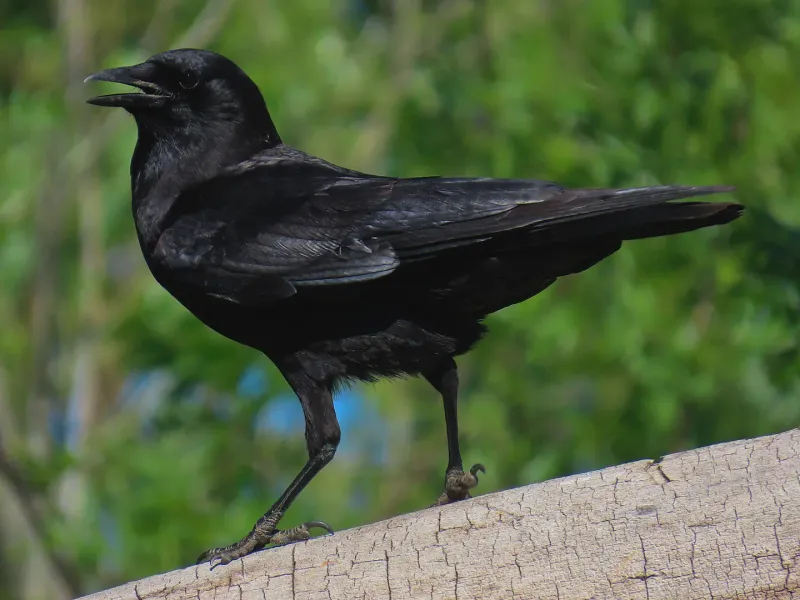
A group of crows on the lawn may look like random strangers until one young bird asks another for food.
That changes the scene.
American crows often stay in family groups. Young birds can remain with their parents beyond the nest season, and older offspring may even help the parent pair raise later chicks.
California yards can become part of that family routine.
One bird may probe the grass while another watches from a fence. A younger crow may follow an adult closely or make more persistent calls. The whole group can shift together from lawn to tree to rooftop.
Watch the distance between them.
Family members often tolerate one another at close range and react together when something changes nearby. A dog at the door, a hawk overhead, or a fresh food source can move several birds at once.
That makes a small group less mysterious than it first appears.
You may see parents, this year’s youngsters, and older siblings use the same familiar patch.
Leave them room and enjoy the show from a distance.
There is no need to add food just to keep them around. Natural searches for food give the birds plenty to do, and regular handouts can create habits you did not plan to manage.
Your backyard may look like a crow conference.
For the birds, it could be closer to a family day out where somebody brought the loud cousins.
7. Close The Backyard Buffet Before It Becomes A Habit
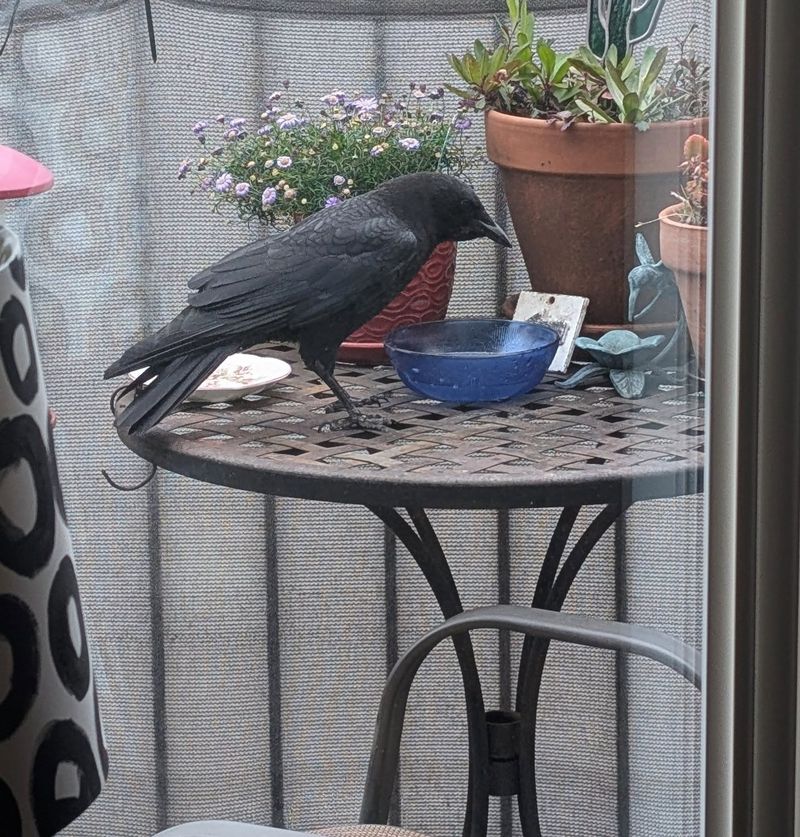
A crow that finds breakfast once may get lucky.
A crow that finds it every morning has discovered a schedule.
Urban crows take advantage of food waste and other predictable resources, and their adaptability helps them use human-dominated spaces well.
California wildlife guidance points to abundant urban food as one reason crows thrive around cities.
That makes consistency your best tool when visits become too frequent.
Start with the reward rather than the birds.
Lock trash lids. Bring pet food inside. Clean spilled birdseed. Pick up fallen fruit. Cover compost. Check the same spots for several days so one forgotten snack does not restart the routine.
Scare tactics can lose their effect after repeated exposure because crows adapt quickly to familiar disturbances. Older California pest guidance also notes that crows can learn around control measures.
So do not build the whole plan around one shiny ribbon or noisy gadget.
A motion sprinkler may add temporary pressure in a specific spot, but food cleanup gives the birds a stronger reason to change their route.
Keep the approach boring and repeatable.
No buffet. No surprise leftovers. No Tuesday trash-can jackpot.
Crows are clever enough to notice a good deal.
They are also practical enough to spend more time somewhere else once your backyard has no rewards left.
Consider it a restaurant closure with very determined former customers.
8. Let The Daily Pattern Solve The Mystery
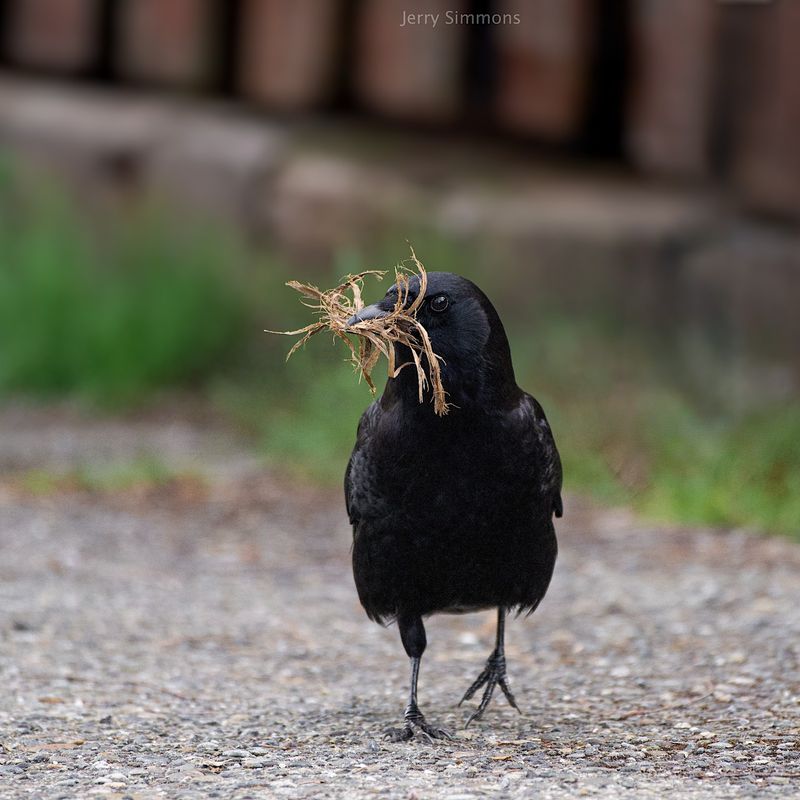
One crow on the fence gives you a moment.
The same twelve crows at 7 a.m. for four mornings give you a pattern.
That pattern is where the useful answer usually hides.
Start with time. Morning groups may visit a known food source. Large groups near dusk may pause before a communal roost. A sudden loud crowd at midday can point toward a hawk or another perceived threat.
Then watch direction.
Birds that arrive together, eat, and scatter may use your yard as one stop on a wider route. Birds that gather from several directions and leave together can suggest a shared destination.
Add sound to the notes.
Urgent, repeated calls paired with intense attention toward one tree deserve a look for a predator. Quieter groups that peck through grass or inspect fallen fruit tell a much calmer story.
You do not need a spreadsheet worthy of a wildlife documentary.
Jot down the time, rough number of birds, location, and what they do for three or four days. The pattern may become obvious surprisingly fast.
That takes the mystery down a notch, and the birds stay just as interesting.
A crow crowd rarely needs an omen to explain it.
Food, family, safety, and routine already provide plenty of plot.
Your backyard just happens to have a front-row seat, and apparently nobody checked the guest list.