What It Means When Hummingbirds Suddenly Disappear From Your Georgia Feeders
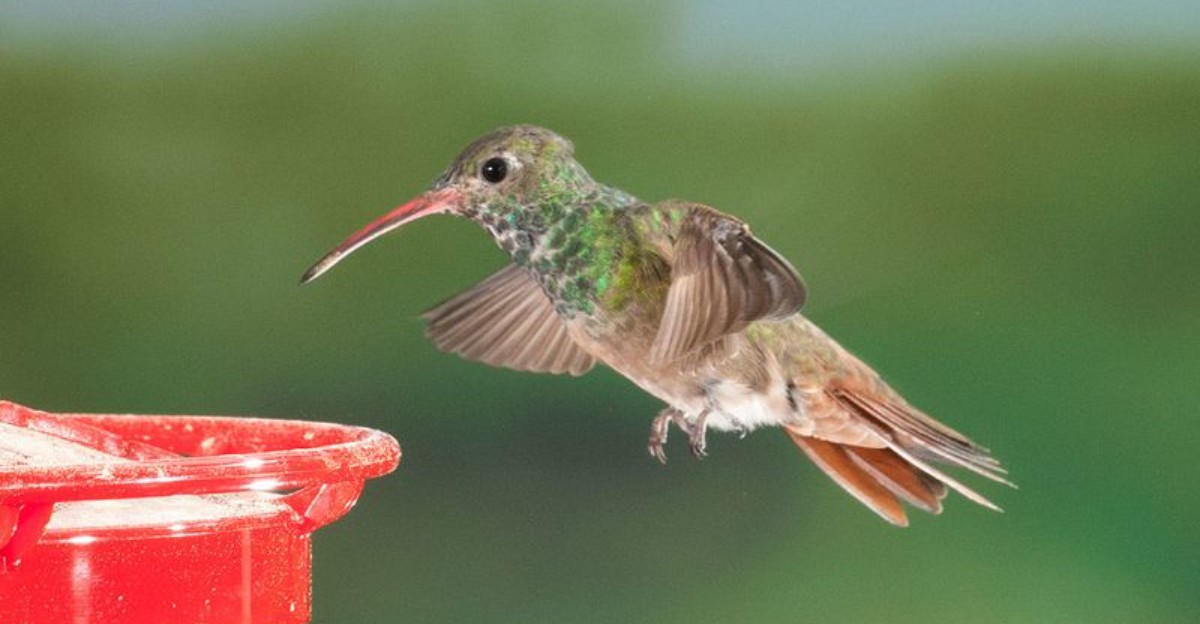
One week your feeder is busy with hummingbirds chasing each other, and the next it sits almost untouched. That sudden quiet can make you wonder if you did something wrong.
Usually, the change has less to do with your feeder than with what the birds are doing.
Many hummingbirds start heading south around now, and that timing can catch you off guard.
Birds that spent the summer in your yard may leave within a few days. Others passing through from farther north often stop briefly and move on.
Migration is not the only reason feeders go quiet in Georgia, though. Problems closer to home can send hummingbirds looking elsewhere, even mid-season.
Take a close look at your feeder and nearby plants this week, since the answer is often right there.
1. An Empty Feeder Does Not Always Signal Trouble
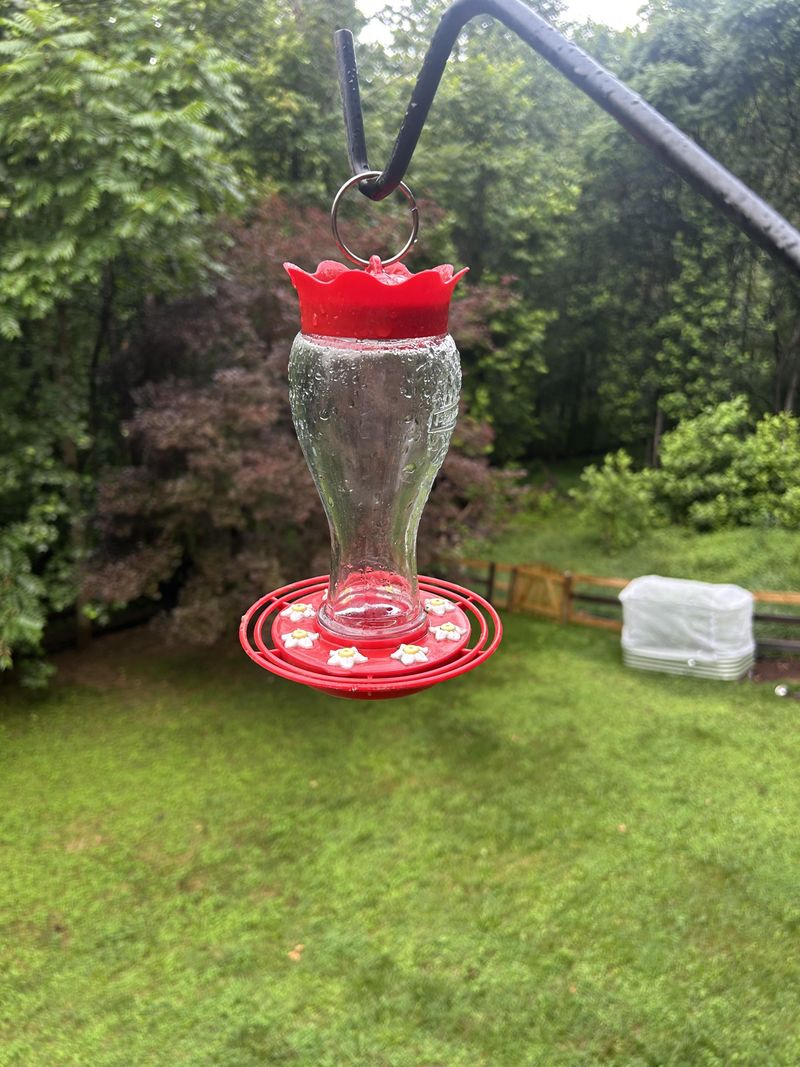
Quiet feeders fool a lot of good people. When the buzzing stops, it is easy to picture something going wrong, but the real reason is usually far more ordinary.
Hummingbirds move around based on food, weather, and the time of year, so a slow week is often just part of their routine.
Around Georgia, backyard birders tend to notice these lulls in July and again in late summer. Birds may be nesting, feeding young on insects, or visiting blooming plants down the street.
Before you start worrying, take a close look at the feeder itself.
Nectar that sits too long in the heat can turn cloudy or grow mold within a few days. Hummingbirds may skip a feeder that smells or looks off, even when they are still nearby.
A quick fix is to empty, rinse, and refill with fresh sugar water every two to three days in hot weather.
Also check for bullies at the feeder, since one pushy male can chase off every other bird for hours. Adding a second feeder out of his line of sight often spreads the traffic around.
Watching quietly from a window for ten minutes at dawn or dusk can tell you a lot more than a quick glance at noon.
2. Fall Migration Often Explains The Sudden Change
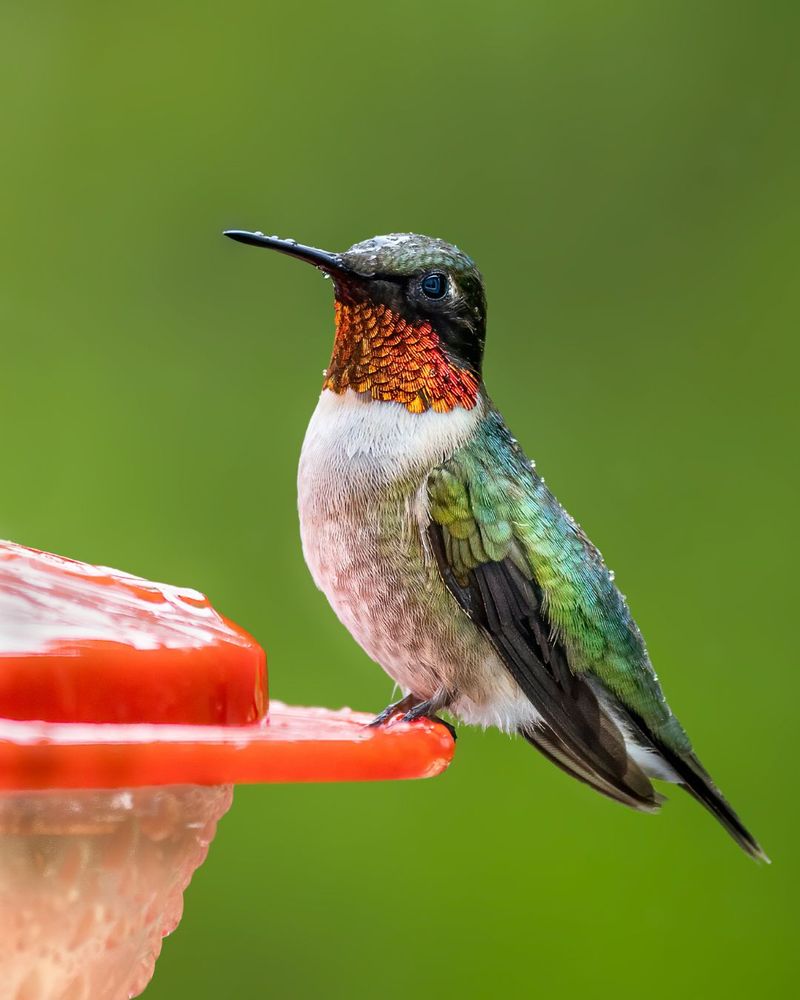
Late August has a different feel in the yard. Days get a little shorter, and hummingbirds start acting like travelers packing for a long trip.
Ruby-throated hummingbirds spend winter mostly in Mexico and Central America, and they begin heading that way as summer winds down.
Across Georgia, that southward movement usually picks up from mid-August through September. Some birds you see are local nesters, while others are passing through from states farther north.
Because of that turnover, your feeder may feel crowded one day and quiet the next.
A bird might stop for a few days, fuel up on nectar and bugs, and then move on without notice. Fresh arrivals may take their place, or they may not, depending on wind and weather.
Cold fronts can nudge birds to move in waves, so a busy weekend can be followed by a calm week.
Keeping a simple notebook helps you spot your own yard’s pattern over a few seasons. Jot down the date you see your last bird each fall and compare it year to year.
Your Georgia Garden Changes Every Week. Your Plan Should Too.
Gardening in Georgia changes quickly throughout the season. Every Friday you’ll receive a simple weekly plan showing exactly what to plant, prune, fertilize, harvest, and protect so you never miss the right timing.
Over time, you may notice your yard’s timing shifts a little based on how hot or dry the summer turned out.
3. Adult Males Are Usually The First To Head South
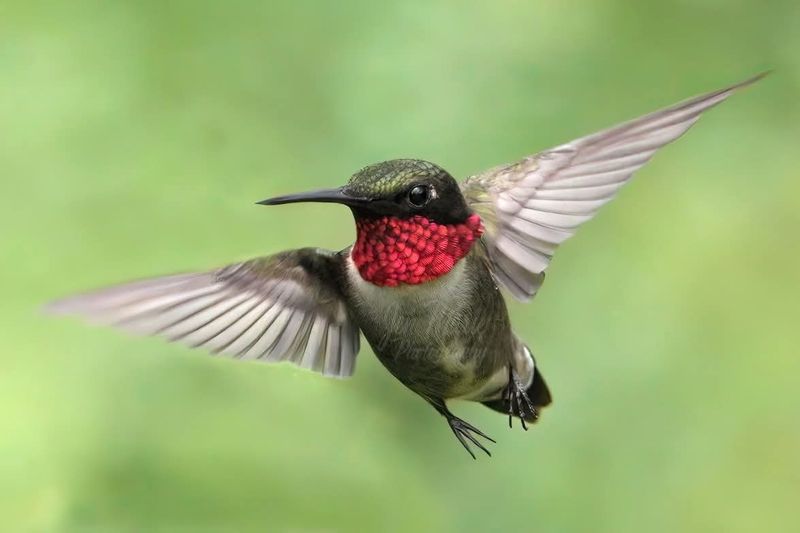
Flashy red throats tend to vanish first. If you notice fewer of those shiny males by early August, you are seeing a pattern that birders have watched for years.
Adult males do not help raise the babies, so once breeding season winds down, they are free to leave early.
Here in Georgia, many backyard watchers report the males thinning out in late July or August. Some stay into September, since individual birds do not all follow the same schedule.
Their early exit can make a feeder seem suddenly calmer and less competitive.
Males are famous for guarding feeders and chasing rivals nonstop. With them gone, females and young birds often visit more freely and spend more time sipping.
Fun fact: a ruby-throated male’s throat can look black in shade and glow bright red when sunlight hits it just right.
If you want to tell who is still around, look for white-tipped tail feathers. Females and juveniles usually show those white spots, while adult males do not.
A small pair of binoculars near the kitchen window makes this kind of backyard detective work much easier and a lot more fun.
4. Females And Young Birds Tend To Follow Later
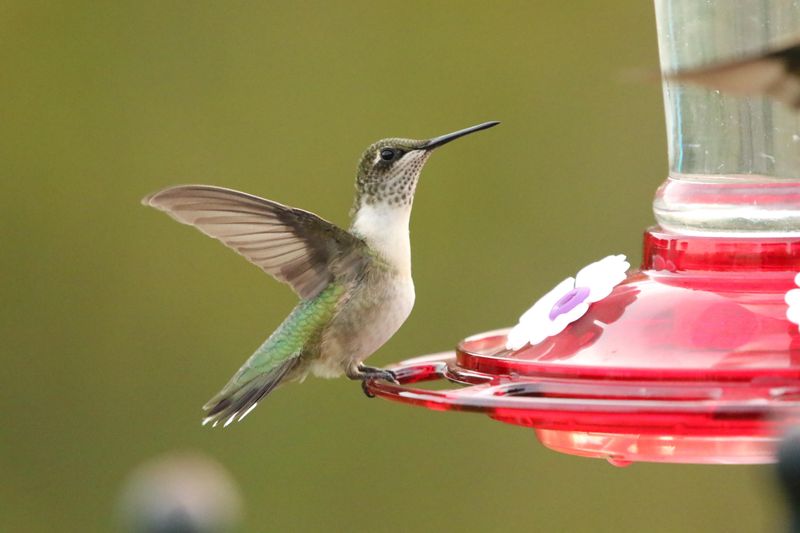
Moms stay behind to finish the job. Female ruby-throats raise the chicks by themselves, so they need extra time before starting their own trip south.
Young birds hatched this year also linger, building strength and fat for their first long flight.
Juveniles can be tricky to identify because they look a lot like females. Young males may show a few dark streaks or a single red speck on the throat.
In a typical Georgia fall, these greener birds make up most of your September visitors.
Keep your feeders clean and full during this stretch, since young birds are still learning where the best food is. A steady nectar source can be a handy pit stop while they practice flying and feeding.
You might notice them hovering at odd objects like red shirts, garden tags, or even a red bucket.
Curiosity like that is normal for inexperienced birds exploring new food spots. It is one of the sweetest parts of late summer birding, honestly.
Once these stragglers leave, usually by early to mid October in much of the state, the feeder may go truly quiet for the season.
5. Natural Food Can Change How Often Feeders Stay Busy
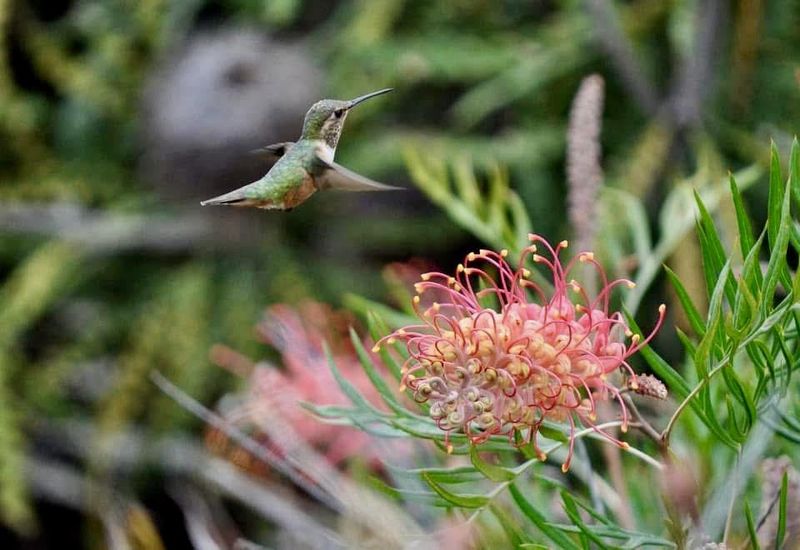
Blooming flowers can beat your feeder any day. When native plants burst into color, hummingbirds may spend more time there and less time at the sugar water.
Plants like trumpet creeper, cardinal flower, red buckeye, coral honeysuckle, and salvia are favorite picks for hummingbirds.
Tiny insects matter too, and they are a major part of a hummingbird’s diet. Gnats, small flies, and spiders give them protein, especially when feeding young.
So a sudden slowdown might simply mean your neighborhood is full of good food.
Gardeners in Georgia often see this in midsummer, when heat-loving flowers peak across yards and roadsides. After a rainy spell, blooms can surge and pull birds away for a few weeks.
Honestly, that is a good sign that the local habitat is healthy.
Want to keep birds close to home? Plant a mix of native nectar flowers that bloom at different times from spring through fall.
Skip heavy pesticide use if you can, because it cuts down the small insects hummingbirds rely on. Results will vary with your soil, sun, and watering, but even a few pots of salvia can help.
6. Keeping Nectar Out Will Not Delay Their Migration
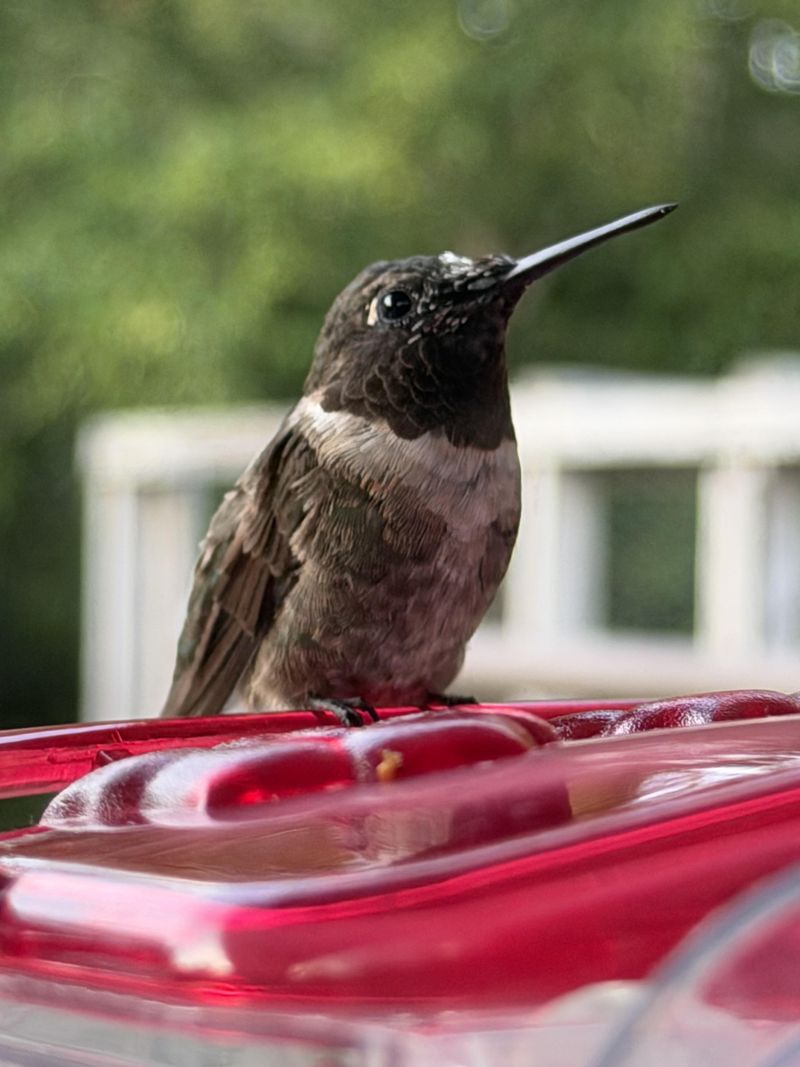
Here is an old myth worth retiring. Some folks worry that leaving feeders up in fall will trap hummingbirds and keep them from leaving on time.
Migration is mainly driven by changes in daylight and the bird’s own internal clock, not by a sugar water bottle on your porch.
Healthy hummingbirds leave when their bodies tell them to go, even with food still available. Your feeder simply gives them extra fuel before or during the journey.
In fact, a full feeder can be a real help to birds passing through Georgia from farther north.
A good rule many birders follow is to keep feeders up for about two weeks after your last sighting. That way, late migrants still have a reliable place to refuel.
Keep the recipe simple: one part white table sugar to four parts water, with no red dye added.
Honey and artificial sweeteners are not safe substitutes, so stick with plain sugar. Boiling the water briefly can help the mix stay fresh a little longer.
Cooler fall weather also means nectar spoils more slowly, so you may only need to change it every four or five days.
7. A Quiet Feeder May Still Welcome A Late Traveler
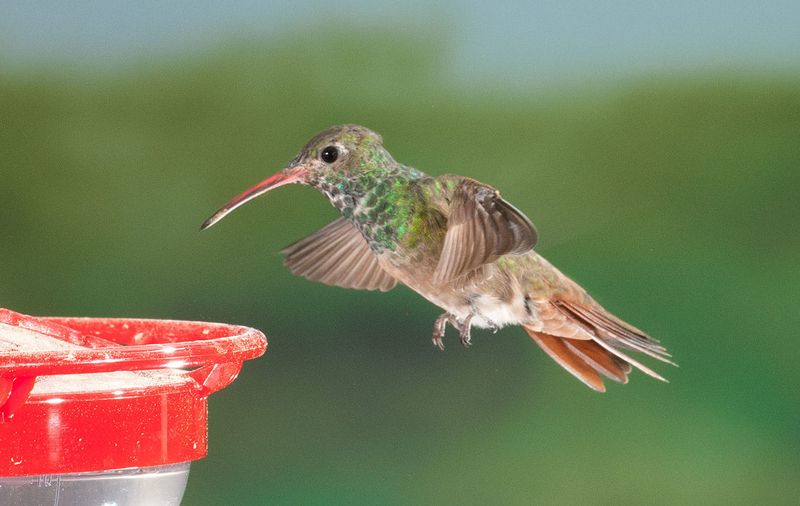
Winter surprises happen more often than people think. After the ruby-throats leave, a few western hummingbirds sometimes show up in the Southeast during the colder months.
Rufous hummingbirds are the most common of these winter visitors, and their orange feathers make them easy to spot.
Other species have turned up too, though sightings are less common. Black-chinned, Allen’s, and calliope hummingbirds have been recorded in the region over the years.
Birders in Georgia sometimes keep one feeder up all winter just to see who might appear.
If you try it, place the feeder near shelter like evergreen shrubs, and check it often. On frosty nights, bring it inside and hang it back out early in the morning so the nectar does not freeze.
Winter hummingbirds are surprisingly tough and can handle chilly weather better than you might guess.
Spotting one is exciting, and reporting it can help others learn about these rare visitors. Local birding groups or bird banders are often glad to hear about sightings.
Even if no one comes, the quiet feeder costs little to keep, and spring ruby-throats usually start returning around March.