What It Means When Hummingbirds Swarm Your Georgia Feeders In Late Summer
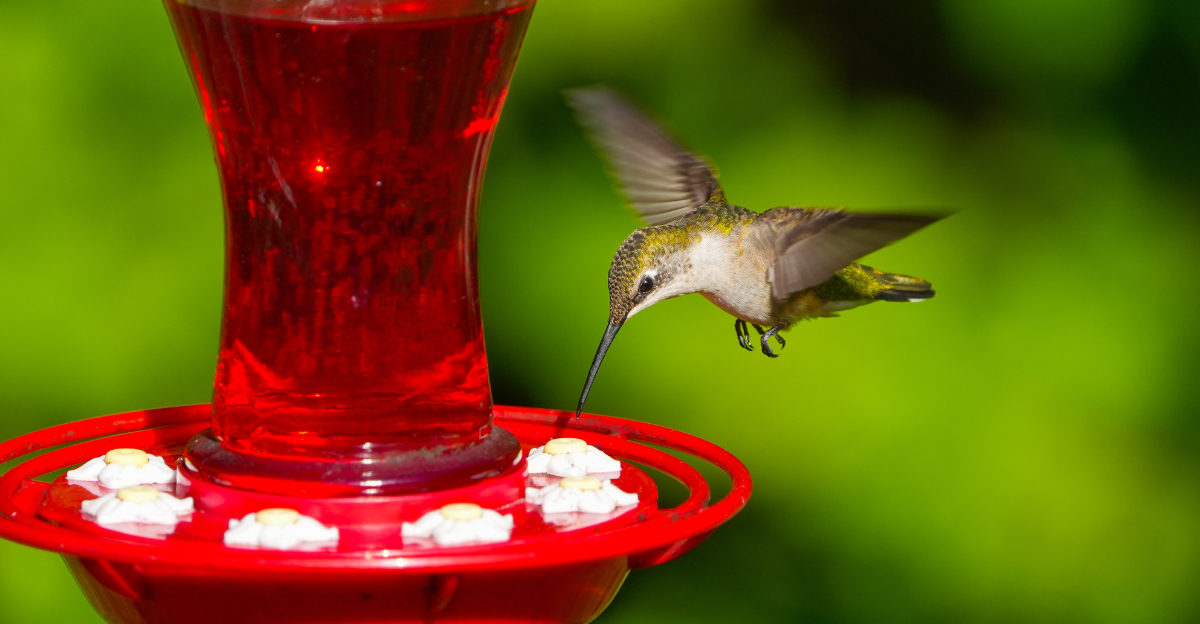
Your feeder was quiet all July. Then one August afternoon it turns into something else entirely, a blur of tiny bodies hovering, spinning, and squabbling over every perch.
Georgia backyards see this shift almost overnight, and it’s tempting to think the birds just multiplied out of nowhere. The real explanation has nothing to do with luck.
Late summer flips a switch inside hummingbirds that most people never learn about, and it changes everything about how they behave around feeders. Suddenly a handful of regulars becomes a crowd that refuses to share space.
Learn the trigger, and the chaos makes sense. Your porch just became the best seat in the house.
Fall Migration Prep Drives The Sudden Feeder Rush
Something shifts in August, and hummingbirds feel it before we do. The days grow slightly shorter, and that change in light triggers a powerful biological response.
Hummingbirds start packing on fat reserves for the long journey south. A ruby-throated hummingbird can nearly double its body weight before migration begins.
That extra fuel is not a luxury, it is a survival tool. These birds will fly hundreds of miles, including a nonstop crossing of the Gulf of Mexico.
Your feeders become a critical pit stop in that preparation. Birds that once visited casually now feed with urgent, focused intensity.
Late summer hummingbird swarms at Georgia feeders are a direct signal of migration prep in action. The frenzy you see is not aggression for its own sake, it is calorie loading.
Think of it like an athlete carb-loading before a marathon. Every sip of nectar is a deposit into an energy account that will be spent on the wing.
Knowing this changes how you see the chaos at your feeder. Instead of a noisy nuisance, you are watching tiny athletes train for one of nature’s greatest endurance events.
Keep your feeders full and fresh during this window. A clean, stocked feeder in late July through September can genuinely support a bird’s survival odds.
You are not just watching wildlife, you are actively helping it. That is a pretty remarkable thing to do from your own backyard.
Juveniles And Adults Feed Heavily Before Long Flights
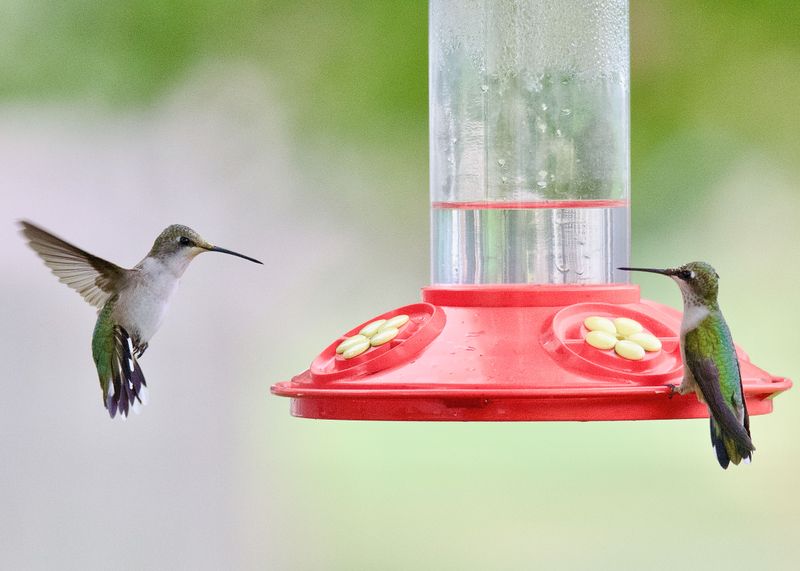
Young hummingbirds are out here figuring out the world on their own schedule. Juveniles hatched earlier in summer are now old enough to feed independently, and they are hungry.
Adult males typically leave Georgia first, often departing by late July or early August. They are the early birds of migration, heading south ahead of the crowd.
Females and juveniles follow later, which is why feeder traffic often peaks in August and September. You might notice smaller, duller birds mixing in with the flashy adults.
Those softer-colored visitors are likely young birds born this season. They are on their first migration, running entirely on instinct and caloric determination.
Juveniles have never made this trip before, yet they seem to know where they’re headed. That built-in navigation system is one of the most astonishing things in the animal kingdom.
Your Georgia Garden Changes Every Week. Your Plan Should Too.
Gardening in Georgia changes quickly throughout the season. Every Friday you’ll receive a simple weekly plan showing exactly what to plant, prune, fertilize, harvest, and protect so you never miss the right timing.
Both age groups need massive amounts of nectar to fuel up properly. A single hummingbird can visit hundreds of flowers, or feeder ports, in one day.
Watching adults and juveniles feed side by side is actually a special sight. The size differences are subtle, but the behavioral differences can be fascinating to observe.
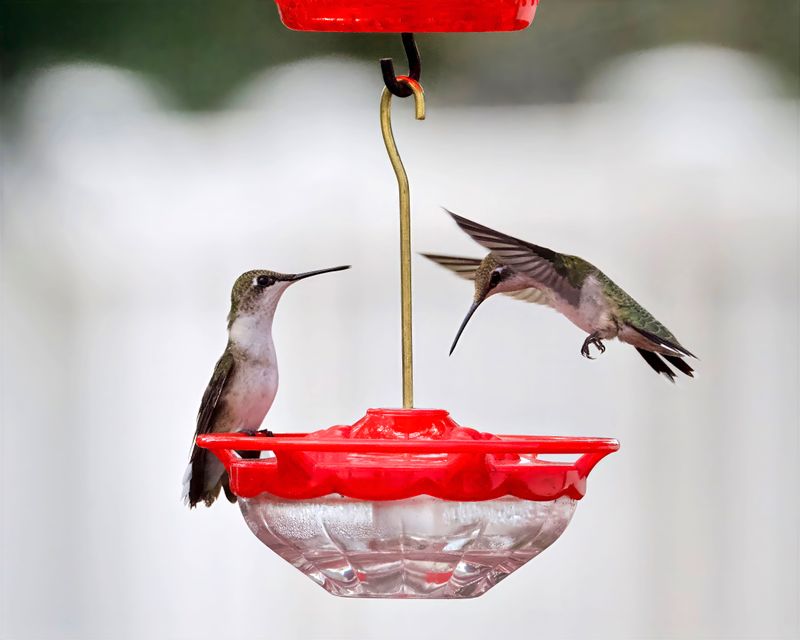
Adults tend to be more aggressive at feeders, defending prime spots. Juveniles often hover at the edges, waiting for an opening before darting in.
Keeping multiple feeders out helps reduce competition and gives every bird a fair shot. More access points mean more birds successfully fueling up for those long flights ahead.
Northern Hummingbirds Pass Through On Their Way South
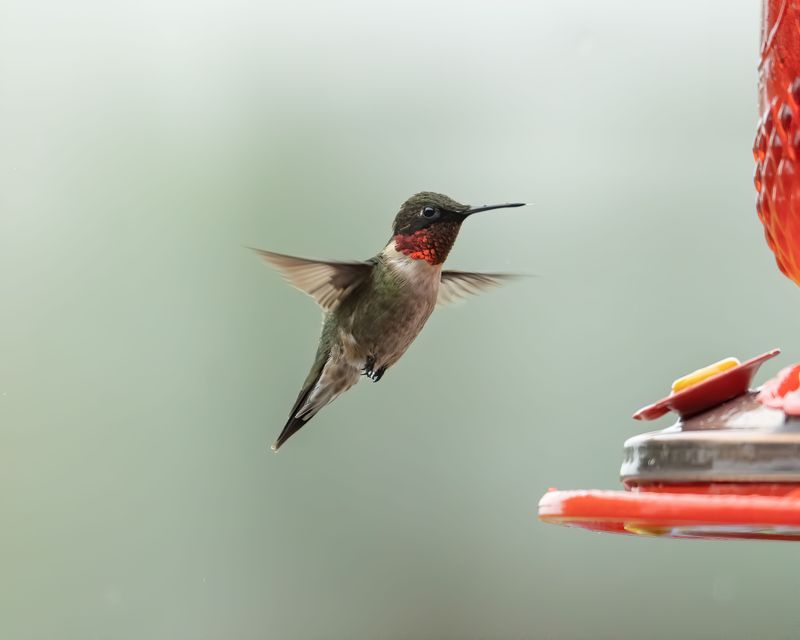
Your yard might be hosting birds that rarely stop by otherwise. Georgia sits in a prime migratory corridor, making it a layover spot for hummingbirds from much farther north.
Ruby-throated hummingbirds breed across a wide swath of the eastern United States and Canada. When fall approaches, all of them funnel southward through states like Georgia.
That means your feeders attract not just local birds but also travelers from Pennsylvania, Ohio, or even Ontario. The population passing through can be significantly larger than what nested nearby.
This migratory influx explains why feeder activity can seem to explode overnight. One week it is quiet, and the next week you have a full-on hummingbird rush hour.
Rare western species occasionally show up in Georgia during this period too. Rufous hummingbirds, which breed in the Pacific Northwest, sometimes wander far off course during fall migration.
Keeping a feeder up through October gives you a chance to spot these unexpected visitors. Birders across the state get genuinely excited about off-course western species appearing at backyard feeders.
A good pair of binoculars and a field guide can turn your feeder into a birdwatching station. You might identify something surprising without ever leaving your porch.
The idea that your yard connects to a continental flyway is worth sitting with for a moment. Hummingbirds passing through on their way south are trusting your feeder as part of their route.
That is a quiet kind of magic hiding in plain sight every late summer.
More Birds Compete For Fewer Natural Nectar Sources
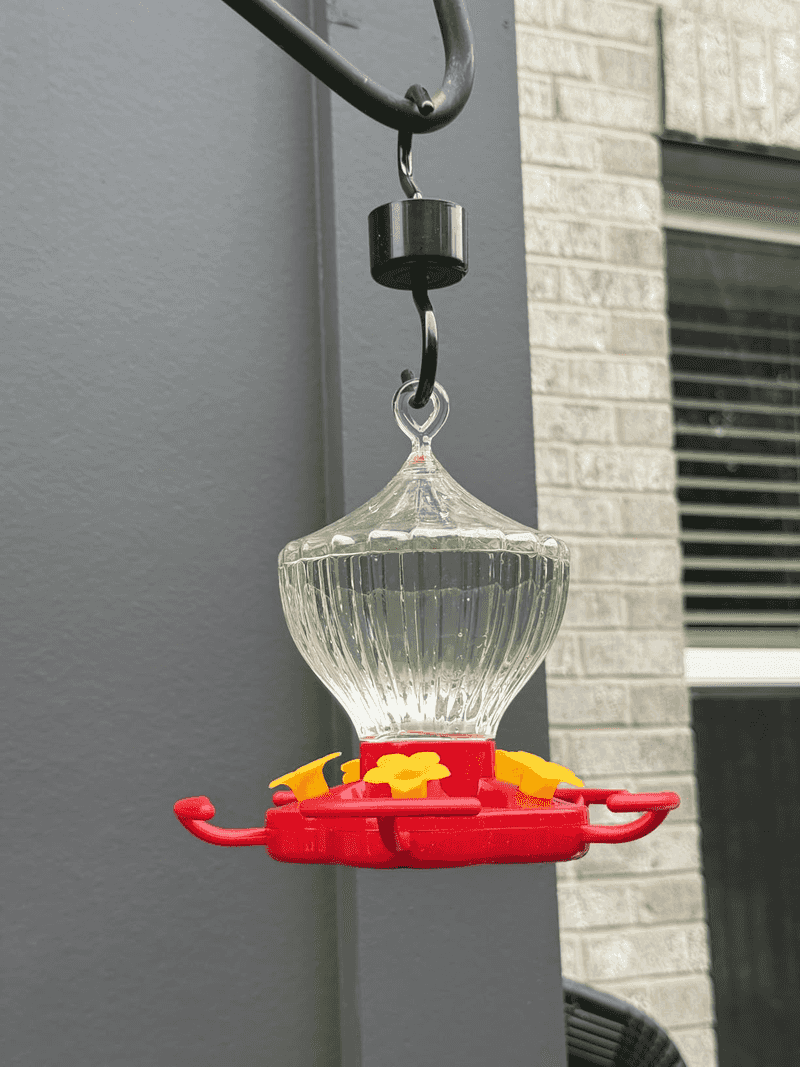
Late summer in Georgia can be tough on flowering plants. Heat, drought, and the natural end of many bloom cycles mean wild nectar sources start to dry up.
When natural flowers fade, hummingbirds redirect their attention to whatever nectar is still available. Your feeder becomes the most reliable food source in the neighborhood.
More birds competing for fewer resources creates the intense, chaotic energy you see at the feeder. What looks like aggression is actually resource competition under pressure.
Hummingbirds are fiercely territorial by nature. A dominant bird will often try to claim an entire feeder and chase every rival away.
That behavior gets amplified when food is scarce. One bossy bird at a single feeder can prevent dozens of others from eating properly.
The fix is simple but effective: put out more feeders. Spreading them around your yard, even out of sight of each other, breaks up territorial control.
A territorial bird can only guard one spot at a time. Multiple feeders spread the resource and give subordinate birds a real chance to fuel up.
Native plants that bloom in late summer can also help supplement the food supply. Species like cardinal flower, salvia, and trumpet vine are excellent hummingbird magnets for Georgia gardens.
Adding plants alongside feeders creates a more natural buffet. Birds get variety, and you get a yard that supports wildlife beyond just the feeder season.
Feeding more birds through a tough season is one of the most impactful things a backyard host can do.
Keeping Feeders Clean Matters More During Busy Periods
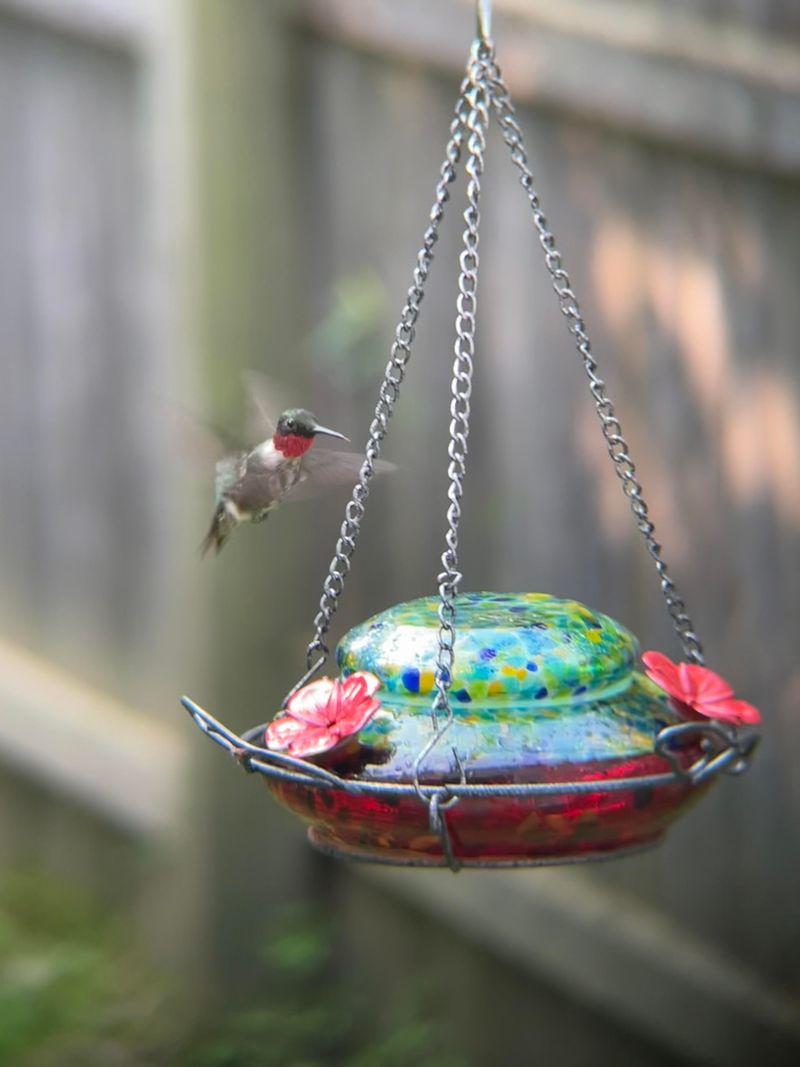
High traffic at your feeder sounds like a win, but it also raises the stakes for cleanliness. More birds visiting means nectar spoils faster and contamination risk goes up.
Nectar spoils quickly in Georgia’s late summer heat. What was fresh this morning can turn cloudy and harmful by afternoon on a hot day.
Mold and bacteria in dirty feeders can sicken hummingbirds at a vulnerable time. A bird that gets ill right before migration has far worse survival odds than a healthy one.
Check your feeders daily during peak activity periods. If the nectar looks cloudy, smells off, or has visible mold, swap it out immediately.
In temperatures above 80 degrees Fahrenheit, nectar can start to spoil within a day or so. Plan your cleaning schedule around the heat, not just the calendar.
Use hot water and a bottle brush to scrub feeders thoroughly every few days. Skip the soap, since residue can harm birds, and rinse everything well before refilling.
Homemade nectar is simple: one part white sugar dissolved in four parts water. Skip the red dye entirely, as it offers no benefit and may cause harm.
Boiling the water first helps the sugar dissolve fully and helps the nectar stay fresh a little longer. Store extra nectar in the fridge for up to two weeks.
A clean feeder is genuinely one of the best gifts you can give migrating hummingbirds. Late summer hummingbird swarms deserve nothing less than fresh fuel for their journey ahead.
Leaving Feeders Up Longer Does Not Delay Migration
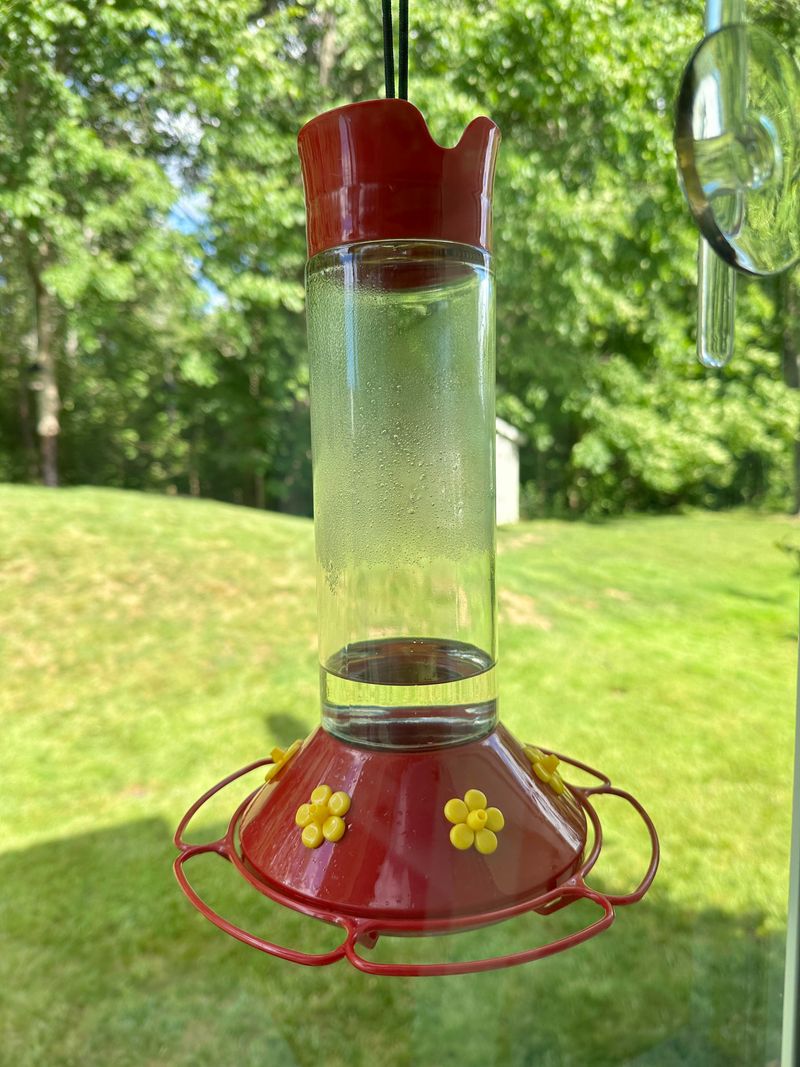
One of the most stubborn myths in backyard birding is this: leaving feeders up will confuse hummingbirds and stop them from migrating. That is simply not true.
Hummingbirds do not decide to migrate based on whether your feeder is hanging outside. Migration is triggered by changes in daylight length, a cue hardwired into their biology.
Available nectar has little influence over that internal clock. A bird that is ready to fly south will fly south, feeder or not.
Keeping feeders up through October actually helps late-season migrants passing through Georgia. Some birds travel later than others, and they need every reliable food source they can find.
Taking feeders down too early can leave stragglers without support during a critical stretch. Late migrants are often juveniles making their first solo trip south.
A good rule of thumb is to keep feeders out until two weeks after you spot your last hummingbird. That buffer ensures no late traveler gets left without a meal.
In Georgia, that often means feeders stay up into October or even early November in some years. Rare western species that sometimes show up late benefit from that extended hospitality.
You are not doing the birds any harm by leaving the feeder out longer. If anything, you are providing a safety net for the most vulnerable travelers on the route.
Late summer hummingbird swarms at your feeder are the beginning of a season, not the end of one. Keep feeding, keep watching, and enjoy every last visit before the quiet of winter settles in.