What It Means When Your Pennsylvania Tomato Leaves Show Target-Shaped Spots
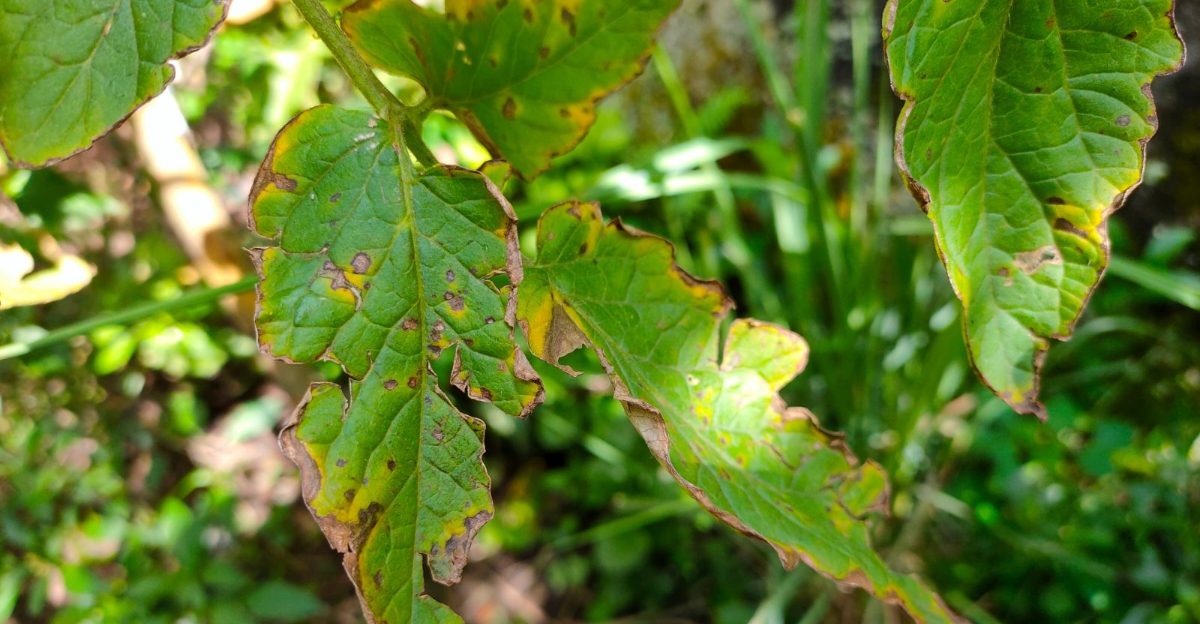
Few things get a Pennsylvania tomato grower’s attention faster than spotting a bull’s-eye pattern on the leaves, and that reaction is completely justified.
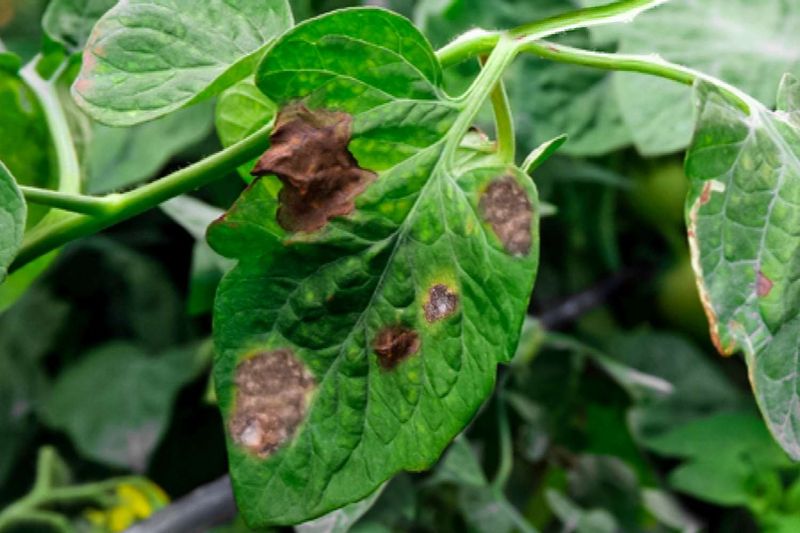
Those dark brown spots with concentric rings radiating outward are one of the more recognizable signs in the vegetable garden, strongly associated with early blight, a fungal disease linked to Alternaria species.
Early blight thrives in exactly the kind of warm, humid conditions Pennsylvania summers tend to deliver, which is a big part of why it shows up so reliably in tomato plantings across the state.
Older leaves near the base of the plant usually show signs first, which is useful to know when you are out there doing your morning check. That said, one ringed spot does not automatically tell the whole story.
Early blight, Septoria leaf spot, late blight, and a handful of other tomato problems can look surprisingly similar, and taking a careful look at the full plant before drawing conclusions is always the smarter move.
1. Target-Shaped Rings Often Signal Early Blight
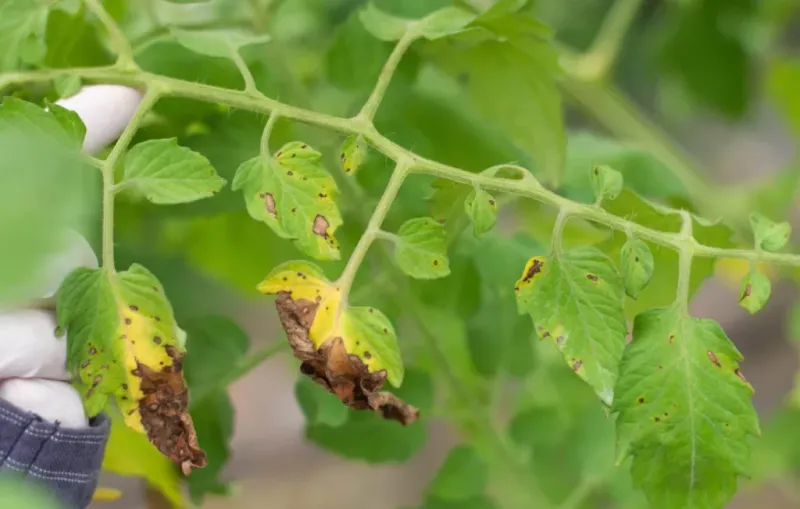
Brown rings arranged in a bull’s-eye pattern on a tomato leaf are one of the more recognizable sights in a Pennsylvania summer vegetable garden, and they point strongly toward early blight. The disease is associated with fungi in the genus Alternaria.
More than one closely related species may be involved, so treating early blight as a single-organism problem can oversimplify what is happening within the affected plant tissue.
Lesions commonly begin as small brown or dark brown areas on a leaflet. As each spot enlarges, layers of affected tissue develop visible rings, creating the familiar target-shaped appearance.
The spots may be roughly round or somewhat irregular, depending on the leaflet’s shape and the conditions present when the infection developed.
Several lesions on one leaflet can expand and eventually merge, turning a larger portion of the tissue brown and papery.
Pennsylvania gardeners may notice this broader discoloration before they see the individual rings, which can make the pattern harder to recognize at first glance.
A target-like mark is a meaningful clue, but it should be considered alongside other observations. The location of the spots, surrounding yellow tissue, the appearance of stems and fruit, and recent weather conditions all contribute to a more complete picture.
Inspecting both sides of several leaves, rather than relying on one distant photograph, gives gardeners a clearer sense of what may be affecting the plant.
2. Lower Leaves Often Show Symptoms First
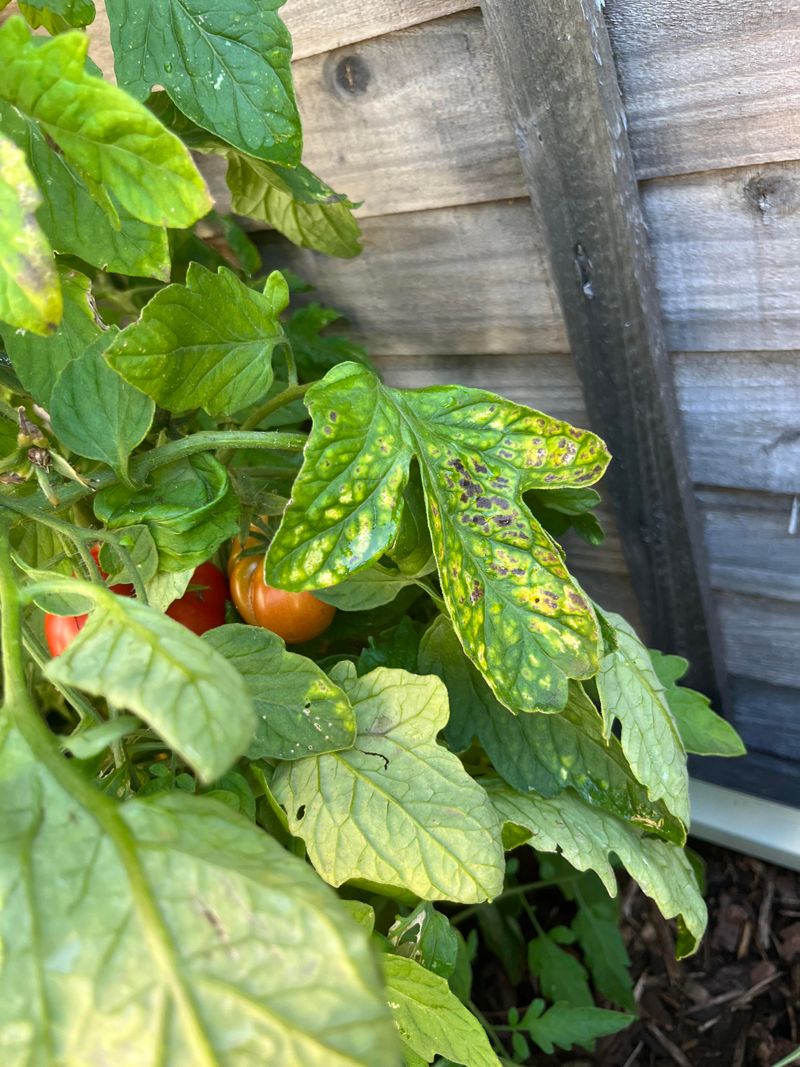
Checking the base of tomato plants regularly can reveal problems that are easy to miss when attention is focused on fruit developing higher up.
In Pennsylvania gardens, early blight commonly becomes noticeable on older leaves near the bottom of the plant, and several factors may contribute to this pattern.
Rain and overhead watering can splash fungal spores from the soil or affected plant debris onto lower foliage.
Older leaves also tend to be more susceptible than young, actively growing tissue, while crop residue left from previous seasons may add to local disease pressure.
Your Pennsylvania Garden Changes Every Week. Your Plan Should Too.
Gardening in Pennsylvania changes quickly throughout the season. Every Friday you’ll receive a simple weekly plan showing exactly what to plant, prune, fertilize, harvest, and protect so you never miss the right timing.
None of these factors confirms early blight by itself, but they help explain why the lowest leaves are often where gardeners first notice changes.
Dense tomato growth can hide the base of the plant, especially in caged or sprawling varieties.
Gently checking beneath the canopy from time to time, without pushing through wet foliage unnecessarily, gives Pennsylvania gardeners a better chance to notice developing spots before they spread through more of the plant.
Lower-leaf spotting is not unique to early blight. Septoria leaf spot and several other tomato problems may also begin near the base.
Target-shaped rings remain a useful distinguishing clue, but location alone is not enough for a firm diagnosis. Symptoms may move upward as the season continues and conditions remain favorable for disease development.
3. Yellow Tissue May Surround The Brown Spots
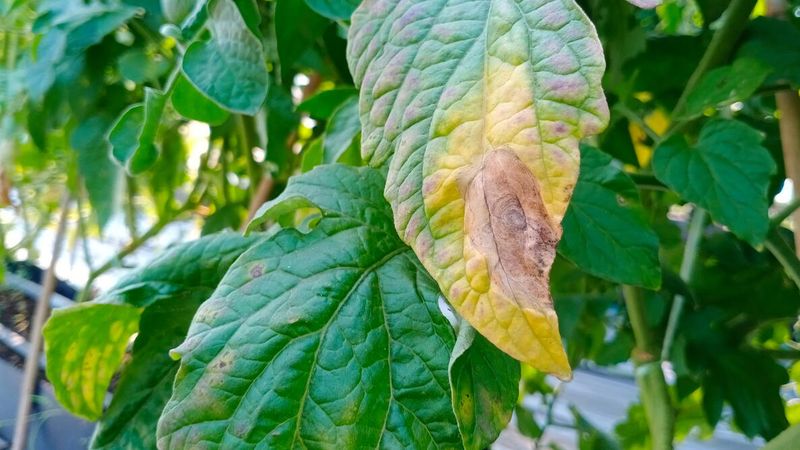
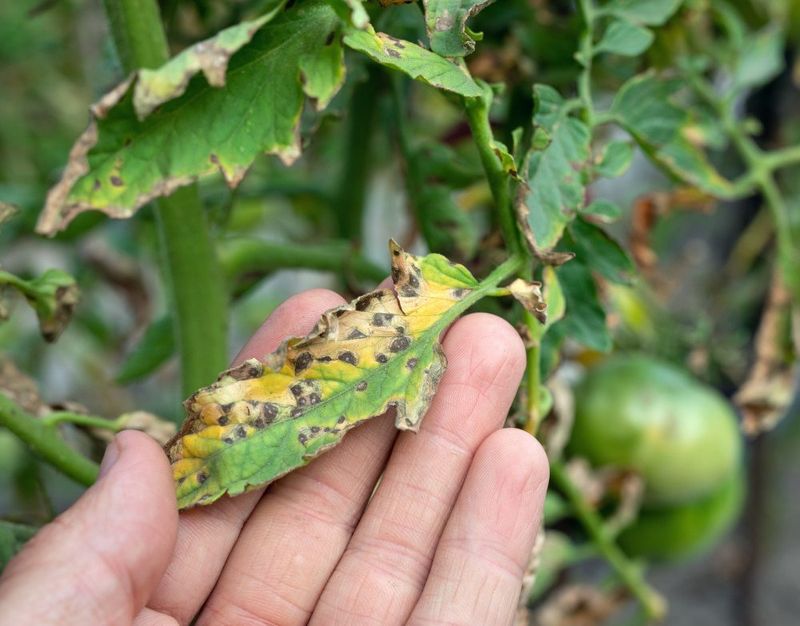
A yellow halo around a brown lesion is one of the extra details that can make early blight easier to recognize in a Pennsylvania tomato garden. As a lesion matures and the affected tissue changes, the surrounding area of the leaflet may turn pale yellow.
In some cases, several expanding lesions can cause an entire leaflet to become yellow or brown before it drops from the plant.
Yellow foliage by itself does not point specifically to early blight. Overwatering, underwatering, root disturbance, nutrient imbalances, natural leaf aging, and several other diseases can all produce yellowing.
The combination of yellow tissue and distinctly ringed, dark lesions is more useful for identification than either symptom viewed alone.
A close look at the shape, size, margins, and internal pattern of each spot can help separate early blight from other causes of discoloration.
A lesion with clear concentric rings inside a yellow area looks different from the more even, washed-out yellowing that may appear with watering stress or a nutrient problem.
Once tissue around an early blight lesion has turned yellow, it will not return to its original green color. At that stage, Pennsylvania gardeners should focus on protecting the remaining healthy foliage rather than trying to reverse existing damage.
That perspective can help guide practical decisions when a plant has already lost a noticeable amount of its lower growth.
4. Warm Wet Conditions Can Favor The Disease
Pennsylvania summers have a way of delivering exactly the kind of weather that makes tomato diseases more likely to appear.
Warm temperatures, frequent rainfall, heavy dew, high humidity, and extended periods of leaf wetness can all support the development of early blight.
Gardeners who have grown tomatoes through a particularly rainy July or August have probably noticed that foliage problems tend to follow close behind.
Repeated wetting of leaf surfaces may allow fungal spores to germinate and infect susceptible tissue.
Dense tomato foliage, crowded plant spacing, nearby weeds that slow airflow, and overhead watering methods can all keep leaves damp for longer stretches of time.
None of these conditions proves that early blight is present, but they create an environment where it is more likely to take hold.
Weather patterns vary across Pennsylvania counties, so not every garden faces the same level of disease pressure in a given season.
A stretch of dry heat in one part of the state may limit early blight development while another region experiences weeks of humid, showery conditions that favor it considerably.
Avoiding blame for weather-related disease is worth mentioning here. Gardeners who follow careful practices can still see early blight symptoms during difficult growing seasons.
The goal is reducing favorable conditions where possible rather than expecting complete prevention. Overhead watering in the morning rather than the evening, for example, gives foliage more time to dry before temperatures drop at night.
5. Stems And Fruit May Develop Ringed Lesions
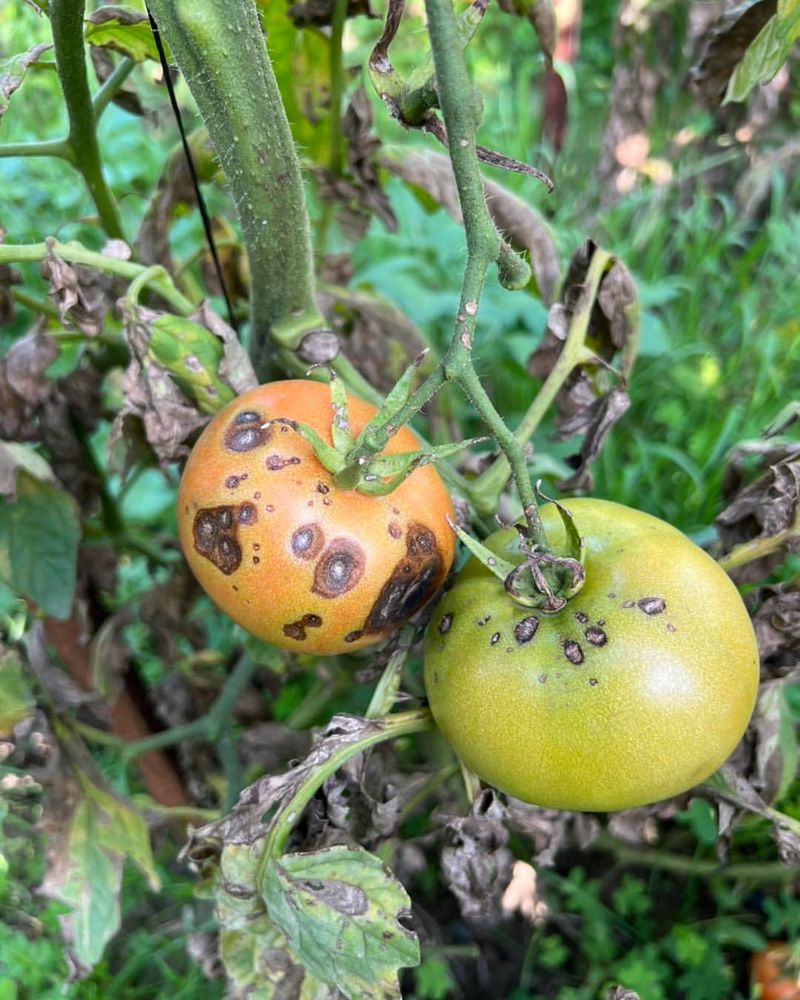
Most gardeners notice early blight on leaves first, but the disease can also affect other parts of a tomato plant. In Pennsylvania gardens, dark, sunken lesions may develop on stems or leaf stalks, and some of these marks can show a ringed or banded appearance.
The pattern is often less distinct on stems than it is on leaf tissue.
Fruit lesions linked to early blight usually appear as dark, leathery, sunken areas, often near the stem end of the tomato. Concentric rings may be visible within the affected tissue.
Not every dark mark in that location points to early blight, since other diseases and growing problems can affect the same part of the fruit. Looking at the fruit alongside the leaf symptoms gives a more complete picture.
Fruit symptoms deserve closer attention when they appear at the same time as characteristic lower-leaf lesions on the same plant.
A dark, sunken area with visible rings inside leathery tissue looks different from blossom-end rot, which appears at the blossom end, or cracking associated with uneven moisture.
Questions about using visibly affected fruit should be checked against current Penn State Extension or food-safety guidance rather than answered with broad assumptions.
At this stage, Pennsylvania gardeners should focus on accurate identification and on deciding how best to manage the remaining healthy parts of the plant.
6. Septoria Leaf Spot Can Create Similar Lower-Leaf Damage
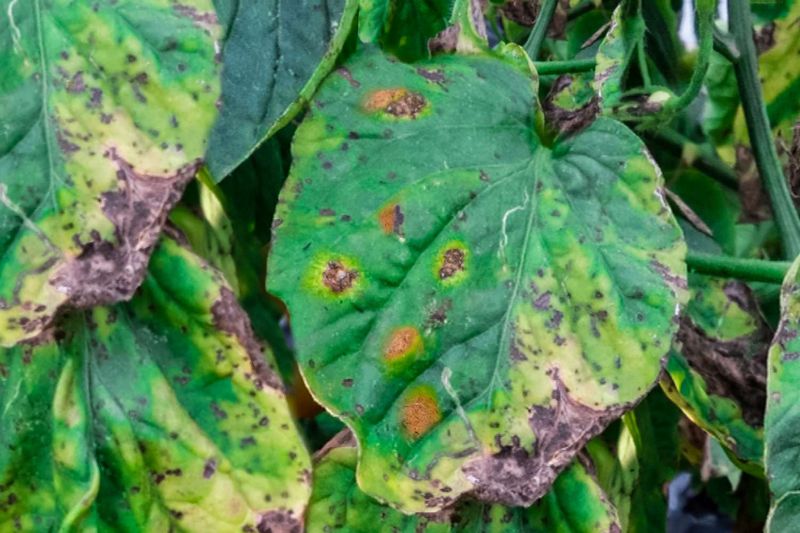
Clusters of small spots on lower tomato leaves can send gardeners searching for answers, and Septoria leaf spot is one of the more common reasons those clusters appear in Pennsylvania gardens.
Because Septoria and early blight both tend to affect older, lower foliage first and can cause yellowing and gradual leaf loss, the two problems may look similar at a glance.
Septoria lesions are generally smaller and more numerous than early blight lesions. They often have pale tan or grayish centers, darker margins, and tiny dark fruiting structures within the spots.
These details may be easier to see with a hand lens or a clear smartphone photograph. The overall pattern usually looks like a scattering of small, pale-centered spots rather than the larger, ringed bull’s-eye lesions associated with early blight.
Distinct concentric rings are more characteristic of early blight, but Pennsylvania gardeners should not assume that every small, pale-centered spot is Septoria.
Bacterial spot, bacterial speck, spray injury, and other problems may create similar markings, especially during their early stages.
Late blight is another important look-alike. It more often produces larger, irregular, water-soaked, gray-green, or dark lesions rather than clearly defined target patterns.
Under humid conditions, pale growth may appear near the edges of affected areas. When symptoms spread quickly, look unusual, or do not match a clear pattern, contacting Penn State Extension or another plant diagnostic resource is a sensible next step.
7. Simple Garden Habits May Reduce Additional Spread
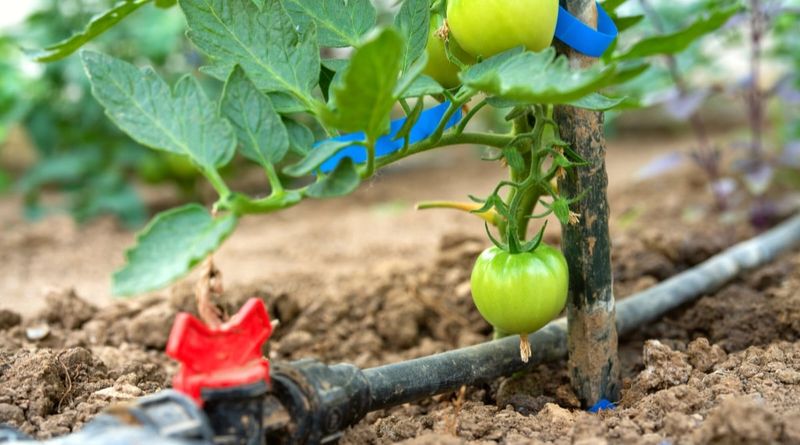
Cultural practices can make a meaningful difference in how quickly tomato disease symptoms develop and spread through a Pennsylvania garden, even though they cannot restore tissue that has already been affected.
Watering near the soil surface or using drip irrigation when practical may help keep foliage drier and shorten the amount of time leaves remain wet.
Rain and dew are outside a gardener’s control, but avoiding unnecessary wetting from a hose or sprinkler is still a sensible step.
Staking or caging tomato plants can improve airflow around the foliage and make it easier to inspect lower leaves without pushing through a damp canopy. Giving each variety enough space also allows air to move more freely between plants.
Heavily affected lower leaves may be removed carefully when enough healthy foliage remains.
Pennsylvania gardeners should avoid handling plants while the leaves are wet, clean pruning tools between plants when practical, and place removed material directly into a disposal container.
Removing too much foliage at once can limit the plant’s ability to support developing fruit and may expose tomatoes to stronger sunlight, so selective removal is more useful than routinely stripping the lower half of the plant.
Mulch around the base may help reduce soil splash onto lower foliage.
End-of-season cleanup and thoughtful rotation of tomatoes, potatoes, peppers, and eggplants may also reduce local disease pressure in later seasons, although rotation can be less effective in small gardens where beds remain close together.
8. Accurate Identification Guides The Best Response
Uncertainty about what is affecting a tomato plant is more common than most gardeners admit, especially when several diseases can produce overlapping symptoms.
Accurate identification matters because a treatment or management approach that fits one problem may do nothing useful for another.
Photographing both sides of affected leaves, noting when symptoms first appeared, and checking stems and fruit before drawing conclusions gives a much stronger starting point.
Penn State Extension, county Master Gardener programs, and plant diagnostic laboratories are practical resources when the cause remains unclear.
A clear diagnosis can be especially valuable before applying any pesticide, since choosing the wrong product or applying it at the wrong time wastes effort and money without helping the plant.
Fungicide products may help protect healthy foliage that has not yet been affected, when chosen and timed appropriately for the specific disease present. They generally do not repair existing lesions.
Pesticide labels are legal documents and must be read and followed carefully. Assuming that one application controls a disease for the rest of the season is not a reliable expectation.
Tomato varieties differ in their tolerance to early blight, and some carry partial resistance. No variety should be considered fully protected, and descriptions of resistance can vary between seed sources.
Checking current Penn State Extension variety recommendations gives the most reliable guidance for Pennsylvania growing conditions.
Homemade spray mixtures using household ingredients are not established treatments for early blight and should not be substituted for evidence-based management approaches.