What It Really Means When A Hawk Keeps Returning To Your North Carolina Backyard
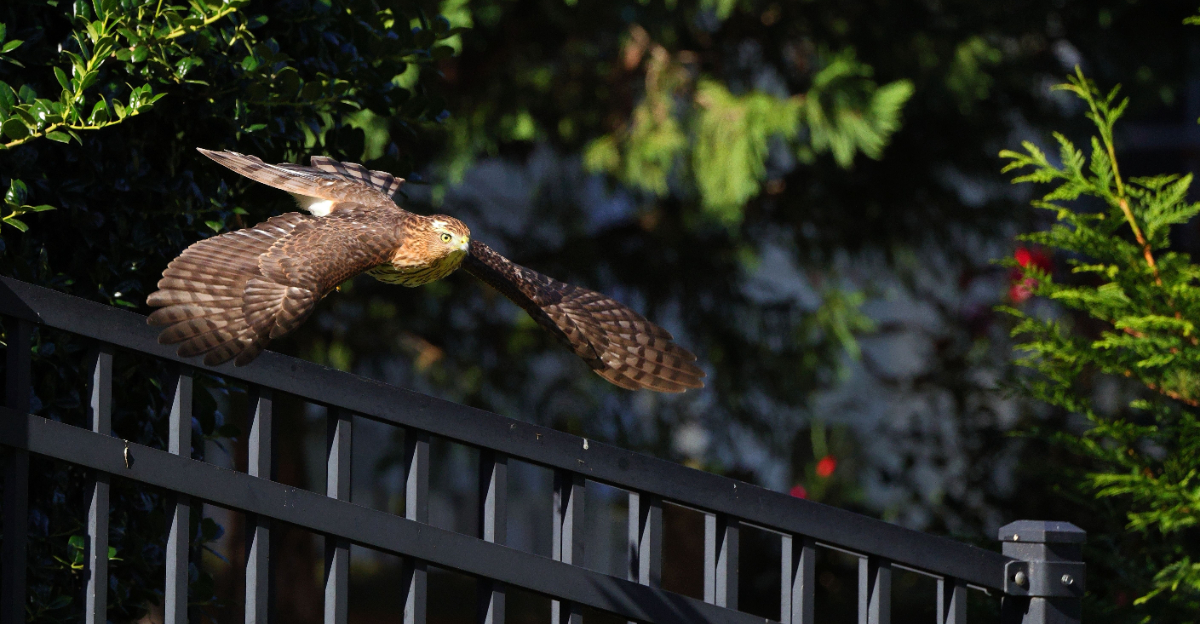
A hawk landing in the same backyard tree two days in a row gets your attention. By the third or fourth visit you start wondering what exactly is going on back there. Hawks don’t choose hunting spots randomly.
When one keeps returning to the same yard, it’s responding to something specific about that space, and what it’s finding there says something real about the condition of your outdoor environment.
For some gardeners that information is reassuring. For others it raises questions worth thinking through, especially if bird feeders or small pets are part of the picture.
A returning hawk is essentially a signal, one that tells an interesting story about the food chain quietly operating in your own backyard whether you’ve been paying attention to it or not.
1. Your Yard Provides A Reliable Food Source
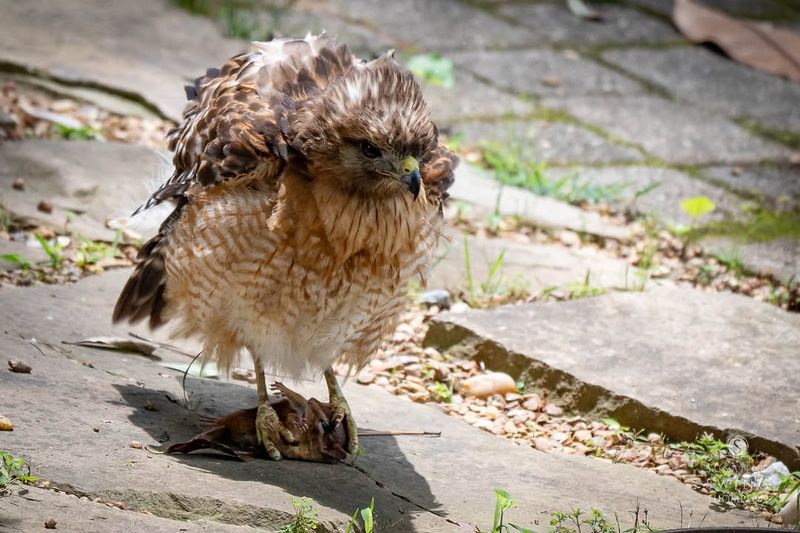
Food is the number one reason any wild animal keeps coming back to the same spot. Hawks are sharp hunters, and once they find a yard that regularly offers prey, they remember it well.
Small animals like mice, voles, chipmunks, and even sparrows make a backyard feel like a stocked pantry to a hunting hawk.
North Carolina yards with overgrown edges, garden beds, or birdseed scattered on the ground often attract plenty of rodents without homeowners even realizing it.
Those rodents then attract hawks, creating a natural chain of events that plays out quietly in your own backyard.
The hawk is simply following the food trail. Consistent prey availability is the strongest signal that keeps a hawk returning to the same location over and over.
If you notice a hawk visiting regularly, chances are your yard is producing a steady stream of small animals it finds worth hunting. This is actually a sign that your outdoor space supports real wildlife activity.
Rather than worrying about the hawk, think of it as nature doing its own pest management right outside your window.
2. Nearby Trees Offer Good Perching Locations
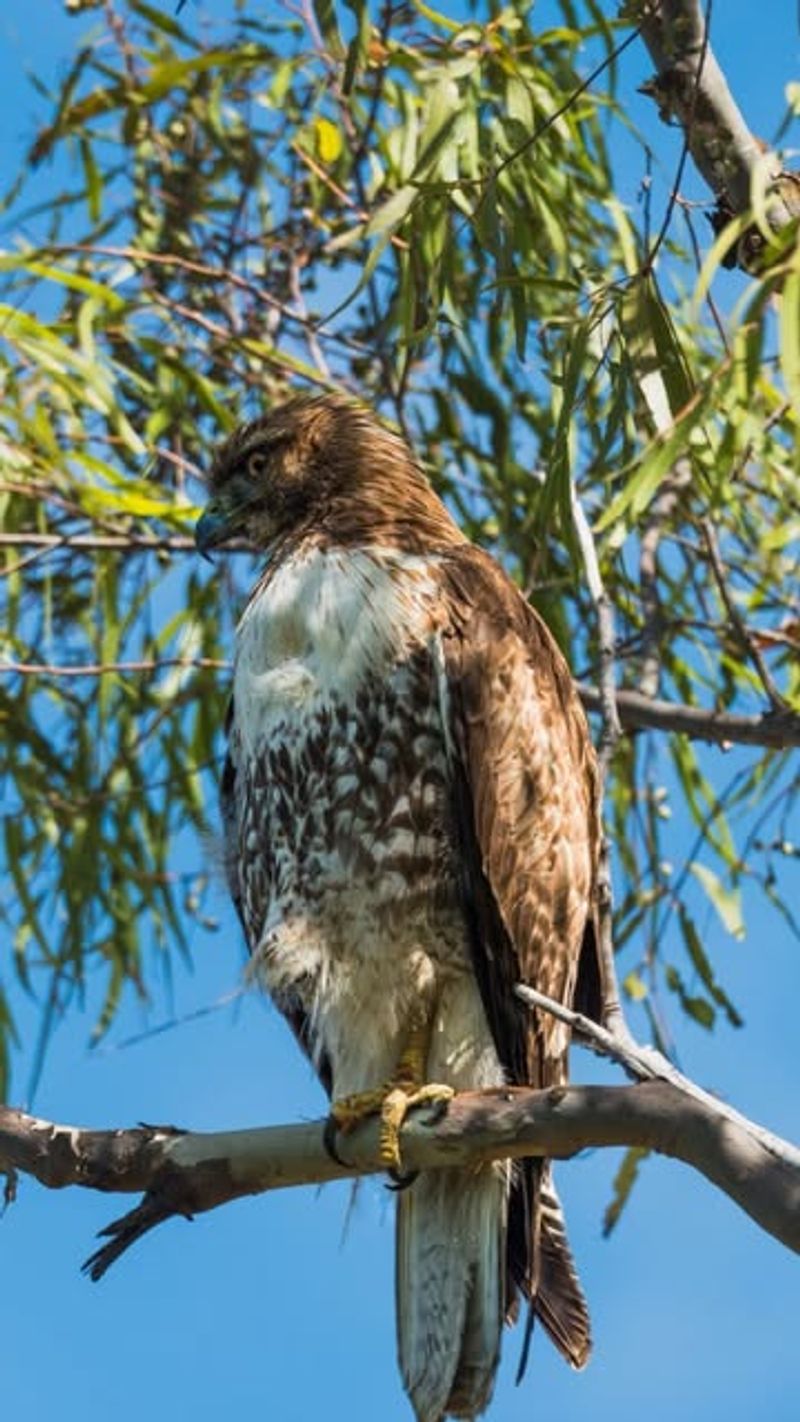
Hawks are patient hunters, and patience requires a good place to sit and watch.
Tall trees, wooden fence posts, utility poles, and even rooftop edges give hawks the elevated vantage point they need to survey the ground below.
A yard with mature trees is basically advertising itself as prime hawk territory. North Carolina is full of beautiful hardwood trees like oaks, hickories, and pines that make perfect perching spots.
When a hawk finds a tree that offers both height and a clear sightline to an open lawn or garden, it will use that spot repeatedly.
You might notice the same branch or post being used visit after visit. Perching is not just about resting. It is an active part of how hawks hunt.
From up high, they can spot the tiniest movement in the grass far below. If your yard has several good perch options, the hawk may rotate between them depending on wind direction, sun position, or where prey seems most active that day.
Having mature trees in your yard is genuinely good for local wildlife, and a visiting hawk is one of the more impressive signs of that. It is worth appreciating how much a single well-placed tree can mean to a wild bird.
Your North Carolina Garden Changes Every Week. Your Plan Should Too.
Gardening in North Carolina changes quickly throughout the season. Every Friday you’ll receive a simple weekly plan showing exactly what to plant, prune, fertilize, harvest, and protect so you never miss the right timing.
3. The Hawk May Be Defending A Territory
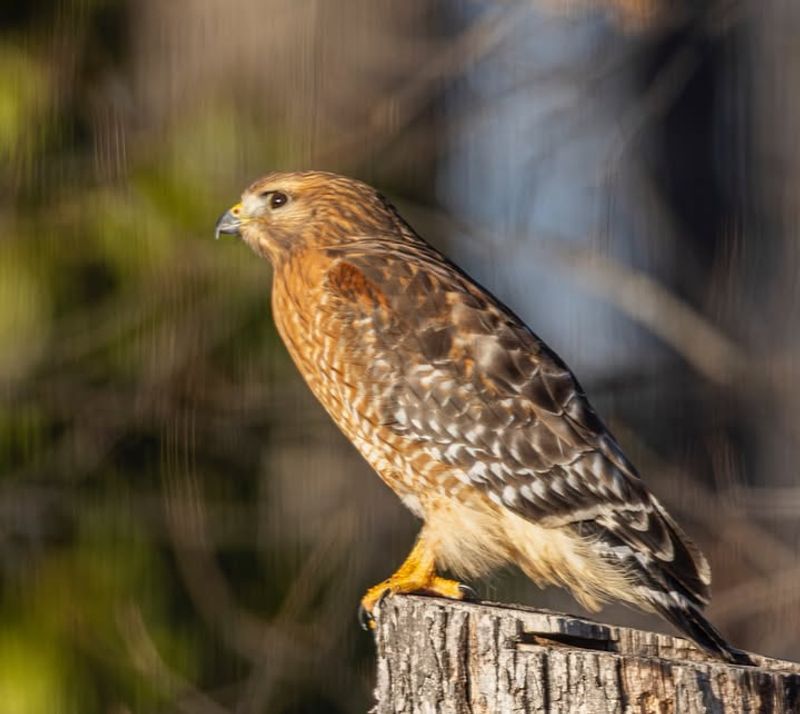
During breeding season, hawks become strongly territorial. A hawk that keeps showing up in your yard may not just be hunting. It may be actively patrolling the boundaries of the area it has claimed as its own.
This behavior is especially common from late winter through early summer in North Carolina.
Species like the Red-shouldered Hawk and Cooper’s Hawk are known to establish territories that overlap with suburban neighborhoods.
They will fly the same routes, call from the same trees, and chase away other hawks that try to move in.
Seeing the same bird repeatedly is often a clue that your yard falls inside its established range.
Territorial behavior can look intense, especially if you watch the hawk chase off other birds or call loudly from a high perch.
However, this is completely normal and healthy hawk behavior. It means the bird is actively engaged in the natural cycle of breeding and survival. Your yard just happens to be part of the real estate it has chosen.
Understanding this makes the repeat visits feel less mysterious and more like front-row seats to wild behavior most people never get to observe up close. It is one of the more fascinating aspects of sharing space with a truly wild predator.
4. A Nest May Be Nearby
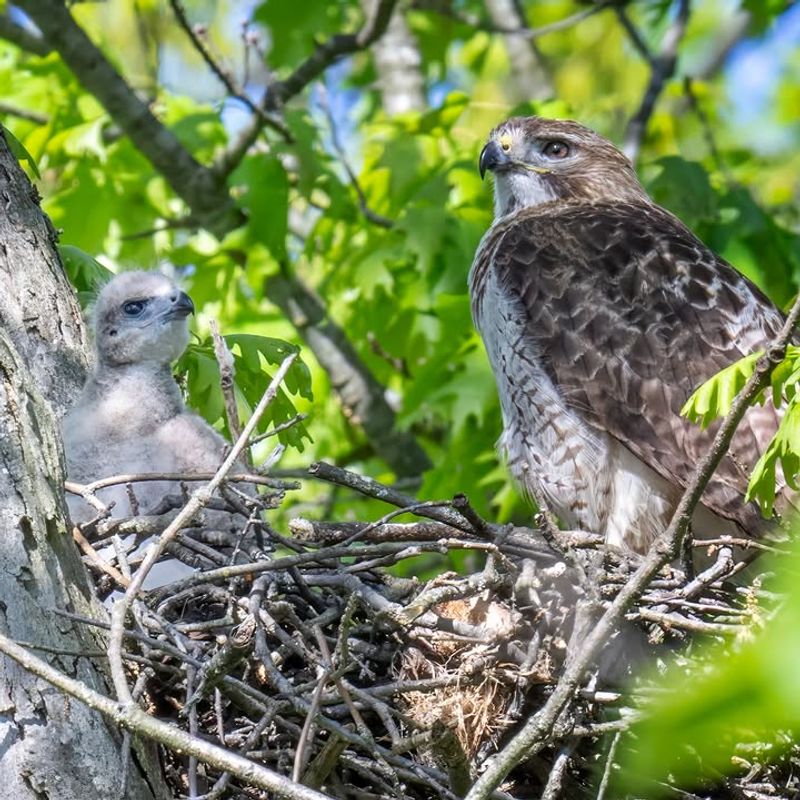
Frequent hawk sightings, especially in spring and early summer, can be a strong hint that a nest is somewhere close by.
Hawks do not nest far from their hunting grounds, so if one keeps visiting your yard, the nest might be in a nearby tree line, a wooded lot next door, or even in one of your own tall trees.
Adult hawks make many trips back and forth while raising young. They hunt, return to the nest to feed their chicks, and then head right back out again.
This repeated pattern can make it seem like the same hawk is always around, because it essentially is. Nesting pairs in North Carolina often use the same general area year after year.
If you suspect a nest is nearby, look for large stick structures wedged into tree forks, usually 20 to 60 feet off the ground.
You might also hear high-pitched calls from young hawks in late spring, a sound that is hard to miss once you know what to listen for.
Watching a nesting pair raise their young from the comfort of your own yard is one of the most rewarding wildlife experiences a homeowner can have.
It requires nothing from you except a little patience and a good pair of binoculars.
5. Your Yard Supports A Healthy Food Web
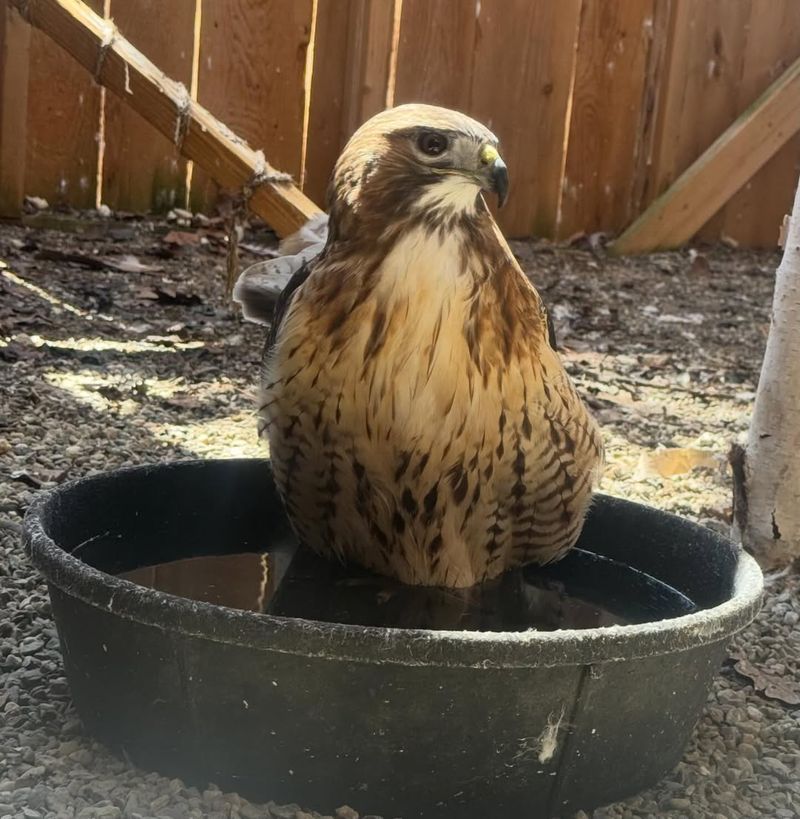
A hawk returning to your yard is actually one of the best compliments nature can give your outdoor space.
Hawks sit near the top of the local food chain, which means their presence signals that everything below them is working well.
Insects, plants, rodents, songbirds, and reptiles all have to be present in good numbers before a hawk finds the area worth visiting regularly.
Think of your yard as a small ecosystem. When native plants grow well, they support insects. Those insects feed small birds and reptiles.
Rodents move in to eat seeds and roots. Hawks then follow the rodents. Every link in that chain depends on the one before it, and a visiting hawk means the whole chain is intact and functioning.
Many North Carolina homeowners are surprised to learn that their backyard wildlife activity is richer than they thought.
A hawk’s repeat visits are like a report card showing that your yard is doing something right. You do not need a large piece of land to support this kind of biodiversity.
Even a modest yard with a few native plants, some leaf litter, and a water source can quietly become a hub for local wildlife. The hawk is simply the most visible and dramatic piece of that bigger picture.
6. Bird Feeders Can Indirectly Attract Hawks
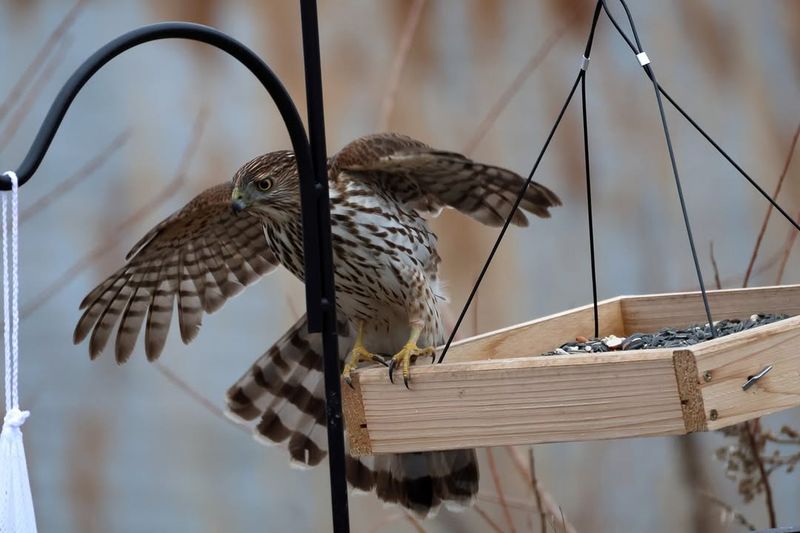
Bird feeders are wonderful for attracting colorful songbirds, but they also set the table for something much larger.
When you put out seed, you invite finches, sparrows, doves, and other small birds.
Those small birds, gathered in one predictable spot day after day, are exactly what an accipiter hawk like a Sharp-shinned or Cooper’s Hawk is looking for.
It is a classic example of unintended consequences in the best possible way. You wanted to watch pretty birds.
You got that, plus the occasional dramatic visit from a hawk that noticed the reliable concentration of prey near your feeder.
This is especially common during fall and winter in North Carolina when natural food sources become less abundant.
Rodents also tend to gather under feeders to pick up dropped seed, which attracts Red-tailed and Red-shouldered Hawks as well.
If you want to reduce hawk activity near your feeder, try temporarily taking it down for a week or two.
The hawk will usually move on once the easy food source disappears. However, many birders actually enjoy the full show, including the hawks.
Watching the natural drama unfold right outside your kitchen window, from tiny chickadees to a swooping hawk, is a reminder that your yard is genuinely alive with wild energy.
7. Open Lawn Areas Make Hunting Easier
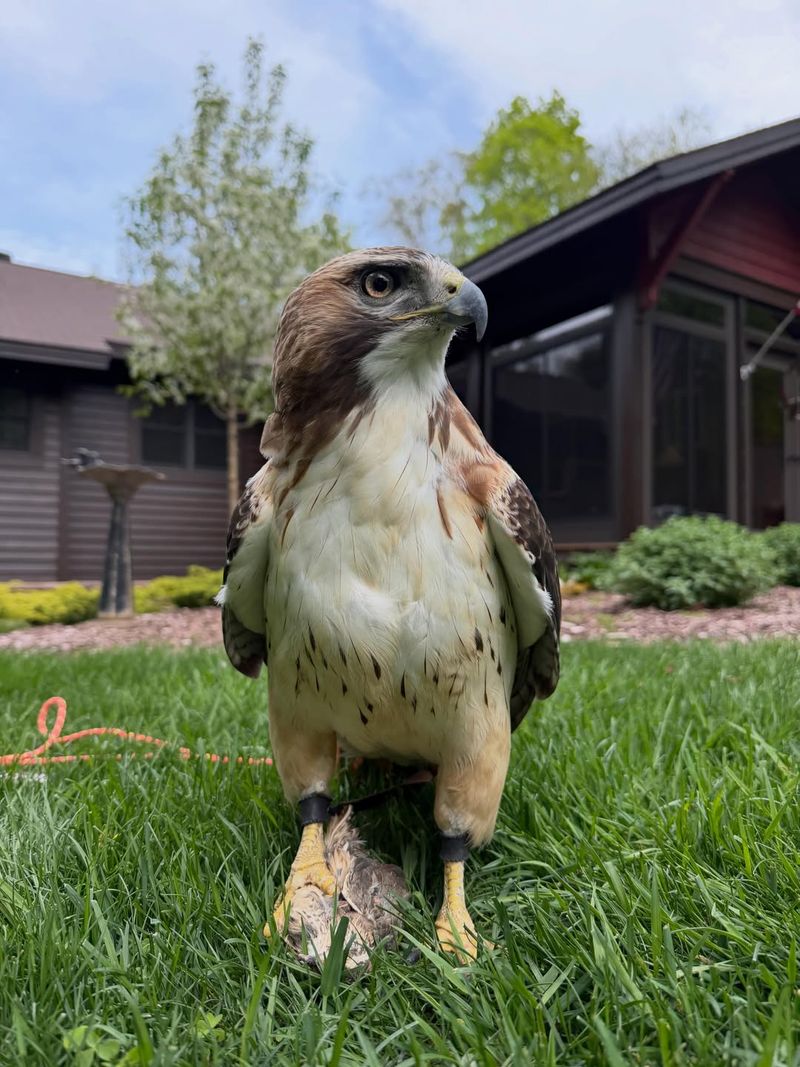
Wide open spaces are a hawk’s best friend when it comes to hunting.
A broad, mowed lawn gives hawks an unobstructed view from above, making it much easier to spot a mouse or vole moving through the grass.
Yards with large open areas are simply more attractive hunting grounds than dense, overgrown spaces where prey can hide easily.
North Carolina backyards that combine open turf with some surrounding shrubs or garden beds actually create ideal hawk hunting conditions.
The open lawn provides visibility, while the edges of garden beds and shrubby areas are exactly where small rodents like to travel.
Hawks know this pattern and use it strategically every single time they visit.
If your lawn is large and relatively open, do not be surprised to see a hawk flying low and slow across it, almost like a slow-motion dive that ends with a quick strike.
This low hunting flight is called coursing, and it is a fascinating behavior to watch. The hawk is reading the landscape just like a skilled athlete reads a playing field.
Understanding why open lawns attract hawks can also help you make smart landscaping choices if you want to either encourage or gently discourage hawk activity near specific areas of your yard, like a spot where small pets spend time outdoors.
8. Seasonal Migration May Increase Sightings
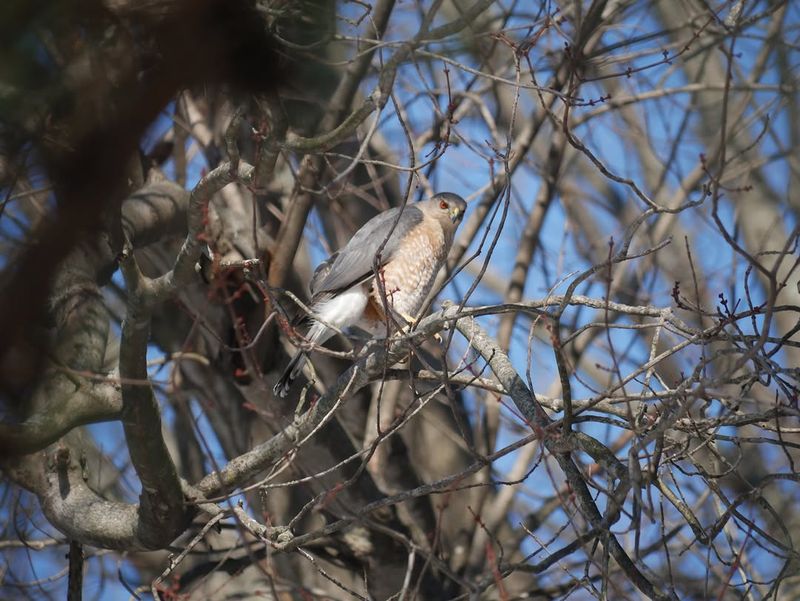
North Carolina sits along one of the most active raptor migration corridors in the eastern United States.
Every fall, thousands of hawks move through the state heading south, and every spring they return heading north.
During these migration windows, hawk sightings increase dramatically across the region, including in backyards that might not normally see much hawk activity.
Broad-winged Hawks are famous for moving in large flocks called kettles during September.
Sharp-shinned and Cooper’s Hawks follow in October and November.
Even if you have never seen a hawk in your yard before, migration season can bring multiple species through in a matter of days.
Some of these birds stop briefly to rest and hunt before continuing their journey.
Hawk watching is actually a beloved hobby across North Carolina, with places like Chimney Rock State Park drawing birders from across the country during peak migration.
If you notice a sudden increase in hawk activity in your yard during fall or spring, migration is likely the explanation.
Keep a simple notebook or use a free app like eBird to log what you see. You might be surprised how many different species pass through your own neighborhood in a single season.
Migration turns ordinary backyards into temporary rest stops on one of nature’s most incredible long-distance journeys.
9. The Hawk May Simply Have A Favorite Hunting Route
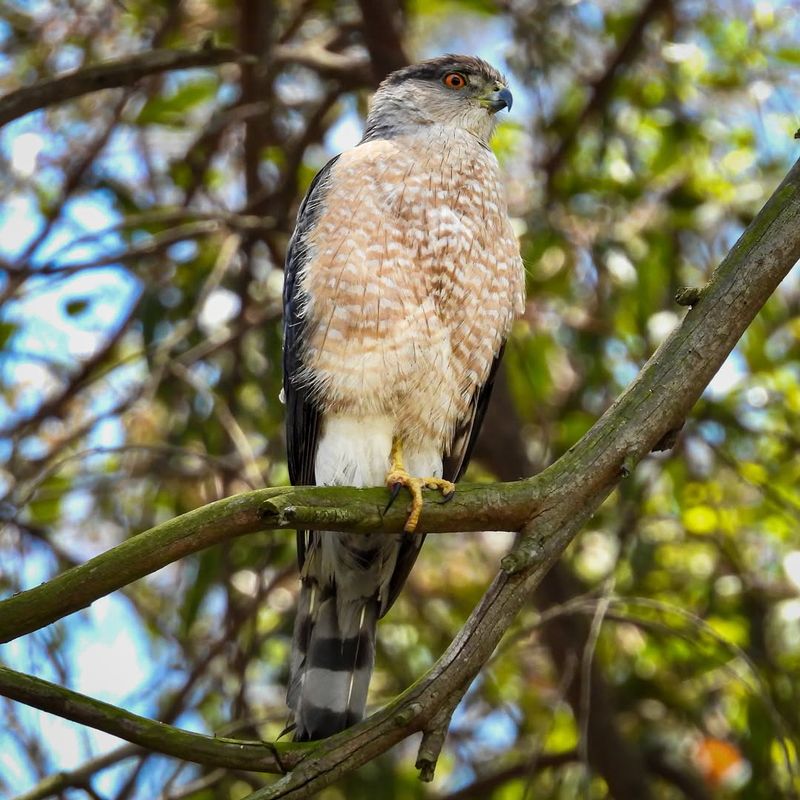
Hawks are creatures of habit in ways that might surprise you.
Research on raptor movement has shown that individual hawks often follow the same travel paths, visit the same hunting spots, and even perch on the same branches day after day.
Your backyard may simply fall along a well-worn route this particular bird uses regularly. Think of it like a daily commute.
The hawk wakes up, checks a few reliable spots for prey, and circles back through the same neighborhood it knows well.
Your yard, your neighbor’s field, the drainage ditch down the street, and the tree line behind the school might all be stops on the same regular circuit this bird has mapped out over weeks or months.
Juvenile hawks learning to hunt often establish these routes during their first year, and once a route proves productive, they stick with it.
Adult hawks that have survived multiple seasons are especially predictable in their movements.
You might start to notice the hawk appearing at roughly the same time of day, which is a strong sign it is following a routine rather than wandering randomly.
Watching for patterns in when and where the hawk shows up can turn casual backyard birdwatching into a genuinely interesting observation project that reveals just how organized and intentional wild animals truly are.
10. Seeing A Hawk Does Not Mean Pets Are In Immediate Danger
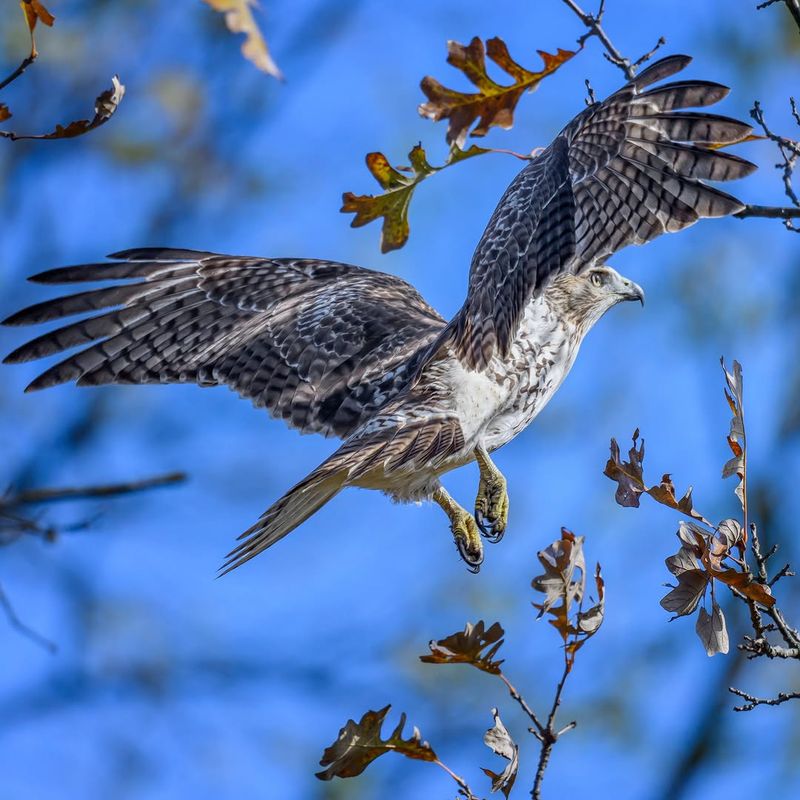
One of the first worries homeowners have when a hawk starts visiting regularly is whether their small pets are at risk. It is a fair concern, but the reality is more reassuring than most people expect.
The vast majority of hawks that visit North Carolina backyards are focused almost entirely on wild prey like mice, voles, small birds, and lizards.
Red-tailed Hawks, the most common large hawk in the state, rarely target animals over about two pounds.
Cooper’s Hawks and Sharp-shinned Hawks are even smaller and focus mainly on songbirds. A healthy adult cat or a medium-sized dog is simply not on the menu for these birds.
Very small kittens or toy-breed puppies left unattended outdoors for extended periods carry a slightly higher risk, but incidents remain uncommon.
The smartest approach is to supervise very small pets when they are outside, especially during active hawk hours around dawn and dusk.
Providing some overhead cover like a patio umbrella or a lattice structure gives small animals a place to retreat. That said, living in fear of a backyard hawk is not necessary or realistic for most pet owners.
These birds are a natural and genuinely valuable part of the local ecosystem, and a little awareness goes a long way toward peaceful coexistence with one of North Carolina’s most impressive wild neighbors.
11. Native Plantings Can Support The Habitat Hawks Use
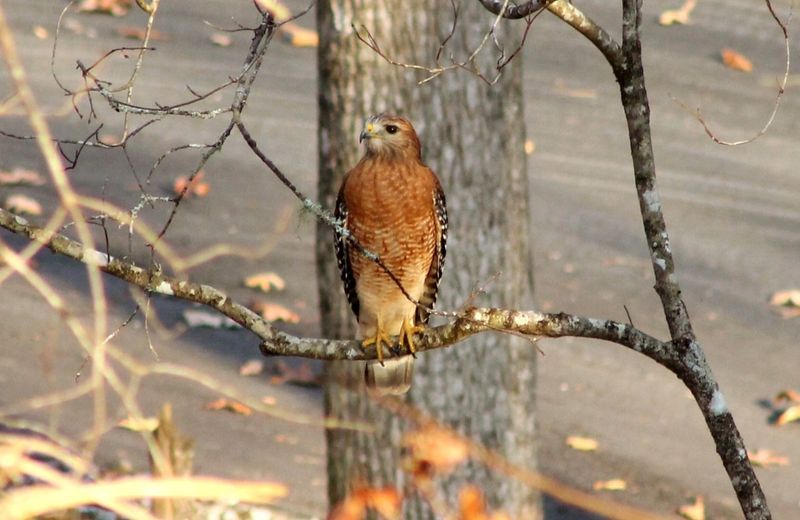
Planting native species in your yard does more than make it look beautiful.
Native trees, shrubs, and ground cover plants create the layered habitat that supports entire communities of insects, birds, and small mammals.
That rich wildlife community is exactly what draws hawks to an area in the first place.
In North Carolina, native plants like Eastern Red Cedar, American Holly, Beautyberry, and native grasses provide food and shelter for the prey animals hawks rely on.
When your yard has a variety of plant layers, from ground cover to mid-level shrubs to tall canopy trees, it mimics the structure of a natural habitat and supports far more wildlife than a plain lawn ever could.
You do not need to relandscape your entire yard to make a difference.
Even adding a few native shrubs along a fence line, letting a small section of lawn grow a bit wilder, or planting a native tree in an open corner can meaningfully increase the habitat value of your property.
Over time, these small changes attract more insects, which bring more birds, which eventually draw in raptors like hawks.
If a hawk keeps visiting your yard, consider it strong encouragement to keep investing in native plants.
You are building something genuinely valuable for local wildlife, one plant at a time, and the results speak for themselves.
12. Repeat Visits Usually Mean The Habitat Is Working
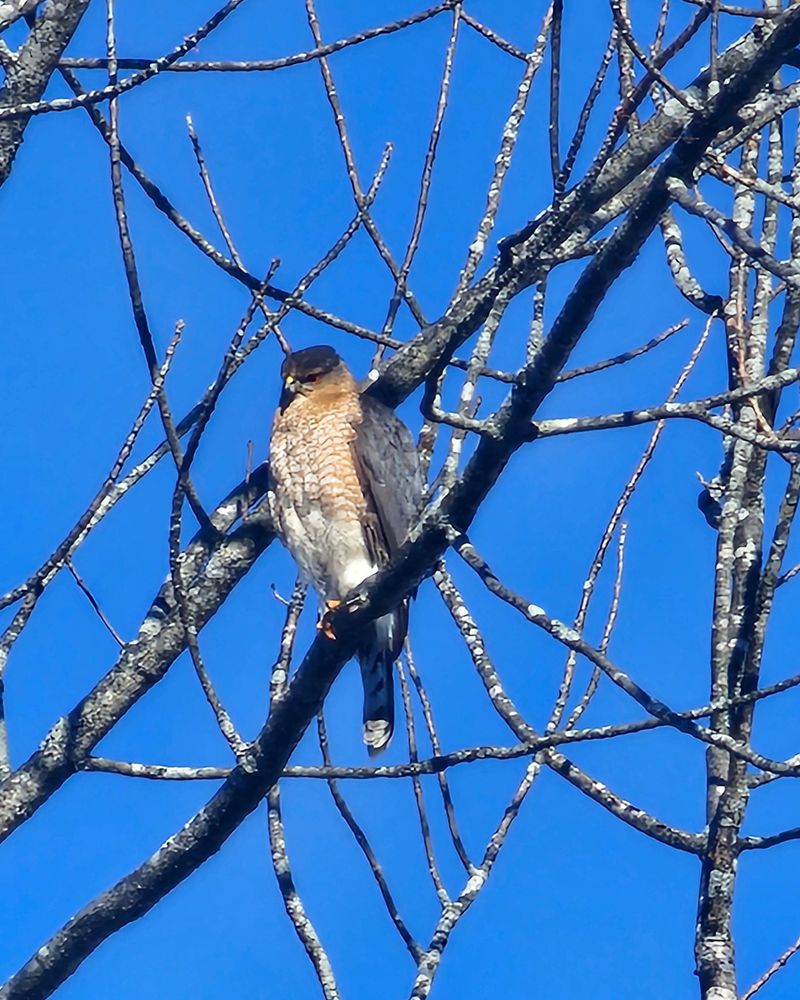
When a hawk keeps coming back to your yard, the simplest explanation is often the best one: your yard has what the bird needs, and it knows it.
Repeat visits are not a warning sign or a problem to solve. They are evidence that your outdoor space has become a genuinely functional piece of the local wildlife landscape.
Hawks are selective. They do not waste energy traveling to places that offer nothing useful.
If one keeps returning, it means your yard consistently provides either food, a good perch, a safe travel corridor, or some combination of all three.
That is a real achievement, even if it happened completely by accident. Many homeowners spend years trying to attract wildlife and never get results this clear or this dramatic.
Embracing the hawk as a regular visitor also shifts the way you see your yard. Instead of a patch of grass to maintain, it becomes a living space shared with wild animals doing exactly what they are built to do.
You can deepen that connection by adding a water feature, planting more native species, or simply spending more time outside observing what comes and goes.
North Carolina is home to an incredible variety of raptors, and having one choose your yard as a regular stop is something genuinely worth celebrating. Your backyard is working, and the hawk is the proof.