Why California Boxwood Turns Brown In The Middle And How To Revive It
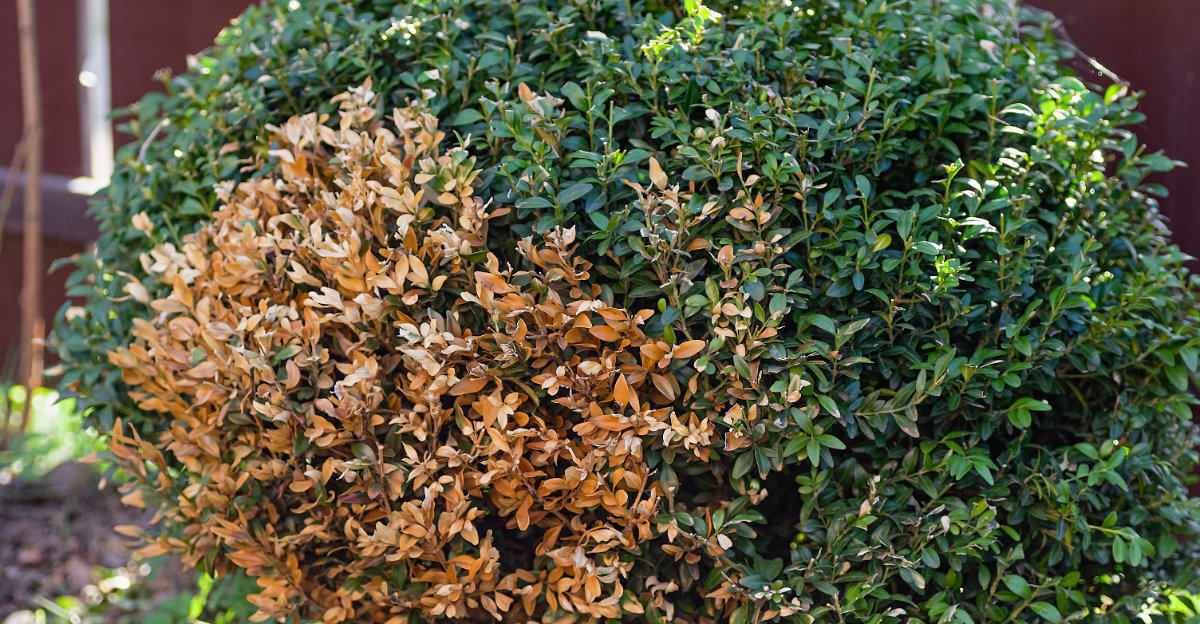
Boxwood has a sneaky way of looking polished on the outside while hiding a crispy little secret inside. In California yards, that brown middle can make even a tidy hedge feel suspicious.
The outside may still look green, so the problem often goes unnoticed until you part the branches. Then suddenly, your “formal garden moment” looks like it has trust issues.
Heat, airflow, watering, pests, and pruning habits can all play a role, but the real clue is usually in the pattern. Before you grab fertilizer or start chopping, slow down and inspect what is happening inside the plant.
Boxwood can recover, but only if you fix the reason it is browning in the first place.
1. Dense Growth Blocks Light From The Center
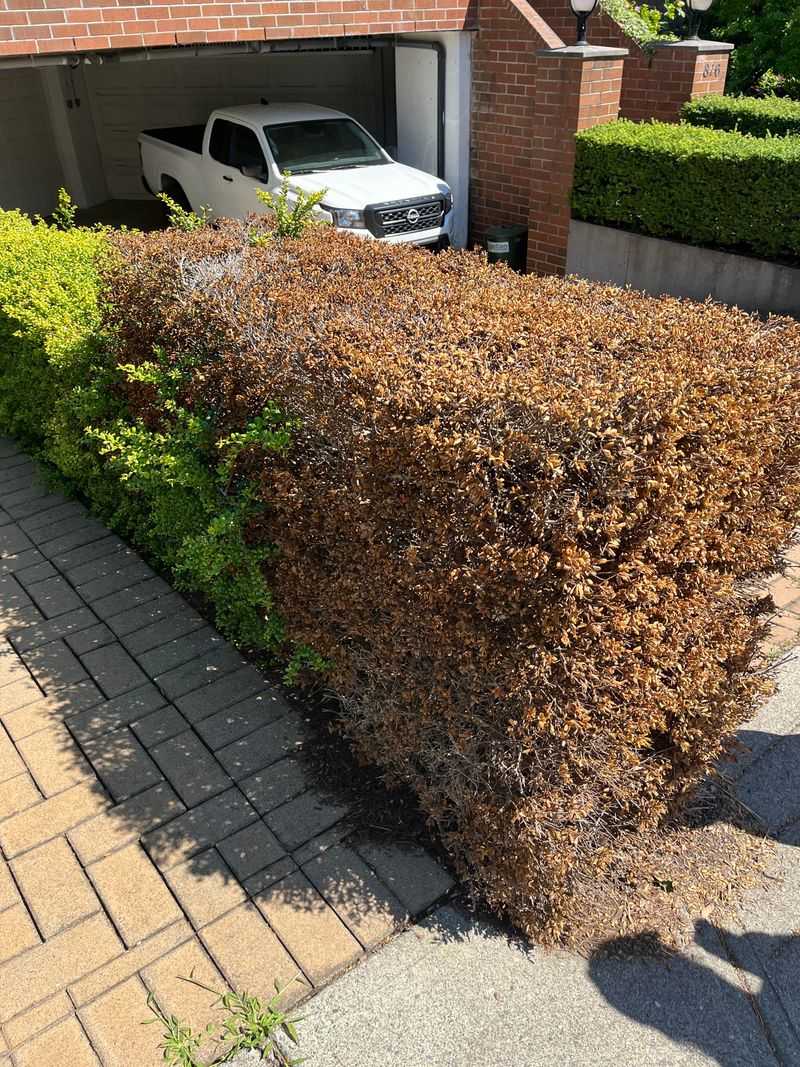
One of the sneakiest reasons boxwood browns in the middle is something most California gardeners never think about: too much leafy growth on the outside.
When the outer shell of your boxwood gets really thick, sunlight cannot reach the inner branches. Without light, those inner leaves slowly fade, yellow, and turn brown.
Boxwood naturally grows outward and upward. Over time, the dense outer canopy acts almost like a roof, shading everything underneath it.
The center becomes a dark, humid space where nothing can thrive. You might not notice it at first because the outside still looks lush and full.
To fix this, you need to selectively thin the plant. Use hand pruners, not hedge shears, and remove some of the older outer branches.
This opens up the canopy and lets sunlight filter through to the middle. Even just a few strategic cuts can make a big difference.
Try to do this kind of thinning in early spring before new growth starts. Avoid cutting too much at once.
Removing no more than one-third of the plant at a time is a safe rule to follow. After thinning, you should start to see the center respond within a few weeks as light reaches those previously shaded areas.
2. Old Inner Leaves Brown And Drop Naturally
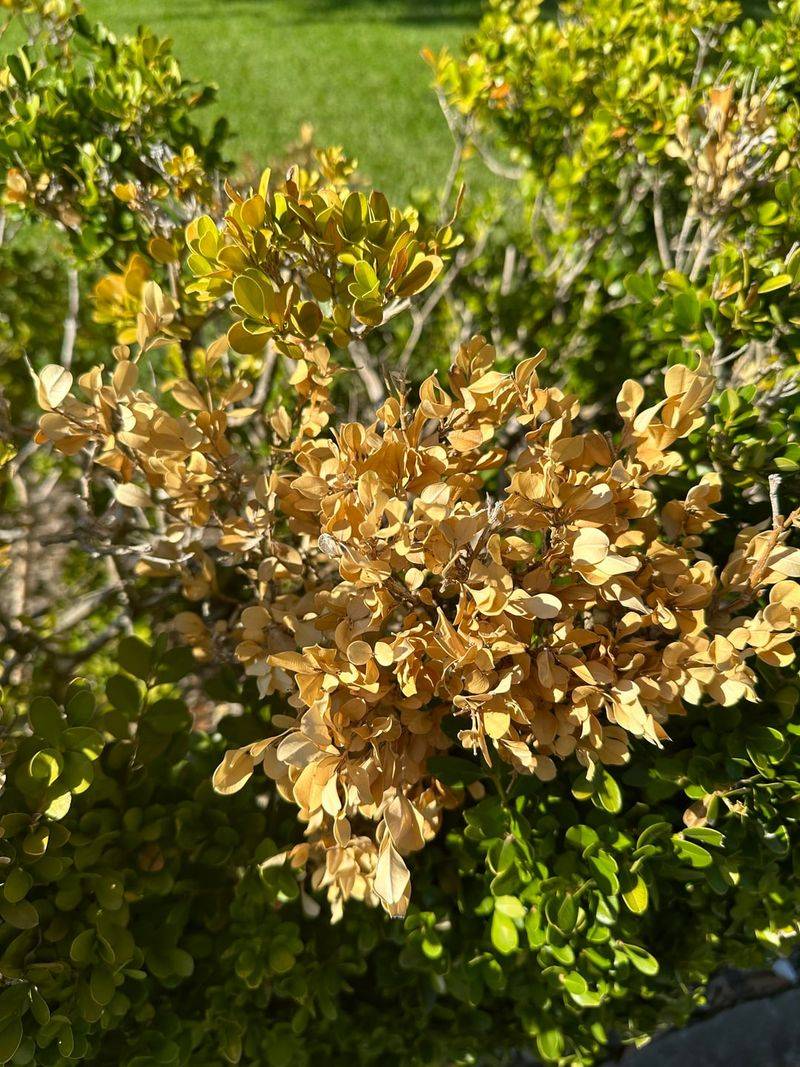
Not every case of interior browning is a problem. Boxwood, like many evergreen shrubs, sheds its old inner leaves as a normal part of its growth cycle.
Each year, older leaves that are no longer efficient at photosynthesis simply brown up and fall off. This is completely normal.
The tricky part is knowing when it is natural versus when something is wrong. Natural leaf drop in boxwood usually happens in late California summer or early fall.
You will see a light scattering of brown leaves inside the plant, and the outer growth will look perfectly healthy. There is no spreading pattern, no smell, and no sticky residue on the leaves.
You do not need to do much when this is the cause. A gentle hand-raking inside the shrub to remove fallen debris is helpful.
Piled-up withered leaves inside the plant can hold moisture and create conditions where fungal issues may develop later on.
If you are unsure whether what you are seeing is natural or something worse, take a closer look. Pull back the outer branches and check if the browning is only on the oldest, innermost leaves.
Your California Garden Changes Every Week. Your Plan Should Too.
Gardening in California changes quickly throughout the season. Every Friday you’ll receive a simple weekly plan showing exactly what to plant, prune, fertilize, harvest, and protect so you never miss the right timing.
If the green growth on the outside looks healthy and vigorous, chances are good that your boxwood is simply doing what it always does this time of year. No stress needed.
3. Shearing Too Often Makes The Shell Too Thick
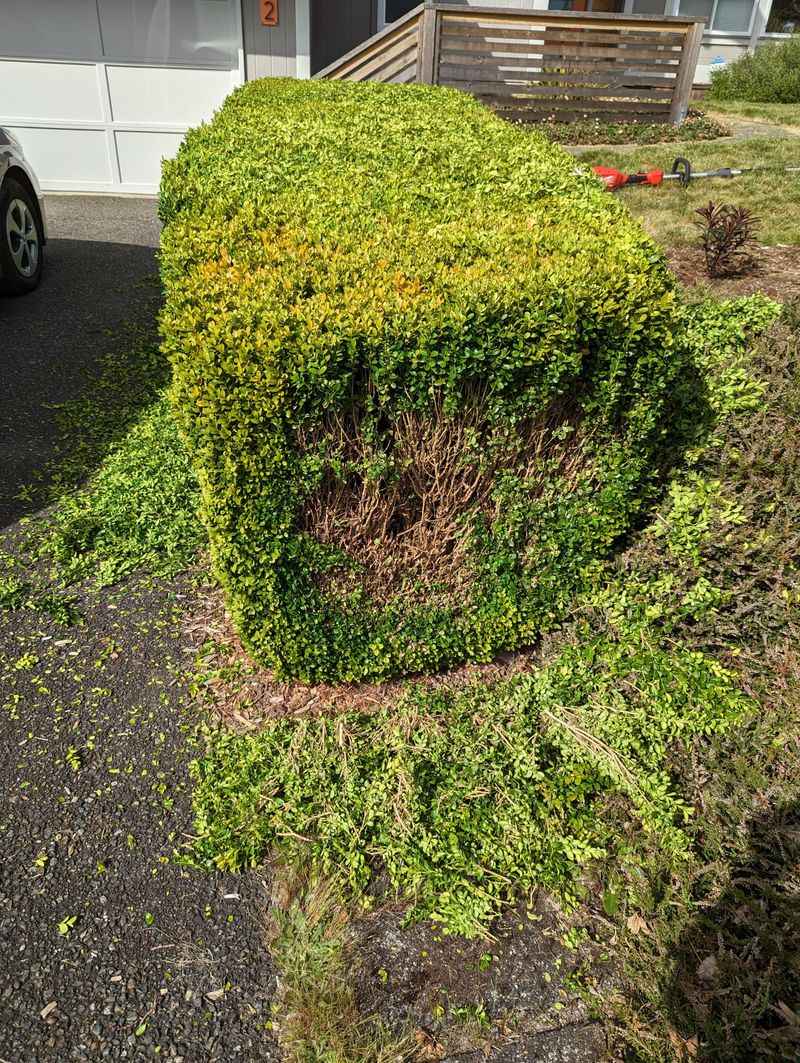
Reaching for the hedge trimmer every few weeks feels like good garden maintenance. But with boxwood, over-shearing is one of the fastest ways to create a thick, impenetrable outer wall that suffocates the inside of the plant.
Every time you shear, you are encouraging dense new growth right at the surface.
That new growth forms a tight, layered shell. Over time, this shell gets so thick that water, light, and airflow cannot get through.
The inside of the shrub becomes dark and stagnant. Leaves in the center start browning because they are essentially cut off from everything they need to stay healthy.
The fix starts with changing your pruning habits. Instead of shearing flat surfaces every few weeks, switch to hand pruning a few times a year.
This method removes individual branches rather than just the tips, which keeps the plant open and airy. It takes a little more time, but your boxwood will thank you.
When you do shear, make sure the sides of the shrub are slightly angled so the bottom receives more light than the top. A flat-sided or top-heavy shape blocks sunlight from reaching the lower and inner portions.
Giving the plant a slightly tapered or rounded shape helps light reach more of the plant and keeps the whole shrub healthier from the inside out.
4. Poor Airflow Keeps The Middle Stressed
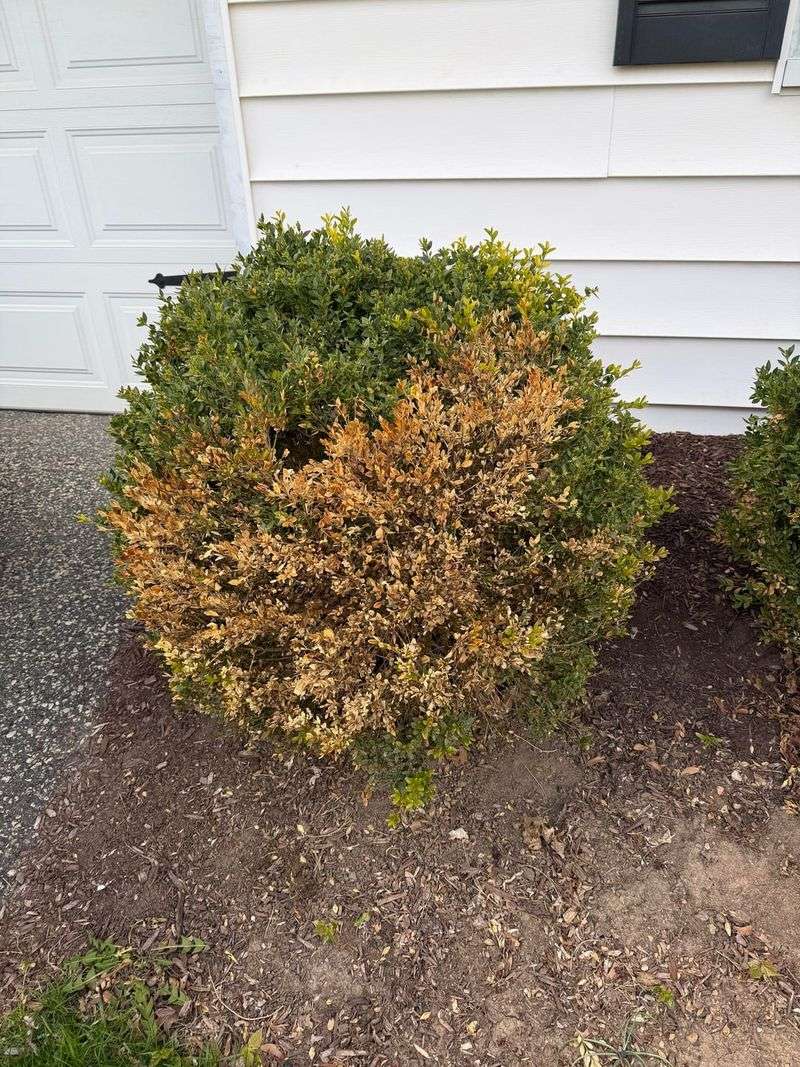
Good airflow matters more than most people realize when it comes to boxwood health. When air cannot move freely through the plant, humidity builds up inside.
That trapped moisture creates the perfect conditions for fungal problems and stressed foliage. The center of the shrub suffers the most.
Coastal California areas with foggy mornings and warm afternoons can be especially tough on boxwood. The combination of moisture and heat inside a densely packed shrub is a recipe for browning.
Even in drier inland areas, a boxwood planted too close to a wall or fence can trap heat and humidity in ways that stress the plant.
Improving airflow starts with spacing. If your boxwood is planted too close to other shrubs or structures, consider pruning back nearby plants to open up the area.
Inside the boxwood itself, thinning out some of the older branches helps air move through the center more freely.
Also check your mulch. A thick layer of mulch piled up against the base of the shrub can trap moisture and restrict airflow at the root zone.
Keep mulch a few inches away from the main stem. Combined with some light thinning, better airflow can noticeably reduce interior browning within one growing season.
It is a small change that creates a big difference for the overall health of your plant.
5. Summer Heat Can Push Browning Faster
Anyone who has gardened through a Central Valley summer knows just how brutal California heat can get.
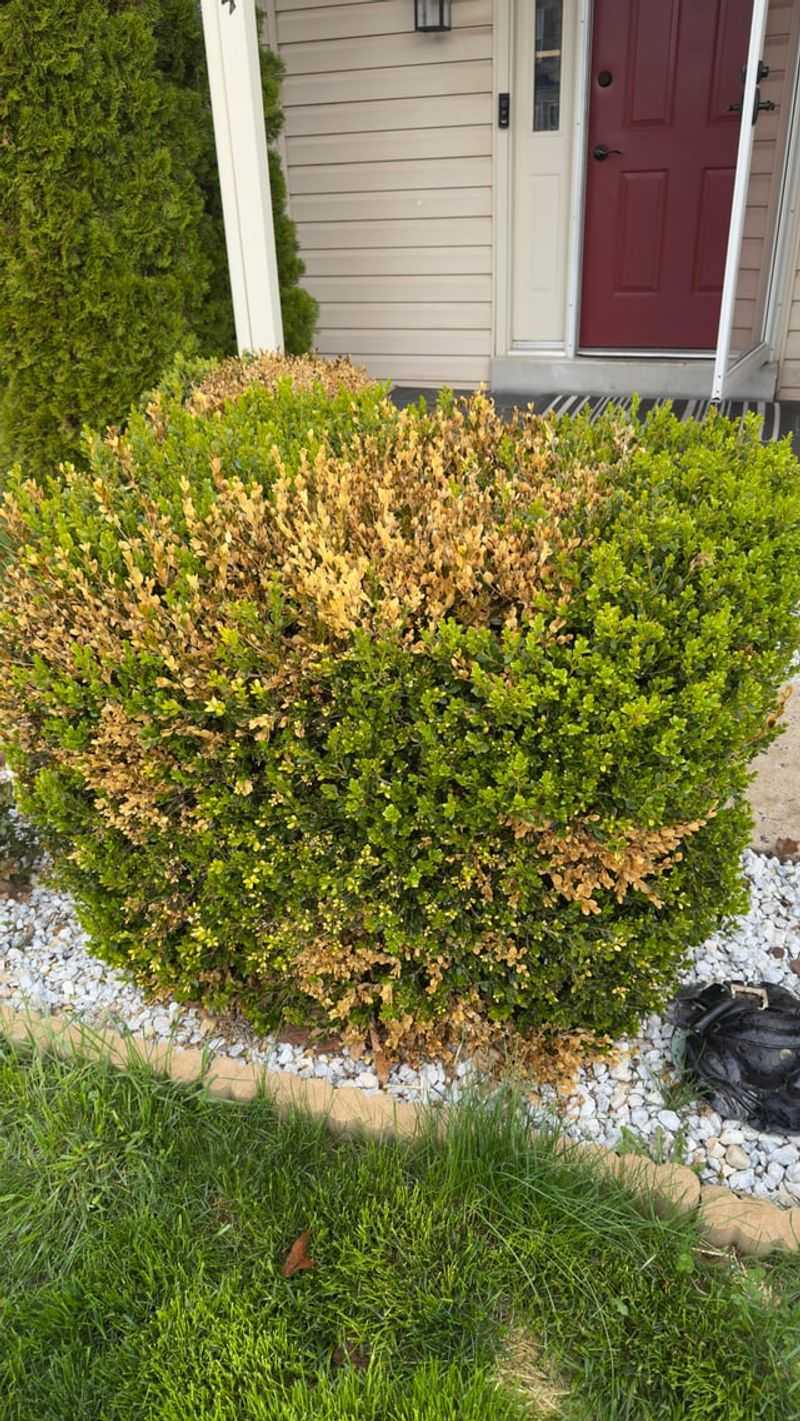
Boxwood is more heat-tolerant than many shrubs, but prolonged high temperatures, especially above 90 degrees Fahrenheit, can accelerate browning inside the plant. The center is always the first to show heat stress.
During a heat wave, the outer leaves of boxwood essentially act as a heat barrier. They absorb and radiate warmth, while the inner leaves sit in a hot, poorly ventilated pocket.
Combine that with dry soil and low humidity, and the center of the plant can brown out surprisingly fast. You might see the change happen within just a week or two during a bad heat stretch.
The best defense is preparation before summer hits. Make sure your boxwood is well-watered heading into the hottest months.
A deep watering once or twice a week is better than light daily watering because it encourages roots to grow deeper, where soil stays cooler. Applying a layer of organic mulch around the base also helps keep root-zone temperatures down.
If your plant is in full afternoon sun, consider adding temporary shade cloth during extreme heat events. This is especially useful for boxwood in southern-facing beds or against reflective walls.
A little shade during the hottest part of the day can prevent a lot of browning and help the shrub bounce back faster once temperatures drop.
6. Dry Roots Show Up As Interior Decline
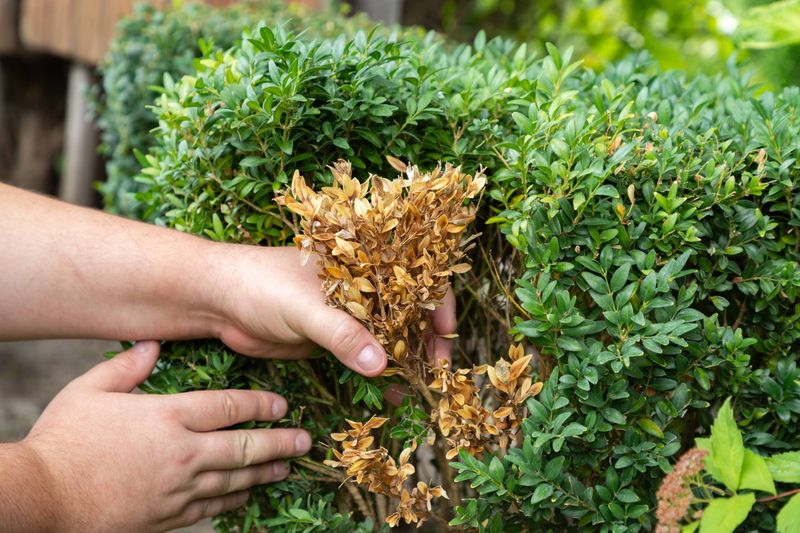
Roots that stay too dry for too long will eventually send a distress signal to the rest of the plant. With boxwood, that signal often shows up as browning in the center.
The inner leaves are the furthest from the outer canopy where some moisture might still be absorbed, so they are usually the first to show drought stress.
Dry root problems are especially common in California during late summer and fall, when rainfall is scarce and irrigation schedules may not be keeping up with the plant’s needs.
Sandy soils drain quickly and can leave roots thirsty even when you think you are watering enough.
Clay soils have the opposite problem: they may hold water near the surface while the deeper root zone stays surprisingly dry.
To check soil moisture, push a wooden dowel or a long screwdriver about six inches into the ground near the base of the shrub. If it comes out dry and clean, your boxwood needs more water.
If it comes out with moist soil clinging to it, the roots are probably fine.
Adjust your irrigation so water reaches deep into the root zone rather than just wetting the surface. Drip irrigation works really well for boxwood because it delivers water slowly and directly to the roots.
Once you get the watering right, new green growth should begin filling in the center over the next few months as the plant recovers.
7. Overwatering Can Brown Boxwood Too
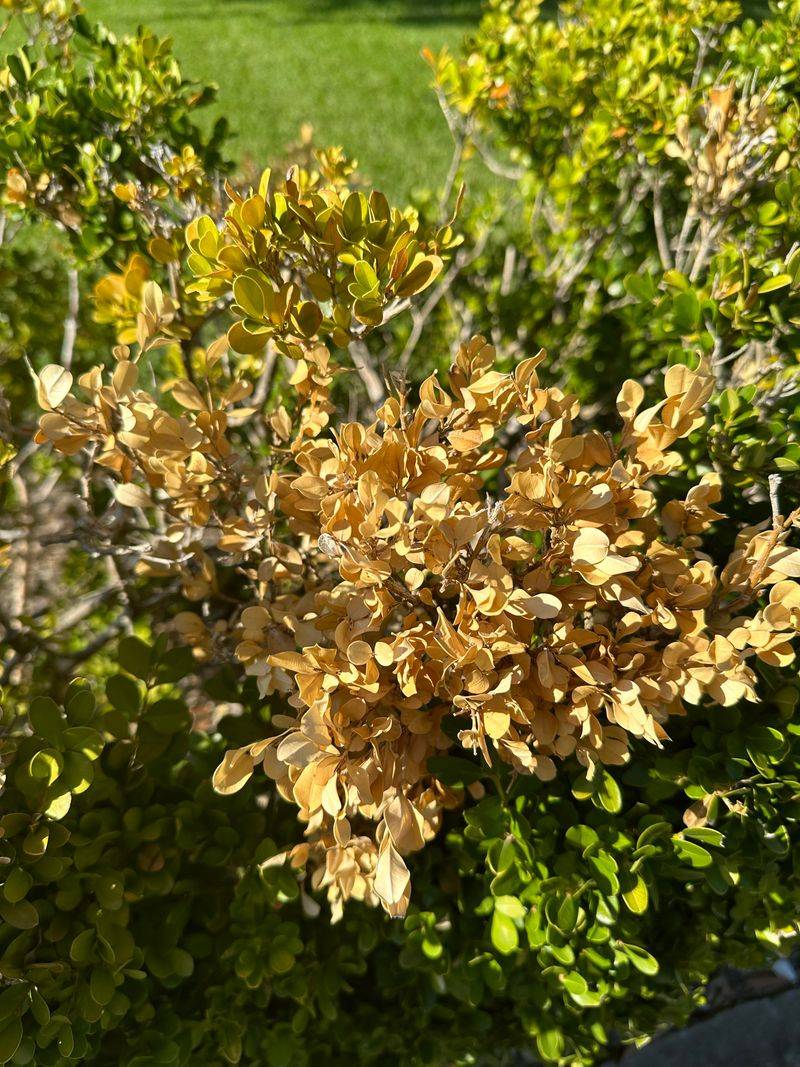
Here is something that surprises a lot of gardeners: too much water can cause the exact same browning symptoms as too little. When the soil around boxwood stays constantly wet, the roots cannot get the oxygen they need.
Oxygen-starved roots start to break down, and the plant shows stress by browning from the inside out.
Overwatering is a common mistake in California, especially in areas where automatic irrigation systems run on a fixed schedule year-round.
During cooler months or after a stretch of rainy weather, the soil may already be saturated.
Running sprinklers on top of that just makes things worse. The roots essentially sit in standing water and begin to decline.
Signs of overwatering look similar to drought stress, which makes it confusing. Check the soil before you water.
If the top two to three inches feel wet or cool, hold off. Boxwood prefers soil that dries out a bit between waterings. It is a more drought-tolerant plant than most people think.
If your boxwood is in heavy clay soil or a low spot in the yard where water collects, you may need to improve drainage.
Adding organic matter to the soil, raising the planting area, or switching to drip irrigation on a smart timer can all help.
Getting the watering balance right is one of the most effective ways to stop interior browning and keep your shrub looking full and healthy all season long.
8. Spider Mites Hide In Stressed Foliage
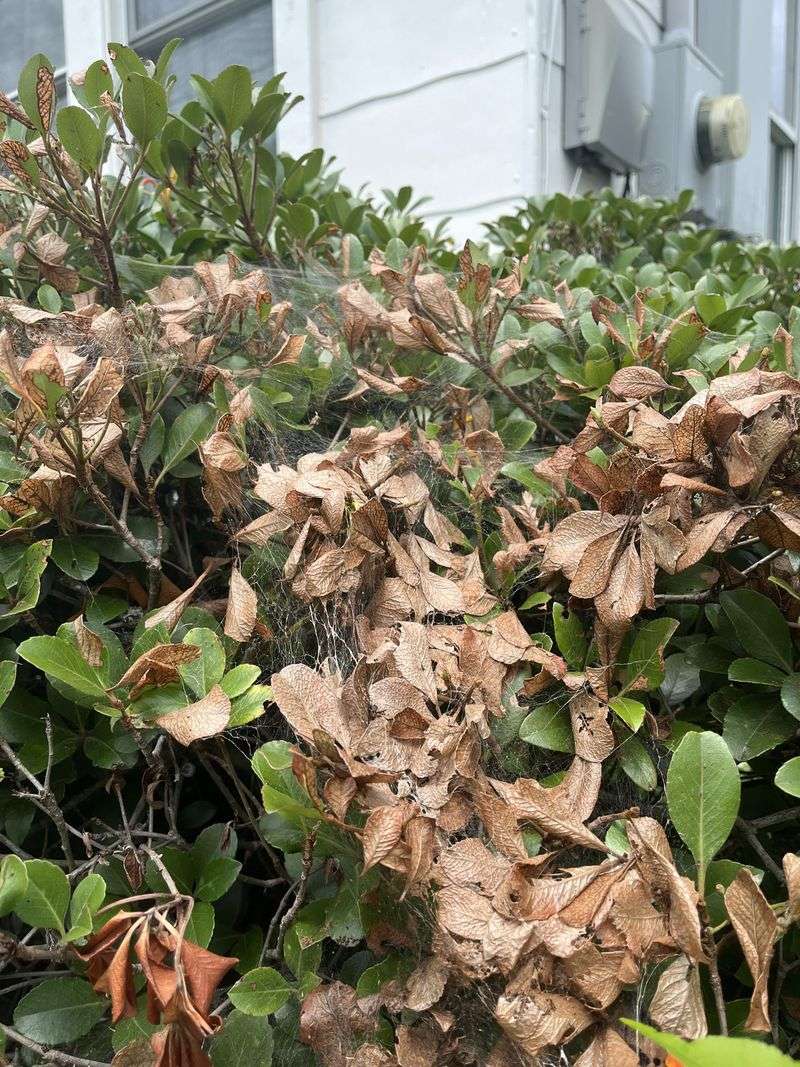
Tiny pests can cause big problems. Spider mites are some of the most overlooked culprits behind boxwood browning, partly because they are so small you can barely see them without a magnifying glass.
They thrive in hot, dry California conditions, which makes the interior of a stressed boxwood the perfect hideout.
Spider mites feed by piercing leaf tissue and sucking out the contents. As they feed, leaves develop a stippled, grayish, or bronze appearance before eventually turning brown.
Because they tend to cluster on the inner, shadier parts of the plant first, the damage often goes unnoticed until it has spread significantly. By then, the center can look quite bare.
To check for spider mites, hold a white sheet of paper under a branch and tap it firmly. If you see tiny moving specks on the paper, you have mites.
You may also notice fine webbing stretched between inner branches, which is another telltale sign of a heavy infestation.
Treatment is straightforward. A strong spray of water from a garden hose can knock mites off the plant and disrupt their feeding.
For more serious cases, neem oil or insecticidal soap applied to all leaf surfaces, including the undersides, works well. Repeat treatments every five to seven days for two to three weeks to break the mite life cycle.
Keeping your boxwood well-watered and properly thinned also reduces the stress conditions that attract mites in the first place.