What It Really Means When Tiny Webs Start Showing Up On Your North Carolina Tomatoes
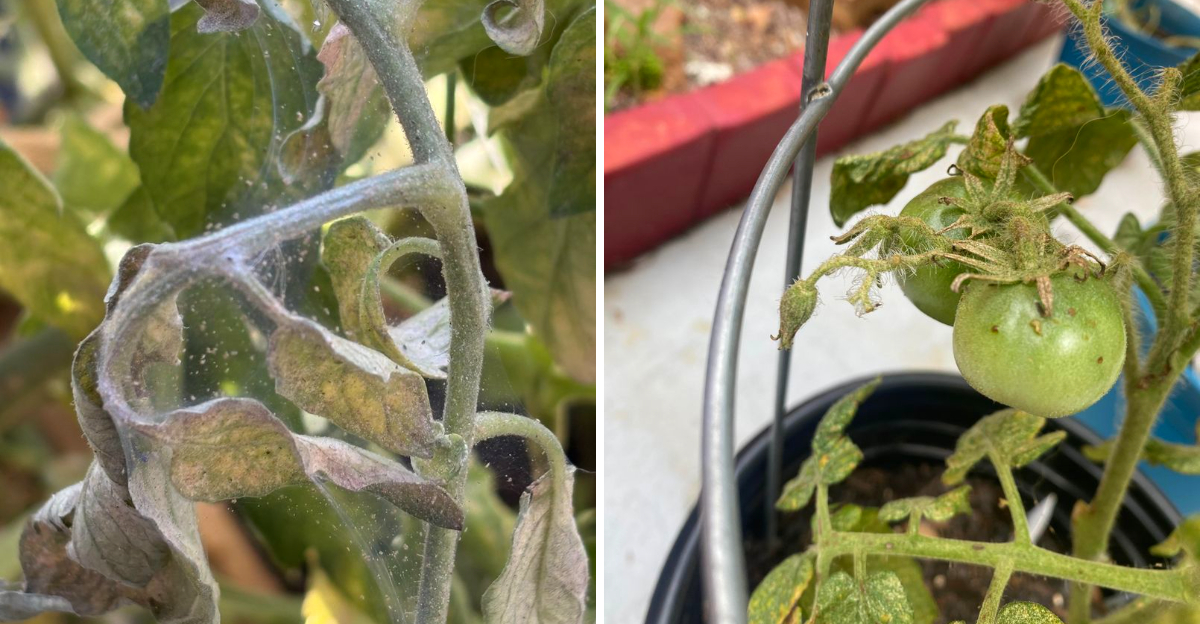
Spotting wispy strands of silk clinging to your North Carolina tomato plants is one of those garden moments that makes you stop and look a little closer.
Your first thought might be that a garden spider has simply claimed some real estate between your plants, and sometimes that is exactly what happened.
But those tiny webs deserve a proper second look because they can be an early warning sign of something much smaller and a lot more damaging at work.
Twospotted spider mites are documented tomato pests that spin silken webbing on leaf undersides while feeding, and a developing infestation can cause real trouble if it goes unnoticed for too long.
Webbing alone does not confirm spider mites are present, but combine that clue with what you find on the leaf undersides and the picture gets a lot clearer fast.
1. Fine Webbing Can Point To Twospotted Spider Mites
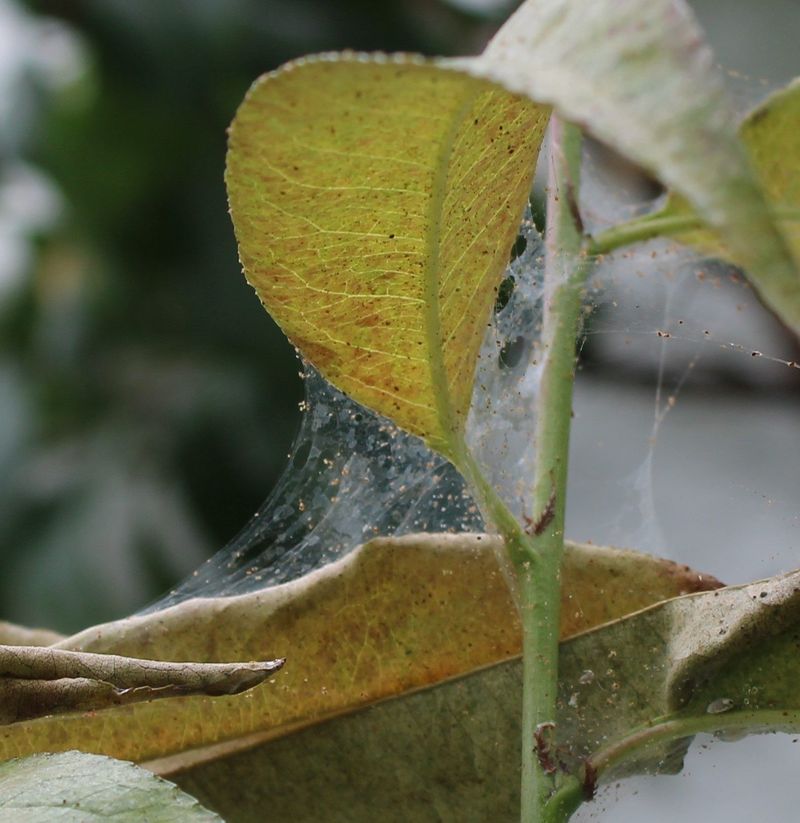
Wispy strands of silk tucked along the undersides of North Carolina tomato leaves are one of the first clues that twospotted spider mites may have moved into your garden.
These mites are well-documented pests of tomatoes, and spinning fine silken webbing as they feed is one of their most recognizable habits.
The webbing tends to appear on leaf undersides first, often in small patches near the midrib or along the edges where leaves curl slightly.
Seeing that webbing should prompt a careful inspection rather than an immediate treatment decision. Not every fine strand on a tomato plant comes from mites.
Spiders, for example, can leave silk near tomato cages or in the surrounding vegetation, but their webs are usually larger and more structured than the delicate, almost dusty-looking silk that mites produce close to the leaf surface.
The key is to treat the webbing as a reason to look more closely rather than a confirmed diagnosis on its own. Check the affected leaves carefully, paying attention to where the silk is concentrated and whether there are other changes in the foliage nearby.
Combining the webbing observation with what you find on the leaf undersides and the overall appearance of the plant gives you a much stronger foundation for figuring out what is actually going on in your tomato patch.
2. The Mites May Be Harder To See Than Their Webbing
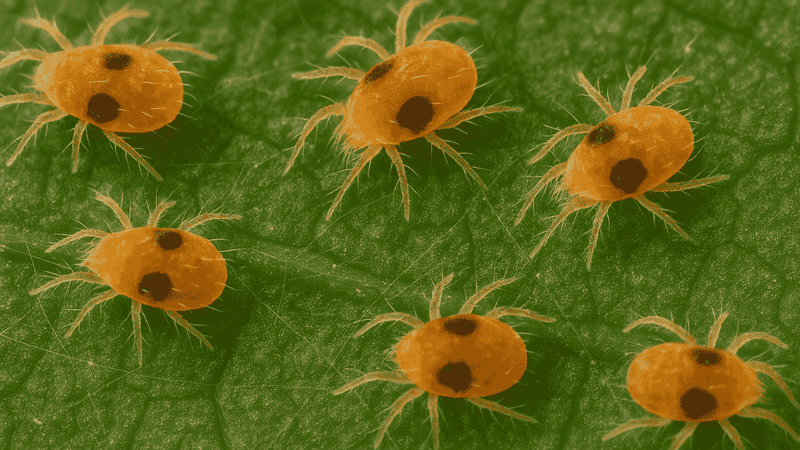
Spotting the webbing is often far easier than spotting the creatures responsible for it. Twospotted spider mites are extremely small arthropods, with adult females measuring roughly 1/64 inch in length.
At that size, they are easy to overlook with the naked eye, especially against the textured surface of a tomato leaf.
Adult mites and older nymphs have eight legs, while newly hatched larvae start out with only six.
Their coloring can range from pale to darker green depending on their stage and condition, and the two dark spots that give the species its name may not be obvious without some magnification.
A simple hand lens can make a significant difference when you are trying to get a better look at what is moving around on a leaf surface.
Your North Carolina Garden Changes Every Week. Your Plan Should Too.
Gardening in North Carolina changes quickly throughout the season. Every Friday you’ll receive a simple weekly plan showing exactly what to plant, prune, fertilize, harvest, and protect so you never miss the right timing.
Because the mites themselves are so easy to miss, the webbing or the changes in leaf appearance often catch a gardener’s attention first. That sequence is completely normal.
Recognizing that the webbing is a signal worth following up on, rather than something to brush aside, is what puts you in a position to catch a developing problem before it progresses.
Once you know to look for very small, slow-moving specks near the webbing and on the leaf underside, you have a much better chance of confirming what you are dealing with in your North Carolina garden.
3. Leaf Undersides Are The First Place To Check
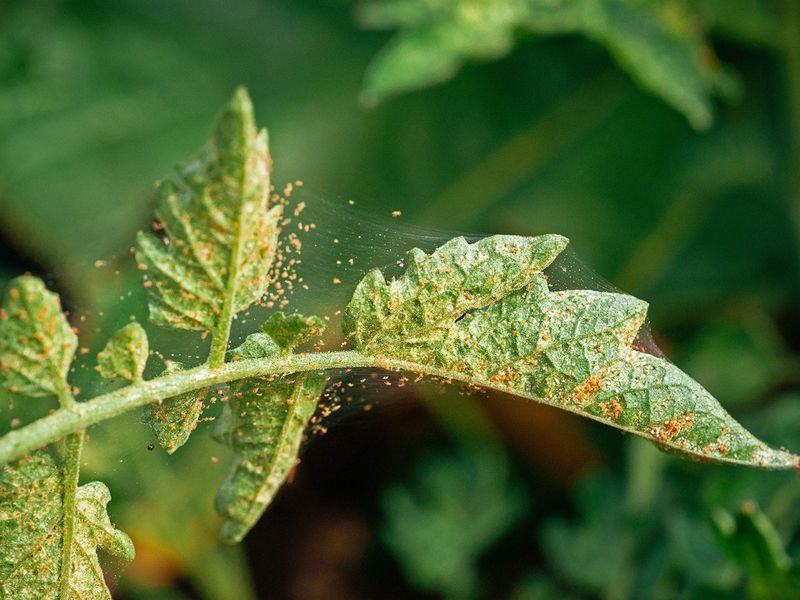
Turning a tomato leaf over and looking at the underside is one of the most practical steps you can take in your North Carolina garden when you notice fine webbing on your plants.
Twospotted spider mites tend to concentrate on leaf undersides, and that is where their eggs, shed skins, and webbing are most likely to be found alongside the mites themselves.
Checking only the top surface of the leaf will often leave you without useful information.
Work through several leaves from different parts of the plant rather than checking just one or two near the bottom.
Mite activity is not always evenly distributed across a plant, so sampling foliage from multiple locations gives you a more accurate picture of what is happening.
Inner leaves and those in the middle to upper canopy can sometimes show activity that lower leaves do not yet display.
A hand lens makes the inspection considerably easier, especially for spotting eggs or very young mites that are nearly impossible to see without some magnification. You do not need to strip large amounts of foliage from the plant simply to take a look.
Gently lift and tilt a few leaves toward the light so you can see the underside clearly.
If you find webbing, small pale specks, or any sign of movement on the underside of multiple leaves, that is meaningful information worth noting before you decide what to do next.
4. Pale Stippling Can Confirm That Feeding Is Underway
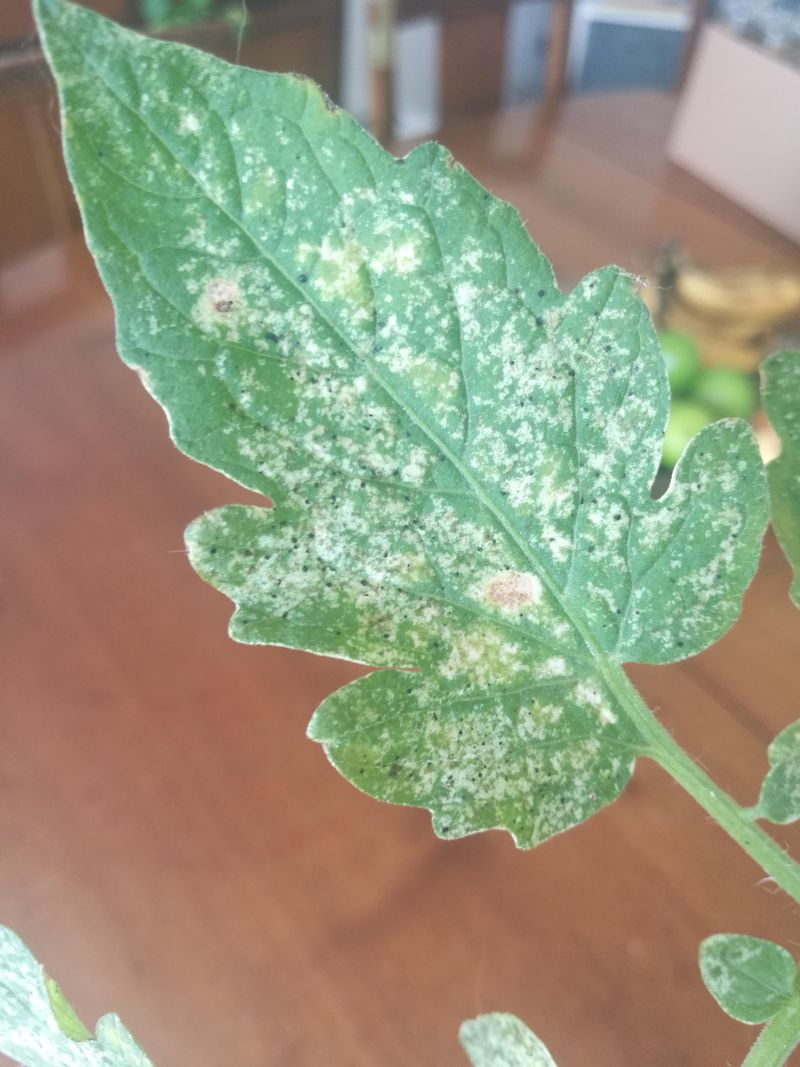
Beyond the webbing itself, the surface of the leaf can tell you a great deal about whether mite feeding has been happening. Twospotted spider mites pierce individual leaf cells as they feed, and the result is a scattering of tiny pale spots across the leaf surface.
This pattern is called stippling, and it can make infested foliage look faded, speckled, or even silvery when the feeding has been going on for a while.
Think of stippling as looking a bit like someone pressed hundreds of pale pinpoints into the leaf surface. The spots are not large blotches or irregular patches the way some fungal issues appear.
They are small, fairly uniform, and spread across the leaf in a way that reflects the mites moving and feeding over time. When you see this pattern combined with webbing on the leaf underside, the case for spider mites becomes considerably stronger.
Keep in mind that tomato foliage can turn pale or yellow for many reasons unrelated to mites, including nutrient issues, water stress, or other problems.
The stippling pattern is most meaningful when it appears alongside webbing and when mites or their eggs are also visible on the leaf underside.
Using multiple clues together rather than relying on leaf color alone gives you a much more reliable read on what is affecting your North Carolina tomato plants.
5. Hot Dry Weather Can Favor Spider Mite Buildup
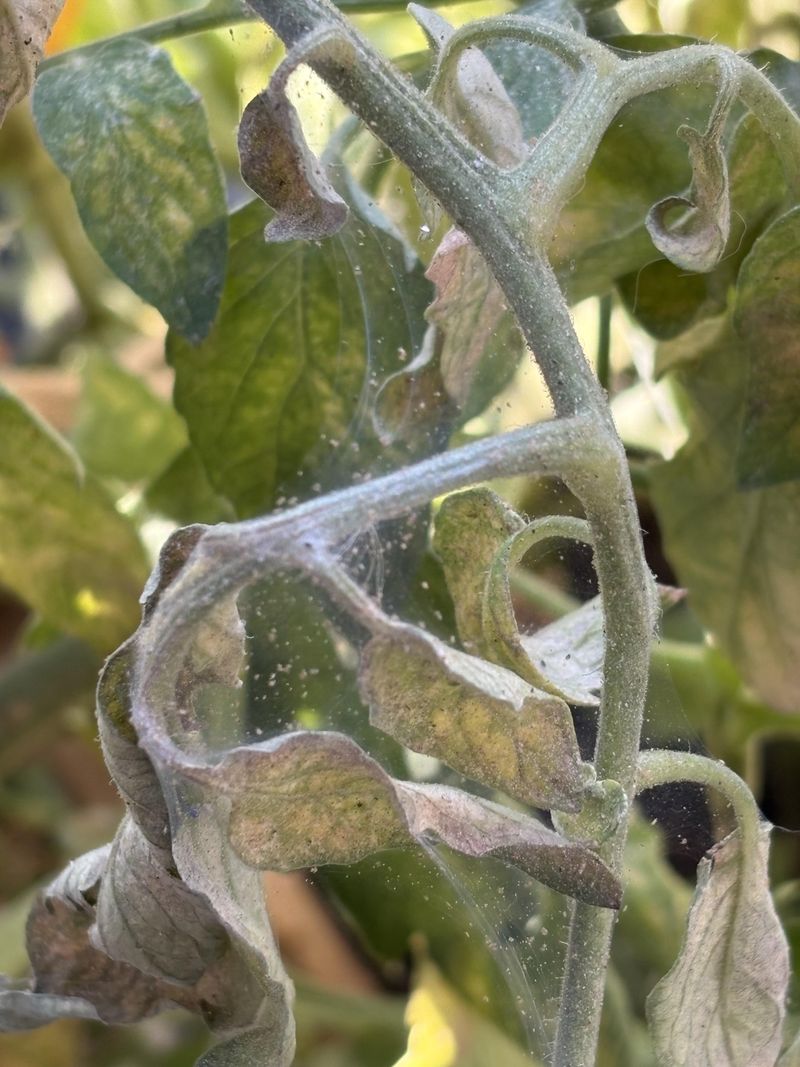
Stretches of hot, rain-free weather are a familiar part of summer in North Carolina, and those conditions can be favorable for twospotted spider mite activity on tomato plants.
When temperatures climb and humidity drops for an extended period, mite populations can build more quickly than they would during cooler or wetter stretches of the growing season.
That relationship between weather and mite activity is worth keeping in mind as summer progresses.
If your tomato plants are already showing webbing or the early signs of stippling and a dry spell sets in, stepping up your monitoring makes good sense.
Check the undersides of leaves more frequently during those periods rather than waiting for visible damage to become obvious.
Catching a developing situation early gives you more options for how to respond.
Weather is one contributing factor among several, not a guarantee that mites will appear or that a light infestation will automatically become a serious one. Plenty of North Carolina gardens go through dry summer periods without significant mite problems.
The point is not to expect trouble every time the temperature rises, but rather to stay attentive to your plants during the conditions that can favor faster mite development.
Regular monitoring during warm, dry periods is a straightforward habit that costs very little time and can make a meaningful difference in catching problems before they progress.
6. A White-Surface Test Can Help Confirm The Culprit
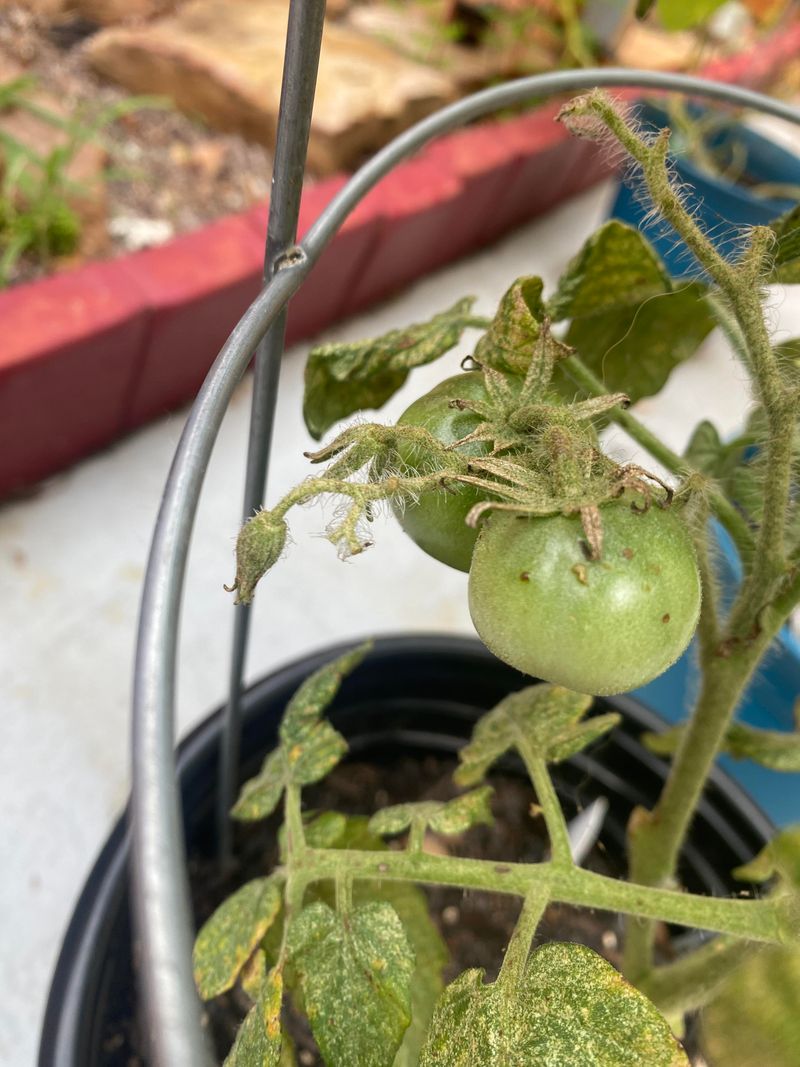
One of the handiest scouting methods for spider mites requires nothing more than a sheet of white paper or a white plate. Hold the surface beneath a suspicious branch or cluster of leaves and give the foliage a few firm taps or shakes.
Any mites dislodged by the movement will fall onto the white surface, where their tiny bodies show up as moving specks against the light background in a way that is much easier to notice than on a green leaf.
This test works best as a complement to your leaf inspection rather than a replacement for it. If you see specks moving across the white surface after tapping, that observation pairs well with what you found on the leaf underside.
Look for webbing, pale stippling, and any mites still clinging to the leaf itself. Taken together, those observations give you a more complete picture than any single check on its own.
A hand lens can help you get a better look at the specks on the white surface to confirm they are actually mites rather than bits of debris or other tiny arthropods.
The white-surface method is widely recommended as an efficient way to monitor for twospotted spider mites precisely because it is quick, requires no special equipment, and can be done during a routine walk through the garden.
For North Carolina gardeners trying to stay ahead of potential problems, it is a practical tool worth keeping in mind throughout the growing season.
7. Natural Predators May Already Be Working Among The Leaves
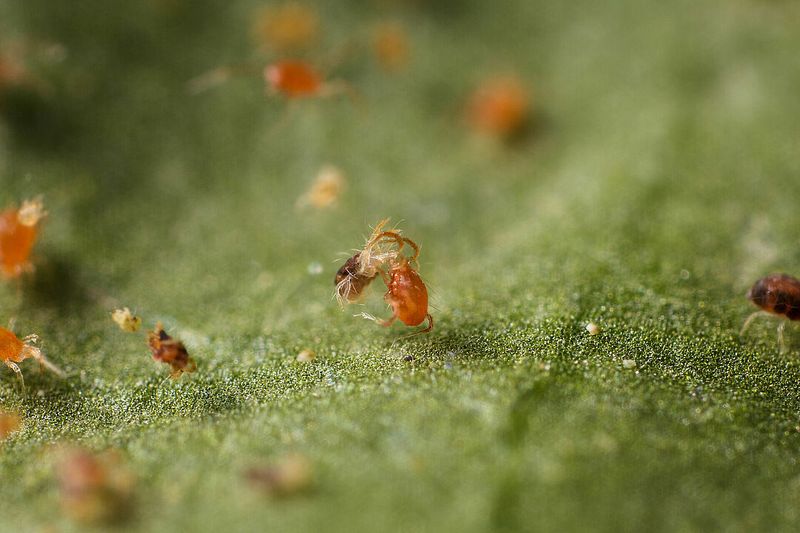
Before reaching for any kind of treatment, it is worth considering that your tomato plants may already have some help managing spider mite activity.
Twospotted spider mites have natural enemies, and one of the most studied is a predatory mite called Phytoseiulus persimilis.
Research conducted in North Carolina has found established populations of this predator in parts of the state, including the Piedmont and Coastal Plain, where it has been observed contributing to suppression of late-season twospotted spider mites in some tomato plantings.
For home gardeners, the practical takeaway is that not every arthropod moving among your tomato leaves is a pest. Some of the tiny specks you notice during an inspection may actually be beneficial organisms working against the mites you are concerned about.
Disrupting that balance carelessly can remove a natural check that was already helping to keep the situation from worsening.
Predatory mites will not solve every spider mite problem in every garden, and their presence cannot be assumed or guaranteed.
The research on augmentative releases of Phytoseiulus persimilis is largely focused on field tomato production and involves several considerations beyond what most home gardeners need to navigate.
Still, knowing that natural predators can play a meaningful role in mite suppression is a good reason to investigate carefully before choosing any response that might affect the beneficial organisms already present in your North Carolina garden.
8. Reaching For A General Insecticide Can Make Matters Worse
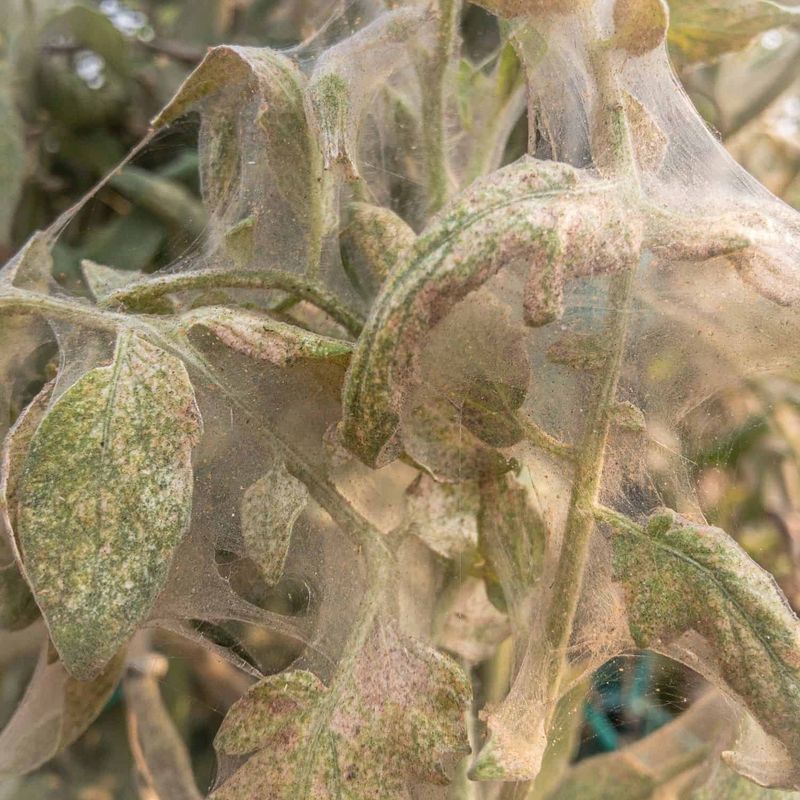
Finding webbing on your tomato plants can create an understandable urge to spray something right away, but acting before you have a solid identification can backfire. Spider mites are not insects.
They are mites, which belong to a different group of arthropods entirely. A product chosen simply because it targets insects may not be effective against mites at all, and spraying the wrong thing wastes time and resources while the actual problem continues.
Beyond the question of effectiveness, some broad-spectrum pesticides can affect beneficial organisms, including the predatory mites that may already be working to suppress the twospotted spider mites on your plants.
Removing those natural allies while leaving the pest mites relatively unaffected can actually allow mite populations to rebound more quickly than they would have otherwise.
That outcome is the opposite of what most North Carolina gardeners are hoping for.
A more measured approach starts with confirming the identification using the combination of clues covered throughout this article, then assessing how widespread the activity appears to be before deciding whether treatment is warranted at all.
When treatment does make sense, reading the pesticide label carefully to confirm it covers spider mites on tomatoes is an essential step.
Integrated pest management encourages gardeners to monitor, identify accurately, consider all available options, and choose responses that protect beneficial organisms wherever possible.
That approach tends to produce better long-term results than spraying simply because fine webbing has appeared on a few leaves.