What It Really Means When Wasps Start Building Nests Around Your Texas Houseplants This Summer
Finding a wasp nest taking shape around your Texas houseplants is the kind of discovery that demands immediate attention. The instinct to deal with it as fast as possible is completely understandable.
But before you reach for the spray, it’s worth pausing for a moment, because wasps choosing to build near your houseplants this summer are actually telling you something specific and worth knowing. Their location is rarely random.
Wasps are selective builders, and when they set up near houseplants in particular, they’re usually responding to something happening in or around those plants. Specific pest activity, microclimate conditions, shelter opportunities created by dense foliage.
Each of these factors can draw wasps in, and understanding which one applies to your situation changes how you respond to the problem in a way that actually addresses the cause rather than just the symptom.
That doesn’t mean living with a wasp nest is the answer. But knowing what it means before you act makes your response more effective and helps prevent the same situation from developing again.
1. Your Potted Plants Offer A Sheltered Construction Site
Wasps are surprisingly picky architects. When a queen paper wasp scouts for a nest location, she is not just looking for any random spot.
She wants somewhere protected from wind, rain, and direct sun, and your potted plants might check every box on her list.
Dense foliage creates a canopy that mimics the shelter of a tree branch. Plant stands with crossbars, hanging baskets, and the undersides of large pots all offer the same kind of cover that wasps would find under a building eave or inside a hollow log.
Covered patios in Texas are especially appealing because they block the brutal afternoon sun while still keeping the area warm.
The structure of a paper wasp nest is delicate. It is made from chewed wood fibers mixed with saliva, forming a papery material that hangs in an open honeycomb shape.
Rain and wind can damage it quickly, so wasps need reliable overhead protection to keep their colony safe and growing.
Potted plants near walls or fences add even more appeal. The wall reflects heat, which wasps seem to enjoy, and the fence blocks wind from multiple directions.
If you have a large leafy plant like a bird of paradise or elephant ear on your patio, it basically looks like a five-star resort to a nest-hunting wasp.
Checking the undersides of pots, the inner joints of plant stands, and the center of thick foliage regularly can help you spot a nest early. Early detection makes management much easier and keeps everyone safer throughout the summer season.
2. A Summer Colony Is Expanding And Raising Young
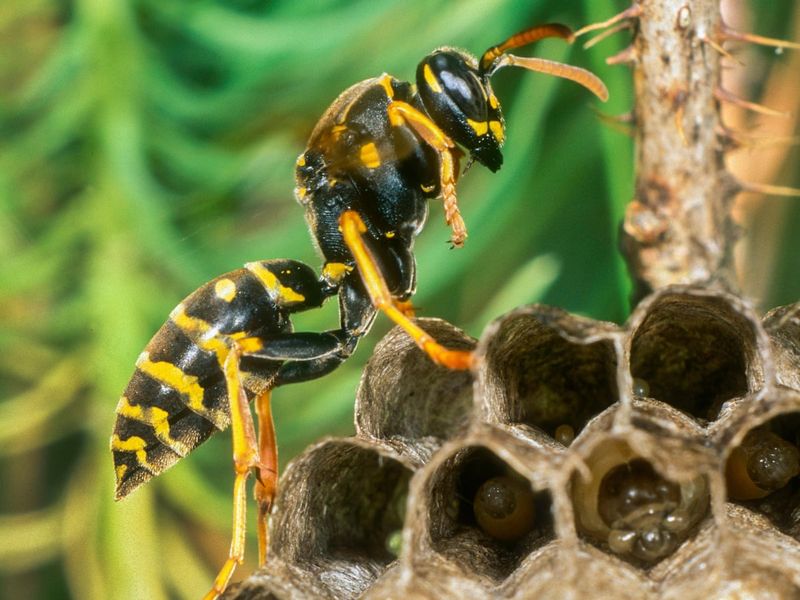
Summer is basically crunch time for a wasp colony. Once temperatures rise across Texas, the queen ramps up egg production and worker wasps get extremely busy.
If you are noticing regular wasp traffic near one specific plant, there is a good chance an active nest is nearby and the colony is in full growth mode.
Your Texas Garden Changes Every Week. Your Plan Should Too.
Gardening in Texas changes quickly throughout the season. Every Friday you’ll receive a simple weekly plan showing exactly what to plant, prune, fertilize, harvest, and protect so you never miss the right timing.
A paper wasp colony can grow from just a handful of workers in spring to dozens or even over a hundred by midsummer. Each worker has a job. Some build and repair the nest. Others hunt for food.
Some guard the entrance. When you see wasps flying back and forth in a steady pattern, that is not random wandering. That is a well-organized workforce doing its thing.
The larvae inside the nest need protein to grow. Worker wasps chew up insects and bring the mashed-up food back to feed the young.
This is why you might see wasps moving purposefully from your plants to a hidden spot nearby. They are making deliveries.
Unlike bees, wasp colonies do not survive the winter. The queen will leave in fall to find a safe spot to wait out the cold, and the rest of the colony will fade away.
So the frantic summer activity you see is the colony making the most of the warm season before time runs out.
Spotting steady, repetitive flight paths is your biggest clue that a nest exists. Watch for wasps returning to the same hidden point again and again.
That consistent movement is a clear sign the colony is active, growing, and very much at home near your houseplants.
3. Plant-Eating Insects May Be Providing Abundant Prey
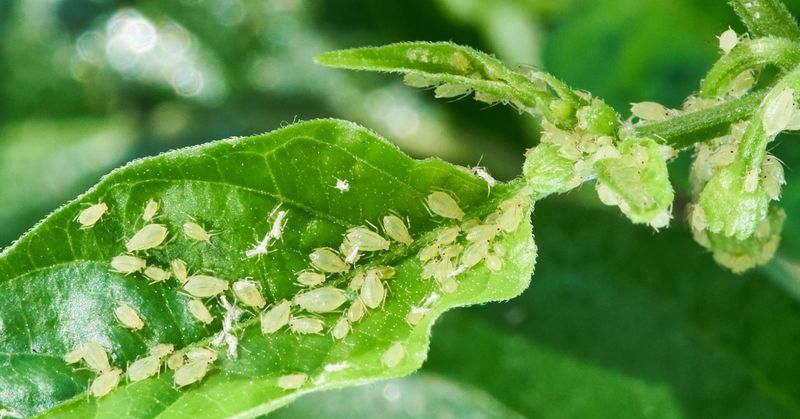
Wasps are hunters, and they are very good at their job. If your houseplants are attracting wasps repeatedly, one likely reason is that your plants are also hosting a buffet of small insects that wasps love to eat.
Caterpillars, aphids, whiteflies, and small spiders are all on the menu. Here is something that might surprise you: wasps can actually be helpful in this situation. By preying on plant-eating insects, they act as a natural form of pest control.
Farmers have known this for a long time, and some even encourage wasps near crops for exactly this reason. Your patio might be running a similar operation without you realizing it.
That said, wasp activity near your plants does not automatically mean you have a serious infestation. Wasps are opportunistic hunters and will check out a plant even if there are only a few insects on it. They are always on patrol, looking for their next meal.
If you want to know whether your plants truly have a pest problem, look closely at the leaves. Check the undersides especially, since that is where aphids, mites, and caterpillar eggs tend to hide.
Sticky residue, yellowing leaves, or tiny holes in the foliage are signs that something is snacking on your plants.
Treating a pest problem early can reduce the food supply that draws wasps in. Gentle options like insecticidal soap or neem oil work well on soft-bodied insects without harming the plant.
Removing pests this way may naturally reduce wasp visits over time, making your patio feel calmer and more comfortable for everyone who spends time there.
4. Flowers And Moisture May Be Attracting Foragers Rather Than Nest Builders
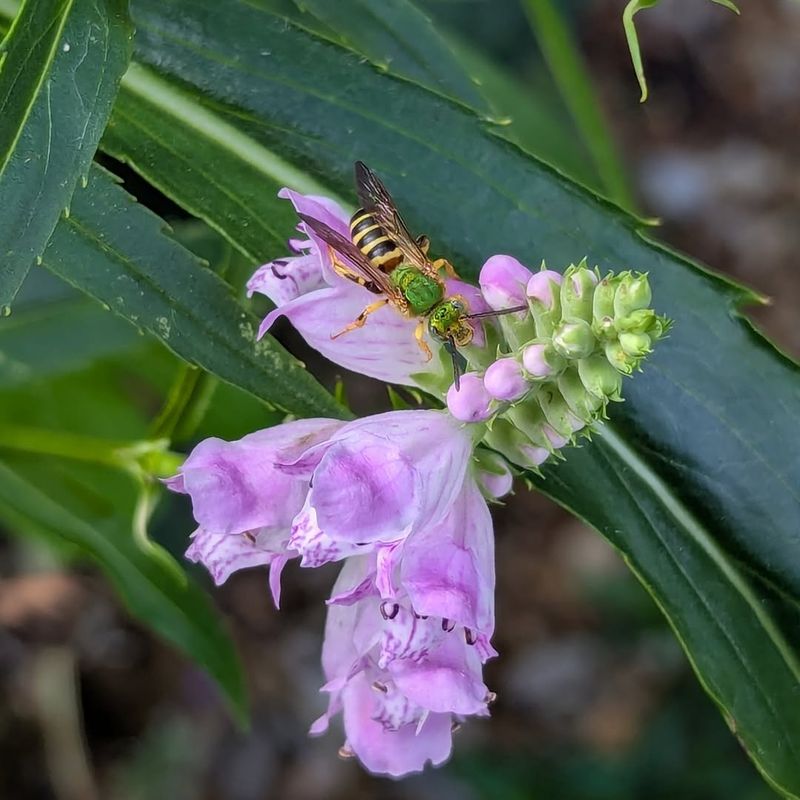
Not every wasp you see near your houseplants is building a nest. Adult wasps need carbohydrates to fuel their own energy, and they get those carbs from nectar and other sugary sources.
If your potted plants are in bloom, wasps may simply be stopping by for a quick meal, just like bees do.
Texas summers are brutally hot, and water becomes precious for all kinds of insects. Wasps will visit damp potting soil, saucers with standing water, and even misting systems to grab a drink.
If your plants stay consistently moist, that moisture alone can be enough to pull wasps in regularly, even with no nest anywhere nearby.
The key difference between a foraging wasp and a nesting wasp is the pattern of movement. A forager lands, eats or drinks, and then flies off in a random direction.
A nesting wasp returns repeatedly to the same specific hidden spot. Watching the flight path for a few minutes can tell you a lot about what is actually going on.
Reducing standing water in saucers and letting the top inch of soil dry out between waterings can make your plants less attractive to thirsty wasps.
Moving blooming plants slightly away from high-traffic seating areas is another easy adjustment that lowers the chance of an accidental close encounter.
Understanding the difference between a curious forager and an established nester helps you avoid unnecessary stress. Most wasps visiting flowers are calm and focused on feeding.
They have no interest in you unless they feel directly threatened. Giving them space is usually all it takes to keep things peaceful on your patio.
5. The Nest Type Reveals How Much Caution Is Necessary
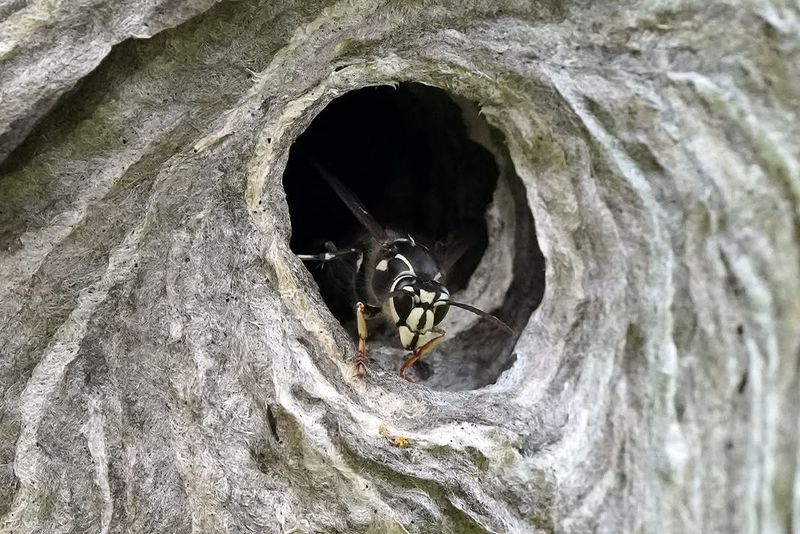
Wasps are not all the same, and the kind of nest you find near your houseplants tells you a lot about what kind of wasp you are dealing with and how cautious you need to be. Learning to spot the differences can genuinely change how you respond to the situation.
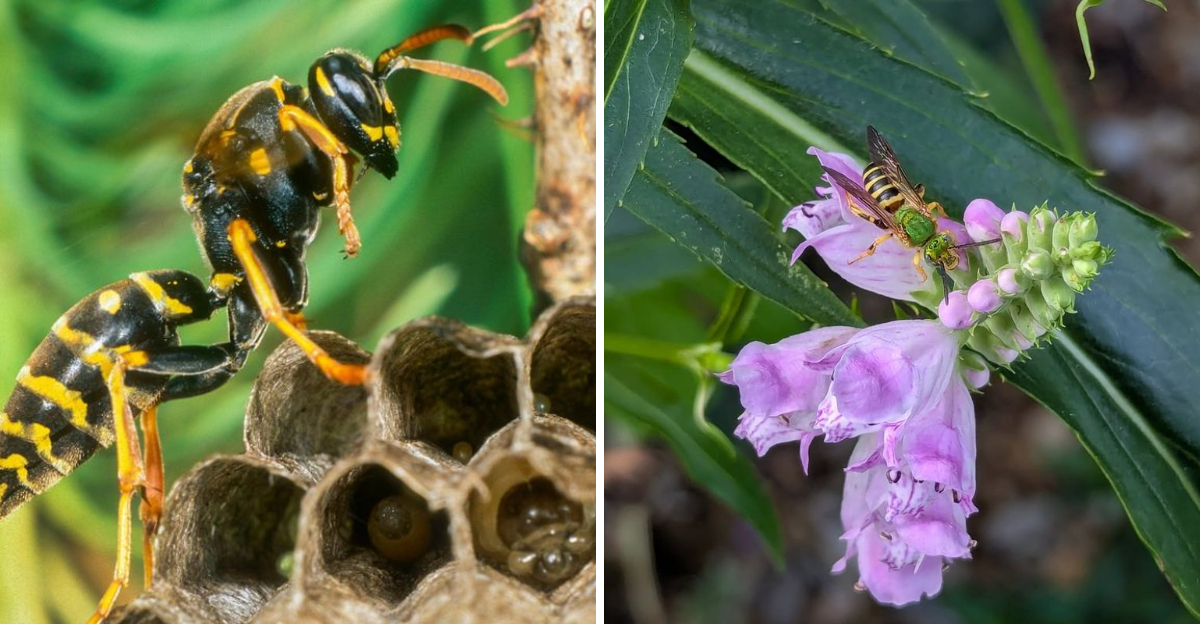
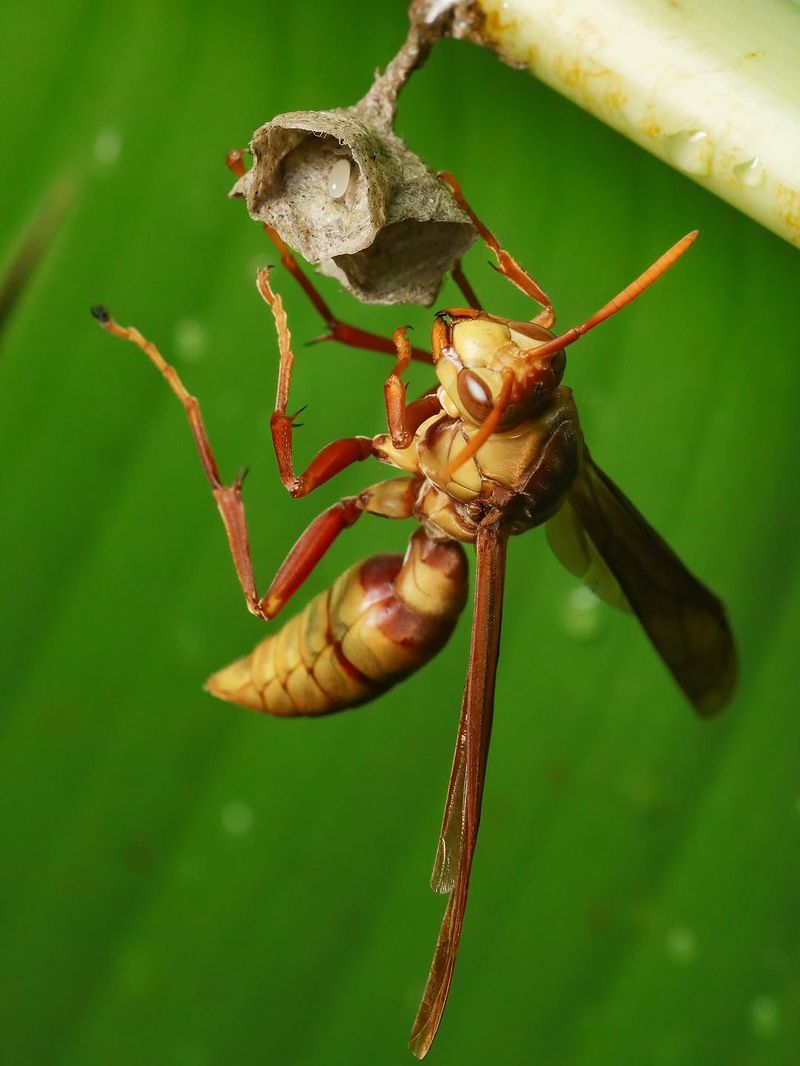
The most common type you will see in Texas is the paper wasp nest. It looks like an upside-down umbrella made of gray, papery material with open hexagonal cells visible underneath.
These nests are built by social wasps that live in groups and will defend their home if they feel threatened. Paper wasps are the ones most likely to sting if you get too close to their nest.
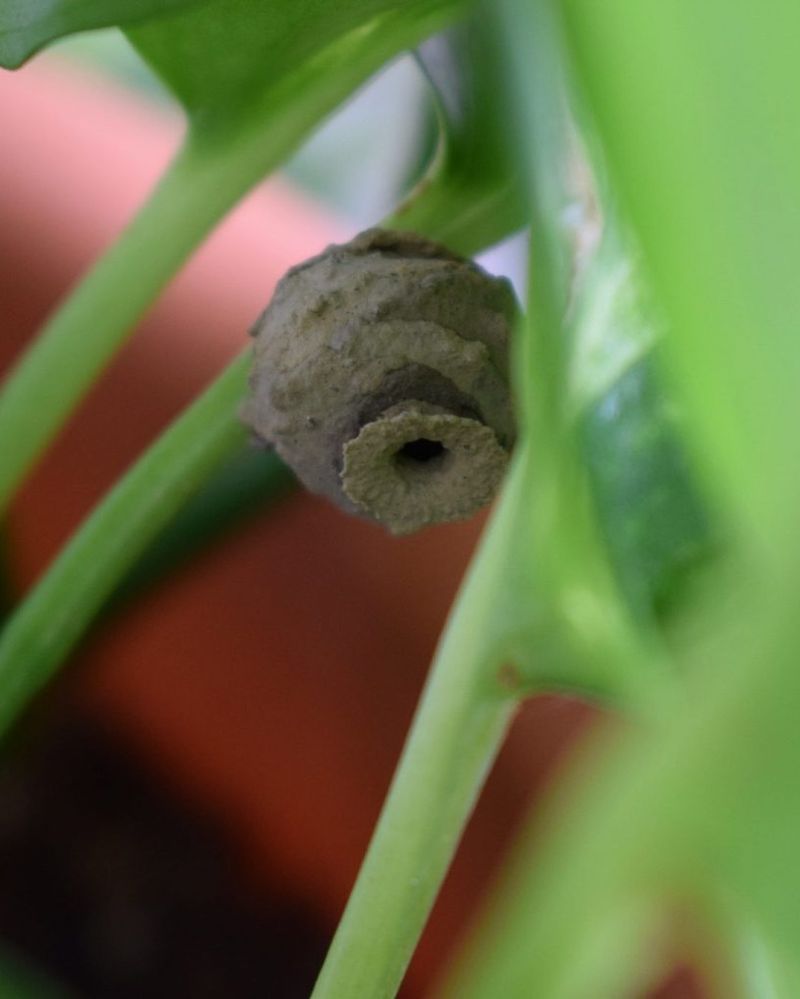
Mud daubers build a very different kind of structure. Their nests look like small tubes or lumpy clumps of dried mud, often stuck to walls, pots, or the undersides of outdoor furniture.
Mud daubers are solitary wasps, meaning each female works alone. They are generally much calmer and far less likely to sting, even if you accidentally bump their nest.
Potter wasps create tiny, pot-shaped mud nests that are actually quite beautiful up close. Like mud daubers, they are solitary and tend to mind their own business.
Spotting one of these near your plants is rarely a cause for alarm.
Texas A&M AgriLife Extension notes that social paper-nest builders are the wasps most likely to pose a risk around people and pets.
If you spot an open-comb nest near a spot you visit regularly, that is worth paying attention to and handling thoughtfully. Identifying the nest type first saves you a lot of unnecessary worry.
6. The Location, Not The Wasp’s Mere Presence, Determines The Risk
Seeing a wasp near your houseplant is not automatically a problem. The real question worth asking is where exactly the nest is located, because location is what truly determines how much risk is involved for you, your family, and any pets spending time on the patio.
A nest tucked into a quiet corner of your yard, far from doorways and foot traffic, can actually be a real asset. Wasps in undisturbed locations will go about their business hunting insects and pollinating flowers without bothering anyone.
Many experienced gardeners choose to leave these nests alone and enjoy the free pest control that comes with them.
The situation changes when a nest is built near a doorway, a seating area, or a plant you need to water and tend regularly. Wasps become defensive when they feel their colony is being disturbed.
Reaching past a nest to water a plant, or brushing against a pot that houses one, can trigger a protective response that ends with a sting.
Never shake the plant or move the pot if you suspect a nest is inside or underneath it. Sudden movement and vibration are among the fastest ways to upset a wasp colony.
Stay calm, move slowly, and give the wasps a wide path whenever you are working nearby. People with known sting allergies should not attempt to manage or remove an occupied nest on their own.
A qualified pest-management professional has the right protective gear and experience to handle the situation safely.
For everyone else, a little awareness and a few simple habit changes around the patio are usually enough to keep the summer peaceful and sting-free.