What Nature Is Telling You When A Red-Tailed Hawk Shows Up In Your Illinois Yard
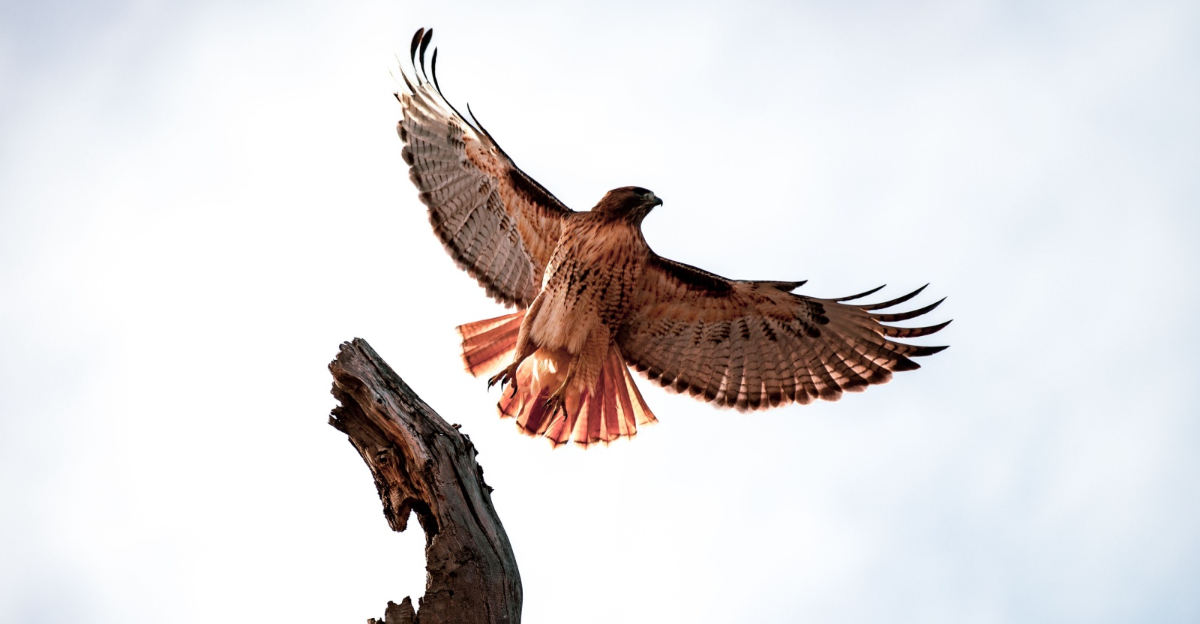
A red-tailed hawk lands on your fence post, locks eyes with you, and time stops. These birds do not wander into yards by accident.
When one appears in your Illinois backyard, it is responding to very specific signals your land is sending out. The prey is there. The habitat supports it. The ecosystem is speaking, and the hawk is listening.
Red-tailed hawks are natural indicators of a landscape’s health. Their presence reveals what is quietly unfolding beneath the grass, along the tree line, and under the brush piles you may have barely noticed.
Small mammals are moving. Food chains are active. Something in your yard has earned the attention of one of Illinois’s most sharp-eyed hunters. Learn to read the signals this bird is following.
Once you understand what draws them, you will never look at your backyard the same way again.
Your Yard Is Within An Active Hunting Territory
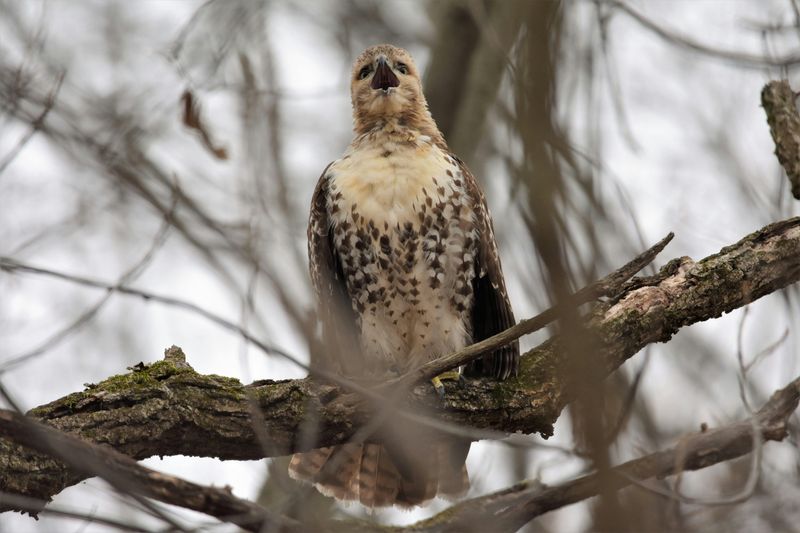
Red-tailed hawks do not wander aimlessly. Every move they make is deliberate, and when one appears in your yard, the first thing to understand is that you are standing inside its hunting ground.
These birds maintain territories that can stretch from half a mile to over two miles wide, and your property just happens to fall right in the middle of the action. Think of it like invisible property lines drawn across the sky.
The hawk has mentally mapped your neighborhood, noted every promising perch, and catalogued where the best foraging happens. Your yard earned a spot on that mental map for a reason.
Illinois yards that border open fields, forest edges, or even large grassy medians tend to attract red-tailed hawks more frequently than densely wooded or fully paved areas.
The bird needs a mix of open ground to spot prey and elevated spots to launch from. If your yard checks those boxes, congratulations, you are prime real estate in hawk terms.
Seeing the same hawk multiple times over several weeks is a strong sign that your yard is a reliable part of its regular circuit. These birds are creatures of habit, returning to proven hunting zones again and again.
Once your yard earns a place on the route, expect repeat visits throughout the season. The hawk is not just passing through, it has claimed a stake in your little patch of Illinois, and that is a sign your land is genuinely alive with ecological activity.
Mice And Voles Are Abundant Nearby
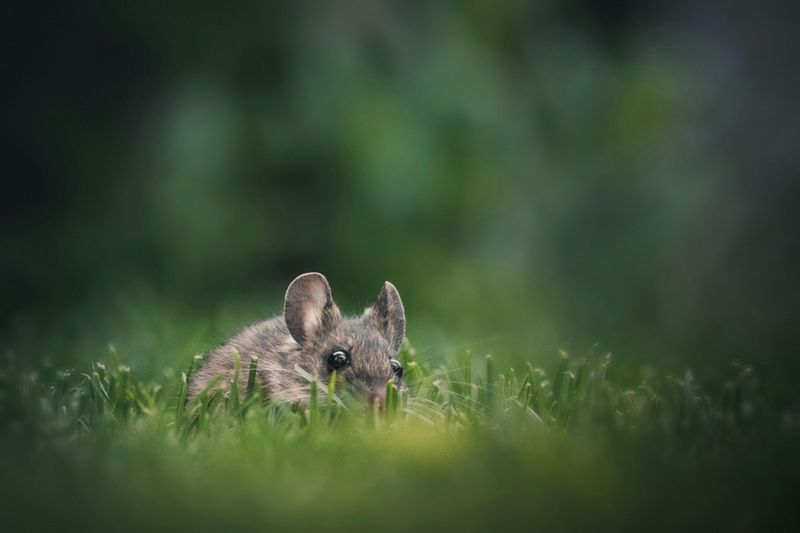
Here is something your yard is quietly hiding from you: a bustling underground community of mice, voles, and shrews that you almost never see.
A red-tailed hawk has already found it. These raptors have extraordinary vision, capable of spotting a mouse from significant heights, and when they keep returning to your yard, it means the small mammal population below your feet is thriving.
Voles are especially common in Illinois yards with thick grass, garden beds, or mulched areas. They tunnel just below the surface and leave distinctive runways through the lawn that look like shallow grooves.
Your Illinois Garden Changes Every Week. Your Plan Should Too.
Gardening in Illinois changes quickly throughout the season. Every Friday you’ll receive a simple weekly plan showing exactly what to plant, prune, fertilize, harvest, and protect so you never miss the right timing.
If you have noticed those mysterious trails in your grass lately, now you know what made them, and now you know why the hawk keeps showing up. Mice tend to cluster near bird feeders, compost bins, wood piles, and garden sheds.
Any of those features in your yard can quietly support a rodent population large enough to attract a full-time predator. The hawk is essentially your free, natural population management service.
Having a healthy small mammal population is not necessarily a bad thing. It signals that your yard has rich soil, good plant cover, and a functioning food web.
The hawk’s presence is nature auditing your ecosystem and giving it a passing grade. Rather than worrying about the rodents, let the hawk do its job and appreciate the fact that your yard supports life at multiple levels of the food chain.
Ideal Perching And Scouting Spots Are Present
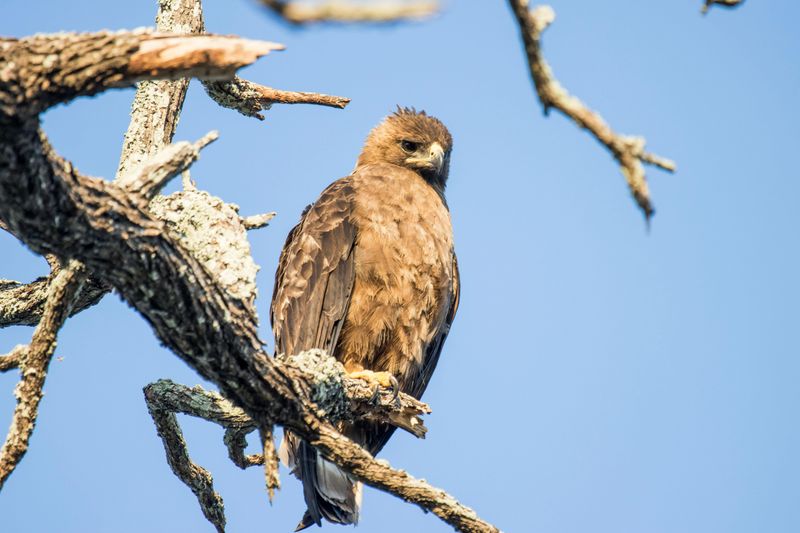
Utility poles make reliable hawk perches. Fence posts, rooftop peaks, and tall bare branches serve the same purpose, giving the hawk an elevated, unobstructed platform to scan the ground below.
If your yard has any of these features, you have unknowingly set out the welcome mat for one of North America’s most skilled aerial hunters.
Red-tailed hawks are what biologists call “perch hunters”. Rather than chasing prey through the air, they sit still, watch patiently, then drop down in a fast, precise strike.
That foraging style demands good scouting spots, and a yard that provides them becomes part of the hawk’s preferred circuit almost automatically.
In Illinois suburbs, the combination of tall trees along property lines and open grass in the middle creates exactly the kind of habitat structure these birds love.
The trees provide the high vantage point, and the lawn provides the clear field of view. It is a setup the hawk can work with all day long.
You can actually encourage more hawk visits by leaving branches or installing a simple raptor perch pole in an open part of your yard.
These are inexpensive, easy to set up, and signal to passing hawks that your property is worth stopping at. Birders across the Midwest have used this trick for years with great results.
Your yard’s existing structure is already doing half the work, so the hawk is not here by accident, it is here because your space is genuinely well-suited for a top predator.
Territory Claiming Season Is Near
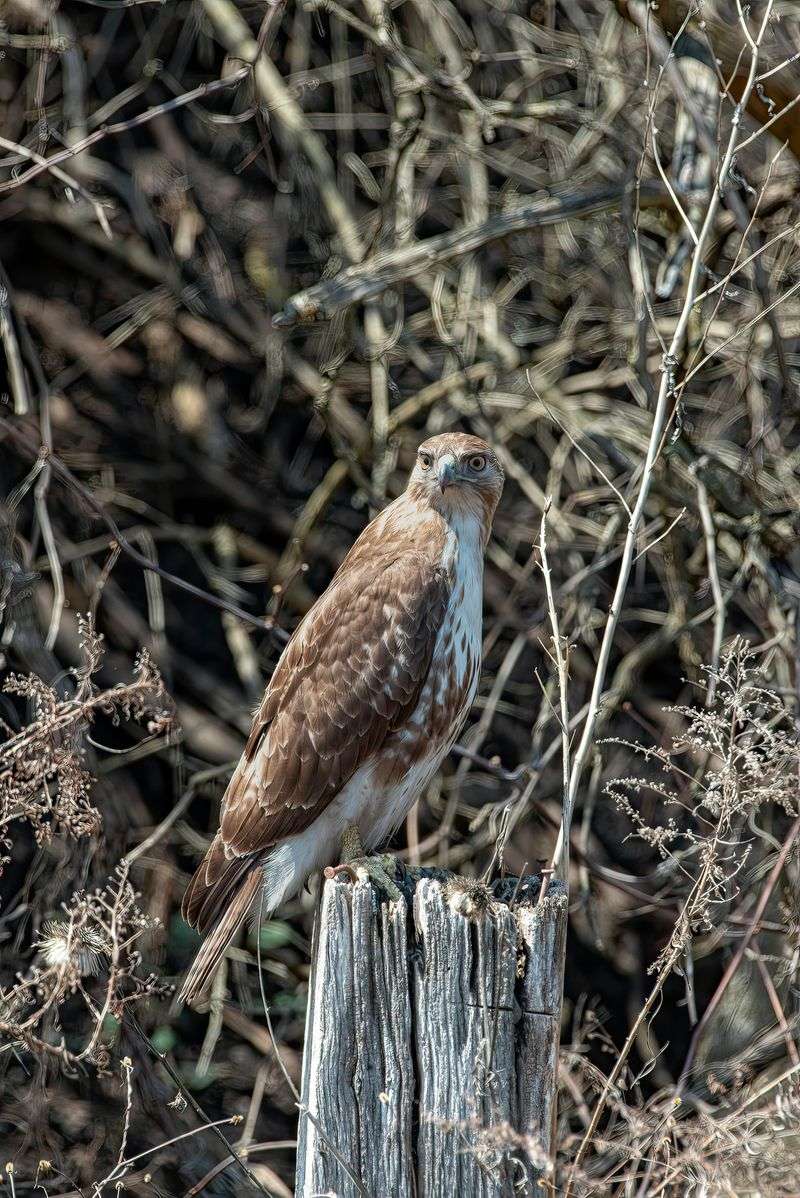
Late winter through early spring is when red-tailed hawks shift from solo hunters into territorial mode.
If you are seeing one of these birds frequently between January and March in Illinois, there is a good chance you are watching the beginning of courtship and boundary-setting behavior.
The hawk is not just hunting, it is broadcasting a message to every other hawk in the area: this ground is taken.
During this period, you might notice the bird calling more often. That iconic screech you hear in movies whenever any bird of prey appears on screen?
That is actually a red-tailed hawk’s call, and hearing it repeatedly over your yard means the bird is actively staking its claim.
It is loud, bold, and impossible to ignore once you know what you are listening for. Pairs will sometimes circle together in wide, slow spirals above the territory they plan to nest in.
Watching two hawks ride thermals together overhead is one of the most quietly spectacular things a backyard birder in Illinois can witness.
Few people realize it is happening right above their own neighborhood. This territorial behavior is a strong sign that your yard sits within a zone the hawks consider worth defending.
That is not a small thing. It means your land has enough resources, enough prey, enough structure, to support a breeding pair through an entire season.
Pay attention to where they circle most often, because that area is about to become the center of something remarkable in the weeks ahead.
Tall Trees Or Structures Make Perfect Nest Sites
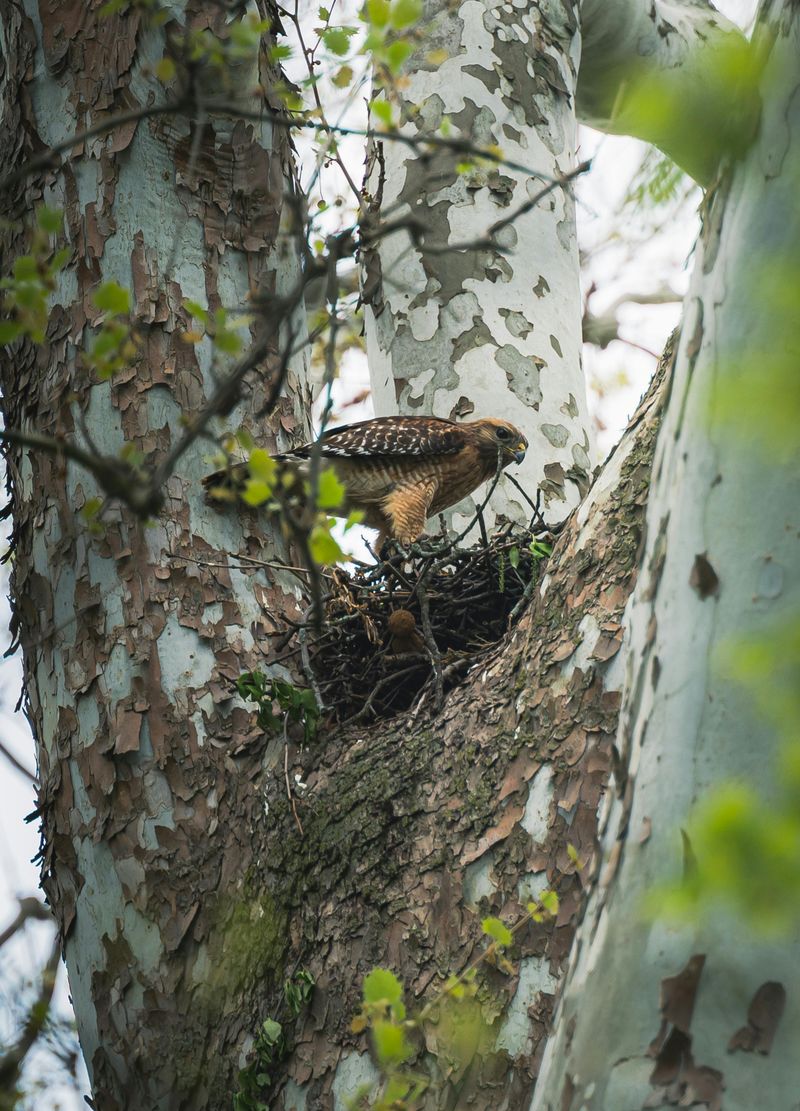
Spotting a hawk eyeing your tallest oak or sycamore with unusual intensity is not your imagination.
Red-tailed hawks build some of the largest stick nests of any North American raptor, and they prefer trees that are at least 35 to 75 feet tall with a wide, sturdy crotch near the top.
If your yard or a neighboring yard has that kind of tree, you may be looking at a future nest site.
Illinois is home to plenty of mature hardwoods, and suburban neighborhoods with older tree canopies are increasingly popular nesting zones as the hawk population adapts to human-altered landscapes.
They are remarkably tolerant of nearby human activity once they commit to a nest, sometimes raising chicks just a few yards from busy streets.
A red-tailed hawk nest can measure up to three feet across and two feet deep, growing larger each year as the pair adds fresh material.
Finding one overhead in early spring is like discovering a secret the tree has been keeping all winter.
The parents will line the interior with softer material like pine needles, bark strips, and fresh green sprigs, a surprisingly tender touch from such a powerful bird.
If you suspect a nest is forming in your yard, give the birds space and resist the urge to trim nearby branches until late summer.
Nesting hawks are protected under federal law, and disturbing an active nest carries real consequences.
But more than the legal side, watching a pair successfully raise young from your own backyard is an experience that sticks with you for years.
Open Lawn Gives Clear Sightlines For Hunting
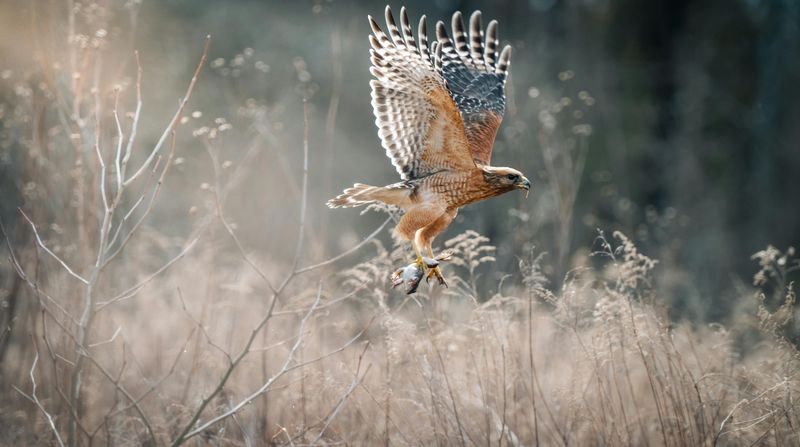
Your mowed lawn is basically a hawk’s ideal foraging arena. Short grass leaves nowhere for mice, voles, and other small creatures to hide, making every movement visible from above.
The more open your yard is, the more attractive it becomes to a hunting red-tailed hawk looking for an easy, efficient meal.
This is one reason you are more likely to see these birds in suburban yards than in densely wooded areas.
Suburbs offer something wild forests often do not: large patches of closely cut grass surrounded by trees and structures.
That combination creates the perfect ambush layout for a perch hunter working a territory. Interestingly, the way you maintain your lawn directly affects how often a hawk visits.
Yards with grass kept at a moderate length, not too long, not scalped bare, tend to support the best balance of prey activity and hawk visibility.
Voles and mice stay active in yards with some ground cover but can still be spotted by a sharp-eyed predator overhead.
If you have been keeping your yard tidy and open, you have accidentally created a hawk-friendly hunting zone. That is something to feel genuinely good about. A yard that supports a top predator is a yard that is doing something right ecologically.
The hawk’s presence over your open lawn is nature’s way of confirming that your patch of Illinois green is part of a working, breathing food web, and that is worth far more than a perfectly uniform grass carpet any day of the week.
Local Prey Population Is Healthy
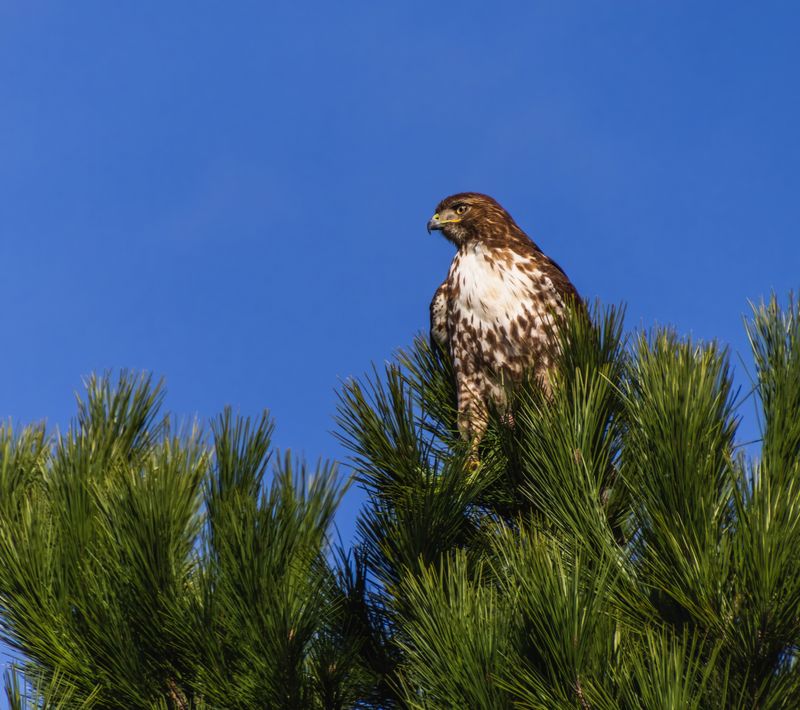
A red-tailed hawk does not set up shop somewhere barren. When this bird becomes a regular presence in your yard, it is living proof that the ecosystem around you is functioning the way nature intended.
A healthy prey population supports the predator, and the predator keeps the prey population balanced, a loop that has been running for thousands of years.
In Illinois yards, the typical prey menu includes meadow voles, white-footed mice, Eastern cottontail rabbits, and occasionally larger animals like squirrels or pheasants.
If the hawk is finding enough to eat in your area, it means all of those species are present in solid numbers. Your yard is part of a productive natural system, whether you planted it that way or not.
Healthy prey populations also indicate good soil quality, strong plant diversity, and the presence of insects and seeds that support the animals further down the food chain.
Everything is connected, and the hawk at the top of your yard’s food web is the most visible sign that the layers below are all doing their jobs.
Some homeowners worry when they see a hawk taking a rabbit or a mouse, but this is exactly how ecosystems regulate themselves. Without predators, prey populations can surge, stress vegetation, and create imbalances in the local food web.
Your yard hosting a red-tailed hawk means nature has found equilibrium right outside your back door. That is genuinely rare in a suburban setting, and it deserves a moment of appreciation.
Your Yard Is A Regular Stop On A Daily Patrol Route
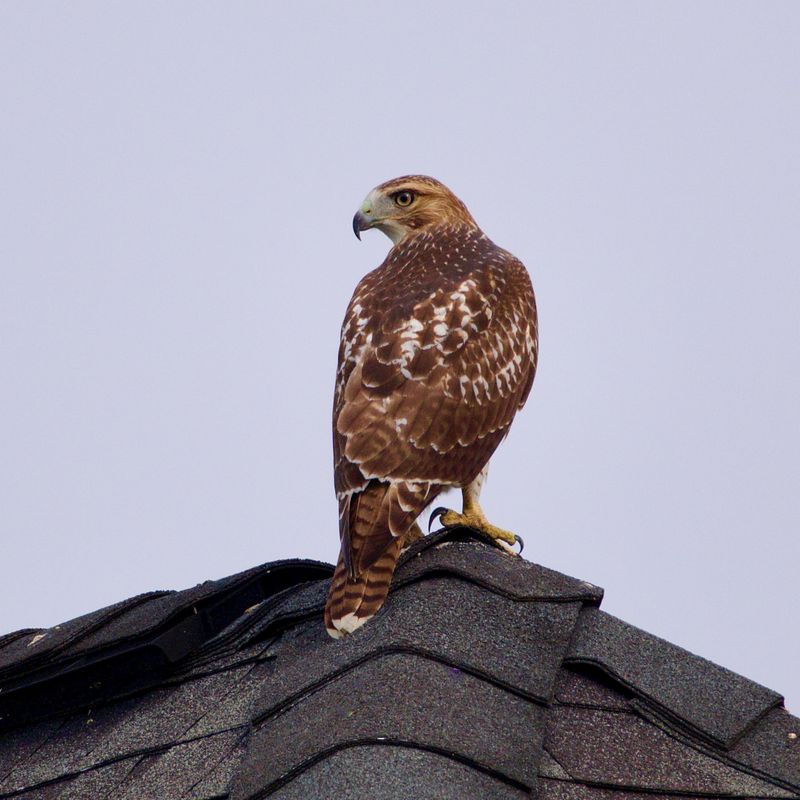
Dawn is when the hawk begins its rounds. Long before most homeowners have poured their first cup of coffee, a red-tailed hawk may already be working its way along a fixed patrol route that passes directly over your yard.
These birds are highly systematic, revisiting the same spots at similar times each day with notable consistency.
If you have noticed the hawk appearing at roughly the same time on multiple days, that is not coincidence.
It has learned the rhythm of your neighborhood, including when squirrels emerge, when birds gather at feeders, and when the rodents in your garden bed are most active.
That kind of learned behavior takes time to develop and signals that your yard has been on the hawk’s radar for a while. Tracking these visits is one of the most rewarding habits a backyard birder can develop.
Keeping a simple notebook or using a free app like eBird to log when and where you see the hawk can reveal surprisingly consistent patterns within just a few weeks.
You start to feel less like a spectator and more like a participant in something ancient and ongoing.
When a red-tailed hawk makes your yard a regular stop on its daily route, it is the clearest sign yet that your property is woven into the local ecosystem in a meaningful way.
Your Illinois backyard is not just a patch of grass and garden beds, it is a living waypoint on a predator’s map, and that is something worth stepping outside to appreciate every single morning.