What North Carolina Crape Myrtles Need In August After Their First Flush Of Blooms
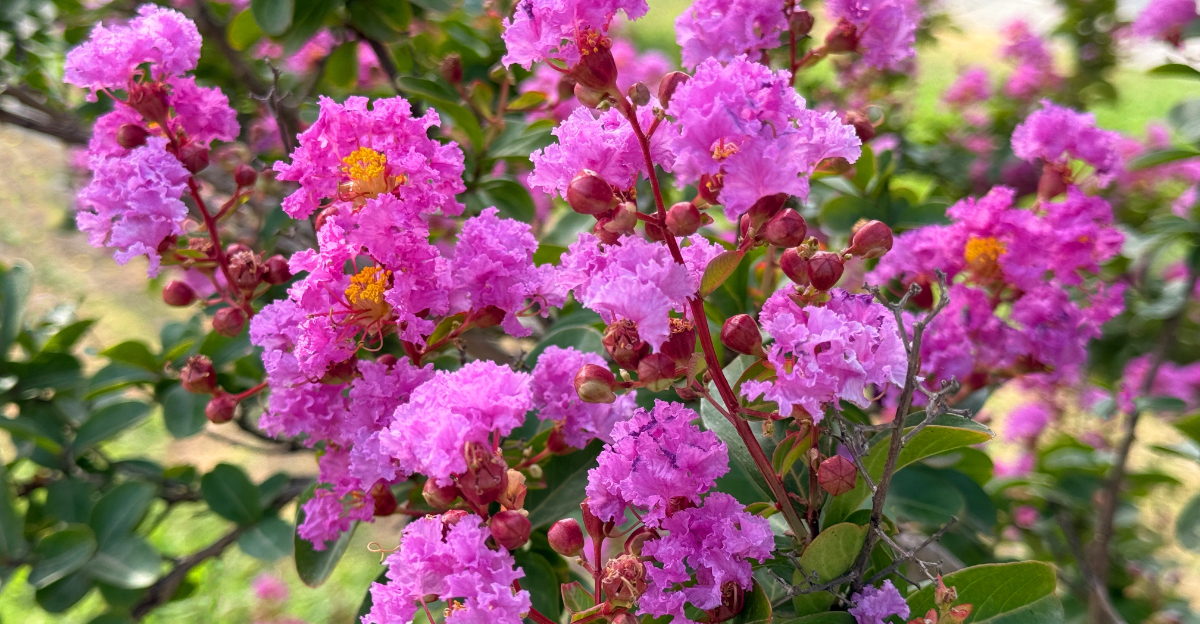
August can make a crape myrtle look like it has already spent its best summer trick.
The huge flower clusters fade. Petals collect below. Fresh color becomes harder to find. Then comes the familiar urge to grab pruners, fertilizer, or the hose and start “helping.”
That is exactly where gardeners can get into trouble.
A North Carolina crape myrtle still has plenty happening after its first flush. The tree may be setting up another round of flowers, coping with dry heat, or showing early clues that something needs attention.
So what actually deserves your time right now?
The answer is less dramatic than a hard pruning session and much more useful. A few small checks can support the tree through the rest of August without pushing it into unnecessary growth or turning routine care into a weekend project.
Before you cut, feed, or fuss, look closely at what the tree is telling you. Its next move may depend more on restraint than action.
Sometimes the smartest summer care looks boring.
1. Water Deeply During Dry August Spells
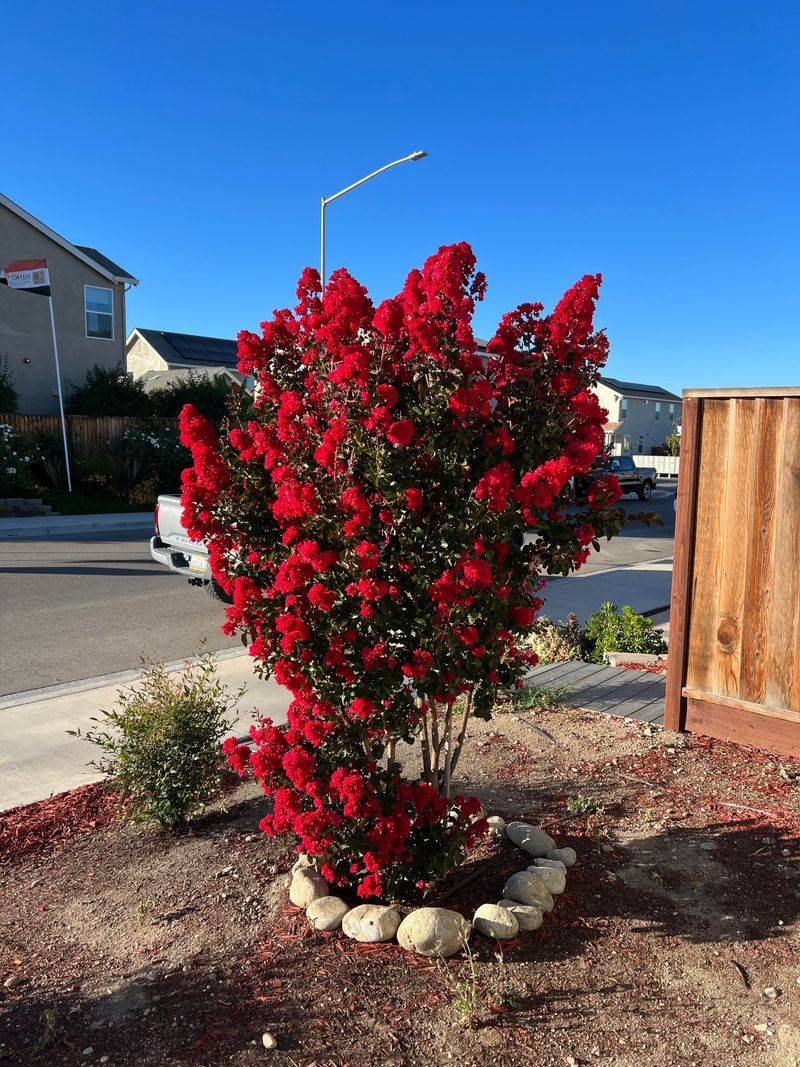
August heat can make a crape myrtle look tougher than it feels.
Established trees handle dry weather fairly well, but a long stretch without rain can still slow growth and reduce the energy available for another round of flowers. That is when deep watering earns its place.
Check the soil before reaching for the hose. Push a screwdriver or finger about three inches into the ground near the drip line. Dry soil at that depth means the root zone could use water. Slightly moist soil means you can give it more time.
When you do water, go slowly and thoroughly. The goal is to wet the deeper root zone rather than splash the top inch of soil.
Shallow watering disappears quickly during a hot North Carolina afternoon and encourages roots to stay near the surface.
Aim water toward the ground beneath and beyond the canopy, not against the trunk. Established crape myrtles generally benefit from about an inch of water per week during active growth, including rainfall.
You are not trying to turn the yard into a swamp. You are replacing what August heat has taken.
Keep foliage dry when possible too. Water at the base rather than spraying the canopy, especially later in the day.
A crape myrtle can handle summer. It just appreciates a proper drink instead of tiny sips.
2. Refresh Mulch Across The Root Zone
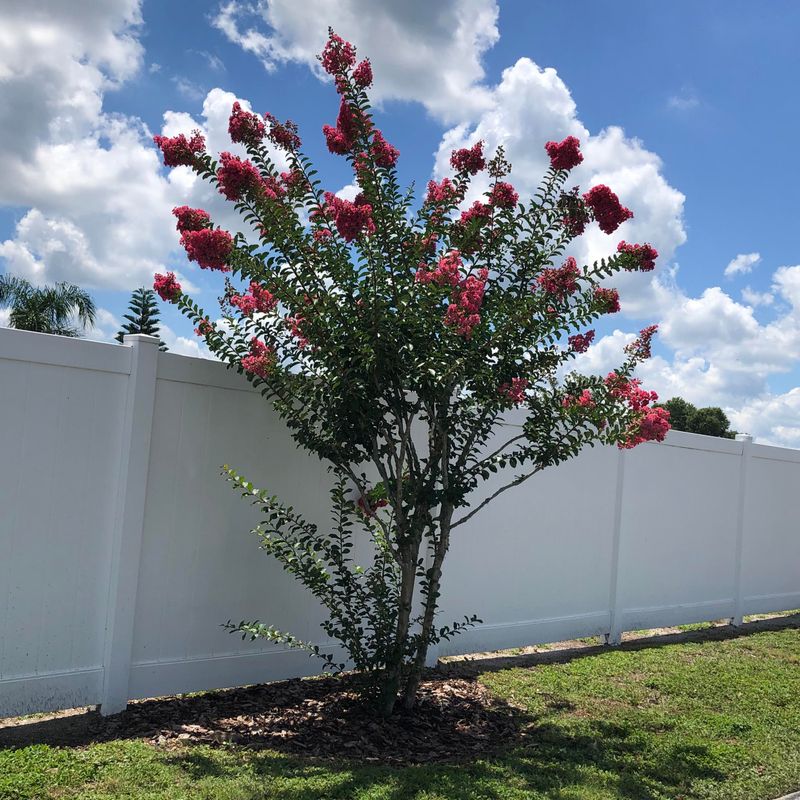
Mulch may not get applause when the flowers return, but it quietly does some of the hardest August work.
By late summer, the layer you spread in spring may look thinner, scattered, or partly broken down. Refreshing it can help the soil hold moisture longer and stay cooler during hot North Carolina afternoons.
Spread organic mulch across a broad section of the root zone. Two to three inches is usually enough for an established landscape tree. Extend it toward the drip line when space allows rather than building one tiny circle around the trunk.
Your North Carolina Garden Changes Every Week. Your Plan Should Too.
Gardening in North Carolina changes quickly throughout the season. Every Friday you’ll receive a simple weekly plan showing exactly what to plant, prune, fertilize, harvest, and protect so you never miss the right timing.
Then check the center.
Mulch should not pile against the bark. Pull it several inches away from the trunk so the base stays visible and dry. Those famous mulch volcanoes may look tidy from the road, but the tree does not need a bark blanket in August.
Shredded hardwood, pine bark, and similar organic materials work well. As they gradually break down, they also add organic matter to the soil.
This gives every deep watering session a little more staying power. Less moisture disappears from the surface, and roots face fewer dramatic temperature swings.
You do not need to keep adding mulch until the bed resembles a mountain range. Check what is already there first.
A modest refresh is enough. The crape myrtle needs cooler roots, not its own backyard volcano.
3. Skip Heavy Late Summer Fertilizer
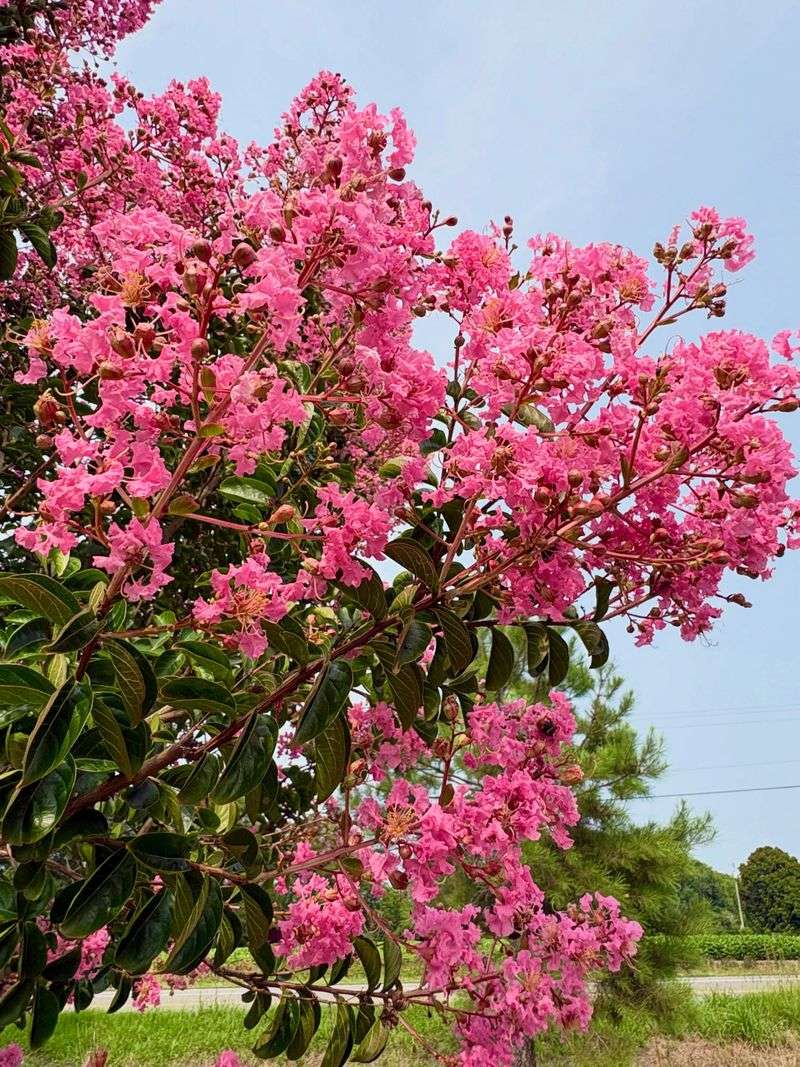
A fading first bloom can make fertilizer look like the obvious answer.
More food, more flowers. Nice theory. August is not always interested in that deal.
A heavy dose of nitrogen can push a crape myrtle toward soft, leafy growth late in the season. That new growth may not have much time to mature before cooler weather arrives, and the tree can spend energy on leaves instead of its normal late-summer rhythm.
Look at the plant before opening a fertilizer bag.
Healthy green foliage, steady growth, and a good first round of flowers usually suggest there is no urgent feeding problem. Trees planted near lawns may also receive nutrients from fertilizer already used on the turf.
A soil test gives you a better reason to fertilize than the calendar does. It can show which nutrients are actually lacking instead of turning August care into a guessing game.
This is one of those moments when doing less can be the more useful choice.
Keep the tree watered during dry periods. Maintain mulch. Watch for pests and disease. Save a major feeding program for the time of year when vigorous new growth makes more sense.
Crape myrtles are already energetic plants. They rarely need a late-summer pep talk from a fertilizer spreader.
Sometimes the best August meal is the one you leave in the bag.
4. Check Bark For White Scale Clusters
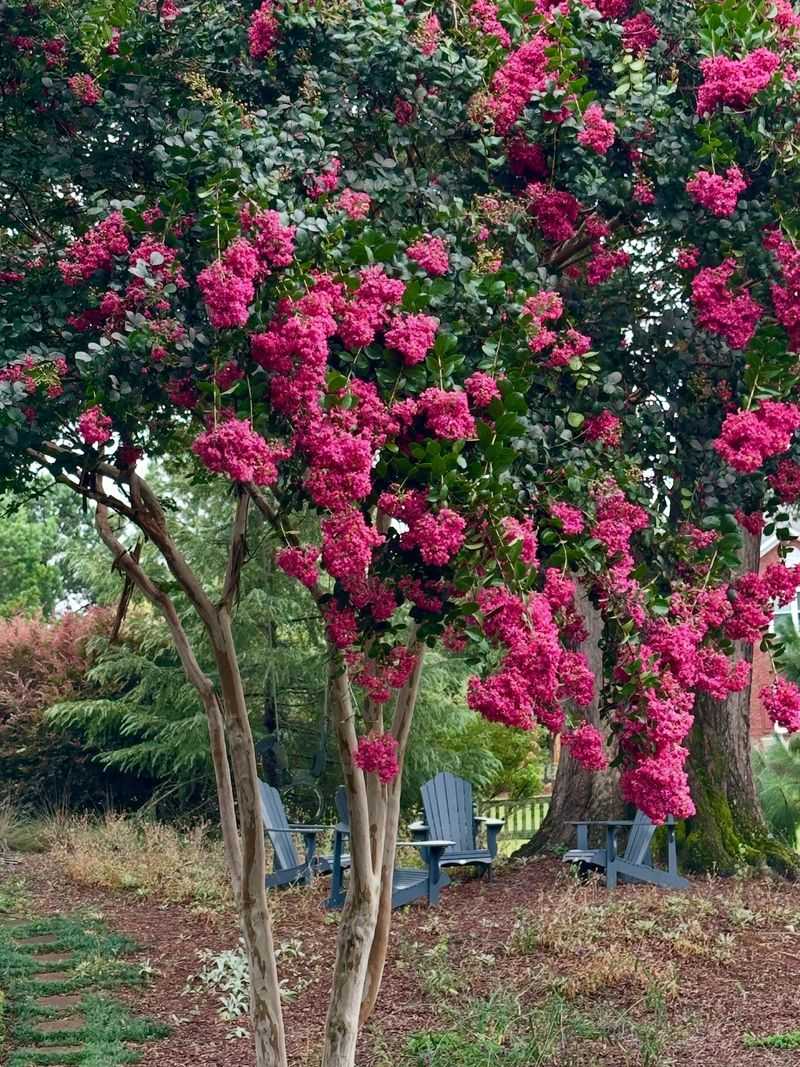
August is a good month to stop admiring the flowers for a minute and inspect the bark.
Look closely along the trunk, branch unions, and old pruning cuts. Small white or gray waxy bumps can point to crape myrtle bark scale, a pest that has become a concern in North Carolina landscapes.
The clusters can be easy to miss from a distance. Get close enough to inspect textured areas of bark where insects may gather.
Another clue may appear before you notice the scale itself. Sticky honeydew from feeding insects can coat surfaces below the tree. Black sooty mold may then grow on that residue, leaving bark or leaves looking dark and grimy.
The mold looks dramatic, but the scale insects are the real issue. Heavy populations can reduce tree vigor over time.
Do not turn one suspicious speck into an emergency spray session. First confirm what you are seeing. Other bark textures and harmless residue can look strange when you start examining a tree closely.
A local Cooperative Extension office can help with identification and current treatment choices when an infestation appears significant.
Early observation gives you more options and keeps you from treating a problem that may not exist.
Consider this the crape myrtle version of checking behind the ears.
The flowers get all the attention, but August bark can tell you plenty.
5. Watch Leaves For Mildew And Spots
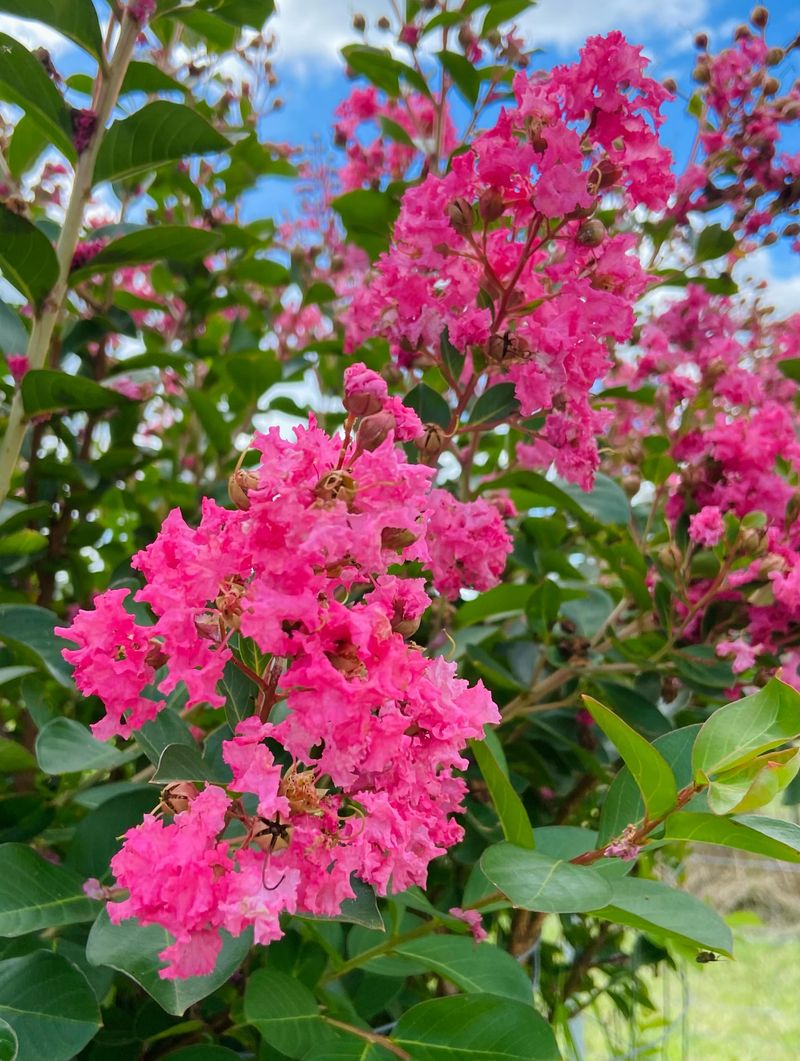
The first bloom may be fading while another August problem starts showing up on the leaves.
Powdery mildew often looks like a white or gray dusting across foliage and tender shoots. Leaf spot diseases can create dark or reddish-brown marks scattered across the leaf surface.
North Carolina’s warm, humid summer weather can make both problems easier to notice.
Start with the whole tree rather than one ugly leaf. A few spots do not automatically mean the canopy needs treatment. Look for patterns, spreading symptoms, premature leaf drop, or large sections that appear affected.
Then check the conditions around the tree.
Crowded growth and poor air movement can keep foliage damp longer. Overhead irrigation late in the day can add even more moisture at exactly the wrong time.
Water near the soil instead. Remove fallen diseased leaves from around the tree when practical, since old foliage can contribute to future disease pressure.
Cultivar matters too. Some crape myrtles show much better resistance to common foliar diseases than others, which can explain why two trees in the same neighborhood look completely different by August.
There is no prize for panicking over the first spotted leaf.
Pay attention, clean up what falls, and improve the conditions you can control. Sometimes the tree needs intervention. Sometimes it simply needs better airflow and fewer evening showers from the sprinkler.
6. Remove Suckers And Damaged Growth
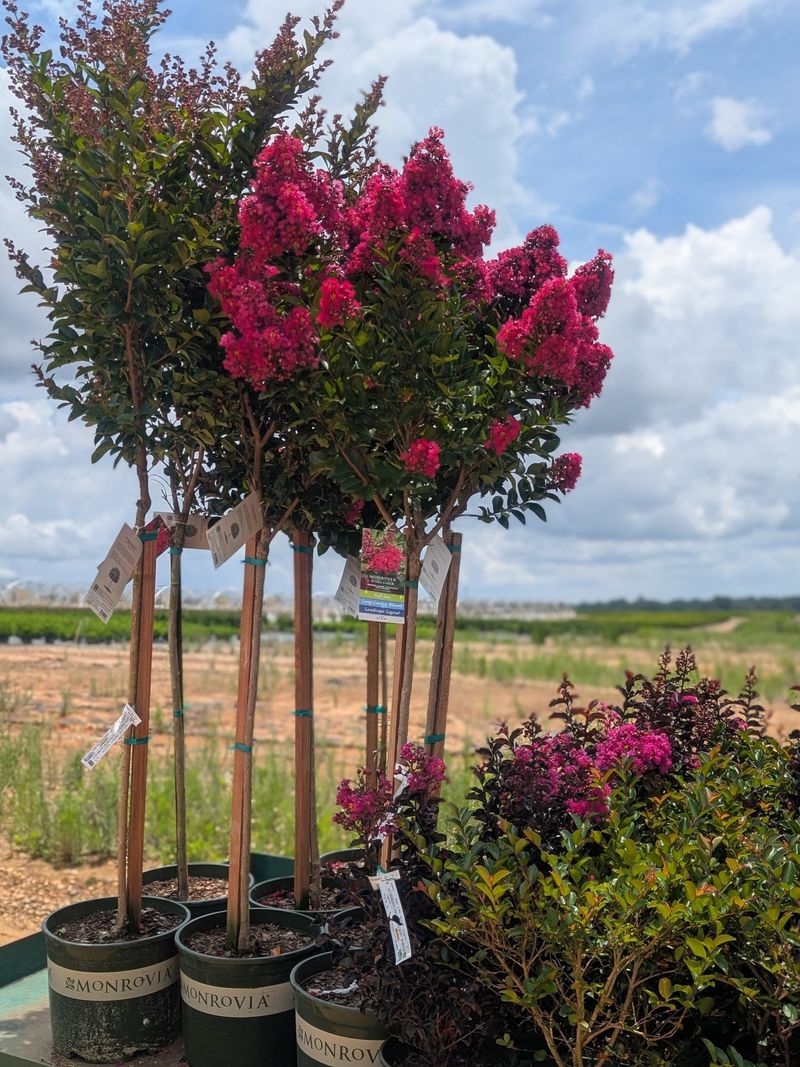
August pruning should feel more like housekeeping than renovation.
Start at the base of the crape myrtle. Thin shoots may be pushing up around the trunks, especially on trees that produce suckers enthusiastically through summer.
Remove those shoots close to their point of origin with clean, sharp pruners. Leaving long stubs often gives the same area another opportunity to sprout, so make the cut neat and close.
Then look upward for obvious damage.
Broken twigs, rubbing branches, or old awkward stubs can usually come out without turning the job into a full canopy makeover. The goal is simple cleanup that keeps the tree tidy and removes growth that offers little benefit.
Keep your tools sharp. Clean cuts leave less ragged tissue behind and make the job easier on both you and the tree.
Tool hygiene matters too, particularly when you move from one plant to another. Wipe blades clean so plant residue does not hitch a free ride around the yard.
This is also a good moment to stop before enthusiasm takes over.
A few suckers do not justify cutting half the tree apart. Save structural decisions for a better season and focus only on the obvious small stuff.
Your August pruning pile should look surprisingly boring.
That is a compliment. Good late-summer cleanup should not leave the crape myrtle wondering where half its branches went.
7. Save Major Pruning For Dormant Season

Faded flowers can make a crape myrtle look untidy enough to trigger a dangerous August thought.
Maybe it needs a big haircut.
Keep the saw in the shed.
Heavy late-summer pruning removes useful canopy and can stimulate soft new growth when the tree is already moving toward the latter part of its growing season.
It can also interfere with the natural structure that makes a mature crape myrtle so attractive.
Save major structural work for the dormant season, usually late winter before spring growth begins.
That timing makes the branch framework easier to see and lets you make deliberate cuts instead of reacting to a tree that simply looks tired after flowering.
Avoid the severe topping often nicknamed “crape murder.” Cutting major limbs back to blunt stubs can create clusters of weak, crowded shoots and an awkward structure that demands more corrective pruning later.
A better approach starts long before the pruners come out. Choose a cultivar whose mature size actually fits the space.
A tree planted beneath a low roofline will eventually argue with the architecture no matter how optimistic everyone felt on planting day.
For now, remove only clearly damaged growth or small problem branches.
The faded flowers are not an invitation to rebuild the tree.
August already gives gardeners enough chores. Creating a yearly pruning crisis does not need to become one of them.
8. Protect Full Sun Around The Canopy

After the first flush fades, sunlight still matters for what comes next.
Crape myrtles flower best with plenty of direct sun, generally six or more hours a day. By August, though, the yard may look very different from spring.
Nearby shrubs have filled out. Vines have climbed. Tree branches have stretched farther over the canopy. A crape myrtle that once had an open sky can suddenly spend much of the afternoon in shade.
Take a look during the brightest part of the day.
You do not need to remove every nearby branch or turn the landscape into an empty lot. Focus on obvious crowding that blocks significant light or restricts air around the canopy.
Better airflow can also help foliage dry sooner after rain, irrigation, or heavy morning dew. That matters during humid North Carolina weather when powdery mildew and leaf spots may already be looking for an opportunity.
Be especially careful around large established trees. Removing major limbs simply to give a crape myrtle more sun can create a much bigger landscape problem.
A young crape myrtle stuck in persistent deep shade may eventually be happier in a more suitable location. Fall or early spring can offer a better opportunity to address that situation.
For August, start with observation and modest adjustments.
Your crape myrtle does not need a spotlight. It does need enough sunshine to remember why everyone planted it for flowers in the first place.