What North Carolina Plant Lovers Should Know About Polka Dot Begonia Care
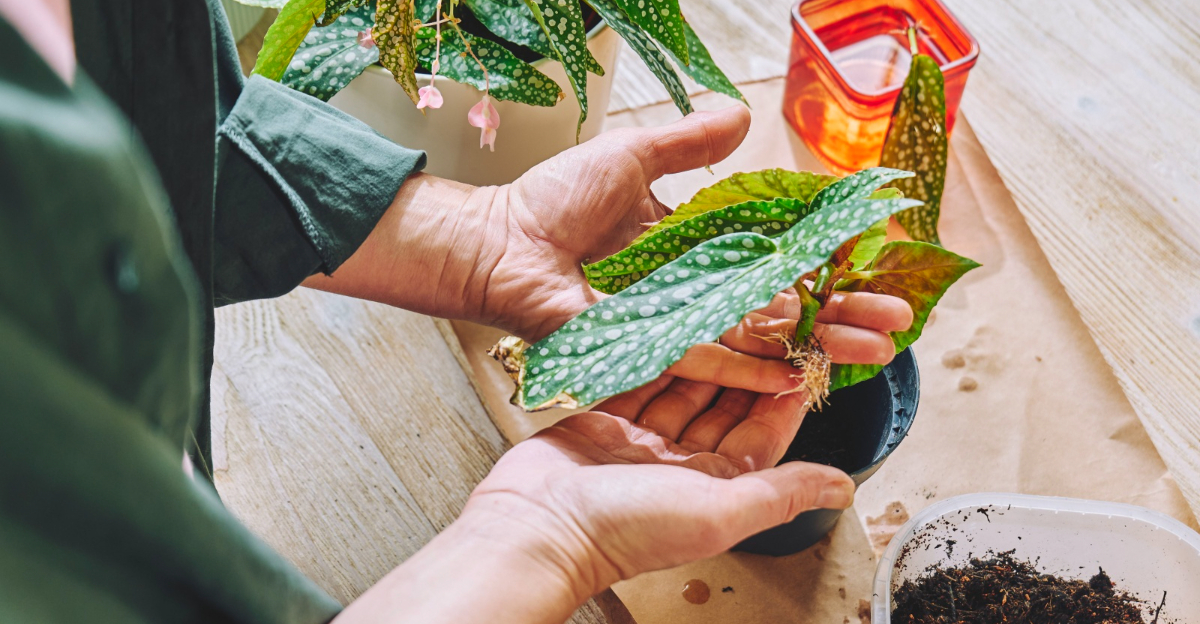
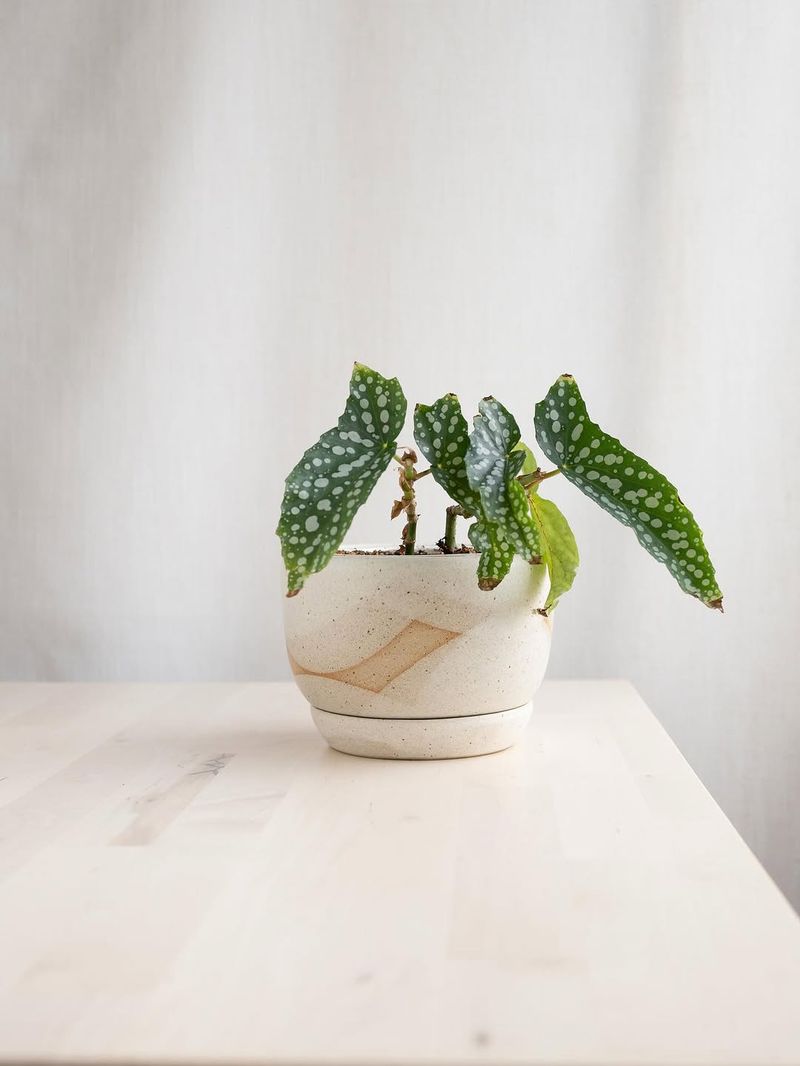
Polka dot begonia is the kind of houseplant that knows how to make an entrance. Those deep green leaves splashed with silver spots look almost hand-painted, and the tall, upright growth gives it a little extra flair.
It is not a shy plant, and honestly, that is part of the fun. North Carolina plant lovers have plenty of reasons to fall for it, but keeping it looking sharp can take a little more attention than its good looks might suggest.
Life inside a North Carolina home can change quite a bit through the year.
Winter air can feel dry enough to make plants grumble, summer sun can hit a window like a spotlight, and heating or air conditioning can shift the mood of a room fast.
Once you understand how light, humidity, drainage, and temperature work together, this spotted beauty can settle in nicely and keep that dramatic charm going strong.
1. Bright Indirect Light Keeps It Looking Good
Placement near a window can make or break how polka dot begonia performs indoors. This plant grows best in bright, indirect light, meaning it wants a well-lit room without direct sun hitting the leaves for long periods.
In North Carolina homes, east-facing windows tend to offer the kind of gentle morning light that suits this plant without causing leaf scorch.
South and west-facing windows can be too intense during summer months, especially in the warmer parts of the state where afternoon sun comes in strong. A sheer curtain can help filter the light if repositioning is not practical.
Without enough brightness, the stems tend to stretch and lean, and the leaf spots may appear less defined over time.
Too much direct light often shows up as bleached or crispy patches on the leaves. Rotating the pot every few weeks encourages even growth on all sides and keeps the plant from leaning heavily toward the light source.
North Carolina plant owners who notice their begonia looking leggy or pale may want to try moving it a few feet closer to a brighter window before assuming something else is wrong.
Light is often the first thing worth adjusting when the plant looks like it is struggling to keep up its usual appearance.
2. Indoor Humidity Affects Leaf Quality
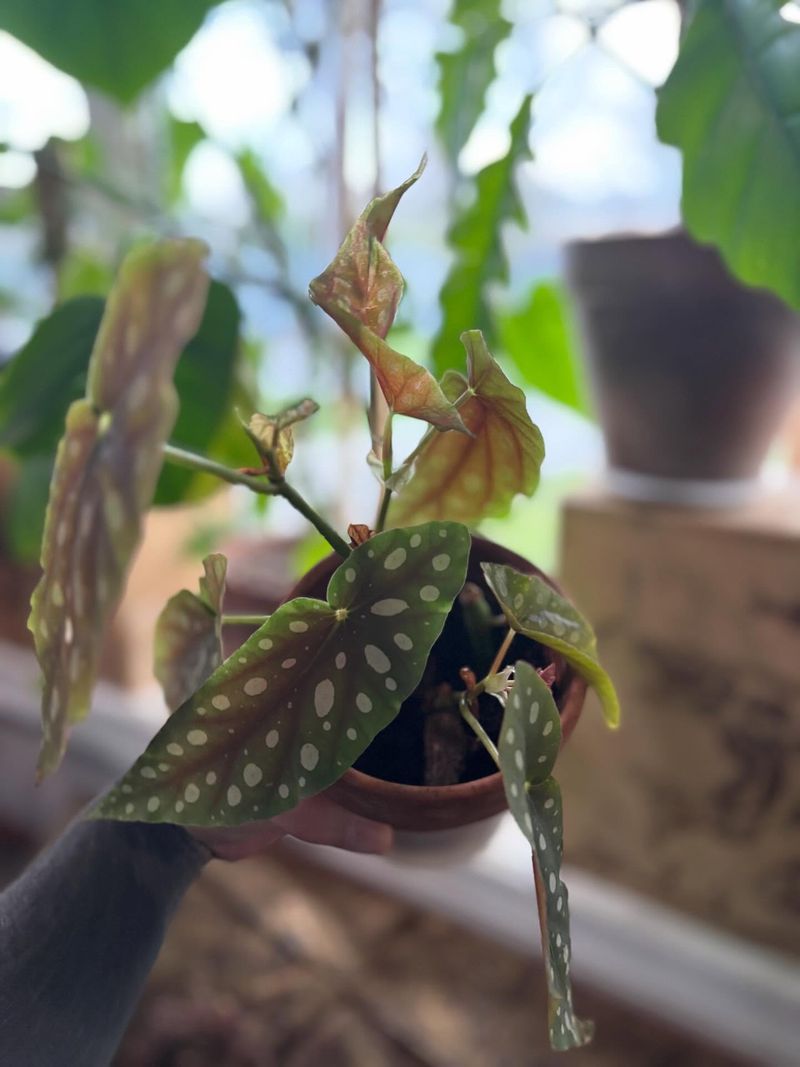
Dry air is one of the more common challenges that North Carolina plant owners face without always realizing it.
When heating systems run through fall and winter, indoor humidity levels can drop significantly, and polka dot begonia is the kind of plant that notices.
Brown leaf edges and tips are often the first sign that the air is too dry for the plant to stay comfortable.
Polka dot begonia tends to prefer humidity levels somewhere in the range of 50 percent or higher, though indoor conditions in most North Carolina homes may run lower than that during cooler months.
Running a small humidifier nearby, grouping plants together, or placing a tray of water near the plant can help raise moisture levels without overcomplicating the routine.
Misting directly on the leaves is sometimes suggested but can lead to issues if the water sits on the foliage for too long, so increasing ambient humidity tends to be a more reliable approach.
Your North Carolina Garden Changes Every Week. Your Plan Should Too.
Gardening in North Carolina changes quickly throughout the season. Every Friday you’ll receive a simple weekly plan showing exactly what to plant, prune, fertilize, harvest, and protect so you never miss the right timing.
During North Carolina summers, central air conditioning can also pull moisture out of the air, so humidity management is not just a winter concern.
Keeping an inexpensive hygrometer near the plant makes it easier to track conditions and respond before the leaves show obvious stress. Consistent humidity often keeps the foliage looking clean and well-defined throughout the year.
3. Good Drainage Supports Better Growth
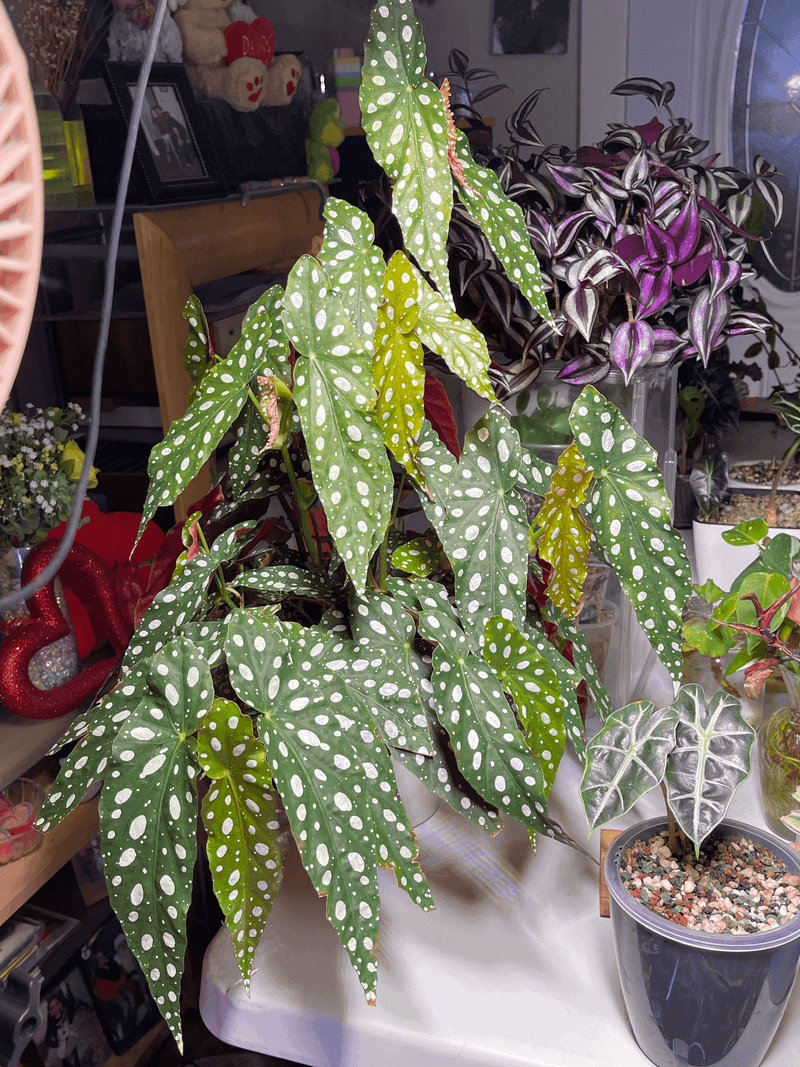
Soil that holds too much moisture for too long creates conditions that polka dot begonia does not handle well. A well-draining potting mix is one of the more practical things a grower can get right from the start.
Many indoor plant enthusiasts in North Carolina use a standard houseplant mix and add perlite or coarse sand to improve drainage and keep the roots from sitting in soggy conditions.
The container itself matters just as much as the mix.
Pots without drainage holes make it very difficult to manage moisture levels accurately, and even experienced growers find it hard to avoid waterlogged soil in a container with no way for water to escape.
Terracotta pots are a popular choice because they allow some moisture to evaporate through the walls, which can help in humid summer conditions across much of North Carolina.
After watering, the water should flow freely through the drainage holes and any excess sitting in the saucer should be emptied within about 30 minutes.
Roots that stay wet for extended periods are more vulnerable to rot, which can set in quietly before the leaves show any outward sign of trouble.
Getting drainage right from the beginning is much easier than trying to fix problems after they have already developed. Good drainage and the right mix work together to give the root system room to breathe and grow steadily.
4. Overwatering Leads To Early Problems
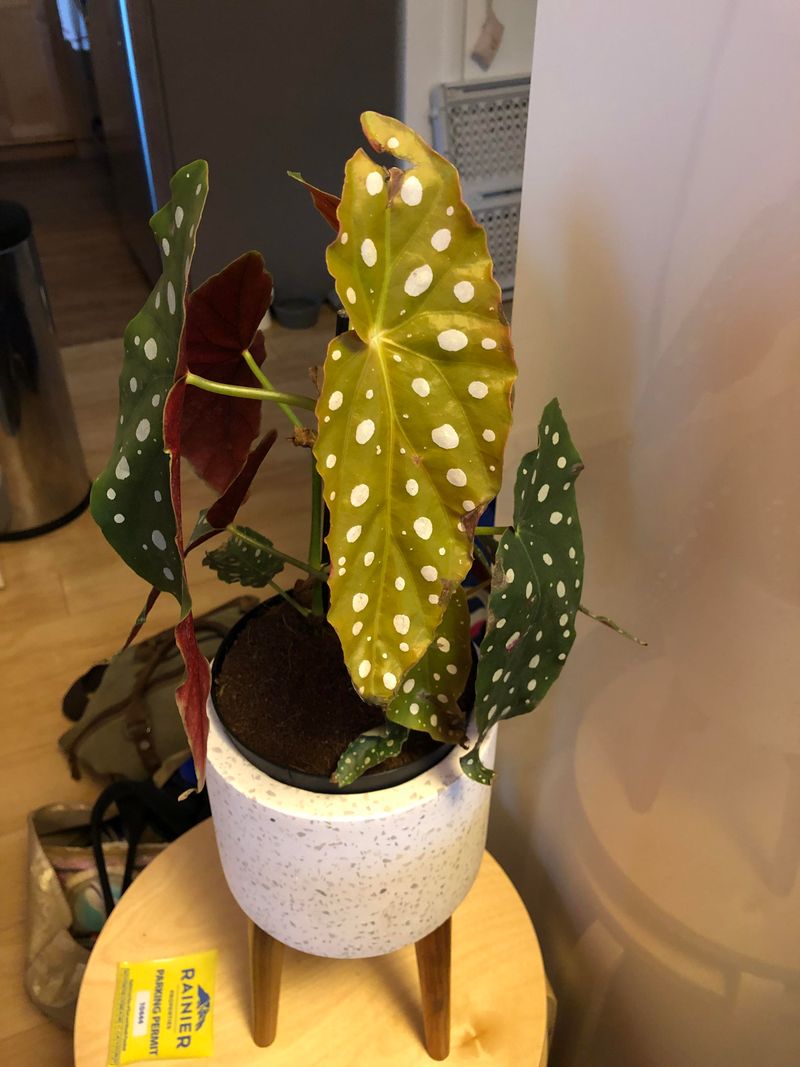
Watering polka dot begonia too often is one of the most common mistakes new plant owners make, and it tends to cause more trouble than underwatering.
The roots of this plant need time to access oxygen between waterings, and consistently wet soil limits that opportunity.
In North Carolina homes where air conditioning or heating runs frequently, the rate at which soil dries out can change from season to season, which makes a fixed watering schedule less reliable than checking the soil directly.
A practical approach is to water when the top inch or two of the potting mix feels dry to the touch. Pressing a finger into the soil gives a more accurate read than going by the calendar or guessing based on how long it has been since the last watering.
Yellowing leaves, especially on the lower part of the plant, are often one of the earlier signs that the roots are dealing with too much moisture.
Soft or mushy stems near the base can indicate a more serious situation developing in the root zone.
If the soil smells sour or the pot feels unusually heavy even days after watering, that is a good reason to check the roots and consider repotting into fresh, dry mix.
Adjusting watering habits with the seasons tends to help North Carolina growers avoid these problems before they become difficult to reverse.
5. Indoor Temperature Swings Can Cause Stress
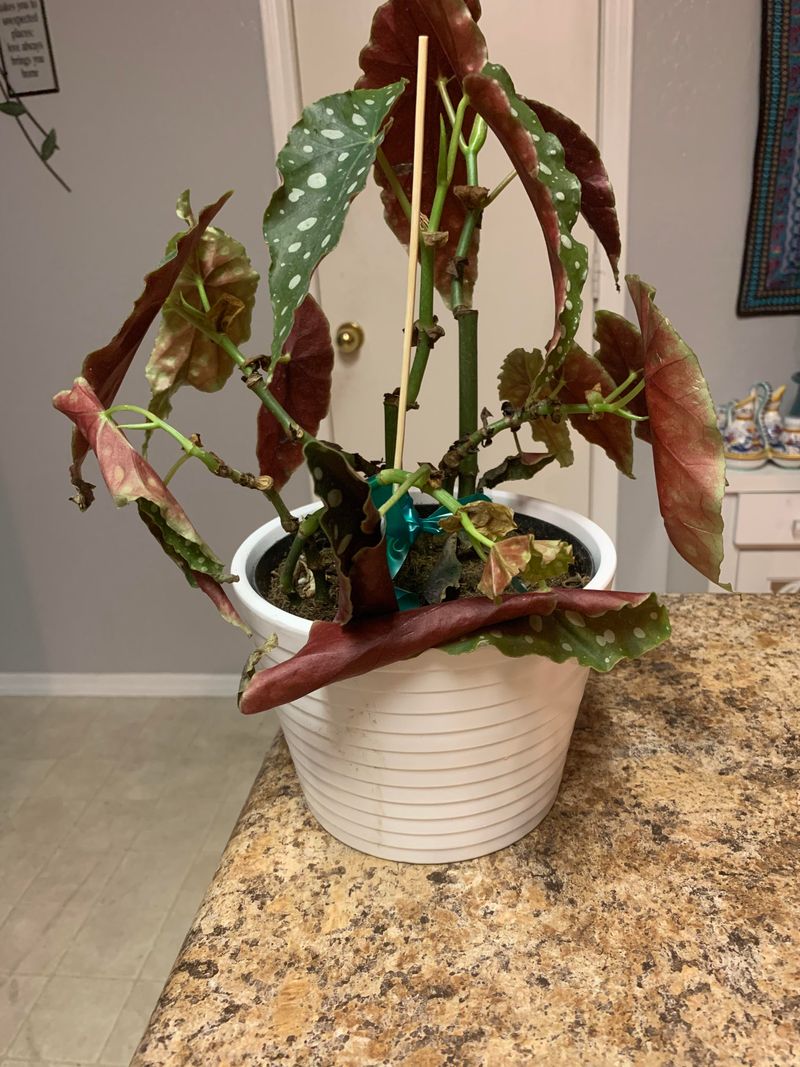
Polka dot begonia grows best when indoor temperatures stay reasonably consistent, somewhere in the range that most people find comfortable at home.
It is sensitive to cold drafts and does not respond well to being placed near heating vents, air conditioning units, or frequently opened exterior doors.
In North Carolina, where winters can include cold snaps and summers bring strong heat, the indoor environment near windows and vents can shift more than people expect.
Temperatures that drop below about 60 degrees Fahrenheit can slow the plant’s growth and may cause the leaves to look dull or limp.
Placing the plant too close to a cold window in January or near a floor vent that blasts warm air in winter can create stress that shows up in the foliage over time.
Leaf curling, drooping, or sudden leaf drop can sometimes be traced back to temperature inconsistency rather than a watering or light issue.
North Carolina plant owners who move their begonia to a new spot in the home should give the plant a little time to adjust before making further changes.
Sometimes what looks like a care problem is really just the plant responding to a new environment.
Keeping the plant away from drafty areas and monitoring where the heating or cooling air flows inside the home can make a noticeable difference in how steady and vigorous the growth stays through the changing seasons.
6. Its Cane Habit Shapes The Way It Grows
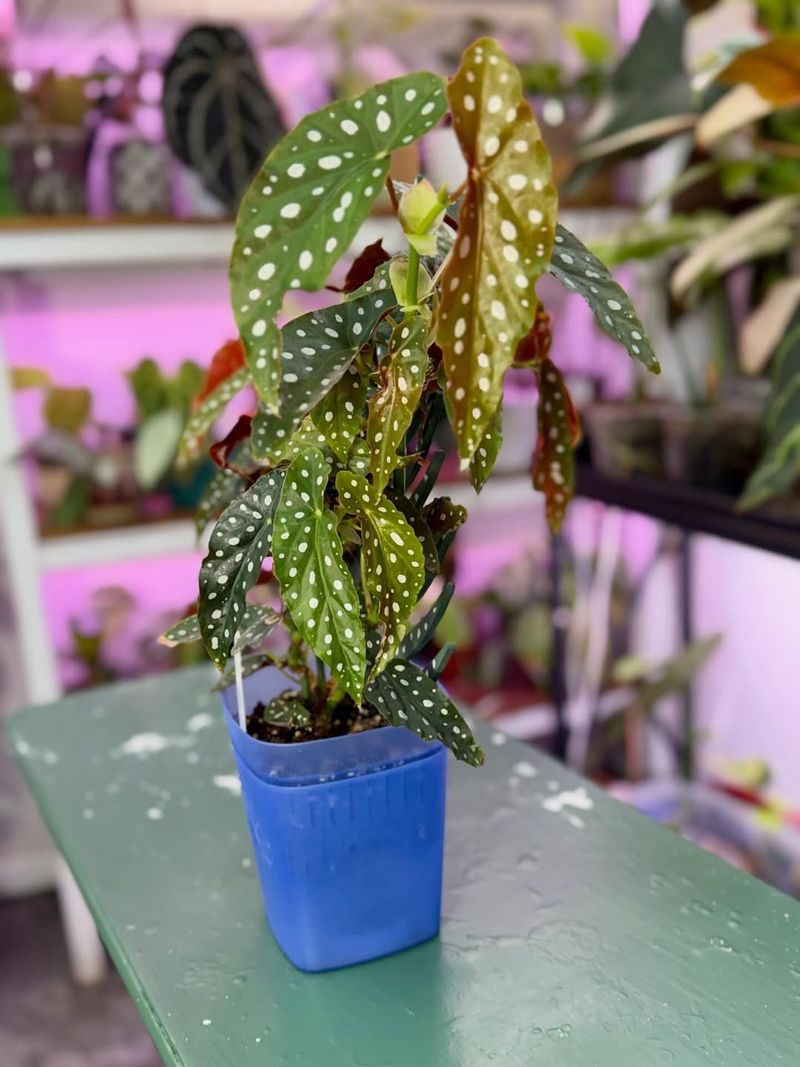
Polka dot begonia belongs to a group called cane begonias, named for the thick, jointed stems that grow upright like bamboo canes.
This growth habit makes the plant look different from the rounder, mounding begonias that some people are more familiar with.
As it matures, polka dot begonia can grow quite tall, and the stems tend to reach upward rather than spread outward.
Understanding this habit helps with placement and care decisions. Because the plant grows vertically, it can start to look top-heavy or bare at the base as the lower leaves drop with age.
Taller plants may benefit from a simple stake to keep stems upright, especially if the pot is on the smaller side or the plant has been growing in lower light conditions that caused some stretching.
The cane structure also means that pruning has a visible impact on the plant’s overall shape. Cutting back a stem encourages new growth to emerge from nodes lower on the cane, which helps the plant fill out instead of continuing to stretch upward.
North Carolina growers who are new to cane begonias sometimes expect the plant to bush out naturally, but it usually needs a little encouragement through pruning to develop a fuller, more balanced appearance.
Knowing how this plant is built makes it easier to work with its natural tendencies rather than against them.
7. Pruning Helps Create A Fuller Plant
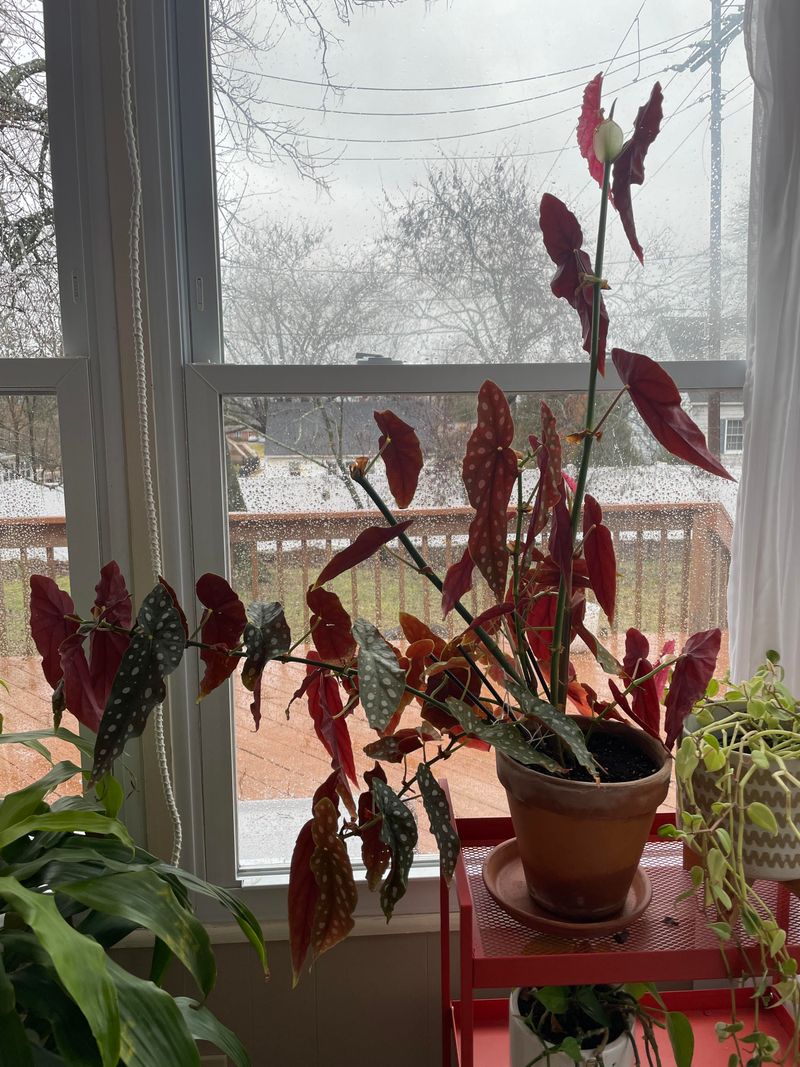
Left to grow on its own, polka dot begonia will often stretch upward and become leggy, with long bare stems and foliage concentrated near the top.
Regular pruning changes that pattern and encourages the plant to produce new shoots along the cane, which leads to denser, more attractive growth over time.
For North Carolina plant owners who want a full, lush-looking plant, pruning is one of the most practical tools available.
The best time to prune is during the active growing season, typically spring and early summer when the plant is putting out new growth.
Cutting just above a leaf node, which is the small bump where a leaf meets the stem, signals the plant to branch out from that point.
Clean, sharp scissors or pruning shears reduce the chance of damaging the stem and make the cut easier for the plant to recover from.
Removing just a few inches from the tips of the tallest stems can be enough to redirect energy downward and encourage branching.
More significant cutbacks are also possible if the plant has become very leggy, but it helps to leave enough healthy foliage on the plant to support continued growth.
The stems that are removed can often be used as cuttings to propagate new plants, which many North Carolina growers find to be one of the more satisfying parts of working with this begonia.
Pruning and propagating together make the plant feel especially rewarding to care for.
8. The Right Pot Supports Easier Care
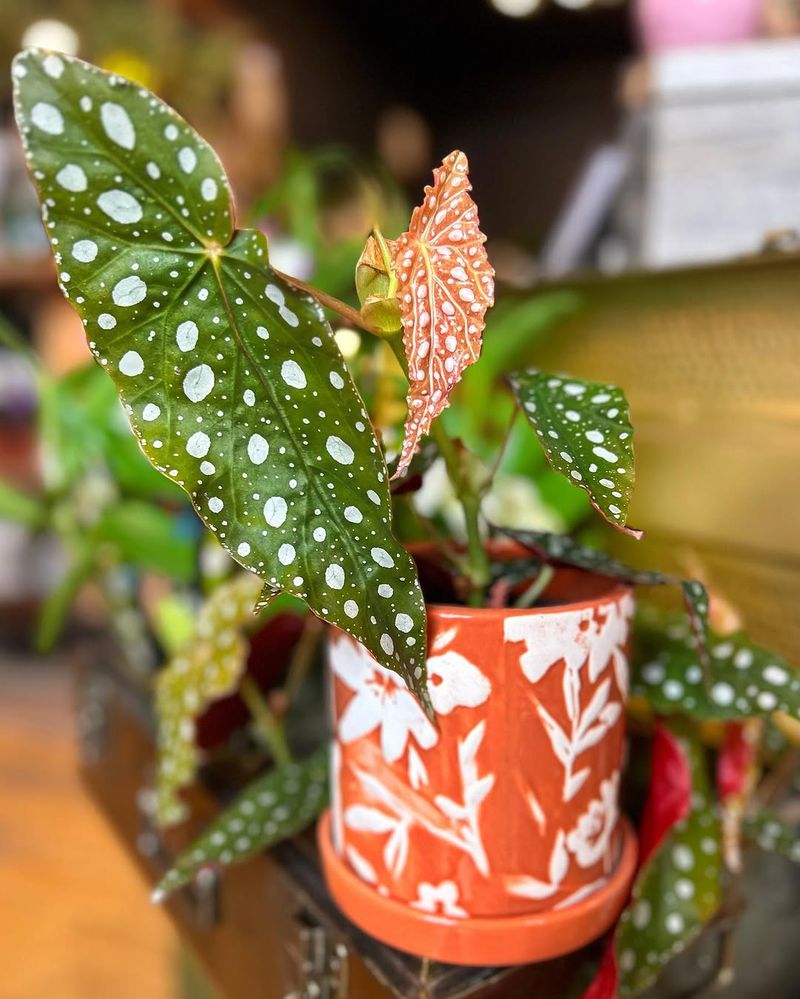
Choosing the right pot size might seem like a minor detail, but it plays a real role in how easy polka dot begonia is to care for.
Pots that are too large hold more soil than the roots can use quickly, which means moisture stays in the mix for longer and increases the chance of root problems.
Starting with a pot that fits the root ball with just a little extra room tends to work better than jumping to a much larger container.
When the plant outgrows its current pot and roots begin circling the bottom or poking through drainage holes, that is a reasonable sign to move up one pot size.
Repotting in spring, as the plant heads into its more active growing period, gives it the best chance to settle into the new container without much disruption.
North Carolina growers who repot in fall or winter may notice slower recovery since the plant is not actively pushing out new roots at that time of year.
Material matters too. Terracotta allows airflow through the walls and helps prevent moisture from building up around the roots, which can be an advantage in the more humid parts of North Carolina during summer.
Plastic and glazed ceramic pots retain moisture longer, so watering frequency may need to be adjusted depending on what the pot is made of.
Matching the pot to both the plant’s size and the home’s conditions makes everyday care more straightforward and consistent.
9. Seasonal Light Changes Shift The Routine
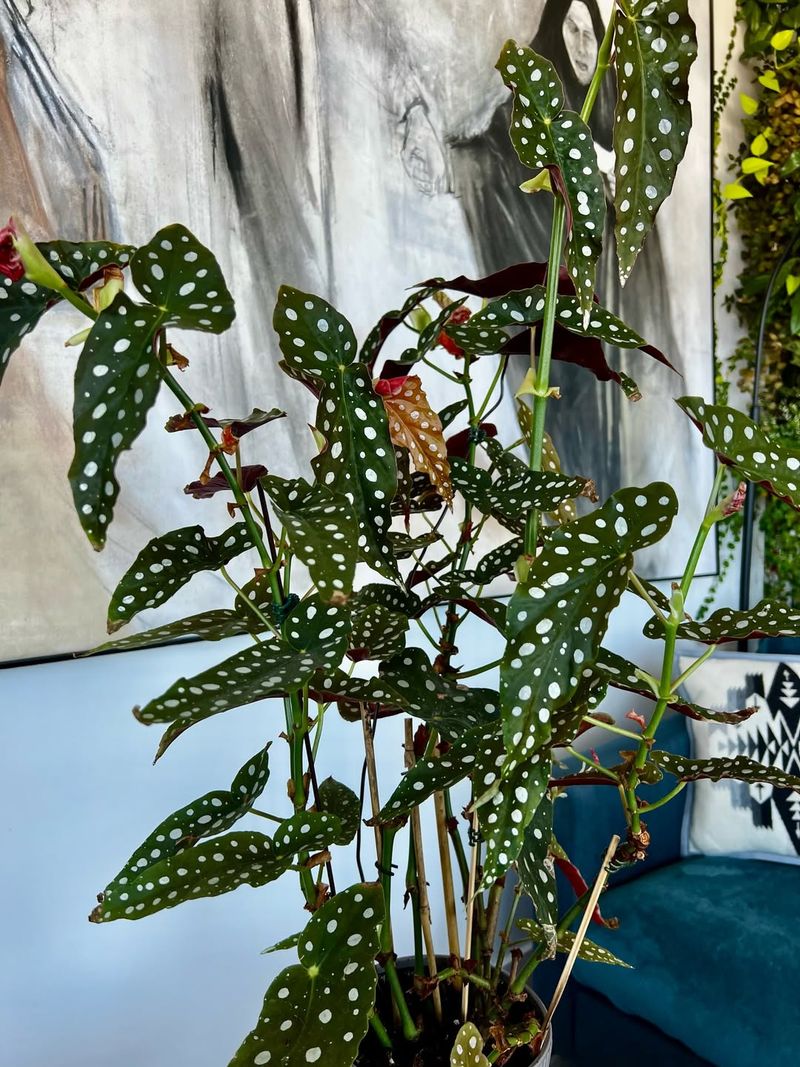
North Carolina experiences noticeable shifts in daylight through the year, and those changes affect how polka dot begonia grows indoors.
During summer, longer days and stronger light can keep the plant growing actively, but that same strong light coming through south or west windows may need to be filtered to avoid leaf damage.
As fall arrives and days shorten, the light angle changes and the intensity drops, which can slow the plant’s growth noticeably.
Winter months often mean less light reaching the plant, especially if it is positioned away from windows or in a room with small openings.
Some North Carolina growers move their begonia closer to a window during winter to compensate, while others use a simple grow light to supplement natural daylight.
Watering frequency often needs to drop during this period since the plant is growing more slowly and the soil takes longer to dry out.
Fertilizing habits also tend to follow the light. During the brighter, more active months, a diluted balanced fertilizer applied occasionally can support steady growth.
During the lower-light months of late fall and winter, holding off on fertilizer is generally a better approach since the plant is not actively using those nutrients.
Paying attention to how the plant looks and adjusting care with the seasons, rather than sticking to a fixed routine all year, tends to produce the steadiest and most satisfying results for North Carolina indoor growers.